
#FactCheck: AI-Generated Video Falsely Claims MEA Spokesperson Randhir Jaiswal Was Questioned Over Eating Nuts During BRICS Summit
Executive Summary
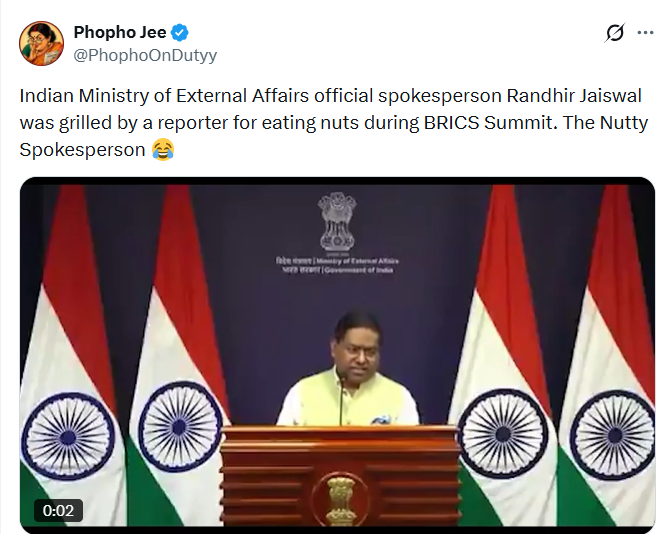
A video is being shared on social media with the claim that Ministry of External Affairs spokesperson Randhir Jaiswal was seen eating nuts during the BRICS Summit. The post claims that a reporter questioned him about eating nuts during the event. The video is also being shared with the sarcastic caption, “The Nutty Spokesperson.” Through the post, an attempt is being made to suggest that a reporter questioned Randhir Jaiswal about eating nuts during a press briefing. CyberPeace Research found that in the original video, Ministry of External Affairs spokesperson Randhir Jaiswal was responding to a question about Pakistan’s announcement of a 7 million Pakistani rupee bounty on Jaish-e-Mohammed chief Masood Azhar. Jaiswal addressed the announcement during the regular media briefing held on September 15, 2026. In his response, Jaiswal said that such announcements by Pakistan were not new and that the country should take concrete action against terrorism. However, the video being circulated on social media has been digitally edited using the original footage to falsely suggest that a reporter had questioned Jaiswal about eating nuts.
Claim:
During the BRICS Summit, a reporter questioned Ministry of External Affairs spokesperson Randhir Jaiswal about eating nuts and confronted him over it.
https://x.com/PhophoOnDutyy/status/2099940769876640084?s=20
Fact Check
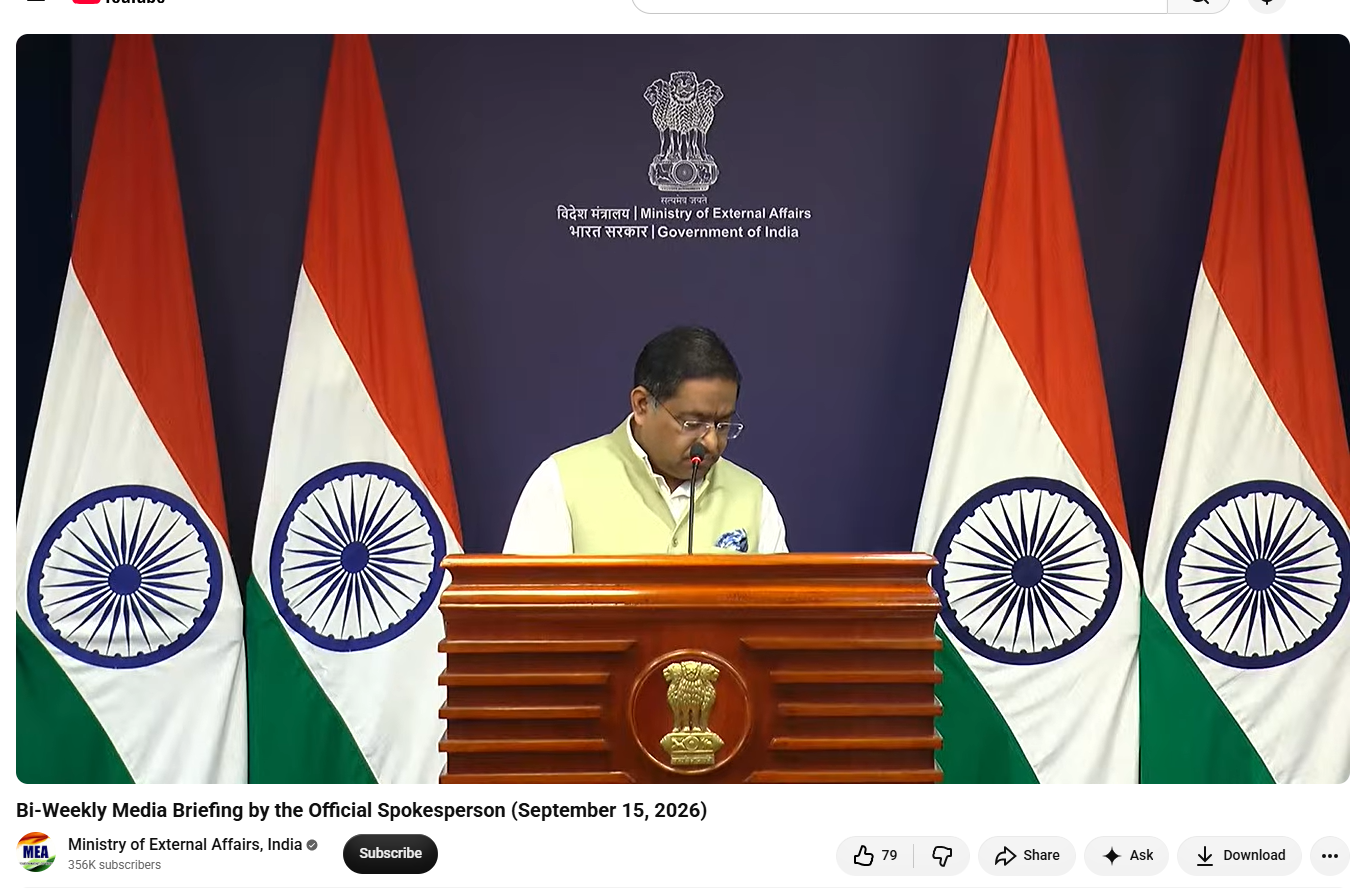
To verify the claim, we conducted a Google search using relevant keywords. During the search, we did not find any credible media report supporting the claim.As part of our research, we conducted a reverse image search of keyframes from the video. We found the original video on the YouTube channel of the Ministry of External Affairs, India. In the original video, Randhir Jaiswal was responding to a question about Pakistan’s announcement of a 7 million Pakistani rupee bounty on Masood Azhar.The reporter does not question Jaiswal about eating nuts anywhere in the original video. This establishes that the original footage has been edited and presented with a false context. Therefore, the claim being circulated on social media is false.
https://www.youtube.com/live/dw-qqLolRgc
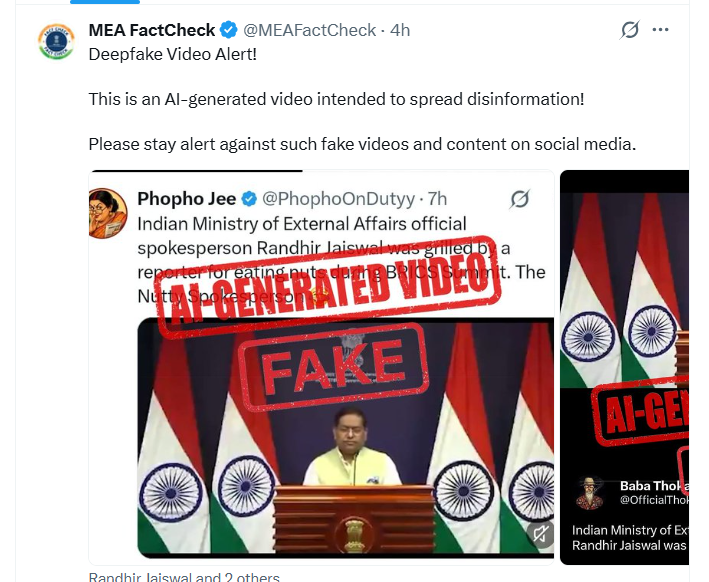
As part of our further research, we checked the official X account of MEA FactCheck. It also identified the video as AI-generated.
https://x.com/MEAFactCheck/status/2100076244805255501?s=20
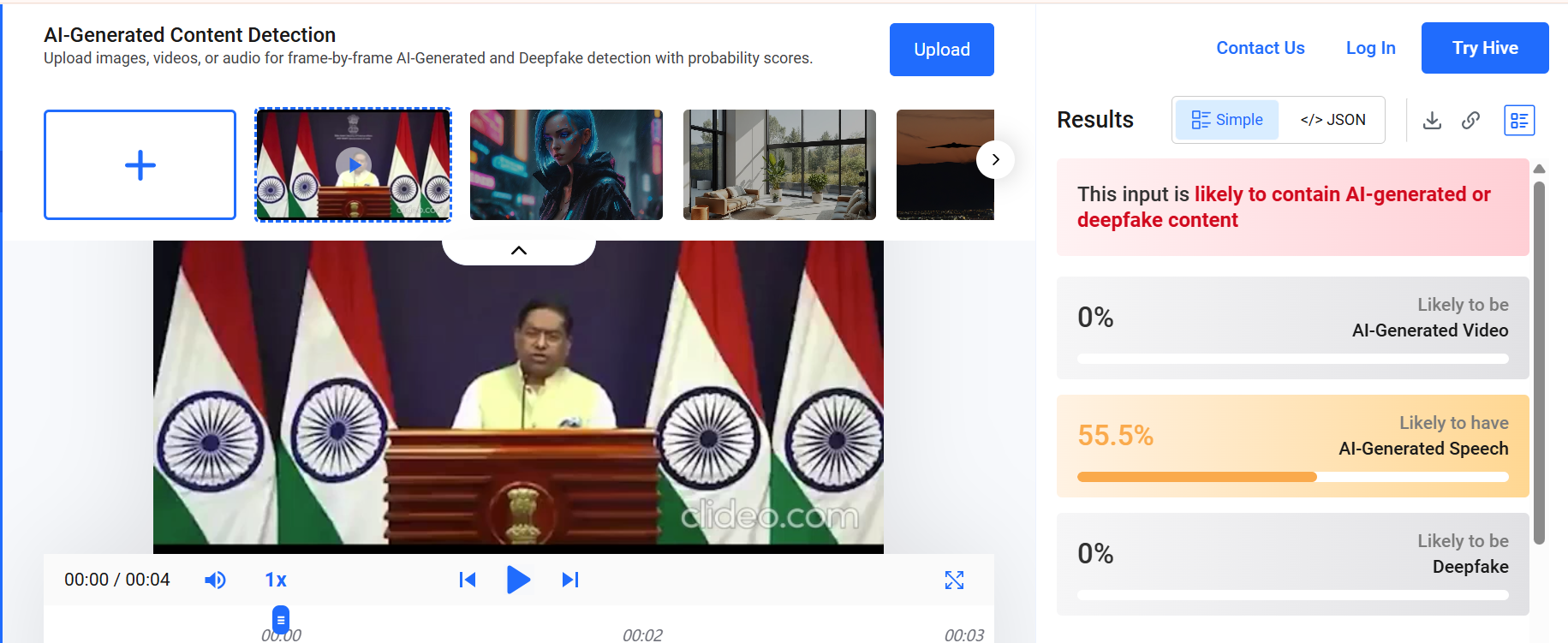
The video was scanned using the AI detection tool Hive Moderation. According to the results, the video has a 55% probability of being AI-generated.
Conclusion
Our research found that the video being shared on social media is fake and edited. In the original video, Ministry of External Affairs spokesperson Randhir Jaiswal was responding to a question about Pakistan’s announcement of a 7 million Pakistani rupee bounty on Masood Azhar.At no point in the original video does the reporter question Jaiswal about eating nuts.
The footage being circulated has been digitally manipulated and presented in a different context. The official X account of MEA FactCheck also identified the video as AI-generated. Therefore, the claim that Jaiswal was questioned by a reporter about eating nuts is false and misleading.

Related Blogs
Executive Summary
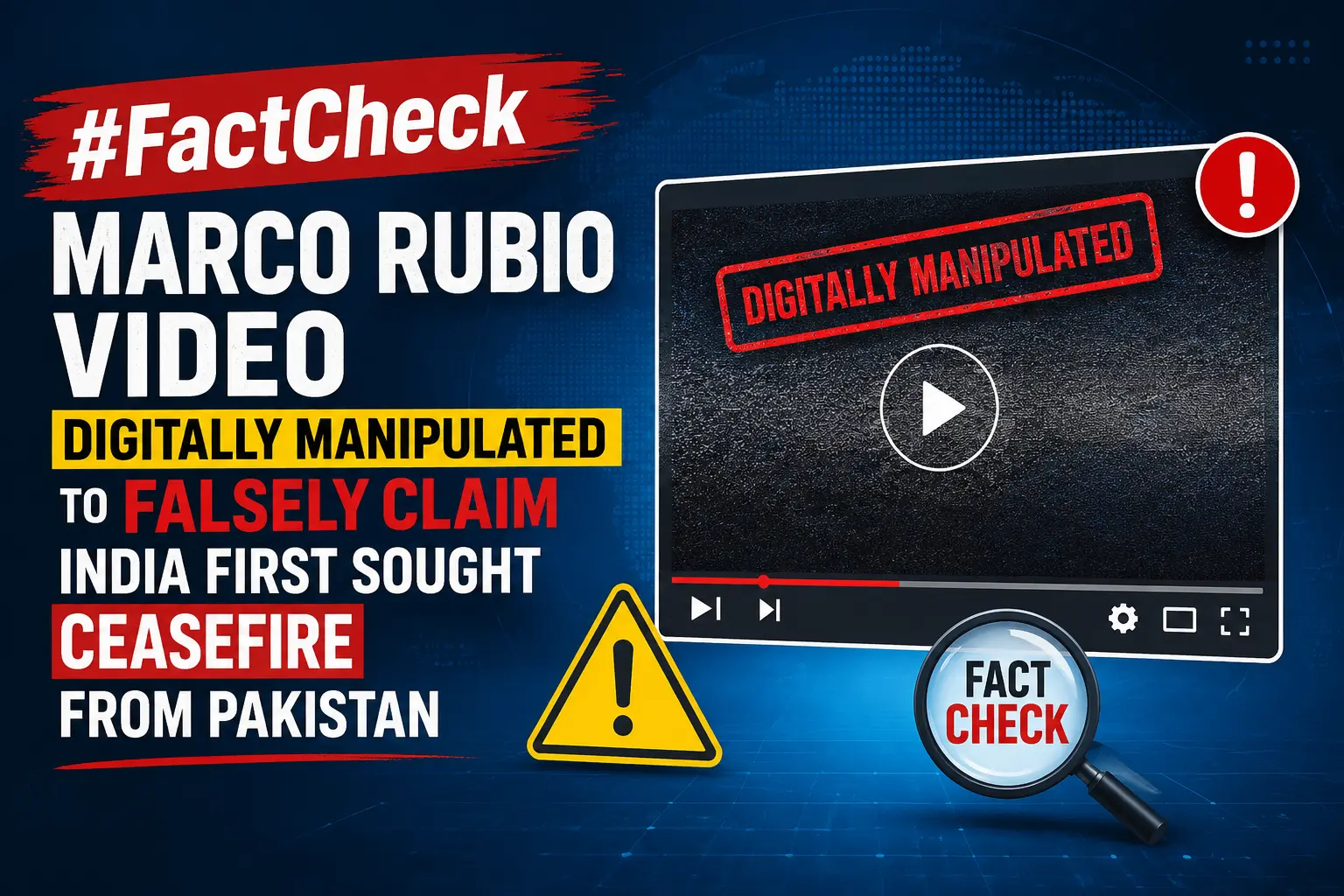
A video of US Secretary of State Marco Rubio is rapidly going viral on social media, in which he can allegedly be heard making a statement regarding the 2025 India-Pakistan conflict. Along with the video, it is being claimed that the US played a crucial role in ending the conflict between the two countries, but India was the first to initiate a ceasefire with Pakistan. Users are sharing this video believing it to be true.
Research by the CyberPeace Research Wing revealed that the video has been digitally manipulated. Rubio did state that the United States played a role in ending the conflict, but he never said that India was the first to request a ceasefire from Pakistan. This alleged statement was not part of the original video and was added later to alter the clip.
Claim
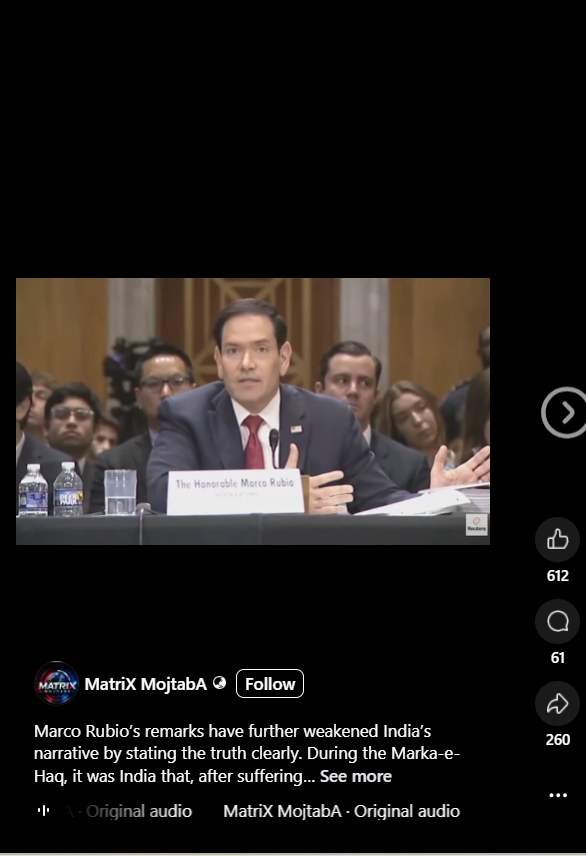
A user on a Facebook page shared the viral video and wrote, "Marco Rubio's statement has clearly brought out the truth, weakening India's claim. During 'Maarka-e-Haq', after suffering heavy losses, India was the first party to request a ceasefire from Pakistan. This highlights the gap between India's public claims and the ground reality, where the military..." The post link, archive link, and screenshot can be seen below. https://www.facebook.com/reel/1015648544746728
https://www.facebook.com/reel/1015648544746728
Fact Check
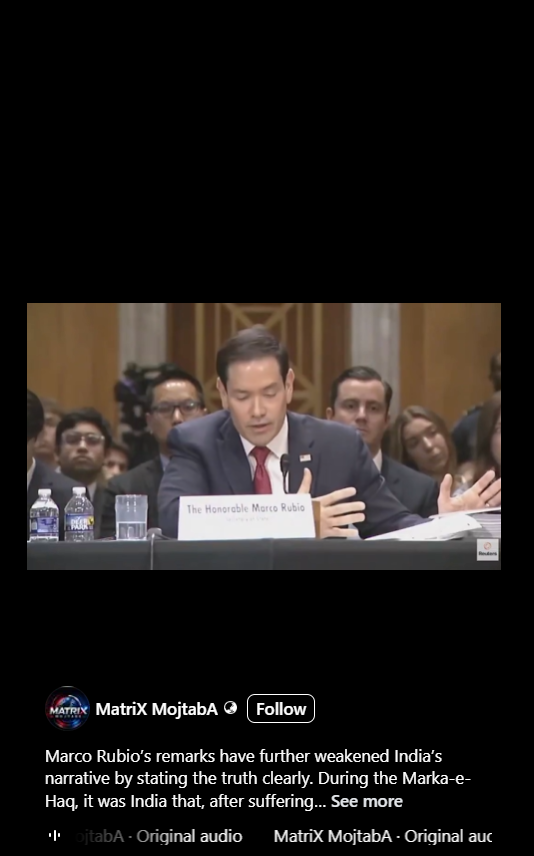
We investigated the viral video using the InVid tool and extracted several of its keyframes. These keyframes were then subjected to a reverse image search via Google Lens. The investigation revealed that the exact same video had been shared on social media previously, showing the same background and setting. The post link and screenshot can be seen below.
https://www.facebook.com/reel/1015648544746728
In the next step of our investigation, we found a video published on Reuters' official YouTube channel on June 2, 2026, whose background matches the viral video. However, nowhere in this original video is Marco Rubio heard saying that India was the first to request a ceasefire from Pakistan. The post link and screenshot can be seen below.
https://www.youtube.com/watch?v=qSpp5IYO6Cs
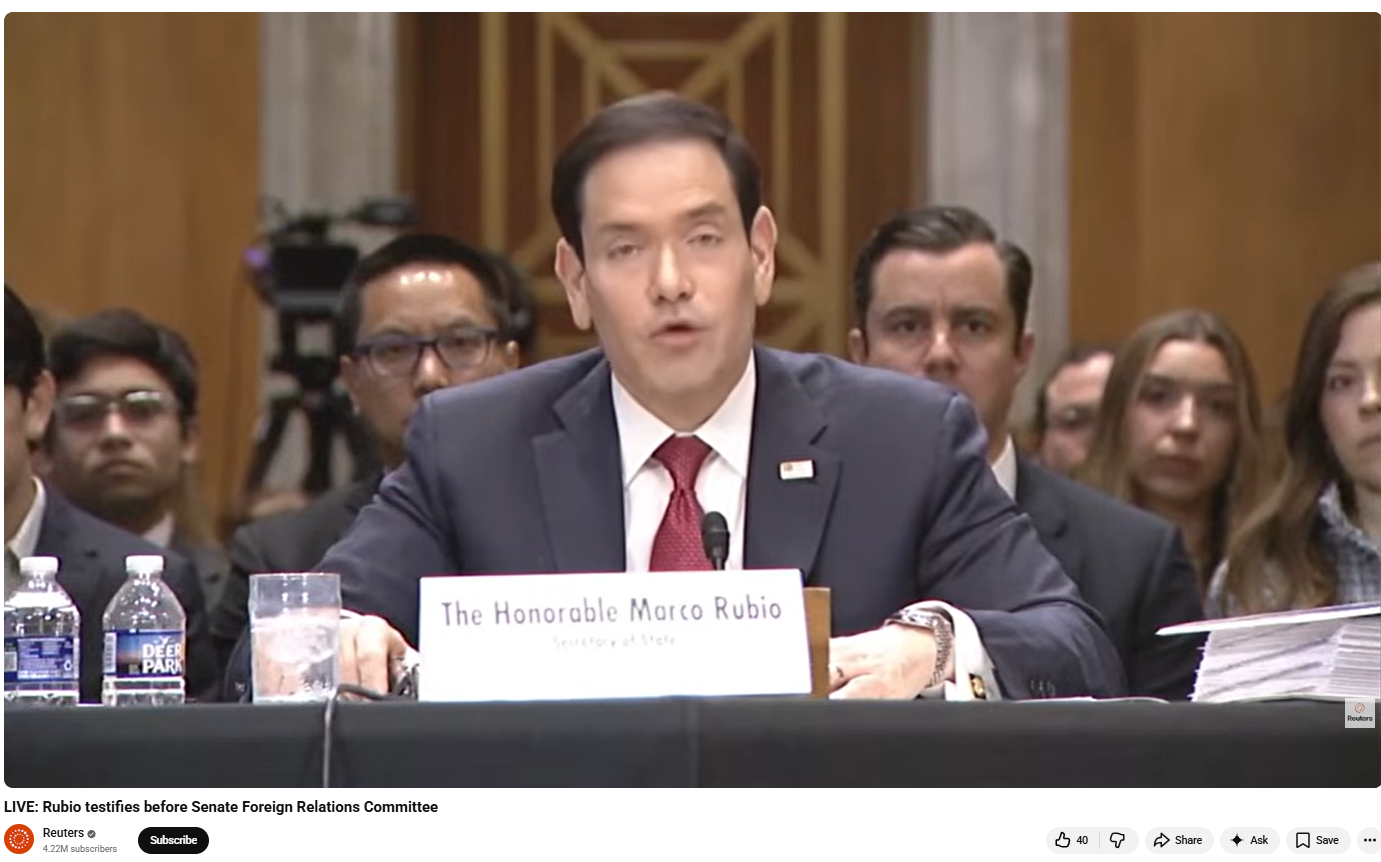
At the 2-hour 8-minute 55-second mark of the Reuters video, Rubio only states that the US played a role in ending the India-Pakistan conflict. Following this, he discusses the Thailand-Cambodia conflict. This makes it clear that the alleged statement in the viral video was digitally added or edited in, and is not part of the original footage.
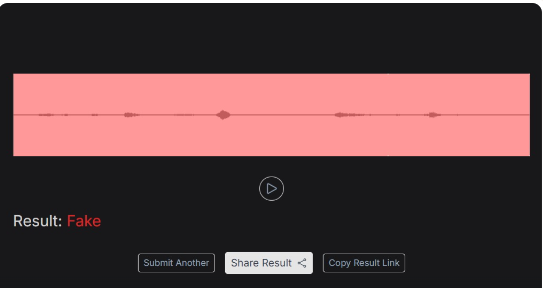
Taking the investigation further, we scanned the suspicious audio portion of the viral video using the AI detection tool 'Resemble AI'. According to the analysis results, clear signs of audio manipulation were detected.
Conclusion:
Our investigation revealed that the video has been digitally manipulated. Rubio did state that the United States played a role in ending the conflict, but he never said that India was the first to request a ceasefire from Pakistan. This alleged statement was not part of the original video and was altered by adding it later.

Executive Summary:
Recently, our team came across a widely circulated post on X (formerly Twitter), claiming that the Indian government would abolish paper currency from February 1 and transition entirely to digital money. The post, designed to resemble an official government notice, cited the absence of advertisements in Kerala newspapers as supposed evidence—an assertion that lacked any substantive basis

Claim:
The Indian government will ban paper currency from February 1, 2025, and adopt digital money as the sole legal tender to fight black money.

Fact Check:
The claim that the Indian government will ban paper currency and transition entirely to digital money from February 1 is completely baseless and lacks any credible foundation. Neither the government nor the Reserve Bank of India (RBI) has made any official announcement supporting this assertion.
Furthermore, the supposed evidence—the absence of specific advertisements in Kerala newspapers—has been misinterpreted and holds no connection to any policy decisions regarding currency
During our research, we found that this was the prediction of what the newspaper from the year 2050 would look like and was not a statement that the notes will be banned and will be shifted to digital currency.
Such a massive change would necessitate clear communication to the public, major infrastructure improvements, and precise policy announcements which have not happened. This false rumor has widely spread on social media without even a shred of evidence from its source, which has been unreliable and is hence completely false.
We also found a clip from a news channel to support our research by asianetnews on Instagram.

We found that the event will be held in Jain Deemed-to-be University, Kochi from 25th January to 1st February. After this advertisement went viral and people began criticizing it, the director of "The Summit of Future 2025" apologized for this confusion. According to him, it was a fictional future news story with a disclaimer, which was misread by some of its readers.
The X handle of Summit of Future 2025 also posted a video of the official statement from Dr Tom.

Conclusion:
The claim that the Indian government will discontinue paper currency by February 1 and resort to full digital money is entirely false. There's no government announcement nor any evidence to support it. We would like to urge everyone to refer to standard sources for accurate information and be aware to avoid misinformation online.
- Claim: India to ban paper currency from February 1, switching to digital money.
- Claimed On: X (Formerly Known As Twitter)
- Fact Check: False and Misleading

Introduction
The G7 nations, a group of the most powerful economies, have recently turned their attention to the critical issue of cybercrimes and (AI) Artificial Intelligence. G7 summit has provided an essential platform for discussing the threats and crimes occurring from AI and lack of cybersecurity. These nations have united to share their expertise, resources, diplomatic efforts and strategies to fight against cybercrimes. In this blog, we shall investigate the recent development and initiatives undertaken by G7 nations, exploring their joint efforts to combat cybercrime and navigate the evolving landscape of artificial intelligence. We shall also explore the new and emerging trends in cybersecurity, providing insights into ongoing challenges and innovative approaches adopted by the G7 nations and the wider international community.
G7 Nations and AI
Each of these nations have launched cooperative efforts and measures to combat cybercrime successfully. They intend to increase their collective capacities in detecting, preventing, and responding to cyber assaults by exchanging intelligence, best practices, and experience. G7 nations are attempting to develop a strong cybersecurity architecture capable of countering increasingly complex cyber-attacks through information-sharing platforms, collaborative training programs, and joint exercises.
The G7 Summit provided an important forum for in-depth debates on the role of artificial intelligence (AI) in cybersecurity. Recognising AI’s transformational potential, the G7 nations have participated in extensive discussions to investigate its advantages and address the related concerns, guaranteeing responsible research and use. The nation also recognises the ethical, legal, and security considerations of deploying AI cybersecurity.
Worldwide Rise of Ransomware
High-profile ransomware attacks have drawn global attention, emphasising the need to combat this expanding threat. These attacks have harmed organisations of all sizes and industries, leading to data breaches, operational outages, and, in some circumstances, the loss of sensitive information. The implications of such assaults go beyond financial loss, frequently resulting in reputational harm, legal penalties, and service delays that affect consumers, clients, and the public. The increase in high-profile ransomware incidents has garnered attention worldwide, Cybercriminals have adopted a multi-faceted approach to ransomware attacks, combining techniques such as phishing, exploit kits, and supply chain Using spear-phishing, exploit kits, and supply chain hacks to obtain unauthorised access to networks and spread the ransomware. This degree of expertise and flexibility presents a substantial challenge to organisations attempting to protect against such attacks.

Focusing On AI and Upcoming Threats
During the G7 summit, one of the key topics for discussion on the role of AI (Artificial Intelligence) in shaping the future, Leaders and policymakers discuss the benefits and dangers of AI adoption in cybersecurity. Recognising AI’s revolutionary capacity, they investigate its potential to improve defence capabilities, predict future threats, and secure vital infrastructure. Furthermore, the G7 countries emphasise the necessity of international collaboration in reaping the advantages of AI while reducing the hazards. They recognise that cyber dangers transcend national borders and must be combated together. Collaboration in areas such as exchanging threat intelligence, developing shared standards, and promoting best practices is emphasised to boost global cybersecurity defences. The G7 conference hopes to set a global agenda that encourages responsible AI research and deployment by emphasising the role of AI in cybersecurity. The summit’s sessions present a path for maximising AI’s promise while tackling the problems and dangers connected with its implementation.
As the G7 countries traverse the complicated convergence of AI and cybersecurity, their emphasis on collaboration, responsible practices, and innovation lays the groundwork for international collaboration in confronting growing cyber threats. The G7 countries aspire to establish robust and secure digital environments that defend essential infrastructure, protect individuals’ privacy, and encourage trust in the digital sphere by collaboratively leveraging the potential of AI.
Promoting Responsible Al development and usage
The G7 conference will focus on developing frameworks that encourage ethical AI development. This includes fostering openness, accountability, and justice in AI systems. The emphasis is on eliminating biases in data and algorithms and ensuring that AI technologies are inclusive and do not perpetuate or magnify existing societal imbalances.
Furthermore, the G7 nations recognise the necessity of privacy protection in the context of AI. Because AI systems frequently rely on massive volumes of personal data, summit speakers emphasise the importance of stringent data privacy legislation and protections. Discussions centre around finding the correct balance between using data for AI innovation, respecting individuals’ privacy rights, and protecting data security. In addition to responsible development, the G7 meeting emphasises the importance of responsible AI use. Leaders emphasise the importance of transparent and responsible AI governance frameworks, which may include regulatory measures and standards to ensure AI technology’s ethical and legal application. The goal is to defend individuals’ rights, limit the potential exploitation of AI, and retain public trust in AI-driven solutions.
The G7 nations support collaboration among governments, businesses, academia, and civil society to foster responsible AI development and use. They stress the significance of sharing best practices, exchanging information, and developing international standards to promote ethical AI concepts and responsible practices across boundaries. The G7 nations hope to build the global AI environment in a way that prioritises human values, protects individual rights, and develops trust in AI technology by fostering responsible AI development and usage. They work together to guarantee that AI is a force for a good while reducing risks and resolving social issues related to its implementation.
Challenges on the way
During the summit, the nations, while the G7 countries are committed to combating cybercrime and developing responsible AI development, they confront several hurdles in their efforts. Some of them are:
A Rapidly Changing Cyber Threat Environment: Cybercriminals’ strategies and methods are always developing, as is the nature of cyber threats. The G7 countries must keep up with new threats and ensure their cybersecurity safeguards remain effective and adaptable.
Cross-Border Coordination: Cybercrime knows no borders, and successful cybersecurity necessitates international collaboration. On the other hand, coordinating activities among nations with various legal structures, regulatory environments, and agendas can be difficult. Harmonising rules, exchanging information, and developing confidence across states are crucial for effective collaboration.
Talent Shortage and Skills Gap: The field of cybersecurity and AI knowledge necessitates highly qualified personnel. However, skilled individuals in these fields need more supply. The G7 nations must attract and nurture people, provide training programs, and support research and innovation to narrow the skills gap.
Keeping Up with Technological Advancements: Technology changes at a rapid rate, and cyber-attacks become more complex. The G7 nations must ensure that their laws, legislation, and cybersecurity plans stay relevant and adaptive to keep up with future technologies such as AI, quantum computing, and IoT, which may both empower and challenge cybersecurity efforts.
Conclusion
To combat cyber threats effectively, support responsible AI development, and establish a robust cybersecurity ecosystem, the G7 nations must constantly analyse and adjust their strategy. By aggressively tackling these concerns, the G7 nations can improve their collective cybersecurity capabilities and defend their citizens’ and global stakeholders’ digital infrastructure and interests.
