
#FactCheck-AI-generated video falsely claims CDS Raja Subramani confirmed resignation of over 30,000 Indian soldiers
Executive Summary
A video is being widely shared on social media, allegedly showing Chief of Defence Staff (CDS) Raja Subramani referring to the resignation of more than 30,000 Indian soldiers. The video is being circulated with the claim that CDS Raja Subramani confirmed that over 30,000 personnel resigned in protest following the demonstration held at Jantar Mantar. CyberPeace Research Wing’s research found that the viral claim is false. The research revealed that the video featuring CDS Raja Subramani has been digitally manipulated and created using Artificial Intelligence (AI). The original video does not contain any statement related to soldiers’ resignations or the Jantar Mantar protest.
Claim
A Facebook user shared the video with a claim stating: “After the protests at Jantar Mantar, India’s Chief of Defence Staff Raja Subramani has issued an emergency alert, saying that more than 30,000 soldiers have resigned in protest because their children were brutally beaten at Jantar Mantar.”
The post link, archive link and screenshot are provided below:

Fact Check
To verify the authenticity of the viral video, we extracted a key frame and conducted a reverse image search using Google Lens. During the search, we found the same video uploaded by the Eastern Command of the Indian Army (@easterncomd) on its official X account on July 21, 2026. The original video shows CDS Raja Subramani extending his best wishes to all participating teams of the 135th Indian Oil Durand Cup Football Tournament. There is no mention of any soldier resignations or the Jantar Mantar protest in the original footage.
https://x.com/easterncomd/status/2079485496988967225
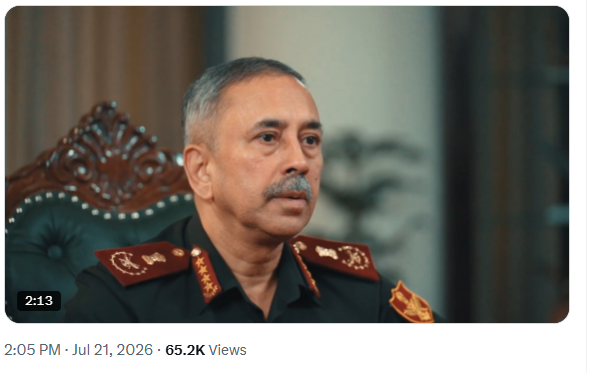
Further research led us to the same video posted by the Instagram account myyouthindia, where CDS Raja Subramani can again be seen wishing teams participating in the 135th Indian Oil Durand Cup Football Tournament.
https://www.instagram.com/reels/DbEGRGBsKv8/

Conclusion
The research established that the viral video of CDS Raja Subramani has been manipulated using AI-generated content. The original video is related to the 135th Indian Oil Durand Cup Football Tournament and does not contain any statement about the resignation of 30,000 Indian soldiers or the Jantar Mantar protest. The digitally altered video is being shared with a false claim.

Related Blogs

Executive Summary:
An alleged video is making the rounds on the internet featuring Ranveer Singh criticizing the Prime Minister Narendra Modi and his Government. But after examining the video closely it revealed that it has been tampered with to change the audio. In fact, the original videos posted by different media outlets actually show Ranveer Singh praising Varanasi, professing his love for Lord Shiva, and acknowledging Modiji’s role in enhancing the cultural charms and infrastructural development of the city. Differences in lip synchronization and the fact that the original video has no sign of criticizing PM Modi show that the video has been potentially manipulated in order to spread misinformation.

Claims:
The Viral Video of Bollywood actor Ranveer Singh criticizing Prime Minister Narendra Modi.

Fact Check:
Upon receiving the Video we divided the video into keyframes and reverse-searched one of the images, we landed on another video of Ranveer Singh with lookalike appearance, posted by an Instagram account named, “The Indian Opinion News''. In the video Ranveer Singh talks about his experience of visiting Kashi Vishwanath Temple with Bollywood actress Kriti Sanon. When we watched the Full video we found no indication of criticizing PM Modi.

Taking a cue from this we did some keyword search to find the full video of the interview. We found many videos uploaded by media outlets but none of the videos indicates criticizing PM Modi as claimed in the viral video.

Ranveer Singh shared his thoughts about how he feels about Lord Shiva, his opinions on the city and the efforts undertaken by the Prime Minister Modi to keep history and heritage of Varanasi alive as well as the city's ongoing development projects. The discrepancy in the viral video clip is clearly seen when we look at it closely. The lips are not in synchronization with the words which we can hear. It is clearly seen in the original video that the lips are in perfect synchronization with the words of audio. Upon lack of evidence to the claim made and discrepancies in the video prove that the video was edited to misrepresent the original interview of Bollywood Actor Ranveer Singh. Hence, the claim made is misleading and false.
Conclusion:
The video that claims Ranveer Singh criticizing PM Narendra Modi is not genuine. Further investigation shows that it has been edited by changing the audio. The original footage actually shows Singh speaking positively about Varanasi and Modi's work. Differences in lip-syncing and upon lack of evidence highlight the danger of misinformation created by simple editing. Ultimately, the claim made is false and misleading.
- Claim: A viral featuring Ranveer Singh criticizing the Prime Minister Narendra Modi and his Government.
- Claimed on: X (formerly known as Twitter)
- Fact Check: Fake & Misleading
.webp)
Introduction
As per the National Crime Records Bureau (NCRB) ‘Cyber Crime In India Report 2022’, A total of 65,893 cases were registered under Cyber Crimes, showing an increase of 24.4% in registration in comparison to 52,974 cases registered in 2021. The crime rate increased from 3.9 in 2021 to 4.8 in 2022. During 2022, 64.8% of cyber-crime cases registered were for the motive of fraud (42,710 out of 65,893 cases), followed by Extortion with 5.5% (3,648 cases) and Sexual Exploitation with 5.2% (3,434 cases). The statistics released by NCRB show the increased rate of cyber crimes in the country, which poses a significant question of safety in the online world. The rise in cybercrime indicates a rise in emerging criminal groups with malicious intentions, creating new cybercrime hotspots in the country where these groups target and commit cyber crimes despite limited resources.
Cyber Crime Hotspots
Police have recently arrested several cyber criminals in a specific region, indicating that certain areas have become hotspots for cybercrime. Mewat region is one such hotspot indicating a growing trend of cybercrime operating from this area. The Mewat gang's modus operandi is quite different; Cybercriminals in Mewat scam mobile owners just using smartphones and SIM cards without kingpins and targeting mobile owners. The scammers also lure people through online marketplaces such as OLX, in which they pretend to sell possessions and then either physically lure victims to pick-up locations or scam them virtually.
A study conducted by Future Crime Research Foundation and IIT Kanpur in 2023 has revealed that Jamatara city, once considered the cyber crime capital of India, is no longer the epicentre. The study found that 35 hotspots in India are actively involved in cybercrime activities. The top 10 cybercrime hotspots in India collectively account for 80% of cybercrime-related cases in India. These districts are strategically located near India's capital or closer to the National Capital Region (NCR). These districts are strategically placed with multiple borders, making them easy targets for criminals.
Online financial fraud and social media-related crimes are the most common in India. Cybercriminals exploit data as a gold mine, using it to commit crimes. For instance, they can obtain banking and insurance data, use simple AI tools to cheat victims, and they can easily impersonate identities to lure innocent people. In cybercrime hotspots, sextortion is a modern way for cybercriminals to record and demand money. Loan app fraud, OLX fraud, and job fraud also originate from these specific regions.
Recommendations
To counter the challenges posed by emerging cybercrime hubs, the following recommendations are to be considered:
- Advanced threat Intelligence: The digital landscape is evolving, and the threat landscape is becoming more complex. AI's role in cybersecurity is becoming increasingly critical, both positively and negatively, as it helps in understanding and addressing advanced threats. AI is capable of proactive threat hunting, real-time anomaly detection, and swift incident response.
- Enhancing capabilities of Law Enforcement Agencies: Law enforcement agencies must be sensitised to advanced tools or techniques to investigate cyber crime cases effectively. The development and implementation of advanced forensic tools and technologies need to be utilised or implemented to keep up with the evolving tactics of cybercrime perpetrators.
- Continuous Monitoring: Continuous cybersecurity monitoring is crucial for detecting anomalies and preventing cyber-attacks. It involves analysing systems and data to establish baseline security, identify deviations, and investigate potential threats. Cybersecurity experts use data observability tools, artificial intelligence, and machine learning to detect unexpected dataset changes.
- Cyber Security Awareness: Public awareness needs to be higher. Cybercrime prevention and cybersecurity is a shared responsibility of all of us by being aware of the threats and following the best practices. The frequent interaction between law enforcement and the public is necessary to raise awareness about safeguarding personal and financial information. Effective campaigns on cyber security are necessary to educate netizens.
Safety Tips for Netizens
Install up-to-date security software and firewalls on devices, use strong passwords for accounts, and regularly update software and applications. Be cautious when clicking on links or downloading files from unknown sources, and be cautious of your personal information.
Conclusion
The rise of Cyber Crime Hotspots in specific regions or districts has significantly exacerbated the issue of increasing cybercrime rates. In order to combat cybercrime more effectively, it is necessary for law enforcement agencies to strengthen their coordination between different states and to adapt advanced technology methods to counter cybercrime threats effectively. Moreover, educating netizens about cyber crime threats and providing best practices is an effective method to counter these threats, considered the first line of defense against cybercrime.
References
- https://ncrb.gov.in/uploads/nationalcrimerecordsbureau/custom/1701607577CrimeinIndia2022Book1.pdf
- https://economictimes.indiatimes.com/tech/technology/no-kingpins-just-a-smartphone-and-sim-card-how-cybercriminals-in-mewat-scam-mobile-owners/articleshow/98062889.cms?from=mdr
- https://www.futurecrime.org/fcrf-cyber-crime-survey-2023
- https://timesofindia.indiatimes.com/city/mumbai/jamtara-loses-crown-as-new-remote-districts-rewrite-indias-cybercrime-map/articleshow/104475868.cms?from=mdr
- https://government.economictimes.indiatimes.com/news/secure-india/80-of-cyber-crimes-from-10-new-districts-iit-report/103921338
- https://www.dw.com/en/how-mewat-became-indias-new-hub-for-cyber-criminals/video-68674527
- https://www.indiatoday.in/from-india-today-magazine/story/into-cybercrime-hotspot-india-mewat-rajasthan-haryana-uttar-pradesh-2381545-2023-05-19
- https://frontline.thehindu.com/the-nation/spotlight-how-nuh-district-in-haryana-became-a-breeding-ground-for-cybercriminals/article67098193.ece
- https://www.opindia.com/2024/04/nuh-mewat-cyber-crime-haryana-police-crackdown/#google_vignette
.webp)
Introduction
Digitalisation presents both opportunities and challenges for micro, small, and medium enterprises (MSMEs) in emerging markets. Digital tools can increase business efficiency and reach but also increase exposure to misinformation, fraud, and cyber attacks. Such cyber threats can lead to financial losses, reputational damage, loss of customer trust, and other challenges hindering MSMEs' ability and desire to participate in the digital economy.
The current information dump is a major component of misinformation. Misinformation spreads or emerges from online sources, causing controversy and confusion in various fields including politics, science, medicine, and business. One obvious adverse effect of misinformation is that MSMEs might lose trust in the digital market. Misinformation can even result in the devaluation of a product, sow mistrust among customers, and negatively impact the companies’ revenue. The reach of and speed with which misinformation can spread and ruin companies’ brands, as well as the overall difficulty businesses face in seeking recourse, may discourage MSMEs from fully embracing the digital ecosystem.
MSMEs are essential for innovation, job development, and economic growth. They contribute considerably to the GDP and account for a sizable share of enterprises. They serve as engines of economic resilience in many nations, including India. Hence, a developing economy’s prosperity and sustainability depend on the MSMEs' growth and such digital threats might hinder this process of growth.
There are widespread incidents of misinformation on social media, and these affect brand and product promotion. MSMEs also rely on online platforms for business activities, and threats such as misinformation and other digital risks can result in reputational damage and financial losses. A company's reputation being tarnished due to inaccurate information or a product or service being incorrectly represented are just some examples and these incidents can cause MSMSs to lose clients and revenue.
In the digital era, MSMEs need to be vigilant against false information in order to preserve their brand name, clientele, and financial standing. In the interconnected world of today, these organisations must develop digital literacy and resistance against misinformation in order to succeed in the long run. Information resilience is crucial for protecting and preserving their reputation in the online market.
The Impact of Misinformation on MSMEs
Misinformation can have serious financial repercussions, such as lost sales, higher expenses, legal fees, harm to the company's reputation, diminished consumer trust, bad press, and a long-lasting unfavourable impact on image. A company's products may lose value as a result of rumours, which might affect both sales and client loyalty.
Inaccurate information can also result in operational mistakes, which can interrupt regular corporate operations and cost the enterprise a lot of money. When inaccurate information on a product's safety causes demand to decline and stockpiling problems to rise, supply chain disruptions may occur. Misinformation can also lead to operational and reputational issues, which can cause psychological stress and anxiety at work. The peace of the workplace and general productivity may suffer as a result. For MSMEs, false information has serious repercussions that impact their capacity to operate profitably, retain employees, and maintain a sustainable business. Companies need to make investments in cybersecurity defence, legal costs, and restoring consumer confidence and brand image in order to lessen the effects of false information and ensure smooth operations.
When we refer to the financial implications caused by misinformation spread in the market, be it about the product or the enterprise, the cost is two-fold in all scenarios: there is loss of revenue and then the organisation has to contend with the costs of countering the impact of the misinformation. Stock Price Volatility is one financial consequence for publicly-traded MSMEs, as misinformation can cause stock price fluctuations. Potential investors might be discouraged due to false negative information.
Further, the reputational damage consequences of misinformation on MSMEs is also a serious concern as a loss of their reputation can have long-term damages for a carefully-cultivated brand image.
There are also operational disruptions caused by misinformation: for instance, false product recalls can take place and supplier mistrust or false claims about supplier reliability can disrupt procurement leading to disruptions in the operations of MSMEs.
Misinformation can negatively impact employee morale and productivity due to its physiological effects. This leads to psychological stress and workplace tensions. Staff confidence is also affected due to the misinformation about the brand. Internal operational stability is a core component of any organisation’s success.
Misinformation: Key Risk Areas for MSMEs
- Product and Service Misinformation
For MSMEs, misinformation about products and services poses a serious danger since it undermines their credibility and the confidence clients place in the enterprise and its products or services. Because this misleading material might mix in with everyday activities and newsfeeds, viewers may find it challenging to identify fraudulent content. For example, falsehoods and rumours about a company or its goods may travel quickly through social media, impacting the confidence and attitude of customers. Algorithms that favour sensational material have the potential to magnify disinformation, resulting in the broad distribution of erroneous information that can harm a company's brand.
- False Customer Reviews and Testimonials
False testimonies and evaluations pose a serious risk to MSMEs. These might be abused to damage a company's brand or lead to unfair competition. False testimonials, for instance, might mislead prospective customers about the calibre or quality of a company’s offerings, while phony reviews can cause consumers to mistrust a company's goods or services. These actions frequently form a part of larger plans by rival companies or bad individuals to weaken a company's position in the market.
- Misleading Information about Business Practices
False statements or distortions regarding a company's operations constitute misleading information about business practices. This might involve dishonest marketing, fabrications regarding the efficacy or legitimacy of goods, and inaccurate claims on a company's compliance with laws or moral principles. Such incorrect information can result in a decline in consumer confidence, harm to one's reputation, and even legal issues if consumers or rival businesses act upon it. Even before the truth is confirmed, for example, allegations of wrongdoing or criminal activity pertaining can inflict a great deal of harm, even if they are disproven later.
- Fake News Related to Industry and Market Conditions
By skewing consumer views and company actions, fake news about market and industry circumstances can have a significant effect on MSMEs. For instance, false information about market trends, regulations, or economic situations might make consumers lose faith in particular industries or force corporations to make poor strategic decisions. The rapid dissemination of misinformation on online platforms intensifies its effects on enterprises that significantly depend on digital engagement for their operations.
Factors Contributing to the Vulnerability of MSMEs
- Limited Resources for Verification
MSMEs have a small resource pool. Information verification is typically not a top priority for most. MSMEs usually lack the resources needed to verify the information and given their limited resources, they usually tend to deploy the same towards other, more seemingly-critical functions. They are more susceptible to misleading information because they lack the capacity to do thorough fact-checking or validate the authenticity of digital content. Technology tools, human capital, and financial resources are all in low supply but they are essential requirements for effective verification processes.
- Inadequate Digital Literacy
Digital literacy is required for effective day-to-day operations. Fake reviews, rumours, or fake images commonly used by malicious actors can result in increased scrutiny or backlash against the targeted business. The lack of awareness combined with limited resources usually spells out a pale redressal plan on part of the affected MSME. Due to their low digital literacy in this domain, a large number of MSMEs are more susceptible to false information and other online threats. Inadequate knowledge and abilities to use digital platforms securely and effectively can result in making bad decisions and raising one's vulnerability to fraud, deception, and online scams.
- Lack of Crisis Management Plans
MSMEs frequently function without clear-cut procedures for handling crises. They lack the strategic preparation necessary to deal with the fallout from disinformation and cyberattacks. Proactive crisis management plans usually incorporate procedures for detecting, addressing, and lessening the impact of digital harms, which are frequently absent from MSMEs.
- High Dependence on Social Media and Online Platforms
The marketing strategy for most MSMEs is heavily reliant on social media and online platforms. While the digital-first nature of operations reduces the need for a large capital to set up in the form of stores or outlets, it also gives them a higher need to stay relevant to the trends of the online community and make their products attractive to the customer base. However, MSMEs are depending more and more on social media and other online channels for marketing, customer interaction, and company operations. These platforms are really beneficial, but they also put organisations at a higher risk of false information and online fraud. Heavy reliance on these platforms coupled with the absence of proper security measures and awareness can result in serious interruptions to operations and monetary losses.
CyberPeace Policy Recommendations to Enhance Information Resilience for MSMEs
CyberPeace advocates for establishing stronger legal frameworks to protect MSMEs from misinformation. Governments should establish regulations to build trust in online business activities and mitigate fraud and misinformation risks. Mandatory training programs should be implemented to cover online safety and misinformation awareness for MSME businesses. Enhanced reporting mechanisms should be developed to address digital harm incidents promptly. Governments should establish strict penalties for deliberate inaccurate misinformation spreaders, similar to those for copyright or intellectual property violations. Community-based approaches should be encouraged to help MSMEs navigate digital challenges effectively. Donor communities and development agencies should invest in digital literacy and cybersecurity training for MSMEs, focusing on misinformation mitigation and safe online practices. Platform accountability should be increased, with social media and online platforms playing a more active role in removing content from known scam networks and responding to fraudulent activity reports. There should be investment in comprehensive digital literacy solutions for MSMEs that incorporate cyber hygiene and discernment skills to combat misinformation.
Conclusion
Misinformation poses a serious risk to MSME’s digital resilience, operational effectiveness, and financial stability. MSMEs are susceptible to false information because of limited technical resources, lack of crisis management strategies, and insufficient digital literacy. They are also more vulnerable to false information and online fraud because of their heavy reliance on social media and other online platforms. To address these challenges it is significant to strengthen their cyber hygiene and information resilience. Robust policy and regulatory frameworks are encouraged, promoting and mandating online safety training programmes, and improved reporting procedures, are required to overall enhance the information landscape.
References:
- https://www.dai.com/uploads/digital-downsides.pdf
- https://www.indiacode.nic.in/bitstream/123456789/2013/3/A2006-27.pdf
- https://pib.gov.in/PressReleaseIframePage.aspx?PRID=1946375
- https://dai-global-digital.com/digital-downsides-the-economic-impact-of-misinformation-and-other-digital-harms-on-msmes-in-kenya-india-and-cambodia.html
- https://www.dai.com/uploads/digital-downsides.pdf
