
#FactCheck:AI-Generated Image Falsely Shared as Houses Built Inside Mexico City Volcano Crater
Executive Summary
A picture is going viral on social media in the name of Mexico City, with the claim that the city’s population has grown so much that, due to a shortage of space, people have built houses inside the crater of a dormant volcano. The viral picture shows houses and other structures inside the crater, which several users are sharing as a real photograph. The research by the CyberPeace Research Wing found that AI technology was used to create the image. A fact-check by Vishvas News found that there are no houses inside the crater in Mexico, although farming is carried out there and residential areas are located around its outer sections.
Claim:
Facebook page ‘The Great India’ shared a picture on August 12, 2026, claiming, “Mexico City, with a huge population of around 2.5 crore, is facing a severe shortage of land. Due to the city’s unprecedented expansion, people have found an unusual way to create homes — settlements, houses and even playgrounds have reportedly been built inside the crater of a dormant volcano. The city, located in a high plateau surrounded by volcanic hills, has seen people turn volcanic slopes and depressions into habitable areas due to the declining availability of land and rapidly growing population.”
Several users on X also shared the picture believing the claim to be true.
https://x.com/Kapil_Jyani_/status/2087380670909931602?s=20

FactCheck
To verify the viral picture, we first scanned it using Google Lens. We found similar pictures on several websites and social media accounts, where they were identified as the crater of Xico Volcano in Mexico.
During the search, we also found a picture on Shutterstock, which identified the location as the crater of Xico Volcano in Chalco, Mexico.

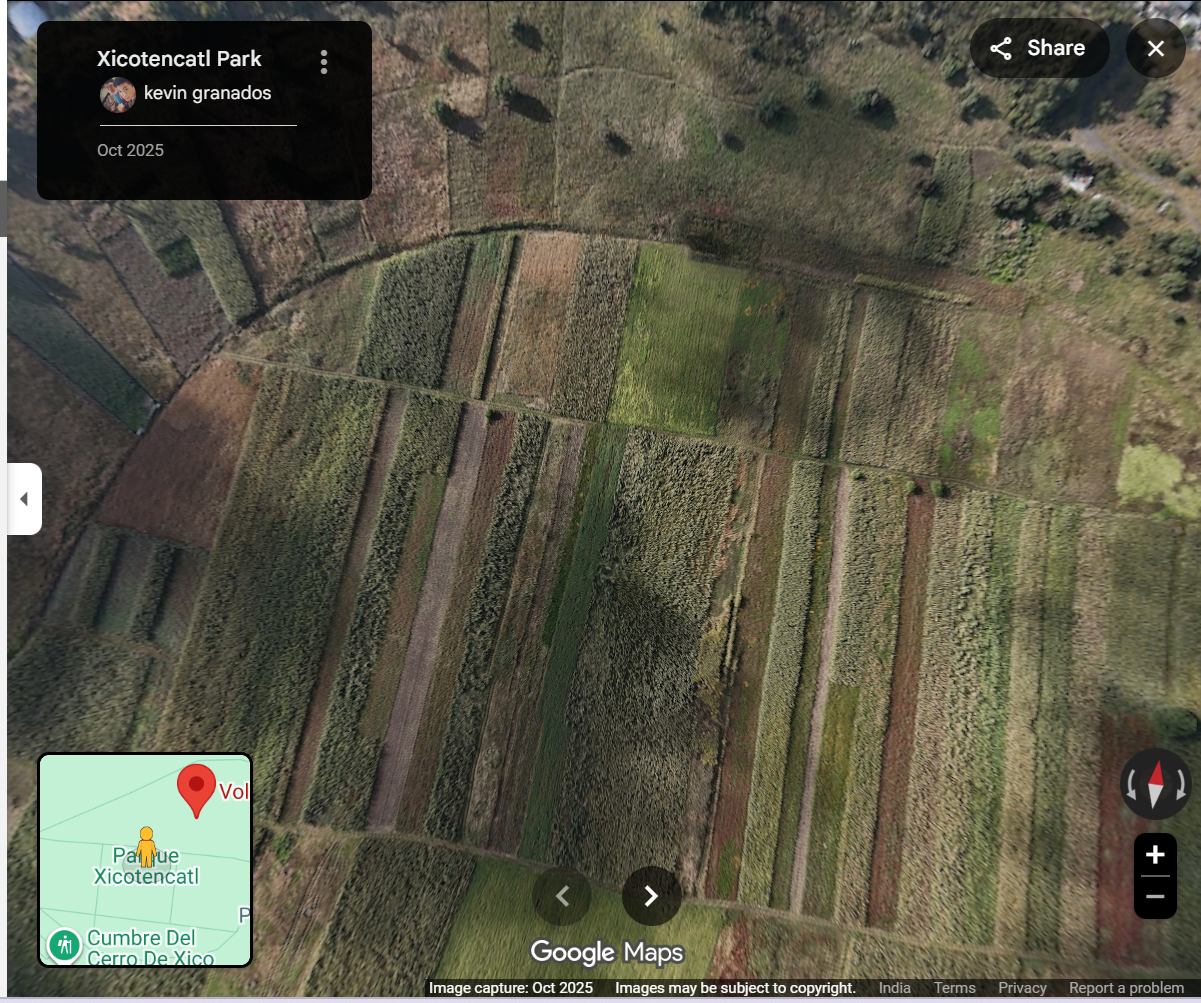
We then used Google Maps to check the location. The search showed that the Xico crater is located on the southern outskirts of Mexico City. Upon checking the area, we found agricultural activity inside the crater, while some houses could be seen in the surrounding areas.
https://maps.app.goo.gl/hszKcR1a8srtYe91A
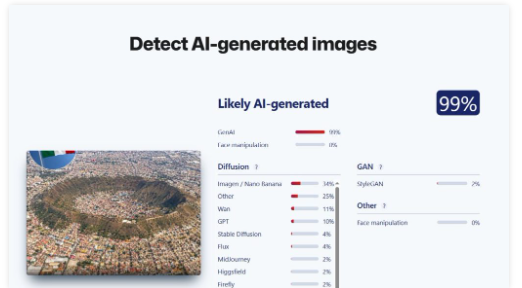
During the next stage of the research, we analysed the viral picture using AI detection tools. We first scanned the image using Hive Moderation. The tool indicated more than a 98 per cent probability that the viral picture was AI-generated.

We then checked the picture using another AI detection tool, Sightengine. Its analysis also indicated a 99 per cent probability that the image was AI-generated.
Conclusion
Our research found that the claim that people have built houses inside a volcano crater in Mexico City due to a shortage of land is false. Although farming takes place inside the Xico crater, residential areas are located outside it. The viral picture was created using AI and is being shared with a misleading claim.

Related Blogs

Introduction
Since users are now constantly retrieving critical data on their mobile devices, fraudsters are now focusing on these devices. App-based, network-based, and device-based vulnerabilities are the three main ways of attacking that Mobile Endpoint Security names as mobile threats. Composed of the following features: program monitoring and risk, connection privacy and safety, psychological anomaly and reconfiguration recognition, and evaluation of vulnerabilities and management, this is how Gartner describes Mobile Threat Defense (MTD).
The widespread adoption and prevalence of cell phones among consumers worldwide have significantly increased in recent years. Users of these operating system-specific devices can install a wide range of software, or "apps," from online marketplaces like Google Play and the Apple App Store. The applications described above are the lifeblood of cell phones; they improve users' daily lives and augment the devices' performance. The app marketplaces let users quickly search for and install new programs, but certain malicious apps/links/websites can also be the origin of malware hidden among legitimate apps. These days, there are many different security issues and malevolent attacks that might affect mobile devices.
Unveiling Malware Landscape
The word "malware" refers to a comprehensive category of spyware intended to infiltrate networks, steal confidential data, cause disruptions, or grant illegal access. Malware can take many forms, such as Trojan horses, worms, ransomware, infections, spyware, and adware. Because each type has distinct goals and features, security specialists face a complex problem. Malware is a serious risk to both people and businesses. Security incidents, monetary losses, harm to one's credibility, and legal repercussions are possible outcomes. Understanding malware's inner workings is essential to defend against it effectively. Malware analysis is helpful in this situation. The practice of deconstructing and analysing dangerous software to comprehend its behaviour, operation, and consequences is known as malware analysis.Major threats targeting mobile phones
Viruses: Viruses are self-renewing programs that can steal data, launch denial of service assaults, or enact ransomware strikes. They spread by altering other software applications, adding malicious code, and running it on the target's device. Computer systems all over the world are still infected with viruses, which attack different operating systems like Mac and Microsoft Windows, even though there is a wealth of antiviral programs obtainable to mitigate their impacts.
Worms: Infections are independent apps that propagate quickly and carry out payloads—such as file deletion or the creation of botnets—to harm computers. Worms, in contrast to viruses, usually harm a computer system, even if it's just through bandwidth use. By taking advantage of holes in security or other vulnerabilities on the target computer, they spread throughout computer networks.
Ransomware: It causes serious commercial and organisational harm to people and businesses by encrypting data and demanding payment to unlock it. The daily operations of the victim organisation are somewhat disrupted, and they need to pay a ransom to get them back. It is not certain, though, that the financial transaction will be successful or that they will receive a working translation key.
Adware: It can be controlled via notification restrictions or ad-blockers, tracks user activities and delivers unsolicited advertisements. Adware poses concerns to users' privacy even though it's not always malevolent since the information it collects is frequently combined with information gathered from other places and used to build user profiles without their permission or knowledge.
Spyware: It can proliferate via malicious software or authentic software downloads, taking advantage of confidential data. This kind of spyware gathers data on users' actions without their authorisation or agreement, including:Internet activityBanking login credentialsPasswordsPersonally Identifiable Information (PII)
Navigating the Mobile Security Landscape
App-Centric Development: Regarding mobile security, app-centric protections are a crucial area of focus. Application authorisations should be regularly reviewed and adjusted to guarantee that applications only access the knowledge that is essential and to lower the probability of data misuse. Users can limit hazards and have greater oversight over their confidentiality by closely monitoring these settings. Installing trustworthy mobile security apps also adds another line of protection. With capabilities like app analysis, real-time protection, and antivirus scanning, these speciality apps strengthen your gadget's protection against malware and other harmful activity.
Network Security: Setting priorities for secure communication procedures is crucial for safeguarding confidential data and thwarting conceivable dangers in mobile security. Avoiding unprotected public Wi-Fi networks is essential since they may be vulnerable to cyberattacks. To lessen the chance of unwelcome entry and data surveillance, promote the usage of reliable, password-protected networks instead. Furthermore, by encrypting data transfer, Virtual Private Networks (VPNs) provide additional protection and make it more difficult for malevolent actors to corrupt information. To further improve security, avoid using public Wi-Fi for essential transactions and hold off until a secure network is available. Users can strengthen their handheld gadgets against possible privacy breaches by implementing these practices, which can dramatically lower the risk of data eavesdropping and illegal access.
Constant development: Maintaining a robust mobile security approach requires a dedication to constant development. Adopt a proactive stance by continuously improving and modifying your security protocols. By following up on recurring outreach and awareness campaigns, you can stay updated about new hazards. Because cybersecurity is a dynamic field, maintaining one step ahead and utilising emerging technologies is essential. Stay updated with security changes, implement the newest safeguards, and incorporate new industry standard procedures into your plan. This dedication to ongoing development creates a flexible barrier, strengthening your resistance to constantly evolving mobile security threats.
Threat emergency preparedness: To start, familiarise yourself with the ever-changing terrain associated with mobile dangers to security. Keep updated on new threats including malware, phishing, and illegal access.
Sturdy Device Management: Put in place a thorough approach to device management. This includes frequent upgrades, safe locking systems, and additional safeguarding capabilities like remote surveillance and erasing.
Customer Alertness: Emphasise proper online conduct and acquaint yourself and your team with potential hazards, such as phishing efforts.
Dynamic Measures for a Robust Wireless Safety Plan
In the dynamic field of mobile assurances, taking a proactive strategy is critical. To strengthen safeguards, thoroughly research common risks like malware, phishing, and illegal access. Establish a strong device management strategy that includes frequent upgrades, safe locking mechanisms, and remote monitoring and deletion capabilities for added security.
Promoting user awareness by educating people so they can identify and block any hazards, especially regarding phishing attempts. Reduce the dangers of data eavesdropping and illegal access by emphasising safe communication practices, using Virtual Private Networks (VPNs), and avoiding public Wi-Fi for essential transactions.
Pay close attention to app-centric integrity by periodically checking and modifying entitlements. Downloading trustworthy mobile security apps skilled at thwarting malware and other unwanted activity will enhance your smartphone's defenses. Lastly, create an atmosphere of continuous development by keeping up with new threats and utilising developing technology to make your handheld security plan more resilient overall.
Conclusion
Mobile privacy threats grow as portable electronics become increasingly integrated into daily activities. Effective defense requires knowledge of the various types of malware, such as worms, ransomware, adware, and spyware. Tools for Mobile Threat Defense, which prioritise vulnerability assessment, management, anomaly detection, connection privacy, and program monitoring, are essential. App-centric development, secure networking procedures, ongoing enhancement, threat readiness, strong device control, and user comprehension are all components of a complete mobile security strategy. People, as well as organisations, can strengthen their defenses against changing mobile security threats by implementing dynamic measures and maintaining vigilance, thereby guaranteeing safe and resilient mobile surrounding.
References
https://www.titanfile.com/blog/types-of-computer-malware/
https://www.simplilearn.com/what-is-a-trojan-malware-article
https://www.linkedin.com/pulse/latest-anti-analysis-tactics-guloader-malware-revealed-ukhxc/?trk=article-ssr-frontend-pulse_more-articles_related-content-card
Introduction
Artificial Intelligence (AI) has transcended its role as a futuristic tool; it is already an integral part of the decision-making process in various sectors, including governance, the medical field, education, security, and the economy, worldwide. On the one hand, there are concerns about the nature of AI, its advantages and disadvantages, and the risks it may pose to the world. There are also doubts about the technology’s capacity to provide effective solutions, especially when threats such as misinformation, cybercrime, and deepfakes are becoming more common.
Recently, global leaders have reiterated that the use of AI should continue to be human-centric, transparent, and governed responsibly. The issue of offering unbridled access to innovators, while also preventing harm, is a dilemma that must be resolved.
AI as a Global Public Good
In earlier times only the most influential states and large corporations controlled the supply and use of advanced technologies, and they guarded them as national strategic assets. In contrast, AI has emerged as a digital innovation that exists and evolves within a deeply interconnected environment, which makes access far more distributed than before. Usage of AI in a specific country will not only bring its pros and cons to that particular place, but the rest of the world as well. For instance, deepfake scams and biased algorithms will not only affect the people in the country where they are created but also in all other countries where such people might be doing business or communicating.
The Growing Threat of AI Misuse
- Deepfakes, Crime, and Digital Terrorism
The application of artificial intelligence in the wrong way is quickly becoming one of the main security problems. Deepfake technology is being used to carry out electoral misinformation spread, communicate lies, and create false narratives. Cybercriminals are now making use of AI to make phishing attacks faster and more efficient, hack into security systems, and come up with elaborate social engineering tactics. In the case of extremist groups, AI has the power to give a better quality of propaganda, recruitment, and coordination.
- Solution - Human Oversight and Safety-by-Design
To overcome these dangers, a global AI system must be developed based on the principles of safety-by-design. This means incorporating moral safeguards right from the development phase rather than reacting after the damage is done. Moreover, human control is just as vital. Artificial intelligence (AI) systems that influence public confidence, security, or human rights should always be under the control of human decision-makers. Automated decision-making where there is no openness or the possibility of auditing could lead to black-box systems being developed, where the assignment of responsibility is unclear.
Three Pillars of a Responsible AI Framework
- Equitable Access to AI Technologies
One of the major hindrances to global AI development is the non-uniformity of access. The provision of high-end computing capability, data infrastructure, and AI research resources is still highly localised in some areas. A sustainable framework needs to be set up so that smaller countries, rural areas, and people speaking different languages will also be able to share the benefits of AI. The distribution of access fairly will be a gradual process, but at the same time, it will lead to the creation of new ideas and improvements in the different places where the local markets are. Thus, there would be no digital divide, and the AI future would not be exclusively determined by the wealthy economies. - Population-Level Skilling and Talent Readiness
AI will have an impact on worldwide working areas. Thus, societies must not only equip their people with the existing job skills but also with the future technology-based skills. Massive AI literacy programs, digital competencies enhancement, and cross-disciplinary education are very important. Forecasting human resources for roles in AI governance, data ethics, cyber security, and modern technologies will help prevent large scale displacement while also promoting growth that is genuinely inclusive. - Responsible and Human-Centric Deployment
Adoption of Responsible AI makes sure that technology is used for social good and not just for making profits. The human-centred AI directs its applications to the sectors like healthcare, agriculture, education, disaster management, and public services, especially the underserved regions in the world that are most in need of these innovations. This strategy guarantees that progress in technology will improve human life instead of making the situation worse for the poor or taking away the responsibility from humans.
Need for a Global AI Governance Framework
- Why International Cooperation Matters
AI governance cannot be fragmented. Different national regulations lead to the creation of loopholes that allow bad actors to operate in different countries. Hence, global coordination and harmonisation of safety frameworks is of utmost importance. A single AI governance framework should stipulate:
- Clear responsible prohibition on AI misuse in terrorism, deepfakes, and cybercrime .
- Transparency and algorithm audits as a compulsory requirement.
- Independent global oversight bodies.
- Ethical codes of conduct in harmony with humanitarian laws.
Framework like this makes it clear that AI will be shaped by common values rather than being subject to the influence of different interest groups.
- Talent Mobility and Open Innovation
If AI is to be universally accepted, then global mobility of talent must be made easier. The flow of innovation takes place when the interaction between researchers, engineers, and policymakers is not limited by borders.
- AI, Equity, and Global Development
The rapid concentration of technology in a few hands poses the risk of widening the gap in equality among countries. Most developing countries are facing the problems of poor infrastructure, lack of education and digital resources. By regarding them only as technology markets and not as partners in innovation, they become even more isolated from the mainstream of development. An AI development mix of human-centred and technology-driven must consider that the global stillness is broken only by the inclusion of the participation of the whole world. For example, the COVID-19 pandemic has already demonstrated how technology can be a major factor in the building of healthcare and crisis resilience. As a matter of fact, when fairly used, AI has a significant role to play in the realisation of the Sustainable Development Goals.
Conclusion
AI is located at a crucial junction. It can either enhance human progress or increase the digital risks. Making sure that AI is a global good goes beyond mere sophisticated technology; it requires moral leadership, inclusion in governance, and collaboration between countries. Preventing misuse by means of openness, supervision by humans, and policies that are responsible will be vital in keeping public trust. Properly guided, AI can make society more resilient, speed up development, and empower future generations. The future we choose is determined by how responsibly we act today.
As PM Modi stated ‘AI should serve as a global good, and at the same time nations must stay vigilant against its misuse’. CyberPeace reinforces this vision by advocating responsible innovation and a secure digital future for all.
References
- https://www.hindustantimes.com/india-news/ai-a-global-good-but-must-guard-against-misuse-pm-101763922179359.html
- https://www.deccanherald.com/india/g20-summit-pm-modi-goes-against-donald-trumps-stand-seeks-global-governance-for-ai-3807928
- https://timesofindia.indiatimes.com/india/need-global-compact-to-prevent-ai-misuse-pm-modi/articleshow/125525379.cms

Amid reports that the death toll in Iran’s ongoing protests has risen to 2,571, a video has been widely circulated on social media showing a man slapping a person dressed in clerical attire after an argument. Users sharing the clip claim that public anger in Iran has escalated to the point where people are now physically attacking religious clerics. However, research by the Cyber Peace Foundation has found this claim to be misleading. The research established that the video is not recent and has no connection to the current protests in Iran. In fact, the clip dates back to 2021 and was entirely scripted.
Claim
On January 14, 2026, users on X (formerly Twitter) shared the viral video with captions suggesting that Iranian citizens are openly assaulting clerics amid the ongoing unrest. One such post stated that the situation in Iran had deteriorated so badly that people were now beating religious leaders.
The link, archived version, and screenshot of the post are available below:

Factcheck:
To verify the authenticity of the claim, the Cyber Peace Foundation extracted keyframes from the viral video and conducted a Google reverse image search. This led investigators to a report published on April 19, 2021, on the Persian-language website of Deutsche Welle (DW). The visuals matched the viral clip exactly, confirming that the footage is nearly five years old, not recent. Here is the link to the original video, along with a screenshot:
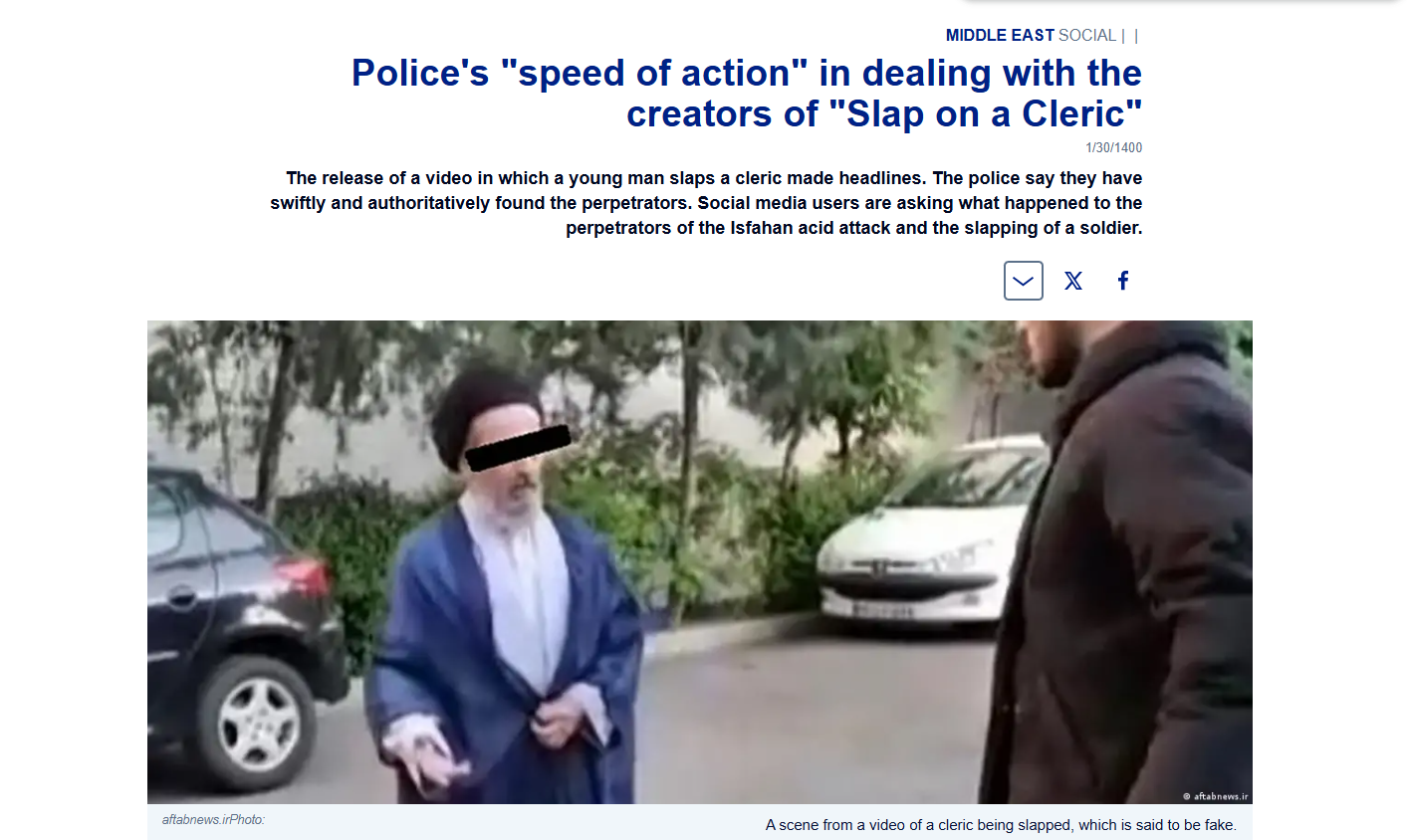
Further examination of reports by Fars News Agency revealed that Tehran police had conducted a detailed probe into the video at the time and declared it fake and pre-scripted. According to Tehran Police Chief Hossein Rahimi, the individual seen wearing religious attire was not a cleric. Here is the link to the original video, along with a screenshot: He was actually employed at a carpet cleaning shop in Tehran, while the man seen slapping him was his own son.
Police stated that the video was deliberately staged and circulated to provoke public sentiment and create unrest by falsely linking it to religious tensions. Both the father and son were arrested, and images of them in police custody were published in contemporaneous reports. Additional confirmation was found on the Independent Persian website, which had also reported on the incident on April 19, 2021, reiterating that the video was fabricated and unrelated to any protest movement. Here is the link to the original video, along with a screenshot:

Conclusion
The claim that the viral video shows an Iranian protester slapping a cleric during the current wave of protests is false. The video is from 2021, was scripted, and has no link to the ongoing demonstrations in Iran. It is being reshared with a misleading narrative to spread disinformation and inflame public sentiment.c
