
#FactCheck: AI-generated audio falsely attributed to Shah Rukh Khan in video claiming he reprimanded Saudi Arabia over Baljinder Singh’s death sentence
Executive Summary
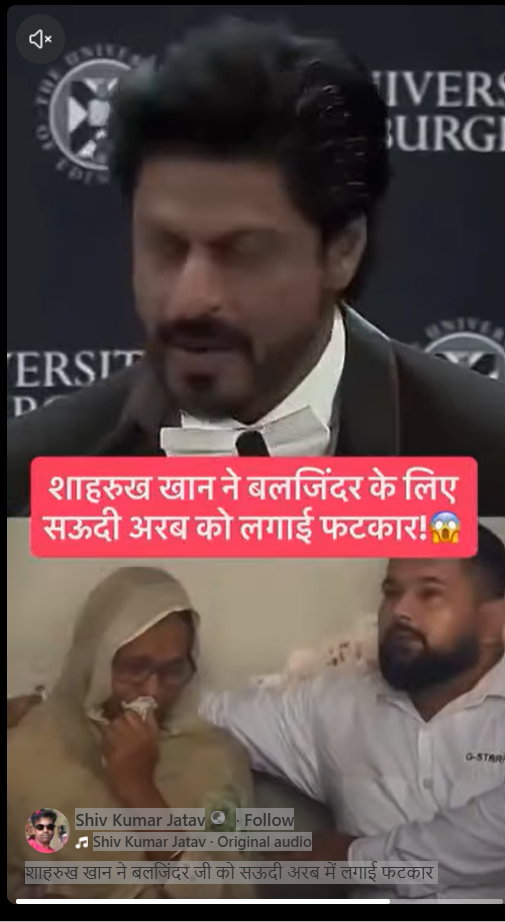
A video is being shared on social media with the claim that actor Shah Rukh Khan reprimanded Saudi Arabia over the death sentence awarded to Baljinder Singh.In the viral video, Shah Rukh Khan is purportedly heard saying, “Our simple and innocent brother Baljinder Singh, a resident of Sujanpur in Punjab’s Pathankot district, has been sentenced to death in Saudi Arabia after being falsely implicated in a drug case as part of a deep conspiracy. But stay strong, my brother.
Nothing will happen to you. I will definitely save you. Your brother is alive, and I swear that I will not let you die alone on that dreaded noose. Instead, I will put all my strength on the line and risk my life to pull you out of that hellish prison and bring you safely back to the soil of Punjab and the land of India.”
CyberPeace Research Wing’s research found the claim to be false. Our research found that the audio used in the viral video is AI-generated.
Claim:
A video is being shared on social media with the claim that actor Shah Rukh Khan reprimanded Saudi Arabia over the death sentence awarded to Baljinder Singh.
https://www.facebook.com/reel/1491107586179716
Fact Check
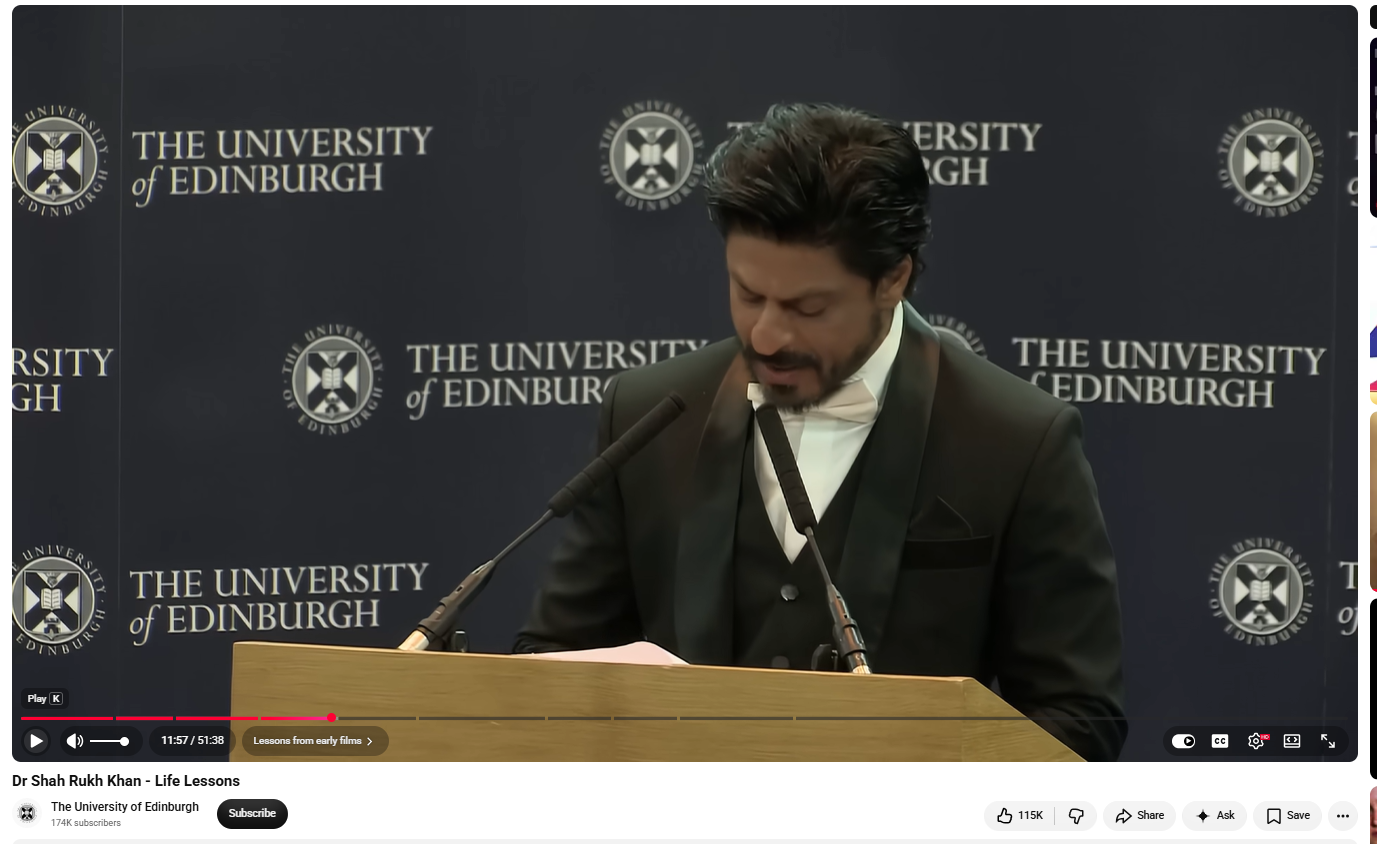
To verify the claim that Shah Rukh Khan reprimanded Saudi Arabia over the death sentence awarded to Baljinder Singh, we first conducted a Google search using relevant keywords. During the search, we did not find any information related to the viral claim in any credible media report.A reverse image search of the keyframes from the video led us to a video uploaded on The University of Edinburgh’s YouTube account on October 16, 2015, which contains the same segment seen in the viral clip. Notably, the background in the original video is identical to that seen in the viral clip.
In the original video, Shah Rukh Khan can be seen speaking about “life lessons”. During the event, he was conferred an honorary doctorate by the University of Edinburgh. In his address, he shared several unique lessons about life through some of his popular film characters. Shah Rukh Khan spoke about the importance of embracing one’s individuality, while combining humour with self-reflection. He also spoke about facing one’s fears and maintaining self-confidence amid challenges. Sharing anecdotes from his journey in films, Shah Rukh Khan explained how different characters had taught him to look at life from new perspectives.However, he makes no mention of Baljinder Singh anywhere in the video.
https://www.youtube.com/watch?v=VnnXAiTOLbo
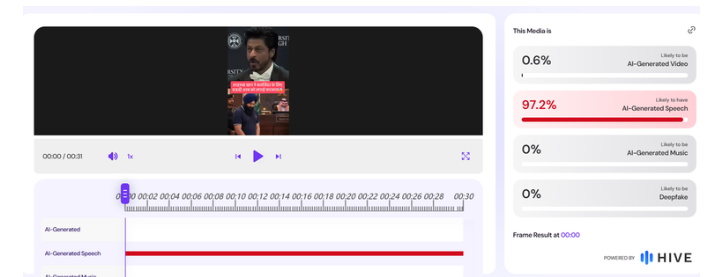
We then checked the viral video using Hive Detect, an AI detection tool. The tool’s analysis indicated that the voice of Shah Rukh Khan in the video was AI-generated, with a 97.2 per cent probability.
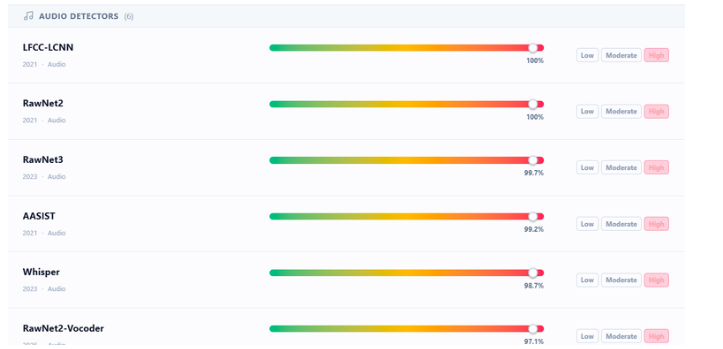
Additionally, six detectors on another AI detection tool, Deepfake-O-Meter, identified Shah Rukh Khan’s voice in the video as highly likely to be AI-generated.
Conclusion
The evidence gathered during our research makes it clear that the claim that Shah Rukh Khan reprimanded Saudi Arabia over the death sentence awarded to Baljinder Singh is false. The audio of Shah Rukh Khan in the viral video is AI-generated.

Related Blogs
Executive Summary
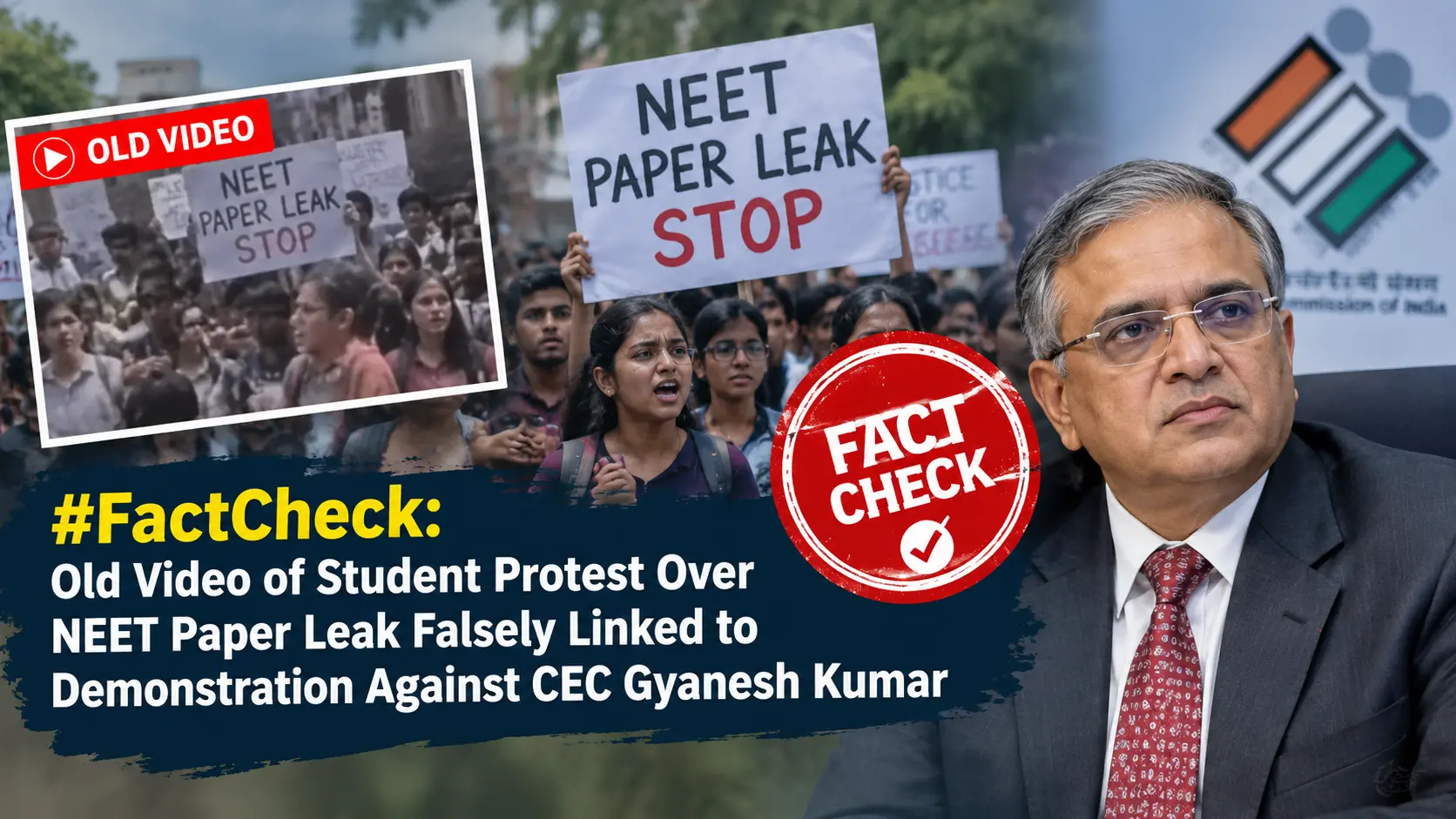
Reports of differences between the Chief Election Commissioner and the two Election Commissioners over the functioning of the Election Commission have emerged, following which protests were held across the country. Protesters demanding the resignation of Chief Election Commissioner Gyanesh Kumar took out a ‘Citizens March’ to Jantar Mantar on October 4, 2026. Against this backdrop, a video is being widely shared on social media. The video purportedly shows a CRPF personnel lathi-charging protesters. It is being shared with the claim that the footage is from the protest against Chief Election Commissioner Gyanesh Kumar at Jantar Mantar in Delhi. However, CyberPeace Research found the viral claim to be false. The viral video is not recent; it dates back to July 2026. At that time, students in Delhi were protesting over the alleged NEET paper leak and demanding the resignation of then Union Education Minister Dharmendra Pradhan.
Claim:
A Facebook user, ‘Kuldeep Pandit’, shared the viral video on October 4, 2026, with the caption: “The only thing left was the last ball, when Modi ji hit a six at the Jantar Mantar stadium and broke the backsides of traitors... Jantar Mantar is now under the control of the Indian Army, and the Army is giving freedom by the trolley load... Jai Shri Ram.”The archive link to the post can be viewed here.
https://www.facebook.com/reel/1807020453964507
https://perma.cc/RN8J-XV4K?type=standard

Fact Check
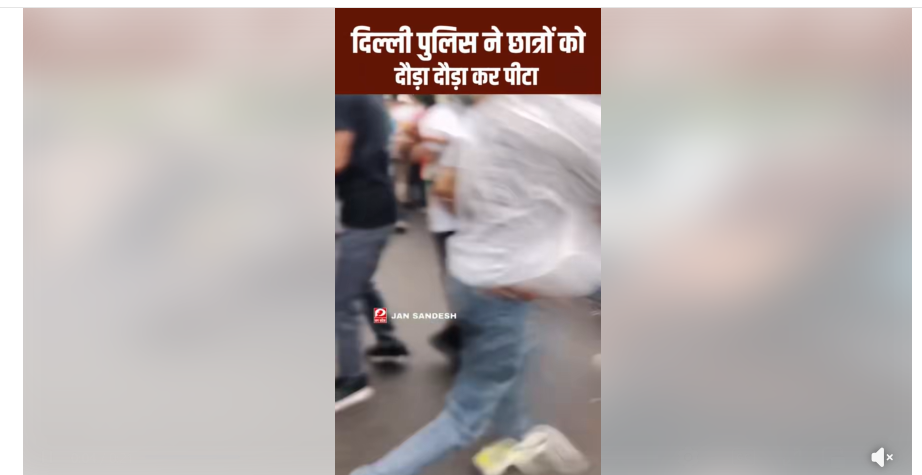
To verify the authenticity of the viral video, we extracted several keyframes using the InVID tool and conducted a reverse image search on Google. During the search, we found the viral video shared on a Facebook account named ‘Jansandesh News’ on July 21, 2026. According to the information provided with the post, the video shows a protest held at Jantar Mantar over the alleged NEET paper leak.
https://www.facebook.com/watch/?v=1786356329397999
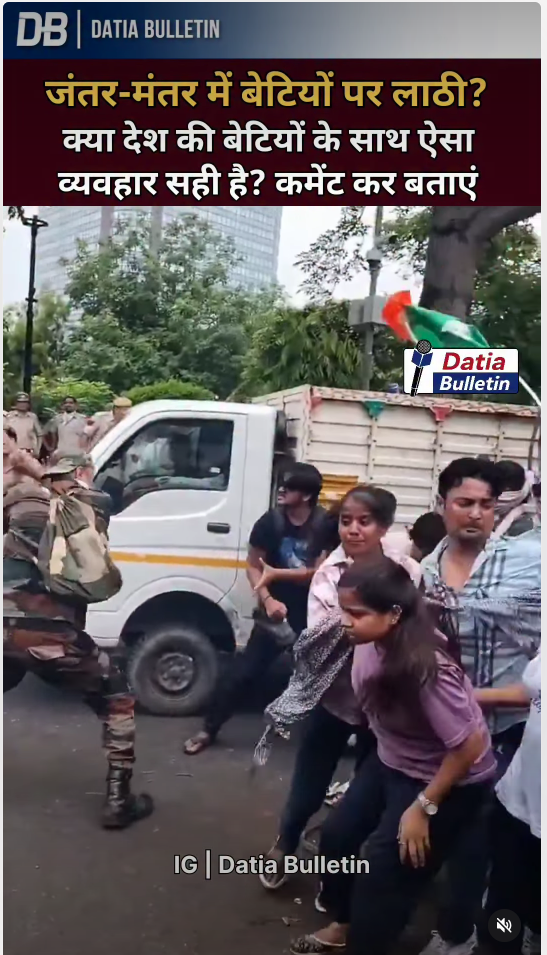
Based on the information obtained, we conducted a Google search using relevant keywords. We also found the viral video on an Instagram account named ‘datiabulletinofficial’. The video was shared on July 21, 2026, and was identified as footage from a protest held at Jantar Mantar. According to the caption, students were protesting over the alleged NEET paper leak and demanding the resignation of then Union Education Minister Dharmendra Pradhan.
https://www.instagram.com/reels/DbFXpGHzmwB/
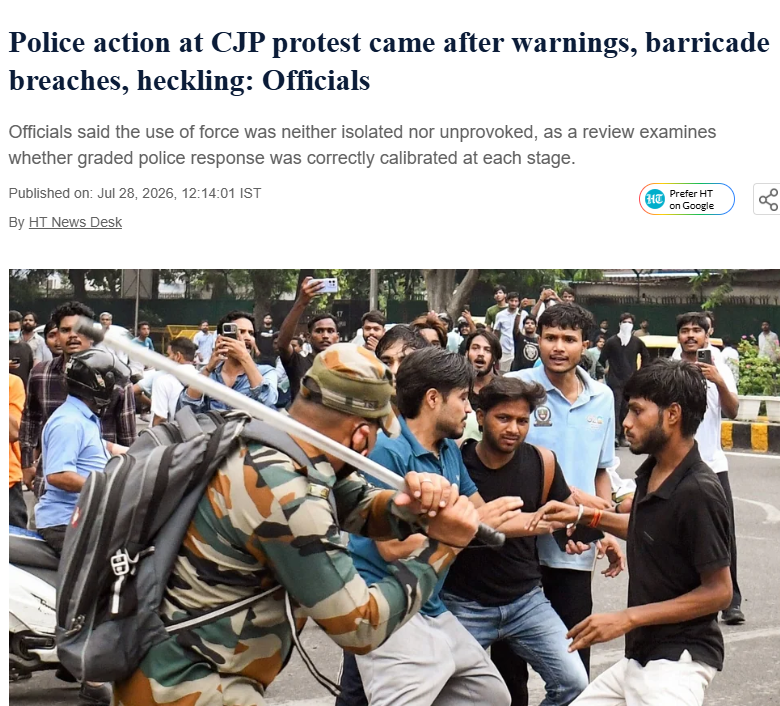
During our research, we found a news report related to the claim on the Hindustan Times website. The report was published on July 28, 2026. According to the report, “On July 20, students led by the ‘Cockroach Janta Party’ (CJP) marched towards Parliament. During the protest, police and Rapid Action Force (RAF) personnel lathi-charged the students, drawing considerable criticism. The Delhi Police later clarified that it would review the lathi-charge on the students and the action taken by the police.”The report also contains keyframes that closely resemble the visuals seen in the viral video.
Conclusion:
Our research found that the claim being made about the viral video of protesters being lathi-charged is false. The video dates back to July 2026, when students in Delhi held protests over the alleged NEET paper leak and demanded the resignation of then Union Education Minister Dharmendra Pradhan.

Introduction
The Indian government has developed the National Cybersecurity Reference Framework (NCRF) to provide an implementable measure for cybersecurity, based on existing legislations, policies, and guidelines. The National Critical Information Infrastructure Protection Centre is responsible for the framework. The government is expected to recommend enterprises, particularly those in critical sectors like banking, telecom, and energy, to use only security products and services developed in India. The NCRF aims to ensure that cybersecurity is protected and that the use of made-in-India products is encouraged to safeguard cyber infrastructure. The Centre is expected to emphasise the significant progress in developing indigenous cybersecurity products and solutions.
National Cybersecurity Reference Framework (NCRF)
The Indian government has developed the National Cybersecurity Reference Framework (NCRF), a guideline that sets the standard for cybersecurity in India. The framework focuses on critical sectors and provides guidelines to help organisations develop strong cybersecurity systems. It can serve as a template for critical sector entities to develop their own governance and management systems. The government has identified telecom, power, transportation, finance, strategic entities, government entities, and health as critical sectors.
The NCRF is non-binding in nature, meaning its recommendations will not be binding. It recommends enterprises allocate at least 10% of their total IT budget towards cybersecurity, with monitoring by top-level management or the board of directors. The framework may suggest that national nodal agencies evolve platforms and processes for machine-processing data from different sources to ensure proper audits and rate auditors based on performance.
Regulators overseeing critical sectors may have greater powers to set rules for information security and define information security requirements to ensure proper audits. They also need an effective Information Security Management System (ISMS) instance to access sensitive data and deficiencies related to operations in the critical sector. The policy is based on a Common but Differentiated Responsibility (CBDR) approach, recognising that different organisations have varying levels of cybersecurity needs and responsibilities.
India faces a barrage of cybersecurity-related incidents, such as the high-profile attack on AIIMS Delhi in 2022. Many ministries feel hamstrung by the lack of an overarching framework on cybersecurity when formulating sector-specific legislation. In recent years, threat actors backed by nation-states and organised cyber-criminal groups have attempted to target the critical information infrastructure (CII) of the government and enterprises. The current guiding framework on cybersecurity for critical infrastructure in India comes from the National Cybersecurity Policy of 2013. From 2013 to 2023, the world has evolved significantly due to the emergence of new threats necessitating the development of new strategies.
Significance in the realm of Critical Infrastructure
India faces numerous cybersecurity incidents due to a lack of a comprehensive framework. Critical Information Infrastructure like banking, energy, healthcare, telecommunications, transportation, strategic enterprises, and government enterprises are most targeted by threat actors, including nation-states and cybercriminals. These critical information sectors especially by their vary nature as they hold sensitive data make them prime targets for cyber threats and attacks. Cyber-attacks can compromise patient privacy, disrupt services, compromise control systems, pose safety risks, and disrupt critical services. Hence it is of paramount importance to come up with NCRF which can potentially address the emerging issues by providing sector-specific guidelines.
The Indian government is considering promoting the use of made-in-India products to enhance Cyber Infrastructure
India is preparing to recommend the use of domestically developed cybersecurity products and services, particularly for critical sectors like banking, telecom, and energy, to enhance national security in the face of escalating cybersecurity threats. The initiative aims to enhance national security in response to increasing cybersecurity threats.
Conclusion
Promoting locally made cybersecurity products and services in important industries shows India's commitment to strengthening national security. A step of coming up with the National Cybersecurity Reference Framework (NCRF) which outlines duties, responsibilities, and recommendations for organisations and regulators shows the critical step towards a comprehensive cybersecurity policy framework which is a need of the hour. The government underscoring made-in-India solutions and allocating cybersecurity resources underlines its determination to protect the country's cyber infrastructure in light of increasing cyber threats & attacks. The NCRF is expected to help draft sector-specific guidelines on cyber security.
References
- https://indianexpress.com/article/business/market/overhaul-of-cybersecurity-framework-to-safeguard-cyber-infra-govt-may-push-use-of-made-in-india-products-9133687/
- https://vajiramandravi.com/upsc-daily-current-affairs/mains-articles/national-cybersecurity-reference-framework-ncrf/
- https://m.toppersnotes.com/current-affairs/blog/to-push-cyber-infra-govt-may-push-use-of-made-in-india-products-DxQP
- https://appkida.in/overhaul-of-cybersecurity-framework-in-2024/

Introduction
The rise of artificial intelligence has transformed how individuals search for information, buy and compare products online. Unlike the traditional search engines like Google that presents the user with a set of links and directs users to websites, AI-powered systems provide synthesised answers and recommendations which means we don't have to click through every link to find what we are looking for, we simply have to ask an LLM and it provides recommendations based on our needs expressed through prompt. This development has raised important legal and commercial questions, one such question was addressed in the judgement of Indiamart Inter Mesh Limited v. Open AI Inc. and Others (2026 SCC OnLine Cal 5738) decided by HMJ Ravi Krishan Kapur of Calcutta High court on 20 May 2026. If an AI platform becomes a primary source of information, can a business demand inclusion in its responses? Is it a legal injury if the LLM omits a business? More fundamentally, how do the existing laws classify technologies that not only process information, but also generate new content? These were the questions that came before Calcutta High Court. Although the dispute arose from Indiamart’s complaint regarding visibility on ChatGPT search, the judgement explored beyond the disagreement between two private entities.
The Dispute
IndiaMart is one of India’s largest electronic business-to-business marketplaces since 1996, serving millions of buyers and sellers across India. They also have registered trademarks and their entire business depends on visibility on the internet considering the digitalisation of the market. Open AI launched ChatGPT search in October 2024, which is a feature that supplements AI responses with links to relevant web sources. Indiamart alleged that ChatGPT was not displaying links to their online platform in the same way that it displayed links to other competing services or individual sellers. A major grievance raised by Indiamart was that ChatGPT allegedly bypassed IndiaMart market listings by directing users to sellers’ individual websites while continuing to provide platform level links for other competing platforms. Hence, they contended that this practice diverted users away from their platform and negatively affected their business interests. The company argued that such exclusion amounted to discriminatory treatment and resulted in economic harm, diluted its trademarks and amounted to disparagement. They alleged that it violated their rights under article 14, 19, 21 under the constitution and rights under IT Act and IT Rules also. When IndiaMart sought an explanation from OpenAI, the company stated that its decision was influenced by the inclusion of IndiaMart in the United States Trade Representative (USTR) Review of Notorious Markets for Counterfeiting and Piracy 2024, a U.S. government report that identifies online and physical marketplaces alleged to facilitate intellectual property infringements. IndiaMart challenged this justification, arguing that the USTR report has no statutory or binding force in India. It further alleged selective discrimination, pointing out that several other platforms featured on the same USTR list including DHGate, Pinduoduo, Shopee, and Taobao continued to remain accessible through ChatGPT-generated responses. Consequently, IndiaMart approached the Calcutta High Court seeking interim relief directing ChatGPT to display and provide access to IndiaMart links in its responses.
ARGUMENTS BEFORE THE COURT
IndiaMart's contentions: They argued that ChatGPT, because its search feature, performs the role of an "intermediary" within the meaning of Section 2(1)(w) of the IT Act and is therefore required to comply with the obligations imposed under the Information Technology (Intermediary Guidelines and Digital Media Ethics Code) Rules, 2021. Relying on Rule 3(1)(n), IndiaMart argued that an intermediary cannot engage in discriminatory treatment of platforms or selectively restrict access to information. IndiaMart further maintained that users have a right to access information relating to its platform and that the omission of IndiaMart links from ChatGPT's responses violated this interest. They alleged violation of Articles 14, 19, and 21 of the Constitution, along with the broader principle of a user's "right to know", to argue that OpenAI owed an obligation to display IndiaMart listings in response to relevant queries. In addition, IndiaMart alleged that the exclusion of its links caused commercial harm, diluted its trademarks, amounted to disparagement, and constituted an unfair trade practice that adversely affected its business and reputation.
OpenAI's contentions: OpenAI asserted that IndiaMart had no legally enforceable ‘Right to visibility’ on ChatGPT. They argued that neither contract, statute, nor constitutional law imposed any obligation on OpenAI to display, prioritise, or recommend IndiaMart links in response to user queries. In the absence of any recognised legal right, there could be no actionable injury and therefore no valid cause of action. OpenAI also challenged the classification of ChatGPT as an "intermediary" under the Information Technology Act, 2000. According to OpenAI, ChatGPT does not merely host, transmit, or facilitate access to third-party content but also generates responses through its large language model (LLM) and therefore functions more closely as an "originator" than an intermediary. Consequently, the obligations applicable to intermediaries under the Information Technology (Intermediary Guidelines and Digital Media Ethics Code) Rules, 2021, including those relied upon by IndiaMart, were inapplicable. With respect to the USTR Notorious Markets List, OpenAI submitted that its reliance on the report formed part of its internal risk-management and business policies. Such decisions, it argued, were matters of private commercial judgment and not ordinarily subject to judicial review. OpenAI further pointed out that IndiaMart had also previously blocked ChatGPT from accessing and crawling its website that weakened the company's demand for greater visibility within ChatGPT-generated responses.
Court’s decision: The court rejected Indiamart's claim that they were entitled to be displayed in ChatGPT searches. The court emphasised the autonomy of private businesses, the court held that the right to carry on trade and business is "inviolable" and that no law can compel one private entity to operate their platform for the benefit of another, which is based on foundational economic philosophy of laissez faire. Unless there is a contractual, statutory or constitutional obligation, a platform has no duty to the other platform to promote or advance their economic interest. Applying this principle, the court found no such duty or “vested legal right” that entitled IndiaMart’s visibility on ChatGPT. The court reasoned that even if users possess the ‘right to know’, Indiamart could not convert that interest into an enforceable claim under article 19(1)(g) or other legal provision. The court looked at the dispute as one arising from commercial disadvantage rather than violation of any legally protected right. Although the reduced visibility may have had economic consequences, economic harm does not by itself create a cause of action.
The court also took into consideration whether ChatGPT should be classified as an intermediary under Section 2(1)(w) of the Information Technology Act, 2000 or as an originator under Section 2(1)(za). This was an important distinction, because the intermediaries can claim safe harbour protection under section 79 of the IT act, but the originators cannot. The court expressed a preliminary view that ChatGPT is generative capabilities, place it closer to an originator than an intermediary because, unlike conventional search engines, which identify and rank existing information, Generative AI systems, analyse the data and produce new output based on algorithms, which is in response to the user’s prompt. The Court also referenced the NITI Aayog National Strategy for Artificial Intelligence (pages 7 to 12) to support its observations that ChatGPT does not merely store, host or transmit information, it can produce essays, research material, code, creative writing, and other forms of content that did not previously exist in that exact form, hence extending beyond the conventional understanding of an intermediary. The court also recognised that it is a vexed issue and remains unsettled because AI systems operate in response to users instructions and do not function independently, which is why the court refrained from providing a definitive classification and acknowledged that the question may ultimately require legislative clarification as well.
In addition to this, the Court took the view that the IndiaMart’s grievances did not amount to an Intellectual property dispute, as they found no trademark infringement or dilution because any reference to the "IndiaMart" mark was merely descriptive and did not constitute commercial use "in the course of trade" under Section 29(4) of the Trade Marks Act. IndiaMart also hadn’t demonstrated any false or misleading use of its trademark.
Similarly, the Court found that claims of disparagement, trade libel, and injurious falsehood were unsustainable because such claims require the publication of a false statement that harms reputation and since ChatGPT had not published any derogatory statement about IndiaMart, the mere omission of links could not amount to disparagement or libel. The Court relied on Tech Plus Media v. Jyoti Janda, that allegations of unfairness or copyright infringement must be supported by specific pleadings and evidence.
Beyond the immediate dispute, the judgment shed light on the growing difficulty of applying legal categories created for an earlier internet era to generative AI systems. The Information Technology Act was enacted at a time when internet regulation focused primarily on websites, service providers, and electronic communications and therefore existing classifications may not adequately address the hybrid nature of contemporary AI technologies. The Court acknowledged OpenAI's concern that granting IndiaMart's request could trigger floodgates of litigation on similar claims from businesses dissatisfied with AI-generated visibility, however, it clarified that such concerns cannot outweigh genuine legal claims or fundamental rights. The Court suggested that legislative intervention may eventually be necessary.
Conclusion
This judgement not only addressed the visibility issue in AI generated responses, but also whether visibility itself can become a legally protected interest in AI-driven searches? As more and more users rely on AI generated output for their preference rather than traditional search engine output, the power to decide what information is displayed and what is not will eventually become economically significant. The Calcutta High Court through this judgement declined to create any such right through judicial interventions and also highlighted that the existing legal framework is not adequately equipped to address the novel challenges posed by generative AI.
(This blog is based on the judgment in Indiamart Inter Mesh Limited v. Open AI Inc. and Others, 2026 SCC OnLine Cal 5738, decided on May 20, 2026 by the Calcutta High Court, and related reporting by LiveLaw and SCC Times.)
References
- https://www.livelaw.in/high-court/calcutta-high-court/no-right-to-visibility-exists-on-private-ai-platforms-calcutta-high-court-refuses-to-direct-chatgpt-to-display-indiamart-links-536891
- https://www.scconline.com/blog/post/2026/06/03/chatgpt-intermediary-originator-it-act-calcutta-high-court/
- https://indiankanoon.org/doc/198449710/
