
#FactCheck- Viral ‘Modi Massage Video’ Claim False, Features Content Creators
Executive Summary
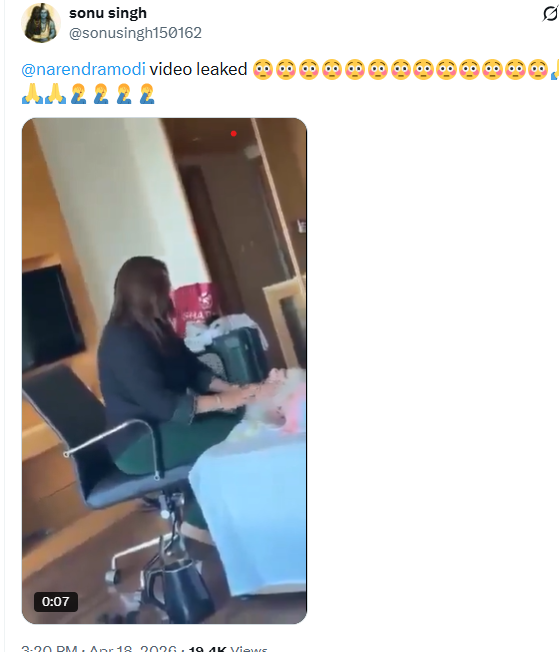
A video showing a woman giving a facial massage to an elderly man with a white beard is going viral on social media, with users claiming that the man is Prime Minister Narendra Modi. Some posts describe it as a “leaked massage video” of the Prime Minister, while others sarcastically link it to the glow on his face. However, research by the CyberPeace Research Wing found that the claim is false. The viral video has no connection to Narendra Modi and is being shared with a misleading narrative.
Claim
An X user named Sonu Singh shared the video with the caption: “Narendra Modi video leaked.”
Fact Check
To verify the claim, we extracted keyframes from the viral video and conducted a reverse image search. This led us to the same video uploaded on April 12, 2026, on the Instagram and Facebook pages of content creator Pradeep Kaur Dhillon, where it was captioned “Massage time.”


Further checks revealed another similar video posted on March 28, 2026, on the same social media accounts, with the caption: “Stylish, Spa day for him… kyunki self-care sirf ladies layi nahi.”
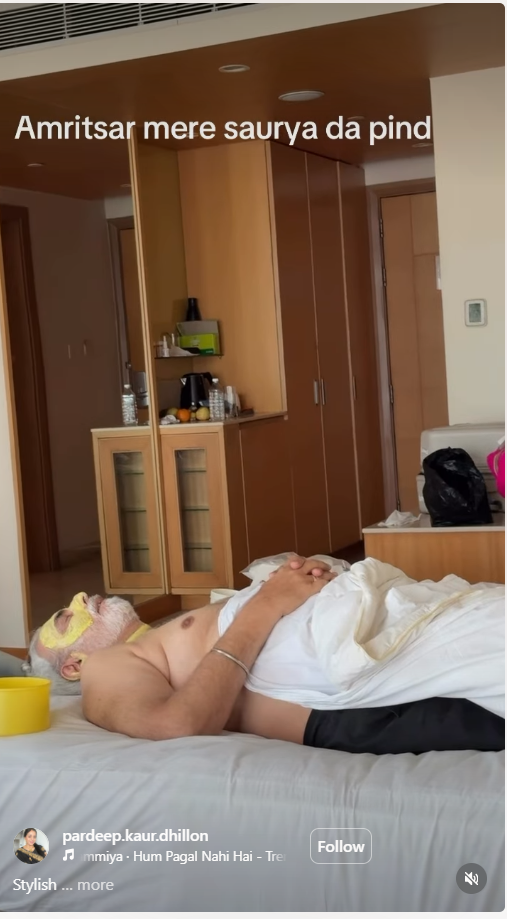
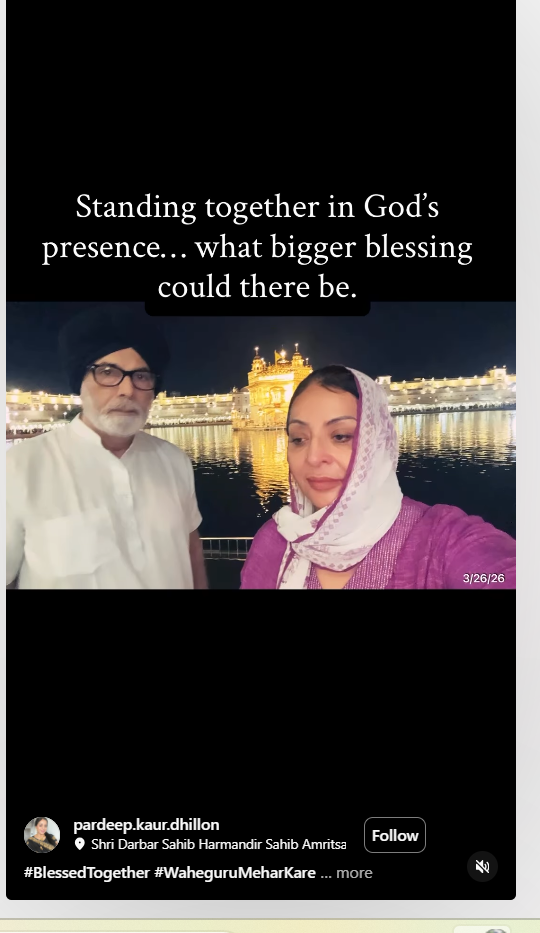
During the research, we also found that the man seen in the video is Jaspal Singh, Dhillon’s partner, who frequently appears in her social media posts. According to publicly available profile details, the duo resides in New Jersey, USA, and originally belongs to Amritsar, Punjab, India.
Conclusion
The viral claim is false. The video does not show Prime Minister Narendra Modi. It features content creators Pradeep Kaur Dhillon and Jaspal Singh and is being circulated online with a false and misleading claim.

Related Blogs

Executive Summary:
A photographer breaking down in tears in a viral photo is not connected to the Ram Mandir opening. Social media users are sharing a collage of images of the recently dedicated Lord Ram idol at the Ayodhya Ram Mandir, along with a claimed shot of the photographer crying at the sight of the deity. A Facebook post that posts this video says, "Even the cameraman couldn't stop his emotions." The CyberPeace Research team found that the event happened during the AFC Asian Cup football match in 2019. During a match between Iraq and Qatar, an Iraqi photographer started crying since Iraq had lost and was out of the competition.
Claims:
The photographer in the widely shared images broke down in tears at seeing the icon of Lord Ram during the Ayodhya Ram Mandir's consecration. The Collage was also shared by many users in other Social Media like X, Reddit, Facebook. An Facebook user shared and the Caption of the Post reads,


Fact Check:
CyberPeace Research team reverse image searched the Photographer, and it landed to several memes from where the picture was taken, from there we landed to a Pinterest Post where it reads, “An Iraqi photographer as his team is knocked out of the Asian Cup of Nations”

Taking an indication from this we did some keyword search and tried to find the actual news behind this Image. We landed at the official Asian Cup X (formerly Twitter) handle where the image was shared 5 years ago on 24 Jan, 2019. The Post reads, “Passionate. Emotional moment for an Iraqi photographer during the Round of 16 clash against ! #AsianCup2019”

We are now confirmed about the News and the origin of this image. To be noted that while we were investigating the Fact Check we also found several other Misinformation news with the Same photographer image and different Post Captions which was all a Misinformation like this one.
Conclusion:
The recent Viral Image of the Photographer claiming to be associated with Ram Mandir Opening is Misleading, the Image of the Photographer was a 5 years old image where the Iraqi Photographer was seen Crying during the Asian Cup Football Competition but not of recent Ram Mandir Opening. Netizens are advised not to believe and share such misinformation posts around Social Media.
- Claim: A person in the widely shared images broke down in tears at seeing the icon of Lord Ram during the Ayodhya Ram Mandir's consecration.
- Claimed on: Facebook, X, Reddit
- Fact Check: Fake

Executive Summary
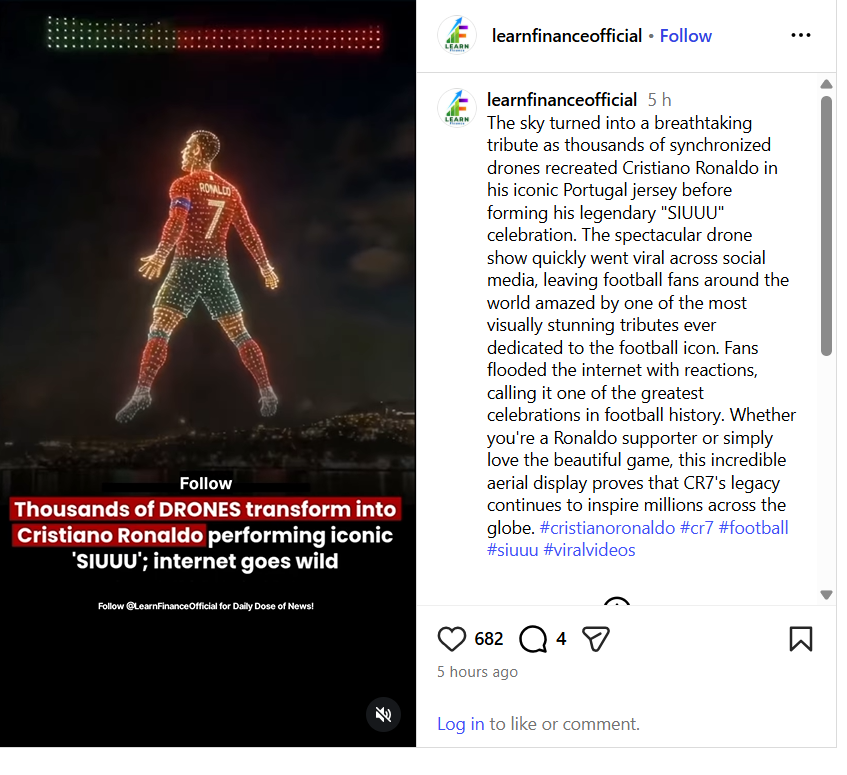
A video is being widely circulated on social media showing thousands of drones forming an image of Cristiano Ronaldo wearing his iconic Portugal jersey over what appears to be a water body. Moments later, the drones are seen creating his famous “SIUUU” celebration pose. The video is being shared with the claim that this spectacular aerial drone show was organised as a tribute to Ronaldo.
CyberPeace Research Wing’s research found the viral claim to be false. The research revealed that the video is not a real drone display but was created using Artificial Intelligence (AI) and is being circulated with a misleading claim.
Claim
The viral video is being shared on social media with the claim that the drone show was organised in honour of Cristiano Ronaldo.
https://www.instagram.com/reel/DamaeegILpU/?igsh=NmtjOTN4cWJzenJ1
Fact Check
To verify the claim, we extracted multiple keyframes from the viral video and conducted a reverse image search using Google Lens. During the research, we did not find any credible video, news report, or reliable source confirming that such a drone show was organised for Cristiano Ronaldo.
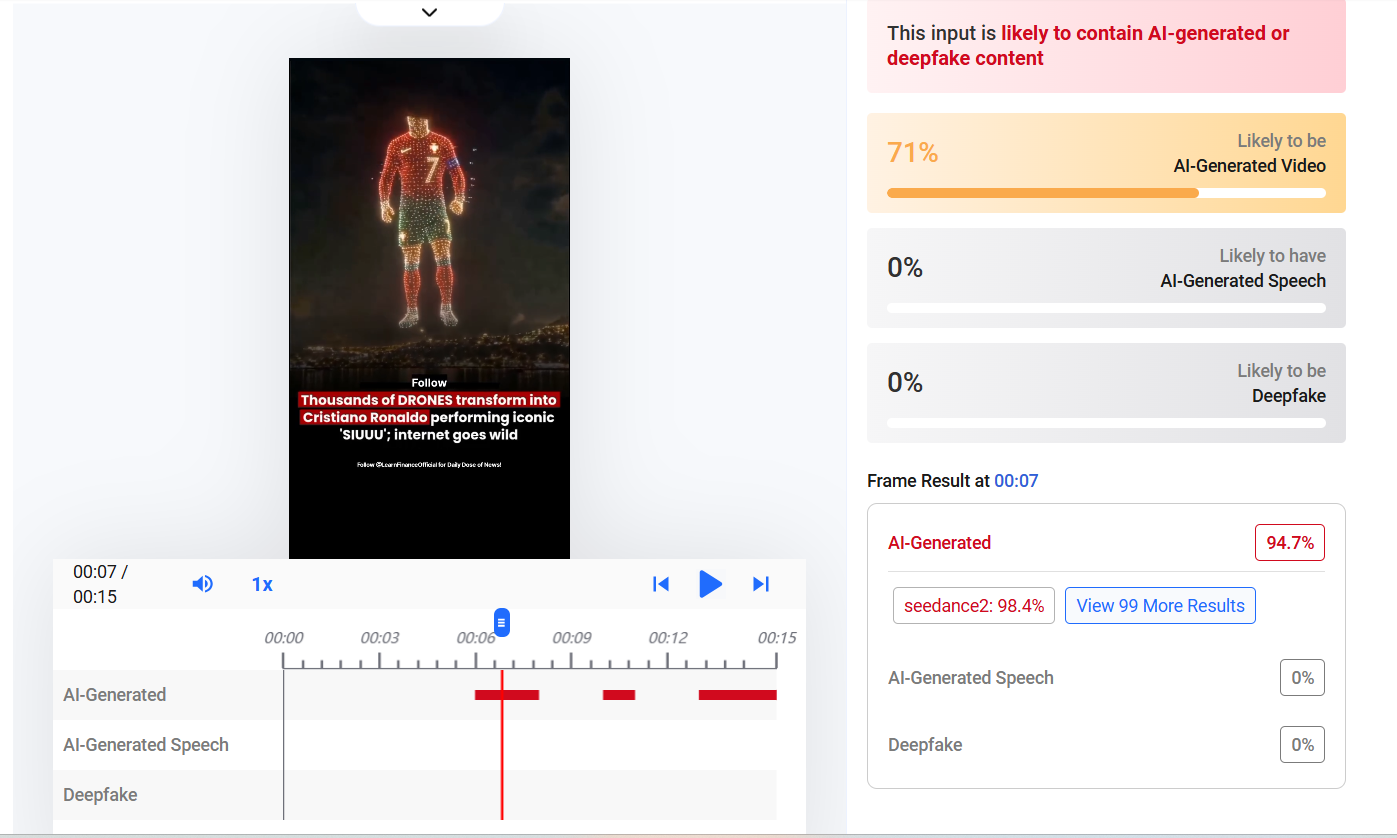
In the next stage of the research, we analysed the video using the AI detection tool Hive Moderation. The tool’s results indicated that the viral video had a 71% probability of being AI-generated.
For further verification, we checked the video using another AI detection tool, DetectVideo AI. The analysis showed that the video had an 80% probability of being AI-generated.

At the final stage of the research, the video was also analysed using Deepfake-O-Meter. The tool indicated an almost 100% probability that the video was AI-generated.

Conclusion
Our research found that the viral claim is false. The video does not show a real drone show organised in honour of Cristiano Ronaldo. The footage was found to be AI-generated and is being circulated on social media with a false narrative.

Executive Summary:
A video circulating online claims to show a man being assaulted by BSF personnel in India for selling Bangladesh flags at a football stadium. The footage has stirred strong reactions and cross border concerns. However, our research confirms that the video is neither recent nor related to the incident that occurred in India. The content has been wrongly framed and shared with misleading claims, misrepresenting the actual incident.
Claim:
It is being claimed through a viral post on social media that a Border Security Force (BSF) soldier physically attacked a man in India for allegedly selling the national flag of Bangladesh in West Bengal. The viral video further implies that the incident reflects political hostility towards Bangladesh within Indian territory.

Fact Check:
After conducting thorough research, including visual verification, reverse image searching, and confirming elements in the video background, we determined that the video was filmed outside of Bangabandhu National Stadium in Dhaka, Bangladesh, during the crowd buildup prior to the AFC Asian Cup. A match featuring Bangladesh against Singapore.

Second layer research confirmed that the man seen being assaulted is a local flag-seller named Hannan. There are eyewitness accounts and local news sources indicating that Bangladeshi Army officials were present to manage the crowd on the day under review. During the crowd control effort a soldier assaulted the vendor with excessive force. The incident created outrage to which the Army responded by identifying the officer responsible and taking disciplinary measures. The victim was reported to have been offered reparations for the misconduct.

Conclusion:
Our research confirms that the viral video does not depict any incident in India. The claim that a BSF officer assaulted a man for selling Bangladesh flags is completely false and misleading. The real incident occurred in Bangladesh, and involved a local army official during a football event crowd-control situation. This case highlights the importance of verifying viral content before sharing, as misinformation can lead to unnecessary panic, tension, and international misunderstanding.
- Claim: Viral video claims BSF personnel thrashing a person selling Bangladesh National Flag in West Bengal
- Claimed On: Social Media
- Fact Check: False and Misleading
