
#FactCheck- Brigadier Assault in Delhi Not Linked to Dance Club or Military Operation
Executive Summary
Misleading claims related to an incident in Delhi are being widely circulated on social media. Several posts allege that an Indian Army brigadier and his son were assaulted while returning from a “dance club party.” The posts further claim that the attack was triggered by remarks related to “Operation Sindoor.” However, research by the CyberPeace found that these claims are completely false and fabricated.
Claim
On social media platform X, some users (including @ManipurPost5) shared posts claiming that an Indian Army brigadier and his son were attacked after returning from a dance club. The posts also alleged that the altercation escalated after someone mocked “Operation Sindoor.”
Fact check
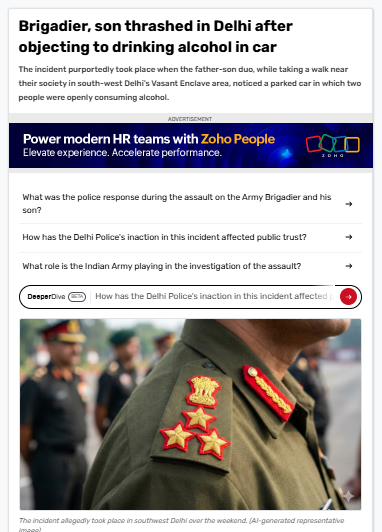
To verify the claim, we conducted keyword searches on Google and found a report published by Republic World on April 14, 2026, which included visuals similar to those being circulated.

According to the report, the victims were identified as Brigadier Parminder Singh Arora, a serving Indian Army officer, and his son Tejas Arora. At the time of the incident, they were taking a walk near their residence after dinner. Reports state that they noticed a group of individuals consuming alcohol inside a parked car in a public place and objected to it. This led to an argument, which later escalated into a violent assault. Around 7–8 individuals allegedly attacked the brigadier and his son, with the son sustaining more serious injuries. Questions have also been raised about the role of police personnel present at the scene. Following the complaint, a case was registered, one police constable was suspended, and two accused individuals have been arrested so far. The vehicle involved has also been seized. Further verification led us to another report published by India Today on April 14, 2026, which corroborated the same details of the incident.
Conclusion
The viral claim is misleading and entirely false.The incident has no connection to any “dance club party” or to “Operation Sindoor.” In reality, the altercation began after the brigadier objected to public drinking near his residence.

Related Blogs

In the digital era of the present day, a nation’s strength no longer gets measured only by the number of missiles or aircraft it has in its inventory. Rather, it also calls for defending the digital borders. Major infrastructures like power grids and dams are increasingly being targeted by cyberattacks in the global security environment that modern militaries operate in. When communication channels are vulnerable to an information breach, cybersecurity becomes a crucial component of national defence.
Why is cybersecurity a crucial national security concern in the modern era?
The technologies and procedures that shield digital devices, networks, and systems from unwanted access or attacks are referred to as cybersecurity. Cyberattacks are silent in the context of national security, in contrast to conventional warfare. They are swift and are also capable of causing a massive disruption without even a single case of physical infiltration. However, hostile states, terrorist organisations, or criminal networks may be able to steal any classified information or disrupt military infrastructure due to a cybersecurity breach in a military network.
To fully comprehend the significance of cybersecurity, let's examine the various approaches, such as:
- Protecting critical infrastructures- Today's nations rely heavily on digital networks to run vital services like banking, transportation, electricity, water supply, and healthcare. Therefore, a cyberattack on these systems could cause problems across the country and interfere with our daily activities. Therefore, it is also seen that the military forces of a nation closely work in synergy with other government agencies and private organizations to create a strong ecosystem of security in this sector.
- Safeguarding military operations in the present age- The armed forces heavily rely on digital tools for communication, mission planning, surveillance, and coordination. In case the cyber intruders get access to those systems, then a lot of major operational hurdles can come up in the form of breach of mission details, disruption of channels, and compromise of the confidentiality of military operations. These are certain conditions that make cybersecurity an important aspect for protecting the physical bases and the security architectures.
- Preventing cyber warfare- With the evolution of the geopolitical landscape, state and non-state actors are now resorting to cyberattacks to gather intelligence, disrupt security networks, and influence political outcomes. Still, strong cybersecurity can help nations to ensure, detect, defend, and respond to threats in an effective manner.
- Securing government databases- The government databases are known for storing sensitive information about the citizens, military assets, diplomatic data, and vital information related to major national infrastructures. If these get compromised, then it can weaken the strategic position of the nation and put the national security of the nation at a grave risk. Therefore, it becomes necessary to protect government data as a priority.
How can countries improve their cybersecurity defences?
Countries all over the world are developing their cyber capabilities using a variety of tactics to protect against the increasing number of cyber threats. A few of these can be interpreted as;
- Creating cyber defence units- The majority of contemporary armed forces have created specialised cyber domains devoted to threat identification. Their responsibilities have been centred on keeping an eye on those dangers, stopping intrusions, and reacting quickly to cyberattacks.
- Public-Private Partnerships- To safeguard vital industries like energy grids, financial networks, and communication systems, the government collaborates with private businesses and technology suppliers. Additionally, these collaborations foster innovation to improve the overall defence against cyberattacks.
- Establishing international collaborations- Cyber threats do not respect our borders. As a result, which countries are increasing their share of intelligence, best practices, and defensive strategies with their allies? Groups like NATO have conducted a joint cyber defence exercise to prepare for dealing with a digital future.
However, these collaborations can help to develop a united front against cybercrime.
Core Pillars of the modern military cyber defence
The modern defence strategies have been built upon several key designated pillars that are designed to prevent, detect, and respond to cyber threats, which can be mentioned as;
- Cyberspace as an operational domain- Militaries have now begun to treat cyberspace like the land, air, sea, and space as domains where wars can both begin and also end. Developing some dedicated cyber units to conduct digital operations to defend networks and engage in a range of counter-cyber activities when required.
- Active and proactive defence- Instead of passively waiting for the attacks to happen, real-time monitoring tools are used for blocking the threats that arise. Proactive defence goes a step further by hunting for potential threats before they can reach the networks.
- • Protection of vital infrastructures- The armed forces collaborate closely with civilian organisations and agencies to secure vital infrastructures that are important to the country. Critical infrastructure is protected from cyberattacks by layered defence, which includes encryption, stringent access control, and ongoing monitoring.
- • Strengthening alliances- Countries can develop a strong and well-coordinated defence system by exchanging intelligence to carry out cooperative cyber operations.
- Fostering innovation for the development of a workforce- Cyber threats evolve at a rapid pace, which calls for the military to invest in advanced technologies like AI-driven systems, secure cloud technologies, besides ensure continuous training related to cybersecurity.
Conclusion
The modern militaries have adopted the method of protecting digital networks to defend their land and seas. Cybersecurity has become the new line of defence to protect government data and vital defence infrastructure from serious and unseen threats. The countries are building a secure, robust, and resilient digital future with the aid of solid alliances, cutting-edge technologies, knowledgeable workers, and a proactive defence strategy.
References
- https://www.ssh.com/academy/cyber-defense-strategy-dod-perspective#:~:text=Defence%20organizations%20are%20prime%20targets,SSH%20Key%20Management%20and%20Compliance
- https://www.fortinet.com/resources/cyberglossary/cyber-warfare#:~:text=Advanced%20endpoint%20security%20adds%20proactive,information%20by%20halting%20unauthorized%20transfers
- https://medium.com/@lynnfdsouza/the-impact-of-cyber-warfare-on-modern-military-strategies-c77cf6d1a788
- https://ccoe.dsci.in/blog/why-cybersecurity-is-critical-for-national-defense-protecting-countries-in-the-digital-age

Introduction
The whole world is shifting towards a cashless economy, with innovative payment transaction systems such as UPI payments, card payments, etc. These payment systems require processing, storage, and movement of millions of cardholders data which is crucial for any successful transaction.
And therefore to maintain the credibility of this payment ecosystem, security or secure movement and processing of cardholders data becomes paramount. Entities involved in a payment ecosystem are responsible for the security of cardholders data. Security is also important because if breaches happen in cardholders data it would amount to financial loss. Fraudsters are attempting smart ways to leverage any kind of security loopholes in the payment system.
So these entities which are involved in the payment ecosystem need to maintain some security standards set by one council of network providers in the payment industry popularly known as the Payment Card Industry Security Standard Council.
Overview of what is PCI and PCI DSS Compliance
Earlier every network providers in the payment industry have their own set of security standards but later they all together i.e., Visa, Mastercard, American Express, Discover, and JCB constituted an independent body to come up with comprehensive security standards like PCI DSS, PA DSS, PCI-PTS, etc. And these network providers ensure the enforcement of the security standards by putting conditions on services being provided to the merchant or acquirer bank.
In other words, PCI DSS particularly is the global standard that provides a baseline of technical and operational requirements designed to protect account data. PCI DSS is a security standard specially designed for merchants and service providers in the payment ecosystem to protect the cardholders data against any fraud or theft.
It applies to all the entities including third-party vendors which are involved in processing storing and transmitting cardholders data. In organization, even all CDE (Card Holder Data Environment) including system components or network component that stores and process cardholders data, has to comply with all the requirements of PCI compliance. Recently PCI has released a new version of PCI DSS v4.0 a few months ago with certain changes from the previous version after three years of the review cycle.
12 Requirements of PCI DSS
This is the most important part of PCI DSS as following these requirements can make any organization to some extent PCI compliant. So what are these requirements:
- Installing firewalls or maintaining security controls in the networks
- Use strong password in order to secure the CDE( Card holders data environment)
- Protection of cardholder data
- Encrypting the cardholder data during transmission over an open and public network.
- Timely detection and protection of the cardholders data environment from any malicious activity or software.
- Regular updating the software thereby maintaining a secure system.
- Rule of business need to know should apply to access the cardholders data
- Identification and authentication of the user are important to access the system components.
- Physical access to cardholders data should be restricted.
- Monitoring or screening of system components to know the malicious activity internally in real-time.
- Regular auditing of security control and finding any vulnerabilities available in the systems.
- Make policies and programs accordingly in order to support information security.
How organization can become PCI compliant
- Scope: First step is to determine all the system components or networks storing and processing cardholders data i.e., Cardholders Data Environment.
- Assess: Then test whether these systems or networks are complying with all the requirements of PCI DSS COMPLIANCE.
- Report: Documenting all the assessment through self assessment questionnaire by answering following questions like whether the requirements are met or not? Whether the requirements are met with customized approach.
- Attest: Then the next step is to complete the attestation process available on the website of PCI SSC.
- Submit: Then organization can submit all the documents including reports and other supporting documents if it is requested by other entities such as payment brands, merchant or acquirer.
- Remediate: Then the organisation should take remedial action for the requirements which are not in place on the system components or networks.
Conclusion
One of the most important issues facing those involved in the digital payment ecosystem is cybersecurity. The likelihood of being exposed to cybersecurity hazards including online fraud, information theft, and virus assaults is rising as more and more users prefer using digital payments.
And thus complying and adopting with these security standards is the need of the hour. And moreover RBI has also mandated all the regulated entities ( NBFCs Banks etc) under one recent notification to comply with these standards.
Introduction
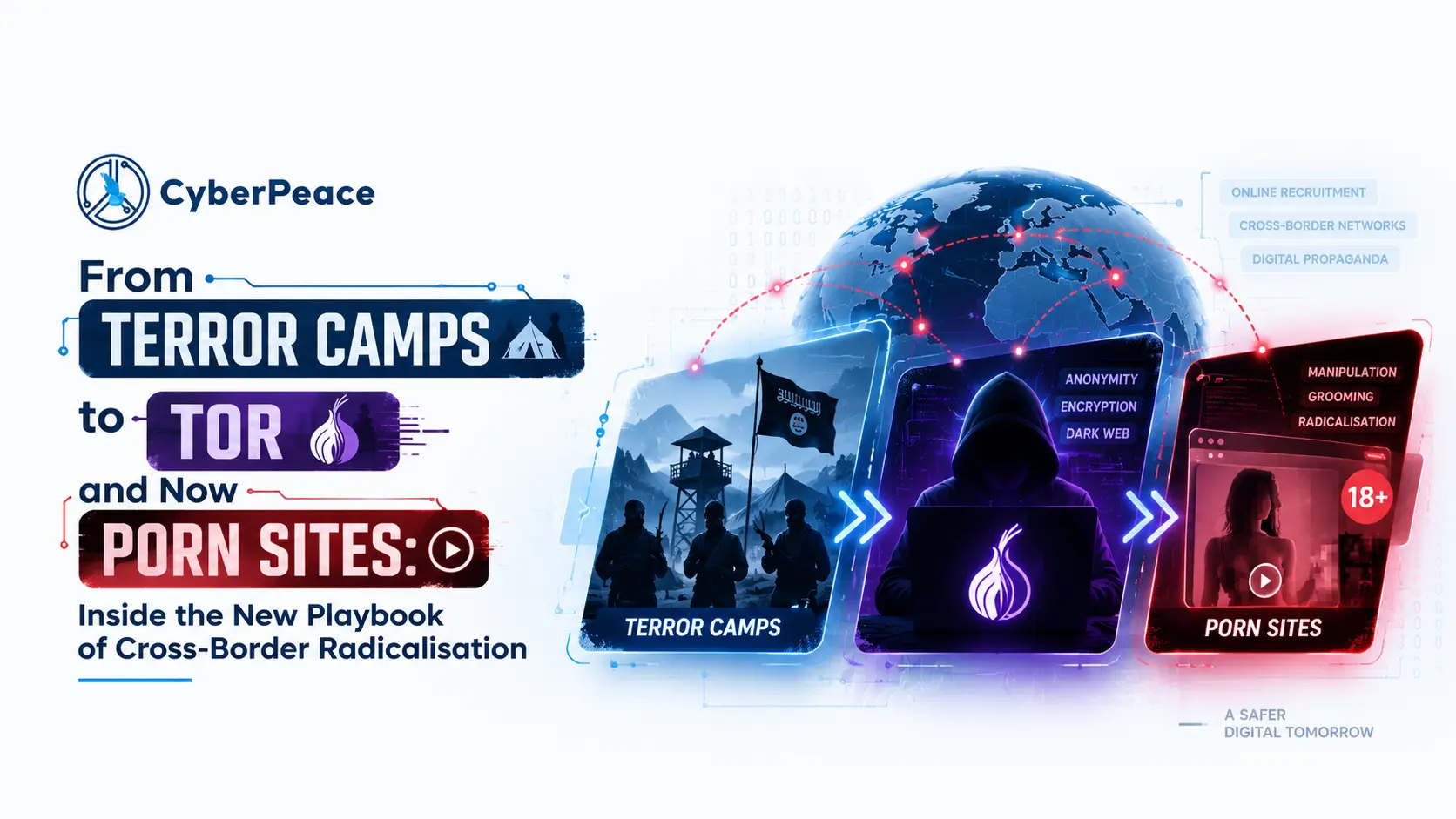
For years, the story of terror recruitment in Jammu & Kashmir followed a familiar arc: physical infiltration across the Line of Control, local Over Ground Workers (OGWs) acting as couriers, and recruitment pitches on mainstream apps like WhatsApp and Facebook Messenger. Indian security agencies built entire surveillance architectures around that arc. Now, officials say, the architecture is being outflanked in a way few anticipated: through pornography and dating platforms.
The New Front: Chat Rooms Nobody Is Watching
According to officials cited in recent reporting, Pakistan-based terror handlers working in coordination with Pakistan's ISI have begun exploiting the real-time chat features built into pornography and dating websites to reach recruits in Jammu & Kashmir. These pornography platforms feature real-time chat tools that operate under the guise of helping users find dates nearby, and handlers are exploiting that feature to broadcast messages and coordinate activities. It's a strikingly mundane pivot for an organisation engaged in violent extremism, but that is precisely the point that nobody expects a counter-terror dragnet to be watching a dating chatbox.
Officials say the tactic is designed to evade the surveillance that has become standard on conventional social media platforms, allowing handlers to convey instructions to recruits while staying off the radar of established monitoring tools. WhatsApp, Signal and Facebook Messenger have all, in various ways, become known quantities to Indian intelligence subject to legal intercepts, metadata analysis and years of institutional familiarity. A chat window buried inside an adult content site is not.
Tor, Encrypted Nodes, and Apps Built to Disappear
Other than porn sites, investigators have also flagged a cluster of niche, privacy-first messaging apps that route traffic through Tor-based, encrypted nodes to mask user identity. Security agencies have placed a wide array of specialised digital tools under scrutiny, with terror handlers relying on Tor-based messaging applications like Coatex and Conion to route data through encrypted nodes and obscure user identities. Access to at least one of these apps' installation files is reportedly already restricted within India, though enforcement against sideloaded Android packages remains an uphill battle.
What makes these platforms attractive to handlers isn't unique code so much as the design philosophy behind privacy-first messaging generally. Some of these apps offer only basic encryption, while others go further with end-to-end encryption, self-destructing messages, and strong on-device encryption algorithms that keep data processing off any third-party server. Several reportedly allow account creation without a phone number or SIM verification, stripping away one of the most basic identity anchors that Indian telecom-linked surveillance depends on.
There's also an operational, almost logistical, reason for the shift: connectivity. Officials note that some of these applications provide end-to-end encryption, self-destructing messages and registration without a phone number or email, making it difficult for security agencies to trace users, even as terror networks also shift away from commonly used platforms. In the hilly, forested and often poorly connected terrain of Jammu's border districts, apps engineered to function on weak 2G or EDGE networks have an obvious tactical advantage over data-hungry mainstream platforms.
VPNs, Banned Apps, and a Cat-and-Mouse Game
Virtual Private Networks add another layer of obfuscation, letting operatives access apps banned in India and mask the geographic origin of their traffic. This isn't new tradecraft, but its pairing with adult-content chat infrastructure and Tor-routed messaging represents a genuinely novel combination in the Kashmir context, according to the officials describing the pattern to reporters.
The broader trend line, officials say, is a steady migration away from platforms Indian agencies have learned to monitor. Terror networks are increasingly moving away from mainstream, commonly used platforms in favour of more obscure alternatives, forcing intelligence agencies into a perpetual game of catch-up: each time a monitoring capability matures against one platform, handlers migrate to the next.
This is not the first time investigators have flagged this cat-and-mouse dynamic. Reporting on a recent case in Jammu's Bathindi area described a 19-year-old allegedly radicalised through the encrypted app. Session the same platform reportedly linked to suspects in a Delhi bomb plot investigation after months of contact with Pakistan-based handlers. Investigators in that case noted that terror organisations have increasingly turned to multi-layered encrypted messaging services specifically to evade monitoring by intelligence agencies.
The Virtual SIM Problem
Alongside app-layer evasion, foreign-issued virtual SIM cards remain a persistent headache for investigators. The most cited example remains the 2019 Pulwama attack investigation, in which agencies reportedly traced more than 40 virtual SIM cards to the Jaish-e-Mohammed suicide bomber and his network numbers that could be provisioned and abandoned without ever touching an Indian telecom's KYC system. That case became something of a template for how virtual and foreign-registered numbers can be used to build communication chains that are extremely difficult to map after the fact, since there is no physical SIM, no retail purchase record, and often no domestic carrier data trail at all.
More recent J&K cases echo the same pattern in a different form. Police investigating a cross-border radicalisation network noted that intelligence agencies now suspect unauthorised SIM card distribution is being used by terrorists to communicate with handlers across the border, part of a broader push to choke off the logistical and communication backbone that keeps sleeper modules alive even when direct physical contact with a local handler is minimal or non-existent.
How Agencies Are Responding
To their credit, security agencies aren't standing still. Officials say cyber-surveillance frameworks are actively being redesigned to map and intercept these "off-grid" communication channels, a phrase that itself signals how far outside traditional monitoring territory this recruitment method has moved. Agencies say they continue to adapt their cyber-surveillance frameworks specifically to map and intercept these off-grid communication channels. That has included moving to restrict access to specific APKs, tightening scrutiny of virtual number providers, and, as seen in recent CIK (Counter Intelligence Kashmir) operations, proactively disrupting online propaganda networks before recruitment pitches can mature into operational plots. One recent CIK operation, for instance, intercepted attempts to recruit two teenage boys who were allegedly being fed terror content in the direction of a Pakistan-based handler, underlining how young the target pool for these campaigns has become.
Conclusion
What this episode really illustrates isn't a single clever trick but a structural truth about counter-terror surveillance: it is inherently reactive. Every time agencies build competence around a platform, handlers find a low-attention, high-friction-to-monitor alternative: first fringe messaging apps, then Tor-routed clients, and now the sprawling, largely unregulated back-end of adult content platforms, which few people would ever think to associate with national security. It's a reminder that the fight against radicalisation online is no longer confined to obviously "extremist" corners of the internet; it can hide in plain sight, inside the most ordinary-looking corners of the web.
Sources
- New J-K terror tactic: Pornography apps, Tor network used for secret messaging — The Tribune
- New J&K terror tactic: Handlers turn to porn sites, encrypted apps to contact recruits — Deccan Herald
- Terrorists using porn website, encrypted apps for chats with recruits — Organiser
- New J&K Terror Tactic: Pornography Apps, Tor Network Used For Secret Messaging — Kashmir Dot Com
- From WhatsApp to Porn Sites: Terror Groups Adopt New Digital Tactic in J&K — Jammu Kashmir Now
- Jammu teenager's arrest exposes cross-border radicalisation network — The Tribune
- After OGW network, J&K cops target communication channel of terrorists — The Tribune
- CIK busts online radical network, foils recruitment of two minors — The Tribune
