#FactCheck- Edited Navbharat Times Postcard Falsely Attributes Statement on Gold Sales to PM Modi
Executive Summary
A postcard carrying the logo of Navbharat Times and featuring Prime Minister Narendra Modi is being widely shared on social media. The postcard quotes Modi as allegedly saying, “The gold of this country will be used for the people of this country. Gold is being sold to save the economy. If this is not done, the country's industrialists will be ruined and people will suffer from unemployment.”Based on this postcard, users are claiming that Prime Minister Modi justified the sale of the country's gold reserves by saying it was necessary to protect the economy and prevent industrialists from facing losses. However, CyberPeace Research Wing research found that Prime Minister Modi never made such a statement. The viral Navbharat Times postcard has been digitally edited.
Claim
An X user with the handle “Brainwash” shared the postcard and wrote: “Sir, have you kept the PM CARES Fund for your own household? Take back the money distributed to industrialists. People should not fall for these claims. Everything they say is false and mere rhetoric.”
https://x.com/Bhawanipm/status/2062259463084785666

Fact Check
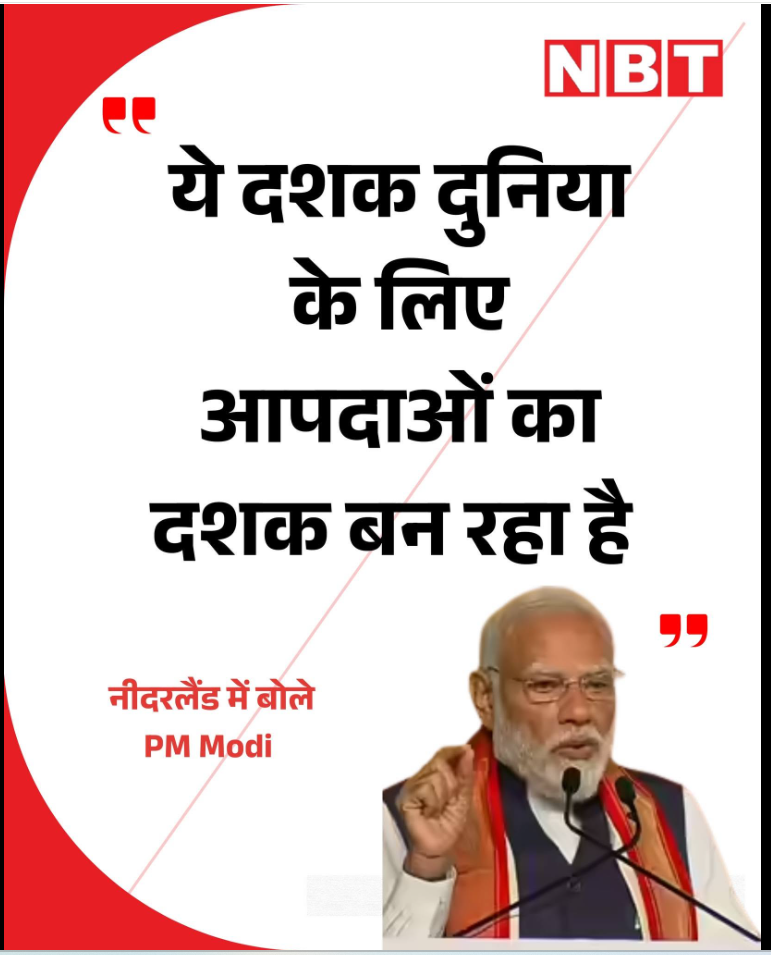
To verify the claim, we conducted keyword searches related to the purported statement. However, we found no credible reports, speeches, interviews, or official records in which Prime Minister Modi made such remarks about selling the country's gold reserves. We then examined the viral postcard and searched the social media handles of Navbharat Times for the original post. During this process, we found a similar postcard published on the Facebook page of Navbharat Times Uttar Pradesh on May 16, 2026. The design, layout, and image matched the viral postcard. However, the original post carried a completely different quote attributed to Prime Minister Modi.
The original postcard quoted Modi as saying: “This decade is becoming a decade of disasters for the world.”
https://www.facebook.com/photo/?fbid=1505172121619709&set=a.685493923587537
Conclusion
Prime Minister Narendra Modi has not made any statement claiming that the country's gold is being sold to save the economy or to protect industrialists from losses. The viral Navbharat Times postcard has been digitally edited, and the quote attributed to Modi is fabricated.
Related Blogs

Introduction
In real-time warfare scenarios of this modern age, where actions occur without delay, the relevance of edge computing emerges as paramount. By processing data close to the source in the battlefield with the help of a drone or through video imaging from any military vehicle or aircraft, the concept of edge computing allows the military to point targets faster and strike with accuracy. It also enables local processing to relay central data, helping ground troops get intelligence inputs to act rapidly in critical mission scenarios.
As the global security landscape experiences a significant transformation in different corners of the world, it presents unprecedented challenges in the present scenario. In this article, we will try to understand how countries can maintain their military capabilities with the help of advanced technologies like edge computing.
Edge Computing in Modern Warfare
Edge computing involves the processing and storage of data at the point of collection on the battlefield, for example, through vehicles and drones, instead of relying on centralized data centers. This enables faster decision-making in real-time. This approach creates a resilient and secure network by reducing reliance on potentially compromised external connections, supporting autonomous systems, precision-based targeting, and data sharing among military personnel, drones, and command centers amidst a challenging environment.
A report released by the US Department of Defence in March 2025 found a crucial reality surrounding the operation of hardware relying on outdated industrial-age processes in the digital era. In the case of applications with video, edge computing helps to deliver significant advantages to a wide range of crucial military operations, which include:
- Situational awareness with real-time data processing that provides improved battlefield visibility and proper threat detection.
- Autonomous warfare systems such as drones, which use a tactical edge cloud computing to get the capability to navigate faster.
- Developing a strong communication and networking capability to secure low-latency communication for troops to stay connected in challenging environments.
- Ensuring predictive maintenance with the help of effective sensors to carry out edge detection and attrition at an early point, thereby reducing equipment failures.
- Developing effective targeting and weapons systems to ensure faster processing to enable precision-based targeting and response, besides a strong logistics and supply chain that can provide real-time tracking to improve delivery accuracy and resource management.
This report also highlighted that the DoD is rapidly updating its software and investing in AI enablers like data sets or MLOps tools. This also stresses the breaking down of integration barriers by enforcing MOSA (Modular Open Systems Approaches), APIs (Application Programming Interface), and modular interfaces to ensure interoperability across platforms, sensors, and networks to make software-defined warfare an effective strategy.
Developing Edge with Artificial Intelligence for Future Warfare
A significant insight from the work of the US Department of Defense is its emphasis on the importance of edge computing in shaping the future of warfare. In that context, the Annual Threat Assessment Report highlights a key limitation of traditional AI strategies that rely on centralised cloud computing, since these might not be suitable for modern battlefields with congested networks and limited bandwidth. The need for real-time data processing requires a distributed and edge-based AI solution to address contemporary threats. This report also directly supports the deployment of effective edge with AI in a defined, disrupted, intermittent, and limited-bandwidth (DDIL) environment. In that case, when the communication networks fail, the edge servers at the edge of the network offer crucial advantages that cloud-dependent systems cannot. This ability to analyse data and make decisions without consistent connectivity and operate with limited computational resources is a strategic necessity.
The scenario of warfare is a phenomenon that requires maintaining a strong strategic and tactical approach, which, in the present times, is being examined through the domain of digital platforms. Modern warfare patterns demand faster decision-making and edge computing deliveries by shifting the power of distant servers to the frontlines. The US military is already moving in the direction of deploying edge-enabled systems to prove the nature of sensors and networks to compute at the tactical edge to transform warfighting.
However, it can be understood with the help of an example, as creating fusion in the skies with F-35s. As they have showcased the capability of edge computing by fusing sensor data with MADL (Multi-Functional Advanced Data Link) to create a unified picture, making the squadrons a force multiplier. An example of this was visible when an F-35 relayed real-time tracking data, enabling a navy ship to neutralise a missile beyond its range.
Conclusion: The Way Ahead
As the changing nature of warfare moves towards adopting software-defined systems, where edge computing thrives as a futuristic military technology, it calls for the need for integration across all domains of warfighting. But at the same time, several imperatives do emerge, such as:
- Developing an open architecture that enables both flexibility and innovation.
- Ensuring an effective connectivity that actually combines a confluence of legacy systems.
- Developing interoperability among the systems that can function in synergy with all platforms and can function across all domains.
- Prioritising edge-native AI development systems, where it is also necessary to ensure the shift to adopting cloud-based AI models to create solutions optimised from the ground up for edge deployment.
- Investing in edge infrastructure to establish a robust edge computing infrastructure that enables rapid deployment by testing and updating AI capabilities across diverse hardware platforms. Like the way the military training academies in India are developing training infrastructures for training officer cadets or personnel to handle drones and all forms of advanced warfare tactics emerging in this age.
- Fostering talent and expertise by embracing commercial solutions where software talent could be enabled across the enterprises with expertise in edge computing capabilities and AI. In this case, the role of the commercial sector can help to drive innovations in edge AI, and the only way to move in this direction is by leveraging these advances through partnerships and collaborative efforts.
Taking the example of the ARPANET, which once seeded the modern internet, edge computing can also help to create a transformative network effect within the digital battlespace. In conclusion, future conflicts will be defined by the speed and accuracy provided by the edge, as nations integrating AI and robust edge infrastructures can hold a strong advantage in the multi-domain battlefields in the future.
References
- https://www.idsa.in/mpidsanews/rk-narangs-article-what-the-regions-first-drone-warfare-taught-us-published-in-the-new-indian-express
- https://latentai.com/blog/software-defined-warfare-why-edge-ai-is-critical-to-americas-defense-future/
- https://www.boozallen.com/s/insight/blog/how-the-us-military-is-using-edge-computing.html
- https://capsindia.org/wp-content/uploads/2022/08/RK-Narang-3.pdf
- https://www.newindianexpress.com/opinions/2025/May/12/what-the-regions-first-drone-warfare-taught-us
- https://www.maris-tech.com/blog/edge-computing-in-the-military-challenges-and-solutions/#:~:text=In%20modern%20warfare%2C%20decisions%20need,enables%20precision%20targeting%20and%20response
- https://cassindia.com/digital-soldiers/

Introduction
In today’s digital age, everyone is online, so is the healthcare sector worldwide. The latest victim of a data breach is Hong Kong healthcare provider OT&P Healthcare, which has recently suffered a data loss of 100,000 patients that exposed their medical history, and caused concern to the patients and their families. This breach has highlighted the vulnerability in the healthcare sector /industry and the importance of cybersecurity measures to protect sensitive information. This blog will explore the data breach, its impact on patients and families, and the best practices for safeguarding sensitive data.
Background: On 13 March 2023, an incident took place where the Cybercriminals deployed a variety of methods to breach the data, which included phishing attacks, malware, and exploiting software vulnerabilities. OT&P Health Care exploits the sensitive data of the patients. According to OT&P Healthcare, it is working together with law enforcement and has hired a cybersecurity firm to investigate the incident and tighten its security procedures. Like other data breaches, the inquiry will most certainly take some time to uncover the actual source and scope of the intrusion. Regardless of the cause of the breach, this event emphasises the significance of frequent cybersecurity assessments, vulnerability testing, and proactive data protection measures. Considering the dangers in the healthcare sector must be cautious in preserving the personal and medical records of the patients as they are sensitive in nature.
Is confidentiality at stake due to data breaches?
Medical data breaches represent a huge danger to patients, with serious ramifications for their privacy, financial security, and physical health. Some of the potential hazards and effects of medical data breaches are as follows:
- Compromise of patient data: Medical data breaches can expose patients’ sensitive information, such as their medical history, diagnoses, treatment, and medication regimens. If history is highly personal and reaches the wrong hands, it could harm someone’s reputation.
- Identity theft: the data stolen by the cybercriminals may be used by them to open credit accounts and apply for loans, Patients can suffer severe financial and psychological stress because of identity theft since they may spend years attempting to rebuild their credit and regain their good name.
- Medical Fraud: Medical data breaches can also result in medical fraud, which occurs when hackers use stolen medical information to charge insurance companies for services that were not performed or for bogus treatments or procedures. Medical fraud may result in financial losses for patients, insurance companies, and individuals obtaining ineffective or risky medical care.
Impact on patients
Data breach does not cause financial loss but may also profoundly impact their mental health and emotional well-being. let’s understand some psychological impacts:
- Anxiety and Stress: Patients whose medical data has been affected may experience feelings of stress and anxiety as they worry about the potential consequences of the data loss can be misused.
- Loss of faith: Patients may lose faith in their healthcare providers if they believe their personal and medical information needs to be properly As a result, patients may be reluctant to disclose sensitive information to their healthcare professionals, compromising the quality of their medical care.
- Sense of Embarrassment: Patients may feel disregarded or ashamed if their sensitive medical information is revealed, particularly if it relates to a sensitive or stigmatised This might lead to social isolation and a reluctance to seek further medical treatment.
- Post-Traumatic Stress Disorder (PTSD): Patients who have experienced a data breach may have PTSD symptoms such as nightmares, flashbacks, and avoidance behaviour. This can have long-term consequences for their mental health and quality of life.
Legal Implications of Data Breach
Patients have certain legal rights and compensations when a healthcare data breach occurs. Let’s have a look at them: –
- Legal Liability: Healthcare providers have a legal obligation to protect data under various privacy and security laws if they fail to take appropriate measures to protect patient data, they may be held legally liable for resulting harm.
- Legal recourse: Patients whose healthcare data leak has impacted them have the legal right to seek compensation and hold healthcare providers and organisations This could involve suing the healthcare practitioner or organisationresponsible for the breach.
- Right to seek compensation: the patients who have suffered from the data loss are liable to seek compensation.
- Notifications: As soon as a data breach takes place, it impacts the organisation and its customers. In this case, it is the responsibility of the OT&P to
- notify their patients about the data breach and inform them about the consequences.
- Take Away from OT &P Healthcare Data Breach: with the growing data breaches in the healthcare industry, here are some lessons that can be learned from the Hong Kong data breach.
- Cybersecurity: The OT&P Healthcare data breach points to the vital need to prioritisecybersecurity in healthcare. To secure themselves, hospitals and the healthcare sector must use the latest software to protect their data.
- Regular risk assessments: These assessments help find system vulnerabilities and security issues. This can assist healthcare providers and organisationsin taking the necessary actions to avoid data breaches and boost their cybersecurity defences.
- Staff Training: Healthcare workers should be taught cybersecurity best practices, such as detecting and responding to phishing attempts, handling sensitive data, and reporting suspected security breaches. This training should be continued to keep workers updated on the newest cybersecurity trends and threats.
- Incident Response Strategy: Healthcare providers and organisations should have an incident response policy in place to deal with data breaches and other security concerns. This strategy should include protocols for reporting instances, limiting the breach, and alerting patients and verified authorities.
Conclusion
The recent data breach in Hong Kong healthcare impact not only the patients but also their trust is shaken. As we continue to rely on digital technology for medical records and healthcare delivery, it is essential that healthcare providers and organisations take proactive steps to protect patient data from cyber-attacks and data breaches.
References
.webp)
Executive Summary
This report analyses a recently launched social engineering attack that took advantage of Microsoft Teams and AnyDesk to deliver DarkGate malware, a MaaS tool. This way, through Microsoft Teams and by tricking users into installing AnyDesk, attackers received unauthorized remote access to deploy DarkGate that offers such features as credential theft, keylogging, and fileless persistence. The attack was executed using obfuscated AutoIt scripts for the delivery of malware which shows how threat actors are changing their modus operandi. The case brings into focus the need to put into practice preventive security measures for instance endpoint protection, staff awareness, limited utilization of off-ice-connection tools, and compartmentalization to safely work with the new and increased risks that contemporary cyber threats present.
Introduction
Hackers find new technologies and application that are reputable for spreading campaigns. The latest use of Microsoft Teams and AnyDesk platforms for launching the DarkGate malware is a perfect example of how hackers continue to use social engineering and technical vulnerabilities to penetrate the defenses of organizations. This paper focuses on the details of the technical aspect of the attack, the consequences of the attack together with preventive measures to counter the threat.
Technical Findings
1. Attack Initiation: Exploiting Microsoft Teams
The attackers leveraged Microsoft Teams as a trusted communication platform to deceive victims, exploiting its legitimacy and widespread adoption. Key technical details include:
- Spoofed Caller Identity: The attackers used impersonation techniques to masquerade as representatives of trusted external suppliers.
- Session Hijacking Risks: Exploiting Microsoft Teams session vulnerabilities, attackers aimed to escalate their privileges and deploy malicious payloads.
- Bypassing Email Filters: The initial email bombardment was designed to overwhelm spam filters and ensure that malicious communication reached the victim’s inbox.
2. Remote Access Exploitation: AnyDesk
After convincing victims to install AnyDesk, the attackers exploited the software’s functionality to achieve unauthorized remote access. Technical observations include:
- Command and Control (C2) Integration: Once installed, AnyDesk was configured to establish persistent communication with the attacker’s C2 servers, enabling remote control.
- Privilege Escalation: Attackers exploited misconfigurations in AnyDesk to gain administrative privileges, allowing them to disable antivirus software and deploy payloads.
- Data Exfiltration Potential: With full remote access, attackers could silently exfiltrate data or install additional malware without detection.
3. Malware Deployment: DarkGate Delivery via AutoIt Script
The deployment of DarkGate malware utilized AutoIt scripting, a programming language commonly used for automating Windows-based tasks. Technical details include:
- Payload Obfuscation: The AutoIt script was heavily obfuscated to evade signature-based antivirus detection.
- Process Injection: The script employed process injection techniques to embed DarkGate into legitimate processes, such as explorer.exe or svchost.exe, to avoid detection.
- Dynamic Command Loading: The malware dynamically fetched additional commands from its C2 server, allowing real-time adaptation to the victim’s environment.
4. DarkGate Malware Capabilities
DarkGate, now available as a Malware-as-a-Service (MaaS) offering, provides attackers with advanced features. Technical insights include:
- Credential Dumping: DarkGate used the Mimikatz module to extract credentials from memory and secure storage locations.
- Keylogging Mechanism: Keystrokes were logged and transmitted in real-time to the attacker’s server, enabling credential theft and activity monitoring.
- Fileless Persistence: Utilizing Windows Management Instrumentation (WMI) and registry modifications, the malware ensured persistence without leaving traditional file traces.
- Network Surveillance: The malware monitored network activity to identify high-value targets for lateral movement within the compromised environment.
5. Attack Indicators
Trend Micro researchers identified several indicators of compromise (IoCs) associated with the DarkGate campaign:
- Suspicious Domains: example-remotesupport[.]com and similar domains used for C2 communication.
- Malicious File Hashes:some text
- AutoIt Script: 5a3f8d0bd6c91234a9cd8321a1b4892d
- DarkGate Payload: 6f72cde4b7f3e9c1ac81e56c3f9f1d7a
- Behavioral Anomalies:some text
- Unusual outbound traffic to non-standard ports.
- Unauthorized registry modifications under HKCU\Software\Microsoft\Windows\CurrentVersion\Run.
Broader Cyber Threat Landscape
In parallel with this campaign, other phishing and malware delivery tactics have been observed, including:
- Cloud Exploitation: Abuse of platforms like Cloudflare Pages to host phishing sites mimicking Microsoft 365 login pages.
- Quishing Campaigns: Phishing emails with QR codes that redirect users to fake login pages.
- File Attachment Exploits: Malicious HTML attachments embedding JavaScript to steal credentials.
- Mobile Malware: Distribution of malicious Android apps capable of financial data theft.
Implications of the DarkGate Campaign
This attack highlights the sophistication of threat actors in leveraging legitimate tools for malicious purposes. Key risks include:
- Advanced Threat Evasion: The use of obfuscation and process injection complicates detection by traditional antivirus solutions.
- Cross-Platform Risk: DarkGate’s modular design enables its functionality across diverse environments, posing risks to Windows, macOS, and Linux systems.
- Organizational Exposure: The compromise of a single endpoint can serve as a gateway for further network exploitation, endangering sensitive organizational data.
Recommendations for Mitigation
- Enable Advanced Threat Detection: Deploy endpoint detection and response (EDR) solutions to identify anomalous behavior like process injection and dynamic command loading.
- Restrict Remote Access Tools: Limit the use of tools like AnyDesk to approved use cases and enforce strict monitoring.
- Use Email Filtering and Monitoring: Implement AI-driven email filtering systems to detect and block email bombardment campaigns.
- Enhance Endpoint Security: Regularly update and patch operating systems and applications to mitigate vulnerabilities.
- Educate Employees: Conduct training sessions to help employees recognize and avoid phishing and social engineering tactics.
- Implement Network Segmentation: Limit the spread of malware within an organization by segmenting high-value assets.
Conclusion
Using Microsoft Teams and AnyDesk to spread DarkGate malware shows the continuous growth of the hackers’ level. The campaign highlights how organizations have to start implementing adequate levels of security preparedness to threats, including, Threat Identification, Training employees, and Rights to Access.
The DarkGate malware is a perfect example of how these attacks have developed into MaaS offerings, meaning that the barrier to launch highly complex attacks is only decreasing, which proves once again why a layered defense approach is crucial. Both awareness and flexibility are still the key issues in addressing the constantly evolving threat in cyberspace.