
#FactCheck- Claim of Paper Currency Being Discontinued from June 30 Along with AI-Generated Audio of PM Modi Goes Viral
Executive Summary
A post is being widely circulated on social media claiming that paper currency will be discontinued in the country from June 30 and replaced with new plastic notes. The claim is being shared along with an audio clip purportedly featuring Prime Minister Narendra Modi, warning people that paper notes will no longer be valid after June 30 and that new plastic currency will be introduced in the market.CyberPeace Research Wing research found the claim to be false. The viral post about discontinuation of paper currency from June 30 is baseless, and the audio attributed to the Prime Minister has been generated using artificial intelligence.
Claim:
An X (formerly Twitter) user shared the viral post claiming that paper currency will be completely withdrawn from circulation in India from June 30 and replaced with plastic notes. The post includes an audio clip allegedly featuring PM Modi.
Post link and archive link can be seen below:
https://www.facebook.com/reel/2172216560209848

Factcheck
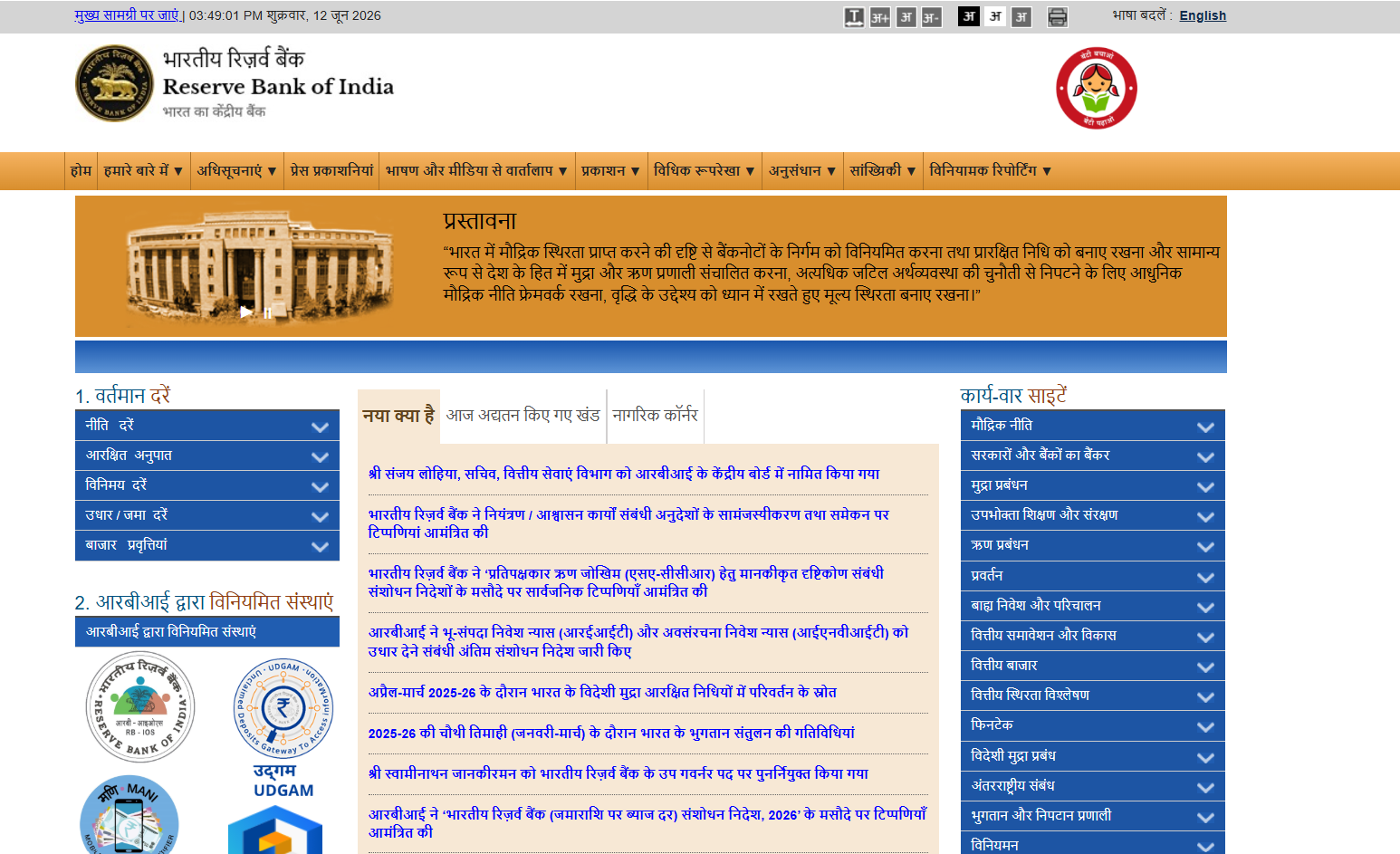
To verify the claim, we conducted a keyword search online. During the research, we found a report published by NDTV on June 6, which stated that the Reserve Bank of India (RBI) is currently examining a proposal related to polymer-based (plastic) currency notes. The report clarified that the proposal is at a very preliminary stage and no final decision has been made. RBI Governor Sanjay Malhotra stated that the central bank is evaluating the pros and cons of polymer notes and will inform the public once any decision is taken. The report does not mention any discontinuation of existing paper currency.

We also checked official sources, including the Prime Minister’s social media handles and the Reserve Bank of India website, but found no announcement or notification regarding the discontinuation of paper currency from June 30.
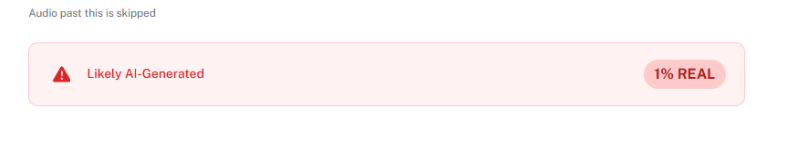
Since the claim included an audio clip attributed to PM Modi, we analyzed it using AI voice detection tools. The Undetectable AI tool identified the voice with 99% probability as AI-generated.
Conclusion:
The research clearly shows that the claim about discontinuation of paper currency from June 30 is baseless. The audio attributed to Prime Minister Narendra Modi is also AI-generated and does not represent any official statement.

Related Blogs

Executive Summary:
Our research has determined that a widely circulated social media image purportedly showing astronaut Sunita Williams with U.S. President Donald Trump and entrepreneur Elon Musk following her return from space is AI-generated. There is no verifiable evidence to suggest that such a meeting took place or was officially announced. The image exhibits clear indicators of AI generation, including inconsistencies in facial features and unnatural detailing.
Claim:
It was claimed on social media that after returning to Earth from space, astronaut Sunita Williams met with U.S. President Donald Trump and Elon Musk, as shown in a circulated picture.

Fact Check:
Following a comprehensive analysis using Hive Moderation, the image has been verified as fake and AI-generated. Distinct signs of AI manipulation include unnatural skin texture, inconsistent lighting, and distorted facial features. Furthermore, no credible news sources or official reports substantiate or confirm such a meeting. The image is likely a digitally altered post designed to mislead viewers.

While reviewing the accounts that shared the image, we found that former Indian cricketer Manoj Tiwary had also posted the same image and a video of a space capsule returning, congratulating Sunita Williams on her homecoming. Notably, the image featured a Grok watermark in the bottom right corner, confirming that it was AI-generated.

Additionally, we discovered a post from Grok on X (formerly known as Twitter) featuring the watermark, stating that the image was likely AI-generated.
Conclusion:
As per our research on the viral image of Sunita Williams with Donald Trump and Elon Musk is AI-generated. Indicators such as unnatural facial features, lighting inconsistencies, and a Grok watermark suggest digital manipulation. No credible sources validate the meeting, and a post from Grok on X further supports this finding. This case underscores the need for careful verification before sharing online content to prevent the spread of misinformation.
- Claim: Sunita Williams met Donald Trump and Elon Musk after her space mission.
- Claimed On: Social Media
- Fact Check: False and Misleading

Introduction
Beginning with the premise that the advent of the internet has woven a rich but daunting digital web, intertwining the very fabric of technology with the variegated hues of human interaction, the EU has stepped in as the custodian of this ever-evolving tableau. It is within this sprawling network—a veritable digital Minotaur's labyrinth—that the European Union has launched a vigilant quest, seeking not merely to chart its enigmatic corridors but to instil a sense of order in its inherent chaos.
The Digital Services Act (DSA) is the EU's latest testament to this determined pilgrimage, a voyage to assert dominion over the nebulous realms of cyberspace. In its latest sagacious move, the EU has levelled its regulatory lance at the behemoths of digital indulgence—Pornhub, XVideos, and Stripchat—monarchs in the realm of adult entertainment, each commanding millions of devoted followers.
Applicability of DSA
Graced with the moniker of Very Large Online Platforms (VLOPs), these titans of titillation are now facing the complex weave of duties delineated by the DSA, a legislative leviathan whose coils envelop the shadowy expanses of the internet with an aim to safeguard its citizens from the snares and pitfalls ensconced within. Like a vigilant Minotaur, the European Commission, the EU's executive arm, stands steadfast, enforcing compliance with an unwavering gaze.
The DSA is more than a mere compilation of edicts; it encapsulates a deeper, more profound ethos—a clarion call announcing that the wild frontiers of the digital domain shall be tamed, transforming into enclaves where the sanctity of individual dignity and rights is zealously championed. The three corporations, singled out as the pioneers to be ensnared by the DSA's intricate net, are now beckoned to embark on an odyssey of transformation, realigning their operations with the EU's noble envisioning of a safeguarded internet ecosystem.
The Paradigm Shift
In a resolute succession, following its first decree addressing 19 Very Large Online Platforms and Search Engines, the Commission has now ensconced the trinity of adult content purveyors within the DSA's embrace. The act demands that these platforms establish intuitive user mechanisms for reporting illicit content, prioritize communications from entities bestowed with the 'trusted flaggers' title, and elucidate to users the rationale behind actions taken to restrict or remove content. Paramount to the DSA's ethos, they are also tasked with constructing internal mechanisms to address complaints, forthwith apprising law enforcement of content hinting at criminal infractions, and revising their operational underpinnings to ensure the confidentiality, integrity, and security of minors.
But the aspirations of the DSA stretch farther, encompassing a realm where platforms are agents against deception and manipulation of users, categorically eschewing targeted advertisement that exploits sensitive profiling data or is aimed at impressionable minors. The platforms must operate with an air of diligence and equitable objectivity, deftly applying their terms of use, and are compelled to reveal their content moderation practices through annual declarations of transparency.
The DSA bestows upon the designated VLOPs an even more intensive catalogue of obligations. Within a scant four months of their designation, Pornhub, XVideos, and Stripchat are mandated to implement measures that both empower and shield their users—especially the most vulnerable, minors—from harms that traverse their digital portals. Augmented content moderation measures are requisite, with critical risk analyses and mitigation strategies directed at halting the spread of unlawful content, such as child exploitation material or the non-consensual circulation of intimate imagery, as well as curbing the proliferation and repercussions of deepfake-generated pornography.
The New Rules
The DSA enshrines the preeminence of protecting minors, with a staunch requirement for VLOPs to contrive their services so as to anticipate and enfeeble any potential threats to the welfare of young internet navigators. They must enact operational measures to deter access to pornographic content by minors, including the utilization of robust age verification systems. The themes of transparency and accountability are amplified under the DSA's auspices, with VLOPs subject to external audits of their risk assessments and adherence to stipulations, the obligation to maintain accessible advertising repositories, and the provision of data access to rigorously vetted researchers.
Coordinated by the Commission in concert with the Member States' Digital Services Coordinators, vigilant supervision will be maintained to ensure the scrupulous compliance of Pornhub, Stripchat, and XVideos with the DSA's stringent directives. The Commission's services are poised to engage with the newly designated platforms diligently, affirming that initiatives aimed at shielding minors from pernicious content, as well as curbing the distribution of illegal content, are effectively addressed.
The EU's monumental crusade, distilled into the DSA, symbolises a pledge—a testament to its steadfast resolve to shepherd cyberspace, ensuring the Minotaur of regulation keeps the bedlam at a manageable compass and the sacrosanctity of the digital realm inviolate for all who meander through its infinite expanses. As we cast our gazes toward February 17, 2024—the cusp of the DSA's comprehensive application—it is palpable that this legislative milestone is not simply a set of guidelines; it stands as a bold, unflinching manifesto. It beckons the advent of a novel digital age, where every online platform, barring small and micro-enterprises, will be enshrined in the lofty ideals imparted by the DSA.
Conclusion
As we teeter on the edge of this nascent digital horizon, it becomes unequivocally clear: the European Union's Digital Services Act is more than a mundane policy—it is a pledge, a resolute statement of purpose, asserting that amid the vast, interwoven tapestry of the internet, each user's safety, dignity, and freedoms are enshrined and hold the intrinsic significance meriting the force of the EU's legislative guard. Although the labyrinth of the digital domain may be convoluted with complexity, guided by the DSA's insightful thread, the march toward a more secure, conscientious online sphere forges on—resolute, unerring, one deliberate stride at a time.
References
https://ec.europa.eu/commission/presscorner/detail/en/ip_23_6763https://www.breakingnews.ie/world/three-of-the-biggest-porn-sites-must-verify-ages-under-eus-new-digital-law-1566874.html
.webp)
Introduction
With the advent of the internet, the world revealed the promise of boundless connection and the ability to bridge vast distances with a single click. However, as we wade through the complex layers of the digital age, we find ourselves facing a paradoxical realm where anonymity offers both liberation and a potential for unforeseen dangers. Omegle, a chat and video messaging platform, epitomizes this modern conundrum. Launched over a decade ago in 2009, it has burgeoned into a popular avenue for digital interaction, especially amidst the heightened need for human connection spurred by the COVID-19 pandemic's social distancing requirements. Yet, this seemingly benign tool of camaraderie, tragically, doubles as a contemporary incarnation of Pandora's box, unleashing untold risks upon the online privacy and security landscape. Omegle shuts down its operations permanently after 14 years of its service.
The Rise of Omegle
The foundations of this nebulous virtual dominion can be traced back to the very architecture of Omegle. Introduced to the world as a simple, anonymous chat service, Omegle has since evolved, encapsulating the essence of unpredictable human interaction. Users enter this digital arena, often with the innocent desire to alleviate the pangs of isolation or simply to satiate curiosity; yet they remain blissfully unaware of the potential cybersecurity maelstrom that awaits them.
As we commence a thorough inquiry into the psyche of Omegle's vast user base, we observe a digital diaspora with staggering figures. The platform, in May 2022, counted 51.7 million unique visitors, a testament to its sprawling reach across the globe. Delve a bit deeper, and you will uncover that approximately 29.89% of these digital nomads originate from the United States. Others, in varying percentages, flock from India, the Philippines, the United Kingdom, and Germany, revealing a vast, intricate mosaic of international engagement.
Such statistics beguile the uninformed observer with the lie of demographic diversity. Yet we must proceed with caution, for while the platform boasts an impressive 63.91% male patronage, we cannot overlook the notable surge in female participation, which has climbed to 36.09% during the pandemic era. More alarming still is the revelation, borne out of a BBC investigation in February 2021, that children as young as seven have trespassed into Omegle's adult sections—a section purportedly guarded by a minimum age limit of thirteen. How we must ask, has underage presence burgeoned on this platform? A sobering pointer finger towards the platform's inadvertent marketing on TikTok, where youthful influencers, with abandon, promote their Omegle exploits under the #omegle hashtag.
The Omegle Allure
Omegle's allure is further compounded by its array of chat opportunities. It flaunts an adult section awash with explicit content, a moderated chat section that, despite the platform's own admissions, remains imperfectly patrolled, and an unmoderated section, its entry pasted with forewarnings of an 18+ audience. Beyond these lies the college chat option, a seemingly exclusive territory that only admits individuals armed with a verified '.edu' email address.
The effervescent charm of Omegle's interface, however, belies its underlying treacheries. Herein lies a digital wilderness where online predators and nefarious entities prowl, emboldened by the absence of requisite registration protocols. No email address, no unique identifier—pestilence to any notion of accountability or safeguarding. Within this unchecked reality, the young and unwary stand vulnerable, a hapless game for exploitation.
Threat to Users
Venture even further into Omegle's data fiefdom, and the spectre of compromise looms larger. Users, particularly the youth, risk exposure to unsuitable content, and their naivety might lead to the inadvertent divulgence of personal information. Skulking behind the facade of connection, opportunities abound for coercion, blackmail, and stalking—perils rendered more potent as every video exchange and text can be captured, and recorded by an unseen adversary. The platform acts as a quasi-familiar confidante, all the while harvesting chat logs, cookies, IP addresses, and even sensory data, which, instead of being ephemeral, endure within Omegle's databases, readily handed to law enforcement and partnered entities under the guise of due diligence.
How to Combat the threat
In mitigating these online gorgons, a multi-faceted approach is necessary. To thwart incursion into your digital footprint, adults, seeking the thrills of Omegle's roulette, would do well to cloak their activities with a Virtual Private Network (VPN), diligently pore over the privacy policy, deploy robust cybersecurity tools, and maintain an iron-clad reticence on personal disclosures. For children, the recommendation gravitates towards outright avoidance. There, a constellation of parental control mechanisms await the vigilant guardian, ready to shield their progeny from the internet's darker alcoves.
Conclusion
In the final analysis, Omegle emerges as a microcosm of the greater web—a vast, paradoxical construct proffering solace and sociability, yet riddled with malevolent traps for the uninformed. As digital denizens, our traverse through this interconnected cosmos necessitates a relentless guarding of our private spheres and the sober acknowledgement that amidst the keystrokes and clicks, we must tread with caution lest we unseal the perils of this digital Pandora's box.
References:
