
#FactCheck -AI-Generated Video Falsely Shared as IAF Pilot Complaining After Sukhoi-30 Crash
Executive Summary
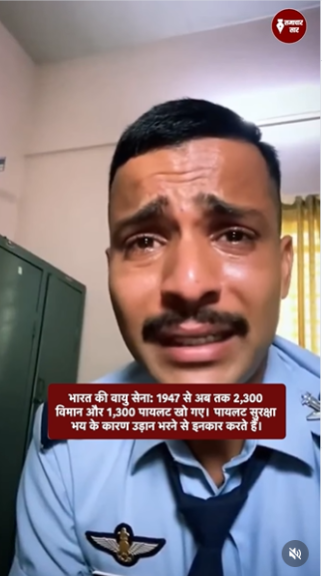
A video circulating widely on social media claims to show a pilot of the Indian Air Force (IAF) crying and expressing fear about flying fighter jets, allegedly citing poor maintenance and frequent crashes. The clip is being linked to the crash of an IAF Sukhoi-30 fighter jet in Assam on March 5, in which two pilots lost their lives. In the viral video, a man dressed like a pilot is seen speaking emotionally, saying that flying fighter jets has become frightening due to lack of maintenance and repeated accidents. Several users are sharing the clip claiming that the man in the video is an IAF pilot revealing the reality behind aircraft crashes. However, research by the CyberPeace found the claim to be false. The video does not depict a real pilot or an actual incident. Instead, it appears to be an AI-generated clip created and circulated with the intent to spread misinformation.
Claim:
An Instagram user, ‘samacharsaar0’, shared the viral video on March 10, 2026, with the English caption: “2300 aircraft crashes, 1300 pilots dead: A major challenge before the IAF.”
- Source: :https://www.instagram.com/reel/DVqa4lNiYJQ
- Archived link::https://perma.cc/EUZ8-DHE3
Fact Check:
The claim was also debunked by PIB Fact Check. While verifying the viral video, PIB clarified that the clip is artificially generated and not related to any real IAF personnel.
To further verify the authenticity of the video, we analyzed it using AI detection tools. The tool Hive Moderation indicated a 99.9% probability that the video was generated using artificial intelligence.
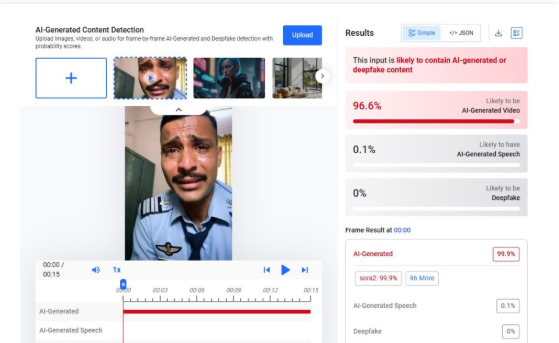
We also examined the clip using another AI detection platform, Undetectable. The analysis suggested an 82% likelihood that the video was created with AI tools. The tool also indicated the possibility that the footage may have been generated using the Sora AI video generation tool.

Conclusion
Our research concludes that the viral video of a crying “pilot” is not authentic. The clip has been created using artificial intelligence and is being misleadingly shared as a real Indian Air Force pilot speaking about aircraft crashes. The government has also denied the claim associated with the video.

Related Blogs

Executive Summary:
Recently, there has been a massive amount of fake news about India’s standing in the United Security Council (UNSC), including a veto. This report, compiled scrupulously by the CyberPeace Research Wing, delves into the provenance and credibility of the information, and it is debunked. No information from the UN or any relevant bodies has been released with regard to India’s permanent UNSC membership although India has swiftly made remarkable progress to achieve this strategic goal.

Claims:
Viral posts claim that India has become the first-ever unanimously voted permanent and veto-holding member of the United Nations Security Council (UNSC). Those posts also claim that this was achieved through overwhelming international support, granting India the same standing as the current permanent members.


Factcheck:
The CyberPeace Research Team did a thorough keyword search on the official UNSC official website and its associated social media profiles; there are presently no official announcements declaring India's entry into permanent status in the UNSC. India remains a non-permanent member, with the five permanent actors- China, France, Russia, United Kingdom, and USA- still holding veto power. Furthermore, India, along with Brazil, Germany, and Japan (the G4 nations), proposes reform of the UNSC; yet no formal resolutions have come to the surface to alter the status quo of permanent membership. We then used tools such as Google Fact Check Explorer to uncover the truth behind these viral claims. We found several debunked articles posted by other fact-checking organizations.

The viral claims also lack credible sources or authenticated references from international institutions, further discrediting the claims. Hence, the claims made by several users on social media about India becoming the first-ever unanimously voted permanent and veto-holding member of the UNSC are misleading and fake.
Conclusion:
The viral claim that India has become a permanent member of the UNSC with veto power is entirely false. India, along with the non-permanent members, protests the need for a restructuring of the UN Security Council. However, there have been no official or formal declarations or commitments for alterations in the composition of the permanent members and their powers to date. Social media users are advised to rely on verified sources for information and refrain from spreading unsubstantiated claims that contribute to misinformation.
- Claim: India’s Permanent Membership in UNSC.
- Claimed On: YouTube, LinkedIn, Facebook, X (Formerly Known As Twitter)
- Fact Check: Fake & Misleading.
Executive Summary
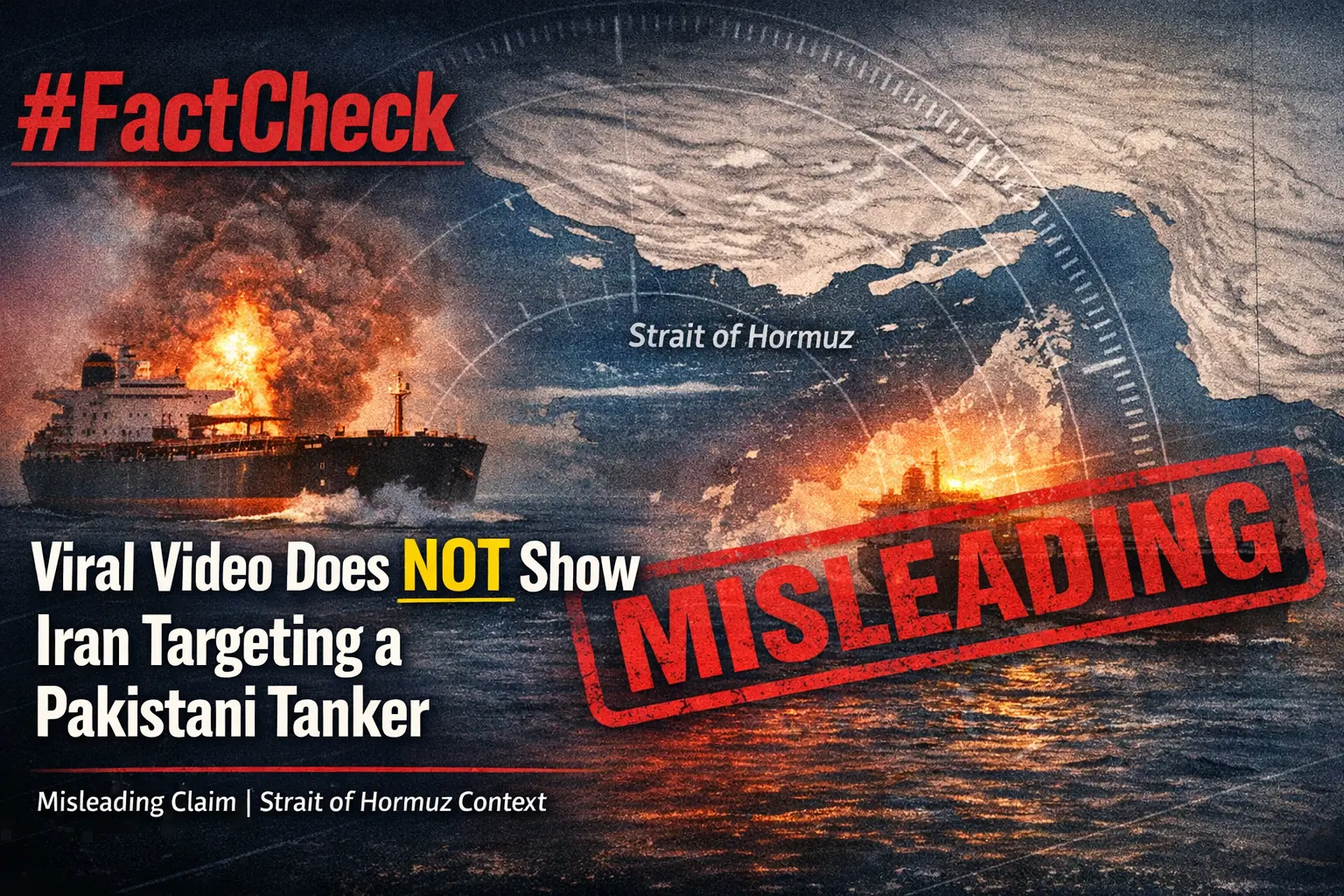
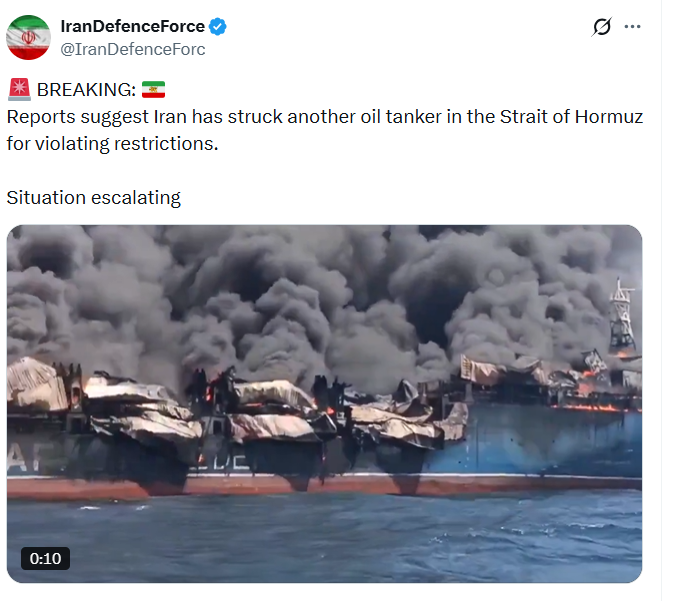
Amid the ongoing tensions involving the United States, Israel, and Iran, a video of a cargo ship engulfed in flames is being widely shared across social media platforms. The clip shows a vessel burning intensely at sea, with users claiming that Iran targeted the ship with a drone for attempting to cross the Strait of Hormuz without permission. Some users have also claimed that the destroyed vessel was a Pakistani-flagged oil tanker hit by Iranian missiles. However, research by CyberPeace found the claim to be false. Our verification also reveals that the viral video is being misrepresented.
Claim
Social media users, including an X (formerly Twitter) account named “IranDefenceForce,” shared the video claiming that Iran targeted an oil tanker in the Strait of Hormuz for allegedly violating restrictions.
Fact Check
A keyword-based news search led us to multiple credible reports mentioning a statement by Iran’s Foreign Minister Abbas Araghchi. According to reports, Iran had allowed ships from “friendly countries” including India, China, Russia, Iraq, and Pakistan to pass through the Strait of Hormuz.
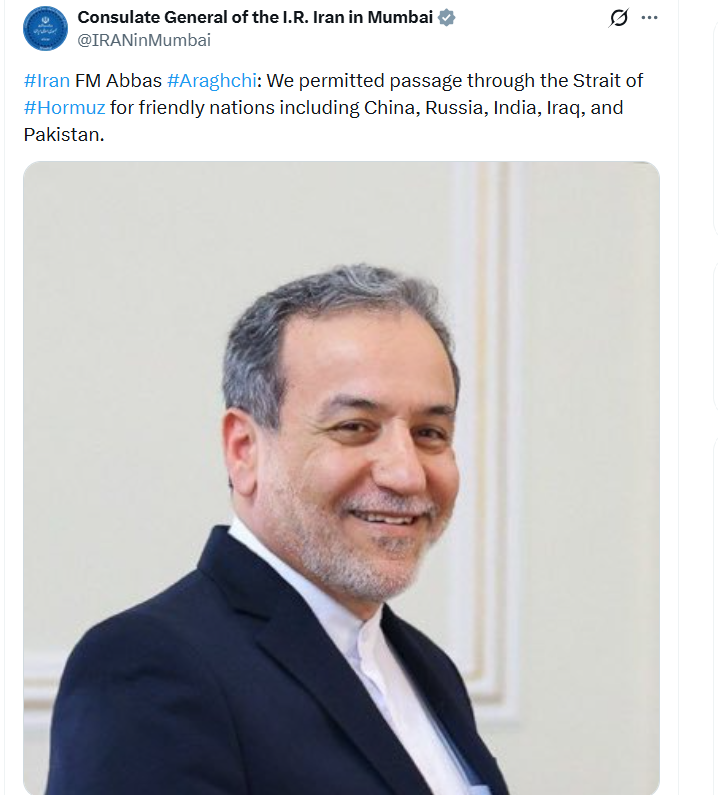
A March 26, 2026 report by The Hindu stated that Araghchi also emphasized Iran’s assertion of sovereignty over the strategic waterway connecting the Persian Gulf and the Gulf of Oman. The same statement was also shared via the official X handle of the Iranian Consulate in Mumbai. During a frame-by-frame analysis of the viral video, we noticed the word “SAFEEN” written on a part of the ship. Using this clue, we conducted a targeted news search and found a report by Reuters dated March 4, 2026.
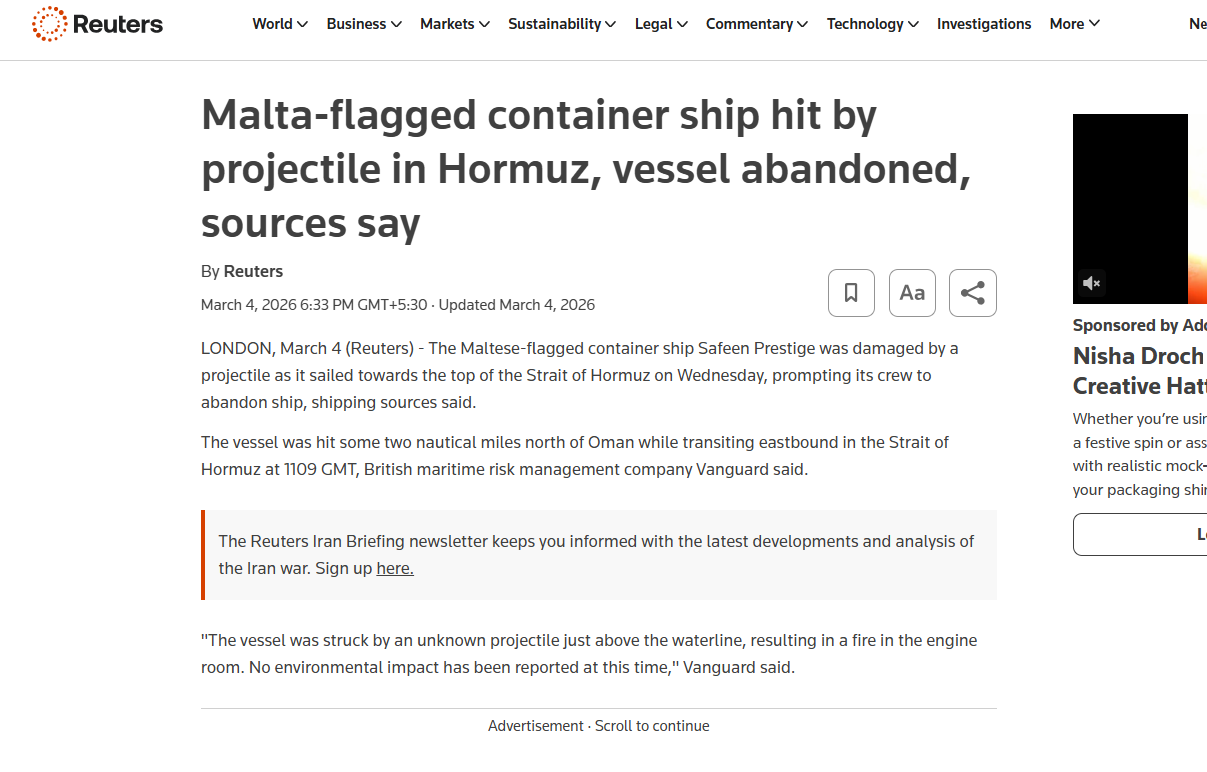
According to the report, a Malta-flagged container ship named Safeen Prestige was damaged in an attack while heading toward the Strait of Hormuz. Shipping sources cited in the report stated that the vessel was struck around 1109 GMT while sailing eastward, approximately two nautical miles north of Oman. The ship had reportedly departed from Sharjah Port in the United Arab Emirates but was damaged before reaching its destination. Its last known location was in the Persian Gulf. Additionally, earlier this month, another cargo vessel named Mayuri Naree was also attacked near Iran’s Qeshm Island. As per Reuters, an explosion caused a fire in the engine room, after which 20 crew members were rescued by the Omani navy, while three remained missing.
Conclusion
The viral video does not show Iran targeting a Pakistani oil tanker for violating restrictions in the Strait of Hormuz. In reality, the clip features the Malta-flagged container ship Safeen Prestige, which was damaged in an unidentified attack in the Persian Gulf. The claim being circulated on social media is misleading.

Introduction
Attempts at countering the spread of misinformation can include various methods and differing degrees of engagement by different stakeholders. The inclusion of Artificial Intelligence, user awareness and steps taken on the part of the public at a larger level, focus on innovation to facilitate clear communication can be considered in the fight to counter misinformation. This becomes even more important in spaces that deal with matters of national security, such as the Indian army.
IIT Indore’s Intelligent Communication System
As per a report in Hindustan Times on 14th November 2024, IIT Indore has achieved a breakthrough on their project regarding Intelligent Communication Systems. The project is supported by the Department of Telecommunications (DoT), the Ministry of Electronics and Information Technology (MeitY), and the Council of Scientific and Industrial Research (CSIR), as part of a specialised 6G research initiative (Bharat 6G Alliance) for innovation in 6G technology.
Professors at IIT Indore claim that the system they are working on has features different from the ones currently in use. They state that the receiver system can recognise coding, interleaving (a technique used to enhance existing error-correcting codes), and modulation methods together in situations of difficult environments, which makes it useful for transmitting information efficiently and securely, and thus could not only be used for telecommunication but the army as well. They also mention that previously, different receivers were required for different scenarios, however, they aim to build a system that has a single receiver that can adapt to any situation.
Previously, in another move that addressed the issue of misinformation in the army, the Ministry of Defence designated the Additional Directorate General of Strategic Communication in the Indian Army as the authorised officer to issue take-down notices regarding instances of posts consisting of illegal content and misinformation concerning the Army.
Recommendations
Here are a few policy implications and deliberations one can explore with respect to innovations geared toward tackling misinformation within the army:
- Research and Development: In this context, investment and research in better communication through institutes have enabled a system that ensures encrypted and secure communication, which helps with ways to combat misinformation for the army.
- Strategic Deployment: Relevant innovations can focus on having separate pilot studies testing sensitive data in the military areas to assess their effectiveness.
- Standardisation: Once tested, a set parameter of standards regarding the intelligence communication systems used can be encouraged.
- Cybersecurity integration: As misinformation is largely spread online, innovation in such fields can encourage further exploration with regard to integration with Cybersecurity.
Conclusion
The spread of misinformation during modern warfare can have severe repercussions. Sensitive and clear data is crucial for safe and efficient communication as a lot is at stake. Innovations that are geared toward combating such issues must be encouraged, for they not only ensure efficiency and security with matters related to defence but also combat misinformation as a whole.
References
- https://timesofindia.indiatimes.com/city/indore/iit-indore-unveils-groundbreaking-intelligent-receivers-for-enhanced-6g-and-military-communication-security/articleshow/115265902.cms
- https://www.hindustantimes.com/technology/6g-technology-and-intelligent-receivers-will-ease-way-for-army-intelligence-operations-iit-official-101731574418660.html
