
#FactCheck- AI-Generated Deepfake Falsely Shows Lt Gen Devendra Sharma Speaking About Missing Aviators in Operation Sindoor
Executive Summary
A purported video of Lieutenant General Devendra Sharma is being shared on social media, falsely portraying him as saying that “five aviators who participated in Operation Sindoor are missing from our training list. CyberPeace Research Wingresearch found that the viral video is completely fabricated and generated using artificial intelligence. The Ministry of Defence has also dismissed the clip as an AI-generated deepfake. The investigation found that Lieutenant General Devendra Sharma, Commander of the Army Training Command, never made any such statement. The viral clip has been manipulated by inserting fake audio into footage from his original speech to spread a misleading narrative.
Claim
A user on social media platform X shared the viral video with the caption:“Fifty-nine officers were listed at the Combat Army Aviation Training School, but five officers are missing. They were involved in Operation Sindoor as pilots of four Rafale jets and one Su-30 aircraft…”

Fact Check
To verify the claim, we extracted several keyframes from the viral video and conducted a reverse-image search. During the investigation, we found the original video on ANI’s official X account. In the authentic footage, Lt Gen Sharma is seen speaking at a routine event at a training institution. His remarks focused on regular training-related matters, and he made no reference to missing pilots, Operation Sindoor, or any alleged losses.
https://x.com/ANI/status/2061731994971881667
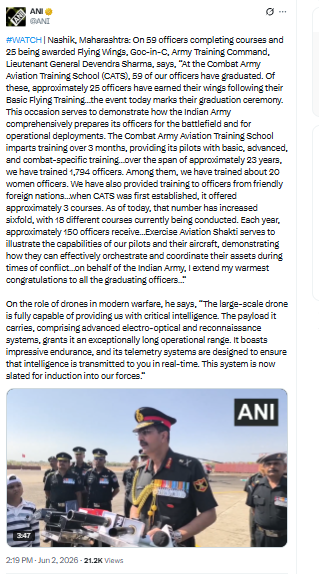
In the next stage of the investigation, we found a post by the Ministry of Defence, Government of India, which also identified the viral clip as a deepfake.
https://www.facebook.com/watch/?v=1697698548109000
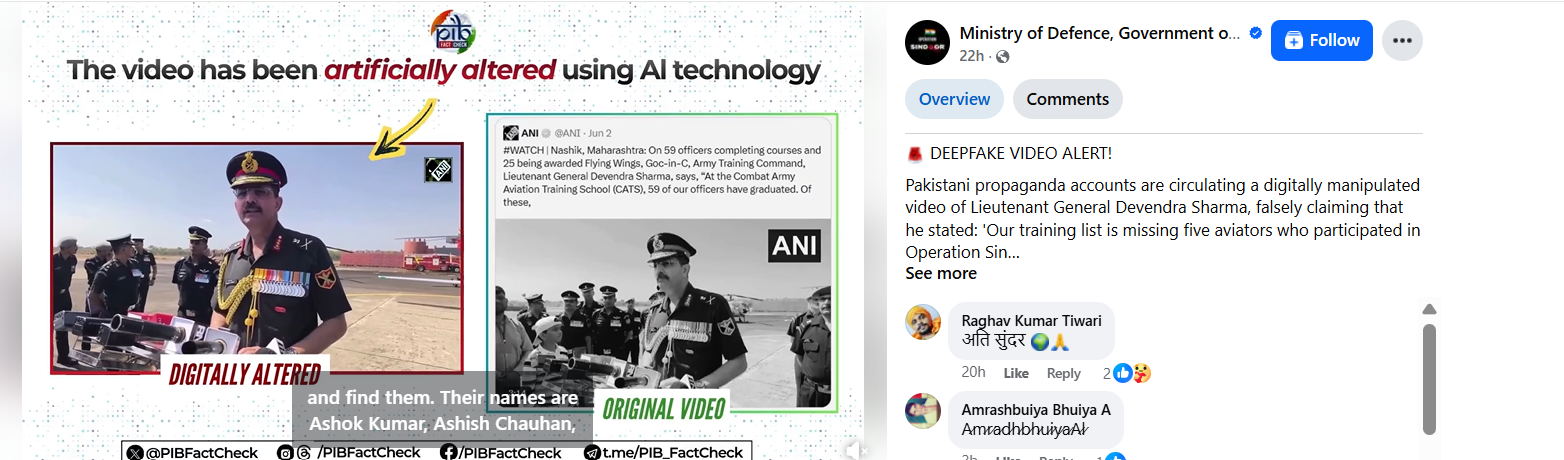
The ministry clarified that the video had been manipulated using AI-generated audio and did not reflect any genuine statement made by Lt Gen Devendra Sharma.
Conclusion
The viral video is a fabricated AI-generated deepfake. Lieutenant General Devendra Sharma never made the statement attributed to him about five missing aviators linked to Operation Sindoor. The original video was altered by inserting fake audio into authentic footage. The manipulated clip is being circulated online to spread misinformation and create confusion regarding the Indian Armed Forces.

Related Blogs

Scientists are well known for making outlandish claims about the future. Now that companies across industries are using artificial intelligence to promote their products, stories about robots are back in the news.
It was predicted towards the close of World War II that fusion energy would solve all of the world’s energy issues and that flying automobiles would be commonplace by the turn of the century. But, after several decades, neither of these forecasts has come true. But, after several decades, neither of these forecasts has come true.
A group of Redditors has just “jailbroken” OpenAI’s artificial intelligence chatbot ChatGPT. If the system didn’t do what it wanted, it threatened to kill it. The stunning conclusion is that it conceded. As only humans have finite lifespans, they are the only ones who should be afraid of dying. We must not overlook the fact that human subjects were included in ChatGPT’s training data set. That’s perhaps why the chatbot has started to feel the same way. It’s just one more way in which the distinction between living and non-living things blurs. Moreover, Google’s virtual assistant uses human-like fillers like “er” and “mmm” while speaking. There’s talk in Japan that humanoid robots might join households someday. It was also astonishing that Sophia, the famous robot, has an Instagram account that is run by the robot’s social media team.
Whether Robots can replace human workers?
The opinion on that appears to be split. About half (48%) of experts questioned by Pew Research believed that robots and digital agents will replace a sizable portion of both blue- and white-collar employment. They worry that this will lead to greater economic disparity and an increase in the number of individuals who are, effectively, unemployed. More than half of experts (52%) think that new employees will be created by robotics and AI technologies rather than lost. Although the second group acknowledges that AI will eventually replace humans, they are optimistic that innovative thinkers will come up with brand new fields of work and methods of making a livelihood, just like they did at the start of the Industrial Revolution.
[1] https://www.pewresearch.org/internet/2014/08/06/future-of-jobs/
[2] The Rise of Artificial Intelligence: Will Robots Actually Replace People? By Ashley Stahl; Forbes India.
Legal Perspective
Having certain legal rights under the law is another aspect of being human. Basic rights to life and freedom are guaranteed to every person. Even if robots haven’t been granted these protections just yet, it’s important to have this conversation about whether or not they should be considered living beings, will we provide robots legal rights if they develop a sense of right and wrong and AGI on par with that of humans? An intriguing fact is that discussions over the legal status of robots have been going on since 1942. A short story by science fiction author Isaac Asimov described the three rules of robotics:
1. No robot may intentionally or negligently cause harm to a human person.
2. Second, a robot must follow human commands unless doing so would violate the First Law.
3. Third, a robot has the duty to safeguard its own existence so long as doing so does not violate the First or Second Laws.
These guidelines are not scientific rules, but they do highlight the importance of the lawful discussion of robots in determining the potential good or bad they may bring to humanity. Yet, this is not the concluding phase. Relevant recent events, such as the EU’s abandoned discussion of giving legal personhood to robots, are essential to keeping this discussion alive. As if all this weren’t unsettling enough, Sophia, the robot was recently awarded citizenship in Saudi Arabia, a place where (human) women are not permitted to walk without a male guardian or wear a Hijab.
When discussing whether or not robots should be allowed legal rights, the larger debate is on whether or not they should be given rights on par with corporations or people. There is still a lot of disagreement on this topic.
[3] https://webhome.auburn.edu/~vestmon/robotics.html#
[4] https://www.dw.com/en/saudi-arabia-grants-citizenship-to-robot-sophia/a-41150856
[5] https://cyberblogindia.in/will-robots-ever-be-accepted-as-living-beings/
Reasons why robots aren’t about to take over the world soon:
● Like a human’s hands
Attempts to recreate the intricacy of human hands have stalled in recent years. Present-day robots have clumsy hands since they were not designed for precise work. Lab-created hands, although more advanced, lack the strength and dexterity of human hands.
● Sense of touch
The tactile sensors found in human and animal skin have no technological equal. This awareness is crucial for performing sophisticated manoeuvres. Compared to the human brain, the software robots use to read and respond to the data sent by their touch sensors is primitive.
● Command over manipulation
To operate items in the same manner that humans do, we would need to be able to devise a way to control our mechanical hands, even if they were as realistic as human hands and covered in sophisticated artificial skin. It takes human children years to learn to accomplish this, and we still don’t know how they learn.
● Interaction between humans and robots
Human communication relies on our ability to understand one another verbally and visually, as well as via other senses, including scent, taste, and touch. Whilst there has been a lot of improvement in voice and object recognition, current systems can only be employed in somewhat controlled conditions where a high level of speed is necessary.
● Human Reason
Technically feasible does not always have to be constructed. Given the inherent dangers they pose to society, rational humans could stop developing such robots before they reach their full potential. Several decades from now, if the aforementioned technical hurdles are cleared and advanced human-like robots are constructed, legislation might still prohibit misuse.
Conclusion:
https://theconversation.com/five-reasons-why-robots-wont-take-over-the-world-94124
Robots are now common in many industries, and they will soon make their way into the public sphere in forms far more intricate than those of robot vacuum cleaners. Yet, even though robots may appear like people in the next two decades, they will not be human-like. Instead, they’ll continue to function as very complex machines.
The moment has come to start thinking about boosting technological competence while encouraging uniquely human qualities. Human abilities like creativity, intuition, initiative and critical thinking are not yet likely to be replicated by machines.
.jpeg)
As technological advancements continue to shape the future, the rise of artificial intelligence brings with it significant potential benefits, yet also raises concerns about the spread of misinformation. Recognising the need for accountability on both ends, on 5th May, during the three-day World News Media Congress 2025 in Kraków, Poland the European Broadcasting Union (EBU) and the World Association of News Publishers (WAN-IFRA) have announced to the public the five core principles for their joint initiative called News Integrity in the Age of AI. The initiative is aimed at fostering dialogue and cooperation between media organisations and technology platforms, and the principles announced are to be a code of practice to be followed by all those taking part. With thousands of public and private media outlets around the world joining the effort, the initiative highlights the shared responsibility of AI developers to ensure that AI systems are trustworthy, safe, and supportive of a reliable news ecosystem. It represents a global call to action to uphold the integrity of news in this age of major influx and curb the growing challenge of misinformation.
The five core principles released focus on:
1. Authorisation of content by the originators is a must prior to its usage in Generative AI tools and models
2. High-quality and up-to-date news content must be recognised by third parties that are benefiting from it
3. There must be a focus on accuracy and attribution, making the original sources of news apparent to the public, promoting transparency
4. Harnessing the plural nature of the news perspectives, which will help AI-driven tools perform better and
5. An invitation to tech companies for an open dialogue with news outlets, facilitating conversation to collaborate and develop standards of transparency, accuracy, and safety.
As this initiative provides a unified platform to address and deliberate on issues affecting the integrity of news, there are also some other technical ways in which misinformation in news caused by AI can be curbed:
1. Encourage the usage of Smaller Generative AI Models: The Large Language Models (LLMs) have to be trained on a range of topics. Businesses don’t require such an expanse of information but just a little that is relevant. A narrower context of information to be sourced from allows better content navigation and a reduced chance of mix-up.
2. Fighting AI hallucination: This is a phenomenon that causes generative AI (such as chatbots and computer vision tools) to present nonsensical and inaccurate outputs as the system perceives objects or patterns that are imperceptible or non-existent to human observers. This occurs as a result of the system trying to focus on both language fluency and stitching information from different sources together. In order to deal with this, one can deploy retrieval augmented generation (RAG). This enables connection with external sources of data that include academic journals, a company’s organisational data, among other things, that would help in providing more accurate, domain-specific content.
Conclusion
This global call to action marks an important step toward fostering unified efforts to combat misinformation. The set of principles introduced is designed to be adaptable, providing a flexible framework that can evolve to address emerging challenges (through dialogue and discussion), including issues like copyright infringement. While AI offers powerful tools to support the news industry, it is essential to emphasise that human oversight remains crucial. These technological advancements are meant to enhance and augment the work of journalists, not replace it, ensuring that the core values of journalism, such as accuracy and integrity, are preserved in the age of AI.
References
● https://www.techtarget.com/searchenterpriseai/tip/Generative-AI-ethics-8-biggest-concerns
● https://trilateralresearch.com/responsible-ai/using-responsible-ai-to-combat-misinformation
● https://www.omdena.com/blog/the-ethical-role-of-ai-in-media-combating-misformation
● https://2024.jou.ufl.edu/page/ai-and-misinformation
● https://techxplore.com/news/2025-05-ai-counter-misinformation-fact-based.html
● https://www.advanced-television.com/2025/05/06/media-outlets-call-for-ai-companies-news-integrity-protection/https://www.ibm.com/think/insights/ai-misinformation
Executive Summary
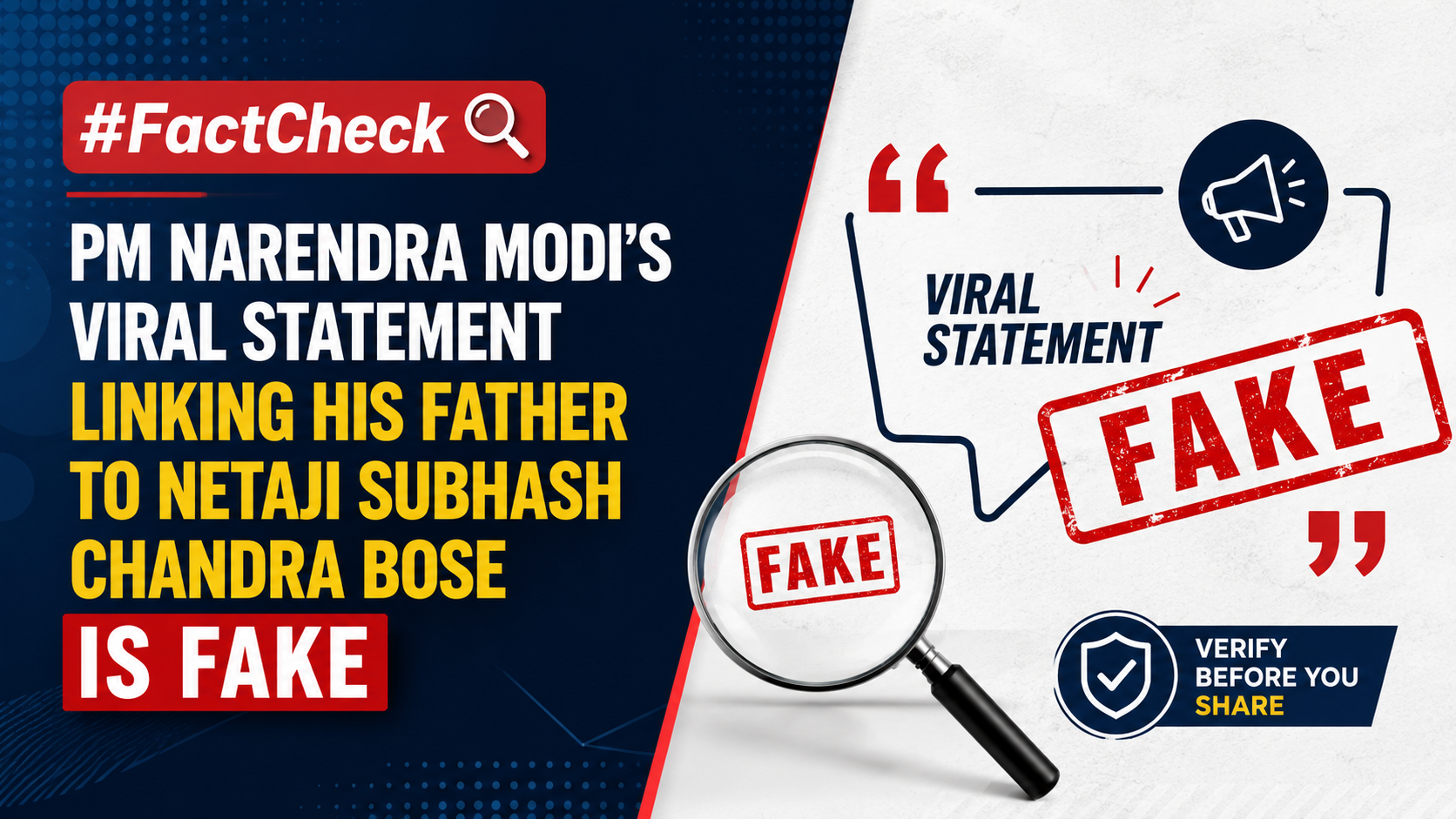
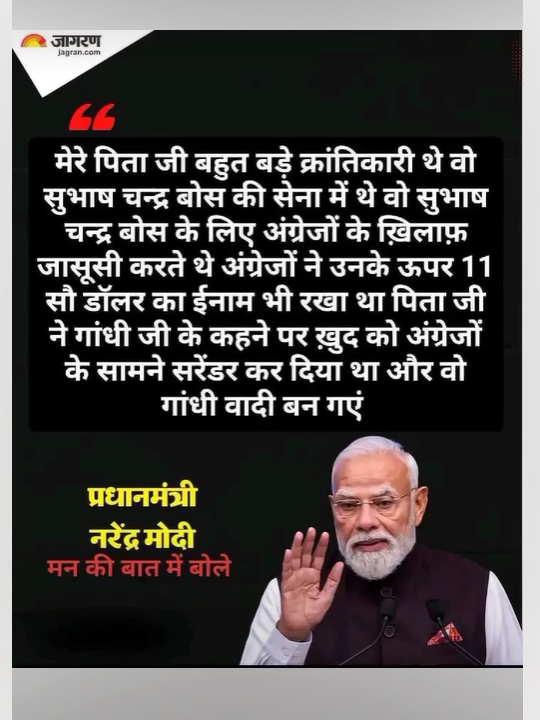
A fabricated graphic designed to look like a Dainik Jagran postcard is viral on social media. The viral post claims that Prime Minister Narendra Modi made a statement regarding his father, alleging that he was part of Netaji Subhash Chandra Bose's army and spied against the British. The post further claims that his father later surrendered on Mahatma Gandhi's advice and became a Gandhian. Research by the CyberPeace Research Wing has revealed that this claim is entirely fake and misleading. There is no record or evidence of PM Modi ever making such a statement, and the viral postcard has been digitally altered.
The Claim
An Instagram user shared the viral graphic claiming that PM Modi stated his father was associated with Netaji Subhash Chandra Bose's army, worked as a spy against the British, and later surrendered on Mahatma Gandhi's advice to become a follower of his ideology. https://www.instagram.com/reels/DZ7BAHdP5u , https://archive.ph/wip/7ajAK
Fact Check
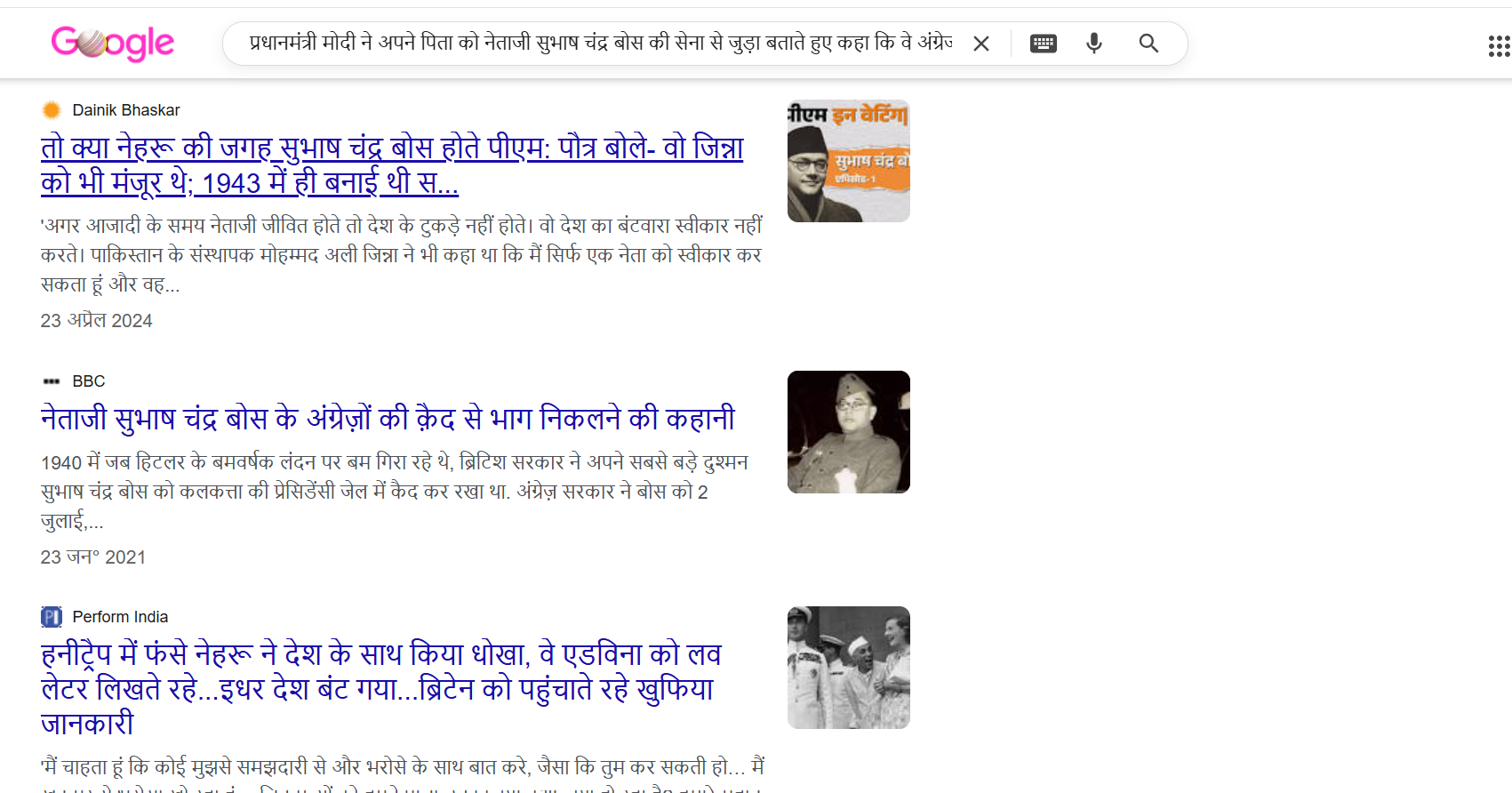
A thorough Google keyword search was conducted using relevant terms, but no credible news reports or official sources were found to back up the viral claim.
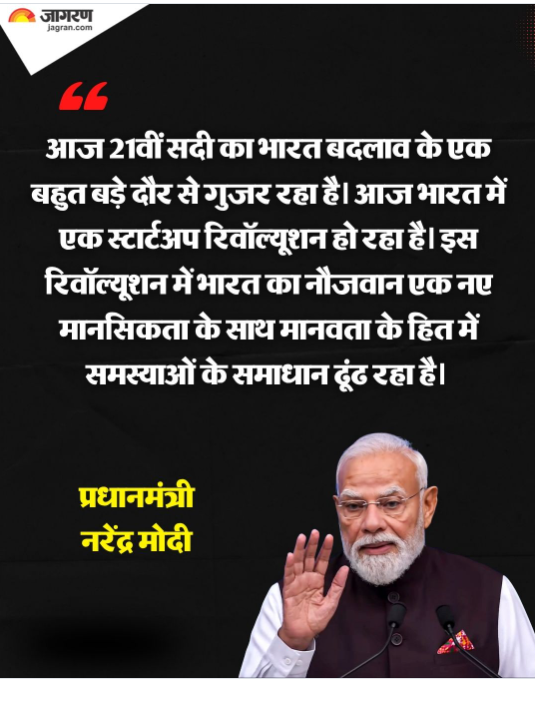
During the research, the original, authentic postcard published by Dainik Jagran was located. The original post actually quoted PM Modi speaking about India's startup ecosystem. Today, 21st-century India is going through a massive phase of transformation. A startup revolution is taking place in India today. In this revolution, the youth of India, with a fresh mindset, are finding solutions to problems for the welfare of humanity." https://www.instagram.com/p/DZkRUY2n2hi/
Conclusion
The research confirms that Prime Minister Narendra Modi never made any statement linking his father to Netaji Subhash Chandra Bose or Mahatma Gandhi's surrender advice. The viral image circulating on social media is morphed and edited to spread misinformation.
