
#FactCheck -AI-Edited Video Falsely Attributes Beauty Parlour Remark to PM Modi in Fuel Conservation Speech
Executive Summary
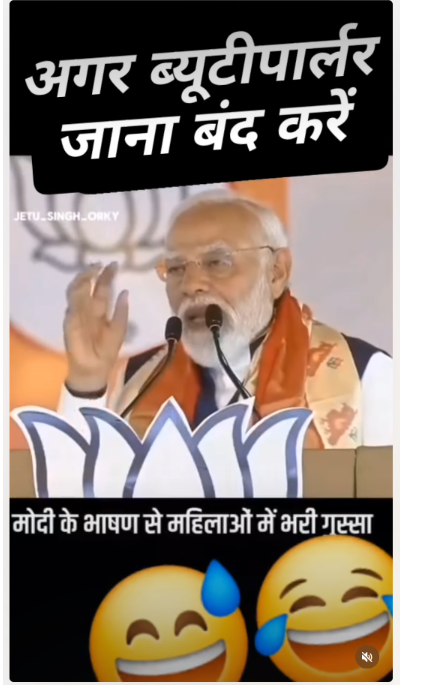
Amid ongoing tensions in West Asia, a video has been circulating on social media claiming that Prime Minister Narendra Modi urged women not to visit beauty parlours as part of an appeal related to fuel conservation. Users are widely sharing the clip as genuine. However, a fact-check by CyberPeace Research Wing has found the claim to be false. The research revealed that the original video, which discussed saving petrol, diesel and cooking gas, has been digitally edited using AI tools and shared with a misleading narrative.
Claim
An Instagram user shared the viral video on May 15, 2026, claiming that the Prime Minister advised women against visiting beauty parlours.
Fact Check
A keyword-based search on Google did not return any credible media reports supporting the viral claim. To verify the video, keyframes were extracted and run through reverse image search. The original footage was traced to the official YouTube channel of Prime Minister Narendra Modi, uploaded on May 10, 2026.
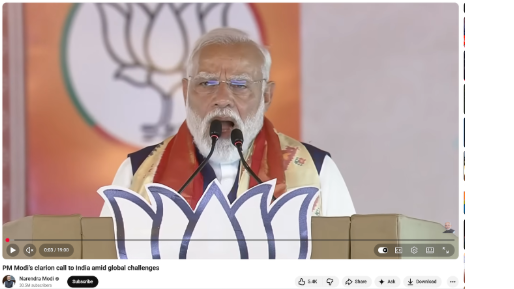
The video shows a rally held in Hyderabad, where the Prime Minister appealed to the public to save fuel by adopting work-from-home practices, promoting swadeshi goods, and refraining from purchasing gold for one year. However, nowhere in the full video is there any mention of advising women not to visit beauty parlours.
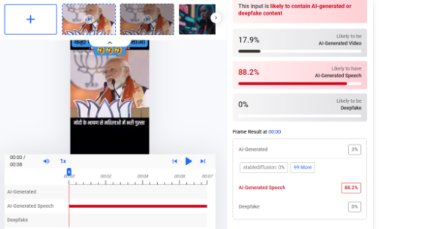
Further analysis also raised suspicion that the viral clip had been digitally altered using AI tools. The video was scanned using the HIVE Moderation AI detection tool, which indicated that it is approximately 88% likely to be AI-generated or manipulated.
Conclusion
The viral video is misleading. The original speech by Prime Minister Narendra Modi about conserving petrol, diesel and cooking gas has been edited using AI tools and circulated with a false claim targeting women visiting beauty parlours.

Related Blogs
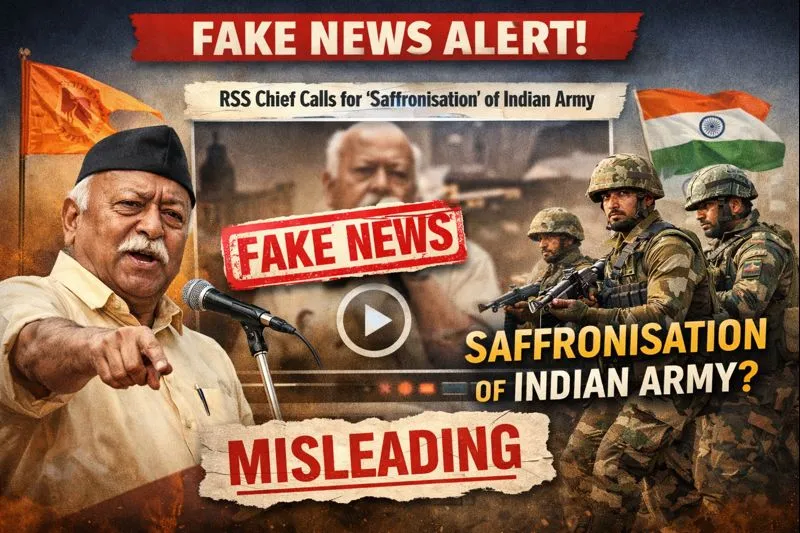
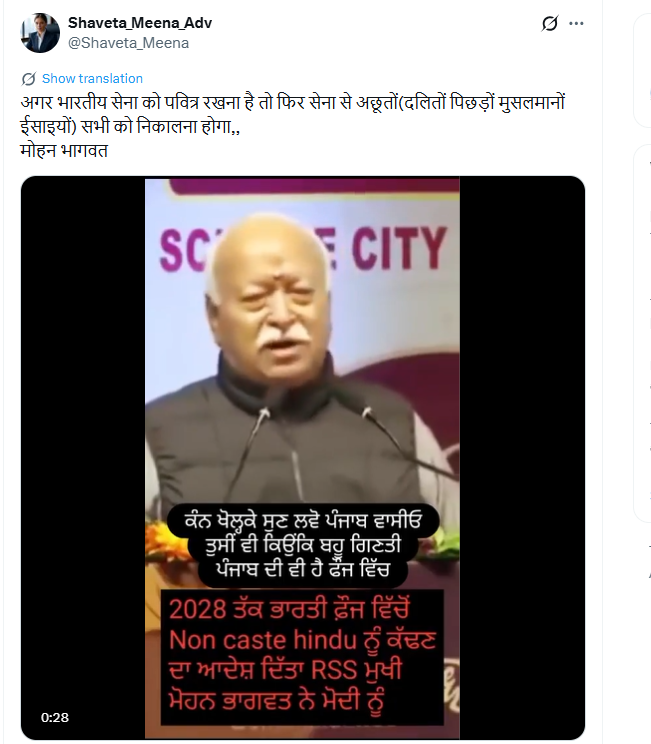
A video purportedly showing Rashtriya Swayamsevak Sangh (RSS) chief Mohan Bhagwat making remarks about the “saffronisation” of the Indian Army has been widely circulated on social media. The clip claims that Bhagwat called for the removal of non-Hindus from the armed forces and linked the issue to future political leadership changes in the country.
Claim
However, a verification by the Cyber Peace Foundation has established that the video is misleading and has been digitally manipulated.
In the video, Bhagwat is allegedly heard saying that unless more than 50 percent of non-Hindus are removed from the Indian Army by 2028, Prime Minister Narendra Modi would be replaced by Uttar Pradesh Chief Minister Yogi Adityanath. The clip further attributes another statement to him, suggesting that he would resign if the Prime Minister were to demand Nitish Kumar’s resignation.
By the time of publication, the video had been viewed over 7,000 times.( lINK, ARCHIVE Link, Screenshot
Fact Check:
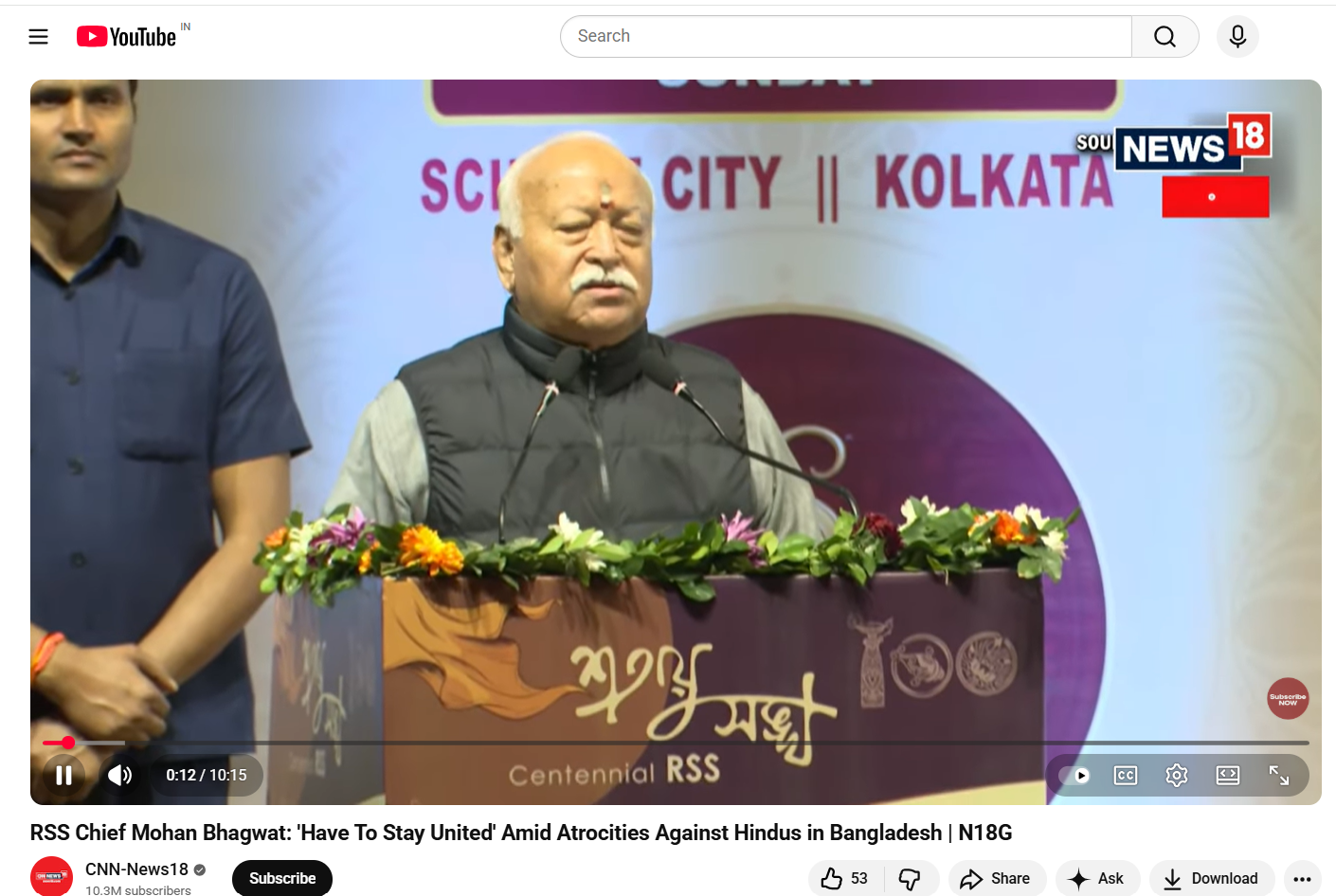
The reverse image search also directed the Desk to a video uploaded on CNN-News18’s official YouTube channel on December 21, 2025. The footage was found to be a longer version of the viral clip and was recorded at the RSS centenary event held in Kolkata on the same date. A comparison of both videos confirmed that the background visuals, stage setup and camera angles were identical.
However, a careful review of the original CNN-News18 video revealed that Mohan Bhagwat did not make any of the statements attributed to him in the viral clip.
In his original address, Bhagwat spoke about unity and referred to concerns over increasing atrocities against Hindus in Bangladesh. He made no reference to the Indian Army, nor did he comment on its composition or alleged saffronisation. Here is the link to the original video, along with a screenshot: https://www.youtube.com/watch?v=KnsAUGfBQBk&t=1s
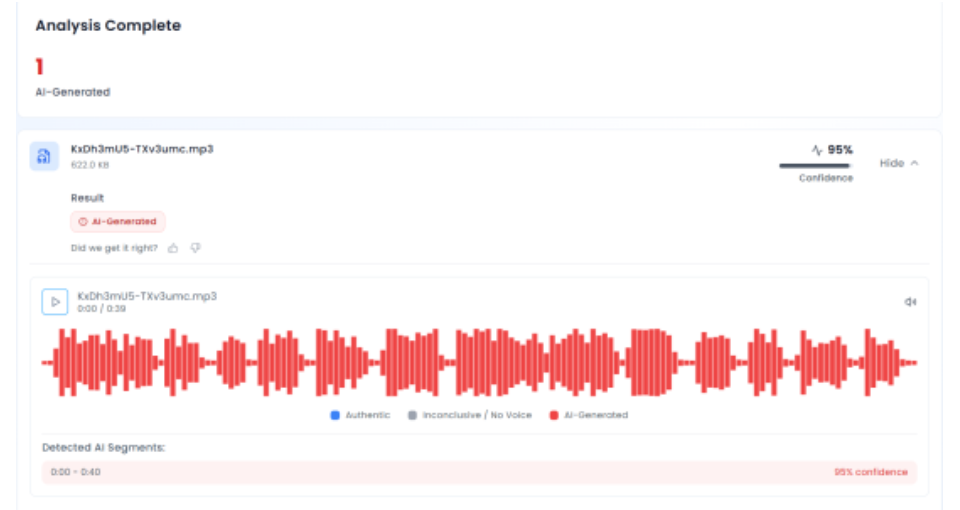
In the next phase of the investigation, the audio track from the viral video was extracted and analysed using the AI audio detection tool Aurigin. The tool’s assessment indicated that the voice heard in the clip was artificially generated, confirming that the audio did not originate from the original speech.
Conclusion
The claim that RSS chief Mohan Bhagwat called for the saffronisation of the Indian Army is false. PTI Fact Check found that the viral video was digitally manipulated, using genuine footage from an RSS centenary event but pairing it with an AI-generated audio track. The altered video was shared online to mislead viewers by falsely attributing statements Bhagwat never made.
Social media has become far more than a tool of communication, engagement and entertainment. It shapes politics, community identity, and even shapes agendas. When misused, the consequences can be grave: communal disharmony, riots, false rumours, harassment or worse. Emphasising the need for digital Atmanirbhar, Prime Minister Narendra Modi recently urged India’s youth to develop the country’s own social media platforms, like Facebook, Instagram and X, to ensure that the nation’s technological ecosystems remain secure and independent, reinforcing digital autonomy. This growing influence of platforms has sharpened the tussle between government regulation, the independence of social media companies, and the protection of freedom of expression in most countries.
Why Government Regulation Is Especially Needed
While self-regulation has its advantages, ‘real-world harms’ show why state oversight cannot be optional:
- Incitement to violence and communal unrest: Misinformation and hate speech can inflame tensions. In Manipur (May 2023), false posts, including unverified sexual-violence claims, spread online, worsening clashes. Authorities shut down mobile internet on 3 May 2023 to curb “disinformation and false rumours,” showing how quickly harmful content can escalate and why enforceable moderation rules matter.
- Fake news and misinformation: False content about health, elections or individuals spreads far faster than corrections. During COVID-19, an “infodemic” of fake cures, conspiracy theories and religious discrimination went viral on WhatsApp and Facebook, starting with false claims that the virus came from eating bats. The WHO warned of serious knock-on effects, and a Reuters Institute study found that although such claims by public figures were fewer, they gained the highest engagement, showing why self-regulation alone often fails to stop it.
Nepal’s Example:
Nepal provides a clear example of the tension between government regulation and the self-regulation tussle of social media. In 2023, the government issued rules requiring all social media platforms, whether local or foreign, to register with the Ministry of Communication and Information Technology, appoint a local contact person, and comply with Nepali law. By 2025, major platforms such as Facebook, Instagram, and YouTube had not met the registration deadline. In response, the Nepal Telecommunications Authority began blocking unregistered platforms until they complied. While journalists, civil-rights groups and Gen Z criticised the move as potentially limiting free speech and exposing corruption against the government. The government argued it was necessary to stop harmful content and misinformation. The case shows that without enforceable obligations, self-regulation can leave platforms unaccountable, but it must also balance with protecting free speech.
Self-Regulation: Strengths and Challenges
Most social-media companies prefer to self-regulate. They write community rules, trust & safety guidelines, and give users ways to flag harmful posts, and lean on a mix of staff, outside boards and AI filters to handle content that crosses the line. The big advantage here is speed: when something dangerous appears, a platform can react within minutes, far quicker than a court or lawmaker. Because they know their systems inside out, from user habits to algorithmic quirks, they can adapt fast.
But there’s a downside. These platforms thrive on engagement, hence sensational or hateful posts often keep people scrolling longer. That means the very content that makes money can also be the content that most needs moderating , a built-in conflict of interest.
Government Regulation: Strengths and Risks
Public rules make platforms answerable. Laws can require illegal content to be removed, force transparency and protect user rights. They can also stop serious harms such as fake news that might spark violence, and they often feel more legitimate when made through open, democratic processes.
Yet regulation can lag behind technology. Vague or heavy-handed rules may be misused to silence critics or curb free speech. Global enforcement is messy, and compliance can be costly for smaller firms.
Practical Implications & Hybrid Governance
For users, regulation brings clearer rights and safer spaces, but it must be carefully drafted to protect legitimate speech. For platforms, self-regulation gives flexibility but less certainty; government rules provide a level playing field but add compliance costs. For governments, regulation helps protect public safety, reduce communal disharmony, and fight misinformation, but it requires transparency and safeguards to avoid misuse.
Hybrid Approach
A combined model of self-regulation plus government regulation is likely to be most effective. Laws should establish baseline obligations: registration, local grievance officers, timely removal of illegal content, and transparency reporting. Platforms should retain flexibility in how they implement these obligations and innovate with tools for user safety. Independent audits, civil society oversight, and simple user appeals can help keep both governments and platforms accountable.
Conclusion
Social media has great power. It can bring people together, but it can also spread false stories, deepen divides and even stir violence. Acting on their own, platforms can move fast and try new ideas, but that alone rarely stops harmful content. Good government rules can fill the gap by holding companies to account and protecting people’s rights.
The best way forward is to mix both approaches, clear laws, outside checks, open reporting, easy complaint systems and support for local platforms, so the digital space stays safer and more trustworthy.
References
- https://timesofindia.indiatimes.com/india/need-desi-social-media-platforms-to-secure-digital-sovereignty-pm/articleshow/123327780.cms#
- https://www.bbc.com/news/world-asia-india-66255989
- https://nepallawsunshine.com/social-media-registration-in-nepal/ https://www.newsonair.gov.in/nepal-bans-26-unregistered-social-media-sites-including-facebook-whatsapp-instagram/
- https://hbr.org/2021/01/social-media-companies-should-self-regulate-now
- https://www.drishtiias.com/daily-updates/daily-news-analysis/social-media-regulation-in-india

Introduction
In the wake of the Spy Loan scandal, more than a dozen malicious loan apps were downloaded on Android phones from the Google Play Store, However, the number is significantly higher because they are also available on third-party marketplaces and questionable websites.
Unmasking the Scam
When a user borrows money, these predatory lending applications capture large quantities of information from their smartphone, which is then used to blackmail and force them into returning the total with hefty interest levels. While the loan amount is disbursed to users, these predatory loan apps request sensitive information by granting access to the camera, contacts, messages, logs, images, Wi-Fi network details, calendar information, and other personal information. These are then sent to loan shark servers.
The researchers have disclosed facts about the applications used by loan sharks to mislead consumers, as well as the numerous techniques used to circumvent some of the limitations imposed on the Play Store. Malware is often created with appealing user interfaces and promotes simple and rapid access to cash with high-interest payback conditions. The revelation of the Spy Loan scandal has triggered an immediate response from law enforcement agencies worldwide. There is an urgency to protect millions of users from becoming victims of malicious loan apps, it has become extremely important for law enforcement to unmask the culprits and dismantle the cyber-criminal network.
Aap’s banned: here is the list of the apps banned by Google Play Store :
- AA Kredit: इंस्टेंट लोन ऐप (com.aa.kredit.android)
- Amor Cash: Préstamos Sin Buró (com.amorcash.credito.prestamo)
- Oro Préstamo – Efectivo rápido (com.app.lo.go)
- Cashwow (com.cashwow.cow.eg)
- CrediBus Préstamos de crédito (com.dinero.profin.prestamo.credito.credit.credibus.loan.efectivo.cash)
- ยืมด้วยความมั่นใจ – ยืมด่วน (com.flashloan.wsft)
- PréstamosCrédito – GuayabaCash (com.guayaba.cash.okredito.mx.tala)
- Préstamos De Crédito-YumiCash (com.loan.cash.credit.tala.prestmo.fast.branch.mextamo)
- Go Crédito – de confianza (com.mlo.xango)
- Instantáneo Préstamo (com.mmp.optima)
- Cartera grande (com.mxolp.postloan)
- Rápido Crédito (com.okey.prestamo)
- Finupp Lending (com.shuiyiwenhua.gl)
- 4S Cash (com.swefjjghs.weejteop)
- TrueNaira – Online Loan (com.truenaira.cashloan.moneycredit)
- EasyCash (king.credit.ng)
- สินเชื่อปลอดภัย – สะดวก (com.sc.safe.credit)
Risks with several dimensions
SpyLoan's loan application violates Google's Financial Services policy by unilaterally shortening the repayment period for personal loans to a few days or any other arbitrary time frame. Additionally, the company threatens users with public embarrassment and exposure if they do not comply with such unreasonable demands.
Furthermore, the privacy rules presented by SpyLoan are misleading. While ostensibly reasonable justifications are provided for obtaining certain permissions, they are very intrusive practices. For instance, camera permission is ostensibly required for picture data uploads for Know Your Customer (KYC) purposes, and access to the user's calendar is ostensibly required to plan payment dates and reminders. However, both of these permissions are dangerous and can potentially infringe on users' privacy.
Prosecution Strategies and Legal Framework
The law enforcement agencies and legal authorities initiated prosecution strategies against the individuals who are involved in the Spy Loan Scandal, this multifaced approach involves international agreements and the exploration of innovative legal avenues. Agencies need to collaborate with International agencies to work on specific cyber-crime, leveraging the legal frameworks against digital fraud furthermore, the cross-border nature of the spy loan operation requires a strong legal framework to exchange information, extradition requests, and the pursuit of legal actions across multiple jurisdictions.
Legal Protections for Victims: Seeking Compensation and Restitution
As the legal battle unfolds in the aftermath of the Spy loan scam the focus shifts towards the victims, who suffer financial loss from such fraudulent apps. Beyond prosecuting culprits, the pursuit of justice should involve legal safeguards for victims. Existing consumer protection laws serve as a crucial shield for Spy Loan victims. These laws are designed to safeguard the rights of individuals against unfair practices.
Challenges in legal representation
As the legal hunt for justice in the Spy Loan scam progresses, it encounters challenges that demand careful navigation and strategic solutions. One of the primary obstacles in the legal pursuit of the Spy loan app lies in the jurisdictional complexities. Within the national borders, it’s quite challenging to define the jurisdiction that holds the authority, and a unified approach in prosecuting the offenders in various regions with the efforts of various government agencies.
Concealing the digital identities
One of the major challenges faced is the anonymity afforded by the digital realm poses a challenge in identifying and catching the perpetrators of the scam, the scammers conceal their identity and make it difficult for law enforcement agencies to attribute to actions against the individuals, this challenge can be overcome by joint effort by international agencies and using the advance digital forensics and use of edge cutting technology to unmask these scammers.
Technological challenges
The nature of cyber threats and crime patterns are changing day by day as technology advances this has become a challenge for legal authorities, the scammers explore vulnerabilities, making it essential, for law enforcement agencies to be a step ahead, which requires continuous training of cybercrime and cyber security.
Shaping the policies to prevent future fraud
As the scam unfolds, it has become really important to empower users by creating more and more awareness campaigns. The developers of the apps need to have a transparent approach to users.
Conclusion
It is really important to shape the policies to prevent future cyber frauds with a multifaced approach. Proposals for legislative amendments, international collaboration, accountability measures, technology protections, and public awareness programs all contribute to the creation of a legal framework that is proactive, flexible, and robust to cybercriminals' shifting techniques. The legal system is at the forefront of this effort, playing a critical role in developing regulations that will protect the digital landscape for years to come.
Safeguarding against spyware threats like SpyLoan requires vigilance and adherence to best practices. Users should exclusively download apps from official sources, meticulously verify the authenticity of offerings, scrutinize reviews, and carefully assess permissions before installation.
