
#FactCheck - Viral Video Falsely Linked to India; Actually from Bangladesh
A video circulating widely on social media shows a child throwing stones at a moving train, while a few other children can also be seen climbing onto the engine. The video is being shared with a communal narrative, with claims that the incident took place in India.
Cyber Peace Foundation’s research found the viral claim to be misleading. Our research revealed that the video is not from India, but from Bangladesh, and is being falsely linked to India on social media.
Claim:
On January 15, 2026, a Facebook user shared the viral video claiming it depicted an incident from India. The post carried a provocative caption stating, “We are not afraid of Pakistan outside our borders. We are afraid of the thousands of mini-Pakistans within India.” The post has been widely circulated, amplifying communal sentiments.
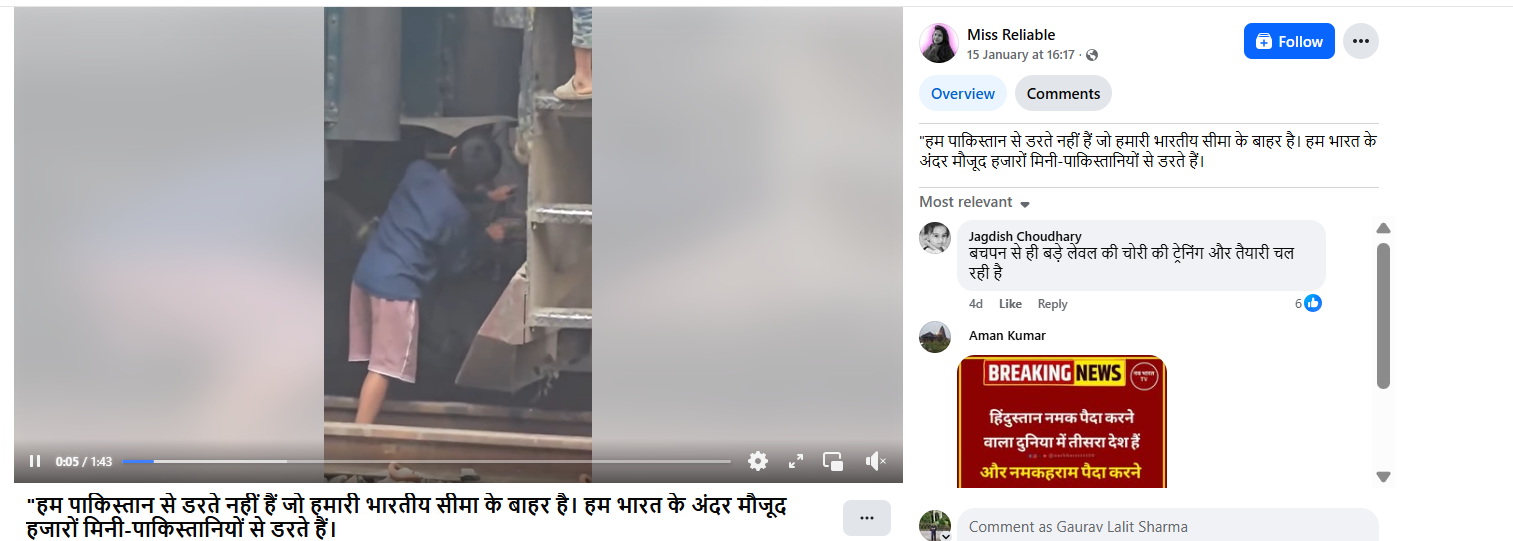
Fact Check:
To verify the authenticity of the video, we conducted a reverse image search using Google Lens by extracting keyframes from the viral clip. During this process, we found the same video uploaded on a Bangladeshi Facebook account named AL Amin Babukhali on December 28, 2025. The caption of the original post mentions Kamalapur, which is a well-known railway station in Bangladesh. This strongly indicates that the incident did not occur in India.
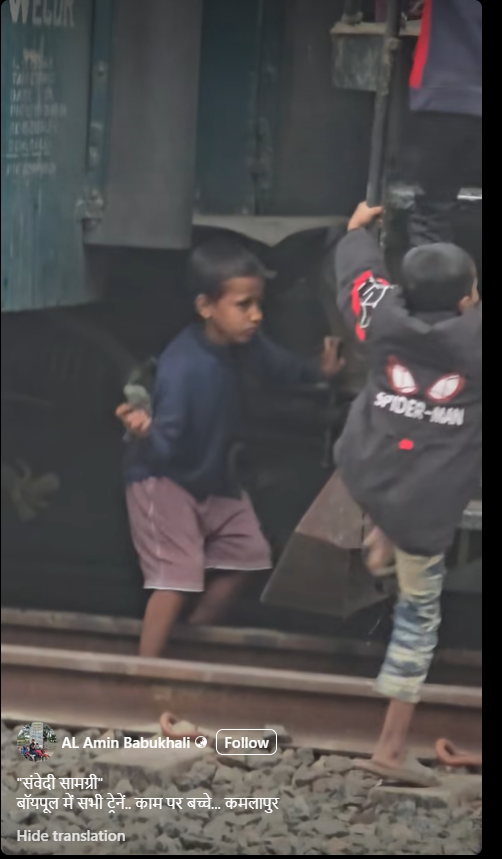
Further analysis of the video shows that the train engine carries the marking “BR”, along with text written in the Bengali language. “BR” stands for Bangladesh Railways, confirming the origin of the train. To corroborate this further, we searched for images related to Bangladesh Railways using Google’s open tools. We found multiple images on Getty Images showing train engines with the same design and markings as seen in the viral video. The visual match clearly establishes that the train belongs to Bangladesh Railways.

Conclusion
Our research confirms that the viral video is from Bangladesh, not India. It is being shared on social media with a false and misleading claim to give it a communal angle and link it to India.

Related Blogs

Executive Summary
Amid reports of a two-week ceasefire announced on April 8, 2026, between the United States and Iran, and claims that Pakistan is facilitating peace talks between the two nations, a video showing leaders of Pakistan and Iran meeting has gone viral on social media. The video is being shared with the claim that Pakistani leaders received a grand welcome upon arriving in Iran for the April 11, 2026 talks. However, an research by the CyberPeace found the claim to be misleading. The viral video is not recent but dates back to September 2025.
Claim
An X (formerly Twitter) user shared the video on April 10, 2026, claiming that it shows Pakistani leaders being warmly welcomed in Iran.
Post link:
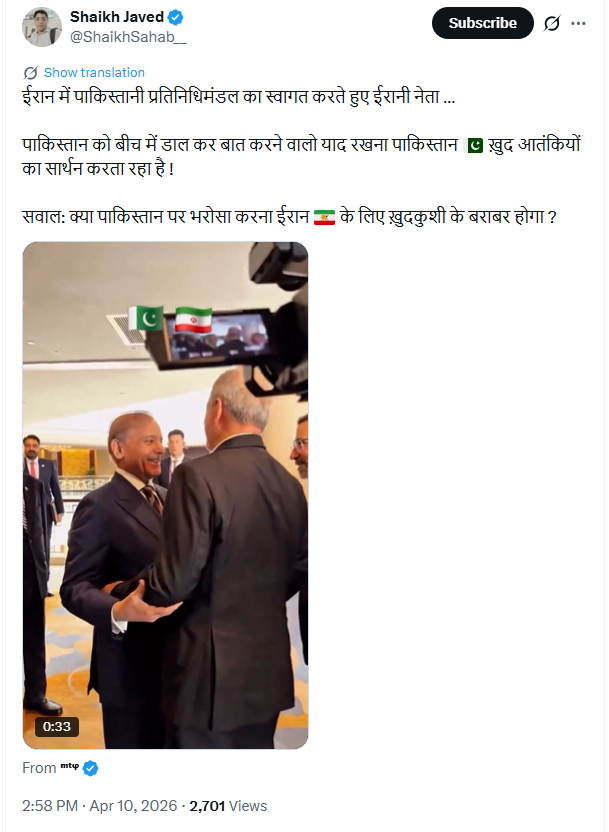
Fact Check
To verify the claim, we extracted keyframes from the viral video and conducted a reverse image search. This led us to the same video posted on a Facebook account named “Bhurgri Siddique” on September 1, 2025.
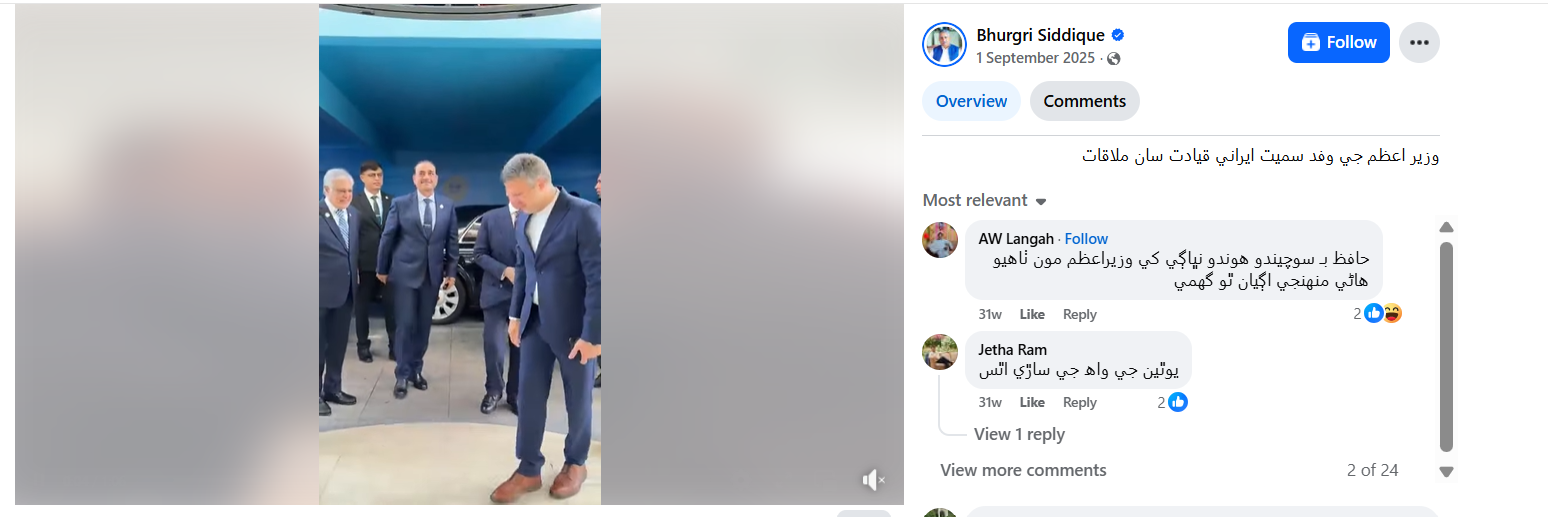
According to the available information, the video shows a meeting between a Pakistani delegation and Iranian leaders. Further keyword searches helped us locate a longer version of the same video on the official YouTube channel “HT Videos,” also uploaded on September 1, 2025. The video was from the Shanghai Cooperation Organisation Summit 2025 held in China, where leaders from various member countries, including Pakistan and Iran, had met.

Conclusion
The viral claim is misleading. The video does not show any recent meeting or welcome ceremony in Iran linked to the ongoing ceasefire talks. Instead, it is an old clip from September 2025, recorded during the SCO Summit in China. There is no evidence to suggest that the footage is related to current developments between the United States, Iran, and Pakistan. The video has been taken out of context and is being reshared with a false narrative to mislead users.
.webp)
Introduction
In the vast expanse of the digital cosmos, where the tendrils of the internet weave an intricate tapestry of connectivity, the channels through which information cascades have become a labyrinth of enigma and complexity. As we traverse this boundless virtual landscape, the line demarcating fact from fiction blurs, leaving the essence of truth adrift in a deluge of data. Amidst this ceaseless flow, platforms such as YouTube, Meta, and Twitter emerge as bulwarks in a pivotal struggle against the insidious spectres of fake news and disinformation—a struggle as fervent and consequential as any historical skirmish over the dominion of truth and influence.
Let us delve into a few case studies that illustrate the multifaceted nature of this digital warfare, where the stakes are nothing less than the integrity of public discourse and the sanctity of societal harmony.
Case 1: A Chief Minister's Stand Against Digital Deception
In the northeastern reaches of India, Assam's Chief Minister, Himanta Biswa Sarma, confronted disinformation head-on. With the spectre of elections looming like a storm on the horizon, he took to the microblogging site X to unveil a nefarious scheme—a doctored video intended to distort his speech and sow seeds of communal discord. 'See for yourself, as elections approach, how vested groups distort a speech with the criminal intention of spreading disinformation and communal disharmony. The long arms of the law will catch up with these elements,' declared Sarma, his words a clarion call for vigilance.
The counterfeit video, crafted to smear the Chief Minister's reputation, elicited a swift and decisive response from Assam's Director General of Police, G.P. Singh. 'Noted Sir. CID Assam would register a criminal case and investigate the people behind this,' assured Singh, signalling the readiness of the law to pursue the purveyors of falsehood.
Case 2: Waves of Deceit: Unverified Claims of Cancellations in the Maldives Tourism Controversy
The narrative shifts to the idyllic archipelago of the Maldives, where the azure waters belie a tumultuous undercurrent of diplomatic discord with India. Following disparaging remarks by Maldivian officials directed at Indian Prime Minister Narendra Modi, the social media sphere became rife with claims of Indian tourists en masse cancelling their sojourns to the island nation. Screenshots purporting to show cancelled bookings flooded platforms like X, with one user claiming to have annulled a reservation at the Palms Retreat, Fulhadhoo, to the tune of at least Rs 5 lakh, citing the officials' 'racist remarks.'
Initial reports from a few media outlets lent credence to this narrative of widespread cancellations. However, upon closer scrutiny, the veracity of these claims crumbled like a sandcastle at high tide. Concrete evidence to substantiate the alleged boycott was conspicuously absent, and neither travel agencies nor airlines corroborated the supposed trend.
The controversy was inflamed when PM Modi's visit to Lakshadweep, and subsequent social media posts praising the archipelago, spurred Indian users to champion Lakshadweep as an alternative to the Maldives. The vitriolic response from Maldivian ministers, who labelled Modi with derogatory remarks, ignited a firestorm on X, with hashtags like #BoycottMaldives and #MaldivesBoycott trending fervently.
Yet, the truth behind the cacophony of cancellation numbers remains shrouded in ambiguity, with no official acknowledgement from either government and a conspicuous absence of data from the tourism industry.
Case 3: Misinformation Highway: Unraveling the Fabrications in Bollywood's rumours or misinformation: Lies, Thumbnails, and Digital Dalliances
Gaze now turns to the bustling fabricated thumbnails or rumour taglines on uploaded videos on YouTube, where thumbnails emblazoned with tantalising texts beckon viewers with the promise of scandalous revelations. 'Pregnant? Divorced?' they shout, luring millions into their web with the allure of salacious 'news.' Yet, these are but mirages, baseless rumours masquerading as fact, or worse, complete fabrications.
The platform teems with counterfeit narratives and rumours, targeting the luminaries of Bollywood. Factors such as easy content uploading without strict scrutiny, a burgeoning digital footprint, and India's insatiable appetite for celebrity culture have created a fertile ground for the proliferation of such content. It is a testament to the power of the digital age, where anyone with a connection can craft a narrative and cast it into the ether, regardless of its foundation in reality.
We must arm ourselves with discernment and scepticism in this relentless onslaught of misinformation. The digital realm, for all its wonders, is also a battleground where the currency is truth, and the price of negligence is the erosion of our collective understanding. As we navigate this ever-evolving landscape, let us hold fast to the principles of verification and evidence, for they are the compass by which we can chart a course through the maelstrom of misinformation that seeks to engulf us.
Conclusion
In this era of digital enlightenment, it is incumbent upon us to discern the chaff from the wheat, to elevate the discourse beyond the mire of falsehoods. Let us endeavour to foster a digital polity that values truth, champions authenticity, and resolutely stands against the tide of disinformation that threatens to undermine the very fabric of our society.
References:
- https://www.indiatodayne.in/assam/video/assam-cm-exposes-fake-video-scheme-dgp-promises-swift-action-743097-2024-01-08
- https://www.thequint.com/news/webqoof/boycott-maldives-misinformation-on-trip-booking-cancellations
- https://www.thequint.com/news/webqoof/bollywood-fake-news-on-youtube-uses-divorce-pregnancy-and-arrests-for-misinformation
.webp)
Executive Summary:
A video circulating on social media claims that people in Balochistan, Pakistan, hoisted the Indian national flag and declared independence from Pakistan. The claim has gone viral, sparking strong reactions and spreading misinformation about the geopolitical scenario in South Asia. Our research reveals that the video is misrepresented and actually shows a celebration in Surat, Gujarat, India.

Claim:
A viral video shows people hoisting the Indian flag and allegedly declaring independence from Pakistan in Balochistan. The claim implies that Baloch nationals are revolting against Pakistan and aligning with India.

Fact Check:
After researching the viral video, it became clear that the claim was misleading. We took key screenshots from the video and performed a reverse image search to trace its origin. This search led us to one of the social media posts from the past, which clearly shows the event taking place in Surat, Gujarat, not Balochistan.

In the original clip, a music band is performing in the middle of a crowd, with people holding Indian flags and enjoying the event. The environment, language on signboards, and festive atmosphere all confirm that this is an Indian Independence Day celebration. From a different angle, another photo we found further proves our claim.

However, some individuals with the intention of spreading false information shared this video out of context, claiming it showed people in Balochistan raising the Indian flag and declaring independence from Pakistan. The video was taken out of context and shared with a fake narrative, turning a local celebration into a political stunt. This is a classic example of misinformation designed to mislead and stir public emotions.
To add further clarity, The Indian Express published a report on May 15 titled ‘Slogans hailing Indian Army ring out in Surat as Tiranga Yatra held’. According to the article, “A highlight of the event was music bands of Saifee Scout Surat, which belongs to the Dawoodi Bohra community, seen leading the yatra from Bhagal crossroads.” This confirms that the video was from an event in Surat, completely unrelated to Balochistan, and was falsely portrayed by some to spread misleading claims online.

Conclusion:
The claim that people in Balochistan hoisted the Indian national flag and declared independence from Pakistan is false and misleading. The video used to support this narrative is actually from Surat, Gujarat, India, during “The Tiranga Yatra”. Social media users are urged to verify the authenticity and source of content before sharing, to avoid spreading misinformation that may escalate geopolitical tensions.
- Claim: Mass uprising in Balochistan as citizens reject Pakistan and honor India.
- Claimed On: Social Media
- Fact Check: False and Misleading
