
How Should Deepfakes Be Regulated in India?
Introduction
The use of AI in content production, especially images and videos, is changing the foundations of evidence. AI-generated videos and images can mirror a person’s facial features, voice, or actions with a level of fidelity to which the average individual may not be able to distinguish real from fake. The ability to provide creative solutions is indeed a beneficial aspect of this technology. However, its misuse has been rapidly escalating over recent years. This creates threats to privacy and dignity, and facilitates the creation of dis/misinformation. Its real-world consequences are the manipulation of elections, national security threats, and the erosion of trust in society.
Why India Needs Deepfake Regulation
Deepfake regulation is urgently needed in India, evidenced by the recent Rashmika Mandanna incident, where a hoax deepfake of an actress created a scandal throughout the country. This was the first time that an individual's image was superimposed on the body of another woman in a viral deepfake video that fooled many viewers and created outrage among those who were deceived by the video. The incident even led to law enforcement agencies issuing warnings to the public about the dangers of manipulated media.
This was not an isolated incident; many influencers, actors, leaders and common people have fallen victim to deepfake pornography, deepfake speech scams, defraudations, and other malicious uses of deepfake technology. The rapid proliferation of deepfake technology is outpacing any efforts by lawmakers to regulate its widespread use. In this regard, a Private Member’s Bill was introduced in the Lok Sabha in its Winter Session. This proposal was presented to the Lok Sabha as an individual MP's Private Member's Bill. Even though these have had a low rate of success in being passed into law historically, they do provide an opportunity for the government to take notice of and respond to emerging issues. In fact, Private Member's Bills have been the catalyst for government action on many important matters and have also provided an avenue for parliamentary discussion and future policy creation. The introduction of this Bill demonstrates the importance of addressing the public concern surrounding digital impersonation and demonstrates that the Parliament acknowledges digital deepfakes to be a significant concern and, therefore, in need of a legislative framework to combat them.
Key Features Proposed by the New Deepfake Regulation Bill
The proposed legislation aims to create a strong legal structure around the creation, distribution and use of deepfake content in India. Its five core proposals are:
1. Prior Consent Requirement: individuals must give their written approval before producing or distributing deepfake media, including digital representations of themselves, as well as their faces, images, likenesses and voices. This aims to protect women, celebrities, minors, and everyday citizens against the use of their identities with the intent to harm them or their reputations or to harass them through the production of deepfakes.
2. Penalties for Malicious Deepfakes: Serious criminal consequences should be placed for creating or sharing deepfake media, particularly when it is intended to cause harm (defame, harass, impersonate, deceive or manipulate another person). The Bill also addresses financially fraudulent use of deepfakes, political misinformation, interfering with elections and other types of explicit AI-generated media.
3. Establishment of a Deepfake Task Force: To look at the potential impact of deepfakes on national security, elections and public order, as well as on public safety and privacy. This group will work with academic institutions, AI research labs and technology companies to create advanced tools for the detection of deepfakes and establish best practices for the safe and responsible use of generative AI.
4. Creation of a Deepfake Detection and Awareness Fund: To assist with the development of tools for detecting deepfakes, increasing the capacity of law enforcement agencies to investigate cybercrime, promoting public awareness of deepfakes through national campaigns, and funding research on artificial intelligence safety and misinformation.
How Other Countries Are Handling Deepfakes
1. United States
Many States in the United States, including California and Texas, have enacted laws to prohibit the use of politically deceptive deepfakes during elections. Additionally, the Federal Government is currently developing regulations requiring that AI-generated content be clearly labelled. Social Media Platforms are also being encouraged to implement a requirement for users to disclose deepfakes.
2. United Kingdom
In the United Kingdom, it is illegal to create or distribute intimate deepfake images without consent; violators face jail time. The Online Safety Act emphasises the accountability of digital media providers by requiring them to identify, eliminate, and avert harmful synthetic content, which makes their role in curating safe environments all the more important.
3. European Union:
The EU has enacted the EU AI Act, which governs the use of deepfakes by requiring an explicit label to be affixed to any AI-generated content. The absence of a label would subject an offending party to potentially severe regulatory consequences; therefore, any platform wishing to do business in the EU should evaluate the risks associated with deepfakes and adhere strictly to the EU's guidelines for transparency regarding manipulated media.
4. China:
China has among the most rigorous regulations regarding deepfakes anywhere on the planet. All AI-manipulated media will have to be marked with a visible watermark, users will have to authenticate their identities prior to being allowed to use advanced AI tools, and online platforms have a legal requirement to take proactive measures to identify and remove synthetic materials from circulation.
Conclusion
Deepfake technology has the potential to be one of the greatest (and most dangerous) innovations of AI technology. There is much to learn from incidents such as that involving Rashmika Mandanna, as well as the proliferation of deepfake technology that abuses globally, demonstrating how easily truth can be altered in the digital realm. The new Private Member's Bill created by India seeks to provide for a comprehensive framework to address these abuses based on prior consent, penalties that actually work, technical preparedness, and public education/awareness. With other nations of the world moving towards increased regulation of AI technology, proposals such as this provide a direction for India to become a leader in the field of responsible digital governance.
References
- https://www.ndtv.com/india-news/lok-sabha-introduces-bill-to-regulate-deepfake-content-with-consent-rules-9761943
- https://m.economictimes.com/news/india/shiv-sena-mp-introduces-private-members-bill-to-regulate-deepfakes/articleshow/125802794.cms
- https://www.bbc.com/news/world-asia-india-67305557
- https://www.akingump.com/en/insights/blogs/ag-data-dive/california-deepfake-laws-first-in-country-to-take-effect
- https://codes.findlaw.com/tx/penal-code/penal-sect-21-165/
- https://www.mishcon.com/news/when-ai-impersonates-taking-action-against-deepfakes-in-the-uk#:~:text=As%20of%2031%20January%202024,of%20intimate%20deepfakes%20without%20consent.
- https://www.politico.eu/article/eu-tech-ai-deepfakes-labeling-rules-images-elections-iti-c2pa/
- https://www.reuters.com/article/technology/china-seeks-to-root-out-fake-news-and-deepfakes-with-new-online-content-rules-idUSKBN1Y30VT/

Related Blogs

Executive Summary
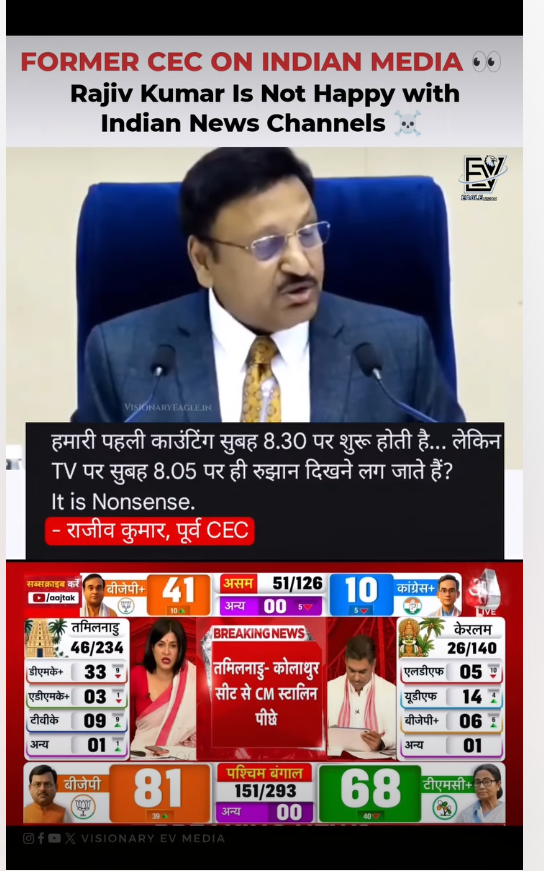
Following the results of the recent West Bengal elections, a video of former Chief Election Commissioner Rajiv Kumar has gone viral on social media. In the clip, Kumar is seen questioning television news channels over their election-result coverage and alleged early “trends” before the actual counting process begins. In the viral video, Rajiv Kumar can be heard saying, “When counting begins, channels start showing trends from 8:05 AM itself, which is nonsense. The first round of counting starts only at 8:30 AM. We have evidence that leads were being shown before that. Is it possible that these early trends are shown just to justify exit polls?”The video is being widely shared with the claim that Kumar made these remarks after the recently concluded West Bengal Assembly elections Research conducted by CyberPeace Research Wing found that a 2024 video of former Chief Election Commissioner Rajiv Kumar is being misleadingly shared as a recent statement made after the West Bengal election results.
Claim
An Instagram user shared the viral clip suggesting that the former Election Commissioner made these comments in the context of the latest West Bengal poll results.
Fact Check
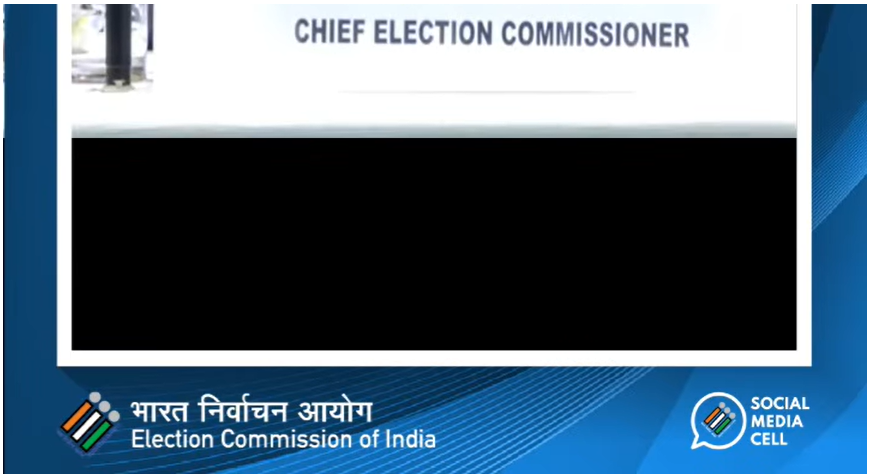
Using relevant keyword searches, we traced the original source of the clip to an official post shared by the Election Commission of Indiaon Facebook on October 15, 2024. The video was part of a press conference announcing the Assembly election schedule for Maharashtra and Jharkhand.
We also found the complete live-streamed press conference on the official YouTube channel of the Election Commission.
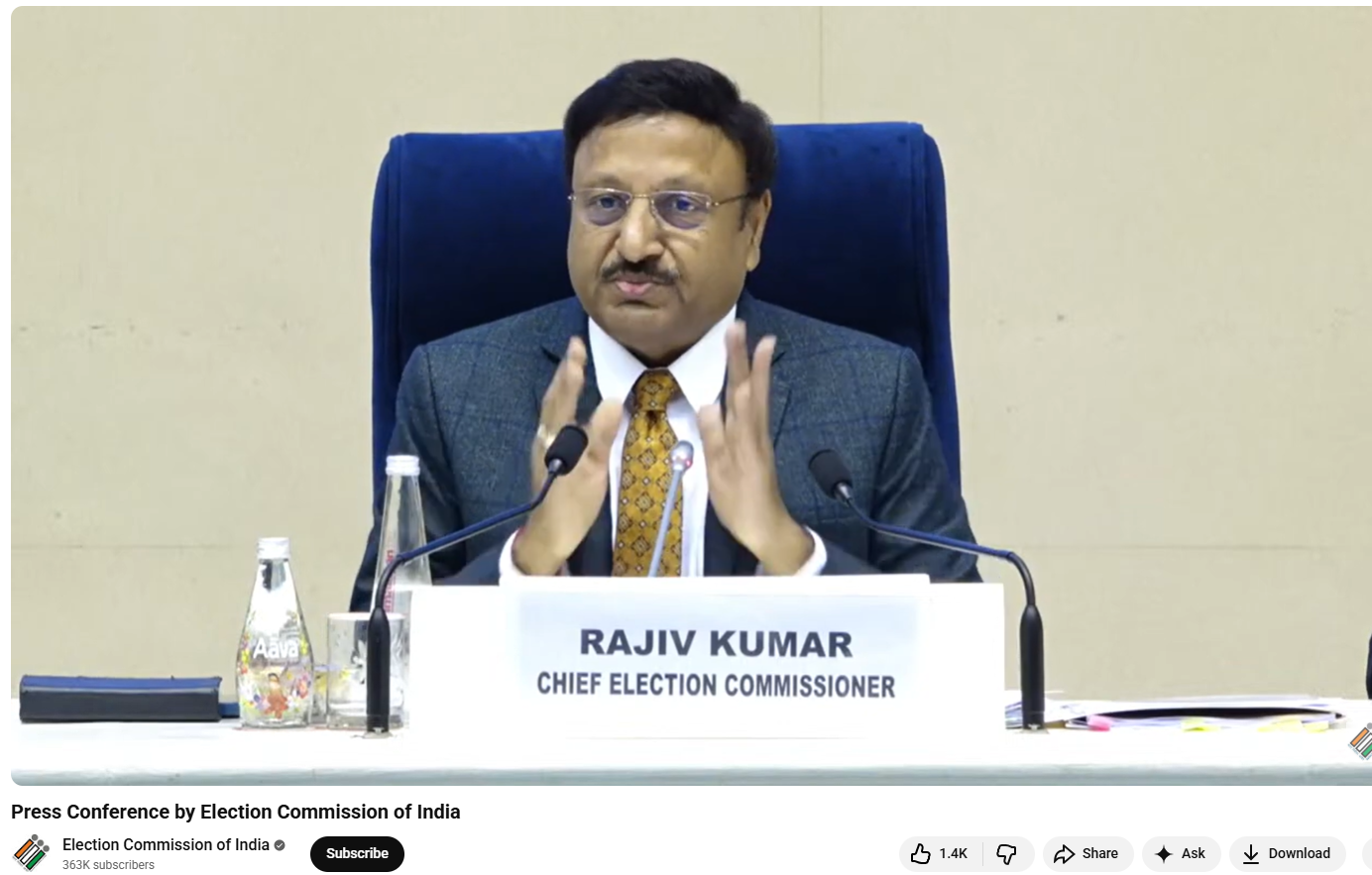
During the press conference, around the 26:45-minute mark, an ANI journalist referred to discrepancies between exit polls and actual Lok Sabha election results and asked whether such situations fuel doubts over EVMs among the public. Responding to the question at around 30:27 minutes, Rajiv Kumar spoke about the need for self-regulation in electronic media and concerns over premature “trends” shown during counting day. He said that exit polls often create public expectations despite lacking a clear scientific basis and questioned why TV channels begin displaying leads even before the first official counting round starts.
Conclusion
The viral claim is misleading. The video of former Chief Election Commissioner Rajiv Kumar is not related to the recent West Bengal election results. The clip is from an October 15, 2024 press conference held to announce the Maharashtra and Jharkhand Assembly election schedule and is now being falsely shared in a misleading context after the West Bengal polls.

Introduction
In the new age of technologies the internet and social media continue to witness a surge in deepfake videos a technological phenomenon that blurs the line between reality and fiction. The string of deepfake videos of Bollywood actors and other famous personalities has raised serious concerns. While Prime Minister Narendra Modi spoke against the risks of artificial intelligence at the G20 Virtual Summit. The central government has recently announced that it will soon set up dedicated regulations to tackle this Menace. This will include holding social media platforms and creators responsible for their actions against the rules and regulations. Very often most people shy away from initiating a legal process or taking action while being victims of misuse of fast-paced tech but the government has announced its big support to the victims and promised to stand by complaints against deepfake videos especially this includes helping individuals to report the incidents and any violations by platforms.
Social media platforms to realign their policies as per the Indian laws
The Ministry of Electronics and Information Technology (MeitY) announced on 24th November 2023 that it will be giving social media platforms seven days time period to align their terms of service and other policies with Indian laws and regulations in order to address the issue of hosting of deepfakes on these platforms. All platforms must align and transform their terms of use with their users to be consistent with the 12 areas that are prohibited under rule 3(1)(b) of the Information Technology (IT) Rules, 2021.
The platforms will ensure harmonization and alignment of their terms & policies so that every user on every platform is aware that when they use a platform the platform intends to be a safe and trusted platform and the platform will not tolerate these 12 types of content or information that have been prohibited under the IT Act and the IT rules. The government approach is to collectively advocate for responsible and safe use of the Internet. The government has taken a proactive step in partnership with these social media platforms to ensure an era where such platforms will be a lot more responsible and a lot more responsive to the expectations under the law and more compliant.
Officer to be appointed under rule 7
As Deepfake Videos continue to surface on social media, the Government has geared up to curb such content online. Mr. Rajeev Chandrasekhar Minister of State, (Meity), stated that the government will soon appoint an officer to take appropriate action against deepfake videos. This statement came after the government meeting with industry stakeholders and important players held on 24 Nov 2023. He added that Meity and the government of India will nominate an officer under rule 7 (IT rules 2021) and will ensure full compliance expectations from all the platforms. An officer appointed under Rule 7, will be entrusted with building a mechanism where users can put in their complaints regarding deepfakes and MeitY may also assist such aggrieved users with filing FIRs in such cases. Mr. Rajeev Chandrasekhar, Minister of State, (Meity) also added that we will also be creating a platform where it will be very easy for netizens to bring to the attention of the government of India and notices of allegations or reports of violation of law by the platforms and the rule 7 officer will take that digital platform information and respond accordingly.
The Information Technology (Intermediary Guidelines and Digital Media Ethics Code) Rules, 2021 (updated as on 6.4.2023)
Rule 3(1)(b) states that intermediaries shall inform its rules and regulations, privacy policy and user agreement to the user and shall make reasonable efforts to ‘restrict’ the users from hosting, displaying, uploading, modifying, publishing, transmitting, store, update or sharing any information that is prohibited under this rule which also includes deepfake, misinformation, CSAM(Child sexual abusive material) etc. As per rule 3(2)(b) Intermediaries shall remove or disable access within 24 hours of receipt of complaints of contents that expose the private areas of individuals, show such individuals in full or partial nudity or in a sexual act or is in the nature of impersonation including morphed images etc.
Ongoing Efforts Ahead of Crucial Meeting with Tech Giants
Ahead of the government meeting with online platforms such as Google, Facebook, and YouTube on Friday, 24th November 2023, Mr. Rajeev Chandrasekhar Minister of State, (Meity) added that way back from October 2022 the government of India had been alerting them to the threat of misinformation and deepfakes which are part of misinformation. He further added that the current IT rules under the IT Act provide for adequate compliance requirements on their part to deal with deepfake.
Deepfake Misinformation
Misinformation powered by AI becoming an even more potent force to disrupt and to mislead and to create chaos and confusion at a scale and of a type that is deeply detrimental. Deepfakes in a very simple basic way is misinformation which is powered by or enhanced by AI. Video-based deepfake misinformation is more dangerous since it has a greater reach as video consumption today is the preferred choice by users on the internet.
Way forward
The Honorable Prime Minister has raised the issue that deep fakes are deeply disruptive they can create divisions and all kinds of disruptions in communities, in families and therefore misuse of deepfake technology is a very clear present danger to the safe and trusted internet.
The Government is on its way to draft a dedicated legislation dedicated to tackling deepfakes.
Even as we speak to a future regulation and a future law which is certainly required given that our IT Act is 23 years old. However current IT rules provide for compliance requirements by the platforms on misinformation patently false information and deepfakes. Followed by the recent government advisory on misinformation and deepfake.
Conclusion
Prime Minister alerting of the dangers of deepfakes online. The government is now in the process of starting to look very seriously into this issue and also issued guidelines for intermediaries and in a finite period of time it is hoped that the threat of deep fakes would actually no longer exist in in our system. The government made it clear that apart from people spreading deepfake videos, the platforms making them spread and not taking action will also be liable they are currently liable and will be even more so in future after new rules and regulations are brought in.
References:
- https://www.moneycontrol.com/news/technology/deepfakes-meity-gives-social-media-platforms-7-day-ultimatum-to-align-their-policies-to-indian-laws-and-regulations-11805521.html
- https://www.azbpartners.com/bank/amendments-to-the-information-technology-intermediary-guidelines-and-digital-media-ethics-code-rules-2021/#:~:text=Prior%20to%20the%20amendment%2C%20under%20Rule%203(1)
- https://www.drishtiias.com/daily-updates/daily-news-analysis/amendments-to-the-it-rules-2021
- https://youtu.be/zmI2ml1d_Es?feature=shared
- https://pib.gov.in/PressReleaseIframePage.aspx?PRID=1975445
.webp)
Introduction
Digitalisation presents both opportunities and challenges for micro, small, and medium enterprises (MSMEs) in emerging markets. Digital tools can increase business efficiency and reach but also increase exposure to misinformation, fraud, and cyber attacks. Such cyber threats can lead to financial losses, reputational damage, loss of customer trust, and other challenges hindering MSMEs' ability and desire to participate in the digital economy.
The current information dump is a major component of misinformation. Misinformation spreads or emerges from online sources, causing controversy and confusion in various fields including politics, science, medicine, and business. One obvious adverse effect of misinformation is that MSMEs might lose trust in the digital market. Misinformation can even result in the devaluation of a product, sow mistrust among customers, and negatively impact the companies’ revenue. The reach of and speed with which misinformation can spread and ruin companies’ brands, as well as the overall difficulty businesses face in seeking recourse, may discourage MSMEs from fully embracing the digital ecosystem.
MSMEs are essential for innovation, job development, and economic growth. They contribute considerably to the GDP and account for a sizable share of enterprises. They serve as engines of economic resilience in many nations, including India. Hence, a developing economy’s prosperity and sustainability depend on the MSMEs' growth and such digital threats might hinder this process of growth.
There are widespread incidents of misinformation on social media, and these affect brand and product promotion. MSMEs also rely on online platforms for business activities, and threats such as misinformation and other digital risks can result in reputational damage and financial losses. A company's reputation being tarnished due to inaccurate information or a product or service being incorrectly represented are just some examples and these incidents can cause MSMSs to lose clients and revenue.
In the digital era, MSMEs need to be vigilant against false information in order to preserve their brand name, clientele, and financial standing. In the interconnected world of today, these organisations must develop digital literacy and resistance against misinformation in order to succeed in the long run. Information resilience is crucial for protecting and preserving their reputation in the online market.
The Impact of Misinformation on MSMEs
Misinformation can have serious financial repercussions, such as lost sales, higher expenses, legal fees, harm to the company's reputation, diminished consumer trust, bad press, and a long-lasting unfavourable impact on image. A company's products may lose value as a result of rumours, which might affect both sales and client loyalty.
Inaccurate information can also result in operational mistakes, which can interrupt regular corporate operations and cost the enterprise a lot of money. When inaccurate information on a product's safety causes demand to decline and stockpiling problems to rise, supply chain disruptions may occur. Misinformation can also lead to operational and reputational issues, which can cause psychological stress and anxiety at work. The peace of the workplace and general productivity may suffer as a result. For MSMEs, false information has serious repercussions that impact their capacity to operate profitably, retain employees, and maintain a sustainable business. Companies need to make investments in cybersecurity defence, legal costs, and restoring consumer confidence and brand image in order to lessen the effects of false information and ensure smooth operations.
When we refer to the financial implications caused by misinformation spread in the market, be it about the product or the enterprise, the cost is two-fold in all scenarios: there is loss of revenue and then the organisation has to contend with the costs of countering the impact of the misinformation. Stock Price Volatility is one financial consequence for publicly-traded MSMEs, as misinformation can cause stock price fluctuations. Potential investors might be discouraged due to false negative information.
Further, the reputational damage consequences of misinformation on MSMEs is also a serious concern as a loss of their reputation can have long-term damages for a carefully-cultivated brand image.
There are also operational disruptions caused by misinformation: for instance, false product recalls can take place and supplier mistrust or false claims about supplier reliability can disrupt procurement leading to disruptions in the operations of MSMEs.
Misinformation can negatively impact employee morale and productivity due to its physiological effects. This leads to psychological stress and workplace tensions. Staff confidence is also affected due to the misinformation about the brand. Internal operational stability is a core component of any organisation’s success.
Misinformation: Key Risk Areas for MSMEs
- Product and Service Misinformation
For MSMEs, misinformation about products and services poses a serious danger since it undermines their credibility and the confidence clients place in the enterprise and its products or services. Because this misleading material might mix in with everyday activities and newsfeeds, viewers may find it challenging to identify fraudulent content. For example, falsehoods and rumours about a company or its goods may travel quickly through social media, impacting the confidence and attitude of customers. Algorithms that favour sensational material have the potential to magnify disinformation, resulting in the broad distribution of erroneous information that can harm a company's brand.
- False Customer Reviews and Testimonials
False testimonies and evaluations pose a serious risk to MSMEs. These might be abused to damage a company's brand or lead to unfair competition. False testimonials, for instance, might mislead prospective customers about the calibre or quality of a company’s offerings, while phony reviews can cause consumers to mistrust a company's goods or services. These actions frequently form a part of larger plans by rival companies or bad individuals to weaken a company's position in the market.
- Misleading Information about Business Practices
False statements or distortions regarding a company's operations constitute misleading information about business practices. This might involve dishonest marketing, fabrications regarding the efficacy or legitimacy of goods, and inaccurate claims on a company's compliance with laws or moral principles. Such incorrect information can result in a decline in consumer confidence, harm to one's reputation, and even legal issues if consumers or rival businesses act upon it. Even before the truth is confirmed, for example, allegations of wrongdoing or criminal activity pertaining can inflict a great deal of harm, even if they are disproven later.
- Fake News Related to Industry and Market Conditions
By skewing consumer views and company actions, fake news about market and industry circumstances can have a significant effect on MSMEs. For instance, false information about market trends, regulations, or economic situations might make consumers lose faith in particular industries or force corporations to make poor strategic decisions. The rapid dissemination of misinformation on online platforms intensifies its effects on enterprises that significantly depend on digital engagement for their operations.
Factors Contributing to the Vulnerability of MSMEs
- Limited Resources for Verification
MSMEs have a small resource pool. Information verification is typically not a top priority for most. MSMEs usually lack the resources needed to verify the information and given their limited resources, they usually tend to deploy the same towards other, more seemingly-critical functions. They are more susceptible to misleading information because they lack the capacity to do thorough fact-checking or validate the authenticity of digital content. Technology tools, human capital, and financial resources are all in low supply but they are essential requirements for effective verification processes.
- Inadequate Digital Literacy
Digital literacy is required for effective day-to-day operations. Fake reviews, rumours, or fake images commonly used by malicious actors can result in increased scrutiny or backlash against the targeted business. The lack of awareness combined with limited resources usually spells out a pale redressal plan on part of the affected MSME. Due to their low digital literacy in this domain, a large number of MSMEs are more susceptible to false information and other online threats. Inadequate knowledge and abilities to use digital platforms securely and effectively can result in making bad decisions and raising one's vulnerability to fraud, deception, and online scams.
- Lack of Crisis Management Plans
MSMEs frequently function without clear-cut procedures for handling crises. They lack the strategic preparation necessary to deal with the fallout from disinformation and cyberattacks. Proactive crisis management plans usually incorporate procedures for detecting, addressing, and lessening the impact of digital harms, which are frequently absent from MSMEs.
- High Dependence on Social Media and Online Platforms
The marketing strategy for most MSMEs is heavily reliant on social media and online platforms. While the digital-first nature of operations reduces the need for a large capital to set up in the form of stores or outlets, it also gives them a higher need to stay relevant to the trends of the online community and make their products attractive to the customer base. However, MSMEs are depending more and more on social media and other online channels for marketing, customer interaction, and company operations. These platforms are really beneficial, but they also put organisations at a higher risk of false information and online fraud. Heavy reliance on these platforms coupled with the absence of proper security measures and awareness can result in serious interruptions to operations and monetary losses.
CyberPeace Policy Recommendations to Enhance Information Resilience for MSMEs
CyberPeace advocates for establishing stronger legal frameworks to protect MSMEs from misinformation. Governments should establish regulations to build trust in online business activities and mitigate fraud and misinformation risks. Mandatory training programs should be implemented to cover online safety and misinformation awareness for MSME businesses. Enhanced reporting mechanisms should be developed to address digital harm incidents promptly. Governments should establish strict penalties for deliberate inaccurate misinformation spreaders, similar to those for copyright or intellectual property violations. Community-based approaches should be encouraged to help MSMEs navigate digital challenges effectively. Donor communities and development agencies should invest in digital literacy and cybersecurity training for MSMEs, focusing on misinformation mitigation and safe online practices. Platform accountability should be increased, with social media and online platforms playing a more active role in removing content from known scam networks and responding to fraudulent activity reports. There should be investment in comprehensive digital literacy solutions for MSMEs that incorporate cyber hygiene and discernment skills to combat misinformation.
Conclusion
Misinformation poses a serious risk to MSME’s digital resilience, operational effectiveness, and financial stability. MSMEs are susceptible to false information because of limited technical resources, lack of crisis management strategies, and insufficient digital literacy. They are also more vulnerable to false information and online fraud because of their heavy reliance on social media and other online platforms. To address these challenges it is significant to strengthen their cyber hygiene and information resilience. Robust policy and regulatory frameworks are encouraged, promoting and mandating online safety training programmes, and improved reporting procedures, are required to overall enhance the information landscape.
References:
- https://www.dai.com/uploads/digital-downsides.pdf
- https://www.indiacode.nic.in/bitstream/123456789/2013/3/A2006-27.pdf
- https://pib.gov.in/PressReleaseIframePage.aspx?PRID=1946375
- https://dai-global-digital.com/digital-downsides-the-economic-impact-of-misinformation-and-other-digital-harms-on-msmes-in-kenya-india-and-cambodia.html
- https://www.dai.com/uploads/digital-downsides.pdf
