#FactCheck - AI-Generated Clip of Lion Carrying Woman Shared as Real Incident
Executive Summary
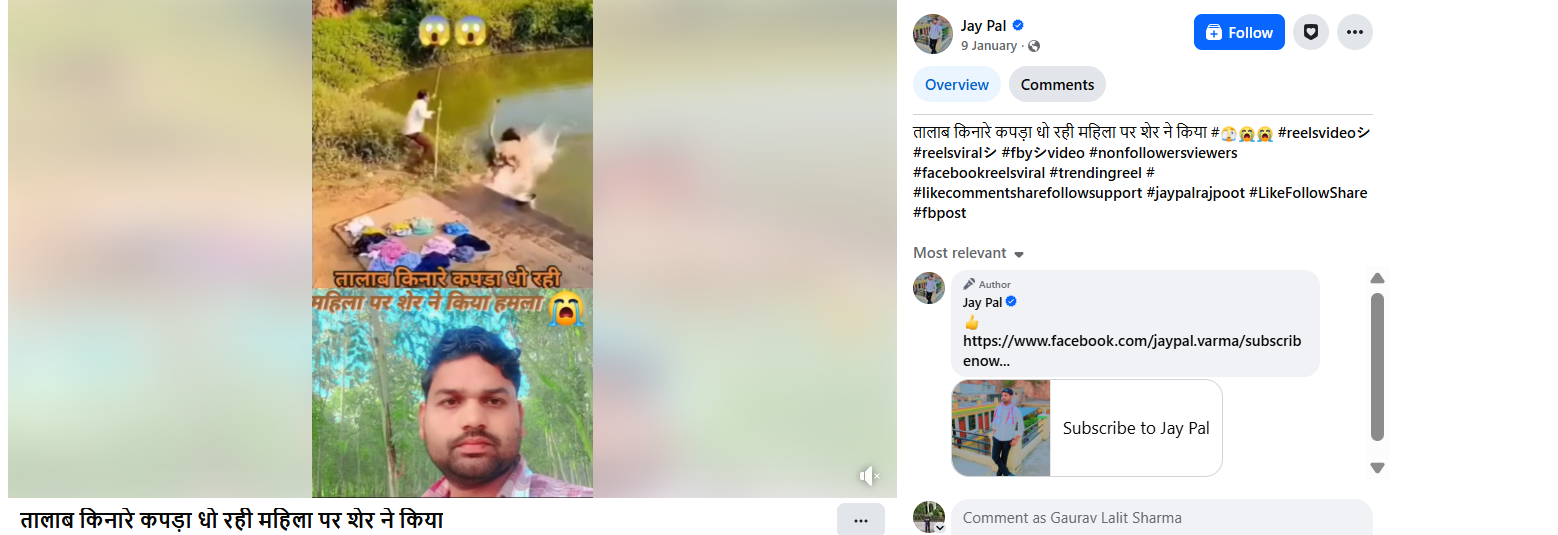
A video circulating on social media shows a lion carrying away a woman who was washing clothes near a pond. Users are sharing the clip claiming it depicts a real incident. However, research by CyberPeace found the viral claim to be false. The research revealed that the video is not real but AI-generated.
Claim
A user on Facebook shared the viral video claiming that a lion attacked and carried away a woman from a pond while she was washing clothes. The link to the post and its archived version are provided below
Fact Check:
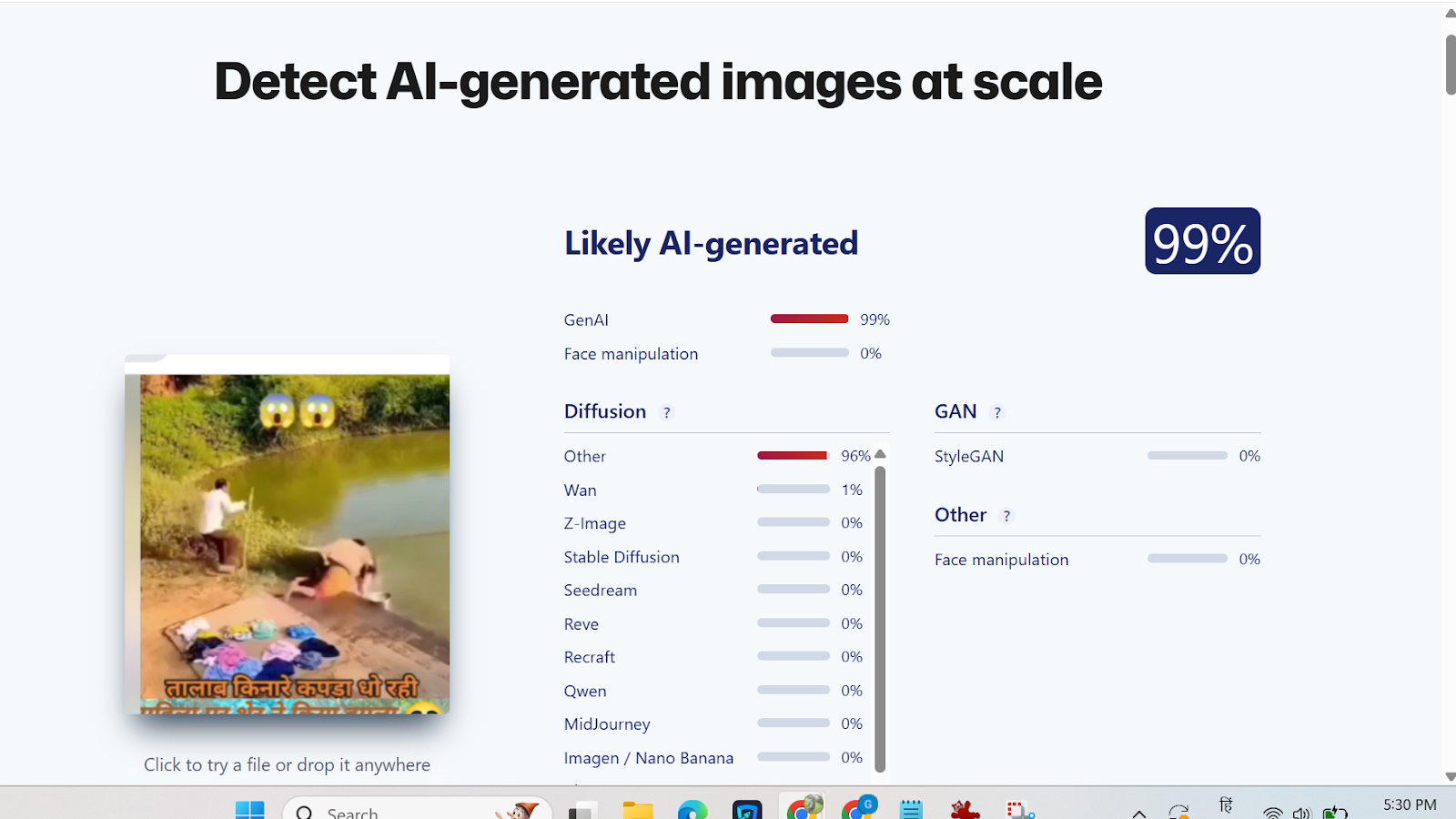
Upon closely examining the viral clip, we noticed several visual inconsistencies that raised suspicion about its authenticity. The video was then analyzed using the AI-detection tool Sightengine. According to the analysis results, the viral video was identified as AI-generated.
Conclusion
The research confirms that the viral video does not depict a real incident. The clip is digitally created using artificial intelligence and is being falsely shared as a genuine event.
Related Blogs

%20(1).webp)
Introduction
The global food industry is vast and complex, influencing consumer behaviour, policy, and health outcomes worldwide. However, misinformation within this sector is pervasive, with significant consequences for public health and market dynamics. Misinformation can arise from various sources, including misleading marketing campaigns, unsubstantiated health claims, and misrepresentation of food production practices through public endorsement or otherwise. Nutrition misinformation is one such example. The promotion of false or unproven products for profit can lead to mislead consumers and affect their interests. Misleading claims and inaccurate information about the nutritional value of food products and processes are common claims. The misinformation created about food on the global stage distorts public understanding of nutrition, food safety, and environmental impacts, leading to significant consequences for public health, consumer trust, and the economy.
Rise of Nutritional Misinformation and Consumer Distrust
Health and nutrition-related misinformation is one of the most prevalent types in the food sector. Businesses frequently advertise their products as "natural" or "healthy" without providing sufficient data to back up these claims, tricking customers into buying goods that might be heavy in fat, sugar, or salt. Words like "superfood" are frequently used without supporting evidence from science, giving the impression that they are healthier.
Misinformation also impacts the sustainability and ethics of food production. Claims of "sustainable" or "ethical" sourcing are frequently exaggerated or fabricated, leaving consumers unaware of the true environmental and social costs associated with certain products.
This lack of clarity is not only observed in general food trends but also within organisations meant to provide trustworthy information. There has been significant criticism, directed at the International Food Information Council (IFIC), for their alleged promotion of nutrition-based misinformation to safeguard the interests of large food corporations, resulting in potentially compromising public health. The preemptive claims that IFIC made about the nutritive claims have been questioned by the National Institutes of Health, USA in November 2022. They reported in their study that IFIC promotes food and beverage company interests and undermines the accurate dissemination of scientific evidence related to diet and health. This was in support of the objective of the study, which was to determine whether, there have been many claims that the nutritional value of certain foods or diets may be manipulated to favour business goals, leaving consumers misinformed about what constitutes a truly healthy diet.
Another source of misinformation is the growing ‘Free-From’ fad. The “free-from” label in the US is a food category of products that claim to be free from certain ingredients or chemicals. It has been steadily growing by 7% annually. These labels often tout products as healthier due to a simpler ingredient list. Although seemingly harmless, transparency in ingredient disclosure is often obscured in the 'free-from' trend. This can lead to consumer distrust in the long run, making them hesitant.
The Harmful Effects of Food Misinformation
The effects of misinformation about nutrition and food safety can directly affect public health.
Consumers unknowingly may accept false claims or avoid certain foods without scientific basis and adopt harmful dietary habits, potentially leading to malnutrition or other health problems. By the time the realisation sets in about being misled, their trust is eroded not only towards such companies but also towards the regulators. This distrust can lead to declining consumer confidence and disrupt market stability.
Some food-related misinformation downplays the environmental impact that certain food production practices have. An example of such a situation is the promotion of meat alternatives as being entirely eco-friendly without considering all environmental factors. This can mislead consumers and obscure the complex environmental effects of food production systems.
Misinformation can distort consumer purchasing habits, potentially leading to a reduced demand for certain products and unfair competition. The sufferers in this case are the small-scale producers who suffer disproportionately, while the large corporations might use this misinformation to maintain their dominance in the market. Regulatory checks, open communication, and public education campaigns are needed to combat mis/disinformation in the global food sector and enable consumers to make decisions that are sustainable, healthful and informed.
CyberPeace Recommendations
- Unfair trade practices like providing misleading information or unchecked claims on food products should be better addressed by the regulators. Companies must provide clear, transparent and accurate information about their products as mandated under the Food Safety and Standards (Advertising and Claims) Regulations, 2018. This information should include the true origins, production methods, and nutritional content on their labels.
- Promotions of initiatives and investments by public health organisations and food authorities towards educating consumers and improving food literacy should encouraged.
- Regulating social media endorsement is also crucial to prevent the spread of misinformation and unchecked claims. Without proper due diligence on product details, influencers may unknowingly mislead their audience, causing potential harm.
- The Social Media Platforms can partner with nutritionists, dietitians, and other health professionals who are content creators, as they can help in understanding and promoting accurate, science-based nutrition information and debunk any misleading claims.
- Campaigns should be encouraged to spread public awareness about the harms of food-related misleading claims or trends. Emphasis should be on evidence-based nutritional guidance. The ongoing research towards food safety, nutrition, and true information should be actively communicated to keep the public informed. Combating food misinformation requires more robust regulations, improved transparency, and heightened consumer awareness and vigilance.
References
- https://timesofindia.indiatimes.com/india/label-claims-on-packaged-food-could-be-misleading-icmr/articleshow/110053363.cms
- https://www.outlookindia.com/hub4business/empowering-change-freedom-food-alliance-takes-on-global-food-industry-misinformation
- https://insightsnow.com/misinformation-hurting-food-business/
- https://www.ncbi.nlm.nih.gov/pmc/articles/PMC9618198/pdf/12992_2022_Article_884.pdf

Executive Summary:
In the age of virtuality, misinformation and misleading techniques shape the macula of the internet, and these threaten human safety and well-being. Recently, an alarming fake information has surfaced, intended to provide a fake Government subsidy scheme with the name of Indian Post. This serves criminals, who attack people's weaknesses, laying them off with proposals of receiving help in exchange for info. In this informative blog, we take a deep dive into one of the common schemes of fraud during this time. We will go through the stages involved which illustrates how one is deceived and offer practical tips to avoid the fall.
Introduction:
Digital communication reaches individuals faster, and as a result, misinformation and mails have accelerated their spread globally. People, therefore, are susceptible to online scams as they add credibility to phenomena. In India, the recently increased fake news draws its target with the deceptive claims of being a subsidy from the Government mainly through the Indian post. These fraudulent schemes frequently are spread via social networks and messaging platforms, influence trust of the individual’s in respectable establishments to establish fraud and collect private data.
Understanding the Claim:
There is a claim circulating on the behalf of the Government at the national level of a great subsidy of $1066 for deserving residents. The individual will be benefited with the subsidy when they complete the questionnaire they have received through social media. The questionnaire may have been designed to steal the individual’s confidential information by way of taking advantage of naivety and carelessness.
The Deceptive Journey Unveiled:
Bogus Offer Presentation: The scheme often appeals to people, by providing a misleading message or a commercial purposely targeted at convincing them to act immediately by instilling the sense of an urgent need. Such messages usually combine the mood of persuasion and highly evaluative material to create an illusion of being authentic.
Questionnaire Requirement: After the visitors land on attractive content material they are directed to fill in the questionnaire which is supposedly required for processing the economic assistance. This questionnaire requests for non private information in their nature.
False Sense of Urgency: Simultaneously, in addition to the stress-causing factor of it being a fake news, even the false deadline may be brought out to push in the technique of compliance. This data collection is intended to put people under pressure and influence them to make the information transfer that immediate without thorough examination.
Data Harvesting Tactics: Despite the financial help actually serving, you might be unaware but lies beneath it is a vile motive, data harvesting. The collection of facts through questionnaires may become something priceless for scammers that they can use for a good while to profit from identity theft, financial crimes and other malicious means.
Analysis Highlights:
- It is important to note that at this particular point, there has not been any official declaration or a proper confirmation of an offer made by the India Post or from the Government. So, people must be very careful when encountering such messages because they are often employed as lures in phishing attacks or misinformation campaigns. Before engaging or transmitting such claims, it is always advisable to authenticate the information from trustworthy sources in order to protect oneself online and prevent the spread of wrongful information
- The campaign is hosted on a third party domain instead of any official Government Website, this raised suspicion. Also the domain has been registered in very recent times.

- Domain Name: ccn-web[.]buzz
- Registry Domain ID: D6073D14AF8D9418BBB6ADE18009D6866-GDREG
- Registrar WHOIS Server: whois[.]namesilo[.]com
- Registrar URL: www[.]namesilo[.]com
- Updated Date: 2024-02-27T06:17:21Z
- Creation Date: 2024-02-11T03:23:08Z
- Registry Expiry Date: 2025-02-11T03:23:08Z
- Registrar: NameSilo, LLC
- Name Server: tegan[.]ns[.]cloudflare[.]com
- Name Server: nikon[.]ns[.]cloudflare[.]com
Note: Cybercriminal used Cloudflare technology to mask the actual IP address of the fraudulent website.
CyberPeace Advisory:
Verification and Vigilance: It makes complete sense in this case that you should be cautious and skeptical. Do not fall prey to this criminal act. Examine the arguments made and the facts provided by either party and consult credible sources before disclosures are made.
Official Channels: Governments usually invoke the use of reliable channels which can as well be by disseminating subsidies and assistance programs through official websites and the legal channels. Take caution for schemes that are not following the protocols previously established.
Educational Awareness: Providing awareness through education and consciousness about on-line scams and the approaches which are fraudulent has to be considered a primary requirement. Through empowering individuals with capabilities and targets we, as a collective, can be armed with information that will prevent erroneous scheme spreading.
Reporting and Action: In a case of mission suspicious and fraudulent images, let them understand immediately by making the authorities and necessary organizations alert. Your swift actions do not only protect yourself but also help others avoid the costs of related security compromises.
Conclusion:
The rise of the ‘Indian Post Countrywide - government subsidy fake news’ poses a stern warning of the present time that the dangers within the virtual ecosystem are. The art of being wise and sharp in terms of scams always reminds us to show a quick reaction to the hacks and try to do the things that we should identify as per the CyberPeace advisories; thereby, we will contribute to a safer Cyberspace for everyone. Likewise, the ability to critically judge, and remain alert, is important to help defeat the variety of tricks offenders use to mislead you online.

Introduction
In this ever-evolving world of technology, cybercrimes and criminals continue to explore new and innovative methods to exploit and intimidate their victims. One of the recent shocking incidents has been reported from the city of Bharatpur, Rajasthan, where the cyber crooks organised a mock court session This complex operation, meant to induce fear and force obedience, exemplifies the daring and intelligence of modern hackers. In this blog article, we’ll go deeper into this concerning occurrence, delving into it to offer light on the strategies used and the ramifications for cybersecurity.to frighten their targets.
The Setup
The case was reported from Gopalgarh village in Bharatpur, Rajasthan, and has unfolded with a shocking twist -the father-son duo, Tahir Khan and his son Talim Khano — from Gopalgarh village in Bharatpur, Rajasthan, has been fooling people to gain their monetary gain by staging a mock court setting and recorded the proceedings to intimidate their victims into paying hefty sums. In the recent case, they have gained 2.69 crores through sextortion. the duo uses to trace their targets on social media platforms, blackmail them, and earn a hefty amount.
An official complaint was filed by a 69-year-old victim who was singled out through his social media accounts, his friends, and his posts Initially, they contacted the victim with a pre-recorded video featuring a nude woman, coaxing him into a compromising situation. As officials from the Delhi Crime Branch and the CBI, they threatened the victim, claiming that a girl had approached them intending to file a complaint against him. Later, masquerading as YouTubers, they threatened to release the incriminating video online. Adding to the charade, they impersonated a local MLA and presented the victim with a forged stamp paper alleging molestation charges. Eventually, posing as Delhi Crime Branch officials again, they demanded money to settle the case after falsely stating that they had apprehended the girl. To further manipulate the victim, the accused staged a court proceeding, recording it and subsequently sending it to him, creating the illusion that everything was concluded. This unique case of sextortion stands out as the only instance where the culprits went to such lengths, staging and recording a mock court to extort money. Furthermore, it was discovered that the accused had fabricated a letter from the Delhi High Court, adding another layer of deception to their scheme.
The Investigation
The complaint was made in a cyber cell. After the complaint was filed, the investigation was made, and it was found that this case stands as one of the most significant sextortion incidents in the country. The father-son pair skillfully assumed five different roles, meticulously executing their plan, which included creating a simulated court environment. “We have also managed to recover Rs 25 lakh from the accused duo—some from their residence in Gopalgarh and the rest from the bank account where it was deposited.
The Tricks used by the duo
The father-son The setup in the fake court scene event was a meticulously built web of deception to inspire fear and weakness in the victim. Let’s look at the tricks the two used to fool the people.
- Social Engineering strategies: Cyber criminals are skilled at using social engineering strategies to acquire the trust of their victims. In this situation, they may have employed phishing emails or phone calls to get personal information about the victim. By appearing as respectable persons or organisations, the crooks tricked the victim into disclosing vital information, giving them weapons they needed to create a sense of trustworthiness.
- Making a False Narrative: To make the fictitious court scenario more credible, the cyber hackers concocted a captivating story based on the victim’s purported legal problems. They might have created plausible papers to give their plan authority, such as forged court summonses, legal notifications, or warrants. They attempted to create a sense of impending danger and an urgent necessity for the victim to comply with their demands by deploying persuasive language and legal jargon.
- Psychological Manipulation: The perpetrators of the fictitious court scenario were well aware of the power of psychological manipulation in coercing their victims. They hoped to emotionally overwhelm the victim by using fear, uncertainty, and the possible implications of legal action. The offenders probably used threats of incarceration, fines, or public exposure to increase the victim’s fear and hinder their capacity to think critically. The idea was to use desperation and anxiety to force the victim to comply.
- Use of Technology to Strengthen Deception: Technological advancements have given cyber thieves tremendous tools to strengthen their misleading methods. The simulated court scenario might have included speech modulation software or deep fake technology to impersonate the voices or appearances of legal experts, judges, or law enforcement personnel. This technology made the deception even more believable, blurring the border between fact and fiction for the victim.
The use of technology in cybercriminals’ misleading techniques has considerably increased their capacity to fool and influence victims. Cybercriminals may develop incredibly realistic and persuasive simulations of judicial processes using speech modulation software, deep fake technology, digital evidence alteration, and real-time communication tools. Individuals must be attentive, gain digital literacy skills, and practice critical thinking when confronting potentially misleading circumstances online as technology advances. Individuals can better protect themselves against the expanding risks posed by cyber thieves by comprehending these technological breakthroughs.
What to do?
Seeking Help and Reporting Incidents: If you or anyone you know is the victim of cybercrime or is fooled by cybercrooks. When confronted with disturbing scenarios such as the imitation court scene staged by cybercrooks, victims must seek help and act quickly by reporting the occurrence. Prompt reporting serves various reasons, including increasing awareness, assisting with investigations, and preventing similar crimes from occurring again. Victims should take the following steps:
- Contact your local law enforcement: Inform local legal enforcement about the cybercrime event. Provide them with pertinent incident facts and proof since they have the experience and resources to investigate cybercrime and catch the offenders involved.
- Seek Assistance from a Cybersecurity specialist: Consult a cybersecurity specialist or respected cybersecurity business to analyse the degree of the breach, safeguard your digital assets, and obtain advice on minimising future risks. Their knowledge and forensic analysis can assist in gathering evidence and mitigating the consequences of the occurrence.
- Preserve Evidence: Keep any evidence relating to the event, including emails, texts, and suspicious actions. Avoid erasing digital evidence, and consider capturing screenshots or creating copies of pertinent exchanges. Evidence preservation is critical for investigations and possible legal procedures.
Conclusion
The setting fake court scene event shows how cybercriminals would deceive and abuse their victims. These criminals tried to use fear and weakness in the victim through social engineering methods, the fabrication of a false narrative, the manipulation of personal information, psychological manipulation, and the use of technology. Individuals can better defend themselves against cybercrooks by remaining watchful and sceptical.