
#FactCheck-Viral ‘Human Pyramid Surviving Strong Winds’ Video Is AI-Generated Introduction
Executive Summary
A video showing a massive human pyramid has gone viral on social media. In the clip, dozens of people are seen forming a towering human pyramid that begins to sway violently as if struck by strong winds. Surprisingly, the structure regains balance within seconds and no one falls. Many users are sharing the video as footage of a real-life incident. CyberPeace Research Wing 's research found that the viral video is fake. It does not depict a real incident; rather, it has been created using Artificial Intelligence (AI).
Claim
An X user, "Cockroach Janta Party," shared the viral video on July 10, 2026, with the caption: "The human pyramid started swaying due to strong winds... but surprisingly, no one fell. Would you dare stand at the very top of this human pyramid?"
https://x.com/CJP_for_India/status/2075405269899866415?s=20
https://perma.cc/T993-99RZ
Fact Check
We first carefully examined the viral video. During our visual analysis, we observed several irregularities. The people forming the pyramid appeared to be standing in unnatural positions, and when the structure began to sway, the movements of the individuals looked highly unnatural and robotic. These visual anomalies raised suspicion that the video had been generated using AI. To verify this, we analysed the video using multiple AI detection tools.
The video was first scanned using Hive Moderation, which detected an almost 100% probability that the content was AI-generated. According to Hive's analysis, the video was most likely created using the Seedance2 model, an AI-powered video generation system.

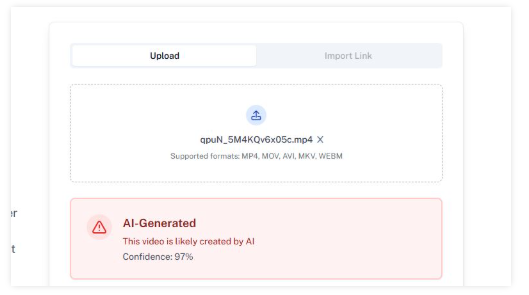
For additional verification, we analysed the video using Undetectable.ai. The tool also concluded that there was a 97% probability that the video had been generated using Artificial Intelligence.
Conclusion
Our research found that the viral human pyramid video is AI-generated. It does not depict a real incident and has been created using artificial intelligence. The video is being circulated on social media without disclosing its AI-generated nature, misleading users into believing it shows an actual event.

Related Blogs
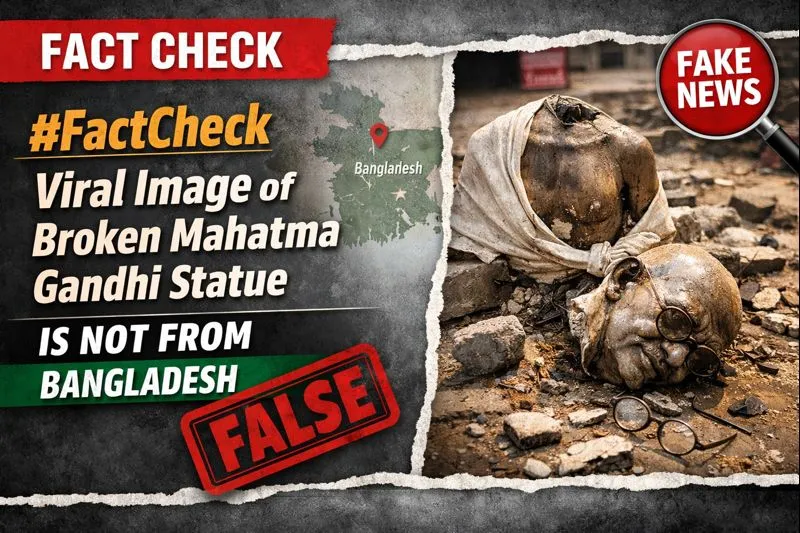
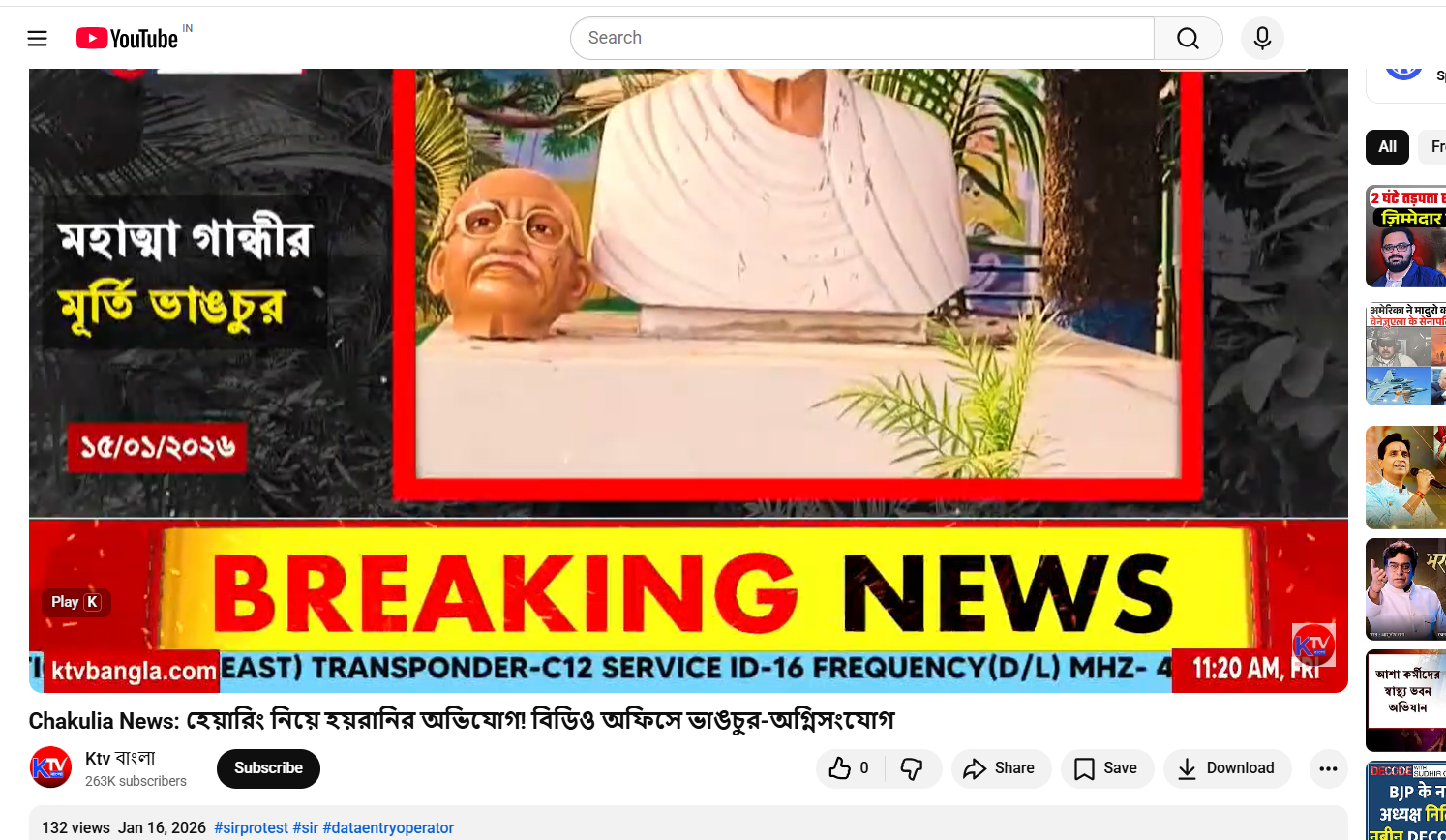
An image showing a damaged statue of Mahatma Gandhi, broken into two pieces, is being widely shared on social media. The image shows Gandhi’s statue with its head separated from the body, prompting strong reactions online.
Social media users are claiming that the incident occurred in Bangladesh, alleging that Mahatma Gandhi’s statue was deliberately vandalised there. The image is being described as a recent incident and is being circulated across platforms with provocative and inflammatory captions.
Cyber Peace Foundation’s research and verification found that the claim being shared online is misleading. Our rsearch revealed that the viral image is not from Bangladesh. The image is actually from Chakulia in Uttar Dinajpur district of West Bengal, India
Claim:
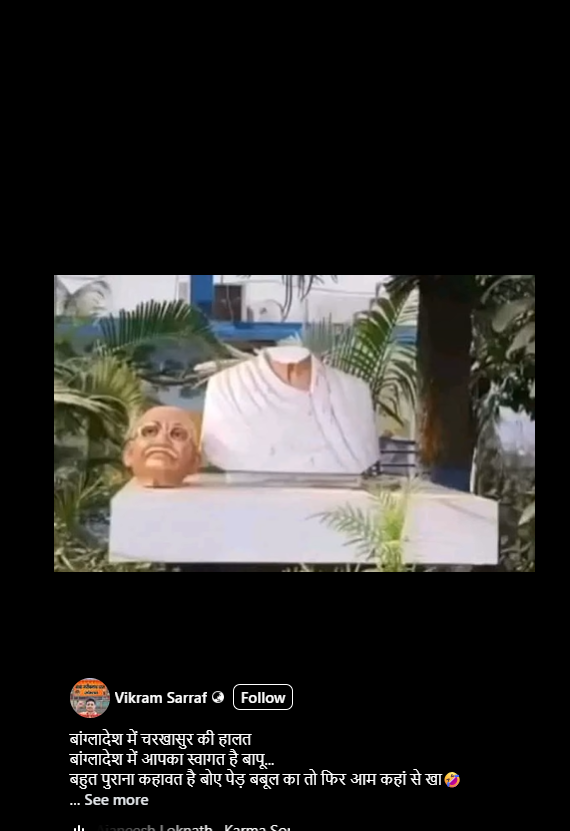
Social media users claim that Mahatma Gandhi’s statue was vandalised in Bangladesh, and that the viral image shows a recent incident from the country.One Facebook user shared the video on 19 January 2026, making derogatory remarks and falsely linking the incident to Bangladesh. The post has since been widely shared on social media platforms. (Archived links and screenshots are available.)
Fact Check:
Our research revealed that the viral image is not from Bangladesh. The image is actually from Chakulia in Uttar Dinajpur district of West Bengal, India. To verify the claim, we conducted a reverse image search using Google Lens on key frames from the viral video. This led us to a report published by ABP Live Bangla on 16 January 2026, which featured the same visuals. Link and screenshot
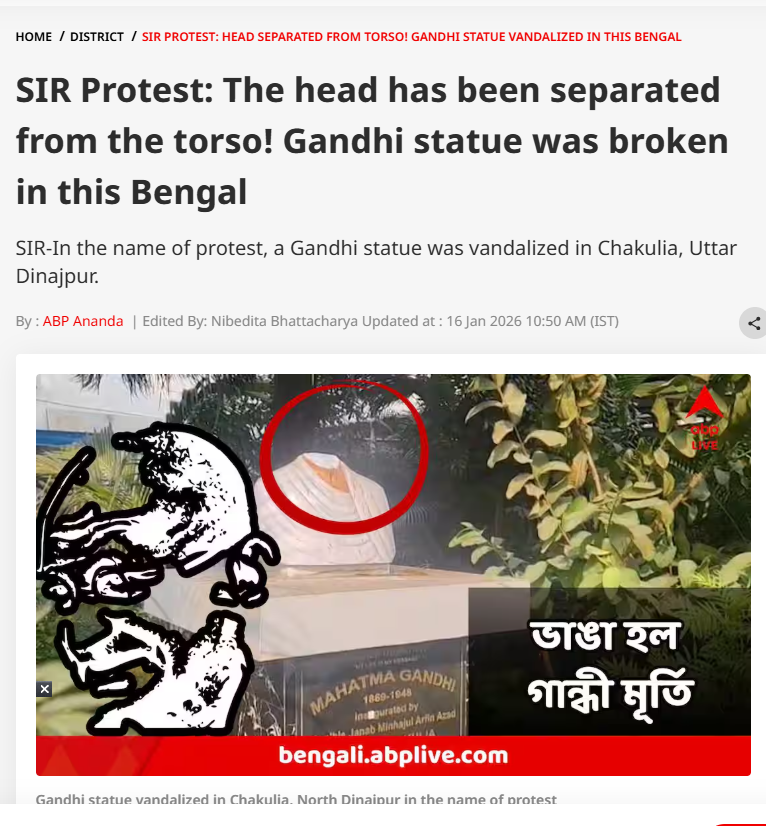
According to ABP Live Bangla, the statue of Mahatma Gandhi was damaged during a protest in Chakulia. The statue’s head was found separated from the body. While a portion of the broken statue remained at the site on Thursday night, it was reported missing by Friday morning. The report further stated that extensive damage was observed at BDO Office No. 2 in Golpokhar. Gandhi’s statue, located at the entrance of the administrative building, was found broken, and ashes were discovered near the premises. Government staff were seen clearing scattered debris from the site.
The incident reportedly occurred during a SIR (Special Intensive Revision) hearing at the BDO office, which was disrupted due to vandalism. In connection with the violence and damage to government property, 21 people have been arrested so far. In the next stage of verification, we found the same footage in a 16 January 2026 report by local Bengali news channel K TV, which also showed clear visuals of the damaged Mahatma Gandhi statue. Link and screenshot.
Conclusion:
The viral image of Mahatma Gandhi’s broken statue does not depict an incident from Bangladesh. The image is from Chakulia in West Bengal’s Uttar Dinajpur district, where the statue was damaged during a protest.
Executive Summary
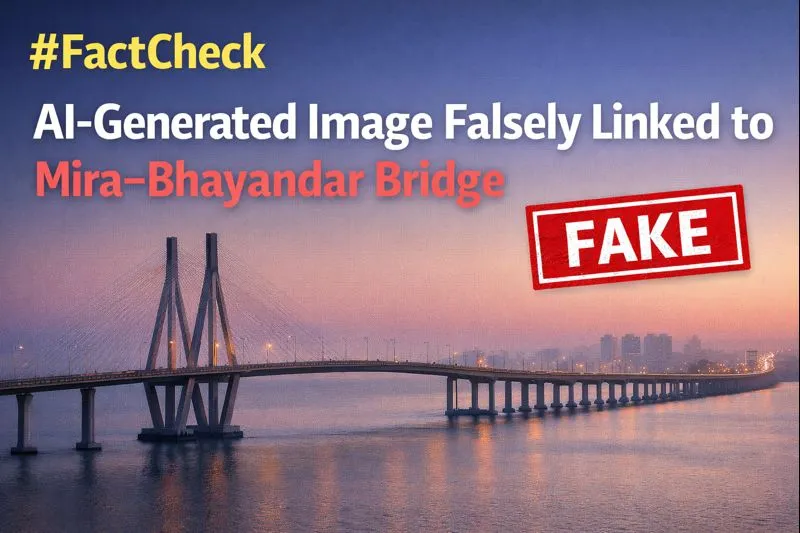
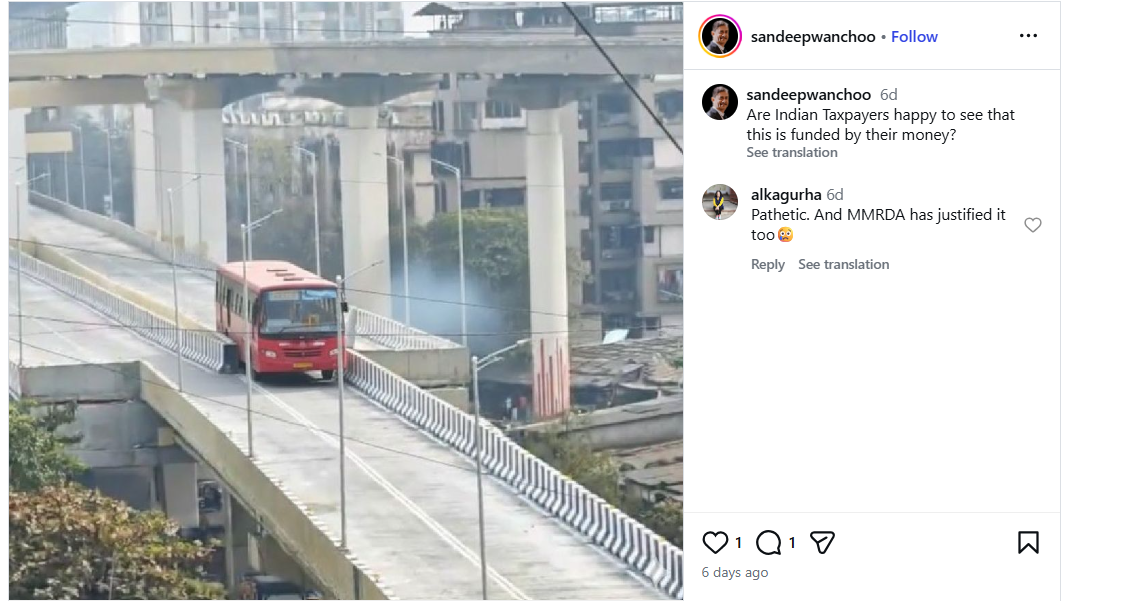
Mumbai’s Mira–Bhayandar bridge has recently been in the news due to its unusual design. In this context, a photograph is going viral on social media showing a bus seemingly stuck on the bridge. Some users are also sharing the image while claiming that it is from Sonpur subdivision in Bihar. However, an research by the CyberPeace has found that the viral image is not real. The bridge shown in the image is indeed the Mira–Bhayandar bridge, which is under discussion because its design causes it to suddenly narrow from four lanes to two lanes. That said, the bridge is not yet operational, and the viral image showing a bus stuck on it has been created using Artificial Intelligence (AI).
Claim
An Instagram user shared the viral image on January 29, 2026, with the caption:“Are Indian taxpayers happy to see that this is funded by their money?” The link, archive link, and screenshot of the post can be seen below.
Fact Check:
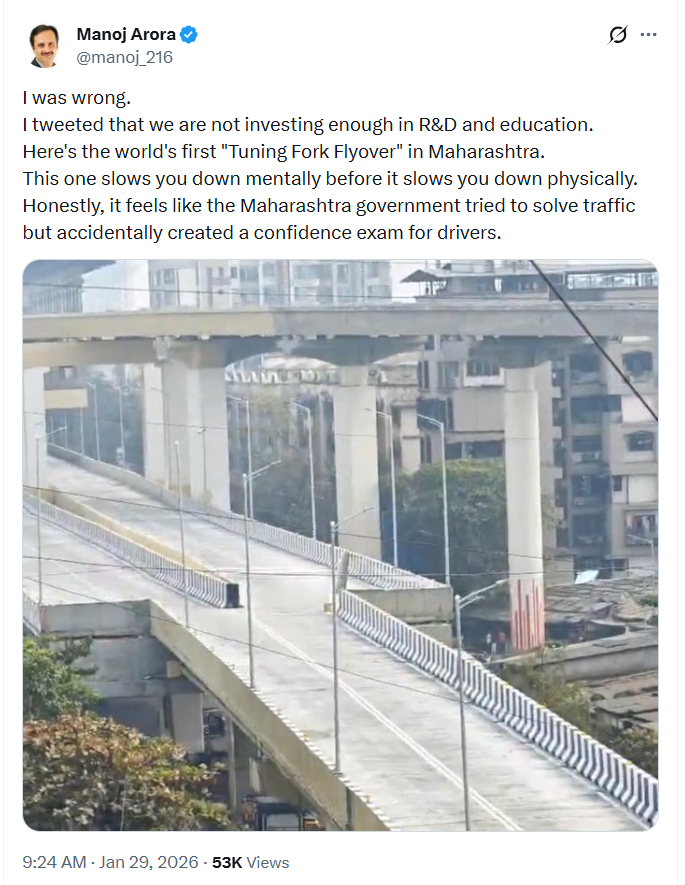
To verify the claim, we first conducted a Google Lens reverse image search. This led us to a post shared by X (formerly Twitter) user Manoj Arora on January 29. While the bridge structure in that image matches the viral photo, no bus is visible in the original post.This raised suspicion that the viral image had been digitally manipulated.
We then ran the viral image through the AI detection tool Hive Moderation, which flagged it as over 99% likely to be AI-generated
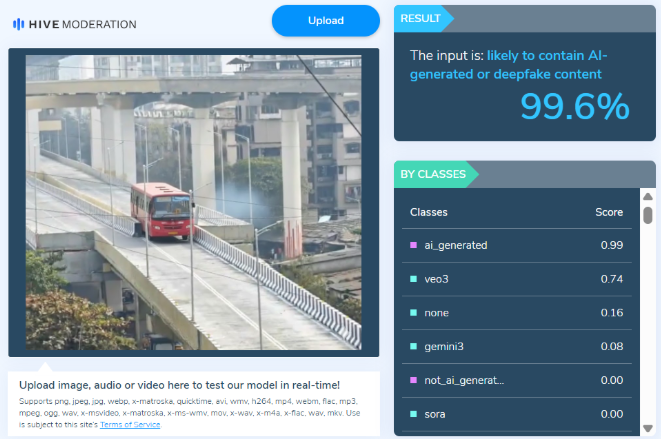
Conclusion
The CyberPeace research confirms that while the Mira–Bhayandar bridge is real and has been in the news due to its design, the viral image showing a bus stuck on the bridge has been created using AI tools. Therefore, the image circulating on social media is misleading.

Introduction
Misinformation regarding health is sensitive and can have far-reaching consequences. These include its effect on personal medical decisions taken by individuals, lack of trust in conventional medicine, delay in seeking treatments, and even loss of life. The fast-paced nature and influx of information on social media can aggravate the situation further. Recently, a report titled Health Misinformation Vectors in India was presented at the Health of India Summit, 2024. It provided certain key insights into health-related misinformation circulating online.
The Health Misinformation Vectors in India Report
The analysis was conducted by the doctors at First Check, a global health fact-checking initiative alongside DataLEADS, a Delhi-based digital media and technology company. The report covers health-related social media content that was posted online from October 2023 to November 2024. It mentions that among all the health scares, misinformation regarding reproductive health, cancer, vaccines, and lifestyle diseases such as diabetes and obesity is the most prominent type that is spread through social media. Misinformation regarding reproductive health includes illegal abortion methods that often go unchecked and even tips on conceiving a male child, among other things.
In order to combat this misinformation, the report encourages stricter regulations regarding health-related content on digital media, inculcating technology for health literacy and misinformation management in public health curricula and recommending tech platforms to work on algorithms that prioritise credible information and fact-checks. Doctors state that people affected by life-threatening diseases are particularly vulnerable to such misinformation, as they are desperate to seek options for treatment for themselves and their family members to have a chance at life. In a diverse society, with the lack of clear and credible information, limited access to or awareness about tools that cross-check content, and low digital literacy, people gravitate towards alternate sources of information which also fosters a sense of disengagement among the public overall. The diseases mentioned in the report, which are prone to misinformation, are life-altering and require attention from healthcare professionals.
CyberPeace Outlook
Globally, there are cases of medically-unqualified social media influencers who disperse false/mis- information regarding various health matters. The topics covered are mostly associated with stigma and are still undergoing research. This gap allows for misinformation to be fostered. An example is misinformation regarding PCOS( Polycystic Ovary Syndrome) which is circulating online.
In the midst of all of this, YouTube has released a new feature that aligns with combating health misinformation, trying to bridge the gap between healthcare professionals and Indians who look for trustworthy health-related information online. The initiative includes a feature that allows doctors, nurses, and other healthcare professionals to sign up for a health information source license. This would help by labeling all their informative videos, as addressed- from a healthcare professional. Earlier, this feature was available only for health organisations including a health source information panel and health content shelves, but this step broadens the scope for verification of licenses of individual healthcare professionals.
As digital literacy continues to grow, methods of seeking credible information, especially regarding sensitive topics such as health, require a combined effort on the part of all the stakeholders involved. We need a robust strategy for battling health-related misinformation online, including more awareness programmes and proactive participation from the consumers as well as medical professionals regarding such content.
References
- https://timesofindia.indiatimes.com/india/misinformation-about-cancer-reproductive-health-is-widespread-in-india-impacting-medical-decisions-says-report/articleshow/115931612.cms
- https://www.ndtv.com/india-news/cancer-misinformation-prevalent-in-india-trust-in-medicine-crucial-report-7165458
- https://www.newindian.in/ai-driven-health-misinformation-poses-threat-to-indias-public-health-report/
- https://www.etvbharat.com/en/!health/youtube-latest-initiative-combat-health-misinformation-india-enn24121002361
- https://blog.google/intl/en-in/products/platforms/new-ways-for-registered-healthcare-professionals-in-india-to-reach-people-on-youtube/
- https://www.bbc.com/news/articles/ckgz2p0999yo
