
#FactCheck: Video of Zepto Store Manager Being Assaulted in Mira Road Falsely Linked to CJP Spokesperson Ashutosh Ranka
Executive Summary
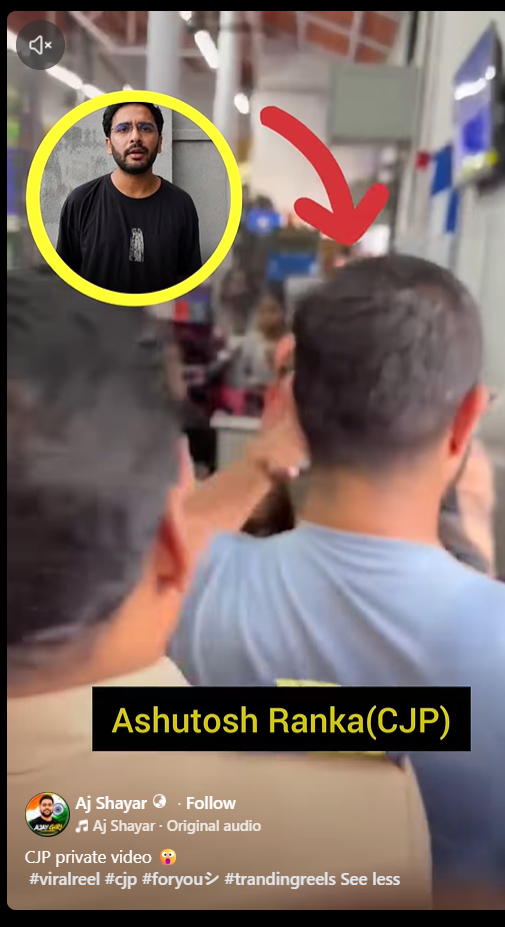
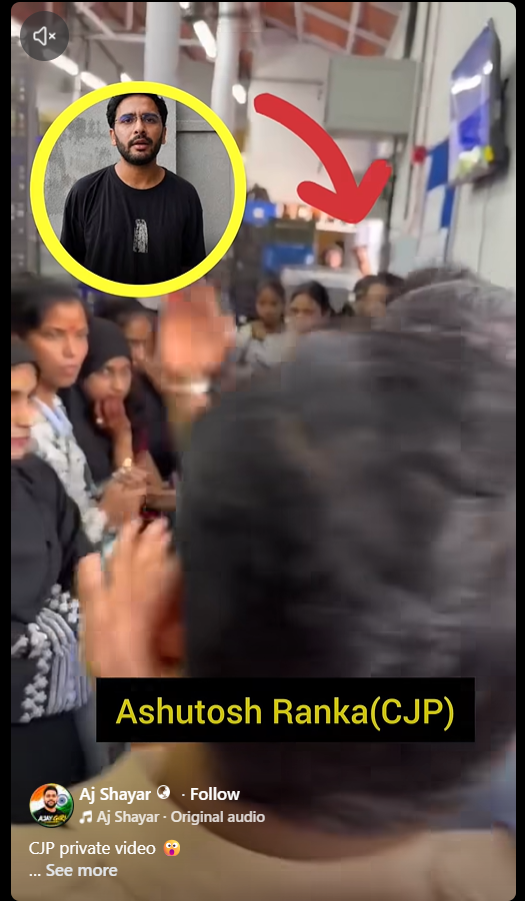
A video is being shared on Facebook with the claim that it shows CJP spokesperson Ashutosh Ranka being assaulted. The video shows several people beating a man. A picture of Ashutosh Ranka has been overlaid on the video along with the text, “CJP Private Video.” Some users commenting on the post also believe that the video genuinely shows Ranka being assaulted. CyberPeace Research found that the video is from Mira Road, where MNS workers had assaulted store manager Jay Pathak.
Claim
A video is being shared on Facebook claiming that it shows a private video of CJP.
https://www.facebook.com/reel/1405149115120742
Fact Check
We first searched Google using keywords such as “CJP spokesperson Ashutosh Ranka assaulted.” However, we did not find any credible media reports mentioning the incident described in the claim.
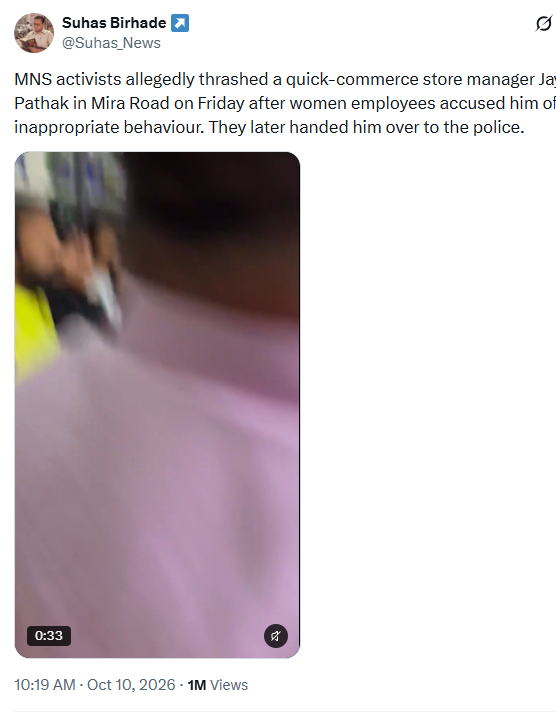
We then conducted a reverse image search of a frame from the viral video using Google Lens. This led us to a longer version of the same video, which was shared on October 10, 2026, by the X account @Suhas_News. According to the accompanying information, Maharashtra Navnirman Sena (MNS) workers assaulted store manager Jay Pathak in Mira Road after female employees alleged that they had been treated inappropriately.
https://www.facebook.com/reel/1405149115120742
https://x.com/Suhas_News/status/2108782017391525953
We also found the same video shared with the same information on the official Facebook page of news agency Midday India on October 10, 2026.
https://www.facebook.com/reel/4737845496451020

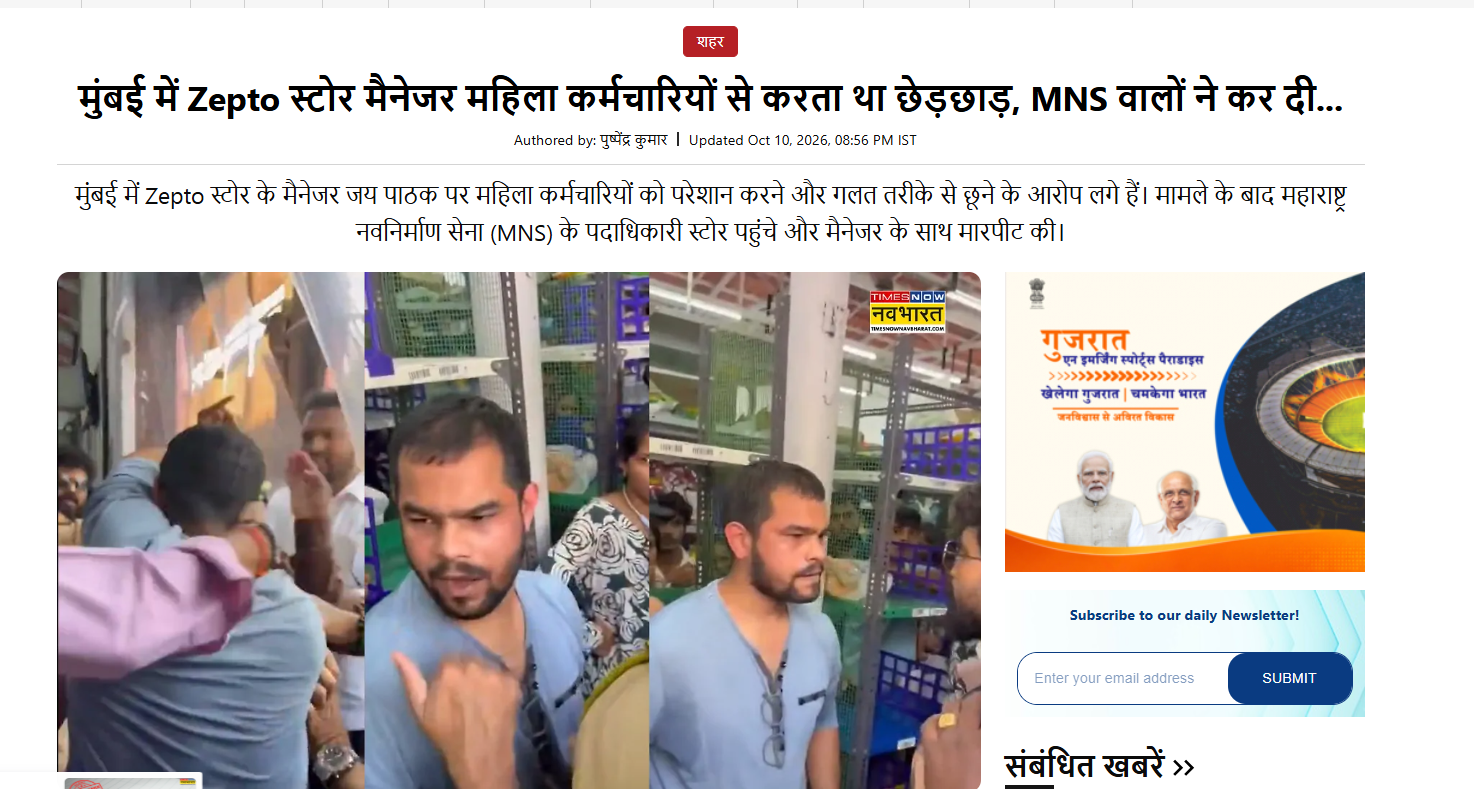
In the next stage of our research, we found a report published by Times Now on October 10, 2026, related to the viral video. According to the report, five female employees of a Zepto store located in the Shivar Garden area of Mira Road had accused their manager, Jai Pathak, of repeatedly touching them inappropriately and sexually harassing them.
Conclusion
Our research found that a video showing the assault of store manager Jai Pathak in Mira Road is being shared with the misleading claim that it shows CJP spokesperson Ashutosh Ranka being beaten.

Related Blogs

The recent Promotion and Regulation of Online Gaming Act, 2025, that came into force in August, has been one of the most widely anticipated regulations in the digital entertainment industry. Among provisions such as promoting esports and licensing of online gaming, the legislation notably introduces a blanket ban on real-money gaming (RMG). The rationale behind this was to reduce its addictive effects, protect minors, and limit the circulation of black-money. However, in reality, the Act has spawned apprehension about the legislative process, regulatory redundancy, and unintended consequences that can shift users and revenue to offshore operators.
From Debate to Prohibition: How the Act was Passed
The Promotion and Regulation of Online Gaming Act was passed as a central law, providing the earlier fragmented state laws on online betting and gambling with an overarching framework. Proponents argue that, among other provisions, some kind of unified national framework was needed to deal with the scale of online betting due to its detrimental impact on young users. The current Act is a direct transition to criminalisation rather than the swings of self-regulation and partial restrictions used during the previous decade of incremental experiments in regulation. Stakeholders in the industry believe that this type of sudden, blanket action creates uncertainty and erodes confidence in the system in the long run. Further, critics have pointed out that the Bill was passed without adequate Parliamentary deliberation. A question has been raised about whether procedural safeguards were upheld.
Prohibition of Online RMG
Within the Indian context, a distinction has long been drawn between games of skill and games of chance, with the latter, like a lottery or a casino, being severely prohibited under state laws, whereas the former, like rummy or fantasy sports, have generally been allowed after being recognized as skill-based by court authorities. The Online Gaming Act of 2025 abolishes this distinction on the internet, thus banning all RMG actions that include cash transactions, regardless of skill or chance. The act also criminalises the advertising, facilitation, and hosting of such sites, thereby penalizing offshore operators with an Indian customer focus, and subjecting their payment gateways, app stores, and advertisers under its jurisdiction to penalties.
The Problem of Overlap
One potential issue that the Act presents is its overlap with the existing laws. The IT Rules 2023 mandate intermediaries in the gaming sector to appoint compliance officers, submit monthly reports, and undergo due diligence. The new Act introduces a three-level classification of games, whereas the advisories of the Central Consumer Protection Authority (CCPA) under the Consumer Protection Act treat online betting as an unfair trade practice.
This multiplicity of regulations builds a maze where different Ministries and state governments have overlapping jurisdiction. Policy experts caution that such an overlap can create enforcement challenges, punish players who act within the law, and leave offshore malefactors undetected.
Unintended Consequences: Driving Users Offshore
Outright prohibition will hardly ever remove demand; it will only push it out. Offshore sites have taken advantage of the situation as Indian operators like Dream11 shut down their money games after the ban. It has already been reported that there is aggressive advertising by foreign betting companies that are not registered in India, most of which have backend infrastructure that cannot be regulated by the Act (Storyboard18).
This diversion of users to unregulated markets has two main risks. First, Indian players are deprived of the consumer protection offered to them in local regulation, and their data can be sent to suspicious foreign organizations. Second, the government loses control over the money flow that can be transferred via informal channels or cryptocurrencies or other obscure systems. Industry analysts are alerting that such developments may only worsen the issue of black-money instead of solving it (IGamingBusiness).
Advertising, Age Gating, and Digital Rights
The Act has also strengthened advertisement regulations, aligning with advisories issued by the Advertising Standards Council of India, which prohibits the targeting of minors. However, critics believe that the application remains inadequately enforced, and children can with comparative ease access unregulated overseas applications. In the absence of complementary digital literacy programs and strong parental controls, these limitations can be effectively superficial instead of real.
Privacy advocates also warn that frequent prompts, vague messages, or invasive surveillance can weaken the digital rights of users instead of strengthening them. Overregulation has also been found to create banner blindness in global contexts where users ignore warnings without first clearly understanding them.
Enforcement Challenges
The Act puts a lot of responsibilities on many stakeholders, including the Ministry of Information and Broadcasting (MIB) and the Reserve Bank of India (RBI). Platforms like Google Play and Apple App Store are expected to verify government-approved lists of compliant gaming apps and remove non-compliant or banned ones, as directed by the MIB and the RBI. Although this pressure may motivate intermediaries to collaborate, it may also have a risk of overreach when it is applied unequally or in a political way.
According to the experts, the solution should be underpinned by technology itself. Artificial intelligence can be used to identify illegal advertisements, track illegal gaming in children, and trace payment streams. At the same time, the regulators should be able to issue final lists of either compliant or non-compliant applications to advise the consumers and intermediaries alike. Without such practical provisions, enforcement risks remaining patchy.
Online Gaming Rules
On 1 October 2025, the government issued a draft of the Online Gaming Rules in accordance with the Promotion and Regulation of Online Gaming Act. The regulations focus on the creation of the compliance frameworks, define the classification of the allowed gaming activities, and prescribe grievance-redressal mechanisms aiming to promote the protection of the players and procedural transparency. However, the draft does not revisit or soften the existing blanket prohibition on real-money gaming (RMG) and, hence, the questions about the effectiveness of enforcement and regulatory clarity remain open (Times of India, 2025).
Protecting Consumers Without Stifling Innovation
The ban highlights a larger conflict, i.e., the protection of the vulnerable users without stifling an industry that has traditionally contributed to innovation, jobs, and the collection of tax revenue. Online gaming has significantly added to the GST collections, and the sudden shakeup brings fiscal concerns (Reuters).
Several legal objections to the Act have already been brought, asking whether the Act is constitutional, especially as to whether the restrictions are proportional to the right to trade. The outcome of such cases will define the future trajectory of the digital economy of India (Reuters).
Way Forward
Instead of outright prohibition, a more balanced approach that incorporates regulation and consumer protection is suggested by the experts. Key measures could include:
- A definite difference between games of skill and games of chance, with proportionate regulation.
- Age confirmation and campaign against online illiteracy to protect the underage population.
- Enhanced advertising and payments compliance requirements and enforceable non-compliance penalty.
- Coordinated oversight among different ministries to prevent duplication and regulatory struggle.
- Leveraging AI and fintech to track illegal financial activities (black money flows) and developing innovation.
Conclusion
The Online Gaming Act 2025 addresses social issues, such as addiction, monetary risk, and child safety, that require governance interventions. However, the path it follows to this end, that of total prohibition, is more likely to spawn a new set of issues instead of providing solutions because it will send consumers to offshore sites, undermine consumer rights, and slow innovation.
For India, the real challenge is not whether to prohibit online money gaming but how to create a balanced, transparent, and enforceable framework that protects users while fostering a responsible gaming ecosystem. India can reduce the adverse consequences of online betting without keeping the industry in the shadows with better coordination, reasonable use of technology, and balanced protection.
References:
- India's Dream11, top gaming apps halt money-based games after ban
- India online gambling ban could drive punters to black market
- Offshore betting firms with backend ops in India not covered by online gaming law
- The Great Gamble: India’s Online Gaming Ban, The GST Battle, And What Lies Ahead.
- Game Over for Online Money Games? An Analysis of the Online Gaming Act 2025
- Government gambles heavily on prohibiting online money gaming
- Online gaming regulation: New rules to take effect from October 1; government stresses consultative approach with industry

Introduction
The Pahalgam terror attack, which took place on April 22, 2025, was a tragic incident that shook the nation. The National Investigation Agency (NIA) formally took over the Pahalgam terrorist attack case on Sunday, April 27, 2025. Following India's strikes on Pakistan, tensions between the two countries have heightened, leading to concerns about potential escalation, including the risk of cyber attacks and the spread of misinformation that could further complicate the situation. It is crucial for corporations, critical sectors, and all netizens in India to stay proactive and vigilant against cyber attacks, while also being cautious of the risks of misinformation. This includes protecting themselves from being affected and avoiding the inadvertent or deliberate spread of false information.
Be Careful with the Information You Consume and Share
It is crucial to note that the Press Information Bureau (PIB) has alerted citizens to stay cautious of fake narratives being circulated by Pakistani handles. Through an official fact check, PIB debunked several misleading claims aimed at undermining India’s internal stability and security forces. Citizens are urged to verify any suspicious content via PIB Fact Check before sharing it further. As social media becomes a hub for viral content, netizens must be cautious about the information they consume and share. Misleading information, old videos, false claims, and misinformation flood the platform, making it essential to be mindful of the content you consume and share, as spreading unverified content can have severe consequences.
CyberPeace Recommends Following Crucial Cyber Safety Tips to Stay Vigilant Against Potential Digital Threats:
- Do not open/download any video file you receive in social media groups or from unknown sources.
- As per several media reports, a video file named "Dance of the Hilary" is being circulated, which may be intended for a cyber attack on India. Please refrain from clicking, downloading, or sharing any such file. Additionally, there are reports of suspicious files circulating on WhatsApp, including tasksche.exe, OperationSindoor.ppt, and OperationSindhu.pptx. Do not download or open any of these files, as they may pose a serious cyber threat.
- To receive accurate alerts, you can enable government notifications on your iPhone. Go to Settings > Notifications and scroll down to Government Alerts. Make sure all the toggles under Government Alerts are turned on. This will allow you to receive timely information and important alerts from government agencies, and your device will display critical notifications to keep you informed and safe.
- Turn off automatic media download in WhatsApp to reduce the risk of downloading potentially harmful files.
- To protect your privacy, disable location services on apps like WhatsApp, Instagram, Snapchat, and X unless absolutely necessary.
- Refrain from sharing sensitive information like government data, confidential details, or personal records on unsecured devices or networks.
- To avoid misinformation and manipulation during conflict, verifying and cross-checking the news before sharing it with anyone is crucial. Stay updated with official news updates, and be cautious while sharing information.
Conclusion
In times of heightened tensions, all of us need to stay vigilant, protect our digital spaces, and verify the information we encounter. Together, we can safeguard ourselves from cyber threats and misinformation, ensuring the safety, stability, and digital security of our nation. As proud citizens, let us unite to protect both our physical and digital well-being.
References
- https://www.thehindu.com/news/national/pakistan-has-unleashed-propaganda-machine-in-response-to-successful-operation-sindoor-ib-ministry/article69549084.ece
- https://sambadenglish.com/national-international-news/india/centre-asks-people-to-stay-alert-against-misinformation-in-social-media-9048169
- https://www.youtube.com/watch?v=gLHo_Vd1_H0&t=19s
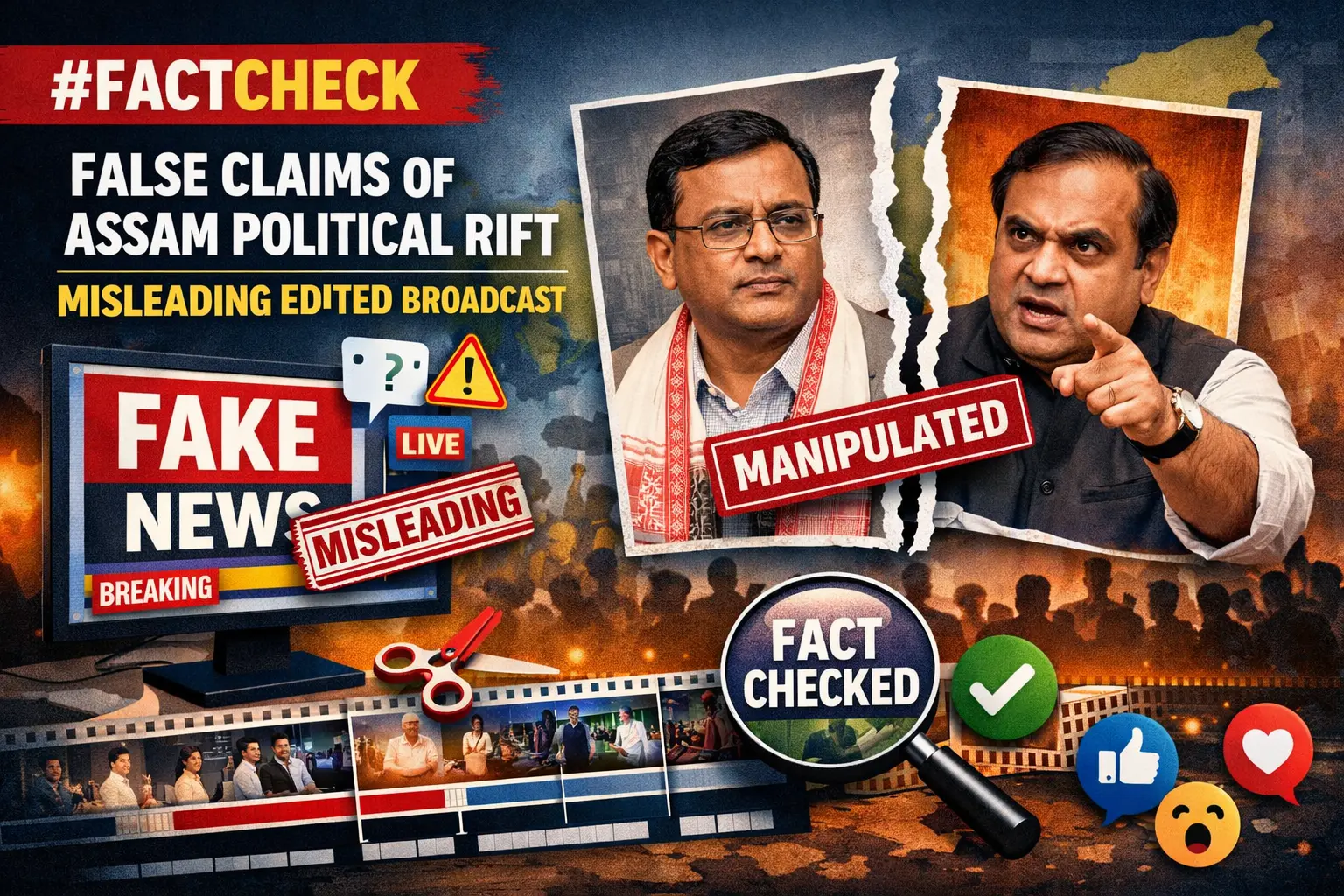
Executive Summary:
A video from an India TV news show related to the Assam elections is going viral on social media. In the clip, anchor Meenakshi Joshi is allegedly seen claiming that there is a rift between the BJP and the RSS in Assam. The video further suggests that RSS chief Mohan Bhagwat wrote a letter to Prime Minister Narendra Modi stating that former Congress members have taken over the BJP, and that RSS volunteers would not work for the party in Assam. However, a research by the CyberPeace found that the viral video is edited and misleading. The original video contains no such claims.
Claim:
A social media user Ajit Singh shared the video on X with the caption:“The core idea of today’s BJP is to capture power by any means. We have been saying this for long, and now even RSS has accepted that BJP in Assam has been taken over by Congress mindset.”
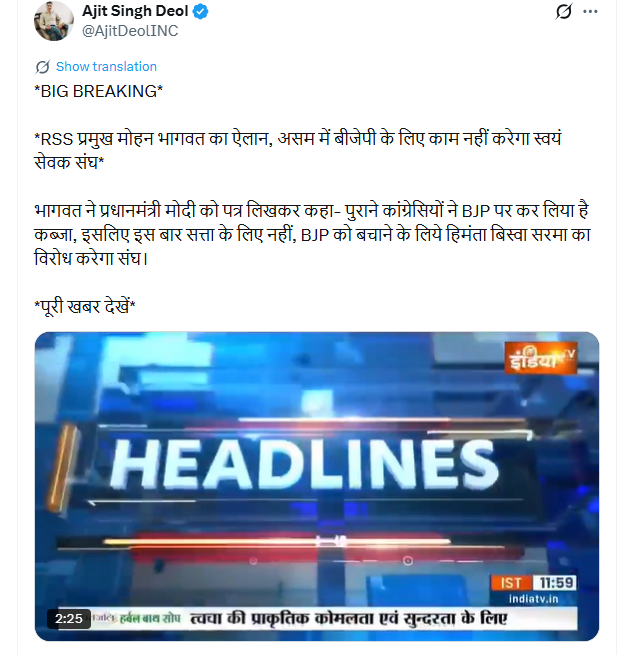
Fact Check:
To verify the claim, we searched relevant keywords about the alleged letter by RSS chief Mohan Bhagwat to Prime Minister Narendra Modi. However, we found no credible media reports supporting this claim. We then checked the YouTube channel of India TV but could not find the viral clip there. During the search, we did find a similar video from Meenakshi Joshi’s show. In the beginning of that video, the portion seen in the viral clip appears.
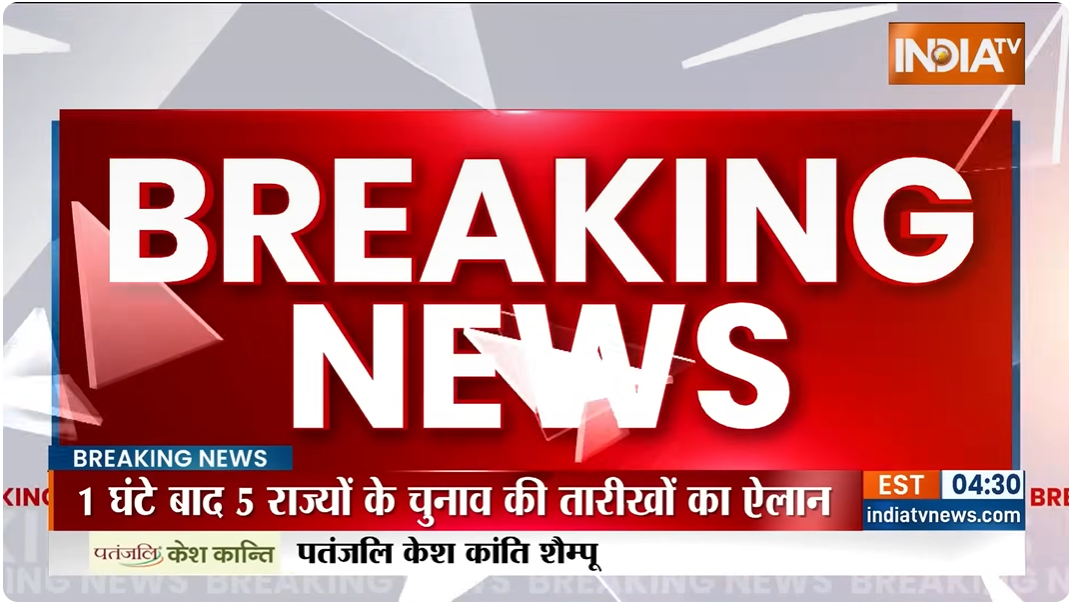
In the original video, the anchor is discussing the announcement of election dates in five states. There is no mention of any rift between the BJP and RSS in Assam.
Conclusion:
The viral India TV video claiming a rift between the BJP and RSS in Assam is edited and misleading. The original broadcast was about election dates in five states and did not include any such claims.
