
#FactCheck: Old Video Falsely Linked to October 10 Protest at Delhi’s Jantar Mantar
Executive Summary
The Cockroach Janta Party (CJP) announced a protest at Jantar Mantar in Delhi on October 10, seeking the removal of Chief Election Commissioner Gyanesh Kumar. Media reports claimed that more than 250 trains, including local services bound for Delhi, had been cancelled. There were also claims that people planning to join the demonstration were being detained or kept under house arrest, while internet services at the protest venue had been suspended. However, CyberPeace Research found that the viral video was unrelated to the October 10 protest. Our research revealed that the footage had already been circulating on social media since September 5, well before the planned demonstration. Therefore, the video does not establish that it shows the October 10 protest.
Claim:
A Facebook user posted the video alongside a caption stating that they were heading to Jantar Mantar to demand the removal of Chief Election Commissioner Gyanesh Kumar, whom the post accused of stealing votes. The caption was originally written in Hindi. An archived version of the post is available below.
https://www.facebook.com/reel/1098834383046385

Fact-check
A reverse image search revealed that the viral video was shared on Facebook by a user named ‘RRBD’ on September 5. The account has more than 636,000 followers. The video was posted with the caption, “Roof status: FULL!”
https://www.facebook.com/reel/1720670926511274
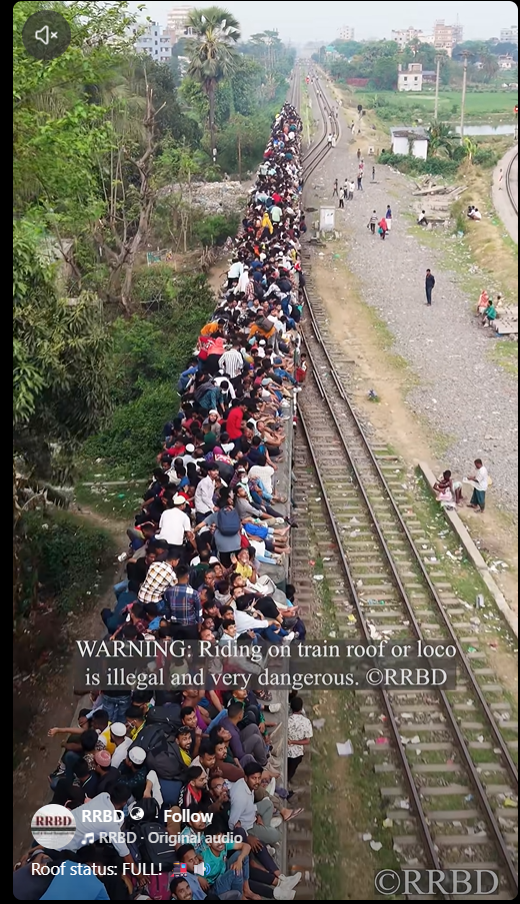
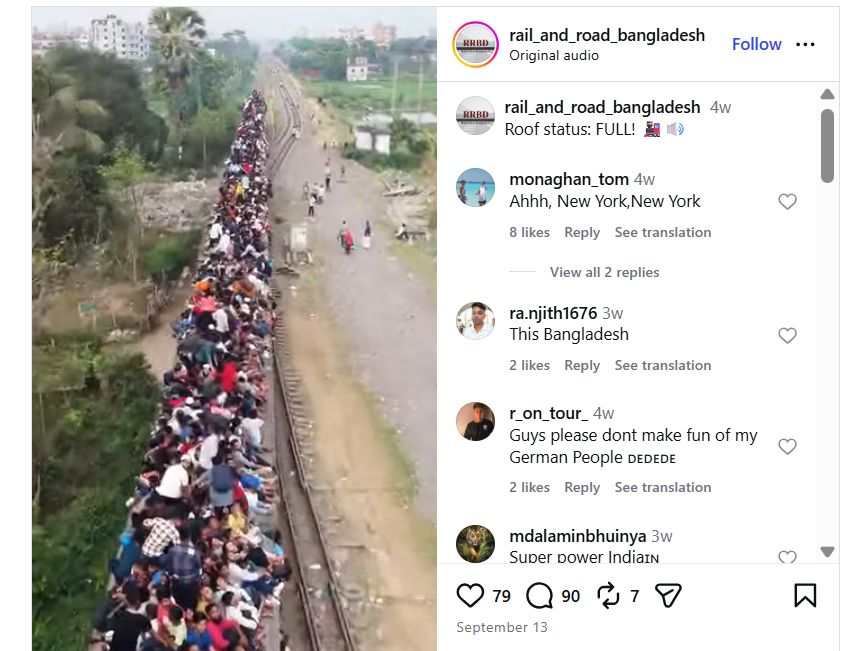
The Facebook account’s description also links to an Instagram account named ‘rail_and_road_bangladesh’, which has over 307,000 followers. The video was shared on this Instagram account on September 13 with the same caption as the Facebook post.
https://www.instagram.com/rail_and_road_bangladesh/reel/DdN6Dx9CVMH/
Conclusion
Our research found that the viral video is unrelated to the protest held at Jantar Mantar in Delhi on October 10. The video has been circulating on social media since September 5 and predates the protest. Therefore, the viral claim is false.

Related Blogs
.webp)
Introduction
Misinformation has the potential to impact people, communities and institutions alike, and the ramifications can be far-ranging. From influencing voter behaviours and consumer choices to shaping personal beliefs and community dynamics, the information we consume in our daily lives affects every aspect of our existence. And so, when this very information is flawed or incomplete, whether accidentally or deliberately so, it has the potential to confuse and mislead people.
‘Debunking’ is the process of exposing false information or countering inaccuracies and manipulation by presenting actual facts. The goal is to minimise the harmful effects of misinformation by informing and educating people. Debunking initiatives work hard to expose false information and cut down conspiracies, catalogue evidence of false information, clearly identify sources of misinformation vs. accurate information, and assert the truth. Debunking looks at building capacity and educating people both as a strategy and goal.
Debunking is most effective when it comes from trusted sources, provides detailed explanations, and offers guidance and verifiable advice. Debunking is reactive in nature and it focuses on specific instances of misinformation and is closely tied to fact-checking. Debunking aims to mitigate the impact of misinformation that has already spread. As such, the approach is to contain and correct, post-occurrence. The most common method of debunking is collaboration between fact-checking groups and social media companies. When journalists or other fact-checkers identify false or misleading content, social media sites flag or label it such, so that audiences are alerted. Debunking is an essential method for reducing the impact and incidence of misinformation by providing real facts and increasing overall accuracy of content in the digital information ecosystem.
Role of Debunking the Misinformation
Debunking fights against false or misleading information by correcting false claims, myths, and misinformation with evidence-based rebuttals. It combats untruths and the spread of misinformation by providing and disseminating debunked evidence to the public. Debunking by presenting evidence that contradicts misleading facts and encourages individuals to develop fact-checking habits and proactively check for authenticated sources. Debunking plays a vital role in boosting trust in credible sources by offering evidence-based corrections and enhancing the credibility of online information. By exposing falsehoods and endorsing qualities like information completeness and evidence-backed data and logic, debunking efforts help create a culture of well-informed and constructive public conversations and analytical exchanges. Effectively dispelling myths and misinformation can help create communities and societies that are more educated, resilient, and goal-oriented.
Debunking as a tailoring Strategy to counter Misinformation
Understanding the information environment and source trustworthiness is critical for developing effective debunking techniques. Successful debunking efforts use clear messages, appealing forms, and targeted distribution to reach a wide range of netizens. Debunking as an effective method for combating misinformation includes analysing successful efforts, using fact-checking, relying on reputable sources for corrections, and using scientific communication. Fact-checking plays a critical role in ensuring information accuracy and holding people accountable for making misleading claims. Collaborative efforts and transparent techniques can boost the credibility and efficacy of fact-checking activities and boost the legitimacy and effectiveness of debunking initiatives at a larger scale. Scientific communication is also critical for debunking myths about different topics/concerns by giving evidence-based information. Clear and understandable framing of scientific knowledge is critical for engaging broad audiences and effectively refuting misinformation.
CyberPeace Policy Recommendations
- It is recommended that debunking initiatives must highlight core facts, emphasising what is true over what is wrong and establishing a clear contrast between the two. This is crucial as people are more likely to believe familiar information even if they learn later that it is incorrect. Debunking must provide a comprehensive explanation, filling the ‘information gap’ created by the myth. This can be done by explaining things as clearly as possible, as people may stop paying attention if they are faced with an overload of competing information. The use of visuals to illustrate core facts is an effective way to help people understand the issue and clearly tell the difference between information and misinformation.
- Individuals can play a role in debunking misinformation on social media by highlighting inconsistencies, recommending related articles with corrections or sharing trusted sources and debunking reports in their communities.
- Governments and regulatory agencies can improve information openness by demanding explicit source labelling and technical measures to be implemented on platforms. This can increase confidence in information sources and equip people to practice discernment when they consume content online. Governments should also support and encourage independent fact-checking organisations that are working to disprove misinformation. Digital literacy programmes may teach the public how to critically assess information online and spot any misinformation.
- Tech businesses may enhance algorithms for detecting and flagging misinformation, therefore reducing the propagation of misleading information. Offering options for people to report suspicious/doubtful information and misinformation can empower them and help them play an active role in identifying and rectifying inaccurate information online and foster a more responsible information environment on the platforms.
Conclusion
Debunking is an effective strategy to counter widespread misinformation through a combination of fact-checking, scientific evidence, factual explanations, verified facts and corrections. Debunking can play an important role in fostering a culture where people look for authenticity while consuming the information and place a high value on trusted and verified information. A collaborative strategy can increase the legitimacy and reach of debunking efforts, making them more effective in reaching larger audiences and being easy-to-understand for a wide range of demographics. In a complex and ever-evolving digital ecosystem, it is important to build information resilience both at the macro level for the ecosystem as a whole and at the micro level, with the individual consumer. Only then can we ensure a culture of mindful, responsible content creation and consumption.
References

Executive Summary
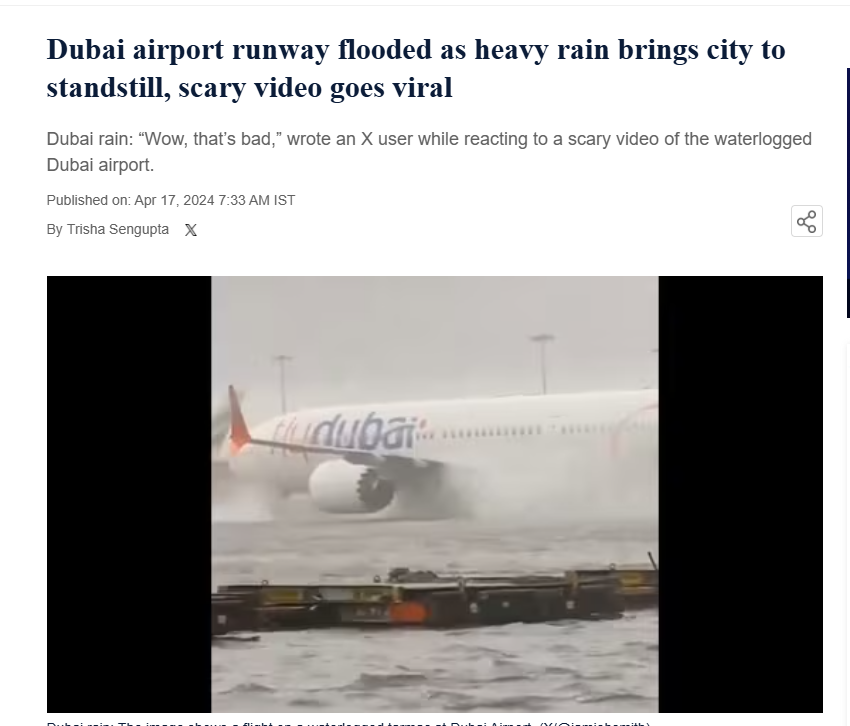
Amid reports of heavy rainfall and flooding in several cities of the United Arab Emirates, a video is being widely circulated on social media claiming to show recent scenes from Dubai. The clip allegedly depicts severe waterlogging at Dubai Airport and inside shopping malls, with users linking it to a “recent storm.”According to research by CyberPeace, the viral footage is not recent. The video is actually a compilation of three different clips stitched together and dates back to 2024, when Dubai experienced unprecedented flooding following heavy rains.
Claim
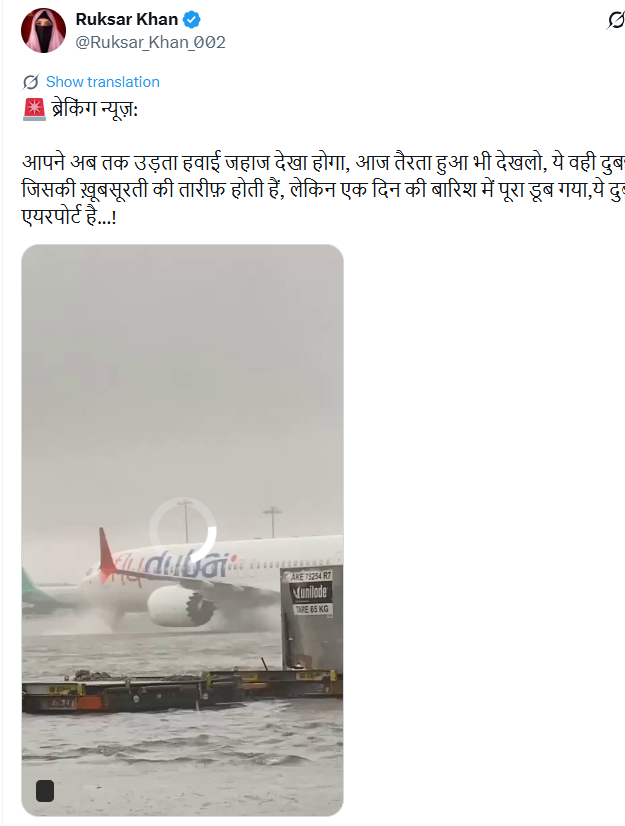
The misleading post was shared by an X (formerly Twitter) user named ‘Ruksar Khan’ on March 28, 2026, with a caption suggesting that Dubai had been submerged after just one day of rain. The post attempted to sensationalize the situation by portraying the visuals as current.
Fact Check:
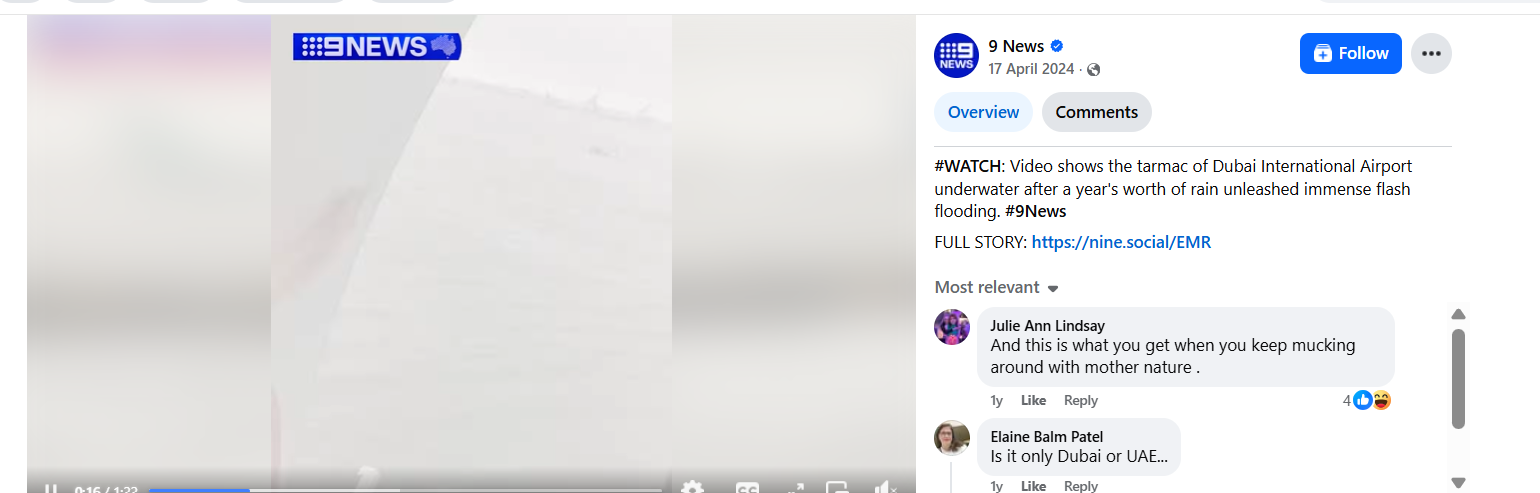
To verify the claim, keyframes from the viral video were extracted using the InVid tool and analyzed through reverse image search. One of the clips was traced to a Facebook post by “9 News,” uploaded on April 17, 2024. The video showed waterlogged runways at Dubai International Airport following intense rainfall and flooding.
Further verification led to a report published by Hindustan Times on April 17, 2024, which featured similar visuals and confirmed that the footage was from the floods that hit Dubai in 2024.
Conclusion:
The viral claim suggesting that the video shows recent flooding in Dubai is false. The footage is nearly two years old and originates from the 2024 floods in Dubai. It is now being reshared with misleading claims to create confusion around current weather events.

Introduction
The Australian Parliament has passed the world’s first legislation regarding a ban on social media for children under 16. This was done citing risks to the mental and physical well-being of children and the need to contain misogynistic influence on them. The debate surrounding the legislation is raging strong, as it is the first proposal of its kind and would set precedence for how other countries can assess their laws regarding children and social media platforms and their priorities.
The Legislation
Currently trailing an age-verification system (such as biometrics or government identification), the legislation mandates a complete ban on underage children using social media, setting the age limit to 16 or above. Further, the law does not provide exemptions of any kind, be it for pre-existing accounts or parental consent. With federal elections approaching, the law seeks to address parental concerns regarding measures to protect their children from threats lurking on social media platforms. Every step in this regard is being observed with keen interest.
The Australian Prime Minister, Anthony Albanese, emphasised that the onus of taking responsible steps toward preventing access falls on the social media platforms, absolving parents and their children of the same. Social media platforms like TikTok, X, and Meta Platforms’ Facebook and Instagram all come under the purview of this legislation.
CyberPeace Overview
The issue of a complete age-based ban raises a few concerns:
- It is challenging to enforce digitally as children might find a way to circumnavigate such restrictions. An example would be the Cinderella Law, formally known as the Shutdown Law, which the Government of South Korea had implemented back in 2011 to reduce online gaming and promote healthy sleeping habits among children. The law mandated the prohibition of access to online gaming for children under the age of 16 between 12 A.M. to 6 A.M. However, a few drawbacks rendered it less effective over time. Children were able to use the login IDs of adults, switch to VPN, and even switch to offline gaming. In addition, parents also felt the government was infringing on the right to privacy and the restrictions were only for online PC games and did not extend to mobile phones. Consequently, the law lost relevance and was repealed in 2021.
- The concept of age verification inherently requires collecting more personal data and inadvertently opens up concerns regarding individual privacy.
- A ban is likely to reduce the pressure on tech and social media companies to develop and work on areas that would make their services a safe child-friendly environment.
Conclusion
Social media platforms can opt for an approach that focuses on how to create a safe environment online for children as they continue to deliberate on restrictions. An example of an impactful-yet-balanced step towards the protection of children on social media while respecting privacy is the U.K.'s Age-Appropriate Design Code (UK AADC). It is the U.K.’s implementation of the European Union’s General Data Protection Regulation (GDPR), prepared by the ICO (Information Commissioner's Office), the U.K. data protection regulator. It follows a safety-by-design approach for children. As we move towards a future that is predominantly online, we must continue to strive and create a safe space for children and address issues in innovative ways.
References
- https://indianexpress.com/article/technology/social/australia-proposes-ban-on-social-media-for-children-under-16-9657544/
- https://www.thehindu.com/opinion/op-ed/should-children-be-barred-from-social-media/article68661342.ece
- https://forumias.com/blog/debates-on-whether-children-should-be-banned-from-social-media/
- https://timesofindia.indiatimes.com/education/news/why-banning-kids-from-social-media-wont-solve-the-youth-mental-health-crisis/articleshow/113328111.cms
- https://iapp.org/news/a/childrens-privacy-laws-and-freedom-of-expression-lessons-from-the-uk-age-appropriate-design-code
- https://www.techinasia.com/s-koreas-cinderella-law-finally-growing-up-teens-may-soon-be-able-to-play-online-after-midnight-again
- https://wp.towson.edu/iajournal/2021/12/13/video-gaming-addiction-a-case-study-of-china-and-south-korea/
- https://www.dailysabah.com/world/asia-pacific/australia-passes-worlds-1st-total-social-media-ban-for-children
