
#FactCheck : Old images of US sailors falsely linked to ongoing Iran tensions
Executive Summary
After Donald Trump said that US Navy ships would soon begin escorting tankers through the Strait of Hormuz, several old images resurfaced on social media with claims that they show American sailors recently captured by Iran amid the ongoing Middle East tensions. Research by CyberPeace found that the viral posts are misleading. The images being circulated are nearly a decade old and have no connection to the ongoing situation in the Middle East.
Claim:
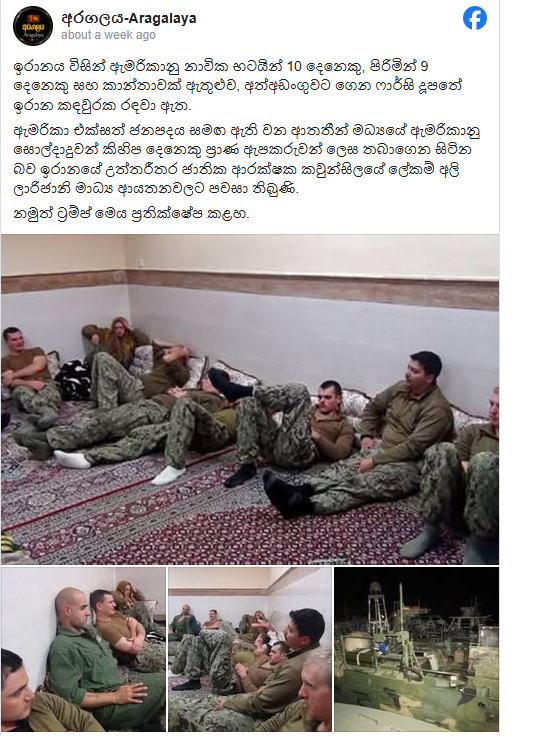
Posts circulating on Facebook alleged that Iran had captured 10 US Navy personnel — nine men and one woman — and detained them at a military base on Farsi Island. The caption further claimed that the incident was reported by Iranian official Ali Larijani and denied by Donald Trump.
https://www.facebook.com/photo/?fbid=1381610870661566&set=pcb.1381611363994850
Fact Check
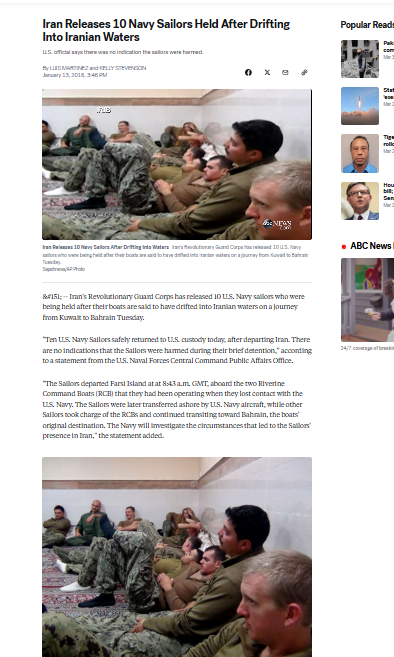
A reverse image search revealed that the viral images are not recent. They were published as early as January 13, 2016, by ABC News in a report titled “Iran Releases 10 Navy Sailors Held After Drifting Into Iranian Waters.”
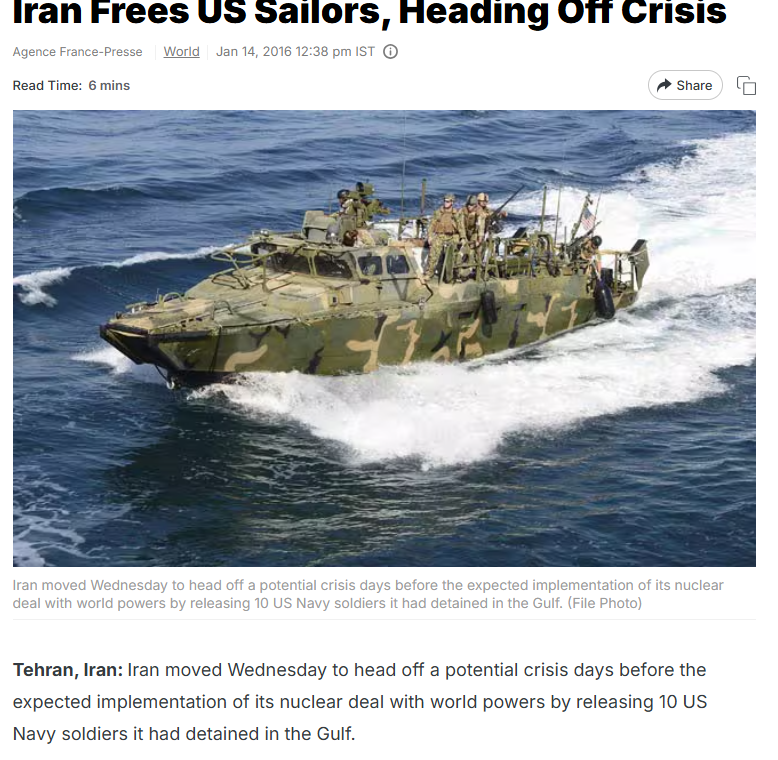
Further checks showed that the same images were distributed by AFP, with credits to Sepah News, the media wing of Iran’s Revolutionary Guards.
Context
The images relate to a 2016 incident in which two US Navy patrol boats accidentally entered Iranian waters. The crew was detained and taken to Farsi Island. Iran later released the sailors after determining that the intrusion was unintentional and that there was no hostile intent.
Conclusion
The viral posts are misleading. The images being shared are nearly a decade old and unrelated to the ongoing situation in the Middle East.

Related Blogs
.webp)
Introduction
In the fast-paced digital age, misinformation spreads faster than actual news. This was seen recently when inaccurate information on social media was spread, stating that the Election Commission of India (ECI) had taken down e-voter rolls for some states from its website overnight. The rumour confused the public and caused political debate in states like Maharashtra, MP, Bihar, UP and Haryana, resulting in public confusion. But the ECI quickly called the viral information "fake news" and made sure that voters could still get access to the electoral rolls of all States and Union Territories, available at voters.eci.gov.in. The incident shows how electoral information could be harmed by the impact of misinformation and how important it is to verify the authenticity.
The Incident and Allegations
On August 7, 2025, social media posts on platforms like X and WhatsApp claimed that the Election Commission of India had removed e-voter lists from its website. The posts appeared after public allegations about irregularities in certain constituencies. However, the claims about the removal of voter lists were unverified.
The Election Commission’s Response
In a formal tweet posted on X, it stated categorically:
“This is a fake news. Anyone can download the Electoral Roll for any of 36 States/UTs through this link: https://voters.eci.gov.in/download-eroll.”
The Commission clarified that no deletion has been done at all and that all the voters' rolls are intact and accessible to the public. Keeping with the spirit of transparency, the ECI reaffirmed its overall practice of public access to electoral information by clarifying that the system is intact and accessible for inspection.
Importance of Timely Clarifications
By countering factually incorrect information the moment it was spread on a large scale, the ECI stopped possible harm to public trust. Election officials rely upon being trusted, and any speculation concerning their honesty can prove harmful to democracy. Such prompt action stops false information from becoming a standard in public discourse.
Misinformation in the Electoral Space
- How False Narratives Gain Traction
Election misinformation increases in significant political environments. Social media, confirmation bias, and increased emotional states during elections enable rumour spread. On this occasion, the unfounded report struck a chord with widespread political distrust, and hence, people easily believed and shared it without checking if it was true or not.
- Risks to Democratic Integrity
When misinformation impacts election procedures, the consequences can be profound:
- Erosion of Trust: People can lose faith in the neutrality of election administrators quite easily.
- Polarization: Untrue assertions tend to reinforce political divides, rendering constructive communication more difficult.
- The Role of Media Literacy
Combating such mis-disinformation requires more than official statements. Media skills training courses can equip individuals with the ability to recognise warning signs in suspect messages. Even basic actions like checking official sources prior to sharing can move far in keeping untruths from being spread.
Strategies to Counter Electoral Misinformation
Multi-Stakeholder Action
Effective counteracting of electoral disinformation requires coordination among election officials, fact-checkers, media, and platforms. Actions that are suggested include:
- Rapid Response Protocols: Institutions should maintain dedicated monitoring teams for quick rebuttals.
- Confirmed Channels of Communication: Providing official sites and pages for actual electoral news.
- Proactive Transparency: Regular publication of electoral process updates can anticipate rumours.
- Platform Accountability: Social media sites must label or limit the visibility of information found to be false by credentialed fact-checkers.
Conclusion
The recent allegations of e-voter rolls deletion underscore the susceptibility of contemporary democracies to mis-disinformation. Even though the circumstances were brought back into order by the ECI's swift and unambiguous denunciation, the incident itself serves to emphasise the necessity of preventive steps to maintain election faith. Even though fact-checking alone might not work in an environment where the information space is growing more polarised and algorithmic, the long-term solution to such complications is to grow an ironclad democratic culture where everyone, every organisation, and platforms value the truth over clickbait. The lesson is clear: in the age of instant news, accurate communication is vital for maintaining democratic integrity, not extravagances.
References
- https://www.newsonair.gov.in/election-commission-dismisses-fake-news-on-removal-of-e-voter-rolls/
- https://economictimes.indiatimes.com/news/india/eci-dismisses-claims-of-removing-e-voter-rolls-from-its-website-calls-it-fake-news/articleshow/123190662.cms
- https://www.thehindu.com/news/national/vote-theft-claim-of-congress-factually-incorrect-election-commission/article69921742.ece
- https://www.thehindu.com/opinion/editorial/a-crisis-of-trust-on-the-election-commission-of-india/article69893682.ece
Executive Summary
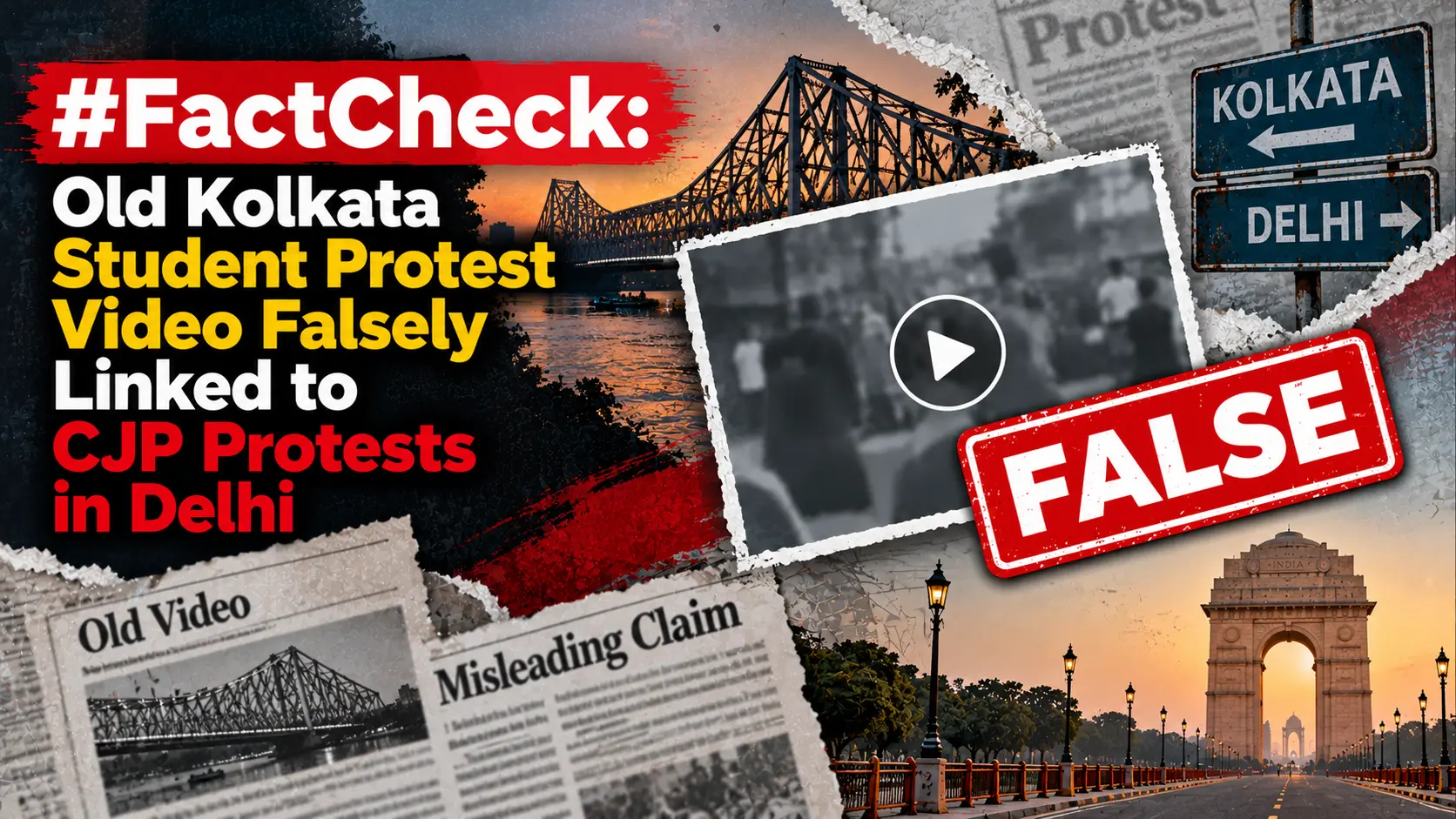
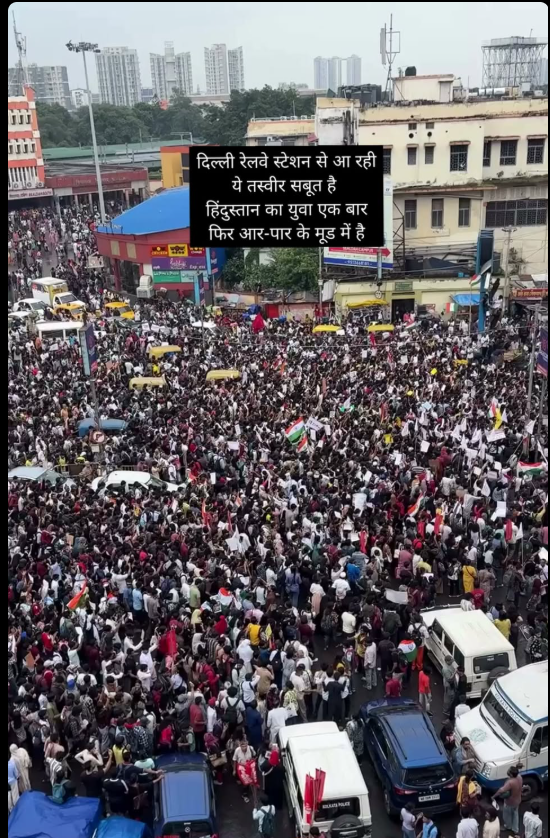
A video is going viral on social media in the name of the protests organised by the ‘Cockroach Janata Party’ (CJP) in Delhi on October 10 and 11. The video is being shared as footage from Delhi Railway Station, with the claim that the protests led to a massive traffic jam outside the station. CyberPeace Research conducted a detailed analysis of the viral video and found the claim to be misleading. The video is not from Delhi but from Sealdah Railway Station in Kolkata, where students held a protest in July 2026. The old video from that time is now being circulated in connection with the protests in Delhi, falsely linking the two events.
Claim
On October 10, 2026, the Facebook page ‘Atrangi Khabar’ shared a video with the following caption:“Massive Protest and Traffic Jam: Huge Crowd Gathers Outside Delhi Railway Station, Several Passengers Miss Their Trains! A massive traffic jam occurred outside Delhi Railway Station on Saturday due to a large-scale protest.
As a result, railway passengers faced severe difficulties reaching the station, and several passengers even missed their trains because of the traffic congestion. The video clearly shows a huge crowd filling the roads and an atmosphere of chaos all around.”
https://www.facebook.com/reel/2176543963241315/?s=single_unit
Fact Check
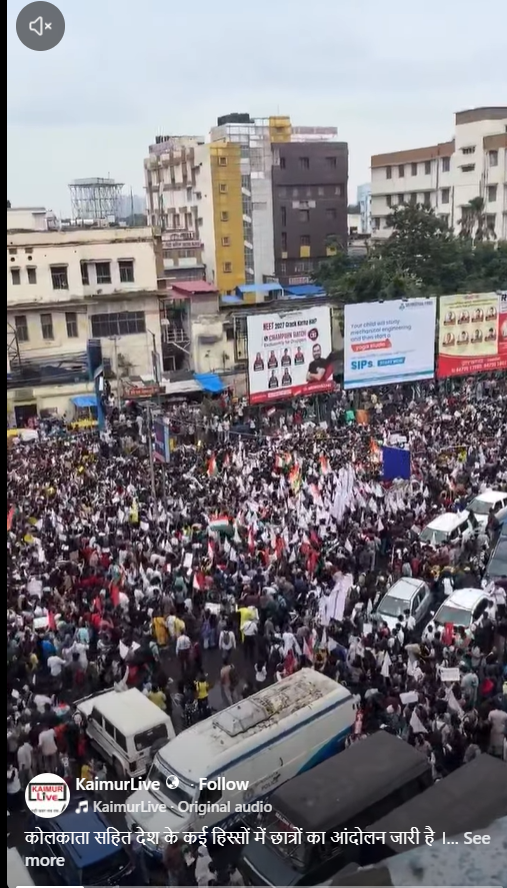
To verify the authenticity of the viral video, we first extracted several keyframes and searched them using Google Lens. We found that the video had been uploaded on multiple platforms on earlier dates. An Instagram account named ‘Faruk Biswas’ (faruk.biswas.581730) had shared the video on July 24, 2026, identifying it as footage of a student protest in Kolkata.
https://www.instagram.com/reels/DbLd3N3of7a/

During our search, we also found the same video on a Facebook page named ‘KaimurLive’. The caption accompanying the video read, “Student protests continue in Kolkata and several other parts of the country. Today, a massive gathering of students was seen on the streets of Kolkata. #NEETPaperLeak”
http://facebook.com/reel/2024661971511084
Conclusion
Our research found the viral post to be misleading. An old video from Sealdah Railway Station in Kolkata is being falsely shared as footage from Delhi Railway Station. The original video dates back to July 2026 and has no connection to the protests held in Delhi on October 10 and 11, 2026.

Introduction
With the ever-growing technology where cyber-crimes are increasing, a new cyber-attack is on the rise, but it’s not in your inbox or your computer- it's targeting your phone, especially your smartphone. Cybercriminals are expanding their reach in India, with a new text-messaging fraud targeting individuals. The Indian Computer Emergency Response Team (CERT-In) has warned against "smishing," or SMS phishing.
Understanding Smishing
Smishing is a combination of the terms "SMS" and "phishing." It entails sending false text messages that appear to be from reputable sources such as banks, government organizations, or well-known companies. These communications frequently generate a feeling of urgency in their readers, prompting them to click on harmful links, expose personal information, or conduct financial transactions.
When hackers "phish," they send out phony emails in the hopes of tricking the receiver into clicking on a dangerous link. Smishing is just the use of text messaging rather than email. In essence, these hackers are out to steal your personal information to commit fraud or other cybercrimes. This generally entails stealing money – usually your own, but occasionally also the money of your firm.
The cybercriminals typically use these tactics to lure victims and steal the information.
Malware- The cyber crooks send the smishing URL link that might tick you into downloading malicious software on your phone itself. This SMS malware may appear as legitimate software, deceiving you into putting in sensitive information and transmitting it to crooks.
Malicious website- The URL in the smishing message may direct you to a bogus website that seeks sensitive personal information. Cybercriminals employ custom-made rogue sites meant to seem like legitimate ones, making it simpler to steal your information.
Smishing text messages often appear to be from your bank, asking you to share personal sensitive information, ATM numbers, or account details. Mobile device cybercrime is increasing, as is mobile device usage. Aside from the fact that texting is the most prevalent usage of cell phones, a few additional aspects make this an especially pernicious security issue. Let's go over how smishing attacks operate.
Modus Operandi
The cyber crooks commit the fraud via SMS. As attackers assume an identity that might be of someone trusted, Smishing attackers can use social engineering techniques to sway a victim's decision-making. Three things are causing this deception:
- Trust- Cyber crooks target individuals, by posing to someone from a legitimate individual and organization, this naturally lowers a person’s defense against threats.
- Context- Using a circumstance that might be relevant to targets helps an attacker to create an effective disguise. The message feels personalized, which helps it overcome any assumption that it is spam.
- Emotion- The nature of the SMS is critical; it makes the victim think that is urgent and requires rapid action. Using these tactics, attackers craft communications that compel the receiver to act.
- Typically, attackers want the victim to click on a URL link within the text message, which takes them to a phishing tool that asks them for sensitive information. This phishing tool is frequently in the form of a website or app that also assumes a phony identity.
How does Smishing Spread?
As we have revealed earlier smishing attacks are delivered through both traditional texts. However, SMS phishing attacks primarily appear to be from known sources People are less careful while they are on their phones. Many people believe that their cell phones are more secure than their desktops. However, smartphone security has limits and cannot always guard against smishing directly.
Considering the fact phones are the target While Android smartphones dominate the market and are a perfect target for malware text messages, iOS devices are as vulnerable. Although Apple's iOS mobile technology has a high reputation for security, no mobile operating system can protect you from phishing-style assaults on its own. A false feeling of security, regardless of platform, might leave users especially exposed.
Kinds of smishing attacks
Some common types of smishing attacks that occurred are;
- COVID-19 Smishing: The Better Business Bureau observed an increase in reports of US government impersonators sending text messages requesting consumers to take an obligatory COVID-19 test via a connected website in April 2020. The concept of these smishing assaults may readily develop, as feeding on pandemic concerns is a successful technique of victimizing the public.
- Gift Smishing: Give away, shopping rewards, or any number of other free offers, this kind of smishing includes free services or products, from a reputable or other company. attackers plan in such a way that the offer is for a limited time or is an exclusive offer and the offers are so lucrative that one gets excited and falls into the trap.
CERT Guidelines
CERT-In shared some steps to avoid falling victim to smishing.
- Never click on any suspicious link in SMS/social media charts or posts.
- Use online resources to validate shortened URLs.
- Always check the link before clicking.
- Use updated antivirus and antimalware tools.
- If you receive any suspicious message pretending to be from a bank or institution, immediately contact the bank or institution.
- Use a separate email account for personal online transactions.
- Enforce multi-factor authentication (MFA) for emails and bank accounts.
- Keep your operating system and software updated with the latest patches.
Conclusion
Smishing uses fraudulent mobile text messages to trick people into downloading malware, sharing sensitive data, or paying cybercriminals money. With the latest technological developments, it has become really important to stay vigilant in the digital era not only protecting your computers but safeguarding the devices that fit in the palm of your hand, CERT warning plays a vital role in this. Awareness and best practices play a pivotal role in safeguarding yourself from evolving threats.
Reference
- https://www.ndtv.com/india-news/government-warns-of-smishing-attacks-heres-how-to-stay-safe-4709458
- https://zeenews.india.com/technology/govt-warns-citizens-about-smishing-scam-how-to-protect-against-this-online-threat-2654285.html
- https://www.the420.in/protect-against-smishing-scams-cert-in-advice-online-safety/
