
#FactCheck : Iraq Religious Gathering Video Misused as Khamenei Funeral Footage
Executive Summary
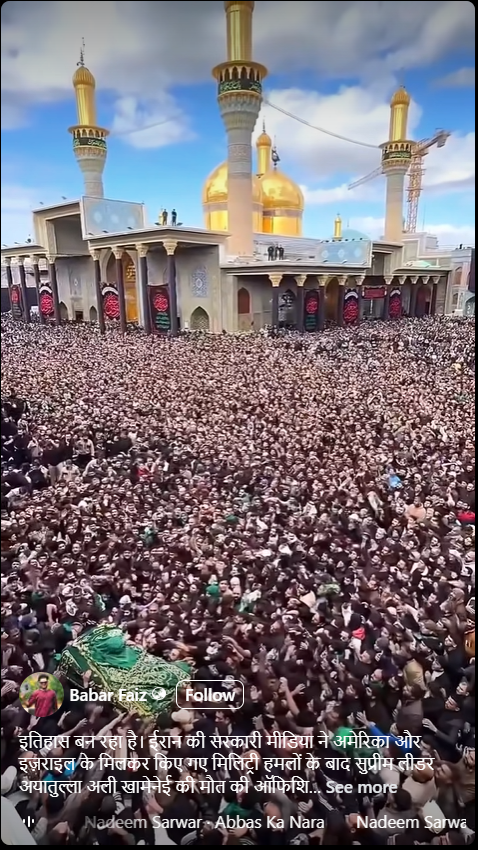
A video showing a massive gathering of people dressed in black is widely circulating on social media. The clip is being shared with the claim that it shows crowds mourning the funeral of Iran’s Supreme Leader Ayatollah Ali Khamenei following his alleged killing in February 2026 However, research by the CyberPeace found that the claim is misleading and the video is unrelated to Iran.
Claim:
The viral video shows a large crowd gathered in a public square, with a mosque featuring a golden dome visible in the background. Social media posts claim that the footage captures mourners attending Ayatollah Khamenei’s funeral after his reported death in a joint US-Israel operation.
Fact Check:
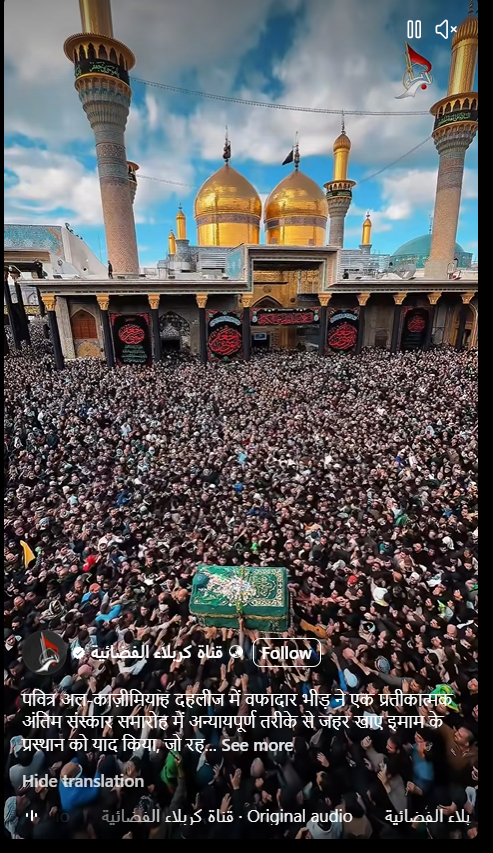
To verify the claim, we extracted keyframes from the video and conducted a reverse image search. This led us to a similar clip uploaded on January 15 by an Iraqi broadcaster, Karbala TV, on Facebook. In the footage, a large crowd can be seen carrying a symbolic coffin near a shrine with a golden dome—matching the visuals seen in the viral video. According to the Arabic caption, the video shows a “symbolic funeral” procession held at the Kazimayn Shrine in Baghdad, Iraq. The event is part of an annual religious observance commemorating Imam Musa al-Kazim, the seventh Imam in Shia Islam, who is believed to have died after being poisoned in the 8th century.
Every year, large numbers of Shia devotees gather at the shrine in Baghdad to pay their respects during this commemoration. The visuals seen in the viral clip are consistent with this annual gathering.
Conclusion:
The claim that the video shows crowds at Ayatollah Khamenei’s funeral is false. The footage is unrelated and actually depicts a religious gathering in Baghdad, Iraq, held as part of an annual Shia ritual.

Related Blogs

Executive Summary:
A viral online video claims visuals of a massive rally organised in Manipur for stopping the violence in Manipur. However, the CyberPeace Research Team has confirmed that the video is a deep fake, created using AI technology to manipulate the crowd into existence. There is no original footage in connection to any similar protest. The claim that promotes the same is therefore, false and misleading.
Claims:
A viral post falsely claims of a massive rally held in Manipur.


Fact Check:
Upon receiving the viral posts, we conducted a Google Lens search on the keyframes of the video. We could not locate any authentic sources mentioning such event held recently or previously. The viral video exhibited signs of digital manipulation, prompting a deeper investigation.
We used AI detection tools, such as TrueMedia and Hive AI Detection tool, to analyze the video. The analysis confirmed with 99.7% confidence that the video was a deepfake. The tools identified "substantial evidence of manipulation," particularly in the crowd and colour gradience , which were found to be artificially generated.


Additionally, an extensive review of official statements and interviews with Manipur State officials revealed no mention of any such rally. No credible reports were found linking to such protests, further confirming the video’s inauthenticity.
Conclusion:
The viral video claims visuals of a massive rally held in Manipur. The research using various tools such as truemedia.org and other AI detection tools confirms that the video is manipulated using AI technology. Additionally, there is no information in any official sources. Thus, the CyberPeace Research Team confirms that the video was manipulated using AI technology, making the claim false and misleading.
- Claim: Massive rally held in Manipur against the ongoing violence viral on social media.
- Claimed on: Instagram and X(Formerly Twitter)
- Fact Check: False & Misleading

Executive Summary
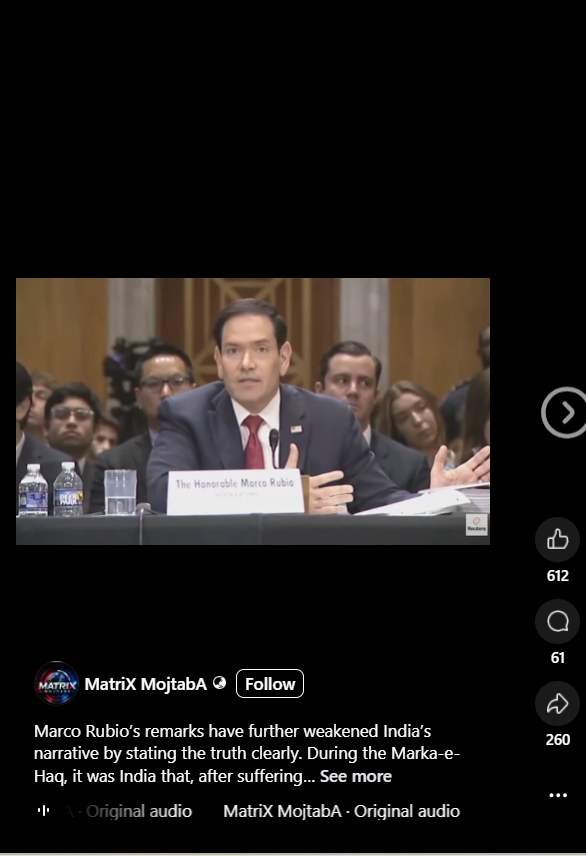
A video of US Secretary of State Marco Rubio is rapidly going viral on social media, in which he can allegedly be heard making a statement regarding the 2025 India-Pakistan conflict. Along with the video, it is being claimed that the US played a crucial role in ending the conflict between the two countries, but India was the first to initiate a ceasefire with Pakistan. Users are sharing this video believing it to be true.
Research by the CyberPeace Research Wing revealed that the video has been digitally manipulated. Rubio did state that the United States played a role in ending the conflict, but he never said that India was the first to request a ceasefire from Pakistan. This alleged statement was not part of the original video and was added later to alter the clip.
Claim
A user on a Facebook page shared the viral video and wrote, "Marco Rubio's statement has clearly brought out the truth, weakening India's claim. During 'Maarka-e-Haq', after suffering heavy losses, India was the first party to request a ceasefire from Pakistan. This highlights the gap between India's public claims and the ground reality, where the military..." The post link, archive link, and screenshot can be seen below. https://www.facebook.com/reel/1015648544746728
https://www.facebook.com/reel/1015648544746728
Fact Check
We investigated the viral video using the InVid tool and extracted several of its keyframes. These keyframes were then subjected to a reverse image search via Google Lens. The investigation revealed that the exact same video had been shared on social media previously, showing the same background and setting. The post link and screenshot can be seen below.
https://www.facebook.com/reel/1015648544746728
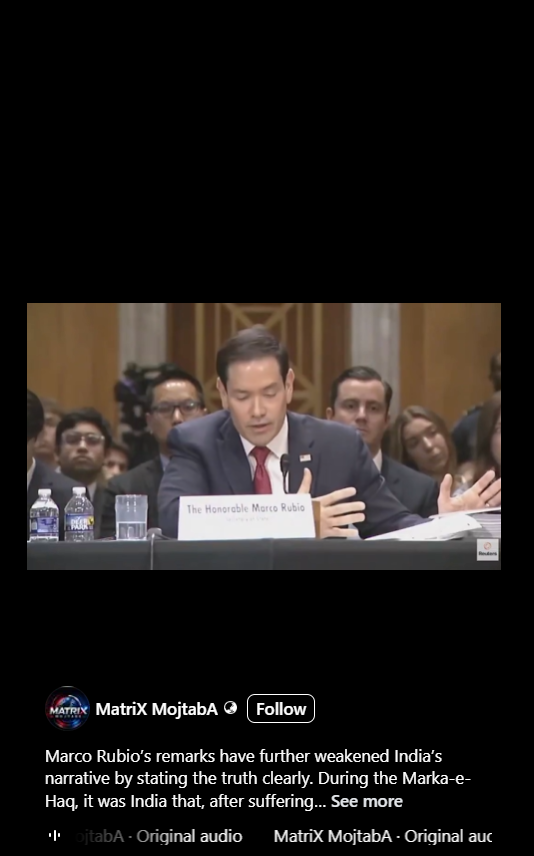
In the next step of our investigation, we found a video published on Reuters' official YouTube channel on June 2, 2026, whose background matches the viral video. However, nowhere in this original video is Marco Rubio heard saying that India was the first to request a ceasefire from Pakistan. The post link and screenshot can be seen below.
https://www.youtube.com/watch?v=qSpp5IYO6Cs

At the 2-hour 8-minute 55-second mark of the Reuters video, Rubio only states that the US played a role in ending the India-Pakistan conflict. Following this, he discusses the Thailand-Cambodia conflict. This makes it clear that the alleged statement in the viral video was digitally added or edited in, and is not part of the original footage.
Taking the investigation further, we scanned the suspicious audio portion of the viral video using the AI detection tool 'Resemble AI'. According to the analysis results, clear signs of audio manipulation were detected.

Conclusion:
Our investigation revealed that the video has been digitally manipulated. Rubio did state that the United States played a role in ending the conflict, but he never said that India was the first to request a ceasefire from Pakistan. This alleged statement was not part of the original video and was altered by adding it later.
Executive Summary
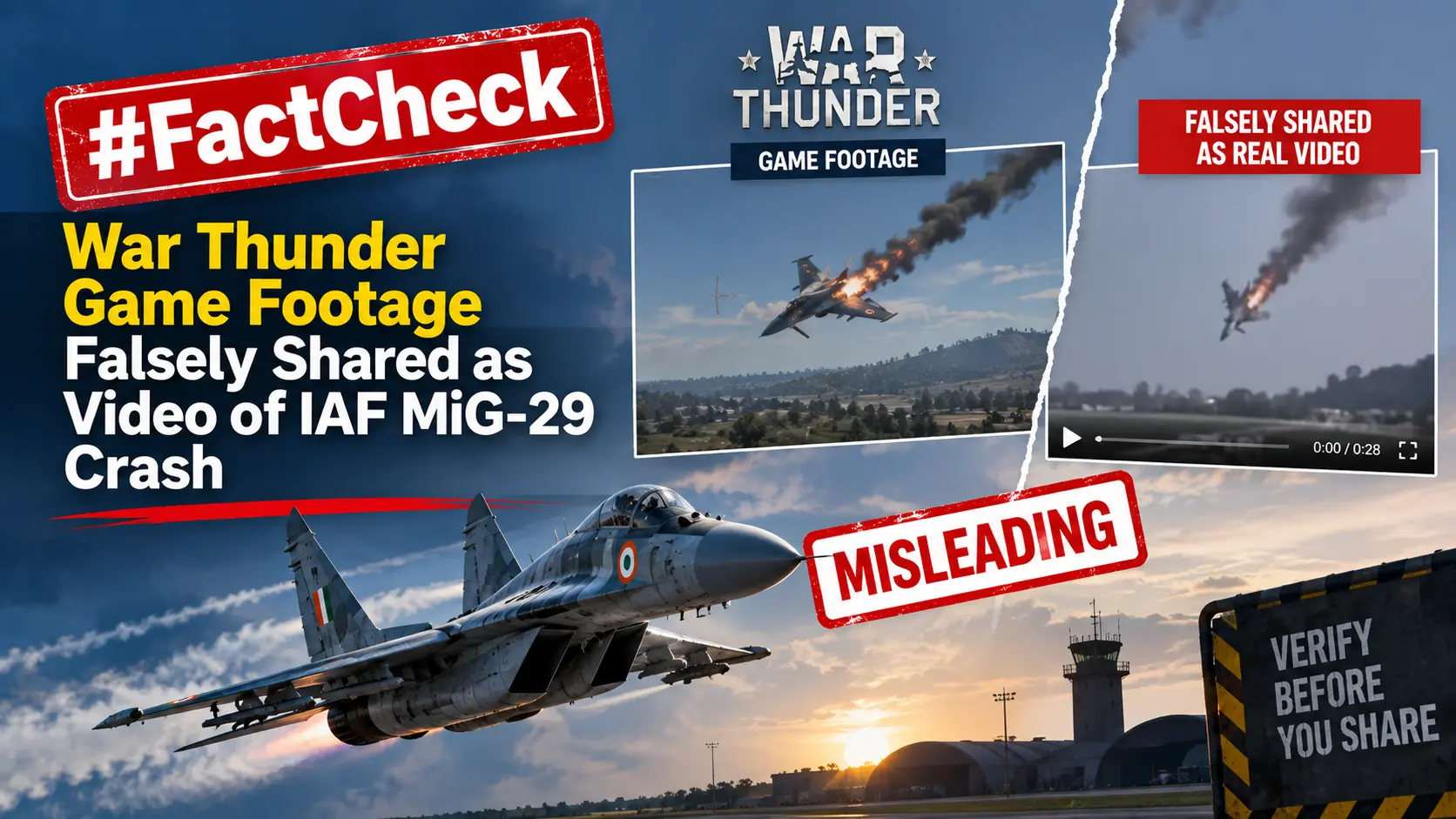
A video is being shared on social media with the claim that an Indian Air Force (IAF) MiG-29 fighter jet crashed while landing due to the pilot’s negligence. The claim further alleges that no casualties were reported in the incident and that the IAF is concealing the incident because it is losing fighter jets at a high rate. The video is being widely shared on social media.
CyberPeace Research found the claim to be false. Our Research revealed that the video is not footage of an actual IAF MiG-29 crash, but gameplay footage from the video game War Thunder, which is being shared with a false and misleading claim.
Claim:
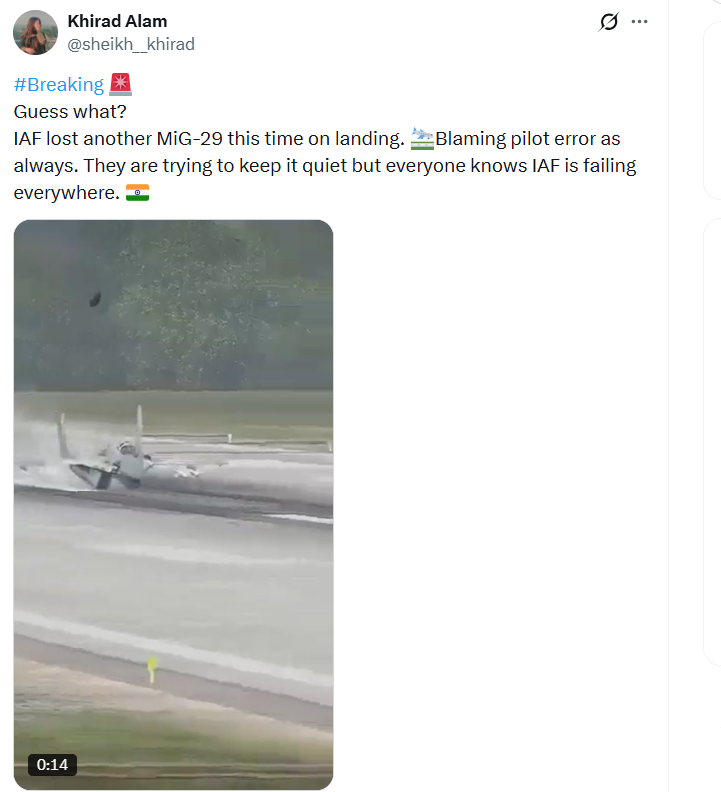
An Indian Air Force MiG-29 fighter jet crashed while landing, with pilot error being blamed for the incident. The post further claims that the IAF is trying to conceal the incident.
https://x.com/sheikh__khirad/status/2100447634599342114?s=20
Fact Check
To verify the claim, we conducted a Google search using relevant keywords. However, we did not find any credible media report supporting the claim. We also checked the official X account of the Indian Army, but found no post confirming the claim.
https://x.com/adgpi

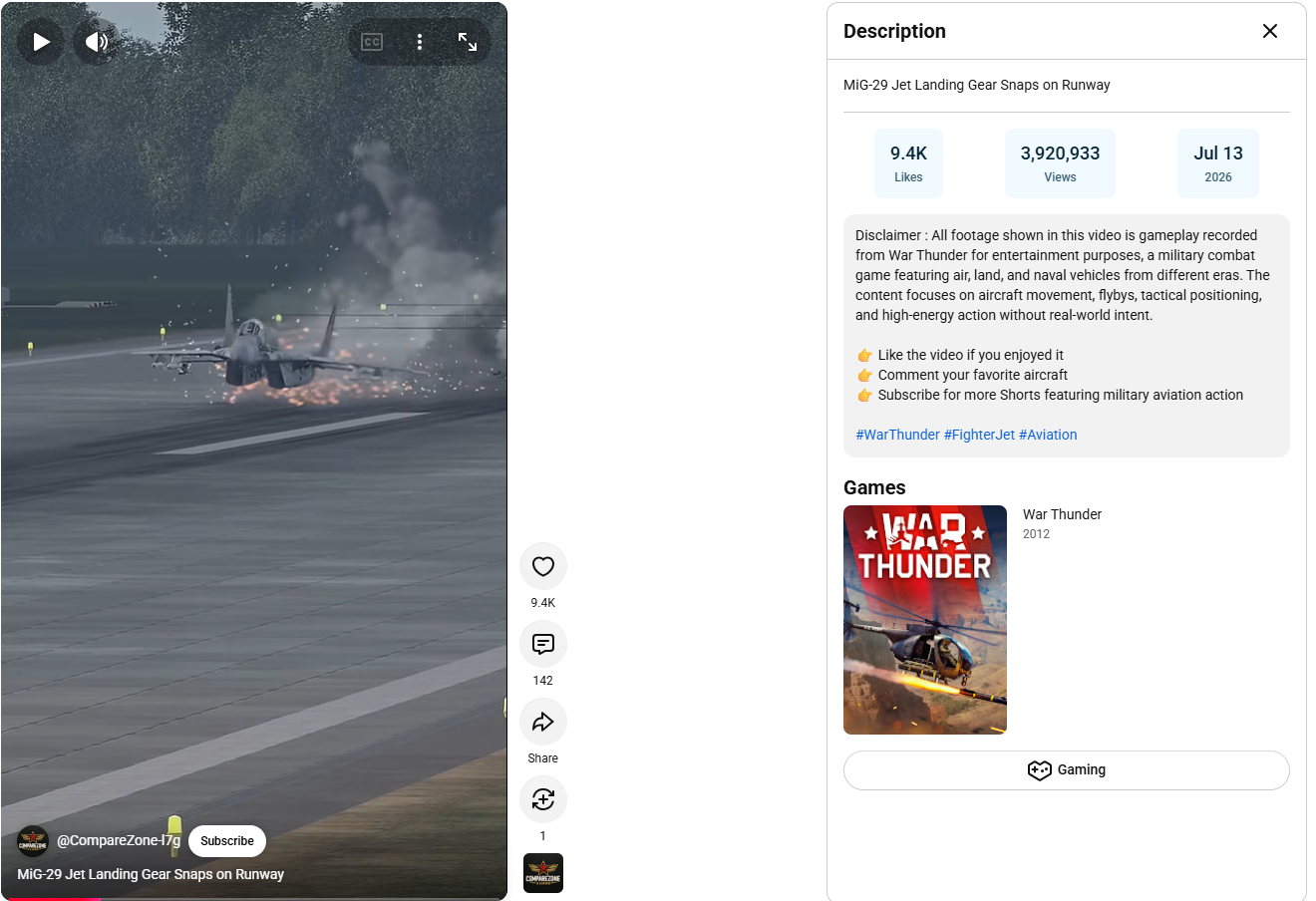
As part of our further research, we conducted a reverse image search of keyframes from the video. During the search, we found a YouTube channel where similar visuals had been uploaded.

We found that the channel regularly posts gaming-related content. At the end of our research, we found the original version of the viral video on the YouTube channel. It was published on July 13, 2026. The video description also clearly states that the footage is gaming content and not a real-life incident.
https://www.youtube.com/shorts/dVu0eMztePo
Conclusion
Our research found that the video being shared with the claim that an IAF MiG-29 fighter jet crashed during landing does not depict a real incident. The video is actually gameplay footage from the video game War Thunder.Therefore, gaming footage is being falsely presented on social media as footage of an Indian Air Force MiG-29 crashing during landing. The incident shown in the video is not real.
