
#FactCheck- AI-Generated Image of PM Modi Misleadingly Shared as Assam Campaign Shoot Setup
Executive Summary
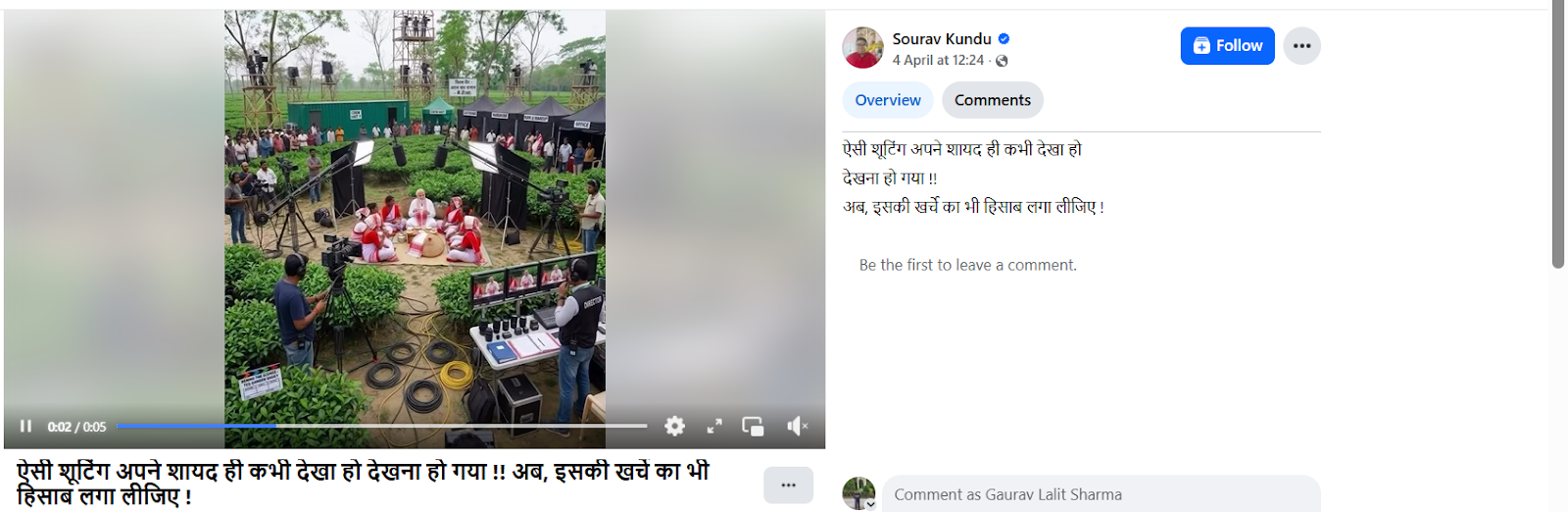
An image of Prime Minister Narendra Modi is being widely circulated on social media. The picture is being shared with the claim that during an election campaign in Assam, a full-fledged shooting set was arranged in a tea garden where Modi interacted with women workers, complete with cameras, microphones, lights, and a director-led production team. However, research by the CyberPeace has found the claim to be false. Our research reveals that the viral image is AI-generated and is being shared with a misleading narrative.
Claim
An Instagram user shared the viral image with the caption suggesting that such a large-scale “shoot” setup had been arranged and questioned the cost involved.
Post link:
Fact Check
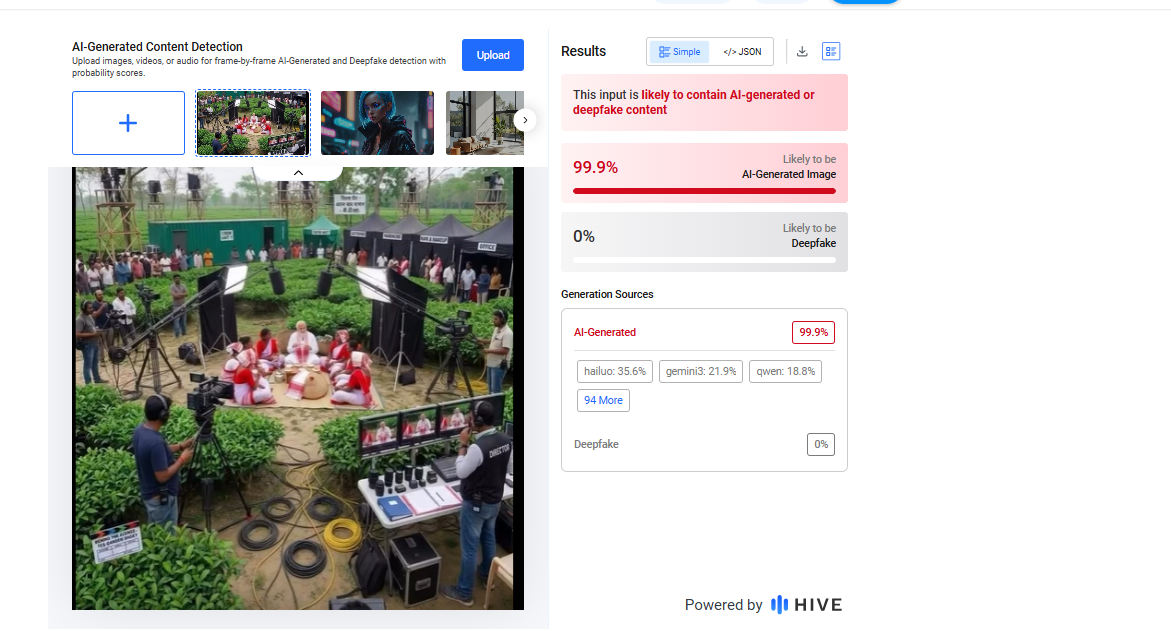
To verify the claim, we conducted a keyword-based search on Google. However, we did not find any credible media reports supporting the claim that such a shooting setup was arranged during Prime Minister Modi’s visit to Assam. Upon closely examining the viral image, we noticed several visual inconsistencies that raised suspicion about it being artificially generated. To confirm this, we analyzed the image using the AI detection tool Hive Moderation, which indicated that the image is approximately 99% AI-generated.
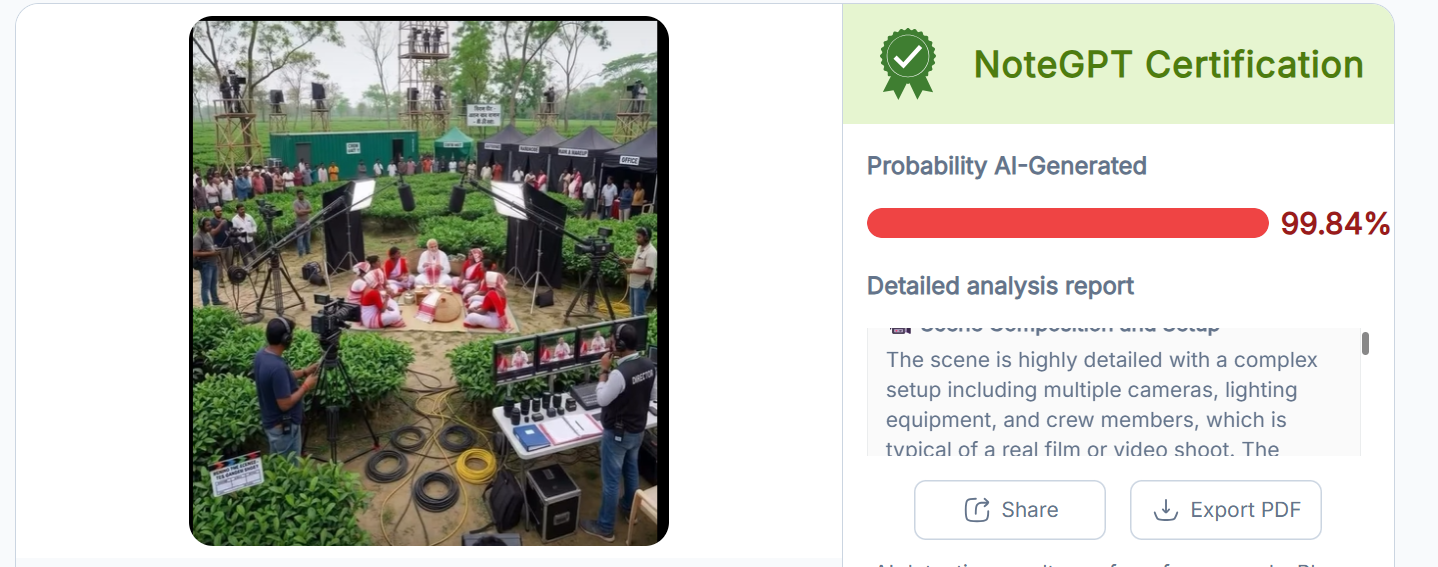
To further validate the findings, we also tested the image using another AI detection tool, NoteGPT, which similarly classified the image as 99% AI-generated.
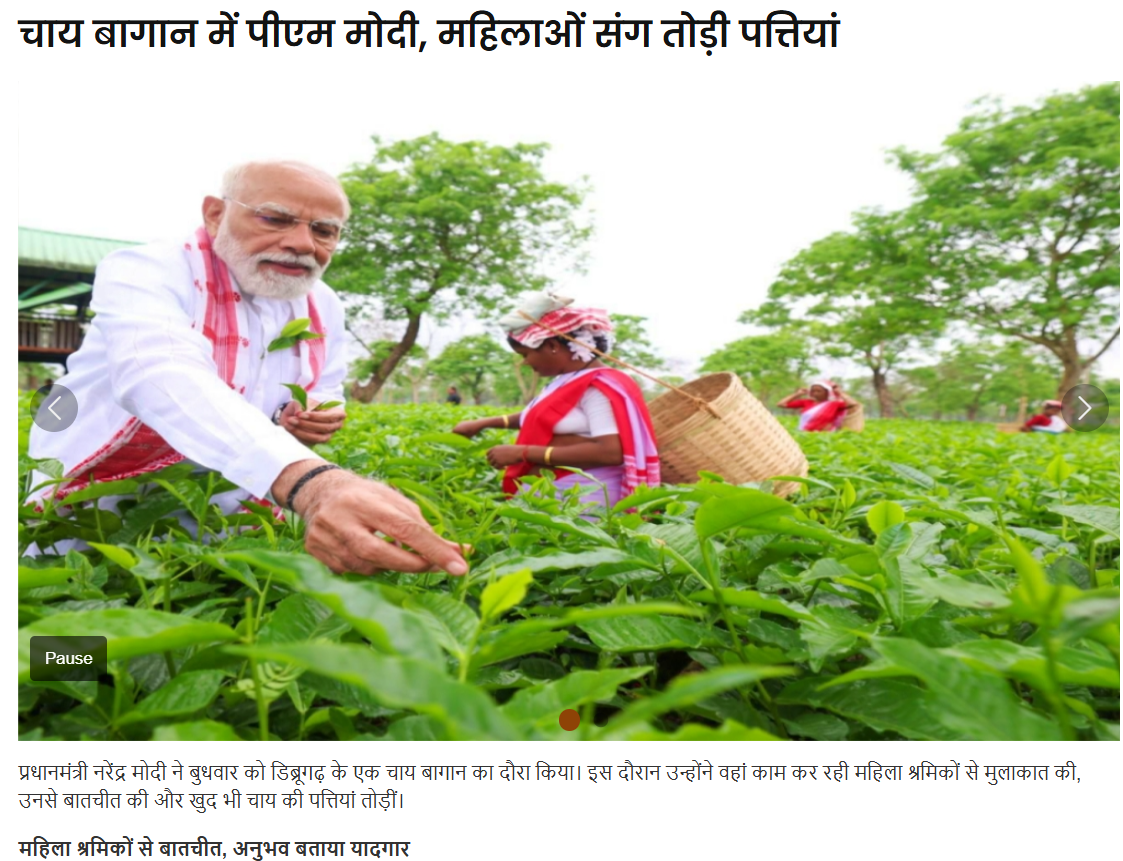
For context, ahead of the 2026 Assam Assembly elections, Prime Minister Narendra Modi has been on a campaign visit to the state. According to a report by DD News, he visited a tea garden in Dibrugarh, where he interacted with women workers and even plucked tea leaves himself.
Conclusion
Our research clearly establishes that the viral image of Prime Minister Narendra Modi is not authentic and has been digitally created using AI tools. There is no evidence to support the claim that a staged shooting setup involving cameras, lights, and a production crew was arranged during his visit. The image is being circulated with a misleading narrative to create a false impression. This case highlights how AI-generated visuals can be used to distort real events and spread misinformation.

Related Blogs
.webp)
What is Deepfake
Deepfakes have been, a fascinating but unsettling phenomenon that is now prominent in this digital age. These incredibly convincing films have drawn attention and blended in well with our high-tech surroundings. The lifelike but completely manufactured quality of deepfake videos has become an essential component of our digital environment as we traverse the broad reaches of our digital society. While these works have an undoubtedly captivating charm, they have important ramifications. Come along as we examine the deep effects that misuse of deepfakes can have on our globalized digital culture. After many actors now business tycoon Ratan Tata has become the latest victim of deepfake. Tata called out a post from a user that used a fake interview of him in a video recommending Investments.
Case Study
The nuisance of deep fake is sparing none from actors politicians to entrepreneurs everyone is getting caught in the Trap. Soon after the actresses Rashmika Mandana, Katrina Kaif, Kajol and other actresses fell prey to the rising scenario of deepfake, a new case from the industry emerged, which took Mr. Ratan Tata on storm. Business tycoon Ratan Tata has become the latest victim of deepfake. He took to his social media sharing an image of the interview that asked people to invest money in a project in a post on Instagram. Ratan Tata called out a post from a user that used a fake interview of him in a video recommending these Investments.
This nuisance that has been created because of the deepfake is sparing nobody from actors to politicians to entrepreneurs now everyone is getting caught in the trap the latest victim being Ratan Tata. Tech magnate Ratan Tata is the most recent victim of this deepfake phenomenon. The millionaire was seen in the video, which was posted by the Instagram user, giving his followers a once-in-a-million opportunity to "exaggerate investments risk-free."
In the stated video, Ratan Tata was seen giving everyone in India advice mentioning to the public regarding the opportunity to increase their money with no risk and a 100% guarantee. The caption of the video clip stated, "Go to the channel right now."
Tata annotated both the video and the screenshot of the caption with the word "FAKE."
Ongoing Deepfake Assaults in India
Deepfake videos continue to target celebrities, and Priyanka Chopra is also a recent victim of this unsettling trend. Priyanka's deepfake adopts a different strategy than other examples, including actresses like Rashmika Mandanna, Katrina Kaif, Kajol, and Alia Bhatt. Rather than editing her face in contentious situations, the misleading film keeps her looking the same but modifies her voice and replaces real interview quotes with made-up commercial phrases. The deceptive video shows Priyanka promoting a product and talking about her yearly salary, highlighting the worrying development of deepfake technology and its possible effects on prominent personalities.
Prevention and Detection
In order to effectively combat the growing threat posed by deepfake technology, people and institutions should place a high priority on developing critical thinking abilities, carefully examining visual and auditory cues for discrepancies, making use of tools like reverse image searches, keeping up with the latest developments in deepfake trends, and rigorously fact-check reputable media sources. Important actions to improve resistance against deepfake threats include putting in place strong security policies, integrating cutting-edge deepfake detection technologies, supporting the development of ethical AI, and encouraging candid communication and cooperation. We can all work together to effectively and mindfully manage the problems presented by deepfake technology by combining these tactics and making adjustments to the constantly changing terrain.
Conclusion
The current instance involving Ratan Tata serves as an example of how the emergence of counterfeit technology poses an imminent danger to our digital civilization. The fake video, which was posted to Instagram, showed the business tycoon giving financial advice and luring followers with low-risk investment options. Tata quickly called out the footage as "FAKE," highlighting the need for careful media consumption. The Tata incident serves as a reminder of the possible damage deepfakes can do to prominent people's reputations. The issue, in Ratan Tata's instance specifically, demands that public personalities be more mindful of the possible misuse of their virtual identities. We can all work together to strengthen our defenses against this sneaky phenomenon and maintain the trustworthiness of our internet-based culture in the face of ever-changing technological challenges by emphasizing preventive measures like strict safety regulations and the implementation of state-of-the-art deepfake detection technologies.
References
- https://economictimes.indiatimes.com/magazines/panache/ratan-tata-slams-deepfake-video-that-features-him-giving-risk-free-investment-advice/articleshow/105805223.cms
- https://www.ndtv.com/india-news/ratan-tata-flags-deepfake-video-of-his-interview-recommending-investments-4640515
- https://www.businesstoday.in/bt-tv/short-video/viralvideo-business-tycoon-ratan-tata-falls-victim-to-deepfake-408557-2023-12-07
- https://www.livemint.com/news/india/false-ratan-tata-calls-out-a-deepfake-video-of-him-giving-investment-advice-11701926766285.html
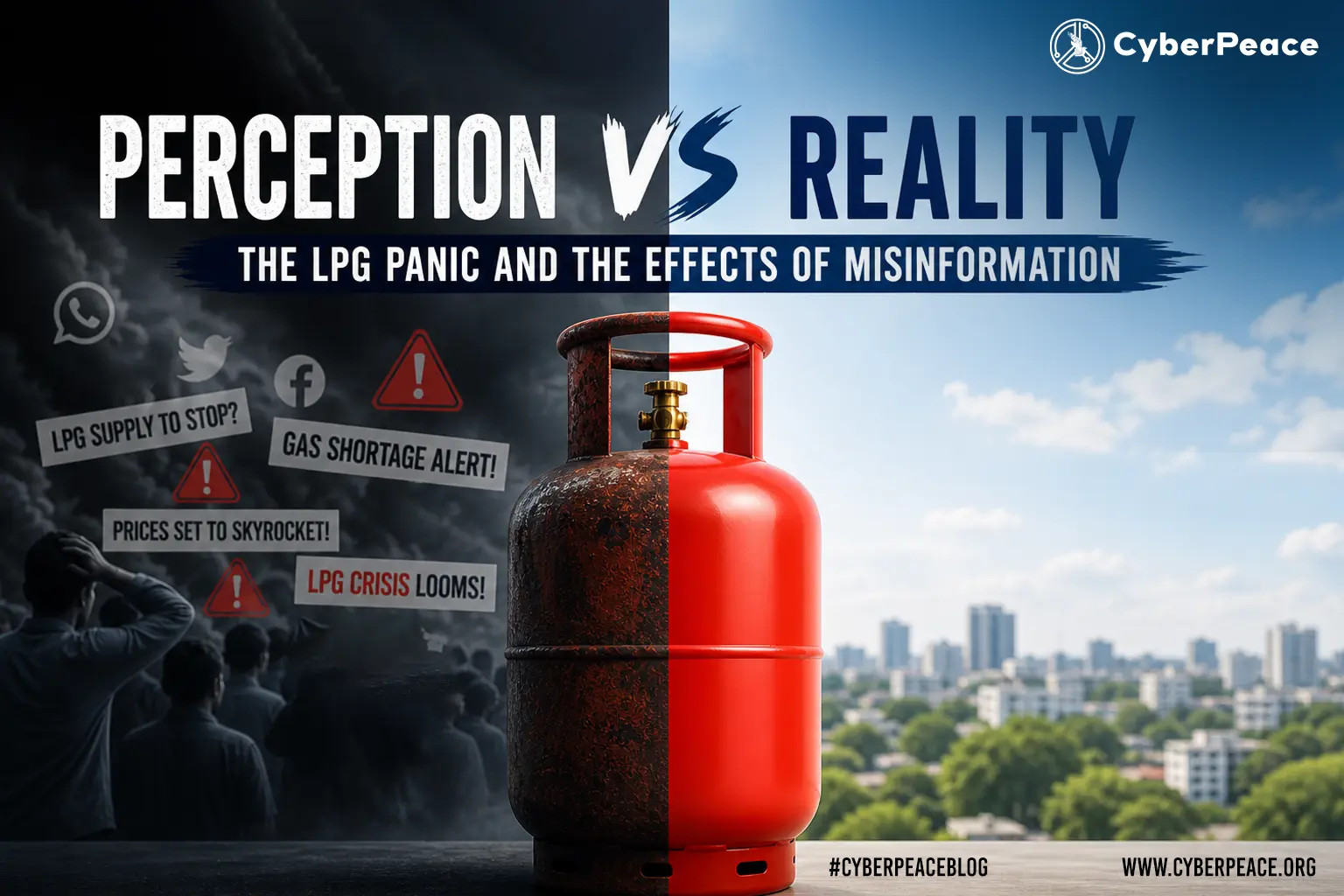
In recent months, conversations around the possible shortage of liquefied petroleum gas (LPG), a basic cooking fuel in Indian households, have quietly resurfaced across the country. From whispers in local markets to viral messages circulating on social media, concerns about LPG availability began to take hold in the public imagination. Though the immediacy of the situation has since faded, its echoes remain, reminding us how quickly uncertainty can spread. Like a ripple across still water, a single rumour can travel far, gathering force as it moves and blurring the line between perception and reality.
Against this backdrop, in April 2026, reports began circulating about a potential LPG shortage. The Union Government moved quickly to counter what it identified as misinformation, emphasising that supply remained stable and urging citizens not to engage in panic buying. A noticeable disconnect emerged between official communication and public perception. Across different regions, signs of anxiety-driven behaviour became evident. Instances of panic buying and hoarding increased, law enforcement agencies conducted raids to address such actions, and opportunistic thefts were reported, often exploiting widespread concern. These incidents highlight how misinformation, even when addressed promptly, can continue to shape public behaviour.
It is worth noting that rising prices also played a role in shaping public response, as increases in LPG rates contributed to a sense of urgency among consumers. Therefore, the surge in panic buying cannot be attributed solely to misinformation, but rather to a combination of economic pressures and perceived scarcity.
Misinformation Ecosystem - From Rumours to Behaviour
The spread of misinformation is occurring at an unprecedented pace and is, in large part, driven by the viral nature of social media. Digital platforms not only enable the rapid dissemination of information but also allow it to be amplified in ways that would not be possible through traditional media outlets. Often, the drive for virality outweighs any concern for accuracy, meaning that many individuals who spread misinformation are motivated more by the pursuit of attention than by any ideological agenda. Recent arrests of individuals involved in spreading misinformation about LPG and petrol shortages, much of which went viral, suggest that misinformation today is frequently driven by the desire for visibility rather than ideological motives. The information being circulated has largely followed a similar pattern, focusing on fears of an LPG shortage, expectations of price increases, and concerns about supply disruptions. Even though this information has not been verified, it has triggered behavioural responses among individuals. In several areas, including parts of Uttar Pradesh and Goa, the spread of misinformation through social media has led to panic buying, despite official assurances that there would be sufficient LPG supply to meet demand.
The impact of panic buying, and its associated misinformation, has already been seen in multiple sectors; these increased demands have placed pressure on the distribution network, leading to disruptions in access, as well as being out of stock of certain products. In many cases, commercial users of products (especially restaurants) have experienced significant disruption, threatening their continued operations, and industry representatives have alerted others about the inconsistent supply of commercial cylinders; likewise, consumers (households) are beginning to switch to alternative products (e.g., induction cooking) as a reflection of the anticipatory mindset to address the uncertainty created through perceptions of Product Scarcity.
State Response: Managing Misinformation or Behaviour?

The government has taken a variety of approaches, from advisories and enforcement actions to communicating with citizens indirectly. For example, State Governments have been directed to combat misinformation, monitor supply chains and take action against hoarding and black market activity. There has been a significant increase in the level of large- scale enforcement activity, with over 3,700 raids carried out to crack down on hoarding and black marketing related to LPG, in addition to confiscating cylinders and issuing penalties to those who break the law. In addition, the authorities have also focused on maintaining regular communication with the public in order to reassure them about the supply of LPG and fuel stability.
Geopolitical Context: Why Rumours Are Believable
Understanding today’s panic requires an understanding of the global environment: i.e., due to the ongoing conflict in West Asia, the energy markets are unstable, and energy supply is uncertain not only in West Asia but across a large part of the world. Even if domestic supply remains stable, public perception is affected by global instability. A clear example of this can be seen in neighbouring countries to India; Pakistan has seen significant increases in the cost of fuel, implemented measures such as reducing the number of days individuals work each week, and has created public support mechanisms; Bangladesh has imposed restrictions on the use of energy, has shortened the number of hours individuals can operate businesses each day, and has restricted the total amount of energy used; Sri Lanka has begun to ration fuel, and to increase the price of petrol; and Nepal has reduced the numbers of days individuals may work each week, and has adjusted supply.
All of these examples are not isolated instances, but are markers of a common regional environment. As we live in a global community that is connected in many ways, these developments will quickly affect public expectations everywhere. Therefore, for consumers in India, seeing evidence of rationing of fuel and shortages of fuel in neighbouring countries increases their belief that these types of problems could occur in their country.
Critical Perspective: Between Panic and Precaution
The LPG incident has brought about questions surrounding the nature of misinformation in terms of its definition & regulation. One of the main concerns is whether or not "misinformation" is being cast too widely. To be sure, false claims need to be addressed; however, not everything that is responded to publicly is based on untrue facts, as many times public responses are based on perceived risk via global and/or local incidents that occur. Perhaps the greatest challenge is the difficulty in differentiating precaution and panic. People’s memories of the COVID-19 pandemic are fresh in their minds and will serve to influence their behaviours moving onward, in that many people are stockpiling or preparing for uncertainty not out of irrational fear, but as an anticipatory response to their prior experiences.
Conclusion
The Indian LPG "crisis" is not so much a problem with actual supply chain breakdown as it is a result of how information and behaviour are connected through perception. This cohabitating environment of panic buying, law enforcement, and government assurance demonstrates an evident disconnect and gap between how governments present a narrative and how the public responds. While there is some role of misinformation within this discourse, the misinformation itself extends beyond any or all false claims about LPG supply and operates within a greater ecosystem of global uncertainty and personal experience. As such, and because of this, perception becomes an incredibly strong force in itself that produces true economic consequences.
Reference
- https://www.pib.gov.in/PressReleasePage.aspx?PRID=2248640&utm_source®=3&lang=2
- https://www.pmindia.gov.in/en/news_updates/pm-addresses-the-lok-sabha-on-the-ongoing-conflict-in-west-asia/
- https://www.ndtv.com/delhi-news/iran-war-middle-east-conflict-why-the-lpg-crisis-is-forcing-migrants-to-quietly-leave-delhi-11313629
- https://timesofindia.indiatimes.com/city/bareilly/thieves-steal-108-lpg-cylinders-from-godown-in-up/articleshow/130035518.cms
- https://indianexpress.com/article/india/arrested-rumours-lpg-petrol-shortage-police-chasing-views-10614193/
- https://www.hindustantimes.com/cities/lucknow-news/social-media-rumours-fuel-panic-buying-in-some-up-districts-situation-normal-in-lucknow-101774465353107.html
- https://timesofindia.indiatimes.com/city/goa/fear-of-shortage-price-rise-fuels-panic-buying-across-goa/articleshow/129810144.cms
- https://www.news18.com/cities/new-delhi-news/online-rumours-offline-rush-panic-buying-sweeps-petrol-pumps-across-cities-whats-the-truth-ws-ln-9995684.html
- https://m.economictimes.com/news/india/3700-raids-conducted-across-country-to-wipe-out-lpg-black-marketing-says-centre/articleshow/130025232.cms
- https://www.reuters.com/business/energy/induction-stoves-fly-off-shelves-india-gas-shortage-fears-spark-panic-buying-2026-03-12/
- https://www.ndtv.com/india-news/restaurant-body-warns-of-closures-over-commercial-lpg-supply-concerns-writes-to-minister-11194418
- https://www.freepressjournal.in/mumbai/fpj-dialogue-we-are-getting-only-1-cylinder-instead-of-10-says-ahar-president-vijay-shetty-on-mumbai-lpg-crisis
- https://www.hindustantimes.com/world-news/fuel-cuts-wfh-and-more-how-indias-neighbours-are-dealing-with-global-energy-crisis-triggered-by-us-iran-war-101775397199941.html
- https://www.abc.net.au/news/2026-03-30/four-step-fuel-supply-plan-national-cabinet-fuel-crisis/106512706
- https://tribune.net.ph/2026/04/07/philippines-scrambles-as-regional-oil-crisis-hits
Executive Summary
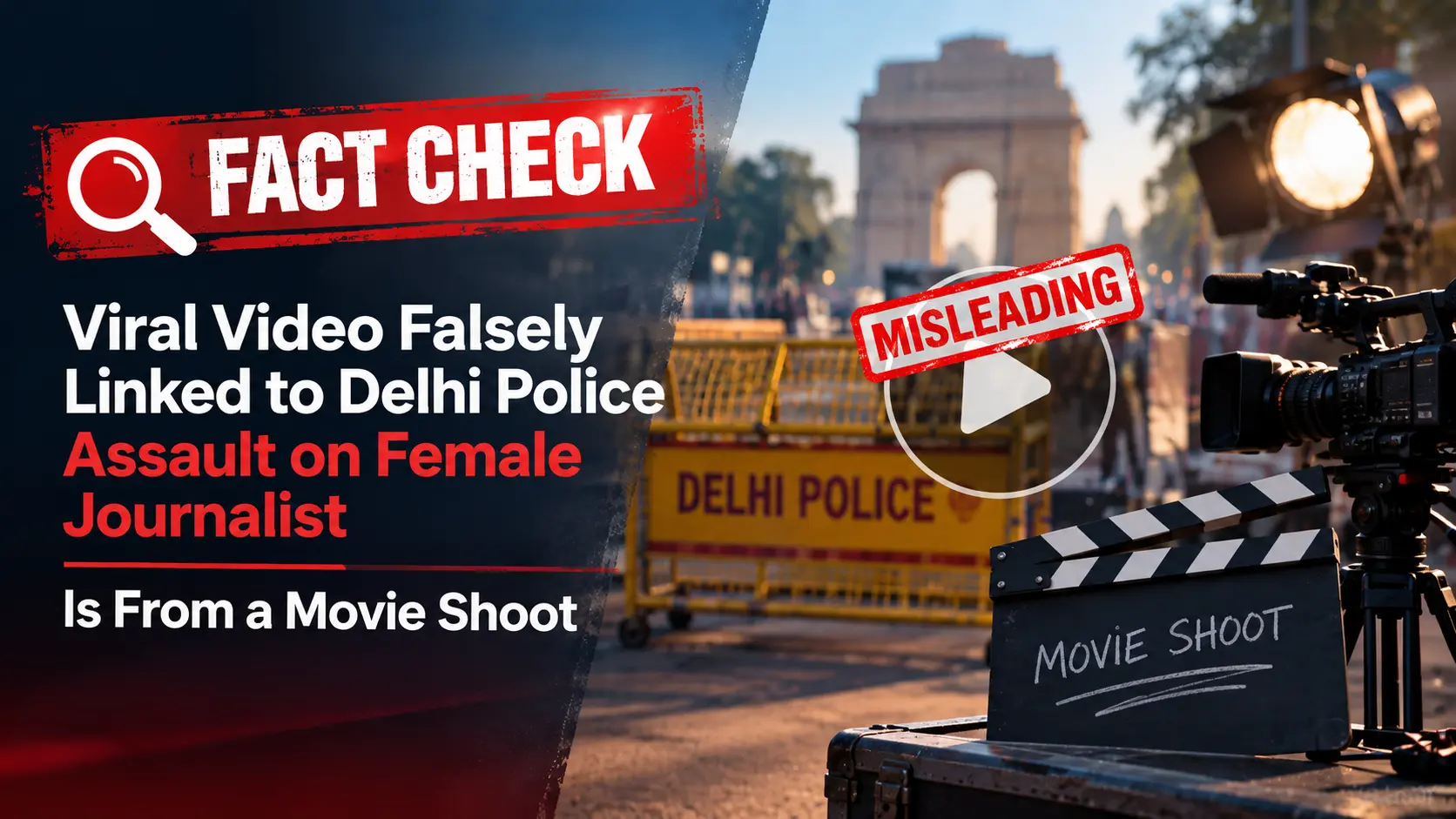
A video is being widely shared on social media with the claim that a female journalist was assaulted by the Delhi Police. The video is being shared with the claim that a female police officer from the Delhi Police is seen assaulting and misbehaving with a female journalist. In the video, a woman wearing a police uniform can be seen allegedly assaulting another woman. Research by the Research Wing of CyberPeace found that the video is actually from a movie shoot. Social media users are sharing it with a misleading claim.
Claim
Social media users shared the video with the caption: “A female journalist is being beaten up by the Delhi Police. What will happen to ordinary people?”
https://www.facebook.com/reel/1599067985010003
https://archive.ph/mgCqt

Fact Check
While investigating the video being shared with the claim that a female journalist was assaulted by the Delhi Police, we conducted a reverse image search of its keyframes. During the search, we found the same video on a Facebook page called ‘CineEdge Media-Behind the Scenes’. The video was uploaded on the page on June 26, 2026. The description and hashtags used with the video indicate that it is not footage of an actual police action, but is related to a film shoot.
https://www.facebook.com/reel/1542614027395118

In addition, the bio of the aforementioned Facebook page states that it posts videos featuring film acting sequences, action thrillers, and behind-the-scenes footage from movies
https://www.facebook.com/profile.php?id=61578948364025&sk=reels_tab

As part of the research, we also examined the CineEdge Media YouTube account. We found that the account has uploaded videos related to films and acting

Conclusion
The evidence gathered during our research makes it clear that the video being shared with the claim that a female journalist was assaulted by the Delhi Police is actually footage from a movie shoot. The video was found on a social media page that shares film-related content, including acting sequences, action scenes and behind-the-scenes footage. Therefore, the claim that the video shows a female journalist being assaulted by the Delhi Police is misleading.
