
#FactCheck - AI-Generated Video Falsely Shared as Iran’s Attack on Israeli Nuclear Site
Executive Summary:
A video is going viral on social media linking it to the ongoing conflict between the US-Israel and Iran. The clip shows explosions on buildings and is being shared with the claim that it depicts an attack on Israel. It is further claimed that Iran targeted a nuclear site located near the sea in Israel, and this video shows that attack. However, an research by the CyberPeace found the claim to be false. The video is not from a real incident but has been created using AI.
Claim:
On social media platform X, a user shared the viral video on March 8, 2026, with the caption: “Iran attacked an Israeli nuclear site located near the sea.”

Fact Check:
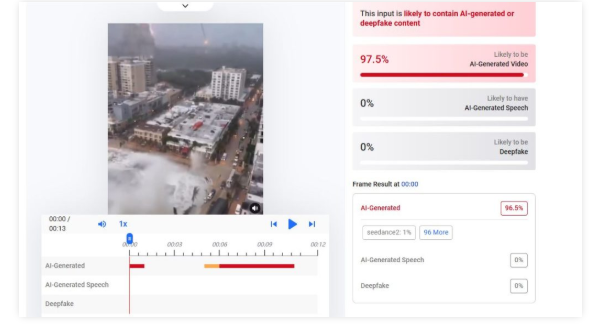
To verify the viral claim, we searched relevant keywords on Google but found no credible news reports supporting it.On closely examining the video, we observed several technical inconsistencies. The person seen in the video appears robotic, raising suspicion that the content may be AI-generated. To confirm this, we analyzed the video using AI detection tools. The tool Hive Moderation indicated that the video is approximately 97.5 percent likely to be generated using artificial intelligence.
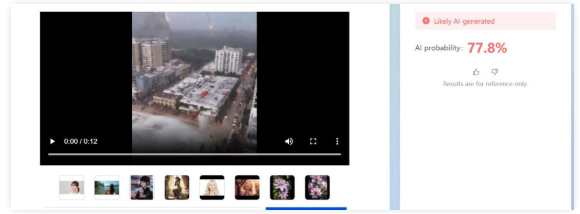
We also used the AI detection tool Matrix.Tencent. The results suggested that the video is likely AI-generated, with around a 77 percent probability.
Conclusion:
Our research found that the viral video claiming to show an Iranian attack on Israel is AI-generated and not related to any real incident.

Related Blogs

Introduction
The ‘Barbie’ fever is going high in India, and it’s hype to launch online scams in India. The cybercriminals attacking the ‘Barbie’ fans in India, as the popular malware and antivirus protection MacAfee has recently reported that India is in the top 3rd number among countries facing major malware attacks. After the release of ‘barbie’ in theatres, the Scams started spreading across India through the free download of the ‘Barbie’ movie from the link and other viruses. The scammers trick the victims by selling free ‘Barbie’ tickets and, after the movie’s hit, search for the free download links on websites which leads to the Scams.
What is the ‘Barbie’ malware?
After the release of the ‘Barbie’ movie, trying to keep up with the trend, Barbie fans started to search the links for free movie downloads from anonymous sources. And after downloading the movie, there was malware in the downloaded zip files. The online scam includes not genuine dubbed downloads of the movie that install malware, barbie-related viruses, and fake videos that point to free tickets, and also clicking on unverified links for the movie access resulted in Scam. It is important not to get stuck in these trends just because to keep up with them, as it could land you in trouble.
Case: As per the report of McAfee, several cases of malware trick victims into downloading the ‘ Barbie’ movie in different languages. By clicking the link, it prompts the user to download a Zip file, which is packed with malware
Countries-wise malware distribution
Cyber Scams witnessed a significant surge in just a few weeks, with hundreds of incidents of new malware cases. And The USA is on the top No. Among all the countries, In the USA there was 37 % of ‘Barbie’ malware attacks held per the, while Australia, the UK, and India suffered 6 % of malware attacks. And other countries like Japan, Ireland, and France faced 3% of Malware attacks.
What are the precautions?
Cyber scams are evolving everywhere, users must remain vigilant and take necessary precautions to protect their personal information. The user shall avoid clicking on suspicious links, also those which are related to unauthorised movie downloads or fake ticket offers. The people shall use legitimate and official platforms to access movie-related content. Keeping anti-malware and antivirus will add an extra layer of protection.
Here are some following precautions against Malware:
- Use security software.
- Use strong passwords and authentication.
- Enforce safe browsing and email.
- Data backup.
- Implement Anti-lateral Movement.
Conclusion
Cyberspace is evolving, and with that, Scams are also evolving. With the new trend of ‘Barbie’ Scams going on the rise everywhere, India is on top 3rd No. In India, McAfee reported several malicious attacks that attempted to trick the victims into downloading the free version of ‘Barbie’ movie in dubbed languages. This resulted in a Scam. People usually try to keep up with trends that land them in trouble. The users shall beware of these kinds of cyber-attacks. These scams result in huge losses. Technology should be used with proper precautions as per the incidents happening around.

Executive Summary:
As we researched a viral social media video we encountered, we did a comprehensive fact check utilizing reverse image search. The video circulated with the claim that it shows illegal Bangladeshi in Assam's Goalpara district carrying homemade spears and attacking a police and/or government official. Our findings are certain that this claim is false. This video was filmed in the Kishoreganj district, Bangladesh, on July 1, 2025, during a political argument involving two rival factions of the Bangladesh Nationalist Party (BNP). The footage has been intentionally misrepresented, putting the report into context regarding Assam to disseminate false information.

Claim:
The viral video shows illegal Bangladeshi immigrants armed with spears marching in Goalpara, Assam, with the intention of attacking police or officials.

Fact Check:
To establish if the claim was valid, we performed a reverse image search on some of the key frames from the video. We did our research on a number of news articles and social media posts from Bangladeshi sources. This led us to a reality check as the events confirmed in these reports took place in Ashtagram, Kishoreganj district, Bangladesh, in a violent political confrontation between factions of the Bangladesh Nationalist Party (BNP) on July 1, 2025, that ultimately resulted in about 40 injuries.
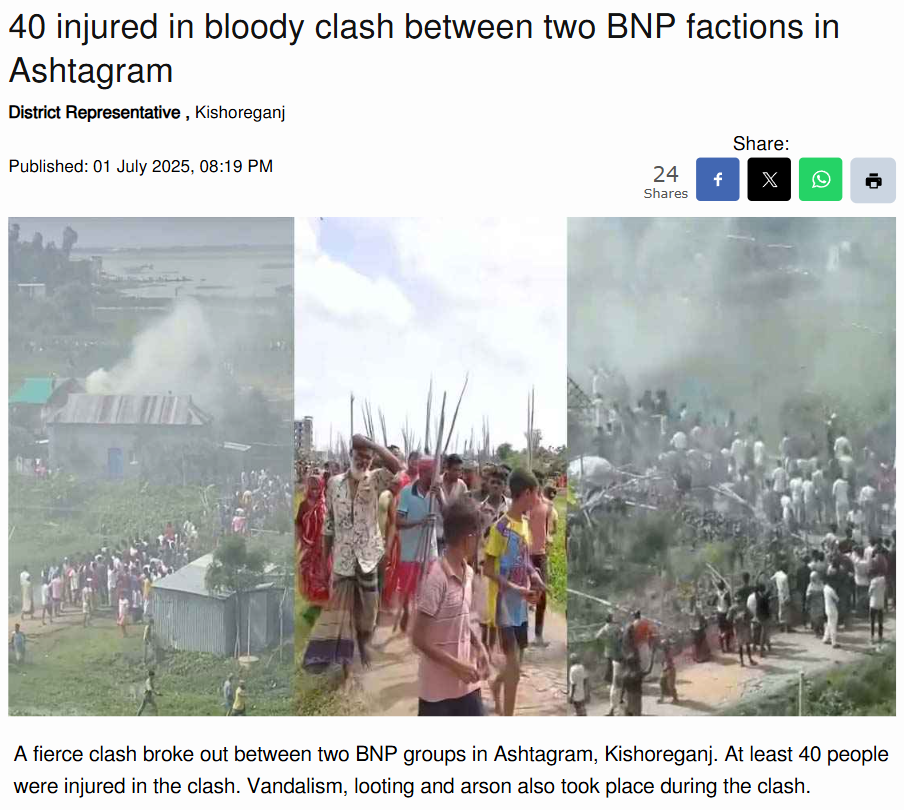
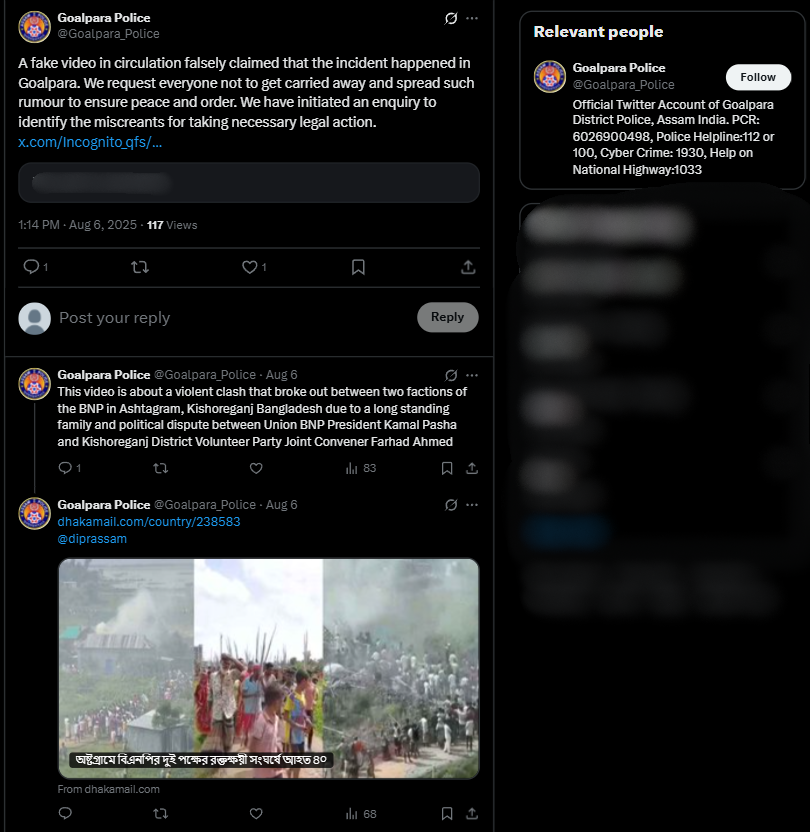
We also found on local media, in particular, Channel i News reported full accounts of the viral report and showed images from the video post. The individuals seen in the video were engaged in a political fight and wielding makeshift spears rather than transitioning into a cross-border attack. The Assam Police issued an official response on X (formerly Twitter) that denied the claim, while noting that nothing of that nature occurred in Goalpara nor in any other district of Assam.

Conclusion:
Based on our research, we conclude that the viral video does not show unlawful Bangladeshi immigrants in Assam. It depicts a political clash in Kishoreganj, Bangladesh, on July 1, 2025. The claim attached to the video is completely untrue and is intended to mislead the public as to where and what the incident depicted is.
Claim: Video shows illegal migrants with spears moving in groups to assault police!
Claimed On: Social Media
Fact Check: False and Misleading

Introduction
The rise in start-up culture, increasing investments, and technological breakthroughs are being encouraged alongside innovations and the incorporation of generative Artificial Intelligence elements. Witnessing the growing focus on human-centred AI, its potential to transform industries like education remains undeniable. Enhancing experiences and inculcating new ways of learning, there is much to be explored. Recently, a Delhi-based non-profit called Rocket Learning, in collaboration with Google.org, launched Appu- a personalised AI educational tool providing a multilingual and conversational learning experience for kids between 3 and 6.
AI Appu
Developed in 6 months, along with the help of dedicated Google.org fellows, interactive Appu has resonated with those the founders call “super-users,” i.e. parents and caregivers. Instead of redirecting students to standard content and instructional videos, it operates on the idea of conversational learning, one equally important for children in the targeted age bracket. Designed in the form of an elephant, Appu is supposed to be a personalised tutor, helping both children and parents understand concepts through dialogue. AI enables the generation of different explanations in case of doubt, aiding in understanding. If children were to answer in mixed languages instead of one complete sentence in a single language (eg, Hindi and English), the AI would still consider it as a response. The AI lessons are two minutes long and are inculcated with real-world examples. The emphasis on interactive and fun learning of concepts through innovation enhances the learning experience. Currently only available in Hindi, it is being worked on to include 20 other languages such as Punjabi and Marathi.
UNESCO, AI, and Education
It is important to note that such innovations also find encouragement in UNESCO’s mandate as AI in education contributes to achieving the 2030 Agenda of Sustainable Development Goals (here; SDG 4- focusing on quality education). Within the ambit of the Beijing Consensus held in 2019, UNESCO encourages a human-centred approach to AI, and has also developed the “Artificial Intelligence and Education: Guidance for Policymakers” aiming towards understanding its potential and opportunities in education as well as the core competencies it needs to work on. Another publication was launched during one of the flagship events of UNESCO- (Digital Learning Week, 2024) - AI competency frameworks for both, students and teachers which provide a roadmap for assessing the potential and risks of AI, each covering common aspects such as AI ethics, and human-centred mindset and even certain distinct options such as AI system design for students and AI pedagogy for teachers.
Potential Challenges
While AI holds immense promise in education, innovation with regard to learning is contentious as several risks must be carefully managed. Depending on the innovation, AI’s struggle with multitasking beyond the classroom, such as administrative duties and tedious grading, which require highly detailed role descriptions could prove to be a challenge. This can become exhausting for developers managing innovative AI systems, as they would have to fit various responses owing to the inherent nature of AI needing to be trained to produce output. Security concerns are another major issue, as data breaches could compromise sensitive student information. Implementation costs also present challenges, as access to AI-driven tools depends on financial resources. Furthermore, AI-driven personalised learning, while beneficial, may inadvertently reduce student motivation, also compromising students' soft skills, such as teamwork and communication, which are crucial for real-world success. These risks highlight the need for a balanced approach to AI integration in education.
Conclusion
Innovations related to education, especially the ones that focus on a human-centred AI approach, have immense potential in not only enhancing learning experiences but also reshaping how knowledge is accessed, understood, and applied. Untapped potential using other services is also encouraged in this sector. However, maintaining a balance between fostering intrigue and ensuring the inculcation of ethical and secure AI remains imperative.
References
- https://www.unesco.org/en/articles/what-you-need-know-about-unescos-new-ai-competency-frameworks-students-and-teachers?hub=32618
- https://www.unesco.org/en/digital-education/artificial-intelligence
- https://www.deccanherald.com/technology/google-backed-rocket-learning-launches-appu-an-ai-powered-tutor-for-kids-3455078
- https://indianexpress.com/article/technology/artificial-intelligence/how-this-google-backed-ai-tool-is-reshaping-education-appu-9896391/
- https://www.thehindu.com/business/ai-appu-to-tutor-children-in-india/article69354145.ece
- https://www.velvetech.com/blog/ai-in-education-risks-and-concerns/
