
#FactCheck: Viral Gambhir Video Predates T20 World Cup 2026, Claim Is Misleading
Executive Summary:
Following India’s heavy defeat to South Africa in the T20 World Cup 2026, the team has been facing intense trolling on social media. Amid this backdrop, a video of Indian cricket team head coach Gautam Gambhir has gone viral. In the clip, Gambhir can be heard saying,“Even people who have nothing to do with cricket have made comments. An IPL owner also wrote about split coaching. It’s surprising. People must stay in their own domain. If we don’t interfere in someone else’s domain, they have no right to interfere in ours.”The video is being shared with the claim that Gambhir made these remarks recently in response to trolling after India’s loss to South Africa in the T20 World Cup 2026. However, research by the CyberPeace found the claim to be misleading. The viral video is not related to the T20 World Cup 2026. It is from December 2025 and pertains to India’s Test series defeat against South Africa. An old video is being circulated with a misleading context.
Claim
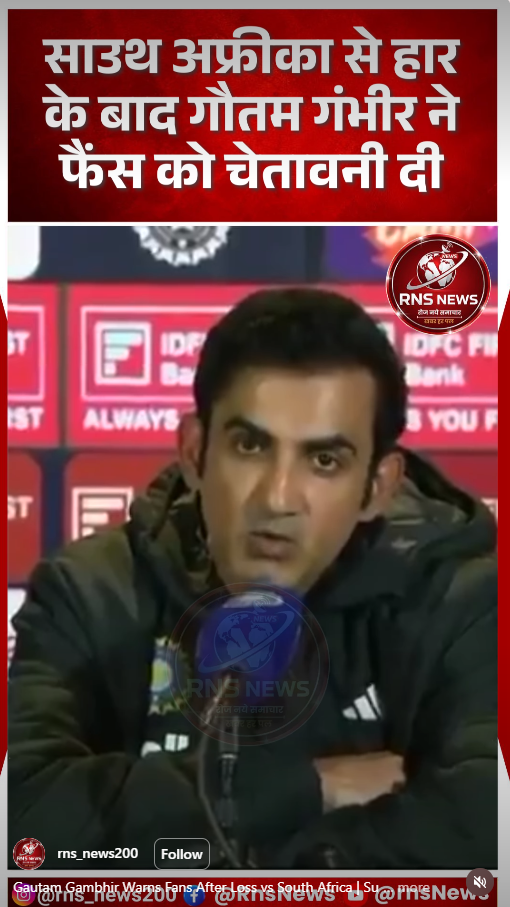
An Instagram user, ‘rns_news200’, shared the viral video on February 23, 2026, claiming that after the loss to South Africa, head coach Gautam Gambhir issued a stern warning to Indian fans. The caption stated that Suryakumar Yadav was heavily trolled on social media after the match, and Gambhir responded strongly, saying players should not be unfairly targeted and the team deserves support, especially during difficult times.
Fact Check
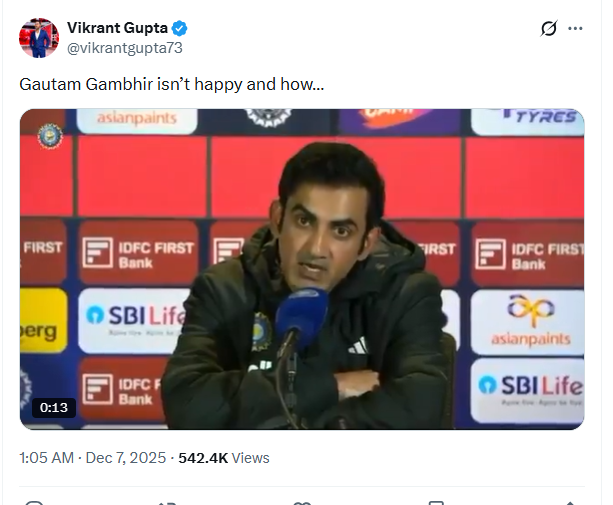
To verify the claim, we conducted a keyword search on Google. We found the same video on the official X (formerly Twitter) account of sports journalist Vikrant Gupta. The video was posted on December 7, 2025. According to the caption, Gambhir was expressing dissatisfaction following India’s performance.
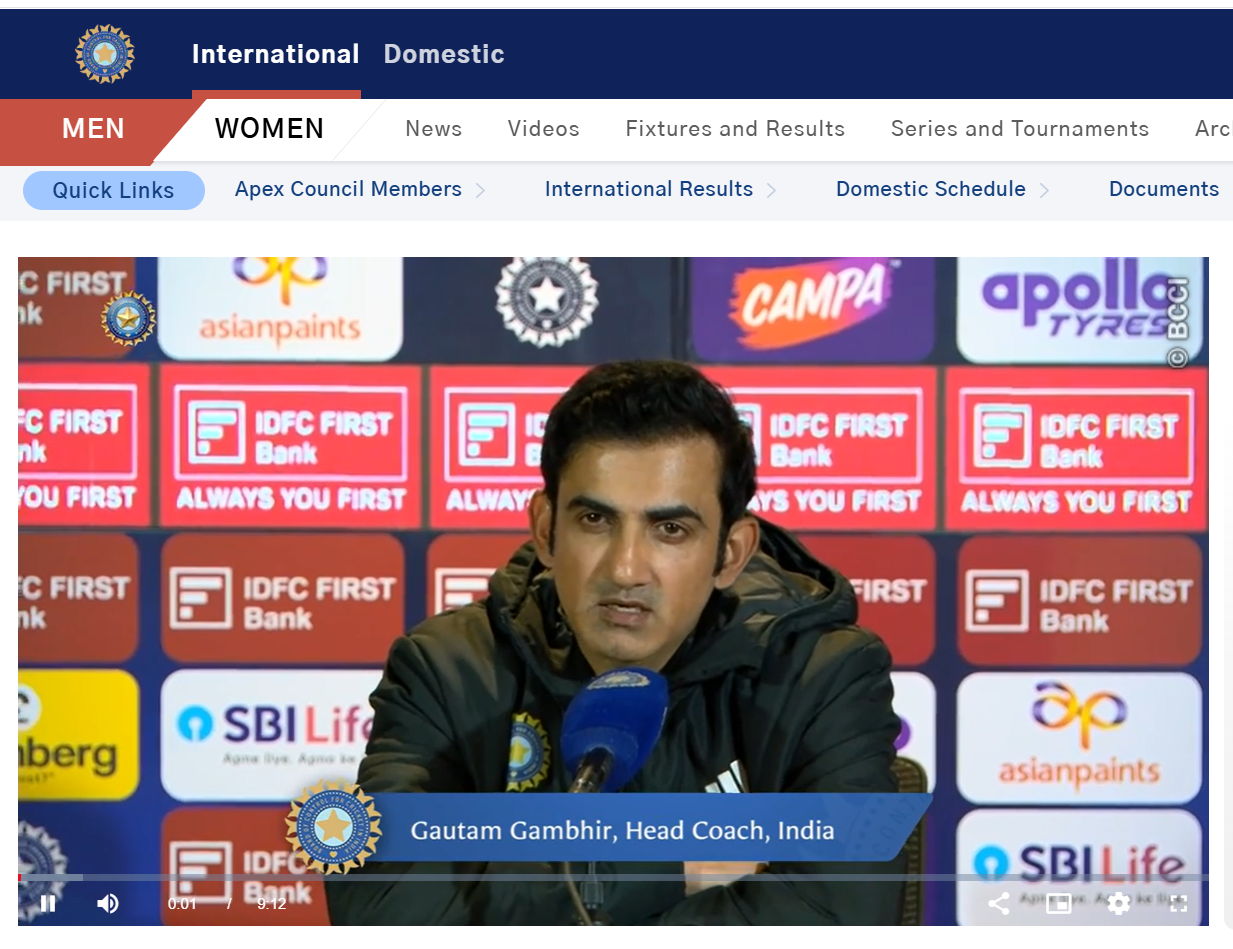
We also found the longer version of the video on the official website of the Board of Control for Cricket in India (BCCI), where it was published on December 6, 2025. In the full video, Gambhir is clearly seen speaking about India’s defeat to South Africa in a Test match. The specific segment that went viral appears around the 1 minute 58 second mark.
Conclusion
Our research found that the viral claim about Gautam Gambhir’s video being linked to trolling after the T20 World Cup 2026 is misleading. The clip is from December 2025 and relates to India’s Test series defeat against South Africa — not the T20 World Cup 2026.An old video is being reshared with a false and misleading context.

Related Blogs
.webp)
Introduction
Lawyers love saying that the devil lies in the detail, and privacy professionals in India have had a neat reminder of this. The Digital Personal Data Protection (Removal of Difficulties) Order, 2026, was issued by MeitY on 5 October and published in the Official Gazette on 7 October. It is brief: it makes two editorial corrections to the Digital Personal Data Protection Act, 2023, and these are described by MeitY as textual and editorial corrections that serve to give effect to the intention of the Parliament. This is fair language, but a careful reader will note the importance of the nuances.
What the Order is and what it is not
The Order is based on section 43(1) of the Act that allows the Central Government to make provision not inconsistent with the Act if difficulty arises in giving effect to the Act. This power is subject to some conditions. Section 43(2) states that no such order can be made after the expiry of three years from the commencement, and section 43(3) says that such order shall be laid before each House of the Parliament. So, it is just a tool for tidying up and not for rewriting the Act. According to India Briefing, the Order came into operation on the date of its publication in the Gazette.
Fix one: guardian consent for children and persons with disabilities
Section 9(1) of the Act says a Data Fiduciary must obtain verifiable consent from the parent or lawful guardian before processing the personal data of “a child or a person with disability who has a lawful guardian”. The Order inserts one small preposition so that the provision reads as the personal data of a child or of a person with a disability. As reported, the missing “of” created a grammatical disjunction between the two categories and could cloud the intended meaning, and the fix puts them side by side.
Why would that matter? Here is one way to see the risk, and to be clear, this is my own illustration and not something the Order says. Read the old phrase quickly, and you could ask whether “who has a lawful guardian” qualifies only the person with a disability or whether it also hangs on the child. The Act’s own definitions point to the answer. Section 2(j) treats the parents or lawful guardian of a child and the lawful guardian of a person with a disability as part of the Data Principal in parallel terms. Parallel treatment in the definitions and slightly tangled treatment in the operative clause is exactly the kind of mismatch that invites an argument later. The extra word shuts that door.
The stakes are not small. The Schedule to the Act sets a penalty of up to Rs 200 crore for breach of the additional obligations relating to children under section 9. Nobody wants to be in a hearing where the question is what a missing preposition was supposed to mean.
Fix two: “audit” becomes “data audit"
Section 10 adds duties for Significant Data Fiduciaries. Clause (b) of sub-section (2) requires them to appoint an independent data auditor to carry out a data audit. Clause (c)(ii), a few lines later, requires a “periodic audit” and nothing more. Same section, two audit duties, two slightly different vocabularies. The Order replaces “audit” with “data audit” in section 10(2)(c)(ii).
The reasoning behind the argument given by India Briefing is that the bare word could leave the scope of the audit ambiguous and subject of different interpretations by regulatory or supervisory authorities. One can only speculate what questions an SDF may have had to answer in the meanwhile. Does a periodic audit entail a financial audit, an information security audit, a generic internal audit or something completely different? With the amendment, the periodic audit has been tied to the compliance with data protection and data processing; fitting into the overall audit framework which the Act provides for SDFs. The Order does not combine the two obligations. The independent auditor and the periodic audit remain separate obligations. What changes is that the two now share a common language. The stakes, again, are real here as the Schedule permits a penalty of up to Rs 150 crore for violation of the additional obligations of an SDF under section 10.
Is “editorial” the right label?
Mostly, yes. India Briefing concludes that the Order does not substantially expand the Act’s obligations, and Zee Business reaches a similar view, noting that it clears up wording rather than creating a new compliance system.
Nevertheless, a label is no protection. Labelling it an editorial correction will not stop a regulator or a litigant from asserting that the text previously meant something else or that the amended text now conveys something different. Section 43 only permits the inclusion of provisions that are not inconsistent with the Act, which is exactly the point that the Government takes care to make through this text. My recommendation is that you read the Gazette text (not summaries of it) and retain a copy in your compliance file.
What privacy teams can do now
Nothing here is urgent, and that is the good news. The DPDP Rules, 2025, were notified in November 2025 with a phased timeline, and as Bar and Bench reports, most operational duties are due after an 18-month transition ending on 13 May 2027. The Rules also operationalise age verification and guardian validation, including through Digital Locker based methods, and expect enhanced governance from SDFs, including audits and risk assessments, as Khurana and Khurana notes. That leaves room to make small corrections calmly. A sensible short list looks like this:
- Check the wording of your consent flows. Make sure notices and policies that deal with children and persons with disabilities use language consistent with the amended section 9(1), and that the guardian route is clearly described.
- Align your audit vocabulary. If you are or may be notified as an SDF, use “data audit” consistently in policies, audit charters, checklists and engagement letters with your independent data auditor.
- Update your statutory reference library. Many teams quote the Act in templates and training decks. Those quotes should now match the amended text.
- Set up a Gazette watch. Notifications, rules and orders under this Act will keep arriving.
Conclusion
Privacy work is often couched in terms of grand themes such as consent, accountability and cross-border transfers. In practice, a substantial part of the work takes the form of close reading. Data Fiduciaries, auditors and the Data Protection Board will all be working from the same words, so that the distinction between 'audit' and 'data audit', or between a phrase including or omitting 'of', is the sort of gap that can decide an argument.
We therefore invite you to treat this order as a prompt to read your own documents as a regulator would. Spot points at which two terms are being used for one purpose or one term is being used to cover two purposes. Rectifying such issues now costs an afternoon's work; waiting until an inquiry is underway will require significantly more resources.
Sources
- Digital Personal Data Protection Act, 2023 (official text), Ministry of Electronics and Information Technology
- DPDP (Removal of Difficulties) Order 2026 Clarifies Consent and Data Audit Requirements in India, India Briefing
- DPDP Order 2026 clarifies data protection, consent and data audit requirements for businesses in India, Zee Business
- MeitY notifies final Digital Personal Data Protection Rules 2025, Bar and Bench
- Update: MeitY Notifies Rules Operationalising the DPDP Framework in India, Khurana and Khurana
Executive Summary
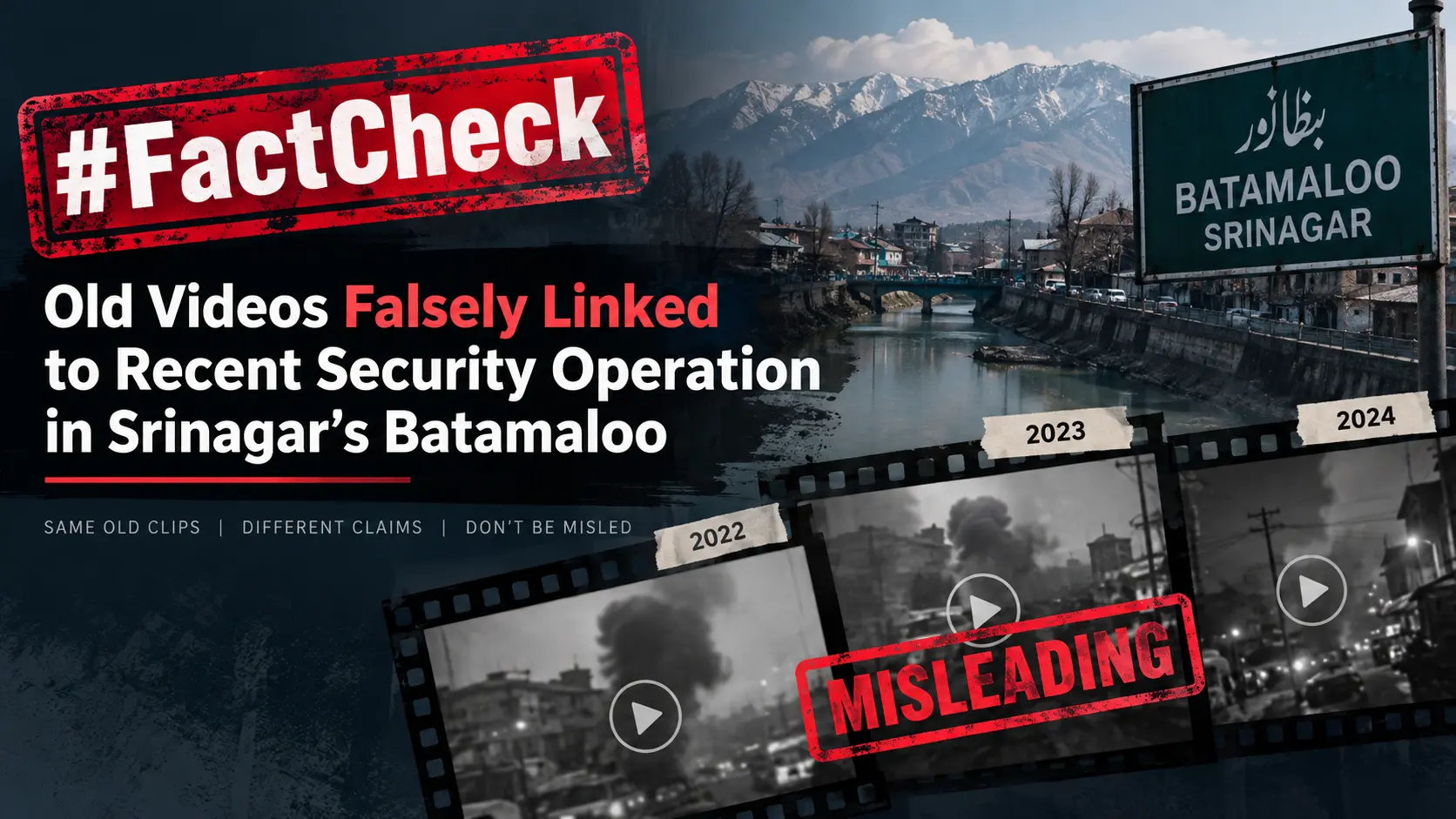
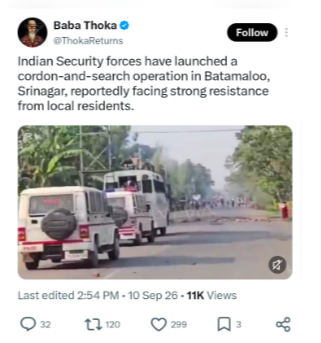
A video is being shared on social media with the claim that Indian security forces faced resistance from local residents during a cordon-and-search operation in the Batamaloo area of Srinagar. Some Pakistani propaganda accounts are sharing the video in an attempt to link it to the recent security operation. Research by CyberPeace found that the viral video is old and unrelated to the recent security operation in the Batamaloo area of Srinagar. The research revealed that the video is actually from Bishnupur, Manipur. It is being falsely presented as footage from Jammu and Kashmir, with claims that local residents were strongly resisting security forces. Similarly, a second video is also being shared with a misleading claim linking it to the recent security operation. The video shows some militants greeting and congratulating one another. However, these visuals are also unrelated to the recent security operation in Batamaloo, Srinagar.
Claim:
An X user shared the viral video with the caption: “Indian security forces have launched a cordon-and-search operation in the Batamaloo area of Srinagar. It is being reported that local residents are strongly resisting the operation.”
https://x.com/ThokaReturns/status/2097979588223930651
FactCheck
As part of our research, we also examined other sources and available reports related to the viral video. However, we did not find any credible report linking the incident shown in the viral video to the recent security operation in Batamaloo, Srinagar. To verify the viral claim, we conducted a reverse image search of the keyframes from the video. During the search, we found similar visuals on the DNA India website, which were published on November 16, 2017.

It is being claimed that the militants are congratulating one another and claiming territorial gains in several areas in response to the Indian Army’s security operation in Batamaloo. However, these claims could not be substantiated. According to the available evidence, the visuals are old and unrelated to the recent security operation. As part of the next step in our research, we found similar visuals on the Northeast Live Facebook page. According to the report, tension had escalated in Manipur’s Bishnupur district after an angry mob set a vehicle on fire on suspicion that the occupants were carrying arms and ammunition. The incident reportedly left 20 people injured.
The incident took place along Tidim Road in the Ningthoukhong and Thinungei areas of Bishnupur district, where locals were observing a bandh. During the protest, people became suspicious of two vehicles and stopped them to check them.
https://www.facebook.com/watch/?v=1446641790532433

Conclusion
No credible evidence was found to substantiate these claims. Our research found that the visuals shown in the videos are old and unrelated to the recent security operation in Batamaloo, Srinagar. Security forces had conducted a cordon-and-search operation in the Batamaloo area as part of routine counter-terrorism measures. However, no credible report or other concrete evidence was found linking the videos being shared on social media to this operation.
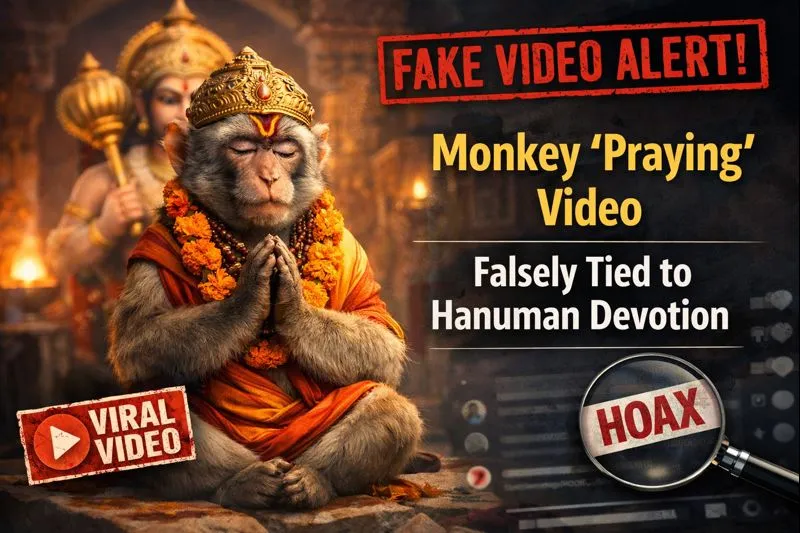
A video is being widely shared on social media showing a monkey, with users claiming that the animal is immersed in devotion to Lord Hanuman. The clip is being circulated with assertions that the monkey was seen participating in Hanuman Aarti. Cyber Peace Foundation’s research found that the viral claim is fake. Our investigation revealed that the video is not real and has been generated using artificial intelligence tools.
Claim
On January 6, 2026, Facebook users shared the viral video claiming, “A monkey was seen immersed in devotion during Hanuman Aarti.”
- Post link: https://www.facebook.com/reel/1261813845766976
- Archived link: https://archive.ph/anid5
Screenshots of the post can be seen below.

FactCheck:
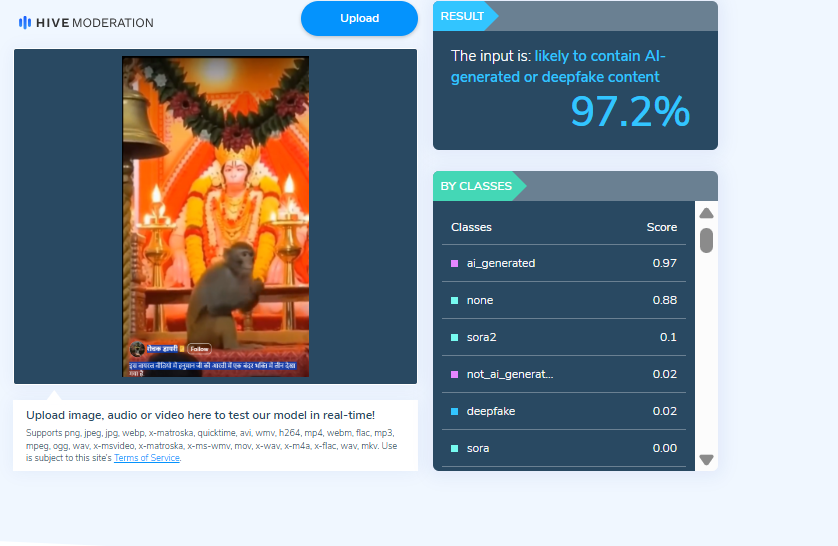
When we closely examined the viral video, we noticed several visual inconsistencies. These anomalies raised suspicion that the video might be AI-generated. To verify this, we scanned the video using the AI detection tool Hive Moderation. According to the results, the video was found to be 97 percent AI-generated.
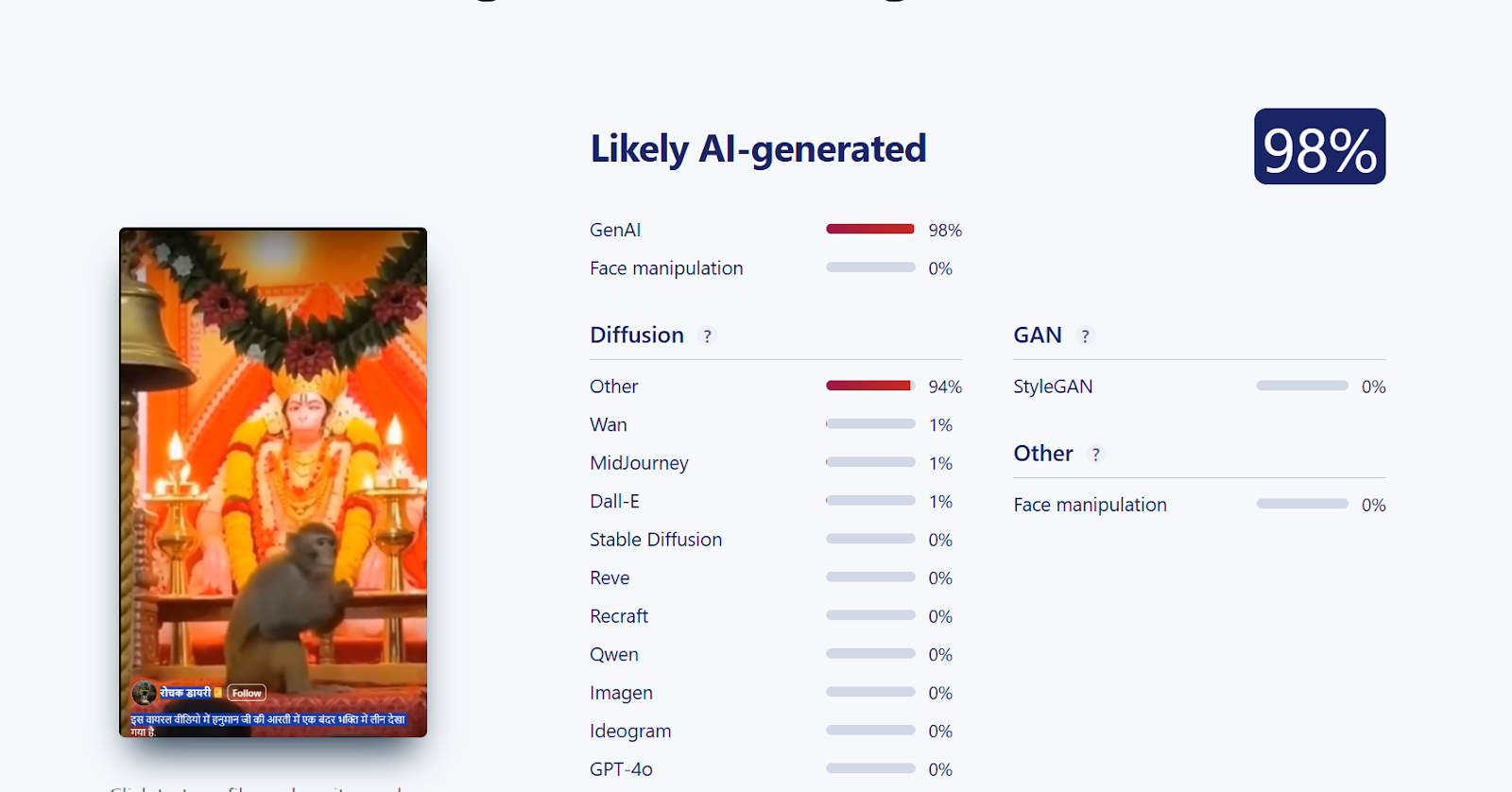
Further, we analysed the video using another AI detection tool, Sightengine. The tool’s assessment indicated that the viral video is 98 percent AI-generated.
Conclusion
Our investigation confirms that the viral video claiming to show a monkey immersed in devotion to Lord Hanuman is AI-generated and not real. The claim circulating on social media is false and misleading.
