
#FactCheck:AI-Generated Image Falsely Shows Kim Jong Un Looking Unhappy at Unveiling of His Statue
Executive Summary
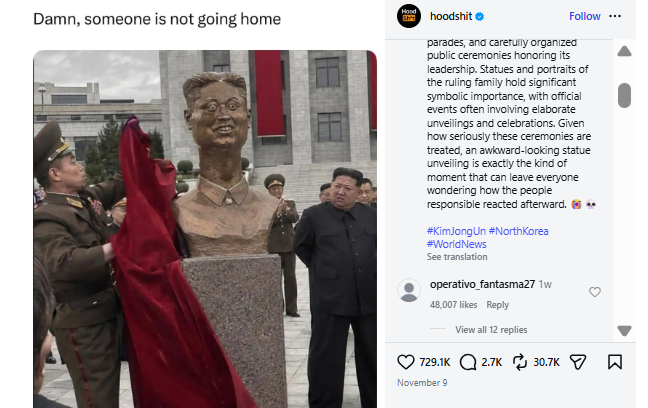
A picture of North Korean leader Kim Jong Un is being shared on social media, purportedly showing him looking unhappy during the unveiling of a statue of himself. CyberPeace Research found that the viral image is fake and was either generated or edited using AI. Furthermore, searches of credible news outlets found no reports of Kim Jong Un expressing displeasure during the unveiling of his statue.
Claim:
A picture of North Korean leader Kim Jong Un is being shared on social media, purportedly showing him looking unhappy and uncomfortable during the unveiling ceremony of a statue of himself. The claim suggests that Kim Jong Un appeared displeased at the event.
https://www.instagram.com/p/Dff40WzgVzO/
Fact Check
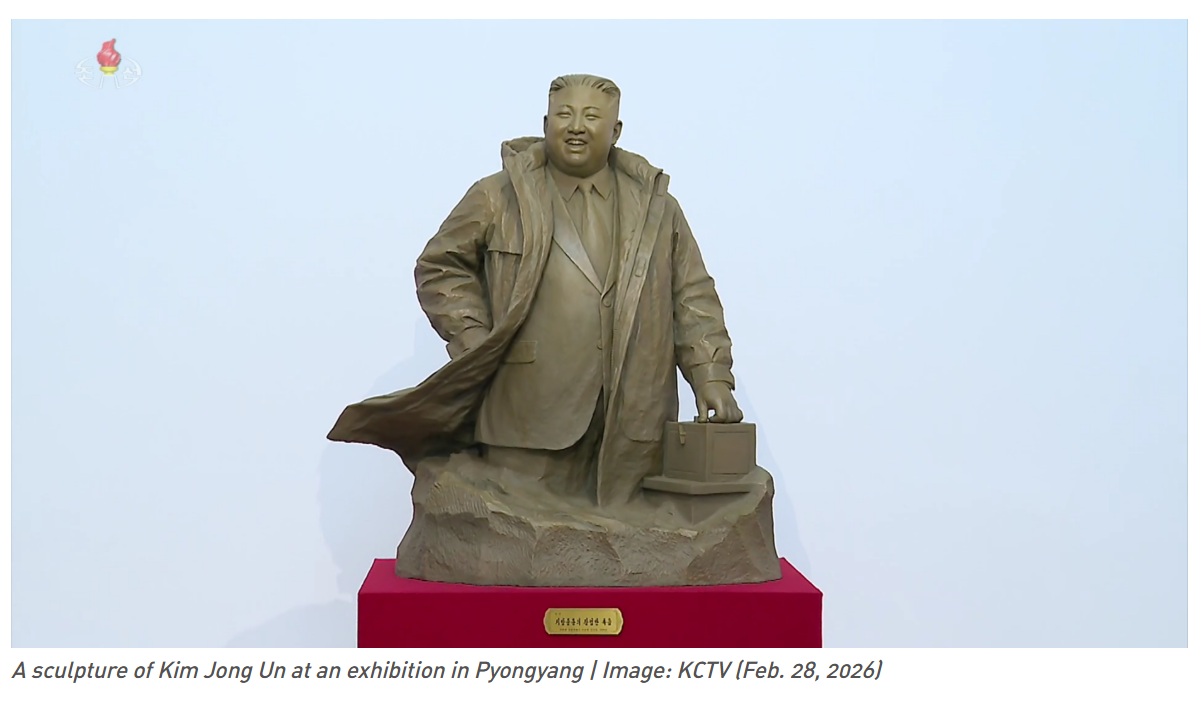
We also found a report published by NK News in March 2026, which reported the unveiling of the first known statue of North Korean leader Kim Jong Un. However, the image of the statue published in the report does not match the one seen in the viral Instagram post.
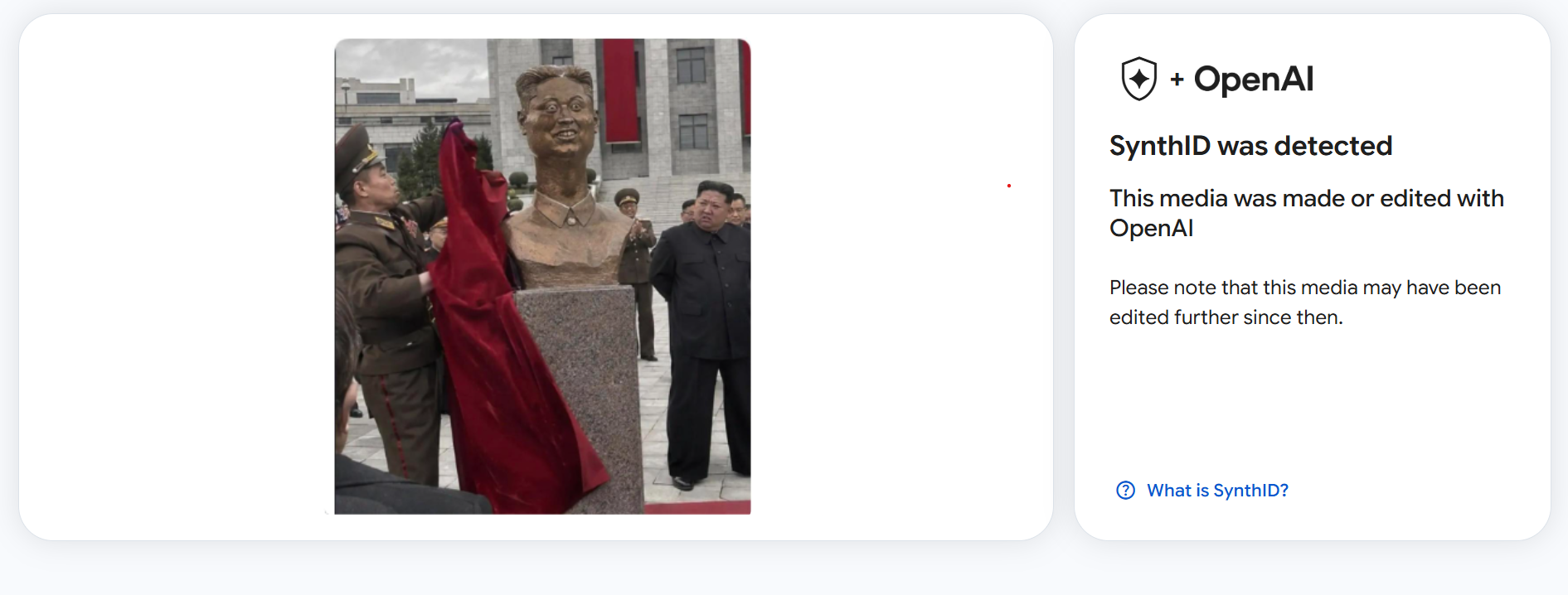
We scanned the viral image using the AI detection tool SynthID Detector. According to the results, the viral image was AI-generated.
Conclusion
Our research found that the viral image is fake and was either generated or edited using AI. Furthermore, no reports from credible news outlets were found to support the claim that Kim Jong Un appeared unhappy during the unveiling of his statue.

Related Blogs

Wishing one another on birthdays and other occasions, sharing messages and wisdom, debating or discussing current issues, and announcing one's opinions and announcements over WhatsApp is more or less nothing new. These all are some of the latest versions of traditional communication without which our lives seem to be an un-escaped miss. Therefore, to state the obvious, WhatsApp is the platform that offers a group of good friends (as decided by the user) to communicate over – sharing information or ideas over a digital platform.
The practice of sharing allegations, images, videos, and hyperlinks through WhatsApp groups on an indiscriminate basis is becoming more and more prevalent and naturally raises the pertinent question: When does the ordinary digital conversation become actionable?
To answer this question, we need to differentiate between what is obnoxious, what is hurtful and what is illegal. There may be overlap between them, but they are not the same thing.
1. The Legal Distinction Between Offensive Expression and Unlawful Communication
The law does not impose on the individual an obligation to communicate respectfully. Criminal liability cannot be founded upon irritation or disapproval. It must be one that is defined by law.
Where a message simply contains info that is forbidden by law, a CRIMINAL threat or libellous imputations, matters are substantially different. Take the defamation provision of the Bharatiya Nyaya Sanhita, 2023 (BNS), Section 356, for instance. To arrive at the conclusion that a certain commentary constitutes defamation, one must look at the nature of the imputation which is attributed, the knowledge and intention concerning the reputational injury and the statutory exception as applicable. If the recipient finds the commentary offensive, it does not necessarily mean that it is defamatory. Similarly, the protection granted to criticism or fair remark cannot be interpreted as an unrestrained license to publish harmful accusations regardless of their veracity, rationale, or sincerity.
In addition, pornographic and sexually explicit material sent electronically is governed by a separate law. The Information Technology Act, 2000, has Sections 67 and 67A that relate to the publication or distribution of pornographic or sexually explicit material, respectively. Section 67B relates to certain kinds of sexually explicit content involving minors. These provisions are not just different in wording but also in material substance.
In short, there are different regulations that regulate the publication or transmission of sexually explicit and pornographic material electronically. Sections 67 and 67A of the Information Technology Act of 2000 deal with the publication or transmission of such materials, while Section 67B deals with certain kinds of sexually explicit material involving children. The application of these clauses depends on content and circumstance.
2. Forwarding Is an Act, Not Merely a Gesture
The idea that a WhatsApp forward is just something that has been "shared" tends to downplay the importance of the act. Forwarding can increase the audience for a piece of content, make it easier for it to spread, and, in certain situations, even help someone commit a crime. The issue of accountability for its future dissemination is not always resolved by the fact that the original content was produced by someone else.
This is exemplified in cases of copyright infringement. The Copyright Act of 1957 protects original literary, artistic, musical and other works. While Section 63 of the Act prescribes the criminal punishment for any act committed with intent to infringe on copyrighted work or for knowingly aiding or abetting such infringement, Section 51 defines what constitutes the infringement of copyright. The simple act of sharing a link to a movie, a book, a software program or any other work protected by the Act will not always necessarily amount to 'crystal clear' criminal responsibility; an investigation into the nature of the content, rights owned, nature of behaviour of the person sharing and required law must be made. A messaged group is not something that questions or impacts the rights of copyright owners.
If a recipient sends such content without checking it, they might unintentionally aid in its spread. Depending on the relevant statutory elements and supporting documentation, it is a different matter entirely whether or not that individual faces legal obligation. However, indiscriminate sending is not a responsible practice just because there is no criminal culpability in a given situation. Even though digital communication does not in and of itself create a legal responsibility, it does create an ethical duty of care.
3. Freedom of Speech, Intermediary Obligations and Group Administrator Liability
Article 19(1)(a) of the Constitution provides for the right to freedom of speech and expression. But sub-article 19(2) provides for reasonable restrictions on this right, and these restrictions, as they have been provided, are reasonable restrictions under the following grounds, namely: – public order, decency or morality, and defamation. So, the right is not absolute.
The due diligence specifications for intermediaries are contained in the Information Technology (Intermediary Guidelines and Digital Media Ethics Code) Rules, 2021, as amended. Read along with these are the prescribed obligations of due diligence which must be placed into the context of the intermediary versus that of the criminal wrongdoer of a user or group admin. Even a consent to a malevolent post being posted on a WhatsApp group cannot itself be deemed a general violation of the rules.
In addition, the role and liability of a group admin are matters that should be pondered upon. Merely having the power to include or exclude members from the group, without proof of being responsible for every post made by a certain participant, cannot be grounds for holding an admin responsible for any offensive post made by any of the others. In Kishor v. State of Maharashtra, the Bombay High Court considered the question of the liability of an admin for offensive posts made by another member of the group.
This finding does not mean an administrator will always be free from criminal liability. There could be a different situation if the administrator personally creates, distributes, enables or aids in publication of illegal material or even conduct that constitutes a crime. The difference is the existence of duties under the control of the administrator as opposed to duties under their own lawful conduct.
4. The Case for Responsible Digital Conduct
The law has the ability to recognise wrongful behaviour and impose a sanction, but alone it cannot ensure that all use of the medium is thoughtful, proportionate and respectful. It’s mainly the audience that has that obligation.
False allegations, unapproved copyrighted content, personal images, fake links, and content that violates the dignity and rights of another should not be part of a WhatsApp group. Admins can assist by setting out what a group's aims are, banning abuse, and reacting to something that needs reacting to. To post content, members should exercise their judgement, particularly if the content is related to another person's reputation, privacy, or finance.
The principle is quite straightforward: ease of transmission should not be mistaken for lack of responsibility. There remains a potential for illegal behaviour and rights breaches in what is essentially a private gathering. Nevertheless, it is essential to think about the details in each case and the factors of the law before asserting any legal consequences.
Think before you type. Verify before you forward. Respect before you post.
Executive Summary
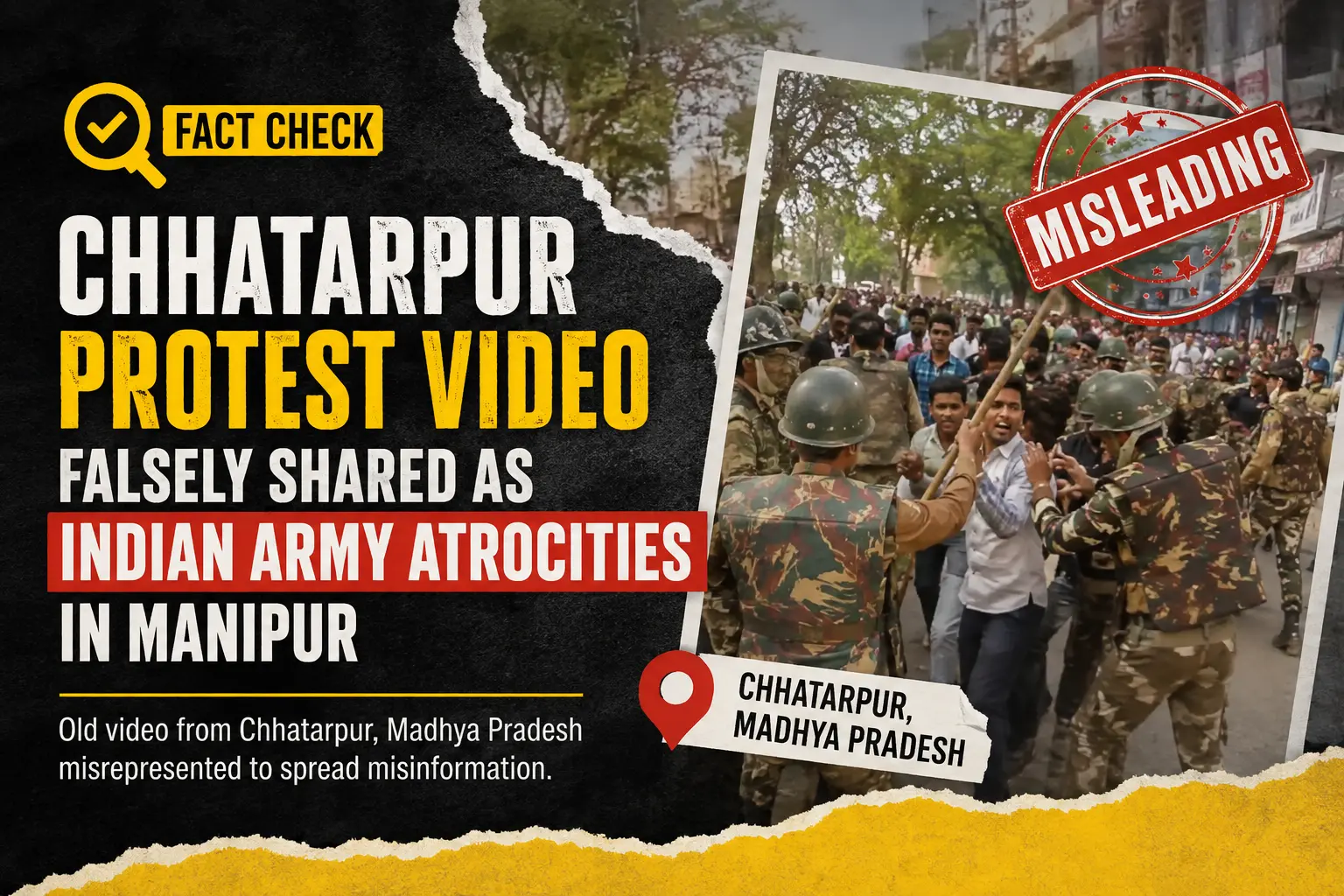
A video is going viral on social media showing police personnel allegedly dragging an elderly woman. The video is being shared with the claim that it was filmed in Manipur and shows the Indian Army committing atrocities against women. The CyberPeace Research Wing found that the viral video is not from Manipur. It was recorded during protests against the Ken-Betwa Link Project in Chhatarpur, Madhya Pradesh, and is being circulated with a misleading claim.
Claim:
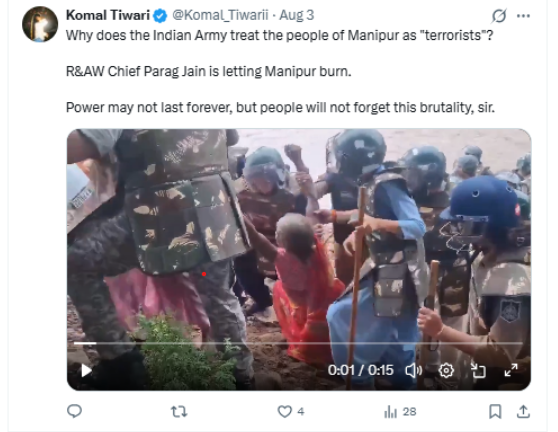
A video shared on social media claims that the Indian Army is committing atrocities against local people, particularly women, in Manipur. The post further alleges that R&AW chief Parag Jain is allowing Manipur to burn and that people will never forget the alleged brutality.
https://x.com/i/status/2084180049285005687
Factcheck
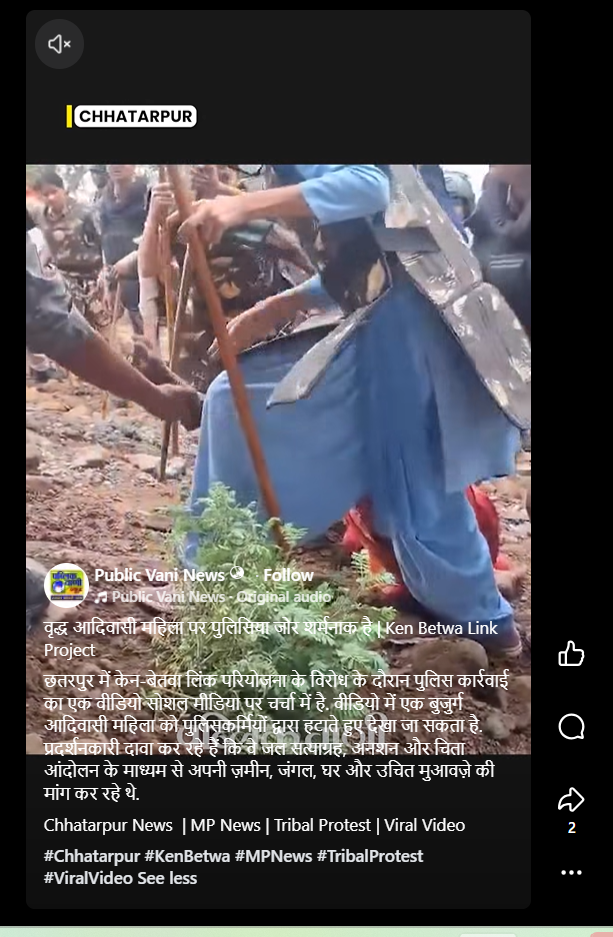
To verify the claim, our team extracted keyframes from the viral video and conducted a reverse image search using Google Lens. During the search, we found the same video uploaded on the Facebook page of Public Vani News on July 31. The accompanying description stated: “Police action against an elderly tribal woman is shameful. During protests against the Ken-Betwa Link Project in Chhatarpur, a video showing police removing an elderly tribal woman has gone viral. Protesters claim they were holding a Jal Satyagraha, hunger strike and Chita Andolan while demanding fair compensation and protection of their land, forests and homes.”
The post and screenshot are provided below:
https://www.facebook.com/reel/1031078973033873
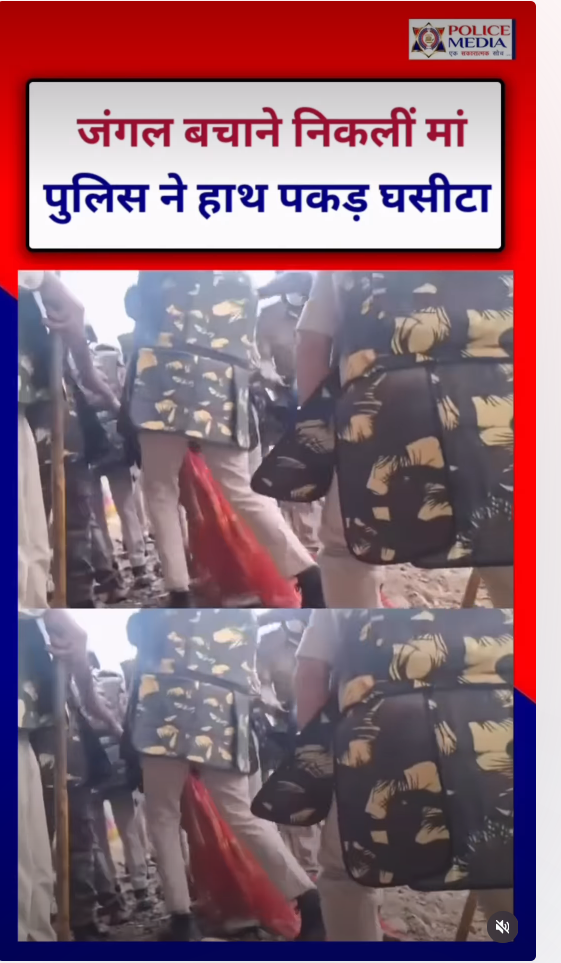
In the next step of the research, we found the same video on an Instagram channel named policemedianews, where it was shared without the misleading Manipur-related claim. The post link and screenshot are provided below
https://www.instagram.com/reels/DbfALvaT4mH/
Conclusion:
The research found that the viral claim is misleading. The video is not from Manipur and does not show Indian Army personnel targeting women there. The footage is from protests against the Ken-Betwa Link Project in Chhatarpur, Madhya Pradesh, where police were seen removing an elderly tribal woman during the demonstration. The video is being shared on social media with a false context.
Executive Summary
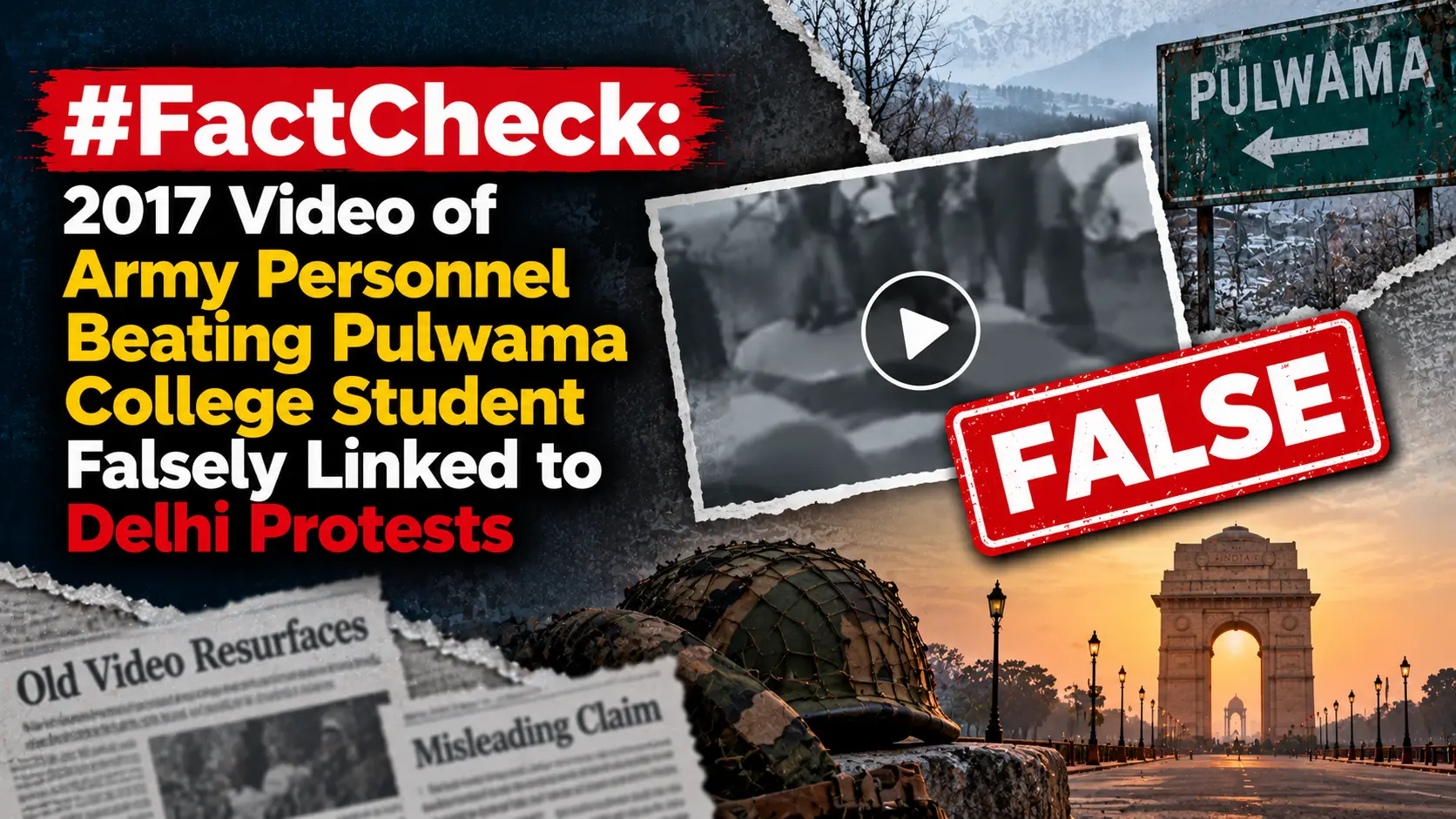
During the protests against Chief Election Commissioner (CEC) Gyanesh Kumar that began on October 10, the Delhi Police had detained thousands of people. Some of those detained alleged that the police assaulted them while they were in custody. CyberPeace Research found that the viral video dates back to 2017 and shows army personnel thrashing a student of Pulwama Degree College in Kashmir. The video has no connection with the protests held in Delhi.
Claim
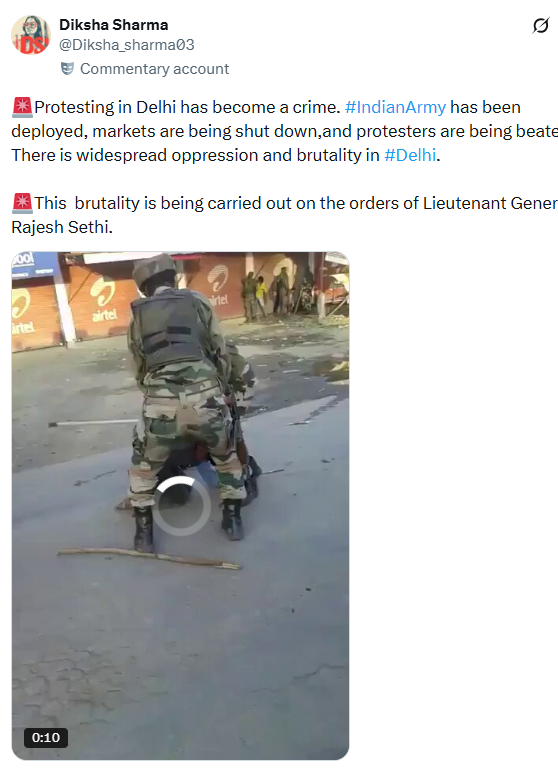
A video is now going viral on social media showing two army personnel thrashing a man pinned to the ground. An X user shared the video with the caption, “Protesting in Delhi has become a crime. The Indian Army has been deployed, markets are being shut down, and protesters are being beaten. There is widespread oppression and brutality in Delhi. This brutality is being carried out on the orders of Lieutenant General Rajesh Sethi.”
https://x.com/Diksha_sharma03/status/2109891097283756401
Fact Check
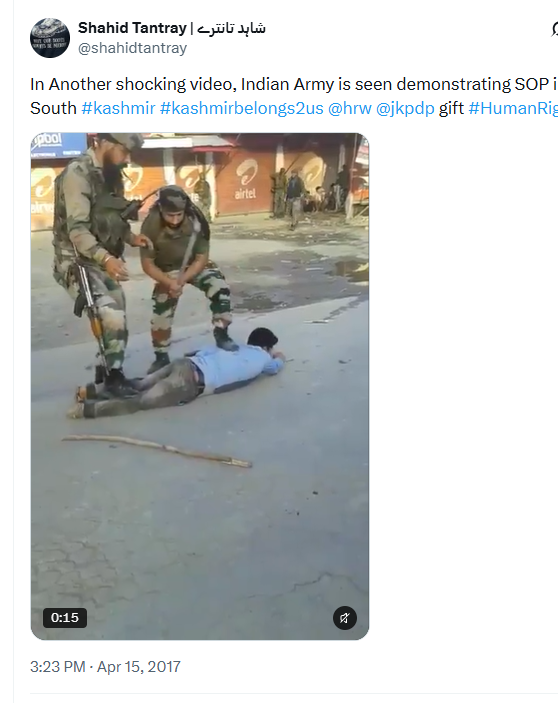
A reverse search of keyframes from the video led us to the account of journalist Shahid Tantray, who shared a longer version of the video on April 15, 2017. The video shows two more army personnel joining the two soldiers who were already thrashing the man. In his post, Tantray claimed that the man had been beaten by Indian Army personnel in South Kashmir.
https://x.com/shahidtantray/status/853184476272144384?s=20
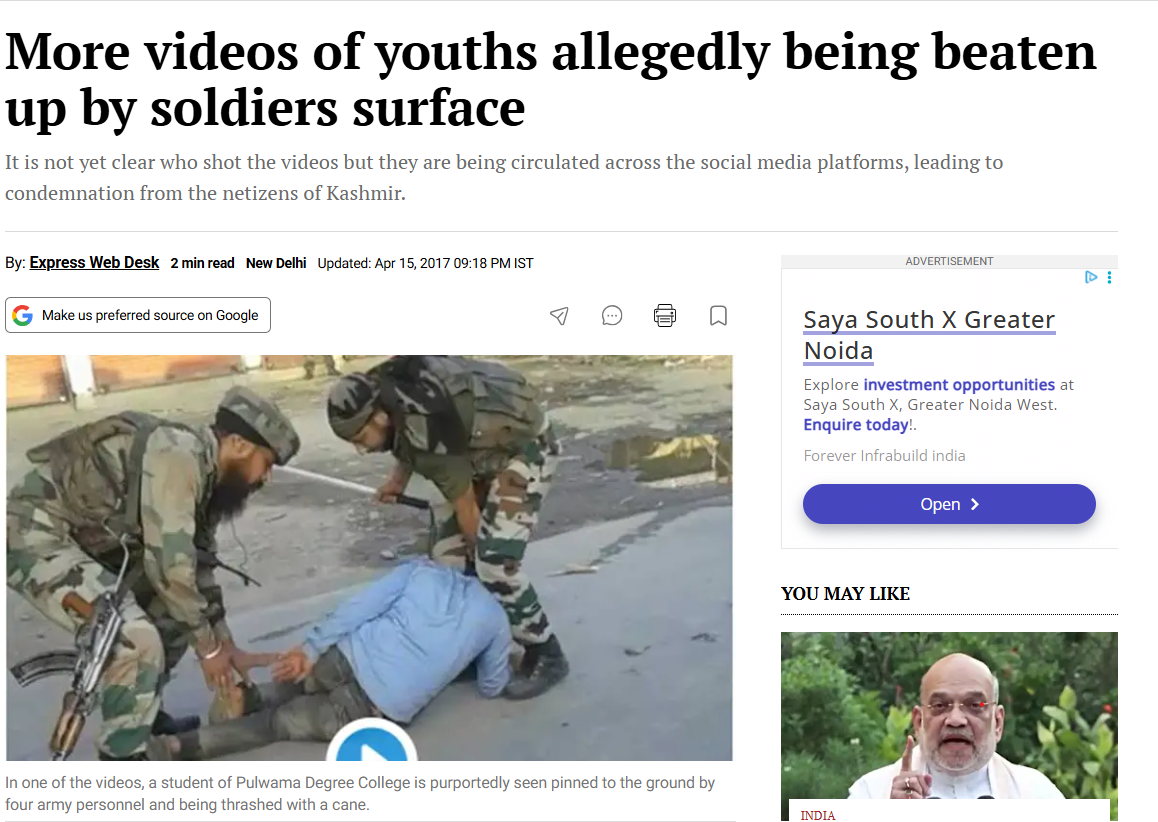
A report published by The Indian Express on April 15, 2017, featured a screenshot from the video. According to the report, four Indian Army personnel allegedly beat up a student of Pulwama Degree College in Jammu and Kashmir.
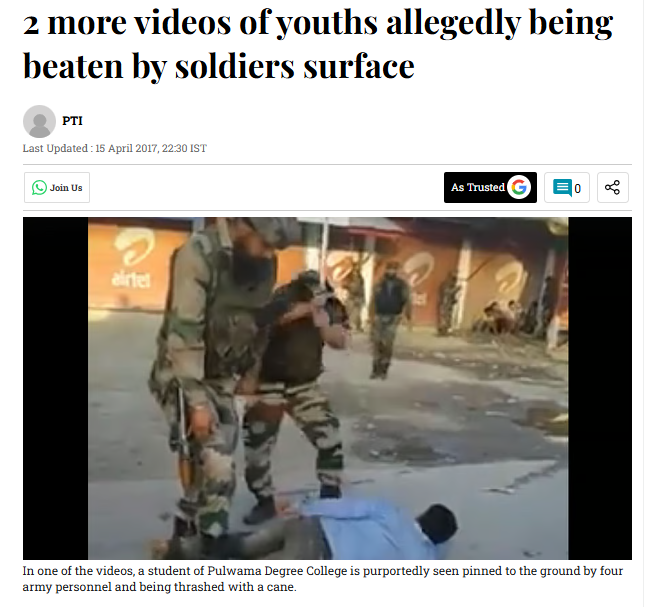
We also found a screenshot from the video in a report published by Deccan Herald on April 15, 2017. The report stated that the person beaten by the four army personnel was a student of Pulwama Degree College.
https://www.deccanherald.com/content/606516/2-more-videos-youths-allegedly.html
Conclusion
Our research found that the viral video dates back to 2017 and shows army personnel thrashing a student of Pulwama Degree College in Kashmir. The video has no connection with the protests held in Delhi.
