
#FactCheck- Viral Video of ₹500 Notes Found in Floodwater Is Not From Nepal
Executive Summary
A video is going viral on social media with the claim that ₹500 Indian currency notes were found inside a bag during the floods in Nepal. A research by CyberPeace’s research wing found that the video is not from the recent floods in Nepal, but from Vrindavan in Uttar Pradesh. The video was uploaded on July 14 by an Instagram creator on their account. The 30-second video shows people travelling in a boat finding a bag floating in the water, from which several ₹500 currency notes are pulled out.
Claim:
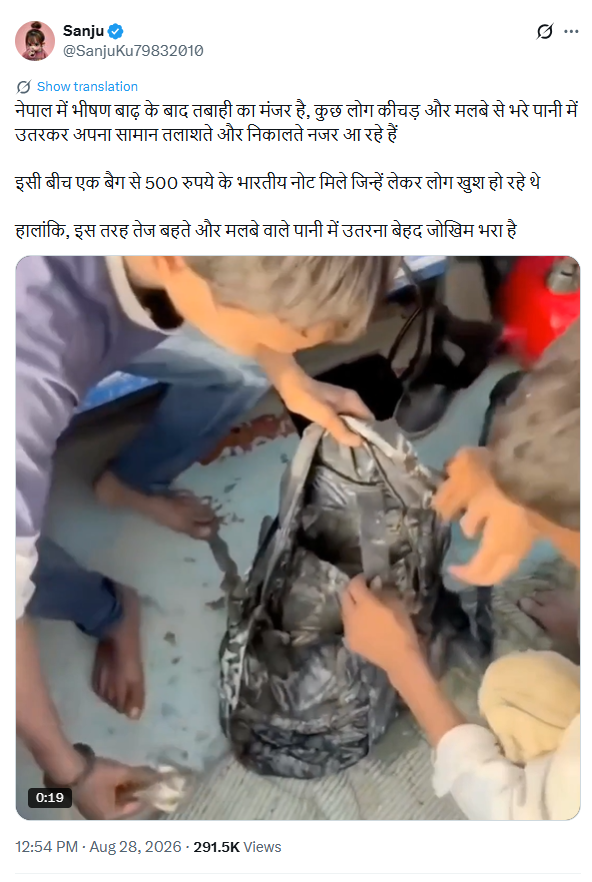
The video has been shared on X with a caption claiming that Nepal is witnessing widespread destruction following severe floods, with people seen wading through muddy, debris-filled water to search for and recover their belongings. The caption further claims that people found a bag containing ₹500 Indian currency notes and were seen rejoicing over the discovery. It also cautions that entering fast-flowing, debris-filled floodwater is extremely dangerous.
https://x.com/SanjuKu79832010/status/2093238274206887946
Fact Check:
To verify the viral video claiming that a bag containing ₹500 Indian currency notes was found during the floods in Nepal, we conducted a reverse image search using keyframes from the footage. The search led us to a video uploaded on the Instagram account ‘parshuram_676’ on July 14, 2024.
https://www.instagram.com/p/Daw7aYJAjoc/

Additionally, we found the same boat seen in the viral video in several other videos uploaded on the same Instagram account.

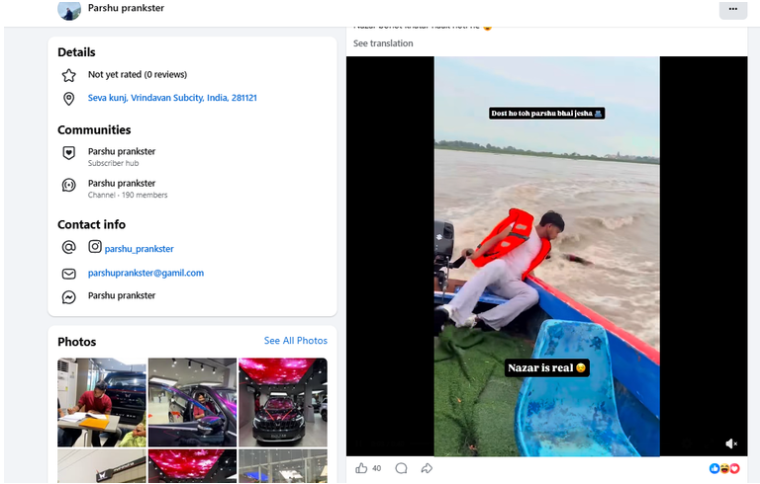
Not only that, we also found several videos with visuals similar to those in the viral video uploaded on the same video creator’s Facebook account. The information provided on the Facebook account also lists Vrindavan, Uttar Pradesh, as the location.
https://www.facebook.com/profile.php?id=61567184794045
Conclusion:
The evidence gathered during our research clearly establishes that the video being circulated with the claim that ₹500 Indian currency notes were found inside a bag during the floods in Nepal was actually filmed by a video creator in Vrindavan, Uttar Pradesh.

Related Blogs
Introduction
The Telecom Regulatory Authority of India (TRAI) issued a consultation paper titled “Encouraging Innovative Technologies, Services, Use Cases, and Business Models through Regulatory Sandbox in Digital Communication Sector. The paper presents a draft sandbox structure for live testing of new digital communication products or services in a regulated environment. TRAI seeks comments from stakeholders on several parts of the framework.
What is digital communication?
Digital communication is the use of internet tools such as email, social media messaging, and texting to communicate with other people or a specific audience. Even something as easy as viewing the content on this webpage qualifies as digital communication.
Aim of Paper
- Frameworks are intended to support regulators’ desire for innovation while also ensuring economic resilience and consumer protection. Considering this, the Department of Telecom (DoT) asked TRAI to offer recommendations on a regulatory sandbox framework. TRAI approaches the issue with the goal of encouraging creativity and hastening the adoption of cutting-edge digital communications technologies.
- Artificial intelligence, the Internet of Things, edge computing, and other emerging technologies are revolutionizing how we connect, communicate, and access information, driving the digital communication sector to rapidly expand. To keep up with this dynamic environment, an enabling environment for the development and deployment of novel technologies, services, use cases, and business models is required.
- The regulatory sandbox concept is becoming increasingly popular around the world as a means of encouraging innovation in a range of industries. A regulatory sandbox is a regulated environment in which businesses and innovators can test their concepts, commodities, and services while operating under changing restrictions.
- Regulatory Sandbox will benefit the telecom startup ecosystem by providing access to a real-time network environment and other data, allowing them to evaluate the reliability of new applications before releasing them to the market. Regulatory Sandbox also attempts to stimulate cross-sectoral collaboration for carrying out such testing by engaging the assistance of other ministries and departments in order to give the starting company with a single window for acquiring all clearances.
What is regulatory sandbox?
- A regulatory sandbox is a controlled regulatory environment in which new products or services are tested in real-time.
- It serves as a “safe space” for businesses because authorities may or may not allow certain relaxations for the sole purpose of testing.
- The sandbox enables the regulator, innovators, financial service providers, and clients to perform field testing in order to gather evidence on the benefits and hazards of new financial innovations, while closely monitoring and mitigating their risks.
What are the advantages of having a regulatory sandbox?
- Firstly, regulators obtain first-hand empirical evidence on the benefits and risks of emerging technologies and their implications, allowing them to form an informed opinion on the regulatory changes or new regulations that may be required to support useful innovation while mitigating the associated risks.
- Second, sandbox customers can evaluate the viability of a product without the need for a wider and more expensive roll-out. If the product appears to have a high chance of success, it may be authorized and delivered to a wider market more quickly.
Digital communication sector and Regulatory Sandbox
- Many countries’ regulatory organizations have built sandbox settings for telecom tech innovation.
- These frameworks are intended to encourage regulators’ desire for innovation while also promoting economic resilience and consumer protection.
- In this context, the Department of Telecom (DoT) had asked TRAI to give recommendations on a regulatory sandbox framework.
- Written comments on the drafting framework will be received until July 17, 2023, and counter-comments will be taken until August 1, 2023. The Authority’s goal in the digital communication industry is to foster creativity and expedite the use of emerging technologies such as artificial intelligence (AI), the Internet of Things (IoT), and edge computing. These technologies are changing the way individuals connect, engage, and access information, causing rapid changes in the industry.
Conclusion
According to TRAI, these technologies are changing how individuals connect, engage, and obtain information, resulting in significant changes in the sector.
The regulatory sandbox also wants to stimulate cross-sectoral collaboration for carrying out such testing by engaging the assistance of other ministries and departments in order to give the starting company with a single window for acquiring all clearances. The consultation paper covers some of the worldwide regulatory sandbox frameworks in use in the digital communication industry, as well as some of the frameworks in use inside the country in other sectors.

Introduction
In the wake of the Spy Loan scandal, more than a dozen malicious loan apps were downloaded on Android phones from the Google Play Store, However, the number is significantly higher because they are also available on third-party marketplaces and questionable websites.
Unmasking the Scam
When a user borrows money, these predatory lending applications capture large quantities of information from their smartphone, which is then used to blackmail and force them into returning the total with hefty interest levels. While the loan amount is disbursed to users, these predatory loan apps request sensitive information by granting access to the camera, contacts, messages, logs, images, Wi-Fi network details, calendar information, and other personal information. These are then sent to loan shark servers.
The researchers have disclosed facts about the applications used by loan sharks to mislead consumers, as well as the numerous techniques used to circumvent some of the limitations imposed on the Play Store. Malware is often created with appealing user interfaces and promotes simple and rapid access to cash with high-interest payback conditions. The revelation of the Spy Loan scandal has triggered an immediate response from law enforcement agencies worldwide. There is an urgency to protect millions of users from becoming victims of malicious loan apps, it has become extremely important for law enforcement to unmask the culprits and dismantle the cyber-criminal network.
Aap’s banned: here is the list of the apps banned by Google Play Store :
- AA Kredit: इंस्टेंट लोन ऐप (com.aa.kredit.android)
- Amor Cash: Préstamos Sin Buró (com.amorcash.credito.prestamo)
- Oro Préstamo – Efectivo rápido (com.app.lo.go)
- Cashwow (com.cashwow.cow.eg)
- CrediBus Préstamos de crédito (com.dinero.profin.prestamo.credito.credit.credibus.loan.efectivo.cash)
- ยืมด้วยความมั่นใจ – ยืมด่วน (com.flashloan.wsft)
- PréstamosCrédito – GuayabaCash (com.guayaba.cash.okredito.mx.tala)
- Préstamos De Crédito-YumiCash (com.loan.cash.credit.tala.prestmo.fast.branch.mextamo)
- Go Crédito – de confianza (com.mlo.xango)
- Instantáneo Préstamo (com.mmp.optima)
- Cartera grande (com.mxolp.postloan)
- Rápido Crédito (com.okey.prestamo)
- Finupp Lending (com.shuiyiwenhua.gl)
- 4S Cash (com.swefjjghs.weejteop)
- TrueNaira – Online Loan (com.truenaira.cashloan.moneycredit)
- EasyCash (king.credit.ng)
- สินเชื่อปลอดภัย – สะดวก (com.sc.safe.credit)
Risks with several dimensions
SpyLoan's loan application violates Google's Financial Services policy by unilaterally shortening the repayment period for personal loans to a few days or any other arbitrary time frame. Additionally, the company threatens users with public embarrassment and exposure if they do not comply with such unreasonable demands.
Furthermore, the privacy rules presented by SpyLoan are misleading. While ostensibly reasonable justifications are provided for obtaining certain permissions, they are very intrusive practices. For instance, camera permission is ostensibly required for picture data uploads for Know Your Customer (KYC) purposes, and access to the user's calendar is ostensibly required to plan payment dates and reminders. However, both of these permissions are dangerous and can potentially infringe on users' privacy.
Prosecution Strategies and Legal Framework
The law enforcement agencies and legal authorities initiated prosecution strategies against the individuals who are involved in the Spy Loan Scandal, this multifaced approach involves international agreements and the exploration of innovative legal avenues. Agencies need to collaborate with International agencies to work on specific cyber-crime, leveraging the legal frameworks against digital fraud furthermore, the cross-border nature of the spy loan operation requires a strong legal framework to exchange information, extradition requests, and the pursuit of legal actions across multiple jurisdictions.
Legal Protections for Victims: Seeking Compensation and Restitution
As the legal battle unfolds in the aftermath of the Spy loan scam the focus shifts towards the victims, who suffer financial loss from such fraudulent apps. Beyond prosecuting culprits, the pursuit of justice should involve legal safeguards for victims. Existing consumer protection laws serve as a crucial shield for Spy Loan victims. These laws are designed to safeguard the rights of individuals against unfair practices.
Challenges in legal representation
As the legal hunt for justice in the Spy Loan scam progresses, it encounters challenges that demand careful navigation and strategic solutions. One of the primary obstacles in the legal pursuit of the Spy loan app lies in the jurisdictional complexities. Within the national borders, it’s quite challenging to define the jurisdiction that holds the authority, and a unified approach in prosecuting the offenders in various regions with the efforts of various government agencies.
Concealing the digital identities
One of the major challenges faced is the anonymity afforded by the digital realm poses a challenge in identifying and catching the perpetrators of the scam, the scammers conceal their identity and make it difficult for law enforcement agencies to attribute to actions against the individuals, this challenge can be overcome by joint effort by international agencies and using the advance digital forensics and use of edge cutting technology to unmask these scammers.
Technological challenges
The nature of cyber threats and crime patterns are changing day by day as technology advances this has become a challenge for legal authorities, the scammers explore vulnerabilities, making it essential, for law enforcement agencies to be a step ahead, which requires continuous training of cybercrime and cyber security.
Shaping the policies to prevent future fraud
As the scam unfolds, it has become really important to empower users by creating more and more awareness campaigns. The developers of the apps need to have a transparent approach to users.
Conclusion
It is really important to shape the policies to prevent future cyber frauds with a multifaced approach. Proposals for legislative amendments, international collaboration, accountability measures, technology protections, and public awareness programs all contribute to the creation of a legal framework that is proactive, flexible, and robust to cybercriminals' shifting techniques. The legal system is at the forefront of this effort, playing a critical role in developing regulations that will protect the digital landscape for years to come.
Safeguarding against spyware threats like SpyLoan requires vigilance and adherence to best practices. Users should exclusively download apps from official sources, meticulously verify the authenticity of offerings, scrutinize reviews, and carefully assess permissions before installation.
References

Executive Summary:
A video circulating on social media falsely claims that India’s Finance Minister, Smt. Nirmala Sitharaman, has endorsed an investment platform promising unusually high returns. Upon investigation, it was confirmed that the video is a deepfake—digitally manipulated using artificial intelligence. The Finance Minister has made no such endorsement through any official platform. This incident highlights a concerning trend of scammers using AI-generated videos to create misleading and seemingly legitimate advertisements to deceive the public.

Claim:
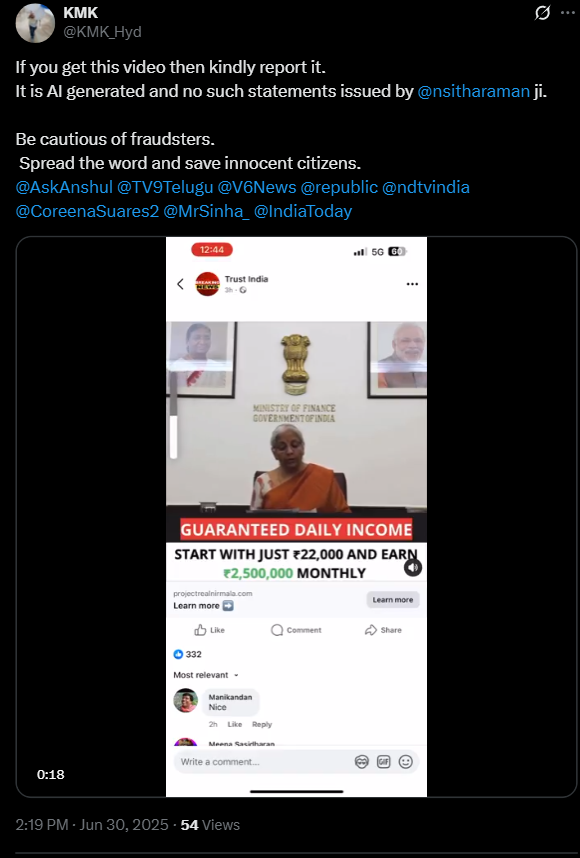
A viral video falsely claims that the Finance Minister of India Smt. Nirmala Sitharaman is endorsing an investment platform, promoting it as a secure and highly profitable scheme for Indian citizens. The video alleges that individuals can start with an investment of ₹22,000 and earn up to ₹25 lakh per month as guaranteed daily income.
Fact check:
By doing a reverse image search from the key frames of the viral fake video we found an original YouTube clip of the Finance Minister of India delivering a speech on the webinar regarding 'Regulatory, Investment and EODB reforms'. Upon further research we have not found anything related to the viral investment scheme in the whole video.
The manipulated video has had an AI-generated voice/audio and scripted text injected into it to make it appear as if she has approved an investment platform.
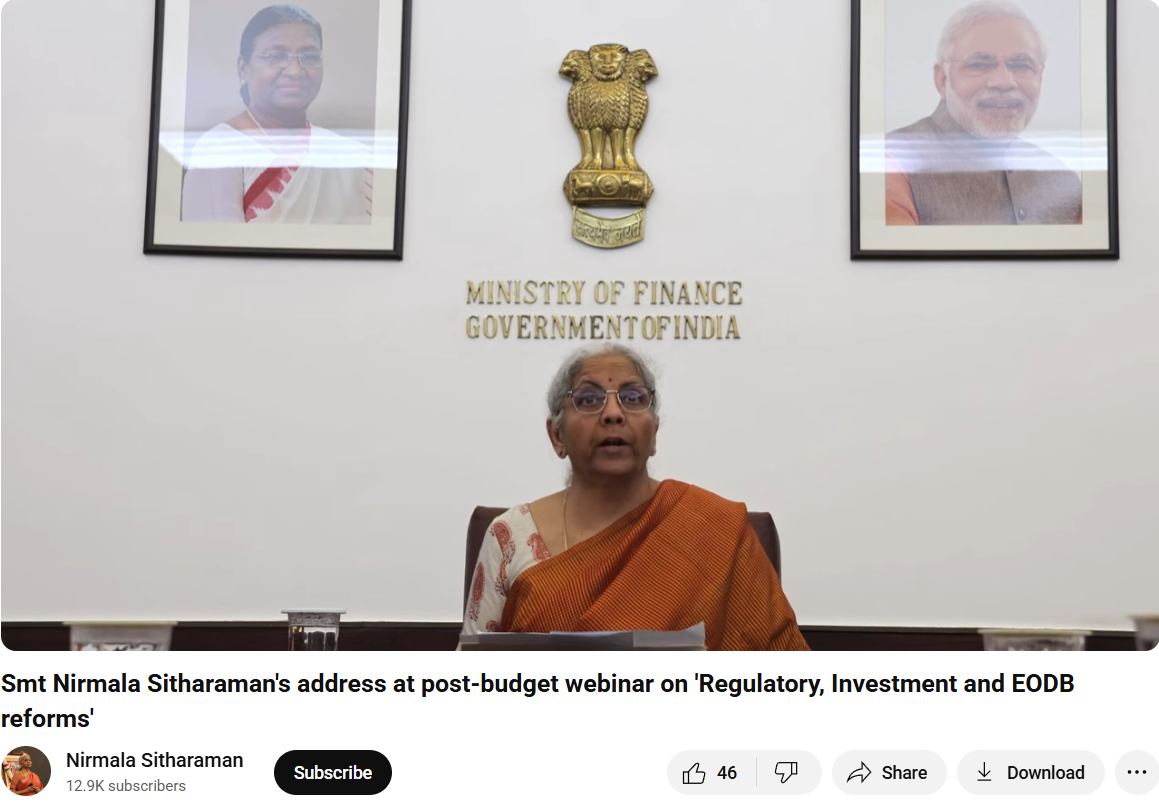
The key to deepfakes is that they seem relatively realistic in their facial movement; however, if you look closely, you can see that there are mismatched lip-syncing and visual transitions that are out of the ordinary, and the results prove our point.
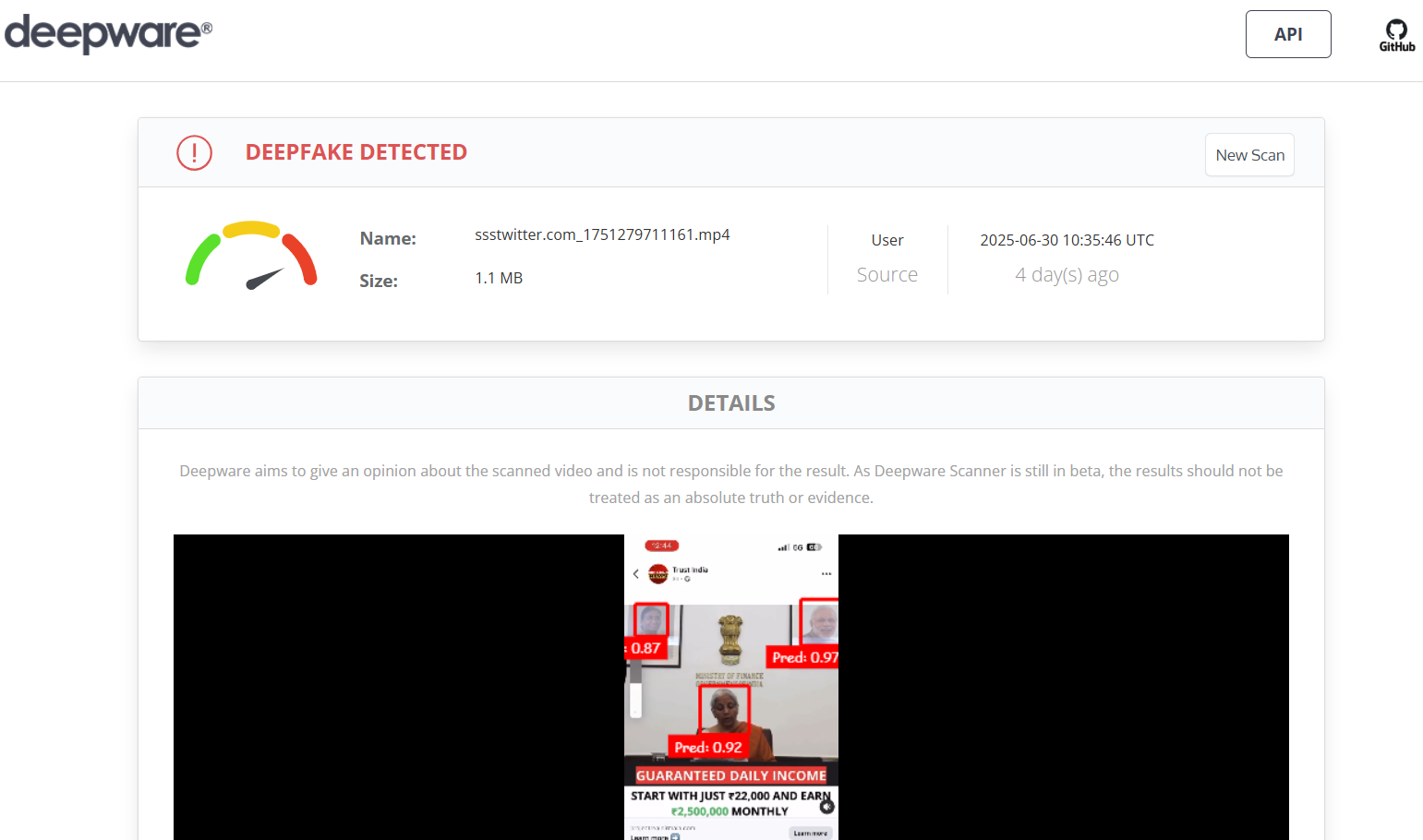
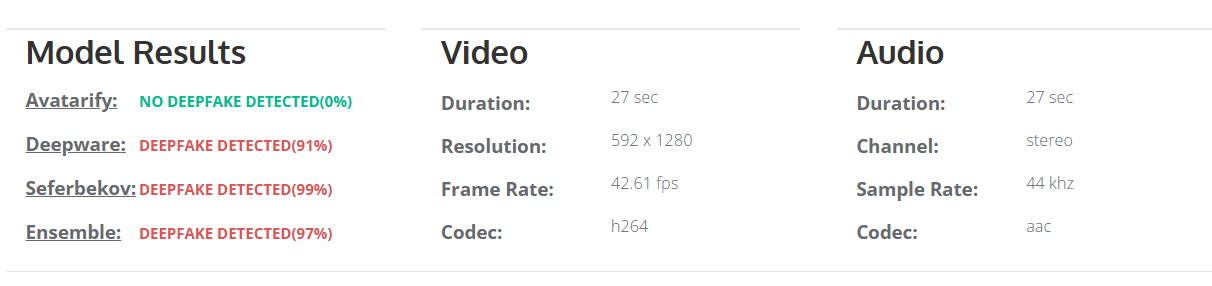
Also, there doesn't appear to be any acknowledgment of any such endorsement from a legitimate government website or a credible news outlet. This video is a fabricated piece of misinformation to attempt to scam the viewers by leveraging the image of a trusted public figure.
Conclusion:
The viral video showing the Finance Minister of India, Smt. Nirmala Sitharaman promoting an investment platform is fake and AI-generated. This is a clear case of deepfake misuse aimed at misleading the public and luring individuals into fraudulent schemes. Citizens are advised to exercise caution, verify any such claims through official government channels, and refrain from clicking on unknown investment links circulating on social media.
- Claim: Nirmala Sitharaman promoted an investment app in a viral video.
- Claimed On: Social Media
- Fact Check: False and Misleading
