
#FactCheck- Viral ‘Prison Torture’ Video Not from Israel, Taken from Iraqi TV Show
Executive Summary
Israel’s parliament, the Knesset, recently passed a bill allowing military courts to impose the death penalty on Palestinians convicted of killing Israelis. Amid this backdrop, a video has gone viral on social media showing men in black uniforms beating detainees inside a prison, with claims linking it to alleged torture by Israeli forces. However, a research by the CyberPeace found the claim to be false. The viral video is not related to Israel or any real incident, but is actually from an Iraqi television series titled “Beit Umm Layla.”
Claim
Sharing the video, a user on X (formerly Twitter) wrote:“Live footage: IDF soldiers always torture Palestinian hostages before executing them. Please don’t let us die in silence.”

Fact Check
To verify the claim, we extracted keyframes from the viral video and conducted a reverse image search. This led us to a longer version of the clip posted on March 9 by the Iraqi channel Al-Iraqiya on its Facebook and Instagram pages.


The posts clearly identified the footage as part of “Beit Umm Layla,” a popular Iraqi TV series. Further research showed that the full series is available on Al-Iraqiya’s official YouTube channel, where 25 episodes were uploaded between February 19 and March 20. The viral clip corresponds to Episode 16 of the show.

Additionally, information available on the Arabic entertainment website elCinema indicates that the series, released on February 18, is a socio-political drama focusing on prisoners and the psychological struggles faced by them and their families.
Conclusion
The viral claim is false and misleading. The video does not depict any real incident involving Israeli forces or Palestinian detainees. Instead, it is a fictional scene from an Iraqi television drama series.There is no credible evidence to support the claim that the footage shows torture by Israeli soldiers. The clip has been taken out of context and shared with a misleading narrative to provoke emotional reactions.

Related Blogs
Introduction
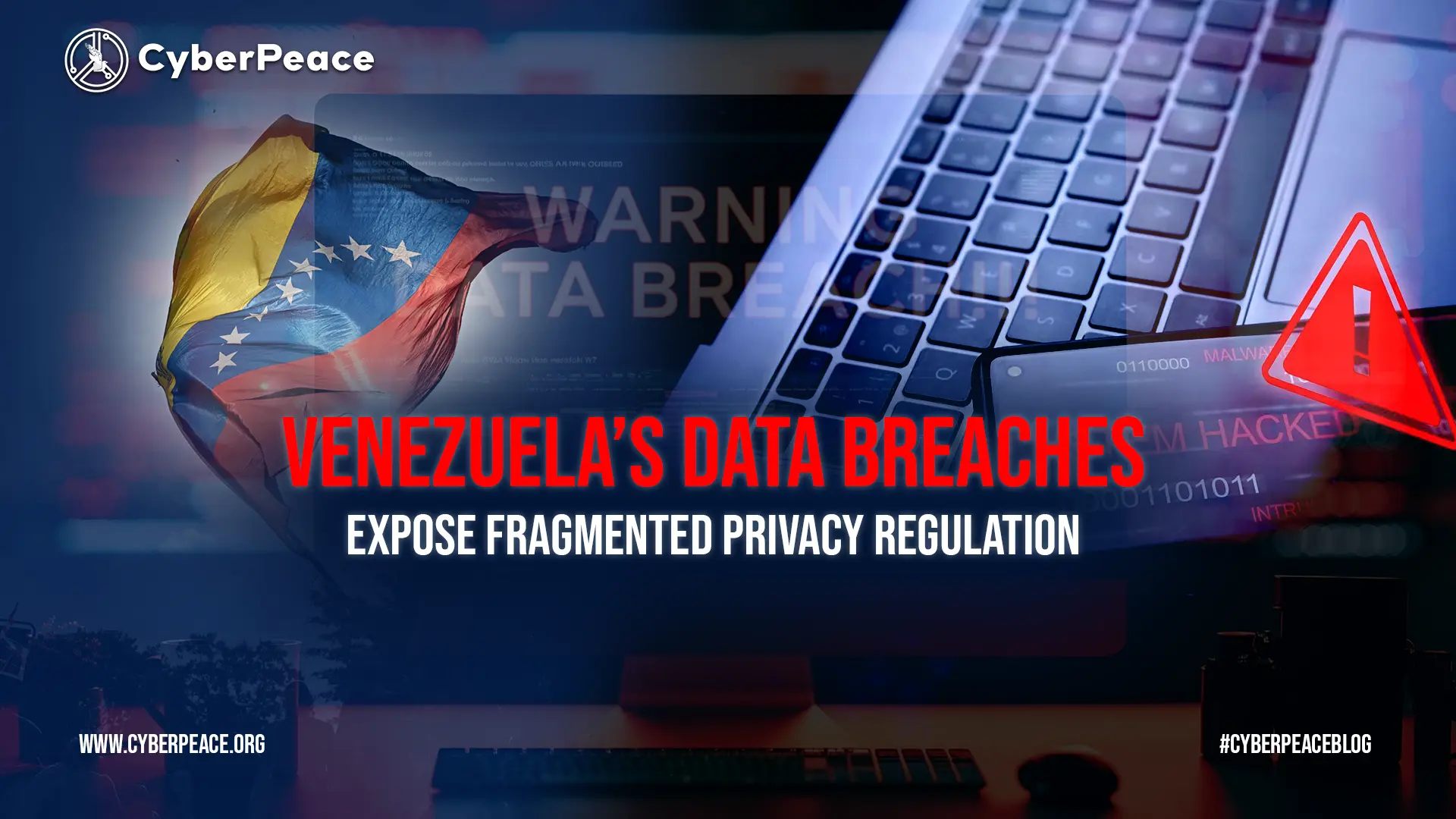
Over the last few years, several public data breaches in Venezuela have revealed a lack of cohesion and progress in its data privacy system and left many people susceptible to fraud, identity theft and long-term harm via the internet. It is clear from these data breaches that when organizations fail to adequately protect their data, both through cybersecurity failures and weak legal protections, they can lead to problems throughout an entire system through which all individuals in the system could potentially suffer.
Among the more notable breaches are the Movistar Venezuela data breach from 2025 and the Cashea App data leak from earlier this year. Each of these examples demonstrates to some extent how the absence of an adequate privacy regulatory scheme can worsen the results of a data breach.
The Movistar Breach: A Regulatory Warning (2025)
Venezuelan digital rights group VE Sin Filtro published a report late in April 2025, which found a database revealed to have been opened onto the internet containing personal information belonging to over 3.2 million Movistar customers. The initial breach contained personal, and confidential, data of Venezuelan citizens such as national identification numbers, full names, city of residence, and phone numbers which could have been exploited to commit identity theft, SIM-swap fraud, and targeted scams.
One significant issue with this situation was that Movistar failed to disclose the breach publicly or contact impacted customers at the time of the disclosure. As a result, there appears to be a significant gap in Sanctions / Other Means of Enforcing Security Countermeasures Laws. Since there are numerous countries that enforce GDPR-style regulations and as such, this matter should lead to a complete investigation and possible fines against those responsible but in Venezuela there is still a lack of accountability.
Cashea App Leak: A 2026 Data Shock
A second alleged data breach came to light in February of 2026. It involved a Venezuelan buy-now-pay-later (BNPL) fintech called Cashea App, which is typically heavily utilized domestically. Reports have circulated that threat actors have been offering a database, believed to hold more than 79 million transaction records. This is more than double the size and sensitivity of the data involved in the Movistar Breach.
According to reports, the leaked data included:
- Bank account details and payment methods
- Merchant profiles and internal business identifiers
- Detailed transaction histories with names, national ID numbers, timestamps, and installment data
This level of exposure goes far beyond basic identifiers. Financial transaction histories combined with personal identifiers enable sophisticated fraud, targeted social engineering, and long-term misuse of financial identities. As with the Movistar breach, no official acknowledgment or notification was issued by Cashea at the time of reporting, again underscoring Venezuela’s weak enforcement environment.
Why These Breaches Matter: The Legal Dimension
The incidents show us that there is a bigger problem with the way Venezuela has set up its framework for protecting data. For instance, the Venezuelan Constitution recognises the principles of data protection and privacy; however, these rights only exist in a theoretical manner; they lack implementing legislation, procedural clarity, and institutional enforcement.
Constitutional Basis of Data Protection
The Supreme Tribunal of Justice (TSJ) stated the core principles for protecting data are found in the Venezuelan Constitution. After the TSJ issued its 2011 ruling, Article 28 of the Venezuelan Constitution gives individuals the right to know what data the state has about them, how the state uses that data, and to correct or delete any harmful data. Article 60 of the Venezuelan Constitution protects individuals' privacy and restricts excessive data collection by the state.
The Constitutional Chamber also put into place additional guiding principles for how to protect personal data, including:
- The data subject must give prior informed and revocable consent.
- The purpose for which the data is collected must be specified and only the minimum amount of information necessary can be collected.
- The data collected must be accurate and of good quality.
- There are confidentiality obligations for third parties regarding the use of the data.
- It is the government's responsibility to put into place procedures and mechanisms to monitor compliance with the data protection laws.
- There are civil, criminal and administrative liabilities for individuals and legal entities that violate the data protection laws.
But, in a civil law country, when courts make rulings, they usually are persuasive only as opposed to being legally binding, and even constitutional rulings cannot be implemented until enabling legislation is passed.
Absence of a Comprehensive Data Protection Law
In contrast to the European Union's GDPR (General Data Protection Regulation), the United States' sectoral approach, and emerging Latin American data protection systems such as the ones in Brazil, Chile and Colombia, Venezuela has no independent data protection law. This lack of law leads to numerous types of uncertainty in the realm of data protection laws:
- No defined data controller or processor obligations
- No standardized lawful bases for processing
- No clear breach notification timelines
- No independent data protection authority
- No procedural pathway for individuals to seek redress
As a result, data protection in Venezuela is not treated as an independent legal discipline but instead becomes derivative, arising incidentally within constitutional litigation or sector-specific disputes.
Regulatory Fragmentation and Institutional Weakness
Due to the TSJ decisions made in 2011, there has been a lack of regulatory action taken in a systematic fashion and instead most actions have been done on a case by case basis as valid incidents arise. The National Cybersecurity Council was established in 2024; however, its function is to support the establishment of cybersecurity infrastructure and has no defined powers regarding the enforcement of privacy.
This creates a fragmented institutional landscape where:
- Authorities lack clear jurisdiction over privacy violations
- Companies face minimal compliance guidance
- Individuals struggle to understand or enforce their rights
The Movistar and Cashea incidents highlight how this fragmentation translates into practical impunity following major data exposures.
What’s Next? A Legal Opportunity for Reform
The repercussions of insufficient safeguards for data protection extend past the damage incurred to a person's privacy:
- Loss of trust in both financial and digital services
- Heightened likelihood of financial fraud and crime
- Lack of willingness from foreign companies to conduct business with Venezuela’s platforms.
- Long-term negative impact on the reputation of domestic companies.
- Possible inability to access cross-border transfer of data due to other jurisdictions’ decisions to restrict transfers into jurisdictions without cutting-edge enforcement of protections for privacy.
In a digital economy that increasingly requires robust data protection to function successfully, a lack of action to create strong protections will cause a significant economic impact.
Conclusion
Major data breaches such as the ones at Movistar in 2025 and Cashea App in 2026 show that constitutional privacy rights alone are insufficient without enforceable legal framework. Privacy laws must move from being just a principle to being a law that has institutions, procedures, and accountability to make sure the privacy of the users is protected.
Now with the global digital economy being so interconnected, not having regulations creates openings for vulnerabilities for people. If Venezuela hopes to protect their citizens, create an innovation-friendly environment, and compete in the global market, they must implement comprehensive data privacy reforms as soon as possible.
REFERENCES
- https://iapp.org/news/a/venezuela-data-breach-highlights-scattered-privacy-regulation
- https://www.apolocybersecurity.com/en/blog-posts/ciberataque-a-movistar-que-ha-pasado-a-quien-afecta-y-como-proteger-tus-datos
- https://darknetsearch.com/knowledge/news/en/cashea-app-data-leak-79m-records-exposed-in-venezuela/
- https://www.binance.com/en-IN/square/post/294369884695410
Executive Summary
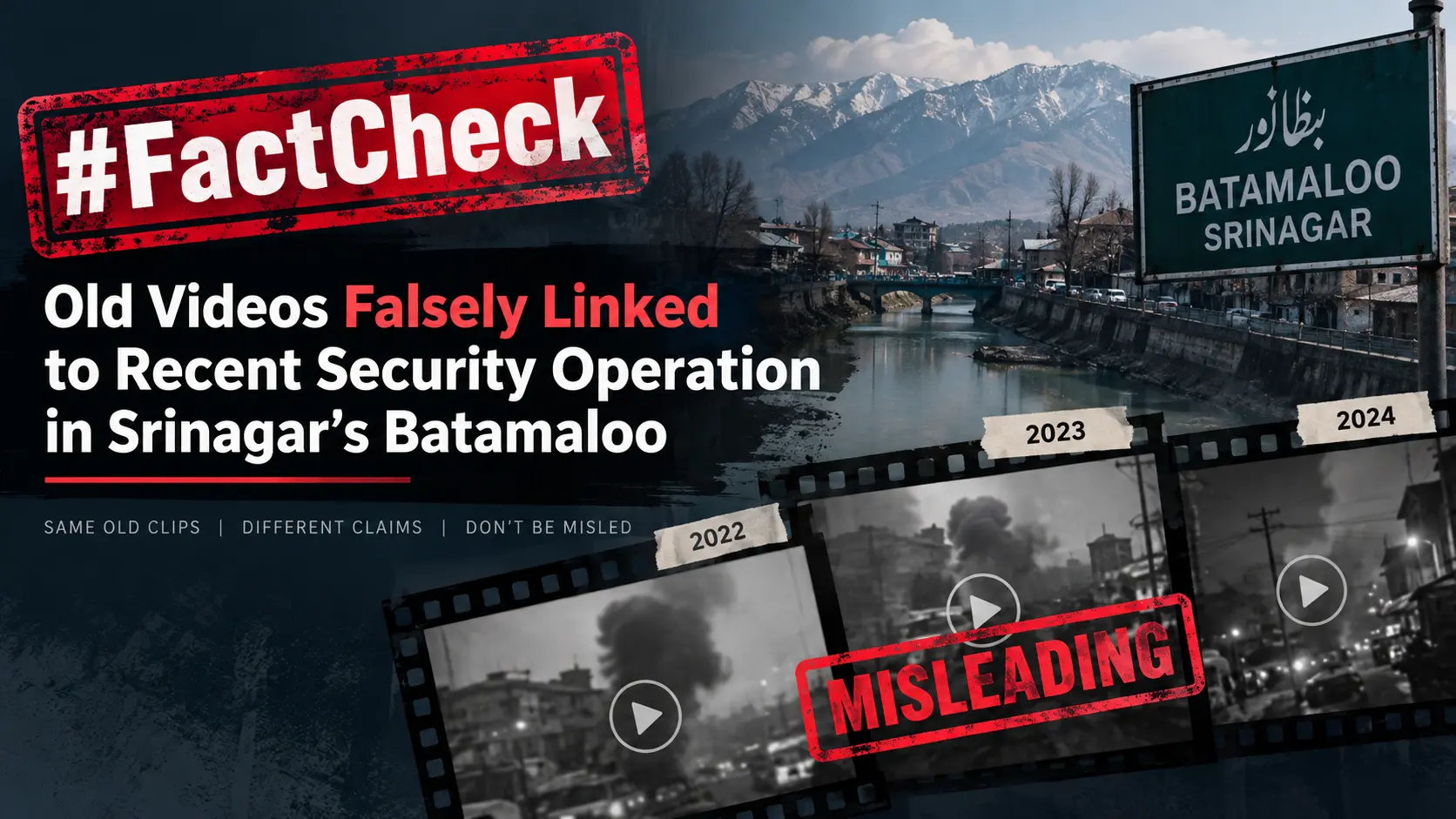
A video is being shared on social media with the claim that Indian security forces faced resistance from local residents during a cordon-and-search operation in the Batamaloo area of Srinagar. Some Pakistani propaganda accounts are sharing the video in an attempt to link it to the recent security operation. Research by CyberPeace found that the viral video is old and unrelated to the recent security operation in the Batamaloo area of Srinagar. The research revealed that the video is actually from Bishnupur, Manipur. It is being falsely presented as footage from Jammu and Kashmir, with claims that local residents were strongly resisting security forces. Similarly, a second video is also being shared with a misleading claim linking it to the recent security operation. The video shows some militants greeting and congratulating one another. However, these visuals are also unrelated to the recent security operation in Batamaloo, Srinagar.
Claim:
An X user shared the viral video with the caption: “Indian security forces have launched a cordon-and-search operation in the Batamaloo area of Srinagar. It is being reported that local residents are strongly resisting the operation.”
https://x.com/ThokaReturns/status/2097979588223930651

FactCheck
As part of our research, we also examined other sources and available reports related to the viral video. However, we did not find any credible report linking the incident shown in the viral video to the recent security operation in Batamaloo, Srinagar. To verify the viral claim, we conducted a reverse image search of the keyframes from the video. During the search, we found similar visuals on the DNA India website, which were published on November 16, 2017.

It is being claimed that the militants are congratulating one another and claiming territorial gains in several areas in response to the Indian Army’s security operation in Batamaloo. However, these claims could not be substantiated. According to the available evidence, the visuals are old and unrelated to the recent security operation. As part of the next step in our research, we found similar visuals on the Northeast Live Facebook page. According to the report, tension had escalated in Manipur’s Bishnupur district after an angry mob set a vehicle on fire on suspicion that the occupants were carrying arms and ammunition. The incident reportedly left 20 people injured.
The incident took place along Tidim Road in the Ningthoukhong and Thinungei areas of Bishnupur district, where locals were observing a bandh. During the protest, people became suspicious of two vehicles and stopped them to check them.
https://www.facebook.com/watch/?v=1446641790532433

Conclusion
No credible evidence was found to substantiate these claims. Our research found that the visuals shown in the videos are old and unrelated to the recent security operation in Batamaloo, Srinagar. Security forces had conducted a cordon-and-search operation in the Batamaloo area as part of routine counter-terrorism measures. However, no credible report or other concrete evidence was found linking the videos being shared on social media to this operation.

According to Statista, the number of users in India's digital assets market is expected to reach 107.30m users by 2025 (Impacts of Inflation on Financial Markets, August 2023). India's digital asset market has been experiencing exponential growth fueled by the increased adoption of cryptocurrencies and blockchain technology. This furthers the need for its regulation. Digital assets include cryptocurrencies, NFTs, asset-backed tokens, and tokenised real estate.
India has defined Digital Assets under Section 47(A) of the Income Tax Act, 1961. The Finance Act 2022-23 has added the word 'virtual' to make it “Virtual Digital Assets”. A “virtual digital asset” is any information or code, number, or token, created through cryptographic methods or otherwise, by any name, giving a digital representation of value exchanged with or without consideration. A VDA should contain an inherent value and represent a store of value or unit of account, functional in any financial transaction or investment. These can be stored, transferred, or traded in electronic format.
Digital Asset Governance: Update and Future Outlook
Indian regulators have been conservative in their approach towards digital assets, with the Reserve Bank of India first issuing directions against cryptocurrency transactions in 2018. This ban was removed by the Supreme Court through a court order in 2020. The presentation of the Cryptocurrency and Regulation of Official Digital Currency Bill of 2021 is a fairly important milestone in its attempts to lay down the framework for issuing an official digital currency by the Reserve Bank of India. While some digital assets seem to have potential, like the Central Bank Digital Currencies (CBDCs) and blockchain-based financial applications, a blanket prohibition has been enforced on private cryptocurrencies.
However, in more recent trends, the landscape is changing as the RBI's CBDC is to provide a state-backed digital alternative to cash under a more structured regulatory framework. This move seeks to balance state control with innovation on investor safety and compliance, expecting to reduce risk and enhance security for investors by enacting strict anti-money laundering and know-your-customer laws. Highlighting these developments is important to examine how global regulatory trends influence India's digital asset policies.
Impact of Global Development on India’s Approach
Global regulatory developments have an impact on Indian policies on digital assets. The European Union's Markets in Crypto-assets (MiCA) is to introduce a comprehensive regulatory framework for cryptocurrencies that could act as an inspiration for India. MiCA regulation covers crypto-assets that are not currently regulated by existing financial services legislation. Its particular focus on consumer protection and market integrity resonates with India in terms of investigating needs related to digital assets, including fraud and price volatility. Additionally, evolving policies in the US, such as regulating crypto exchanges and classifying certain tokens as securities, could also form the basis for India's regulatory posture.
Collaboration on the international level is also a chief contributing factor. India’s regular participation in global forums like the G20, facilitates an opportunity to align its regulations on digital assets with other countries, tending toward an even more standardised and predictable framework for cross-border transactions. This can significantly help India given that the nation has a huge diaspora providing a critical inflow of remuneration.
CyberPeace Outlook
Though digital assets offer many opportunities to India, challenges also exist. Cryptocurrency volatility affects investors, posing concerns over fraud and illicit dealings. A balance between the need for innovation and investor protection is paramount to avoid killing the growth of India's digital asset ecosystem with overly restrictive regulations.
Financial inclusion, efficient cross-border payments with low transaction costs, and the opening of investment opportunities are a few opportunities offered by digital assets. For example, the tokenisation of real estate throws open real estate investment to smaller investors. To strengthen the opportunities while addressing challenges, some policy reforms and new frameworks might prove beneficial.
CyberPeace Policy Recommendations
- Establish a regulatory sandbox for startups working in the area of blockchain and digital assets. This would allow them to test innovative solutions in a controlled environment with regulatory oversight minimising risks.
- Clear guidelines for the taxation of digital assets should be provided as they will ensure transparency, reduce ambiguity for investors, and promote compliance with tax regulations. Specific guidelines can be drawn from the EU's MiCA regulation.
- Workshops, online resources, and campaigns are some examples of initiatives aimed at improving consumer awareness about digital assets, benefits and associated risks that should be implemented. Partnerships with global fintech firms will provide a great opportunity to learn best practices.
Conclusion
India is positioned at a critical juncture with respect to the debate on digital assets. The challenge which lies ahead is one of balancing innovation with effective regulation. The introduction of the Central Bank Digital Currency (CBDC) and the development of new policies signal a willingness on the part of the regulators to embrace the digital future. In contrast, issues like volatility, fraud, and regulatory compliance continue to pose hurdles. By drawing insights from global frameworks and strengthening ties through international forums, India can pave the way for a secure and dynamic digital asset ecosystem. Embracing strategic measures such as regulatory sandboxes and transparent tax guidelines will not only protect investors but also unlock the immense potential of digital assets, propelling India into a new era of financial innovation and inclusivity.
References
- https://www.weforum.org/agenda/2024/10/different-countries-navigating-uncertainty-digital-asset-regulation-election-year/
- https://www.acfcs.org/eu-passes-landmark-crypto-regulation
- https://www.indiabudget.gov.in/budget2022-23/doc/Finance_Bill.pdf
- https://www.weforum.org/agenda/2024/10/different-countries-navigating-uncertainty-digital-asset-regulation-election-year/
- https://www3.weforum.org/docs/WEF_Digital_Assets_Regulation_2024.pdf
