
#FactCheck- No, Iran’s Supreme Leader Mojtaba Khamenei Is Not Dead—Viral Video Debunked
Executive Summary
A video circulating on social media claims that Iran’s new Supreme Leader Mojtaba Khamenei has passed away, with users attributing the claim to American sources. However, research by the CyberPeace found the claim to be false. Our research confirms that Mojtaba Khamenei is alive and in good health.
Claim
A Facebook user shared the viral video, claiming that Iran’s new Supreme Leader Mojtaba Khamenei had died.

Fact Check
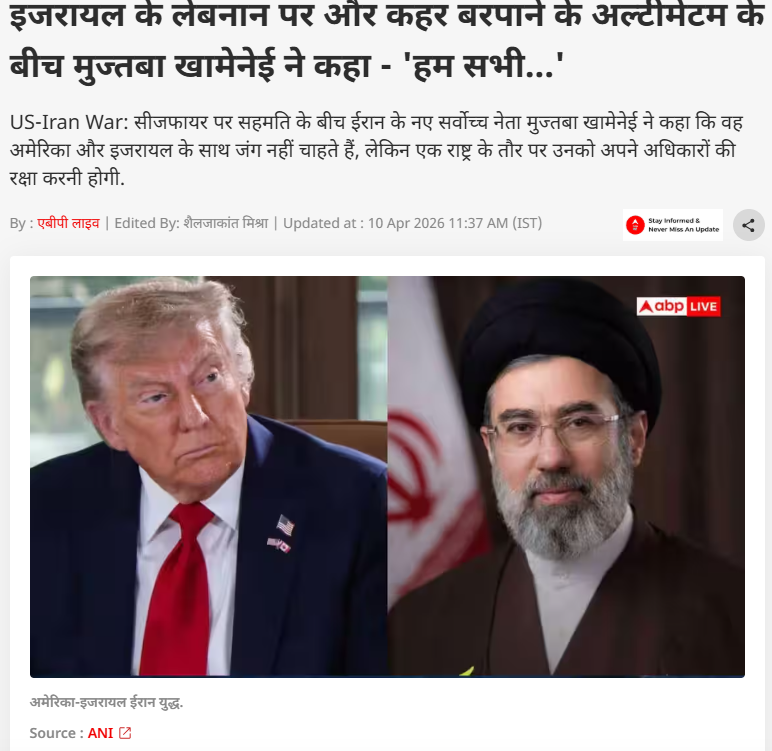
To verify the claim, we conducted keyword searches on Google but found no credible media reports confirming his death. Further research led us to a report published on April 10, 2026, by ABP News. According to the report, amid discussions around a ceasefire, Mojtaba Khamenei issued a statement saying that Iran does not seek war with the United States or Israel, but as a nation, it must defend its rights.
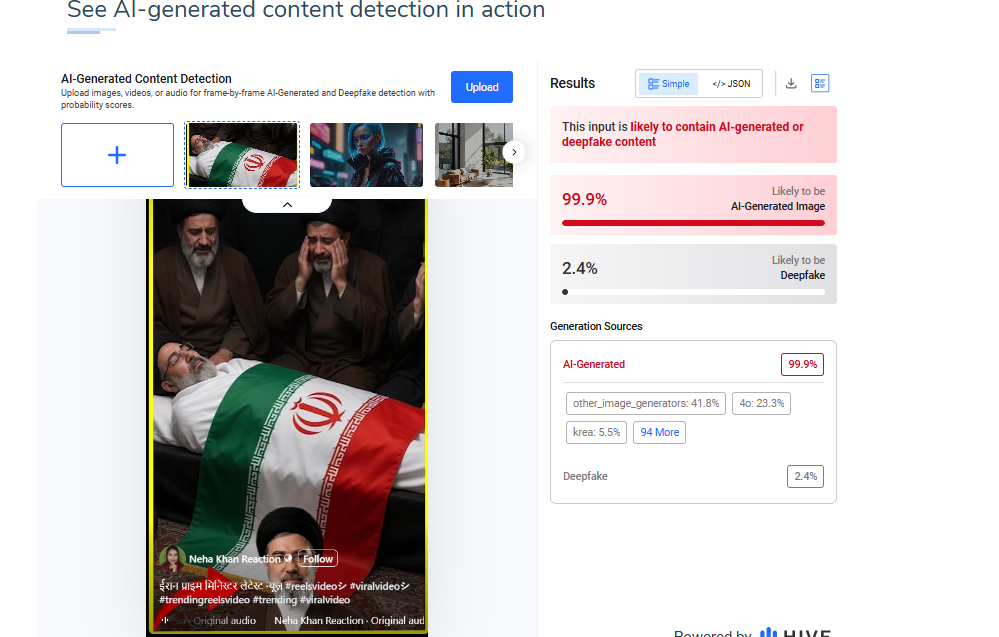
Additionally, the image used in the viral video was analyzed using the AI detection tool HIVE Moderation. The results indicated a 99% probability that the image is AI-generated.
Conclusion
The viral claim is false and misleading. There is no credible evidence to suggest that Mojtaba Khamenei has died. On the contrary, recent verified reports confirm that he is alive and has even issued public statements on ongoing geopolitical developments. The widespread circulation of this claim appears to be driven by misinformation, amplified through social media without verification. The use of AI-generated visuals further adds to the confusion, making the content appear authentic at first glance.

Related Blogs

Introduction
Indian Cybercrime Coordination Centre (I4C) was established by the Ministry of Home Affairs (MHA) to provide a framework for law enforcement agencies (LEAs) to deal with cybercrime in a coordinated and comprehensive manner. The Indian Ministry of Home Affairs approved a scheme for the establishment of the Indian Cyber Crime Coordination Centre (I4C) in October 2018. I4C is actively working towards initiatives to combat the emerging threats in cyberspace and it has become a strong pillar of India’s cyber security and cybercrime prevention. The ‘National Cyber Crime Reporting Portal’ equipped with a 24x7 helpline number 1930, is one of the key components of the I4C.
On 10 September 2024, I4Ccelebrated its foundation day for the first time at Vigyan Bhawan, New Delhi. This celebration marked a major milestone in India’s efforts against cybercrimes and in enhancing its cybersecurity infrastructure. Union Home Minister and Minister of Cooperation, Shri Amit Shah, launched key initiatives aimed at strengthening the country’s cybersecurity landscape.
Launch of Key Initiatives to Strengthen Cybersecurity
- Cyber Fraud Mitigation Centre (CFMC): As a product of Prime Minister Shri Narendra Modi’s vision, the Cyber Fraud Mitigation Centre (CFMC), was incorporated to bring together banks, financial institutions, telecom companies, Internet Service Providers, and law enforcement agencies on a single platform to tackle online financial crimes efficiently. This integrated approach is expected to minimise the time required to streamline operations and to track and neutralise cyber fraud.
- Cyber Commando: The Cyber Commandos Program is an initiative in which a specialised wing of trained Cyber Commandos will be established in states, Union Territories, and Central Police Organizations. These commandos will work to secure the nation’s digital space and counter rising cyber threats. They will form the first line of defence in safeguarding India from the growing cyber threats.
- Samanvay Platform: The Samanvay platform is a web-based Joint Cybercrime Investigation Facility System that was introduced as a one-stop data repository for cybercrime. It facilitates cybercrime mapping, data analytics, and cooperation among law enforcement agencies across the country. This will play a pivotal role in fostering collaborations in combating cybercrimes. Mr. Shah recognised the Samanvay platform as a crucial step in fostering data sharing and collaboration. He called for a shift from the “need to know” principle to a “duty to share” mindset in dealing with cyber threats. The Samanvay platform will serve as India’s first shared data repository, significantly enhancing the country’s cybercrime response.
- Suspect Registry: The Suspect Registry Portal is a national-level platform that has been designed to track cybercriminals. The portal registry will be connected to the National Cybercrime Reporting Portal (NCRP) which aims to help banks, financial intermediaries, and law enforcement agencies strengthen fraud risk management. The initiative is expected to improve the real-time tracking of cyber suspects, preventing repeat offences and improving fraud detection mechanisms.
Rising Digitalization: Prioritizing Cybersecurity
The number of internet users in India has grown from 25 crores in 2014 to 95 crores in 2024, accompanied by a 78-foldincrease in data consumption. This growth is echoed in the number of growing cybersecurity challenges in the digital era. With the rise of digital transactions through Jan Dhan accounts, Rupay debit cards, and UPI systems, Shri Shah underscored the growing threat of digital fraud. He emphasised the need to protect personal data, prevent online harassment, and counter misinformation, fake news, and child abuse in the digital space.
The three new criminal laws, the Bharatiya Nyaya Sanhita (BNS), Bharatiya Nagrik Suraksha Sanhita (BNSS), and Bharatiya Sakshya Adhiniyam (BSA), which aim to strengthen India’s legal framework for cybercrime prevention, were also referred to in the address bythe Home Minister. These laws incorporate tech-driven solutions that will ensure investigations are conducted scientifically and effectively.
Mr. Shah emphasised popularising the 1930Cyber Crime Helpline. Additionally, he noted that I4C has issued over 600advisories, blocked numerous websites and social media pages operated by cybercriminals, and established a National Cyber Forensic Laboratory in Delhi. Over 1,100 officers have already received cyber forensics training under theI4C umbrella.
In response to the regional cybercrime challenges, the formation of Joint Cyber Coordination Teams in cybercrime hotspot areas like Mewat, Jamtara, Ahmedabad, Hyderabad, Chandigarh, Visakhapatnam and Guwahati was highlighted as a coordinated response to local cybercrime hotspot issues.
Conclusion
With the launch of initiatives like the Cyber Fraud Mitigation Centre, the Samanvay platform, and the Cyber Commandos Program, I4C is positioned to play a crucial role in combating cybercrime. The I4C is moving forward with a clear vision for a secure digital future and safeguarding India's digital ecosystem.
References:
● https://pib.gov.in/PressReleaseIframePage.aspx?PRID=2053438
Executive Summary
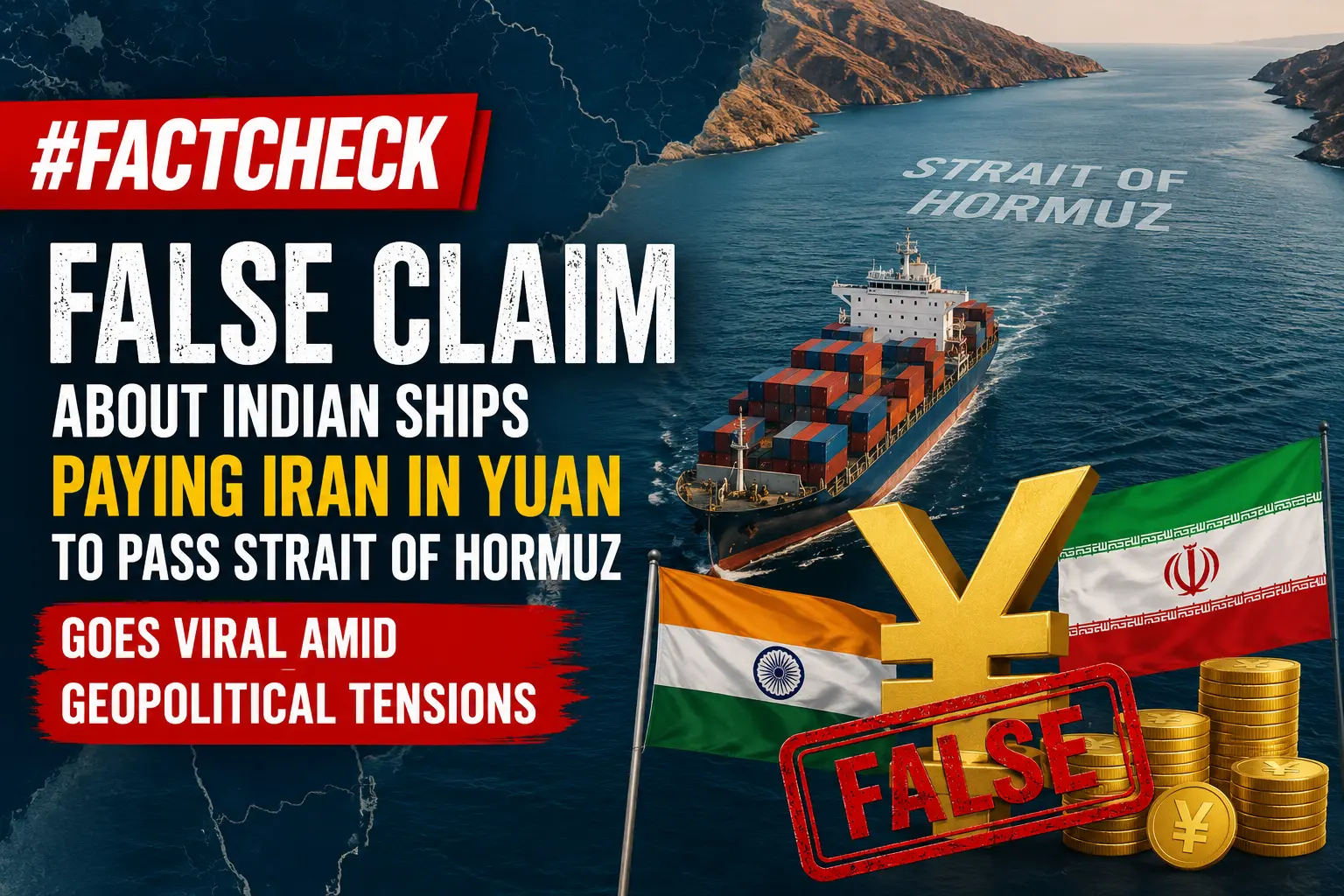
Amid the ongoing geopolitical tensions involving the US, Israel, and Iran, and reports of disruptions in the Strait of Hormuz affecting cargo ship movement and global crude oil prices, several posts on social media have made a viral claim. The posts allege that Indian cargo vessels are being allowed to pass through the Strait of Hormuz after payments to Iran were made in Chinese currency, the yuan. The claim has been widely circulated from certain social media accounts, suggesting a shift in India’s trade and payment arrangements. However, a fact-check by CyberPeace Research Wing has found the claim to be false.
Claim
A social media user “MEHF voice 2.0” shared a viral post (archived link), claiming that an Indian oil tanker secured passage through the Strait of Hormuz by making payments in Chinese yuan. The post further suggested that India had formed a new alignment with China, bypassing the US dollar system.

Fact Check
Due to US sanctions, Iran is excluded from the international banking network SWIFT, which prevents direct trade settlements in US dollars or euros. As a result, India and Iran conduct trade through a specially designed rupee–rial payment mechanism. According to a Ministry of Commerce and Industry release (based on a written reply in Parliament), India and Iran established this arrangement to facilitate bilateral trade using local currencies instead of the US dollar.

Further, information from the Indian Embassy in Tehran notes that rupee-based payments are processed through UCO Bank and Iranian banks with vostro accounts, enabling trade settlement outside sanctioned banking channels. IDBI Bank has also been part of efforts to expand rupee-based transactions with Iran.
The Ministry of External Affairs’ official fact-check handle has also debunked this claim, confirming that it is false.

Conclusion
The viral claim that Indian oil tankers are paying in Chinese yuan to pass through the Strait of Hormuz is false. India and Iran conduct trade settlements through a rupee–rial payment mechanism, not through the Chinese currency.
.webp)
Introduction
Search engines have become indispensable in our daily lives, allowing us to find information instantly by entering keywords or phrases. Using the prompt "search Google or type a URL" reflects just how seamless this journey to knowledge has become. With millions of searches conducted every second, and Google handling over 6.3 million searches per minute as of 2023 (Statista), one critical question arises: do search engines prioritise results based on user preferences and past behaviours, or are they truly unbiased?
Understanding AI Bias in Search Algorithms
AI bias is also known as machine learning bias or algorithm bias. It refers to the occurrence of biased results due to human biases that deviate from the original training data or AI algorithm which leads to distortion of outputs and creation of potentially harmful outcomes. The sources of this bias are algorithmic bias, data bias and interpretation bias which emerge from user history, geographical data, and even broader societal biases in training data.
Common biases include excluding certain groups of people from opportunities because of AI bias. In healthcare, underrepresenting data of women or minority groups can skew predictive AI algorithms. While AI helps streamline the automation of resume scanning during a search to help identify ideal candidates, the information requested and answers screened out can result in biased outcomes due to a biased dataset or any other bias in the input data.
Case in Point: Google’s "Helpful" Results and Its Impact
Google optimises results by analysing user interactions to determine satisfaction with specific types of content. This data-driven approach forms ‘filter bubbles’ by repeatedly displaying content that aligns with a user’s preferences, regardless of factual accuracy. While this can create a more personalised experience, it risks confining users to a limited view, excluding diverse perspectives or alternative viewpoints.
The personal and societal impacts of such biases are significant. At an individual level, filter bubbles can influence decision-making, perceptions, and even mental health. On a societal level, these biases can reinforce stereotypes, polarise opinions, and shape collective narratives. There is also a growing concern that these biases may promote misinformation or limit users’ exposure to diverse perspectives, all stemming from the inherent bias in search algorithms.
Policy Challenges and Regulatory Measures
Regulating emerging technologies like AI, especially in search engine algorithms, presents significant challenges due to their intricate, proprietary nature. Traditional regulatory frameworks struggle to keep up with them as existing laws were not designed to address the nuances of algorithm-driven platforms. Regulatory bodies are pushing for transparency and accountability in AI-powered search algorithms to counter biases and ensure fairness globally. For example, the EU’s Artificial Intelligence Act aims to establish a regulatory framework that will categorise AI systems based on risk and enforces strict standards for transparency, accountability, and fairness, especially for high-risk AI applications, which may include search engines. India has proposed the Digital India Act in 2023 which will define and regulate High-risk AI.
Efforts include ethical guidelines emphasising fairness, accountability, and transparency in information prioritisation. However, a complex regulatory landscape could hinder market entrants, highlighting the need for adaptable, balanced frameworks that protect user interests without stifling innovation.
CyberPeace Insights
In a world where search engines are gateways to knowledge, ensuring unbiased, accurate, and diverse information access is crucial. True objectivity remains elusive as AI-driven algorithms tend to personalise results based on user preferences and past behaviour, often creating a biased view of the web. Filter bubbles, which reinforce individual perspectives, can obscure factual accuracy and limit exposure to diverse viewpoints. Addressing this bias requires efforts from both users and companies. Users should diversify sources and verify information, while companies should enhance transparency and regularly audit algorithms for biases. Together, these actions can promote a more equitable, accurate, and unbiased search experience for all users.
References
- https://www.bbc.com/future/article/20241101-how-online-photos-and-videos-alter-the-way-you-think
- https://www.bbc.com/future/article/20241031-how-google-tells-you-what-you-want-to-hear
- https://www.ibm.com/topics/ai-bias#:~:text=In%20healthcare%2C%20underrepresenting%20data%20of,can%20skew%20predictive%20AI%20algorithms
