
#FactCheck-Old 2020 Lockdown Video of PM Modi Resurfaces as Recent
Executive Summary
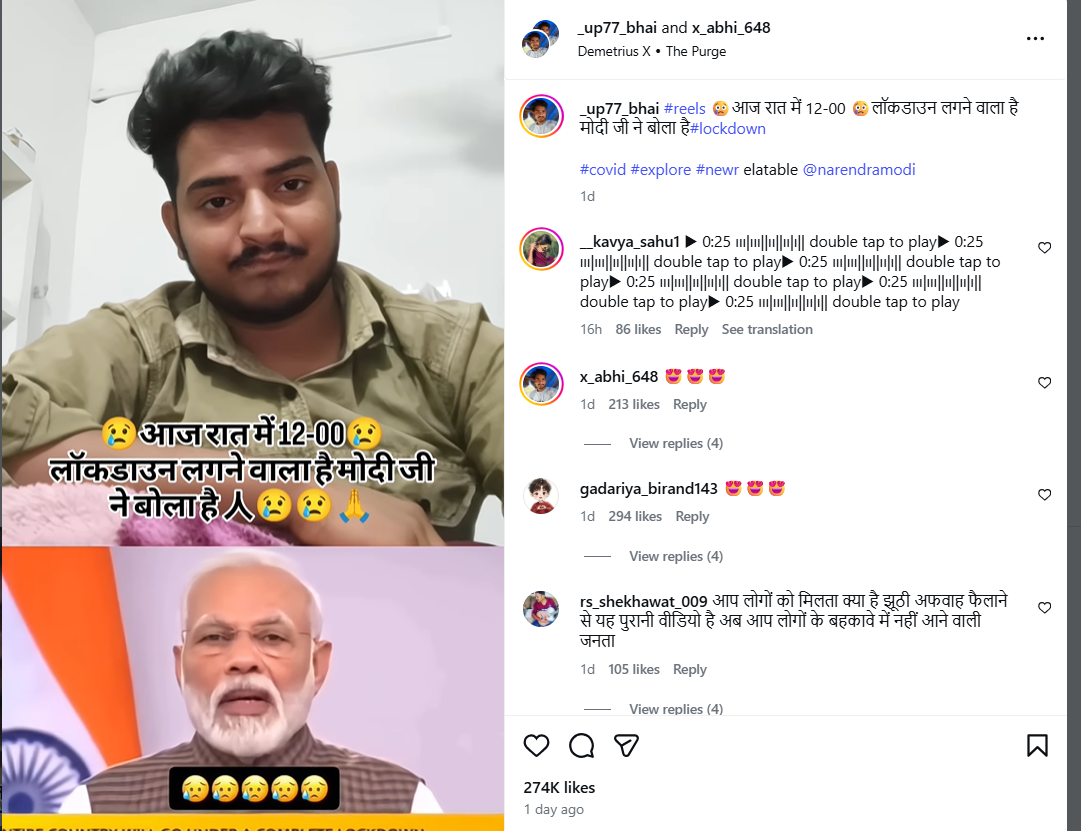
A video is being shared on social media in which Prime Minister Narendra Modi can be heard saying that “a complete lockdown will be imposed from midnight to save the country.” Research by the CyberPeace found the viral claim to be misleading. Our probe revealed that the video is from March 2020, when PM Modi had announced a nationwide lockdown to curb the spread of COVID-19.
Claim:
An Instagram user shared the viral video on March 25, 2026. The link and archive link of the post are given below.
Fact Check:
To verify the claim, we conducted a keyword search on Google. However, we did not find any credible media reports confirming that such a lockdown announcement had been made recently. We then extracted keyframes from the viral video and performed a reverse image search using Google Lens. During this process, we found the same video on a YouTube channel, where it had been uploaded on March 24, 2020.
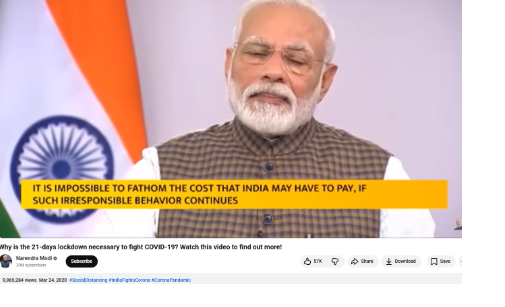
The viral portion of the clip appears around the 40-second mark in the original video.
Conclusion:
Our research found that the viral video is not recent. It dates back to March 24, 2020, when PM Modi announced a nationwide lockdown during the COVID-19 pandemic. The clip is being shared with a misleading claim.

Related Blogs
.webp)
Introduction
The rise of misinformation, disinformation, and synthetic media content on the internet and social media platforms has raised serious concerns, emphasizing the need for responsible use of social media to maintain information accuracy and combat misinformation incidents. With online misinformation rampant all over the world, the World Economic Forum's 2024 Global Risk Report, notably ranks India amongst the highest in terms of risk of mis/disinformation.
The widespread online misinformation on social media platforms necessitates a joint effort between tech/social media platforms and the government to counter such incidents. The Indian government is actively seeking to collaborate with tech/social media platforms to foster a safe and trustworthy digital environment and to also ensure compliance with intermediary rules and regulations. The Ministry of Information and Broadcasting has used ‘extraordinary powers’ to block certain YouTube channels, X (Twitter) & Facebook accounts, allegedly used to spread harmful misinformation. The government has issued advisories regulating deepfake and misinformation, and social media platforms initiated efforts to implement algorithmic and technical improvements to counter misinformation and secure the information landscape.
Efforts by the Government and Social Media Platforms to Combat Misinformation
- Advisory regulating AI, deepfake and misinformation
The Ministry of Electronics and Information Technology (MeitY) issued a modified advisory on 15th March 2024, in suppression of the advisory issued on 1st March 2024. The latest advisory specifies that the platforms should inform all users about the consequences of dealing with unlawful information on platforms, including disabling access, removing non-compliant information, suspension or termination of access or usage rights of the user to their user account and imposing punishment under applicable law. The advisory necessitates identifying synthetically created content across various formats, and instructs platforms to employ labels, unique identifiers, or metadata to ensure transparency.
- Rules related to content regulation
The Information Technology (Intermediary Guidelines and Digital Media Ethics Code) Rules, 2021 (Updated as on 6.4.2023) have been enacted under the IT Act, 2000. These rules assign specific obligations on intermediaries as to what kind of information is to be hosted, displayed, uploaded, published, transmitted, stored or shared. The rules also specify provisions to establish a grievance redressal mechanism by platforms and remove unlawful content within stipulated time frames.
- Counteracting misinformation during Indian elections 2024
To counter misinformation during the Indian elections the government and social media platforms made their best efforts to ensure the electoral integrity was saved from any threat of mis/disinformation. The Election Commission of India (ECI) further launched the 'Myth vs Reality Register' to combat misinformation and to ensure the integrity of the electoral process during the general elections in 2024. The ECI collaborated with Google to empower the citizenry by making it easy to find critical voting information on Google Search and YouTube. In this way, Google has supported the 2024 Indian General Election by providing high-quality information to voters and helping people navigate AI-generated content. Google connected voters to helpful information through product features that show data from trusted institutions across its portfolio. YouTube showcased election information panels, featuring content from authoritative sources.
- YouTube and X (Twitter) new ‘Notes Feature’
- Notes Feature on YouTube: YouTube is testing an experimental feature that allows users to add notes to provide relevant, timely, and easy-to-understand context for videos. This initiative builds on previous products that display helpful information alongside videos, such as information panels and disclosure requirements when content is altered or synthetic. YouTube clarified that the pilot will be available on mobiles in the U.S. and in the English language, to start with. During this test phase, viewers, participants, and creators are invited to give feedback on the quality of the notes.
- Community Notes feature on X: Community Notes on X aims to enhance the understanding of potentially misleading posts by allowing users to add context to them. Contributors can leave notes on any post, and if enough people rate the note as helpful, it will be publicly displayed. The algorithm is open source and publicly available on GitHub, allowing anyone to audit, analyze, or suggest improvements. However, Community Notes do not represent X's viewpoint and cannot be edited or modified by their teams. A post with a Community Note will not be labelled, removed, or addressed by X unless it violates the X Rules, Terms of Service, or Privacy Policy. Failure to abide by these rules can result in removal from accessing Community Notes and/or other remediations. Users can report notes that do not comply with the rules by selecting the menu on a note and selecting ‘Report’ or using the provided form.
CyberPeace Policy Recommendations
Countering widespread online misinformation on social media platforms requires a multipronged approach that involves joint efforts from different stakeholders. Platforms should invest in state-of-the-art algorithms and technology to detect and flag suspected misleading information. They should also establish trustworthy fact-checking protocols and collaborate with expert fact-checking groups. Campaigns, seminars, and other educational materials must be encouraged by the government to increase public awareness and digital literacy about the mis/disinformation risks and impacts. Netizens should be empowered with the necessary skills and ability to discern fact and misleading information to successfully browse true information in the digital information age. The joint efforts by Government authorities, tech companies, and expert cyber security organisations are vital in promoting a secure and honest online information landscape and countering the spread of mis/disinformation. Platforms must encourage netizens/users to foster appropriate online conduct while using platforms and abiding by the terms & conditions and community guidelines of the platforms. Encouraging a culture of truth and integrity on the internet, honouring differing points of view, and confirming facts all help to create a more reliable and information-resilient environment.
References:
- https://www.meity.gov.in/writereaddata/files/Advisory%2015March%202024.pdf
- https://blog.google/intl/en-in/company-news/outreach-initiatives/supporting-the-2024-indian-general-election/
- https://blog.youtube/news-and-events/new-ways-to-offer-viewers-more-context/
- https://help.x.com/en/using-x/community-notes

CyberPeace and Suraksha Catalyst: Building the Next Chapter of Indo-US Cybersecurity Collaboration
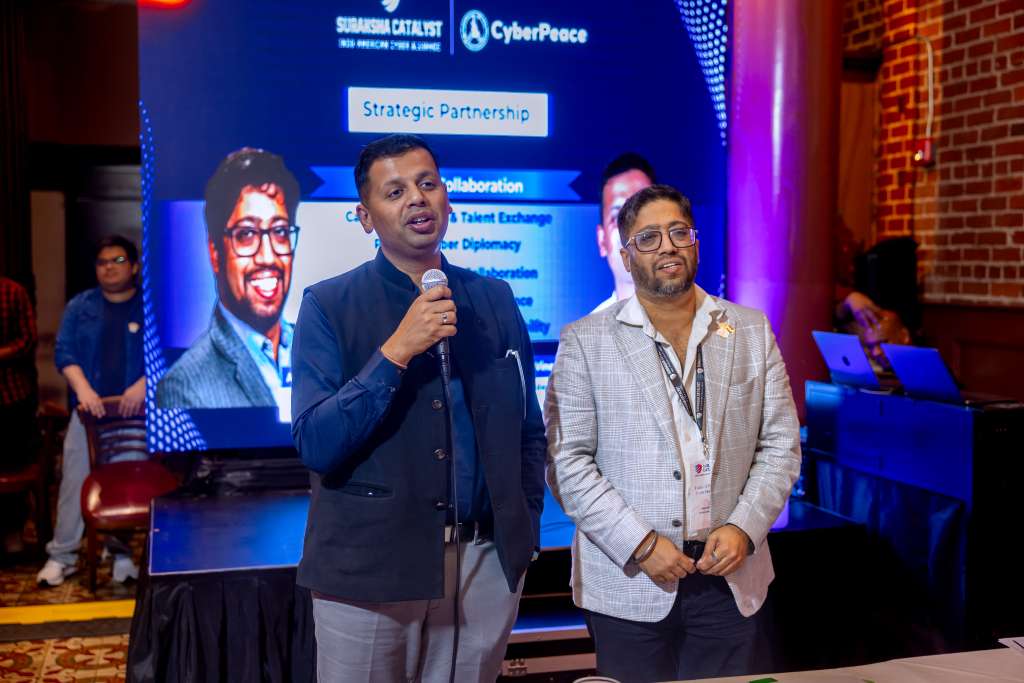
Some partnerships are transactional. Others are declarations of intent. The Memorandum of Understanding signed between CyberPeace and Suraksha Catalyst at the Indo-US Cyber Conclave 2026, held alongside the RSA Conference in San Francisco, belongs unmistakably to the latter category.
It represents more than two organisations agreeing to work together. It brings together two complementary approaches to cybersecurity—CyberPeace ’s community-centred mission and Suraksha Catalyst’s enterprise and Indo-US cybersecurity ecosystem—with a shared ambition to turn collaboration into measurable impact.
Why This Collaboration Is More Than Symbolic
It would be easy to view an MoU signed at a marquee international event as a ceremonial gesture. But the significance of this collaboration lies in what both organisations bring to the table.
CyberPeace brings deep experience in building cyber resilience across communities, institutions, students and other stakeholders. Its approach recognises that cybersecurity is not only a technical challenge; it is also a question of awareness, education, trust and collective responsibility.
Suraksha Catalyst brings a strong connection to cybersecurity leaders, industry and the broader Indo-American technology ecosystem. Its work helps create pathways between cybersecurity practitioners, enterprises, emerging innovators and strategic stakeholders.
Together, these capabilities create a bridge between community resilience and enterprise-grade cybersecurity, connecting education and awareness with industry exposure, mentorship and practical implementation.
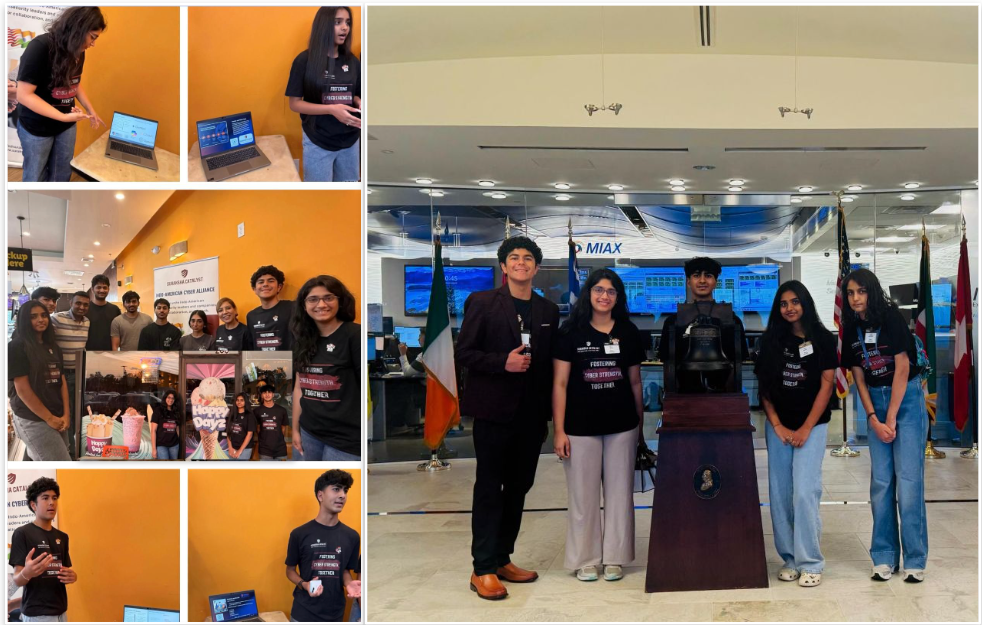
The collaboration is already reflected in the NJ Youth Chapter Mentoring Program, which focuses on inspiring high school students to pursue cybersecurity careers while empowering them to strengthen cyber resilience in their own communities. The programme brings together industry mentors and young learners through a structured five-week journey.
This makes the partnership tangible: rather than limiting collaboration to institutional dialogue, it creates opportunities for young people to learn from cybersecurity professionals and then apply that knowledge in real-world environments.
Two Different Roads to the Same Frontier
CyberPeace has built its approach around the idea that a safer digital world requires participation from multiple layers of society. Its work extends beyond cybersecurity professionals to students, educators, communities and institutions.
Suraksha Catalyst approaches the same challenge through the industry and enterprise ecosystem, creating connections among cybersecurity leaders and organisations across India and the United States.
These different starting points converge around a common principle: cybersecurity resilience becomes stronger when knowledge, expertise and opportunity move across institutional boundaries.
The NJ Youth Chapter Mentoring Program is a strong example of this convergence.
Its first pillar, Mentor Connect, connects high school students with CISOs and security practitioners through weekly 30-minute virtual mentoring sessions. Its second pillar, Community Cyber Corps, encourages students to take what they learn and use it to raise cybersecurity awareness among local small businesses.
The model therefore moves beyond conventional mentoring. Students are not simply receiving knowledge; they are being encouraged to transform that knowledge into community impact.
From Mentoring to Real-World Experience
The programme follows a five-week journey, beginning with virtual mentoring, progressing to a business visit and concluding with a share-and-reflect phase.
This structure provides students with multiple dimensions of exposure:
Learn → Experience → Apply → Reflect
During the programme, participants engage with practical cybersecurity and AI topics including:
- Passwords and passkeys
- Responsible AI use
- AI-enabled phishing
- Patching and software updates
- Deepfake and voice fraud
- Network and Wi-Fi hygiene
- Incident response
- Prompt injection basics
- Vendor and supply-chain risk
These are not presented merely as theoretical cybersecurity concepts. Students are encouraged to understand how such risks manifest in everyday organisational environments and how individuals and businesses can respond.
Turning Young Learners into Community Cyber Ambassadors
Perhaps the most important dimension of the initiative is its emphasis on community impact.
As part of the programme, mentees put their learning into practice by leading a hands-on AI and cybersecurity workshop for employees at a local business. They explored the cyber threat landscape, social engineering, safe browsing and responsible AI, while also gaining experience communicating cybersecurity concepts to a real business audience.
This creates a valuable two-way impact.
Students gain practical experience, confidence and exposure to professional cybersecurity environments. At the same time, local businesses receive access to cybersecurity and AI awareness guidance.
The underlying idea is simple but powerful: when young people are given both knowledge and the opportunity to lead, cybersecurity awareness can travel beyond the classroom and into the wider community.
Inside the Security Operations Center
The programme also provides participants with direct exposure to enterprise security operations.
During an SOC visit, mentees experienced cybersecurity and physical security operations firsthand, observed live threat dashboards and learned how access and infrastructure are secured. Industry professionals also walked them through their day-to-day responsibilities and answered their questions.
For students considering cybersecurity as a career, such exposure can make an otherwise abstract career path tangible. Seeing security professionals operate in real environments helps connect classroom learning with the realities of enterprise cybersecurity.
The Bigger Message
The partnership between CyberPeace and Suraksha Catalyst therefore carries a message that extends beyond the signing of an MoU.
Cybersecurity's most difficult challenges—from protecting communities and young people to strengthening businesses and developing the next generation of cybersecurity professionals—cannot be addressed by a single sector working independently.
They require civil society's reach, industry's expertise, mentors' experience and young people's energy to move in the same direction.
For CyberPeace collaboration with Suraksha Catalyst creates an opportunity to extend its mission of building a safer and more peaceful cyberspace into a broader Indo-US ecosystem.
For Suraksha Catalyst, the collaboration creates an opportunity to connect its industry-oriented ecosystem with community-level cybersecurity education and youth empowerment.
And for the students participating in initiatives such as the NJ Youth Chapter Mentoring Program, the partnership turns cybersecurity from something they simply study into something they can experience, communicate and apply.
From an MoU to a Movement
The real measure of this partnership will ultimately be what emerges from it: joint programmes, mentorship opportunities, community initiatives, knowledge exchange, research, capacity building and stronger connections between cybersecurity professionals and the next generation.
The NJ Youth Chapter Mentoring Program offers an early illustration of what that vision can look like in practice—industry mentors connecting with students, students engaging with real businesses, and young people taking cybersecurity knowledge back into their communities.
The Indo-US cybersecurity relationship is increasingly creating space for governments, enterprises, technology leaders, researchers, civil-society organisations and young innovators to contribute to a shared digital future.
The CyberPeace –Suraksha Catalyst collaboration adds another important layer to that ecosystem: connecting enterprise expertise with community resilience and youth empowerment.
Because the future of cybersecurity will not be shaped only by those who build the technology or defend the infrastructure. It will also be shaped by the people who learn, teach, mentor, question and carry that knowledge into the communities around them.
That is where this partnership has the potential to make its most meaningful contribution—not simply by signing an agreement, but by turning collaboration into capability, capability into confidence, and confidence into lasting cyber resilience.
Reference
- https://www.linkedin.com/posts/a-proud-milestone-for-suraksha-catalyst-share-7440575975614070784-THNR/
- https://surakshacatalyst.com/
- https://cyberpeace.org/
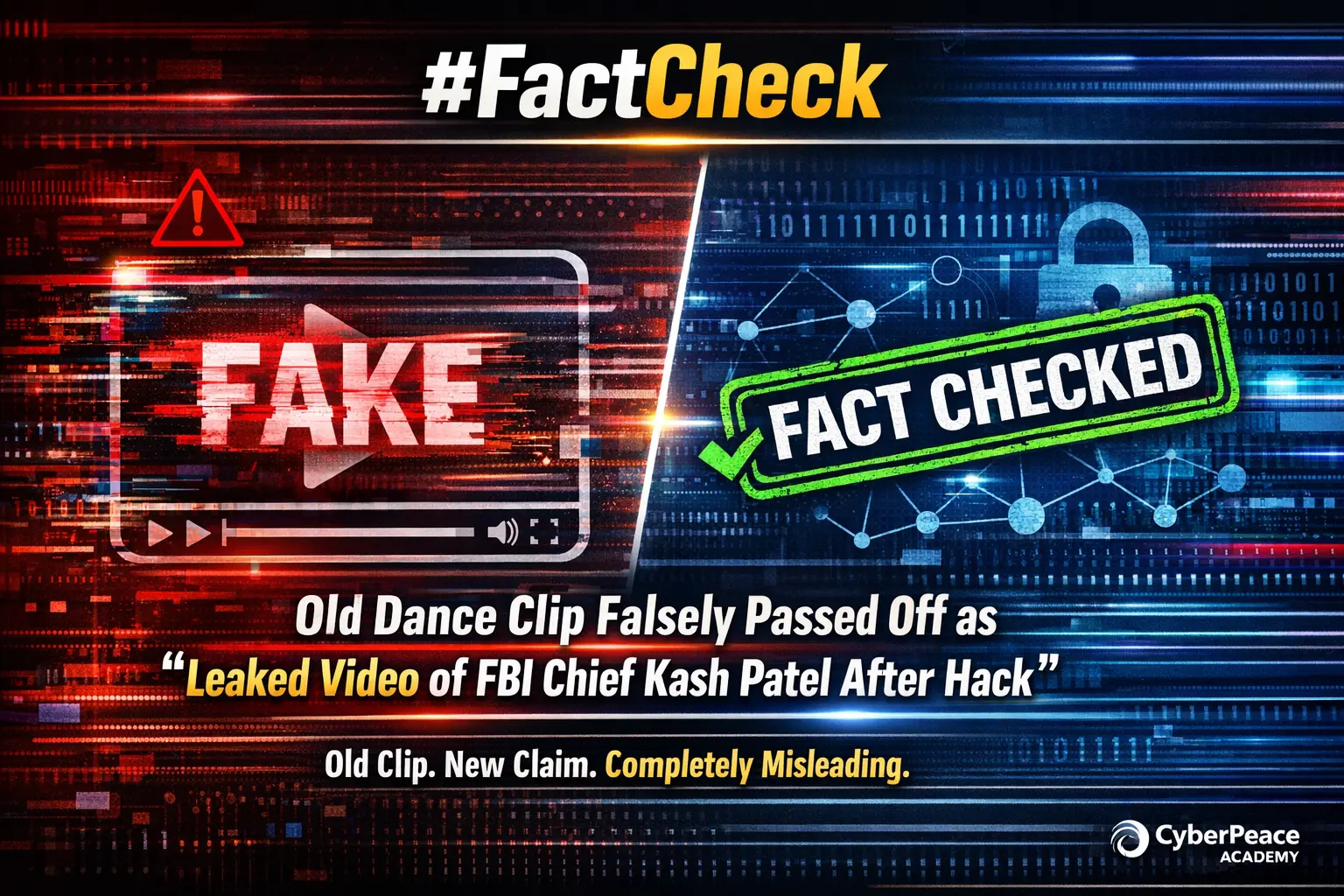
Executive Summary
A video is rapidly circulating on social media showing a man enthusiastically dancing to the Hindi song Sun Sahiba Sun. The clip is being shared with a sensational claim that it is a private video leaked from the hacked email account of FBI Director Kash Patel. In the video, a man can be seen dancing in a casual setting while people in the background cheer him on. Several users have linked the clip to an alleged cyberattack by Iran-linked hackers, attempting to connect it with ongoing international developments.
However, research by the CyberPeace found that the video has been available online since at least 2020. It also resurfaced in 2022, long before the current claims emerged. There is no connection between the video and Kash Patel or any hacking incident. Further research confirmed that the clip is not recent and has no link to any cybersecurity breach. In 2022, the same video had gone viral as a humorous post, with claims that the man was celebrating because his wife had temporarily gone to her maternal home.
Claim
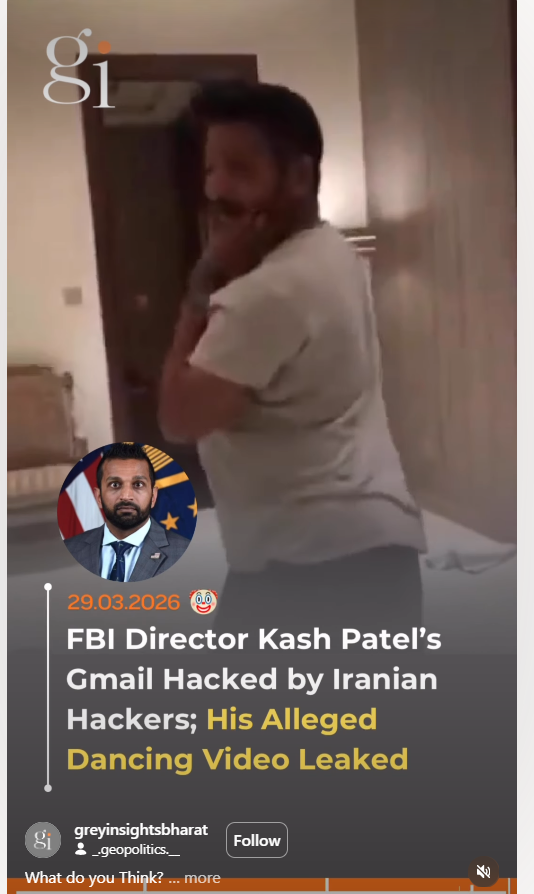
On March 29, 2026, an Instagram user named ‘greyinsightsbharat’ shared the video claiming it was leaked from Patel’s hacked Gmail account. The caption read:“FBI Director Kash Patel's Gmail Hacked by Iranian Hackers; His Alleged Dancing Video Leaked.”
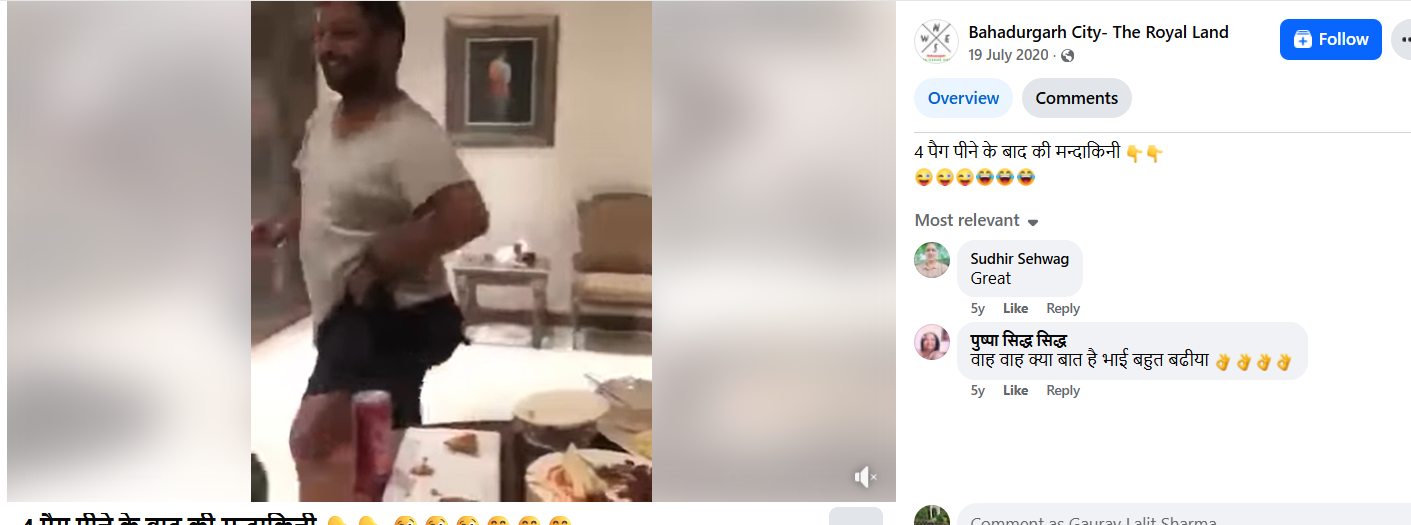
The research involved extracting keyframes from the video and conducting reverse image searches, which revealed that the same clip had been shared multiple times in the past with different, unrelated claims.
Fact Check
A reverse search also led to a December 2022 media report featuring the same visuals. According to that report, the video showed a man joyfully dancing to celebrate his wife’s temporary visit to her parental home.

Additionally, findings confirm that the footage has existed online since at least 2020 and has previously gone viral. The song featured in the clip is from the 1985 Bollywood film Ram Teri Ganga Maili, originally sung by legendary artist Lata Mangeshkar.
Conclusion:
The claim that the viral dance video is a leaked private clip of FBI Director Kash Patel is false and misleading. Verified findings show that the video has been available on the internet since at least 2020 and had already gone viral in 2022 in a completely different and humorous context. There is no evidence linking the clip to any recent cyberattack, email hack, or data breach involving Patel. The resurfacing of this old video with a fabricated narrative highlights how unrelated content is often repurposed to create sensational misinformation, especially during sensitive geopolitical situations. Users are advised to verify such claims through credible sources before sharing, as misleading posts like these can distort public understanding and spread confusion.
