
#FactCheck -No Evidence IPS Officer Ajay Pal Sharma Has Been Deputed to West Bengal for Five Years
Executive Summary
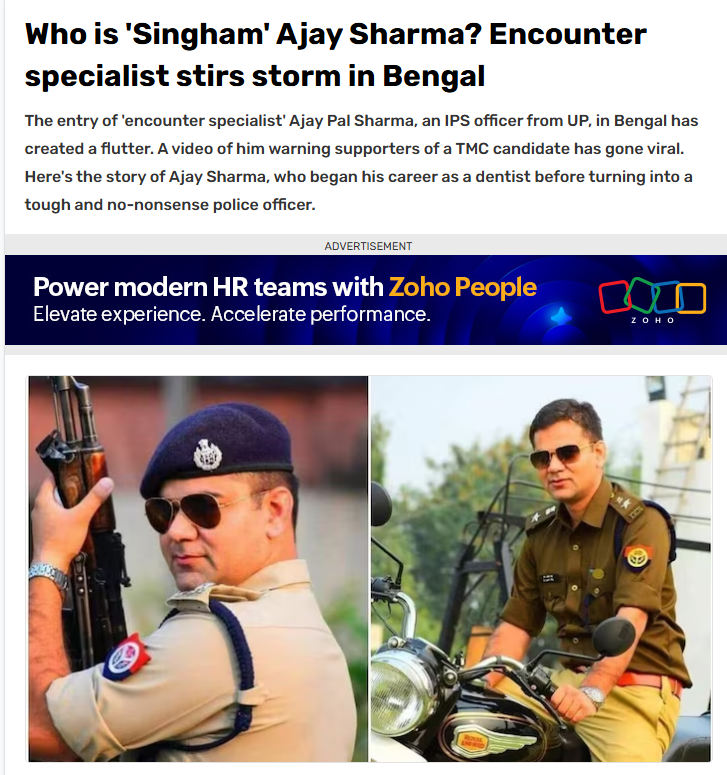
Ahead of the final phase of the West Bengal Assembly elections, a claim regarding Uttar Pradesh cadre IPS officer Ajay Pal Sharma began circulating widely on social media. Users claimed that Sharma was being sent to West Bengal on deputation for a period of five years. However, research conducted by CyberPeace Research Wing found the claim to be false. Sources close to the IPS officer confirmed that no such deputation order has been issued so far and that Ajay Pal Sharma is currently posted as Additional Commissioner in Prayagraj, Uttar Pradesh. Ajay Pal Sharma had earlier been deployed as a police observer during the West Bengal elections. During that period, a video of him warning Trinamool Congress candidate Jahangir Khan from the Falta constituency had gone viral on social media.
Claim
Several users on Facebook and X claimed that Ajay Pal Sharma had been transferred to West Bengal for five years under an administrative arrangement involving experienced officers from different states. One Facebook user wrote:“This decision has been taken under an administrative arrangement through which experienced officers are deployed in different states.”
- https://www.facebook.com/photo.php?fbid=818902764628152&set=a.296761956842238&type=3
- https://perma.cc/FD8Q-CF7L?type=standard

Fact Check
Our research found that the deputation claim is false. Ajay Pal Sharma is currently serving as Additional Commissioner in Prayagraj, a position he has held since 2025. Further scrutiny revealed that the claim appears to have originated from a parody account on X. On May 4, around 6 PM, the account @abdullah_0mar posted the claim regarding Sharma’s alleged five-year deputation to Bengal. However, in the comments section, the user later clarified that the post was intended as satire.

We also reviewed several news reports regarding Ajay Pal Sharma’s role during the West Bengal elections. Reports confirmed that the Election Commission had deployed him as a police observer in South 24 Parganas district during the polls. However, none of the reports mentioned any five-year transfer or deputation to West Bengal.
Conclusion
The viral claim is false. No official order has been issued regarding IPS officer Ajay Pal Sharma’s deputation to West Bengal for five years. Sources close to the officer confirmed that he continues to serve as Additional Commissioner in Prayagraj, Uttar Pradesh. Sharma had only been deputed as a police observer during the West Bengal Assembly elections, during which a video of him warning TMC candidate Jahangir Khan went viral online.

Related Blogs
Executive Summary
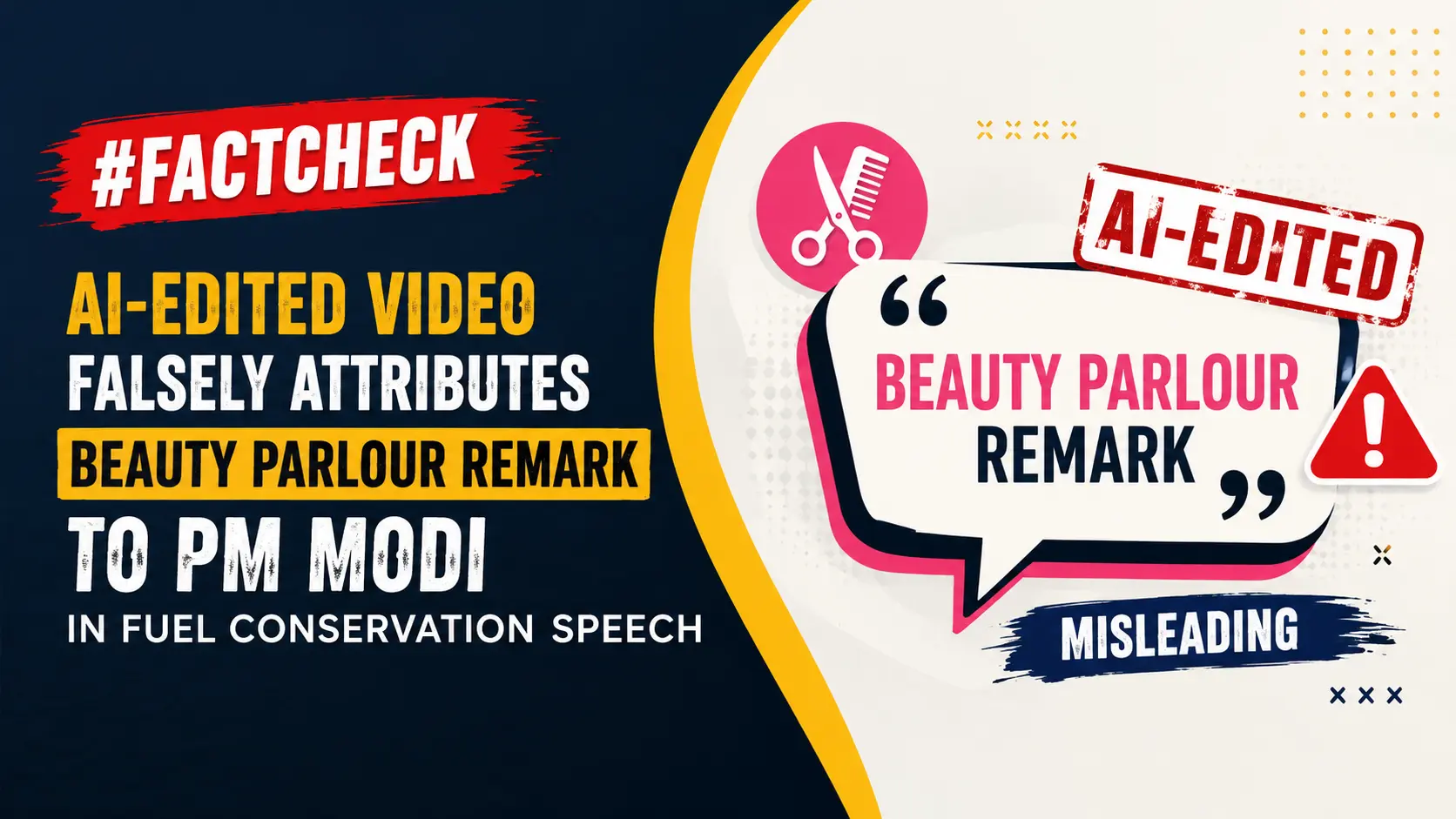
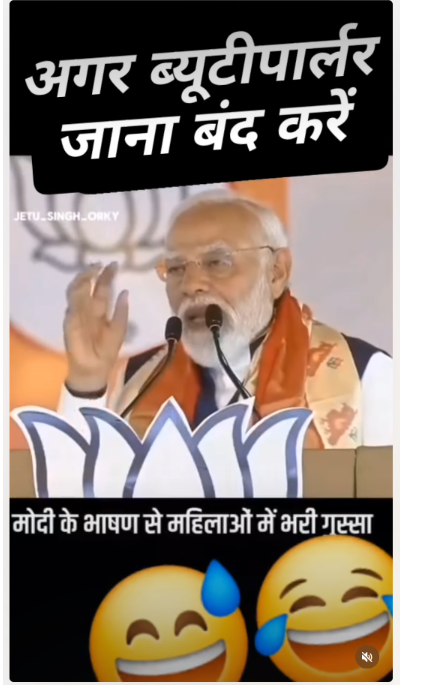
Amid ongoing tensions in West Asia, a video has been circulating on social media claiming that Prime Minister Narendra Modi urged women not to visit beauty parlours as part of an appeal related to fuel conservation. Users are widely sharing the clip as genuine. However, a fact-check by CyberPeace Research Wing has found the claim to be false. The research revealed that the original video, which discussed saving petrol, diesel and cooking gas, has been digitally edited using AI tools and shared with a misleading narrative.
Claim
An Instagram user shared the viral video on May 15, 2026, claiming that the Prime Minister advised women against visiting beauty parlours.
Fact Check
A keyword-based search on Google did not return any credible media reports supporting the viral claim. To verify the video, keyframes were extracted and run through reverse image search. The original footage was traced to the official YouTube channel of Prime Minister Narendra Modi, uploaded on May 10, 2026.
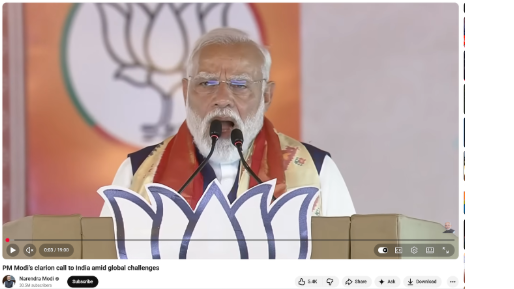
The video shows a rally held in Hyderabad, where the Prime Minister appealed to the public to save fuel by adopting work-from-home practices, promoting swadeshi goods, and refraining from purchasing gold for one year. However, nowhere in the full video is there any mention of advising women not to visit beauty parlours.
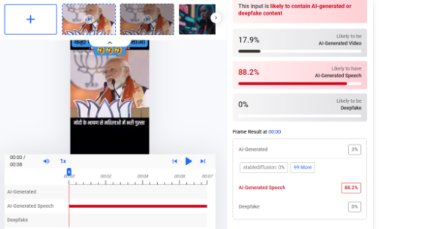
Further analysis also raised suspicion that the viral clip had been digitally altered using AI tools. The video was scanned using the HIVE Moderation AI detection tool, which indicated that it is approximately 88% likely to be AI-generated or manipulated.
Conclusion
The viral video is misleading. The original speech by Prime Minister Narendra Modi about conserving petrol, diesel and cooking gas has been edited using AI tools and circulated with a false claim targeting women visiting beauty parlours.
.webp)
Introduction
Meta Platforms is experiencing a long-term surge of lawsuits that not only question particular practices, but also the very design and governance of its platforms, across the United States and beyond. This range of privacy breaches to youth mental health damages and antitrust issues are all indicative of a new era of judicial, regulatory, and civil society scrutiny of the duties of big tech firms. The main question is no longer whether harmful content is placed on platforms, but to what extent they are actively creating harm-producing environments.
From Content to Conduct: A Turning Point in Legal Strategy
Over the years, Meta and other sites have depended on legal safeguards like the US Communications Decency Act, Section 230, which protects companies against liability due to user-created content. New ways of testing that protection are now being tried.
Recent incidents have shifted off the blame of particular content and has placed the emphasis on the design of the platform. Courts are becoming more receptive to consider whether the characteristics of infinite scroll, algorithmic amplification, and engagement-based ranking systems are contributing to quantifiable harm.
In March 2026, a California jury declared that Meta and Google were negligent in creating platforms that led to youth addiction and mental health problems. The jury decided that Meta and Google were to pay off a joint sum of 6 million dollars in damages, with 70 percent of the sum being charged on Meta. It is a bellwether case, which means that it is related to about 2,000 other pending cases by parents and school districts. This change is important as it avoids legal barriers. When the liability is linked to the design decisions instead of user-created content, accountability begins to shift.
The Youth Harm Cases: A Big Tobacco Moment
Social media are becoming the subject of increased scrutiny by courts and regulators as products that have quantifiable psychological impacts. The most impactful group of lawsuits against Meta is, perhaps, the one concerning youth mental health.
A day prior to the California verdict, a New Mexico jury ordered Meta to pay $375 million in damages due to failure to safeguard young users against child predators on Instagram and Facebook, and found that the company had lied to consumers about the safety of its products and violated state consumer protection laws.
Similar arguments have been presented in other lawsuits filed by attorneys general in over 30 states, and the cases reflect previous regulatory turning points in other industries such as tobacco. The question that courts are not merely asking is whether there is harm or not. They are questioning whether businesses were aware of creating systems that capitalize on behavioral weaknesses. It has been reported in internal documents and accounts of former employees that Meta made a profit by intentionally turning its platforms into addictions to children, with algorithmic functions tailored to drive users into engagement loops, maximising time on platform to the detriment of wellbeing.
Meta has refuted these characterisations, claiming that teen mental health is multifaceted and cannot be blamed on an individual app. The companies have indicated that they will appeal the verdicts.
Privacy and Data Misuse: An Ongoing Fault Line
Platform design is not the only issue that Meta faces in legal matters. Cases centered on privacy have been a recurrent problem in the last ten years, and previous cases have claimed that Facebook monitored users even after they have logged out, scanned personal messages, and utilized personal data in a manner that was beyond user expectations. In more recent times, in April 2026, a class action suit was filed claiming that WhatsApp messages were accessed by Meta employees and third-party contractors, despite the long-standing end-to-end encryption guarantees of the platform.
These instances indicate a structural problem that is consistent. Consent mechanisms and privacy policies tend to be out of date with the reality of data use, and the gap between legal compliance and what users actually know or expect.
Antitrust: A Win, But Not a Clean One
One of the legal fronts was Meta all the way. In November 2025, a judge in the US District Court, James Boasberg, declared that Meta was not a social networking monopoly, finding that the FTC did not demonstrate that the acquisitions of Instagram and WhatsApp by the company were against the antitrust law. The decision has since been appealed by the FTC, which continues to argue that "Meta broke our antitrust laws by acquiring Instagram and WhatsApp, and that American consumers have been harmed by it.
The case also demonstrates a significant drawback of the antitrust law as a form of regulation of tech companies. By the time the trial occurred five years after the lawsuit was initiated, the social media market had evolved such that Tik Tok was a major competitor, undermining the market definition claims of the FTC. The structural issue of whether a few platforms are too powerful in the communication of the masses is not answered, although the legal claim in this instance might have been unsuccessful.
Policy Takeaways: What This Means Going Forward
The accumulating number of lawsuits against Meta provides a number of valuable lessons to policymakers.
- Platform design has become a regulatory topic. Laws should go beyond content regulation and deal with the construction of systems. Engagement maximising features can also increase harm, and this trade-off must be governed explicitly.
- Transparency should be mandatory and not discretionary. Privacy policies and disclosures on platforms are usually too complicated or ambiguous. Regulators might be required to make more transparent and standardised disclosures regarding the use of data and the operation of recommendation systems.
- Section 230 safeguards are under reinterpretation. Courts are becoming open to restrict immunity in cases where the harm is associated with the conduct of the platform and not the content of the user. This would redefine the law of all digital platforms, and not only Meta.
- Cross-border coordination is needed. Meta is an international company, yet the regulatory reaction is still divided. This will require more coordination among jurisdictions to guarantee uniform enforcement and to eliminate regulatory arbitrage.
Conclusion
The lawsuits of Meta are not single cases. They are a more general reconsideration of the regulation of digital platforms and the accountability of those responsible when design decisions have harm at scale. In the wider context of the technology ecosystem, the implications are structural. Courts are starting to question not only what is hosted on them, but how they work and why they are constructed in the manner they are.
The age of minimal responsibility is being supplanted by a more challenging requirement: that platforms should foresee, quantify, and alleviate the harms they produce. The result of these cases will not only decide the future of Meta in terms of legal matters. They will influence the regulations of the digital economy in the years to come.
References
- https://www.npr.org/2026/03/25/nx-s1-5746125/meta-youtube-social-media-trial-verdict
- https://www.pbs.org/newshour/show/jury-finds-meta-and-youtube-liable-in-landmark-youth-addiction-case
- https://www.cbsnews.com/news/meta-ftc-whatsapp-instagram/
- https://www.cnbc.com/2026/01/20/ftc-appeals-metaruling-antitrust-instagram-whatsapp.html
- https://www.bbc.com/news/articles/czjw0zgz9zyo

Introduction
India & Bangladesh have adopted proactive approaches, focusing on advancing cyber capacity building in the region. Bangladeshi and Indian cybersecurity experts have emphasised the importance of continuous technology training to protect the digital space from growing cyber-attacks and threats. They call for greater collaboration to share knowledge and expertise in cyber resilience, network vulnerability, and cyber risk assessment. The Cyber-Maitree 2023 event held in Dhaka aimed to enrich and build capacity to counter cyber-attacks and threats. The senior director of India's Computer Emergency Response Team acknowledged the growing dependence on cyberspace and the need for increased preparedness as critical infrastructures, energy systems, banks, and utilities are connected to the internet. Recently, Bangladesh Cyber Security Summit 2024, organised by Grameenphone, was held in Dhaka on March 5th, 2024. Such collaborative dialogues between the countries serve as a shining example of cooperation between the governments of Bangladesh and India, serving as a platform for knowledge sharing, capacity building, and international cooperation in cyber security.
Cyber Maitree held in 2023
In 2023, India and Bangladesh held 'Cyber Maitree 2023', an initiative hosted by the ICT Division of the Bangladeshi Government, to address cybersecurity challenges in a rapidly globalising world characterised by digitisation. The event, which translates to "Cyber Friendship," was an interface for cybersecurity experts and aspirants from both nations, creating an avenue for extensive training, practical exercises, and a dynamic exchange of information. We need to emphasise the importance of bolstering digital safety as both nations grapple with the rapid digitisation of the world.
India-Bangladesh joint efforts aim to fortify cyber resilience, pinpoint potential network vulnerabilities, bolster rigorous risk assessments, and illuminate the landscape of cyber threats. It encompasses various sectors, including cybersecurity, artificial intelligence, ICT, and IT-driven human resource expansion. The growing camaraderie between India and Bangladesh has been evident through strategic engagements, such as the India-Bangladesh Startup Bridge and the establishment of 12 High Tech Parks in Bangladesh.
Highlights of the India-Bangladesh MoUs for Cyber Security Cooperation
In 2017, India and Bangladesh signed a Memorandum of Understanding (MoU) focused on cyber security cooperation.
In 2022, Both nations crafted a Memorandum of Understanding (MoU), highlighting collaboration in spheres such as e-governance, e-public service delivery, research, and development. A separate agreement was also inked focusing on mutual information sharing pertaining to cyber-attacks and incidents. The first MoU aims to provide a framework for training Bangladesh Railway employees at Indian Railways' training institutes, including field visits. The Indian Railways will coordinate with officials from the Ministry of Railways, Government of Bangladesh to improve training facilities in Bangladesh. The second MoU focuses on collaboration in IT systems, for the Bangladesh Railway. The Ministry of Railway, Government of India, will offer IT solutions for passenger ticketing, freight operations, train inquiry systems, asset management digitisation, HR and finance infrastructure. The MoUs aim to strengthen the friendship bond between India and Bangladesh and promote friendly cooperation in the railway sector.
Way Ahead
Zunaid Ahmed Palak, State Minister for Posts, Telecom and ICT, Bangladesh, has announced that Bangladesh and India will collaborate to ensure the safety of the cyber world. The two countries are expected to sign a final agreement within the next three to six months. He stressed the importance of attracting investments in the postal, telecommunication, and IT sectors. He also highlighted the strong ties between Bangladesh and India. He also announced that 12 high-tech parks will be constructed in Bangladesh with an Indian Line of Credit, starting operation by 2025. He further referred to the Indian Cyber Emergency Response Team (CERT), and said "We are very much enthusiastic in fighting against the cyber attacks and crimes as the team is now working with us".
Bangladesh Cyber Security Summit 2024
The Bangladesh Cyber Security Summit 2024, organised by Grameenphone, was held in Dhaka on 5th March 2024, focusing on cybersecurity issues and opportunities, fostering collaboration between government, private organisations, industry experts, and sponsors investing in Bangladesh's digital future.
Conclusion
India and Bangladesh share a common vision for a secure digital future, focusing on cybersecurity collaboration to safeguard shared aspirations and empower nations to thrive in the digital age. We must emphasise the need to fortify digital defenses, leveraging expertise, innovation, and collaboration to secure interconnected futures. Collaborative relations in Information and Communication Technology and Cyber Security will strengthen digital defense and establish cyber resilience.
References:
- https://caribbeannewsglobal.com/bangladesh-and-india-call-for-more-cyber-security-training/?amp=1
- https://www.indianewsnetwork.com/en/20231005/bangladesh-and-india-strengthen-ties-through-cyber-maitree-2023
- https://www.bssnews.net/news-flash/150763
- https://digibanglatech.news/english/bangladesh-english/125439/
- https://www.mea.gov.in/Portal/LegalTreatiesDoc/BG17B3024.pdf
- https://digibanglatech.news/english/bangladesh-english/125439/
- https://www.tbsnews.net/tech/ict/bangladesh-india-work-together-cyber-security-palak-712182
