
#FactCheck -Deepfake Audio Misuses Old Jaishankar Podcast to Fabricate False Claims About “Operation Sindoor”
Executive Summary
A deepfake video is being widely circulated on social media with a false claim that External Affairs Minister S. Jaishankar admitted in a podcast interview that India was surprised by Pakistan’s counter-response during “Operation Sindoor” and suffered some losses. However, a fact-check by CyberPeace Research Wing has found the claim to be fake. The research shows that AI-generated audio has been used to misrepresent the External Affairs Minister’s remarks.
Claim
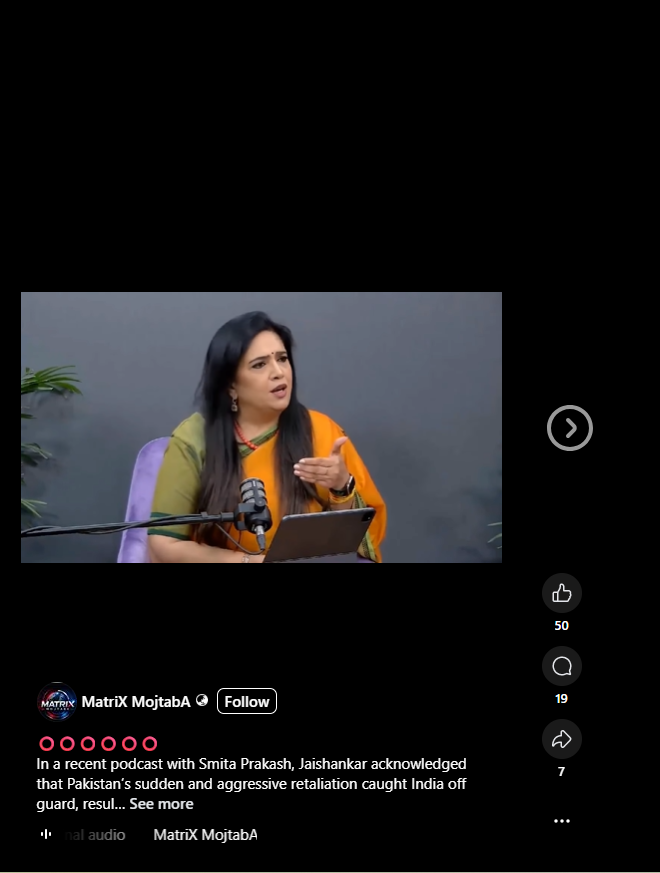
A Facebook user shared the viral video claiming that in a recent podcast with journalist Smita Prakash, Jaishankar admitted that Pakistan’s aggressive response during Operation Sindoor had caught India off guard.
Fact Check
A review of the original interview on ANI’s YouTube channel shows that the conversation between Smita Prakash and S. Jaishankar was uploaded on May 24, 2024—well before Operation Sindoor.
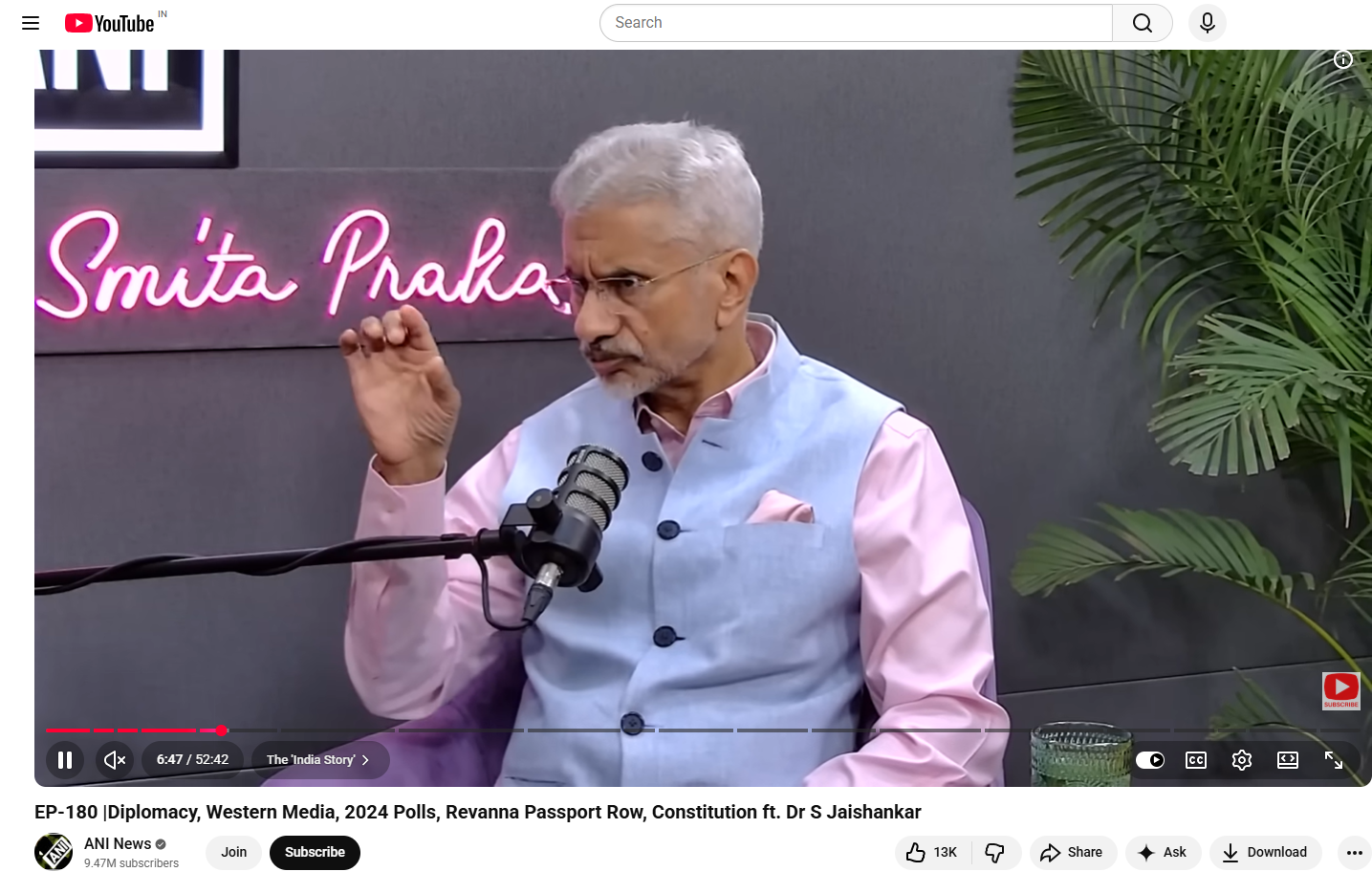
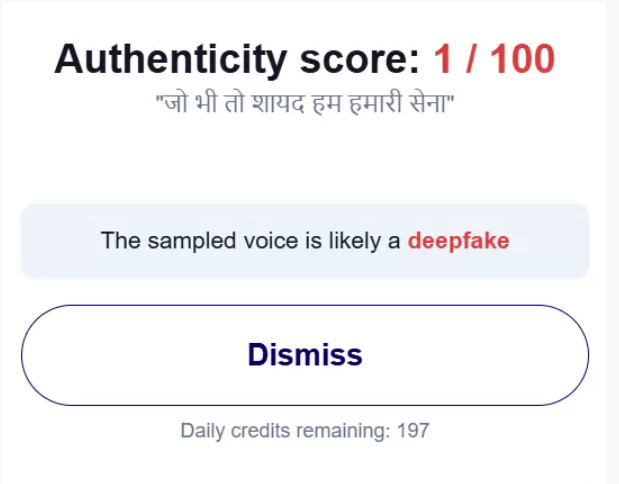
Operation Sindoor reportedly began on May 7, 2025. In the original video, there is no mention of Operation Sindoor or any Pakistani counter-response, making the viral claim baseless. Further analysis using AI detection tools such as Hive Moderation and Hiya indicated that the audio in the viral clip is likely AI-generated, suggesting manipulation of the original content.
Conclusion
The viral video is fake. AI-generated audio has been used to alter an old interview and falsely attribute statements to External Affairs Minister S. Jaishankar.

Related Blogs

Introduction
The role of ‘Small and Medium Enterprises’ (SMEs) in the economic and social development of the country is well established. The SME sector is often driven by individual creativity and innovation. With its contribution at 8% of the country’s GDP, and 45% of the manufactured output and 40% of its exports, SMEs provide employment to about 60 million persons through over 26 million enterprises producing over six thousand products.
It would be an understatement to say that the SMEs sector in India is highly heterogeneous in terms of the size of the enterprises, variety of products and services produced and the levels of technology employed. With the SME sector booming across the country, these enterprises are contributing significantly to local, state, regional and national growth and feeding into India’s objectives of inclusive, sustainable development.
As the digital economy expands, SMEs cannot be left behind and must integrate online to be able to grow and prosper. This development is not without its risks and cybersecurity concerns and digital threats like misinformation are fast becoming a pressing pain point for the SME sector. The unique challenge posed to SMEs by cyber threats is that while the negative consequences of digital risks are just as damaging for the SMEs as they are for larger industries, the former’s ability to counter these threats is not at par with the latter, owing to the limited nature of resources at their disposal. The rapid development of emerging technologies like artificial intelligence makes it easier for malicious actors to develop bots, deepfakes, or other forms of manipulated content that can steer customers away from small businesses and the consequences can be devastating.
Misinformation is the sharing of inaccurate and misleading information, and the act can be both deliberate and unintentional. Malicious actors can use fake reviews, rumours, or false images to promote negative content or create backlash against a business’ brand and reputation. For a fledgling or growing enterprise, its credibility is a critical asset and any threat to the same is as much a cause for concern as any other operational hindrance.
Relationship Building to Counter Misinformation
We live in a world that is dominated by brands. A brand should ideally inspire trust. It is the single most powerful and unifying characteristic that embodies an organisation's culture and values and once well-established, can create incremental value. Businesses report industry rumours where misinformation resulted in the devaluation of a product, sowing mistrust among customers, and negatively impacting the companies’ revenue. Mitigating strategies to counter these digital downsides can include implementing greater due diligence and basic cyber hygiene practices, like two-factor or multi-factor authentication, as well as open communication of one’s experiences in the larger professional and business networks.
The loss of customer trust can be fatal for a business, and for an SME, the access to the scale of digital and other resources required to restore reputations may simply not be a feasible option. Creating your brand story is not just the selling pitch you give to customers and investors, but is also about larger qualitative factors such as your own motivation for starting the enterprise or the emotional connection your audience base enjoys with your organisation. The brand story is a mosaic of multiple tangible and intangible elements that all come together to determine how the brand is perceived by its various stakeholders. Building a compelling and fortified brand story which resonates deeply with people is an important step in developing a robust reputation. It can help innoculate against several degrees of misinformation and malicious attempts and ensure that customers continue to place their faith in the brand despite attempts to hurt this dynamic.
Engaging with the target audience, ie, the customer base is part of an effective marketing tool and misinformation inoculation strategy. SMEs should also continuously assess their strategies, adapt to market changes, and remain agile in their approach to stay competitive and relevant in today's dynamic business environment. These strategies will lead to greater customer engagement through the means of feedback, reviews and surveys which help in building trust and loyalty. Innovative and dynamic customer service engages the target audience and helps in staying in the competition and being relevant.
Crisis Management and Response
Having a crisis management strategy is an important practice for all SMEs and should be mandated for better policy implementation. Businesses need greater due diligence and basic cyber hygiene practices, like two-factor authentication, essential compliances, strong password protocols, transparent disclosure, etc.
The following steps should form part of a crisis management and response strategy:
- Assessing the damage by identifying the misinformation spread and its impact is the first step.
- Issuing a response in the form of a public statement by engaging the media should precede legal action.
- Two levels of communication need to take place in response to a misinformation attack. The first tier is internal, to the employees and it should clarify the implications of the incident and the organisation’s response plan. The other is aimed at customers via direct outreach to clarify the situation and provide accurate information in regard to the matter. If required the employees can be provided training related to the handling of the customer enquiries regarding the misinformation.
- The digital engagement of the enterprise should be promptly updated and social media platforms and online communications must address the issue and provide clarity and factual information.
- Immediate action must include a plan to rebuild reputations and trust by ensuring customers of the high quality of products and services. The management should seek customer feedback and show commitment to improving processes and transparency. Sharing positive testimonials and stories of satisfied customers can also help at this stage.
- Engaging with the community and collaborating with organisations is also an important part of crisis management.
While these steps are for rebuilding and crisis management, further steps also need to be taken:
- Monitoring customer sentiment and gauging the effectiveness of the efforts taken is also necessary. And if required, strategic adjustments can be made in response to the evolving circumstances.
- Depending on the severity of the impact, management may choose to engage the professional help of PR consultants and crisis management experts to develop comprehensive recovery plans and help navigate the situation.
- A long-term strategy which focuses on building resilience against future attacks is important. Along with this, engaging in transparency and proactive communication with stakeholders is a must.
Legal and Ethical Considerations
SMEs administrators must prioritise ethical market practices and appreciate that SMEs are subject to laws which deal with defamation, intellectual property rights- trademark and copyright infringement in particular, data protection and privacy laws and consumer protection laws. Having the knowledge of these laws and ensuring that there is no infringement upon the rights of other enterprises or their consumers is integral in order to continue engaging in business legally.
Ethical and transparent business conduct includes clear and honest communication and proactive public redressal mechanisms in the event of misinformation or mistakes. These efforts go a long way towards building trust and accountability.
Proactive public engagement is an important step in building relationships. SMEs can engage with the community where they conduct their business through outreach programs and social media engagement. Efforts to counter misinformation through public education campaigns that alert customers and other stakeholders about misinformation serve the dual purpose of countering misinformation and creating deep community ties. SME administrators should monitor content and developments in their markets and sectors to ensure that their marketing practices are ethical and not creating or spreading misinformation, be it in the form of active sensationalising of existing content or passive dissemination of misinformation created by others. Fact-checking tools and expert consultations can help address and prevent a myriad of problems and should be incorporated into everyday operations.
Conclusion
Developing strong cybersecurity protocols, practising basic digital hygiene and ensuring regulatory compliances are crucial to ensure that a business not only survives but also thrives. Therefore, a crisis management plan and trust-building along with ethical business and legal practices go a long way in ensuring the future of SMEs. In today's digital landscape, misinformation is pervasive, and trust has become a cornerstone of successful business operations. It is the bedrock of a resilient and successful SME. By implementing and continuously improving trust-building efforts, businesses can not only navigate the challenges of misinformation but also create lasting value for their customers and stakeholders. Prioritising trust ensures long-term growth and sustainability in an ever-evolving digital landscape.
References
- https://SME.gov.in/sites/default/files/SME-Strategic-Action-Plan.pdf
- https://carnegieendowment.org/research/2024/01/countering-disinformation-effectively-an-evidence-based-policy-guide?lang=en
- https://dcSME.gov.in/Report%20of%20Expert%20Committee%20on%20SMEs%20-%20The%20U%20K%20Sinha%20Committee%20constitutes%20by%20RBI.pdf
Executive Summary
A dramatic video showing several people jumping from the upper floors of a building into what appears to be thick snow has been circulating on social media, with users claiming that it captures a real incident in Russia during heavy snowfall. In the footage, individuals can be seen leaping one after another from a multi-storey structure onto a snow-covered surface below, eliciting reactions ranging from amusement to concern. The claim accompanying the video suggests that it depicts a reckless real-life episode in a snow-hit region of Russia.
A thorough analysis by CyberPeace confirmed that the video is not a real-world recording but an AI-generated creation. The footage exhibits multiple signs of synthetic media, including unnatural human movements, inconsistent physics, blurred or distorted edges, and a glossy, computer-rendered appearance. In some frames, a partial watermark from an AI video generation tool is visible. Further verification using the Hive Moderation AI-detection platform indicated that 98.7% of the video is AI-generated, confirming that the clip is entirely digitally created and does not depict any actual incident in Russia.
Claim:
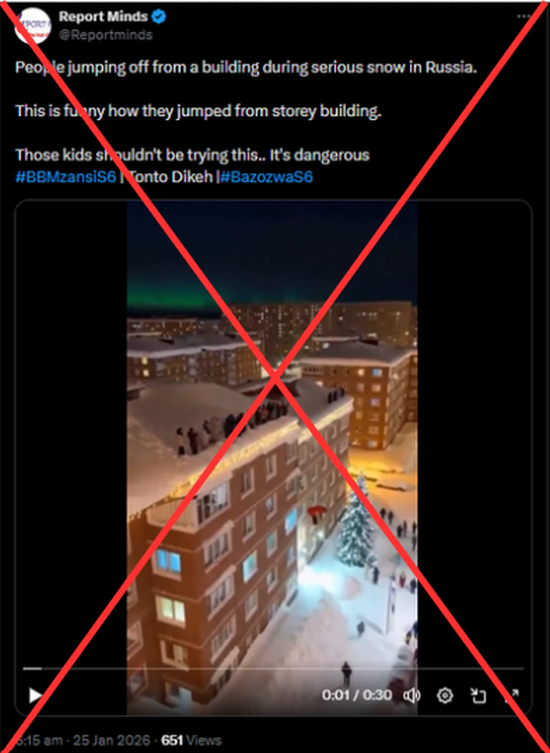
The video was shared on social media by an X (formerly Twitter) user ‘Report Minds’ on January 25, claiming it showed a real-life event in Russia. The post caption read: "People jumping off from a building during serious snow in Russia. This is funny, how they jumped from a storey building. Those kids shouldn't be trying this. It's dangerous." Here is the link to the post, and below is a screenshot.
Fact Check:
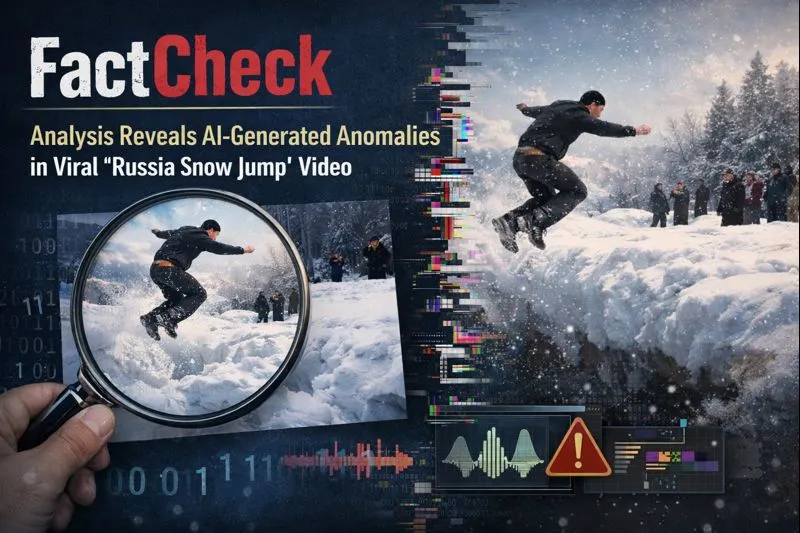
The Desk used the InVid tool to extract keyframes from the viral video and conducted a reverse image search, which revealed multiple instances of the same video shared by other users with similar claims. Upon close visual examination, several anomalies were observed, including unnatural human movements, blurred and distorted sections, a glossy, digitally-rendered appearance, and a partially concealed logo of the AI video generation tool ‘Sora AI’ visible in certain frames. Screenshots highlighting these inconsistencies were captured during the research .
- https://x.com/DailyLoud/status/2015107152772297086?s=20
- https://x.com/75secondes/status/2015134928745164848?s=20


The video was analyzed on Hive Moderation, an AI-detection platform, which confirmed that 98.7% of the content is AI-generated.
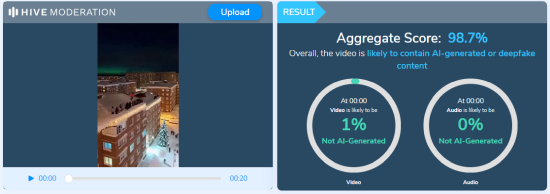
The viral video showing people jumping off a building into snow, claimed to depict a real incident in Russia, is entirely AI-generated. Social media users who shared it presented the digitally created footage as if it were real, making the claim false and misleading.
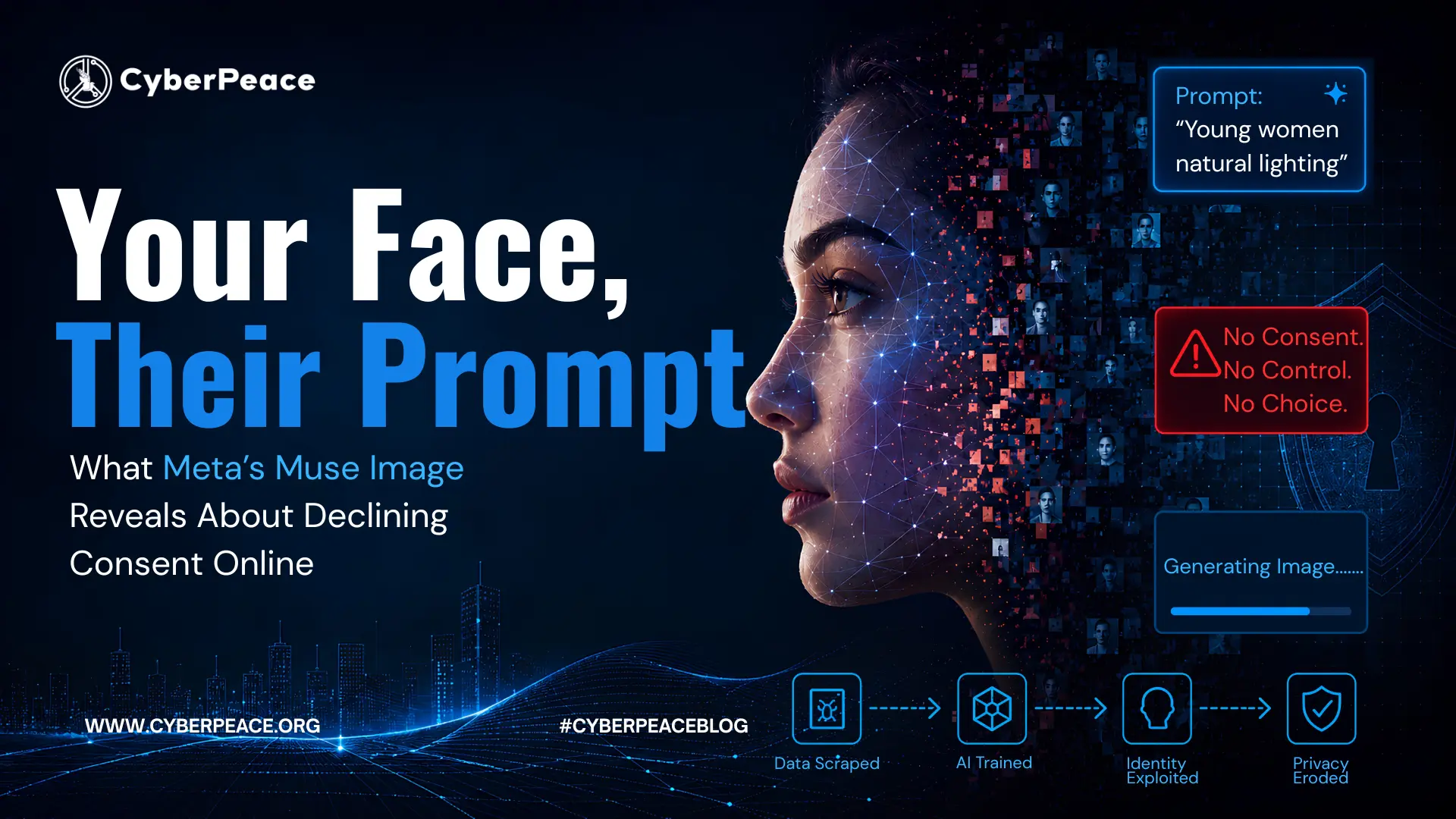
When your digital identity becomes raw material for someone else’s imagination, who really owns your face?
On July 7, 2026, Meta launched Muse Image, the first standalone image-generation model developed by Meta Superintelligence Labs under Alexandr Wang. Positioned as a competitor to OpenAI’s GPT Images 2.0 and Google’s Nano Banana 2, the launch highlights Meta’s growing ambitions in the generative AI race. Yet beneath the technical advancements lies a far more consequential question than what AI can create, but about who gets to decide what it creates with?
That ambition of generative AI comes with a cost, and one of Muse Image's most controversial design choices is its integration with Instagram, which allows public profiles to become creative references for AI-generated images. Users can tag public Instagram accounts in prompts and generate AI images inspired by that person’s publicly available content. Meta presents this as a new form of personalization and creativity. However, critics argue that the feature transforms years of personal photographs into a massive library of AI-ready human identities, where non-action automatically becomes permission. The concern is not just that AI can generate realistic images. The concern is that consent itself is being manipulated in a way.
The opt-out system most users never asked for
Muse Image operates through Meta AI’s integration with Instagram. A user can reference a public Instagram profile in a prompt, allowing the system to generate images influenced by that person’s existing content and likeness. Under the default arrangement, the person whose profile is being referenced may not necessarily approve the generation beforehand.
Meta does provide users with controls to restrict this functionality. The setting exists under Instagram’s “Sharing and reuse” options, where users can disable permissions related to the use of their posts and reels with Meta’s AI features. But the larger issue is the direction in which responsibility flows. Instead of requiring active permission before someone’s likeness becomes available for AI-generated content, the burden is placed on individuals to discover the feature, understand the implications, locate the setting, and disable it. In a digital environment where users already navigate endless privacy menus, cookie banners, and terms of service agreements, expecting meaningful awareness from billions of people becomes unrealistic. Consent that depends on finding the exit door is very different from consent that begins with a choice.
A guide for opting-out
One way of opting out is to have a private account. As verified, Meta does not encroach on private accounts as of now for image-generation.
But if you have a public account, here are the steps that can be followed to secure yourself from Meta’s Muse automatic consent:
On your profile, tap the menu bar which is on the top right (≡), you will enter into ‘setting and activity’, after that you will see an option of ‘sharing and refuse’ and then disable the options under it, namely- Allow people to reuse your content on Instagram and with AI features at Meta. Notably, the changes made will be only for your future content not the already existing content on your public profile.
Why “public” does not mean “available for anything”
The debate around Muse Image highlights a deeper misunderstanding at the center of modern digital platforms: the difference between visibility and reuse. When someone makes an Instagram account public, they are generally making a decision about the audience. They are allowing others to view their photos, discover their profile, or engage with their content. That decision was never traditionally understood as permission for their face, appearance, personal moments, or identity markers to become reusable components in AI-generated media. A photograph posted online has context. It represents a specific moment, purpose, relationship, or expression. Generative AI changes that equation because it separates identity from context. A person’s likeness can be extracted from its original context and placed into entirely new situations created by someone else. Muse Image does not just expand who can see your content. It expands what can be done with it. That distinction is what scales the problem for every public user on the app. The privacy implications become significantly larger because of Instagram’s global reach. With billions of users worldwide, even a small percentage of affected public accounts represents an enormous number of people. Many public profiles do not belong to celebrities, influencers, or creators who intentionally operate as public brands. They belong to students, professionals, small businesses, artists, photographers, and everyday users who simply chose visibility within a social network.
For years, platforms encouraged people to share more, build audiences, and maintain a public digital presence. Now, the meaning of that public presence is changing after the fact. The question becomes: should a decision made years ago to share photos socially automatically extend into permission for generative AI systems built years later?
There is also a catch while opting out. Changing these settings only protects your content from being used in future AI generations, it does not undo anything that has already happened. Any AI images previously created using your public profile will remain unaffected. Essentially, the opt-out works as a shield for what comes next, not a reset button for what has already been created.
A familiar pattern in the AI era
Muse Image reflects a broader pattern emerging across the technology industry. New AI capabilities are introduced at massive scale, participation becomes the default, and individual control arrives afterward through settings that many users may never find. The same debates that once surrounded targeted advertising, data collection, and algorithmic profiling are now moving into a far more personal territory, the human identity itself. Faces are not ordinary data points. Unlike a username, password, or preference setting, a person cannot simply replace their appearance once it has been widely replicated.
Technical solutions such as AI watermarking and content labels may help identify generated material, but they address authenticity after creation. They do not answer the question of whether the generation should have happened in the first place.
Innovation cannot replace consent
The technological progress behind Muse Image is significant. Better image generation, improved text rendering, and more personalized creative tools represent genuine advances in artificial intelligence. But capability alone cannot determine acceptability. The future of AI will not only depend on how realistic images become, how powerful models become, or how quickly companies can deploy new features. It will also depend on whether people feel they have meaningful control over their own digital identities. Muse Image is therefore more than another AI product launch. It represents a defining question for the next phase of the internet: Will our online presence remain something we control, or will it become something others can generate?
