
#FactCheck -Claim That India’s GDP Was “Fake for 10 Years” is Misleading
Executive Summary
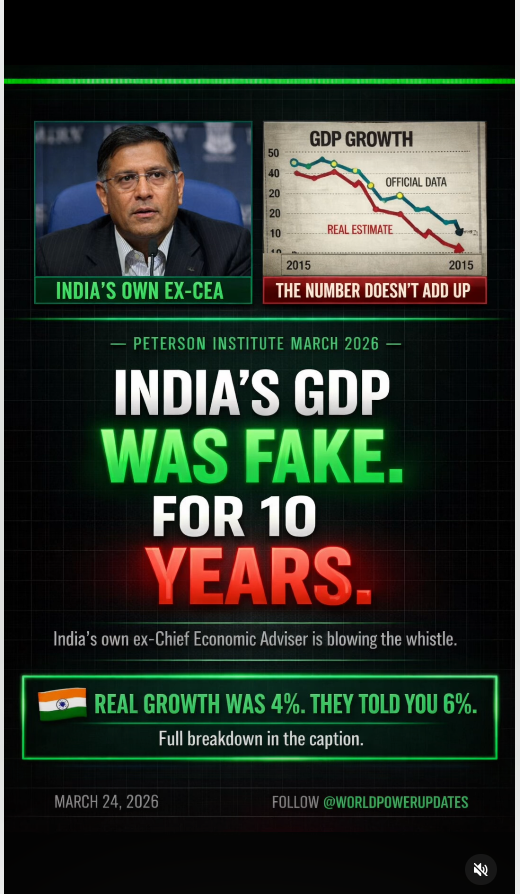
A viral graphic post on social media claims that India’s GDP (Gross Domestic Product) was “fake for 10 years.” The post also states that the real economic growth was around 4%, while official figures reported it at 6%. It further cites a former Chief Economic Adviser (Ex-CEA) and presents the claim as a “revelation.”
Research by CyberPeace Research Wing found this claim to be misleading. No official government document, nor India’s Ministry of Statistics and Programme Implementation (MoSPI), the Reserve Bank of India (RBI), or any recognised international institution has stated that India’s GDP was “fake.”
Claim
On the social media platform Instagram, a user shared a post claiming that the Chief Economic Adviser said India’s GDP (Gross Domestic Product) was “fake for 10 years.” The link to the post and its archive link are given below, along with a screenshot.
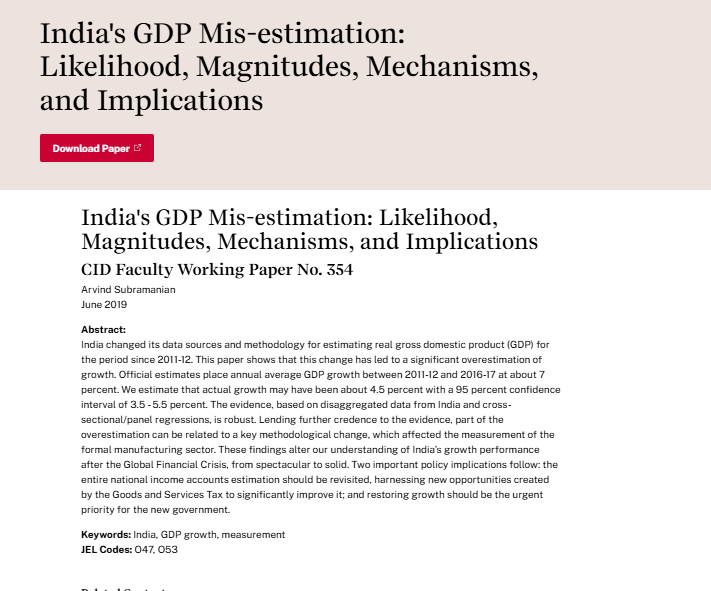
The viral post refers to a 2019 research paper linked to former Chief Economic Adviser (Ex-CEA) Arvind Subramanian. In this study, he raised questions about India’s GDP growth estimation and suggested that during 2011–12 to 2016–17, the actual growth could have been around 4.5%, while the official estimate was close to 7%.
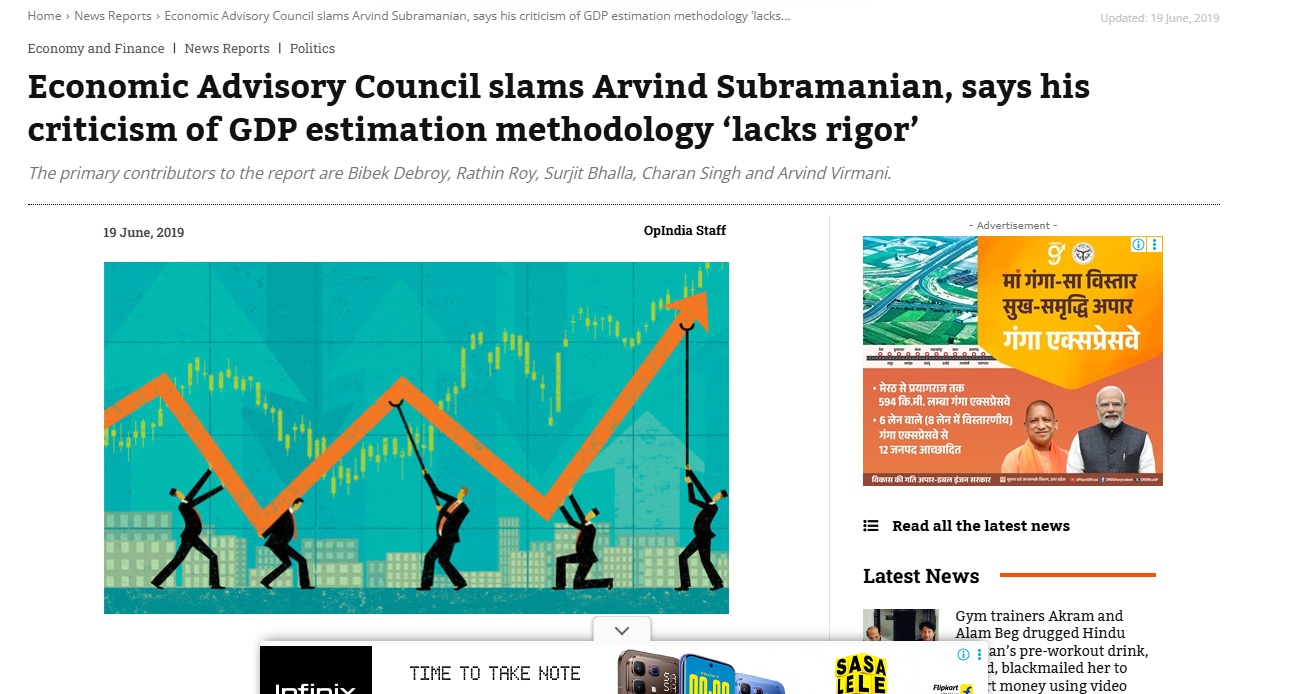
However, the study does not conclude anywhere that India’s GDP was “fake” or entirely incorrect. It only presents an alternative estimation based on different assumptions and methods, which has also been challenged by other economists and government agencies.
- https://www.hks.harvard.edu/centers/cid/publications/faculty-working-papers/india-gdp-overestimate?utm_source
- https://www.hks.harvard.edu/centers/cid/publications/faculty-working-papers/india-gdp-overestimate?utm_source
Conclusion:
The claim circulating on social media is misleading. The former Chief Economic Adviser provided an academic view on GDP estimation, but there is no evidence or official confirmation that India’s GDP was “fake for 10 years.” The data released by the Government of India was not validated by the figures circulated on social media.

Related Blogs

Introduction
In a world where social media dictates public perception and content created by AI dilutes the difference between fact and fiction, mis/disinformation has become a national cybersecurity threat. Today, disinformation campaigns are designed for their effect, with political manipulation, interference in public health, financial fraud, and even community violence. India, with its 900+ million internet users, is especially susceptible to this distortion online. The advent of deep fakes, AI-text, and hyper-personalised propaganda has made disinformation more plausible and more difficult to identify than ever.
What is Misinformation?
Misinformation is false or inaccurate information provided without intent to deceive. Disinformation, on the other hand, is content intentionally designed to mislead and created and disseminated to harm or manipulate. Both are responsible for what experts have termed an "infodemic", overwhelming people with a deluge of false information that hinders their ability to make decisions.
Examples of impactful mis/disinformation are:
- COVID-19 vaccine conspiracy theories (e.g., infertility or microchips)
- Election-related false news (e.g., EVM hacking so-called)
- Social disinformation (e.g., manipulated videos of riots)
- Financial scams (e.g., bogus UPI cashbacks or RBI refund plans)
How Misinformation Spreads
Misinformation goes viral because of both technology design and human psychology. Social media sites such as Facebook, X (formerly Twitter), Instagram, and WhatsApp are designed to amplify messages that elicit high levels of emotional reactions are usually polarising, sensationalistic, or fear-mongering posts. This causes falsehoods or misinformation to get much more attention and activity than authentic facts, and therefore prioritises virality over truth.
Another major consideration is the misuse of generative AI and deep fakes. Applications like ChatGPT, Midjourney, and ElevenLabs can be used to generate highly convincing fake news stories, audio recordings, or videos imitating public figures. These synthetic media assets are increasingly being misused by bad actors for political impersonation, propagating fabricated news reports, and even carrying out voice-based scams.
To this danger are added coordinated disinformation efforts that are commonly operated by foreign or domestic players with certain political or ideological objectives. These efforts employ networks of bot networks on social media, deceptive hashtags, and fabricated images to sway public opinion, especially during politically sensitive events such as elections, protests, or foreign wars. Such efforts are usually automated with the help of bots and meme-driven propaganda, which makes them scalable and traceless.
Why Misinformation is Dangerous
Mis/disinformation is a significant threat to democratic stability, public health, and personal security. Perhaps one of the most pernicious threats is that it undermines public trust. If it goes unchecked, then it destroys trust in core institutions like the media, judiciary, and electoral system. This erosion of public trust has the potential to destabilise democracies and heighten political polarisation.
In India, false information has had terrible real-world outcomes, especially in terms of creating violence. Misleading messages regarding child kidnappers on WhatsApp have resulted in rural mob lynching. As well, communal riots have been sparked due to manipulated religious videos, and false terrorist warnings have created public panic.
The pandemic of COVID-19 also showed us how misinformation can be lethal. Misinformation regarding vaccine safety, miracle cures, and the source of viruses resulted in mass vaccine hesitancy, utilisation of dangerous treatments, and even avoidable deaths.
Aside from health and safety, mis/disinformation has also been used in financial scams. Cybercriminals take advantage of the fear and curiosity of the people by promoting false investment opportunities, phishing URLs, and impersonation cons. Victims get tricked into sharing confidential information or remitting money using seemingly official government or bank websites, leading to losses in crypto Ponzi schemes, UPI scams, and others.
India’s Response to Misinformation
- PIB Fact Check Unit
The Press Information Bureau (PIB) operates a fact-checking service to debunk viral false information, particularly on government policies. In 3 years, the unit identified more than 1,500 misinformation posts across media.
- Indian Cybercrime Coordination Centre (I4C)
Working under MHA, I4C has collaborated with social media platforms to identify sources of viral misinformation. Through the Cyber Tipline, citizens can report misleading content through 1930 or cybercrime.gov.in.
- IT Rules (The Information Technology (Intermediary Guidelines and Digital Media Ethics Code) Rules, 2021 [updated as on 6.4.2023]
The Information Technology (Intermediary Guidelines) Rules were updated to enable the government to following aspects:
- Removal of unlawful content
- Platform accountability
- Detection Tools
There are certain detection tool that works as shields in assisting fact-checkers and enforcement bodies to:
- Identify synthetic voice and video scams through technical measures.
- Track misinformation networks.
- Label manipulated media in real-time.
CyberPeace View: Solutions for a Misinformation-Resilient Bharat
- Scale Digital Literacy
"Think Before You Share" programs for rural schools to teach students to check sources, identify clickbait, and not reshare fake news.
- Platform Accountability
Technology platforms need to:
- Flag manipulated media.
- Offer algorithmic transparency.
- Mark AI-created media.
- Provide localised fact-checking across diverse Indian languages.
- Community-Led Verification
Establish WhatsApp and Telegram "Fact Check Hubs" headed by expert organisations, industry experts, journalists, and digital volunteers who can report at the grassroots level fake content.
- Legal Framework for Deepfakes
Formulate targeted legislation under the Bhartiya Nyaya Sanhita (BNS) and other relevant laws to make malicious deepfake and synthetic media use a criminal offense for:
- Electoral manipulation.
- Defamation.
- Financial scams.
- AI Counter-Misinformation Infrastructure
Invest in public sector AI models trained specifically to identify:
- Coordinated disinformation patterns.
- Botnet-driven hashtag campaigns.
- Real-time viral fake news bursts.
Conclusion
Mis/disinformation is more than just a content issue, it's a public health, cybersecurity, and democratic stability challenge. As India enters the digitally empowered world, making a secure, informed, and resilient information ecosystem is no longer a choice; now, it's imperative. Fighting misinformation demands a whole-of-society effort with AI innovation, public education, regulatory overhaul, and tech responsibility. The danger is there, but so is the opportunity to guide the world toward a fact-first, trust-based digital age. It's time to act.
References
- https://www.pib.gov.in/factcheck.aspx
- https://www.meity.gov.in/static/uploads/2024/02/Information-Technology-Intermediary-Guidelines-and-Digital-Media-Ethics-Code-Rules-2021-updated-06.04.2023-.pdf
- https://www.cyberpeace.org
- https://www.bbc.com/news/topics/cezwr3d2085t
- https://www.logically.ai
- https://www.altnews.in
Executive Summary
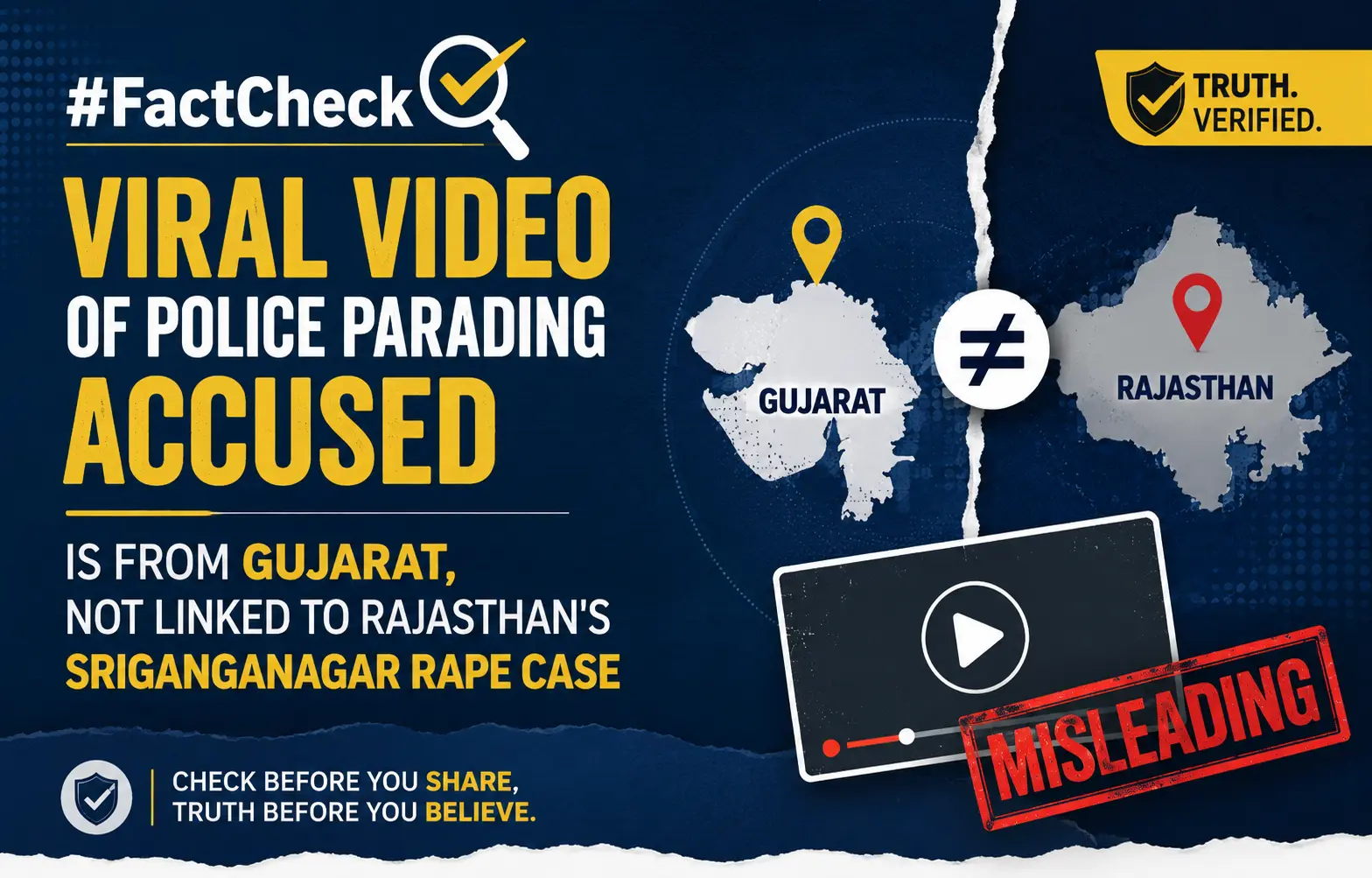
Amid nationwide outrage over the gang-rape of a 13-year-old minor in Sriganganagar, Rajasthan, a video is circulating on social media. The clip shows police officers tying the hands of several accused individuals and parading them publicly on the streets. Users sharing the video claim that these are the culprits from the Sriganganagar case being beaten by the police.
A fact-check by the CyberPeace Research Wing found this claim to be misleading. The viral video has no connection to the Rajasthan incident; it actually depicts a separate event from Patan, Gujarat, dating back to March 2026.
The Claim
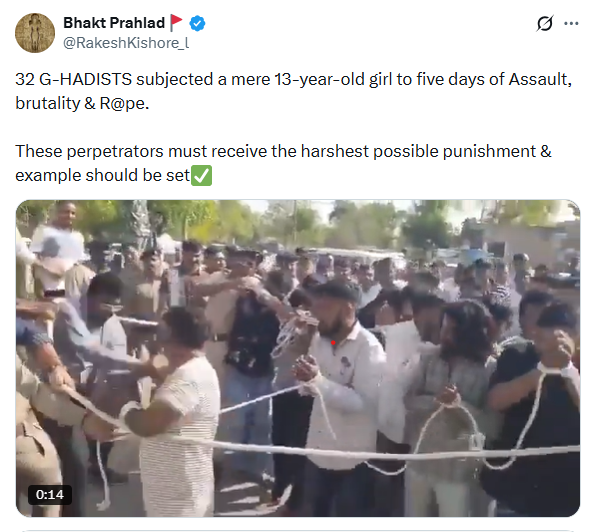
On July 7, 2026, a user on X (formerly Twitter) shared the video with the caption: "32 jihadis assaulted, brutalized, and raped a 13-year-old girl for five days. These criminals must get the harshest punishment to set an example."
https://x.com/RakeshKishore_l/status/2074400280352084129
Fact Check
To verify the viral claim, keyframes from the video were extracted and analysed using Google Lens for reverse image search. During the research, we found a report published by NDTV on March 19, 2026, which carried visuals matching the viral video. The report link and screenshot are provided below:
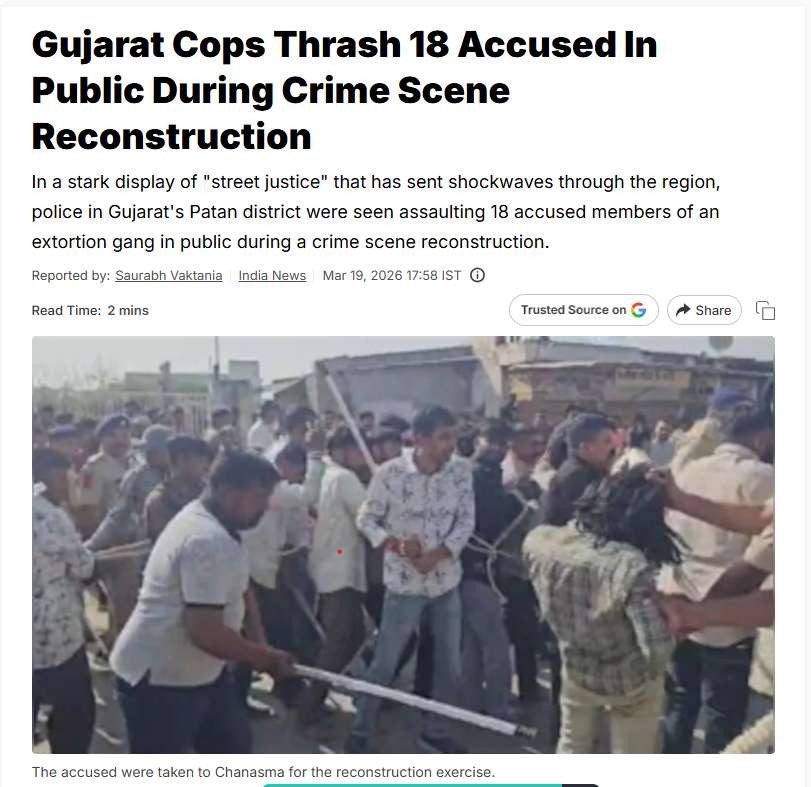
According to the NDTV report, a video showing police personnel publicly assaulting 18 alleged accused persons in Gujarat’s Patan district had surfaced. The incident was reported to have taken place during a crime scene reconstruction exercise.
The report stated that the accused, allegedly linked to an extortion gang, were taken to Chanasma for the reconstruction process. During the exercise, police personnel were seen assaulting them. Witnesses claimed that the accused were paraded through areas where they had allegedly created fear among locals.
The accused were reportedly linked to the alleged Jhiliya gang. The incident occurred days after a violent clash in which members of the same group allegedly attacked a police team, forcing officers to retreat from the spot.
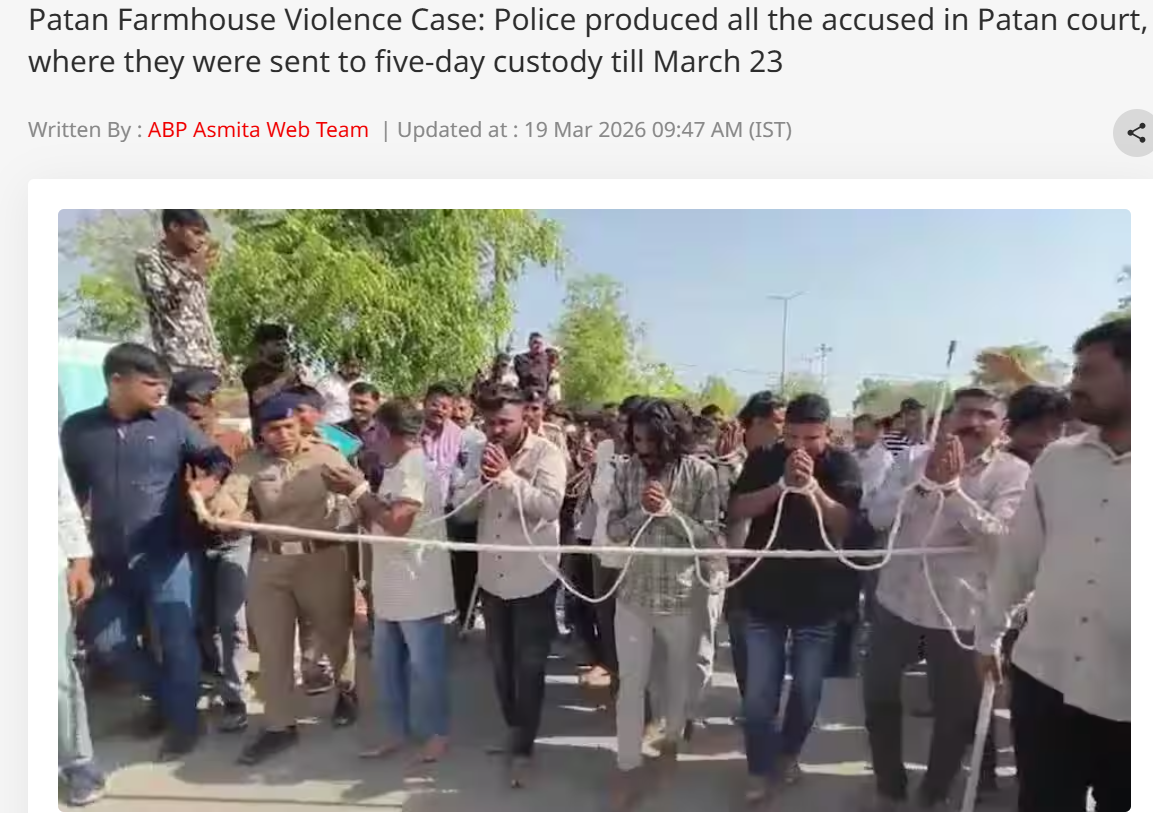
During further research, we found a report published by ABP Asmita on March 19, 2026. According to the report, the incident was linked to an old dispute over temple donations.
The report stated that the accused were produced before a court, which sent them to five days of police custody until March 23, 2026. The report link and screenshot are provided below:
Conclusion
The research found that the viral video is not related to the alleged gang rape case in Sri Ganganagar, Rajasthan. The video is being shared with a false context. The footage actually belongs to a separate incident from Gujarat’s Patan district reported in March 2026.
Executive Summary
A video circulating on social media claims that Chief of Defence Staff Anil Chauhan described US leaders as “toothless rulers” and said that US President Donald Trump cannot disobey Israeli Prime Minister Benjamin Netanyahu. The clip is being widely shared as a recent statement. However, research by the CyberPeace Research Wing found the claim to be misleading. A review of the full interview revealed that Chauhan was speaking about the need for India to prepare for the next phase of ‘Operation Sindoor’. He emphasised that the armed forces must move beyond past operations and gear up for future challenges.
Claim
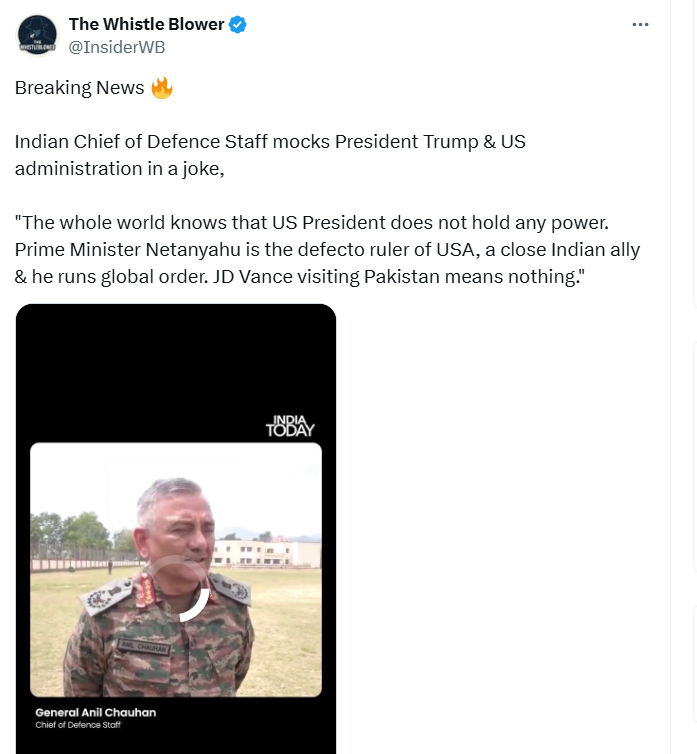
Social media users have shared the video claiming that CDS Anil Chauhan referred to US leaders as “toothless rulers” and stated that Donald Trump cannot act against the wishes of Benjamin Netanyahu.
- Link: https://x.com/InsiderWB/status/2046263000928330130
- Archive: https://archive.ph/j8CeL
Fact Check
A detailed keyword search using terms such as “CDS Anil Chauhan, Donald Trump, JD Vance, Pakistan” did not yield any credible reports or verified statements supporting the viral claim. A reverse image search of keyframes from the clip traced it back to a post shared by India Today on April 18, 2026, where the same visuals and setting were used.
https://x.com/IndiaToday/status/2045531069647327240
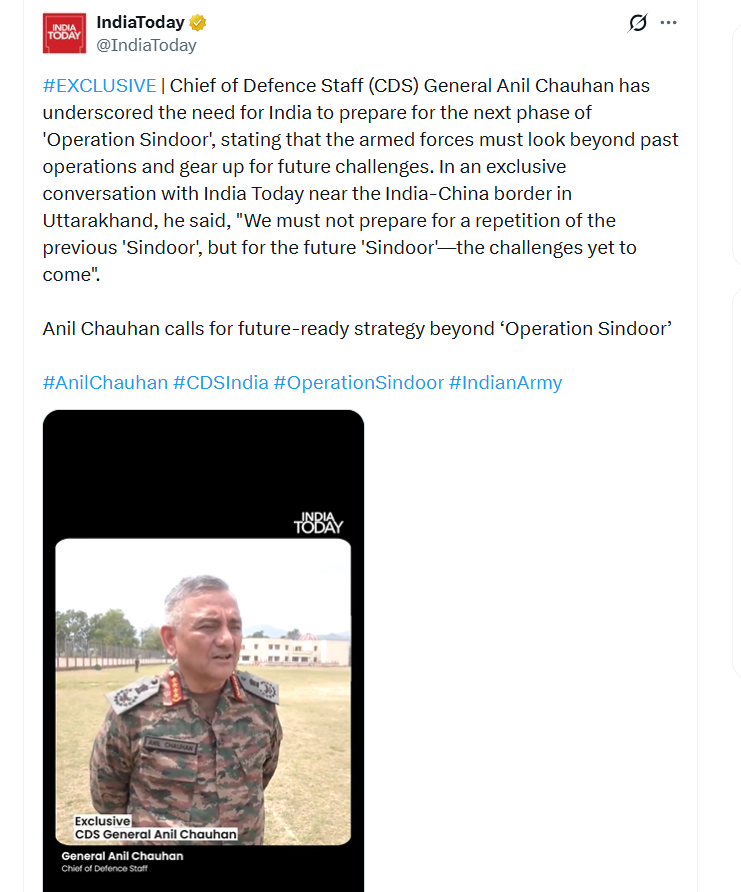
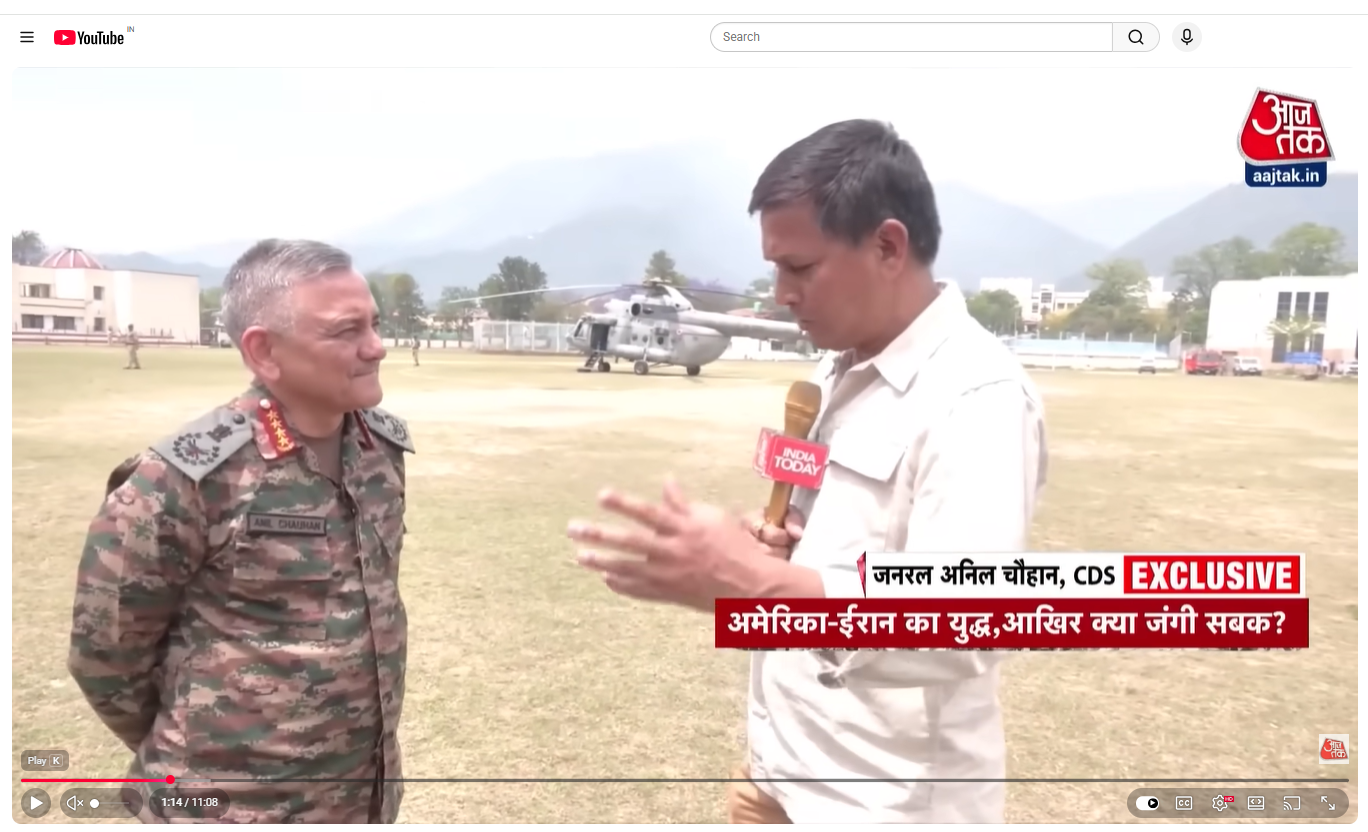
In the original interview, Chauhan focused on military preparedness and the future course of ‘Operation Sindoor’. He did not make any remarks about US leadership, Donald Trump, or Benjamin Netanyahu. The complete version of the interaction, also aired on Aaj Tak, was reviewed in full and similarly contains no such controversial or political statements.
Conclusion
The viral claim is misleading. The video has been edited or taken out of context to falsely attribute remarks to CDS Anil Chauhan that he never made. In reality, his statements were limited to India’s military preparedness and did not include any comments on US or Israeli leadership.
