
#FactCheck- AI-Generated Flyover Video Falsely Shared as Patna Infrastructure
Executive Summary
A video showing a modern highway flyover illuminated at night is being widely shared on social media. The bridge features bright white light poles and illuminated barriers. The video is being falsely claimed to be from Patna, Bihar. A CyberPeace Research Wing research has found the claim to be false. Our verification shows that the viral video is not real but AI-generated and is being circulated with misleading claims.
Claim:
A user on YouTube shared the viral video, claiming it shows a flyover in Patna. The post, along with its archive link and screenshots, can be seen below:
https://www.youtube.com/shorts/j9jU-QVKcrw
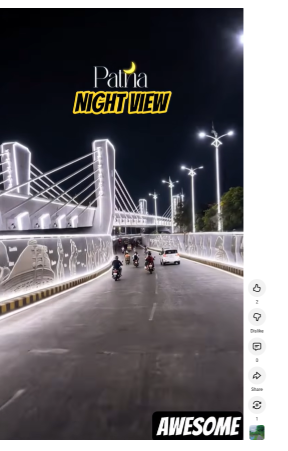
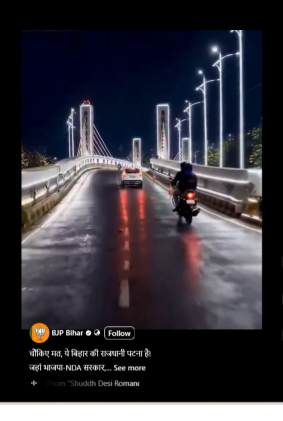
Meanwhile, the BJP also shared the same video on its official Facebook page, writing: “Don’t be surprised, this is Patna, the capital of Bihar! Where there is BJP-NDA government, development moves at a fast pace.” The post link, archive link, and screenshots are available below:
https://www.facebook.com/bjp4bihar
Fact Check
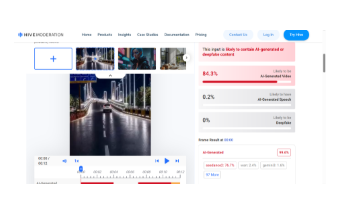
A careful review of the viral video raised suspicions that it may be AI-generated. The footage was analysed using the AI detection tool HIVE MODERATION, which indicated that the video is approximately 84% likely to be AI-generated.
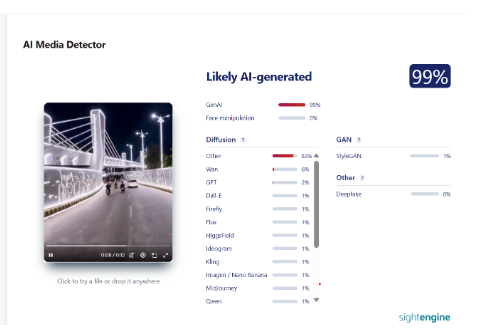
We also analysed the video using another AI detection tool, SIGHTENGINE, which produced an even stronger result, indicating a 99% likelihood of AI generation.
Conclusion:
The viral video being circulated as a flyover from Patna is not real. It is AI-generated and is being shared with misleading claims.

Related Blogs
.webp)
Introduction
The recent events in Mira Road, a bustling suburb on the outskirts of Mumbai, India, unfold like a modern-day parable, cautioning us against the perils of unverified digital content. The Mira Road incident, a communal clash that erupted into the physical realm, has been mirrored and magnified through the prism of social media. The Maharashtra Police, in a concerted effort to quell the spread of discord, issued stern warnings against the dissemination of rumours and fake messages. These digital phantoms, they stressed, have the potential to ignite law and order conflagrations, threatening the delicate tapestry of peace.
The police's clarion call came in the wake of a video, mischievously edited, that falsely claimed anti-social elements had set the Mira Road railway station ablaze. This digital doppelgänger of reality swiftly went viral, its tendrils reaching into the ubiquitous realm of WhatsApp, ensnaring the unsuspecting in its web of deceit.
In this age of information overload, where the line between fact and fabrication blurs, the police urged citizens to exercise discernment. The note they issued was not merely an advisory but a plea for vigilance, a reminder that the act of sharing unauthenticated messages is not a passive one; it is an act that can disturb the peace and unravel the fabric of society.
The Massacre
The police's response to this crisis was multifaceted. Administrators and members of social media groups found to be the harbingers of such falsehoods would face legal repercussions. The Thane District, a mosaic of cultural and religious significance, has been marred by a series of violent incidents, casting a shadow over its storied history. The police, in their role as guardians of order, have detained individuals, scoured social media for inauthentic posts, and maintained a vigilant presence in the region.
The Maharashtra cyber cell, a digital sentinel, has unearthed approximately 15 posts laden with videos and messages designed to sow discord among the masses. These findings were shared with the Mira-Bhayandar, Vasai-Virar (MBVV) police, who stand ready to take appropriate action. Inspector General Yashasvi Yadav of the Maharashtra cyber cell issued an appeal to the public, urging them to refrain from circulating such unverified messages, reinforcing the notion that the propagation of inauthentic information is, in itself, a crime.
The MBVV police, in their zero-tolerance stance, have formed a team dedicated to scrutinizing social media posts. The message is clear: fake news will be met with strict action. The right to free speech on social media comes with the responsibility not to share information that could incite mischief. The Indian Penal Code and Information Technology Act serve as the bulwarks against such transgressions.
The Aftermath
In the aftermath of the clashes, the police have worked tirelessly to restore calm. A young man, whose video replete with harsh and obscene language went viral, was apprehended and has since apologised for his actions. The MBVV police have also taken to social media to reassure the public that the situation is under control, urging them to avoid circulating messages that could exacerbate tensions.
The Thane district has witnessed acts of vandalism targeting shops, further escalating tensions. In response, the police have apprehended individuals linked to these acts, hoping that such measures will expedite the return of peace. Advisories have been issued, warning against the dissemination of provocative messages and rumours.
In total, 19 individuals have been taken into custody in relation to numerous incidents of violence. The Mira-Bhayandar and Vasai-Virar police have underscored their commitment to legal action against those who spread rumours through fake messages. The authorities have also highlighted the importance of brotherhood and unity, reminding citizens that above all, they are Indians first.
Conclusion
In a world where old videos, stripped of context, can fuel tensions, the police have issued a note referring to the aforementioned fake video message. They urge citizens to exercise caution, to neither believe nor circulate such messages. Police Authorities have assured that no one involved in the violence will be spared, and peace committees are being convened to restore harmony. The Mira Road incident serves as a sign of the prowess of information and responsibility that comes with it. In the digital age, where the ephemeral and the eternal collide, we must navigate the waters of truth with care. Ultimately, it is not just the image of a locality that is at stake, but the essence of our collective humanity.
References
- https://youtu.be/gK2Ac1qP-nE?feature=shared
- https://www.mid-day.com/mumbai/mumbai-crime-news/article/mira-road-communal-clash-those-spreading-fake-messages-to-face-strict-action-say-mira-bhayandar-vasai-virar-cops-23331572
- https://www.mid-day.com/mumbai/mumbai-news/article/mira-road-communal-clash-cybercops-on-alert-for-fake-clips-23331653
- https://www.theweek.in/wire-updates/national/2024/01/24/bom43-mh-shops-3rdld-vandalism.html

Introduction
In the dynamic realm of online gaming, where virtual worlds and competitive landscapes converge, ensuring the safety of players has become an imperative task. As the digital gaming community expands, so do the challenges of navigating potential risks and threats. There is a need for crucial strategies and measures aimed at safeguarding players and fostering a secure environment where gamers can fully immerse themselves in their passion without compromising their well-being. Online gaming, a thriving industry, makes gamers attractive targets for cyber theft, including account takeovers (ATO). ATO involves stealing characters, inventory, in-game currencies, achievements, and skins, with high-level accounts as prime targets. Gamers face real-life consequences as fraud within games can compromise personal information, including location, credentials, credit card details, and more. Protecting oneself involves maintaining privacy in sharing information, enabling two-factor authentication, and employing strong, unique passwords with security solutions that provide additional safeguards for an uninterrupted gaming experience.
Online Gaming Carries The Following Major Risks
Viruses and malware: Searching for less expensive or free downloads of your preferred games puts you in danger of accidentally downloading malware and viruses.
Theft of identity: Hackers gather information that is personally identifiable to create victimised identities. The chat feature is one of the possible risks of playing video games online with random people.
Invasion of a profile: It's not advisable to use an identical password and username across all of your preferred video game platforms since if hackers manage to obtain your login information, they may hack all of your player accounts and perhaps take control of them.
Swatting and doxing: Doxxing is the practice of hackers publishing your residential location or telephone number online after obtaining your private data. Swatting is a dangerous harassment tactic originating from online gaming, involving false emergency reports to provoke an excessive police response at the unsuspecting victim's location.
How Hacking Poses Serious Risks to Online Gaming Security
The video game industry has experienced rapid growth in recent times, catering to millions of players throughout the globe who relish an extensive array of engaging adventures. But because of its widespread use, hackers are now more likely to target it in an attempt to take advantage of its weaknesses.
Hackers are drawn to the gaming business for a number of reasons.
Due to its enormous income potential, this sector is an appealing option for investment. Players' large audience offers a treasure trove of private data that can be used for fraudulent transactions and other nefarious activities. Because of its high exposure, the sector is a tempting target for attackers looking to achieve recognition or make an impression. Customers wish to add modifications, cheats, or other external software to their contest, which increases the threat. In this sector, there is fierce competition, and winners take home large cash awards. This encourages players to use DDoS attacks to their advantage in order to outperform their rivals.
Importance of Secure Servers
Upgrade server applications and Modifications
Maintaining the most recent versions of all server software is a basic step in gaming server security. Updates and patches are regularly released by developers to address security flaws, therefore it's imperative to install them right away. If you ignore updates, your server becomes vulnerable to known vulnerabilities and a prime target for cybercriminals.
Put Strict Access Controls in Place
It is essential to manage who has permission to access your gaming system to avoid violations and unwanted access. Use strong password regulations and mandate complicated passwords for administrators on the system.
Two-factor authentication (2FA) into place
Restrict access rights to those who need them for administrative tasks to lessen the possibility of unlicensed individuals taking over a server.Safety Measures Players should be urged to adhere to best practices, which include:
Using secure passwords.
Avoid clicking on dubious links.
Updating software & apps regularly.
Upgrading antivirus software regularlyImproving cybersecurity practices and bringing attention to possible risks can greatly improve the general population's safety in gaming.
Conclusion
The internet gaming industry's rapid expansion has resulted in increased security threats in addition to recreation. Players confront various threats, including growing hacking attempts, sensitive information leaks, malware, identity theft, and doxing. To reduce these dangers, secure servers are essential. They emphasise the importance of frequent upgrades, restricting access, and user training. It becomes essential to enable security measures to keep ahead of emerging dangers. Enhancing safety measures guarantees a more secure gaming environment, safeguarding the large population that participates in this quickly changing digital space.
References
https://www.kaspersky.com/resource-center/threats/top-10-online-gaming-risks
https://www.imperva.com/blog/cyber-attacks-gaming-industry/
https://www.techslang.com/securing-gaming-servers-cybersecurity-best-practices-for-online-gaming-communities/
https://www.vox.com/policy-and-politics/2018/1/13/16888710/barris-swatting-death-charges
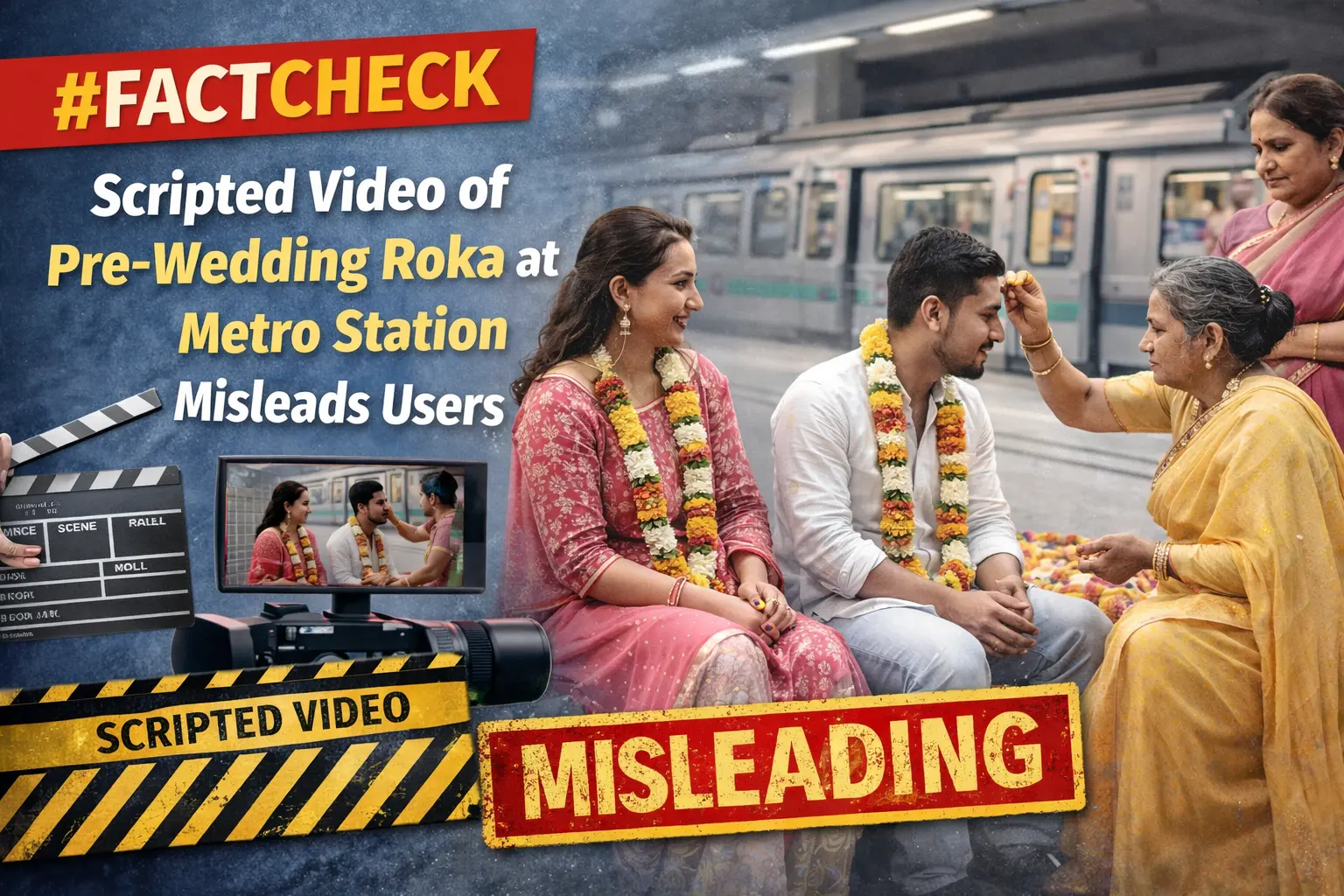
Executive Summary
A video is going viral on social media showing a woman performing a pre-wedding ritual called “Roka” for a couple at a metro station. Many users are sharing the clip believing it to be a real incident. CyberPeace found in its research that the viral claim is false. The video is actually scripted.
Claim:
An Instagram user posted the video on February 7, 2026, with the caption, “A mother performed her son’s Roka with his girlfriend at a metro station.”

Fact Check:
To verify the claim, we conducted a reverse image search using Google Lens on screenshots from the viral video. We found the same video was first uploaded on February 5, 2026, by an Instagram account named “chalte_phirte098.” The profile belongs to digital content creator Aarav Mavi, who regularly posts relationship and breakup-related videos.
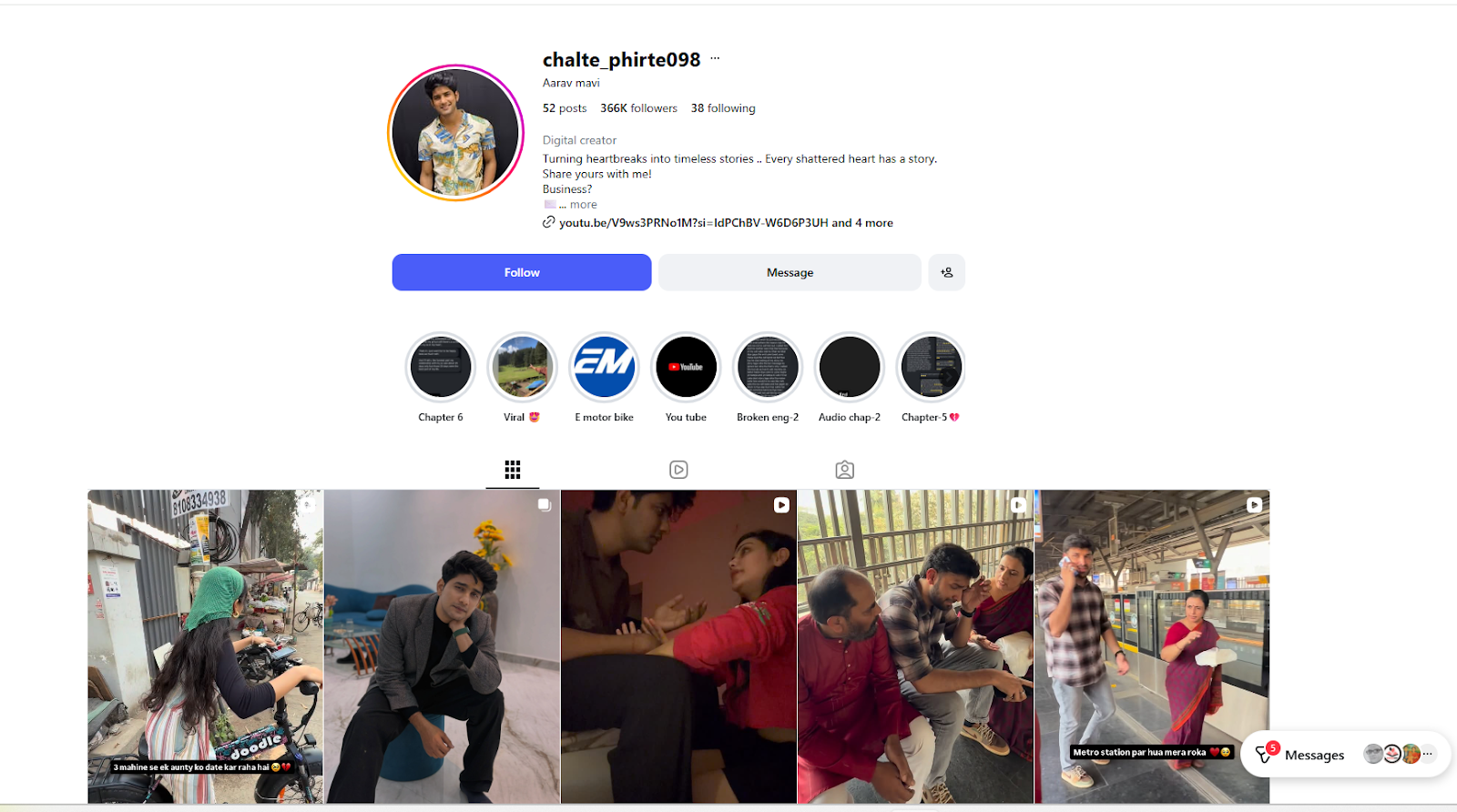
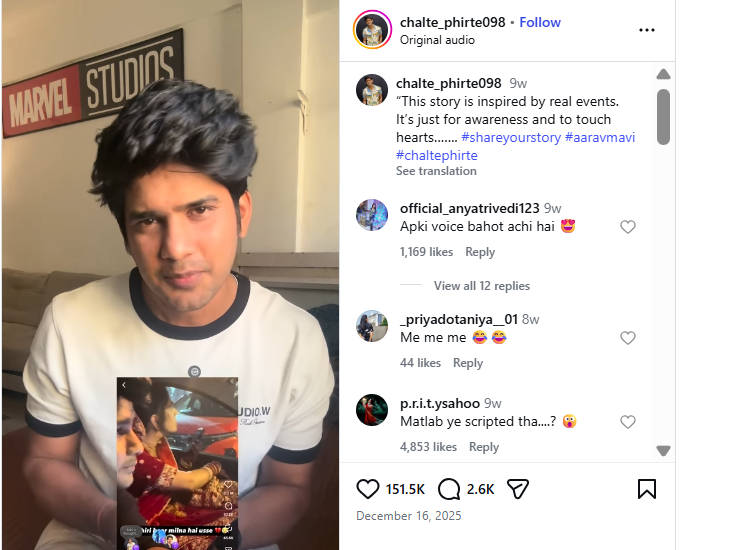
Although the viral clip does not include any disclaimer stating that it is scripted, an older video posted by the creator on December 16, 2025, clarifies that his content is based on real-life stories shared by people but is filmed using professional actors. Several similar staged videos are also available on his profile on Instagram.
Conclusion:
Our research clearly shows that the viral video claiming to show a pre-wedding Roka ceremony at a metro station is not real. It was created by a content creator for entertainment purposes. Therefore, the claim circulating on social media is misleading.
