
#FactCheck -AI-Generated Crowd Video Falsely Tied to Epstein Files Release
Executive Summary
The U.S. Department of Justice recently released nearly three million pages of documents, along with thousands of videos and photographs, related to its research into convicted offender Jeffrey Epstein. Meanwhile, a video showing a massive crowd protesting on a street is going viral on social media The video, which had earlier circulated with false claims linking it to anti-government protests in Iran, is now being shared by several users who claim that the protest took place in the United States after the release of the Epstein files. Research by CyberPeace found the viral claim to be false. The video being linked to protests in the United States following the release of the Epstein files is not real and was generated using artificial intelligence (AI).
Claim:
An Instagram user uploaded the viral video on February 9, 2026, with the caption: “After Epstein files released in America. All eyes on America.”
- https://www.instagram.com/reel/DUjLe-XE5lA
- https://ghostarchive.org/archive/tkP6W

Fact Check:
To verify the claim, we first conducted a reverse search of the viral video using Google Lens. The same video was found posted on January 10, 2026, by an Instagram account named “elnaz555,” where it was shared in the context of recent protests in Iran. The post also mentioned that the video was created using AI.
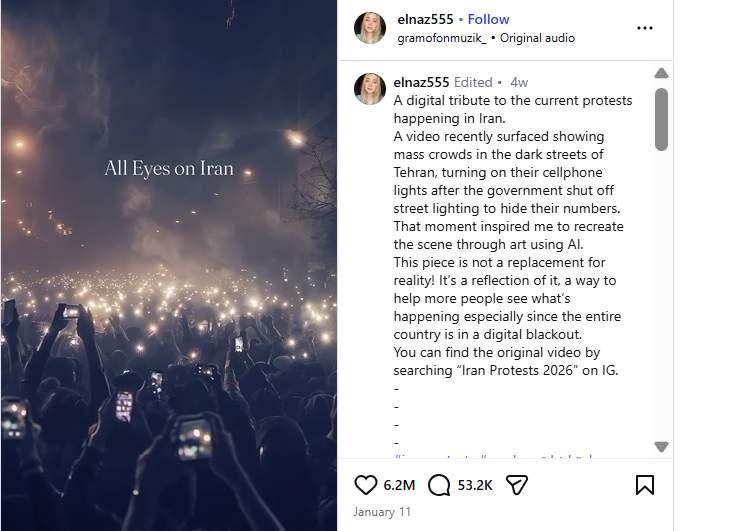
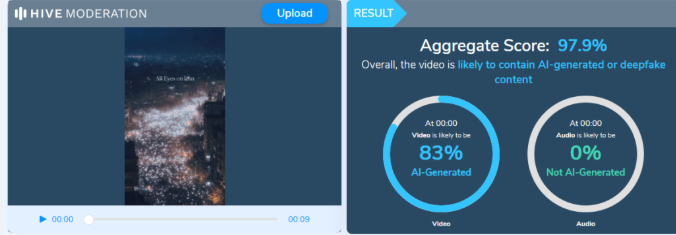
Based on this lead, we further analyzed a higher-quality version of the viral video using Hive Moderation, a tool used to detect AI-generated images and videos. The analysis indicated a 97.9% probability that the video was generated using artificial intelligence. The research clearly shows that the video is not authentic and has been falsely linked to protests in the United States after the release of the Epstein files.
Conclusion:
The claim circulating on social media is false. The viral video allegedly showing protests in the United States following the release of the Epstein files is AI-generated and not related to any real event.

Related Blogs

Introduction
In an era when misinformation spreads like wildfire across the digital landscape, the need for effective strategies to counteract these challenges has grown exponentially in a very short period. Prebunking and Debunking are two approaches for countering the growing spread of misinformation online. Prebunking empowers individuals by teaching them to discern between true and false information and acts as a protective layer that comes into play even before people encounter malicious content. Debunking is the correction of false or misleading claims after exposure, aiming to undo or reverse the effects of a particular piece of misinformation. Debunking includes methods such as fact-checking, algorithmic correction on a platform, social correction by an individual or group of online peers, or fact-checking reports by expert organisations or journalists. An integrated approach which involves both strategies can be effective in countering the rapid spread of misinformation online.
Brief Analysis of Prebunking
Prebunking is a proactive practice that seeks to rebut erroneous information before it spreads. The goal is to train people to critically analyse information and develop ‘cognitive immunity’ so that they are less likely to be misled when they do encounter misinformation.
The Prebunking approach, grounded in Inoculation theory, teaches people to recognise, analyse and avoid manipulation and misleading content so that they build resilience against the same. Inoculation theory, a social psychology framework, suggests that pre-emptively conferring psychological resistance against malicious persuasion attempts can reduce susceptibility to misinformation across cultures. As the term suggests, the MO is to help the mind in the present develop resistance to influence that it may encounter in the future. Just as medical vaccines or inoculations help the body build resistance to future infections by administering weakened doses of the harm agent, inoculation theory seeks to teach people fact from fiction through exposure to examples of weak, dichotomous arguments, manipulation tactics like emotionally charged language, case studies that draw parallels between truths and distortions, and so on. In showing people the difference, inoculation theory teaches them to be on the lookout for misinformation and manipulation even, or especially, when they least expect it.
The core difference between Prebunking and Debunking is that while the former is preventative and seeks to provide a broad-spectrum cover against misinformation, the latter is reactive and focuses on specific instances of misinformation. While Debunking is closely tied to fact-checking, Prebunking is tied to a wider range of specific interventions, some of which increase motivation to be vigilant against misinformation and others increase the ability to engage in vigilance with success.
There is much to be said in favour of the Prebunking approach because these interventions build the capacity to identify misinformation and recognise red flags However, their success in practice may vary. It might be difficult to scale up Prebunking efforts and ensure their reach to a larger audience. Sustainability is critical in ensuring that Prebunking measures maintain their impact over time. Continuous reinforcement and reminders may be required to ensure that individuals retain the skills and information they gained from the Prebunking training activities. Misinformation tactics and strategies are always evolving, so it is critical that Prebunking interventions are also flexible and agile and respond promptly to developing challenges. This may be easier said than done, but with new misinformation and cyber threats developing frequently, it is a challenge that has to be addressed for Prebunking to be a successful long-term solution.
Encouraging people to be actively cautious while interacting with information, acquire critical thinking abilities, and reject the effect of misinformation requires a significant behavioural change over a relatively short period of time. Overcoming ingrained habits and prejudices, and countering a natural reluctance to change is no mean feat. Developing a widespread culture of information literacy requires years of social conditioning and unlearning and may pose a significant challenge to the effectiveness of Prebunking interventions.
Brief Analysis of Debunking
Debunking is a technique for identifying and informing people that certain news items or information are incorrect or misleading. It seeks to lessen the impact of misinformation that has already spread. The most popular kind of Debunking occurs through collaboration between fact-checking organisations and social media businesses. Journalists or other fact-checkers discover inaccurate or misleading material, and social media platforms flag or label it. Debunking is an important strategy for curtailing the spread of misinformation and promoting accuracy in the digital information ecosystem.
Debunking interventions are crucial in combating misinformation. However, there are certain challenges associated with the same. Debunking misinformation entails critically verifying facts and promoting corrected information. However, this is difficult owing to the rising complexity of modern tools used to generate narratives that combine truth and untruth, views and facts. These advanced approaches, which include emotional spectrum elements, deepfakes, audiovisual material, and pervasive trolling, necessitate a sophisticated reaction at all levels: technological, organisational, and cultural.
Furthermore, It is impossible to debunk all misinformation at any given time, which effectively means that it is impossible to protect everyone at all times, which means that at least some innocent netizens will fall victim to manipulation despite our best efforts. Debunking is inherently reactive in nature, addressing misinformation after it has grown extensively. This reactionary method may be less successful than proactive strategies such as Prebunking from the perspective of total harm done. Misinformation producers operate swiftly and unexpectedly, making it difficult for fact-checkers to keep up with the rapid dissemination of erroneous or misleading information. Debunking may need continuous exposure to fact-check to prevent erroneous beliefs from forming, implying that a single Debunking may not be enough to rectify misinformation. Debunking requires time and resources, and it is not possible to disprove every piece of misinformation that circulates at any particular moment. This constraint may cause certain misinformation to go unchecked, perhaps leading to unexpected effects. The misinformation on social media can be quickly spread and may become viral faster than Debunking pieces or articles. This leads to a situation in which misinformation spreads like a virus, while the antidote to debunked facts struggles to catch up.
Prebunking vs Debunking: Comparative Analysis
Prebunking interventions seek to educate people to recognise and reject misinformation before they are exposed to actual manipulation. Prebunking offers tactics for critical examination, lessening the individuals' susceptibility to misinformation in a variety of contexts. On the other hand, Debunking interventions involve correcting specific false claims after they have been circulated. While Debunking can address individual instances of misinformation, its impact on reducing overall reliance on misinformation may be limited by the reactive nature of the approach.
.png)
CyberPeace Policy Recommendations for Tech/Social Media Platforms
With the rising threat of online misinformation, tech/social media platforms can adopt an integrated strategy that includes both Prebunking and Debunking initiatives to be deployed and supported on all platforms to empower users to recognise the manipulative messaging through Prebunking and be aware of the accuracy of misinformation through Debunking interventions.
- Gamified Inoculation: Tech/social media companies can encourage gamified inoculation campaigns, which is a competence-oriented approach to Prebunking misinformation. This can be effective in helping people immunise the receiver against subsequent exposures. It can empower people to build competencies to detect misinformation through gamified interventions.
- Promotion of Prebunking and Debunking Campaigns through Algorithm Mechanisms: Tech/social media platforms may promote and guarantee that algorithms prioritise the distribution of Prebunking materials to users, boosting educational content that strengthens resistance to misinformation. Platform operators should incorporate algorithms that prioritise the visibility of Debunking content in order to combat the spread of erroneous information and deliver proper corrections; this can eventually address and aid in Prebunking and Debunking methods to reach a bigger or targeted audience.
- User Empowerment to Counter Misinformation: Tech/social media platforms can design user-friendly interfaces that allow people to access Prebunking materials, quizzes, and instructional information to help them improve their critical thinking abilities. Furthermore, they can incorporate simple reporting tools for flagging misinformation, as well as links to fact-checking resources and corrections.
- Partnership with Fact-Checking/Expert Organizations: Tech/social media platforms can facilitate Prebunking and Debunking initiatives/campaigns by collaborating with fact-checking/expert organisations and promoting such initiatives at a larger scale and ultimately fighting misinformation with joint hands initiatives.
Conclusion
The threat of online misinformation is only growing with every passing day and so, deploying effective countermeasures is essential. Prebunking and Debunking are the two such interventions. To sum up: Prebunking interventions try to increase resilience to misinformation, proactively lowering susceptibility to erroneous or misleading information and addressing broader patterns of misinformation consumption, while Debunking is effective in correcting a particular piece of misinformation and having a targeted impact on belief in individual false claims. An integrated approach involving both the methods and joint initiatives by tech/social media platforms and expert organizations can ultimately help in fighting the rising tide of online misinformation and establishing a resilient online information landscape.
References
- https://mark-hurlstone.github.io/THKE.22.BJP.pdf
- https://futurefreespeech.org/wp-content/uploads/2024/01/Empowering-Audiences-Through-%E2%80%98Prebunking-Michael-Bang-Petersen-Background-Report_formatted.pdf
- https://newsreel.pte.hu/news/unprecedented_challenges_Debunking_disinformation
- https://misinforeview.hks.harvard.edu/article/global-vaccination-badnews/

Executive Summary
A video is being widely shared on social media showing a flood-affected area. In the video, several houses appear to be almost completely submerged in water, with only their triangular rooftops visible above the surface. Several people can be seen sitting on these rooftops, while ducks and other animals appear to be floating in the water. The video is being shared with the claim that it shows the real situation during the recent floods in Assam. CyberPeace Research Wing’s research found the claim to be misleading. The research revealed that the viral video is not from any real flood incident but was created using Artificial Intelligence (AI). Although the flood situation in Assam is real and several parts of the state have been affected, the viral video has no connection with those events. The AI-generated video is being falsely shared as an actual visual from the Assam floods.
Claim
A user on Instagram shared the viral video on July 27, 2026, claiming that Assam continues to face severe flooding, with more than seven lakh people affected. The post link, archive link and screenshot are provided below.
https://www.instagram.com/reel/DbSVmAApQf6/

FactCheck
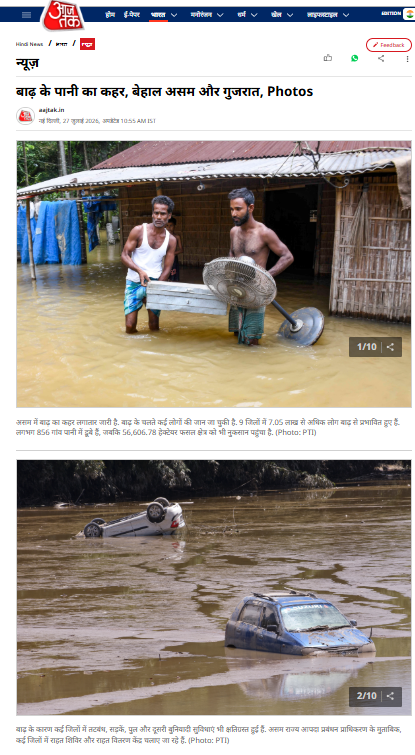
To verify the authenticity of the viral claim, we extracted several key frames from the video and conducted a reverse image search using Google Lens. The search did not reveal any credible news report, official source, or reliable information confirming that the video showed real flood visuals from Assam. During the research, we found a report published by Aaj Tak on July 27, 2026. According to the report, the flood situation in Assam remained severe, with several deaths reported and more than 7.05 lakh people affected across nine districts of the state. The report link and screenshot are provided below.
As the video appeared suspicious, we analysed it using the AI detection tool HIVE Moderation. The tool’s analysis indicated a 98.8 percent probability that the video was AI-generated, suggesting that it was not a real recording.

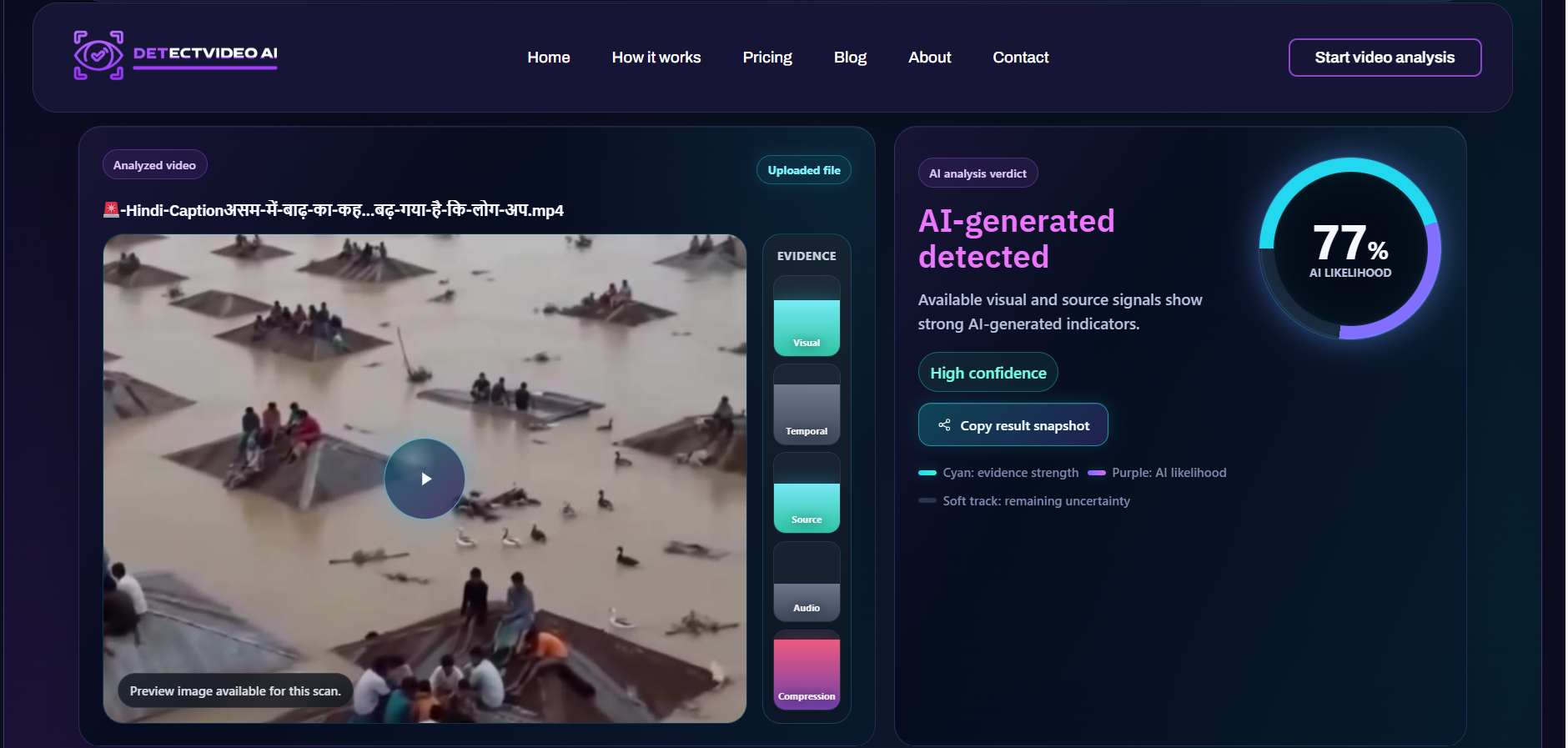
Further research was carried out using another AI detection tool, DetectVideo.AI, which found a 77 percent likelihood of the video being AI-generated.
For additional verification, we extracted key frames from the viral video and analysed them using another AI detection tool, AI or Not. The tool’s assessment indicated a 96 percent probability that the visuals were AI-generated.

Conclusion
The research established that the viral video is not from a real flood incident but was created using AI. While flooding in Assam is a real situation, this AI-generated video is unrelated to the actual floods and is being circulated on social media with a misleading claim.

Introduction:
Digital Forensics, as the term goes, “It is the process of collecting, preserving, identifying, analyzing, and presenting digital evidence in a way that the evidence is legally admitted.”
It is like a detective work in the digital realm, where investigators use various specific methods to find deleted files and to reveal destroyed messages.
The reason why Digital Forensics is an important field is because with the advancement of technology and the use of digital devices, the role of Digital Forensics in preserving the evidence and protecting our data from cybercrime is becoming more and more crucial.
Digital Forensics is used in various situations such as:
- Criminal Investigations: Digital Forensics enables investigators to trace back cyber threat actors and further identify victims of the crime to gather evidence needed to punish criminals.
- Legal issues: Digital Forensics might aid in legal matters involving intellectual property infringement and data breaches etc.
Types of Digital Data in Digital Forensics:
1.Persistent (Non-volatile) Data :-
- This type of Data Remains Intact When The Computer Is Turned Off.
- ex. Hard-disk, Flash-drives
2. Volatile Data :-
- These types of Data Would Be Lost When The Computer Is Turned Off.
- ex. Temp. Files, Unsaved OpenFiles, etc.
The Digital Forensics Process
The process is as follows

- Evidence Acquisition: This process involves making an exact copy (forensic image) of the storage devices such as hard drives, SSD or mobile devices. The goal is to preserve the original data without changing it.
- Data Recovery: After acquiring the forensic image, the analysts use tools to recover deleted, hidden or the encrypted data inside the device .
- Timeline Analysis: Analysts use timestamp information from files, and system logs to reconstruct the timeline of activities on a device. This helps in understanding how an incident spanned out and who was involved in it.
- Malware Analysis: In cases involving security breaches, analysts analyze malware samples to understand their behavior, impact, and origins. various reverse engineering techniques are used to analyze the malicious code.
Types of tools:
- Faraday Bags: Faraday bags are generally the first step in digital evidence capture. These bags are generally made of conductive materials, which are used to shield our electronic devices from external waves such as WiFi, Bluetooth, and mobile cellular signals, which in turn protects the digital evidence from external tampering.
- Data recovery : These types of software are generally used for the recovery of deleted files and their associated data. Ex. Magnet Forensics, Access data, X-Ways
- Disk imaging and analysis :These types of softwares are Generally used to replicate the data storage devices and then perform further analysis on it ex. FTKImager, Autopsy, and, Sleuth Kit
- File carving tools: They are generally used to extract information from the embedded files in the image made. Ex.Foremost, Binwalk, Scalpel
Some common tools:
- EnCase: It is a tool for acquiring, analyzing, and reporting digital evidence.
- Autopsy: It is an open-source platform generally used for analyzing hard drives and smartphones.
- Volatility: It is a framework used generally for memory forensics to analyze volatile memory dumps and extract info.
- Sleuth Kit: It is a package of CLI tools for investigating disk images and its associated file systems.
- Cellebrite UFED: It is a tool generally used for mobile forensics.
Challenges in the Field:
- Encryption: Encryption plays a major challenge as the encrypted data requires specialized techniques and tools for decryption.
- Anti-Forensic Techniques: Anti-Forensics techniques play a major challenge as the criminals often use anti-forensic methods to cover their tracks, making it challenging to get the digital evidence.
- Data Volume and Complexity: The large volume of digital data and the diversity of various devices create challenges in evidence collection and analysis.
The Future of Digital Forensics: A Perspective
With the growth of technology and the vast presence of digital data, the challenges and opportunities in Digital Forensics keep on updating themselves. Due to the onset of new technology and the ever growing necessity of cloud storage, mobile devices, and the IoT (Internet of Things), investigators will have to develop new strategies and should be ready to adapt and learn from the new shaping of the tech world.
Conclusion:
Digital Forensics is an essential field in the recent era for ensuring fairness in the digital era. By collecting, inspecting, and analyzing the digital data, the Digital Forensics investigators can arrive lawfully at the prosecution of criminals and the settlement of civil disputes. Nowadays with technology on one hand progressing continuously, the discipline of Digital Forensics will certainly become even more pivotal in the case of investigations in the years to come.
