
#FactCheck - Viral Photo of Modi and Rahul Gandhi in Parliament Found to Be AI-Generated
Executive Summary
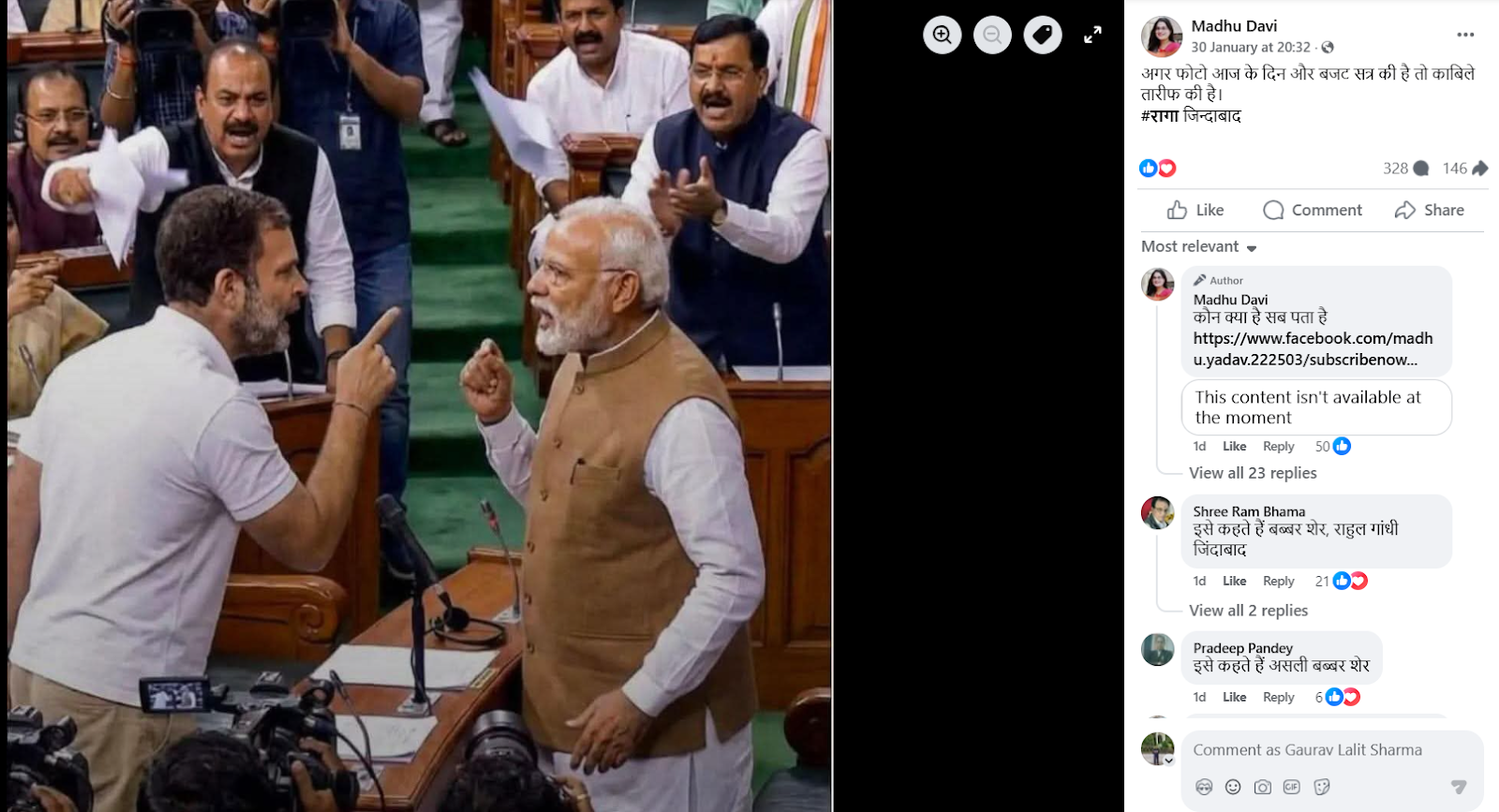
An image showing Prime Minister Narendra Modi and Leader of Opposition in the Lok Sabha and Congress MP Rahul Gandhi standing face to face inside Parliament is going viral on social media. Several users are sharing the image claiming that the photograph was taken during the ongoing Budget Session, suggesting a direct face-off between the two leaders inside Parliament. However, research conducted by the CyberPeacehas found that the viral claim is false. The image in question is not real but has been generated using Artificial Intelligence (AI). The AI-generated image is now being shared on social media with a misleading claim.
Claim
A Facebook user named Madhu Davi shared the viral image on January 30, 2026, with the caption: “If this photo is from today and the Budget Session, it is commendable. RAGA Zindabad.”
(Archived version of the post available here.)
- https://www.facebook.com/photo/?fbid=759145877237871&set=a.110639115421887
- https://perma.cc/N2XD-TZ32?type=image
Fact Check:
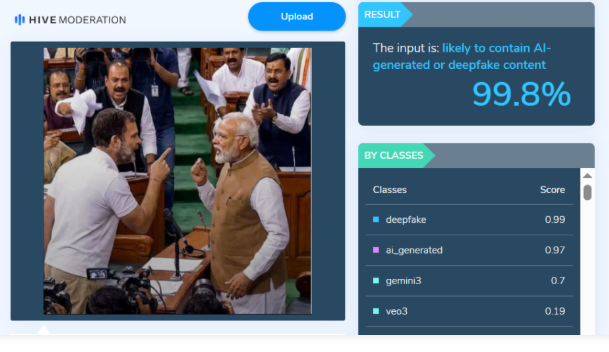
To verify the viral claim, we first conducted a keyword search on Google to check whether any credible media outlet had reported such an incident during the Budget Session. However, no news reports supporting the claim were found. We then performed a reverse image search using Google Lens, but this too did not yield any reliable media reports or evidence confirming the authenticity of the image. This raised suspicion that the image might be AI-generated. To further verify, the image was analysed using the AI detection tool Hive Moderation. The tool indicated a probability of over 99 per cent that the image was generated using Artificial Intelligence.
Conclusion
CyberPeace research confirms that the image being circulated with the claim that Prime Minister Narendra Modi and Rahul Gandhi came face to face during the Budget Session is fake. The viral image has been created using AI and is being shared with a false and misleading narrative.

Related Blogs
Executive Summary
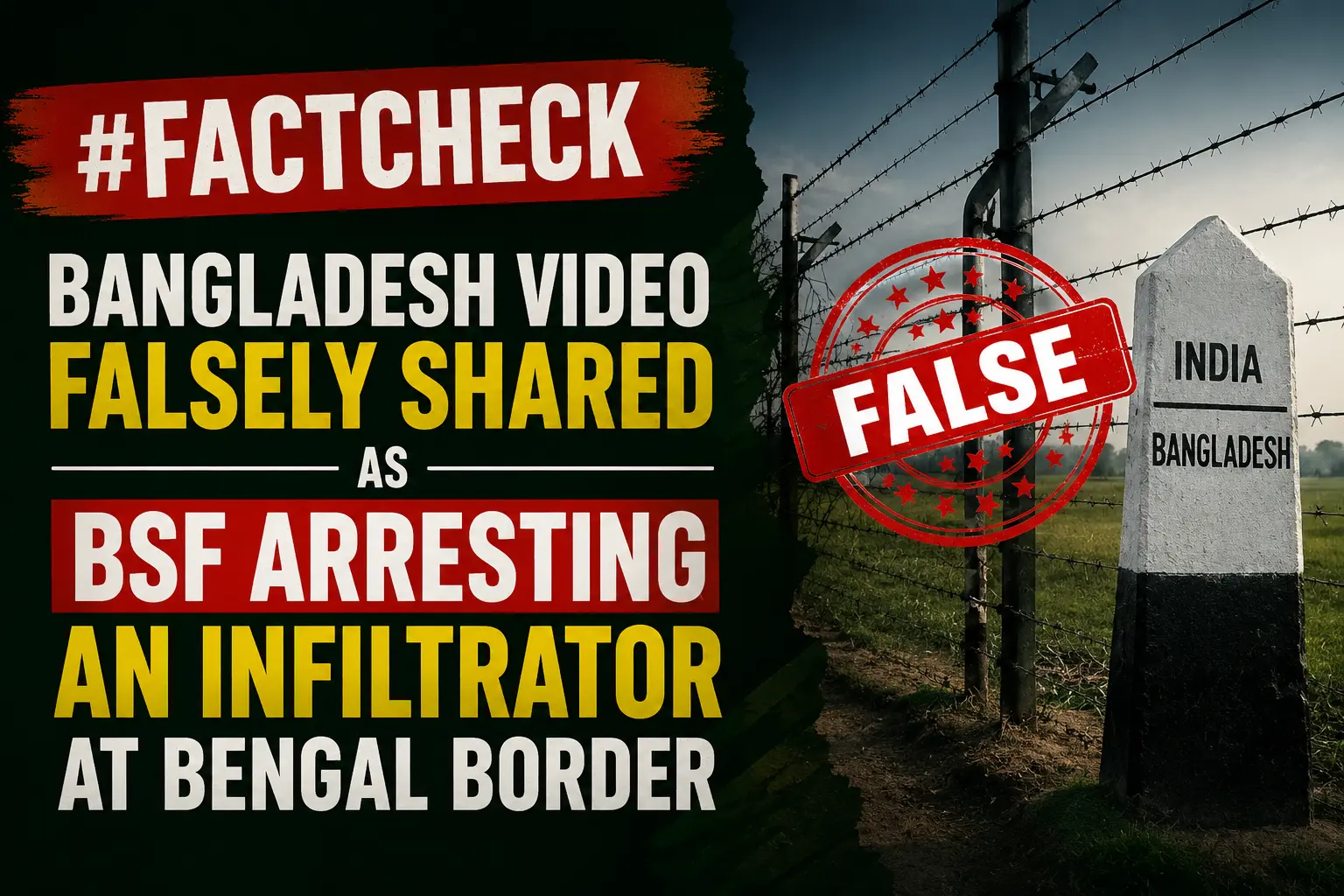
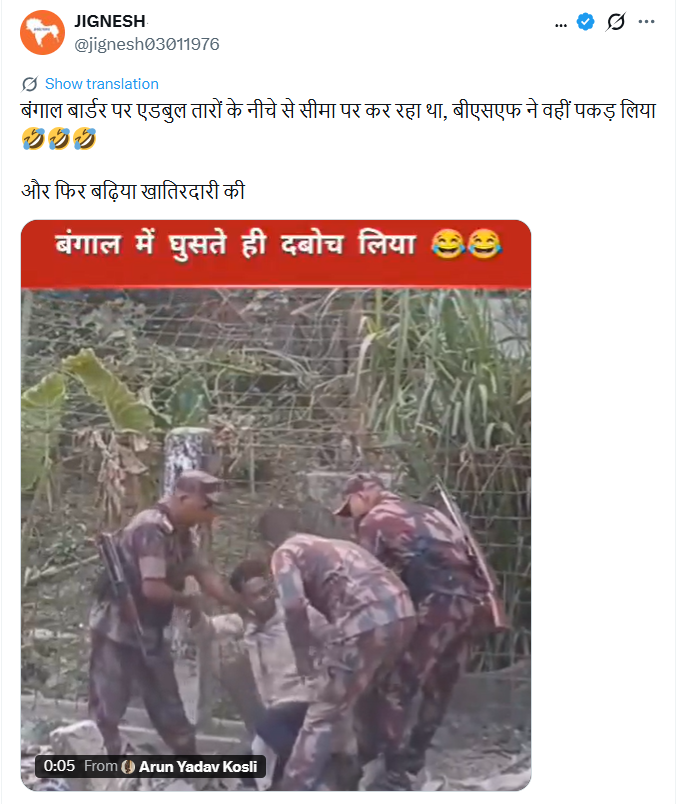
A video showing security personnel overpowering a man is being widely shared on social media with the claim that it shows the Border Security Force (BSF) arresting an infiltrator attempting to cross the India-Bangladesh border in West Bengal. However, research by CyberPeace Research Wing found that the claim is false. The viral video is from Bangladesh and is unrelated to India or the BSF.
Claim
An X user shared the viral video claiming: “He was crossing the Bengal border from beneath the barbed fencing when the BSF caught him on the spot.”
The post was circulated as an incident from the India-Bangladesh border in West Bengal.
Fact Check
To verify the claim, we extracted keyframes from the viral video and conducted a reverse image search. During the research, we found the same video posted on 21 March 2026 by an X handle named “Niru Nahar.”
According to the caption of that post, the video showed Bangladesh Border Guards arresting BNP leader Mizan, also known as “Baba Mizan,” near the border.
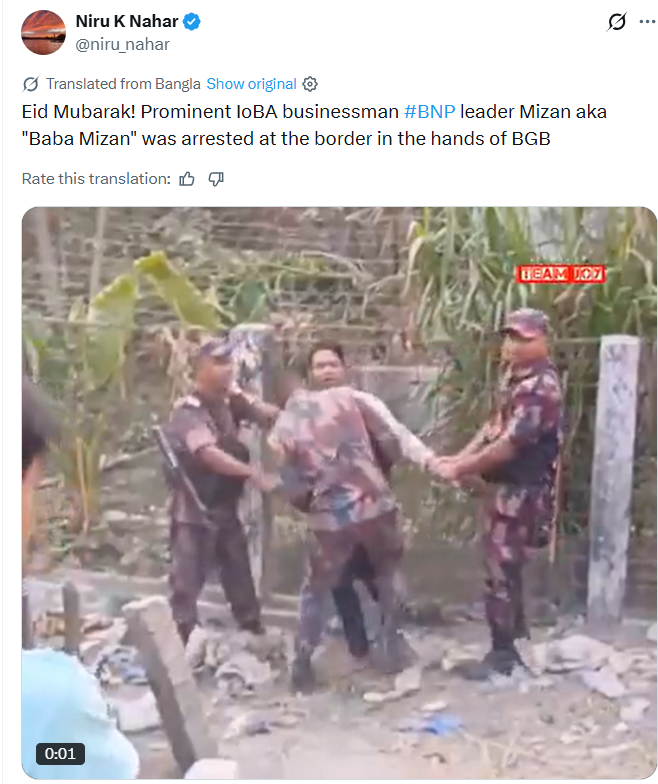
Further research led us to a Facebook post uploaded on 22 March 2026 by Bangladeshi news platform Jono Pulse. The post identified the detained individual as “Juel,” an alleged drug trafficker from Chapainawabganj, and stated that he had been arrested by the Border Guard Bangladesh (BGB).
Chapainawabganj is located in Bangladesh, confirming that the video is unrelated to West Bengal or the BSF.

Conclusion
The viral claim is misleading. The video does not show the BSF arresting an infiltrator at the Bengal border. It is actually from Bangladesh and depicts a separate incident involving Border Guard Bangladesh personnel.
![Securing Digital Banking: RBI Mandates Migration to [.]bank[.]in Domains](https://cdn.prod.website-files.com/64b94adadbfa4c824629b337/6818602cfbcc953fcae859a1_POLICY%20TEAM%20COVER%20PAGES%20-21%20(1).webp)
Introduction
The Reserve Bank of India (RBI) has mandated banks to switch their digital banking domains to 'Bank.in' by October 31, 2025, as part of a strategy to modernise the sector and maintain consumer confidence. The move is expected to provide a consistent and secure interface for online banking, as a response to the increasing threats posed by cybercriminals who exploit vulnerabilities in online platforms. The RBI's directive is seen as a proactive measure to address the growing concerns over cybersecurity in the banking sector.
RBI Circular - Migration to '.bank.in' domain
The official circular released by the RBI dated April 22, 2025, read as follows:
“It has now been decided to operationalise the ‘. bank.in’ domain for banks through the Institute for Development and Research in Banking Technology (IDRBT), which has been authorised by National Internet Exchange of India (NIXI), under the aegis of the Ministry of Electronics and Information Technology (MeitY), to serve as the exclusive registrar for this domain. Banks may contact IDRBT at sahyog@idrbt.ac.in to initiate the registration process. IDRBT shall guide the banks on various aspects related to application process and migration to new domain.”
“All banks are advised to commence the migration of their existing domains to the ‘.bank.in’ domain and complete the process at the earliest and in any case, not later than October 31, 2025.”
CyberPeace Outlook
The Reserve Bank of India's directive mandating banks to shift to the 'Bank.in' domain by October 31, 2025, represents a strategic and forward-looking measure to modernise the nation’s digital banking infrastructure. With this initiative, the RBI is setting a new benchmark in cybersecurity by creating a trusted, exclusive domain that banks must adopt. This move will drastically reduce cyber threats, phishing attacks, and fake banking websites, which have been major sources of financial fraud. This fixed domain will simplify verification for consumers and tech platforms to more easily identify legitimate banking websites and apps. Furthermore, a strong drop in online financial fraud will have a long-term effect by this order. Since phishing and domain spoofing are two of the most prevalent forms of cybercrime, a shift to a strictly regulated domain name system will remove the potential for lookalike URLs and fraudulent websites that mimic banks. As India’s digital economy grows, RBI’s move is timely, essential, and future-ready.
References

Executive Summary
Amid uncertainty over the future of the two-week ceasefire following 21 hours of inconclusive talks between the United States and Iran, two videos linked to Israel are going viral on social media.In one clip, a man speaking at a microphone is suddenly attacked by another person. Some users claim the video shows an incident inside Israel’s parliament, the Knesset.
In another video, a similar scene is being shared with the claim that a Member of Parliament assaulted Israeli Prime Minister Benjamin Netanyahu. However, a research by the CyberPeace found both claims to be false. The videos are old and unrelated to Israel.
Claim
An Instagram user shared one of the videos claiming it shows an attack inside the Israeli parliament.Another user shared a similar clip alleging that an MP assaulted Prime Minister Netanyahu.
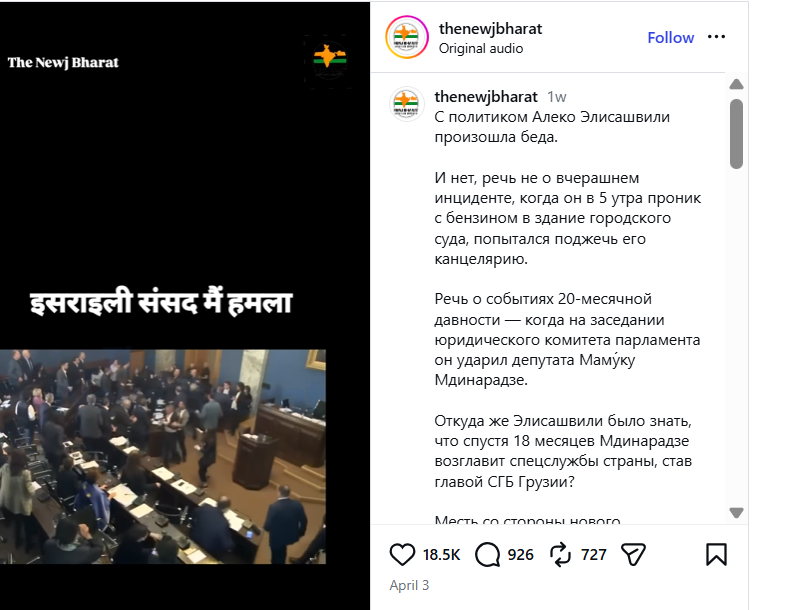
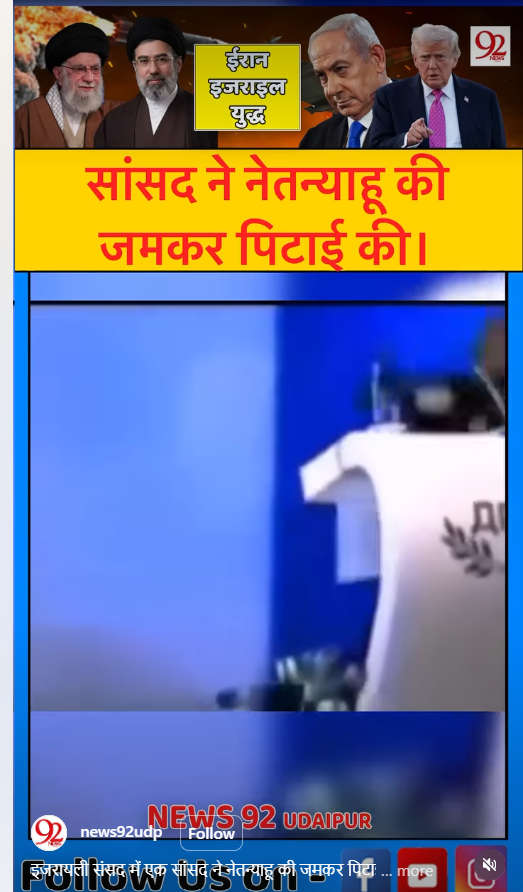
Fact Check
First Video
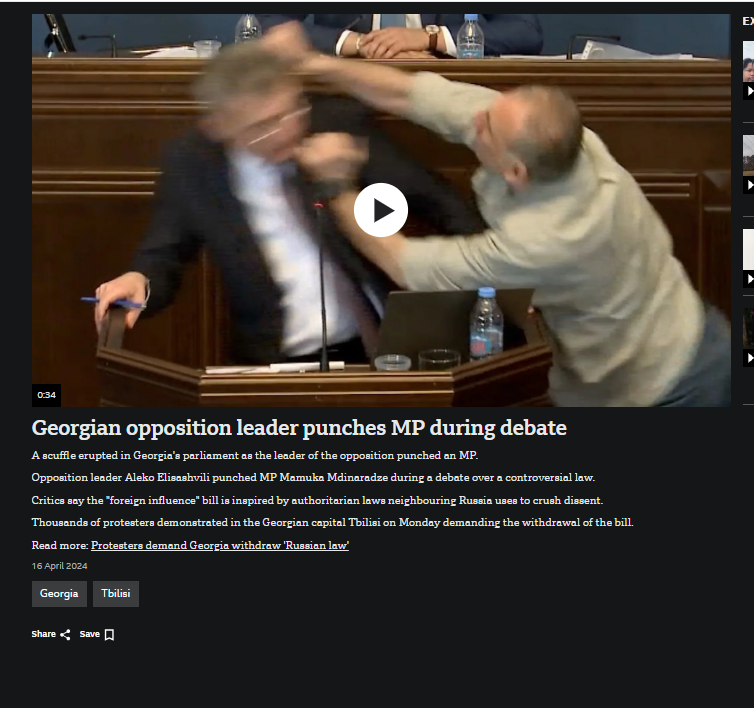
We extracted keyframes from the first viral clip and conducted a reverse image search. The footage was found on the YouTube channel of AFP News Agency, uploaded on April 15, 2024. According to the report, the video shows a scuffle inside the parliament of Georgia. The clash broke out after the government reintroduced a controversial bill, during which an opposition leader punched a ruling party MP, triggering chaos in the chamber.
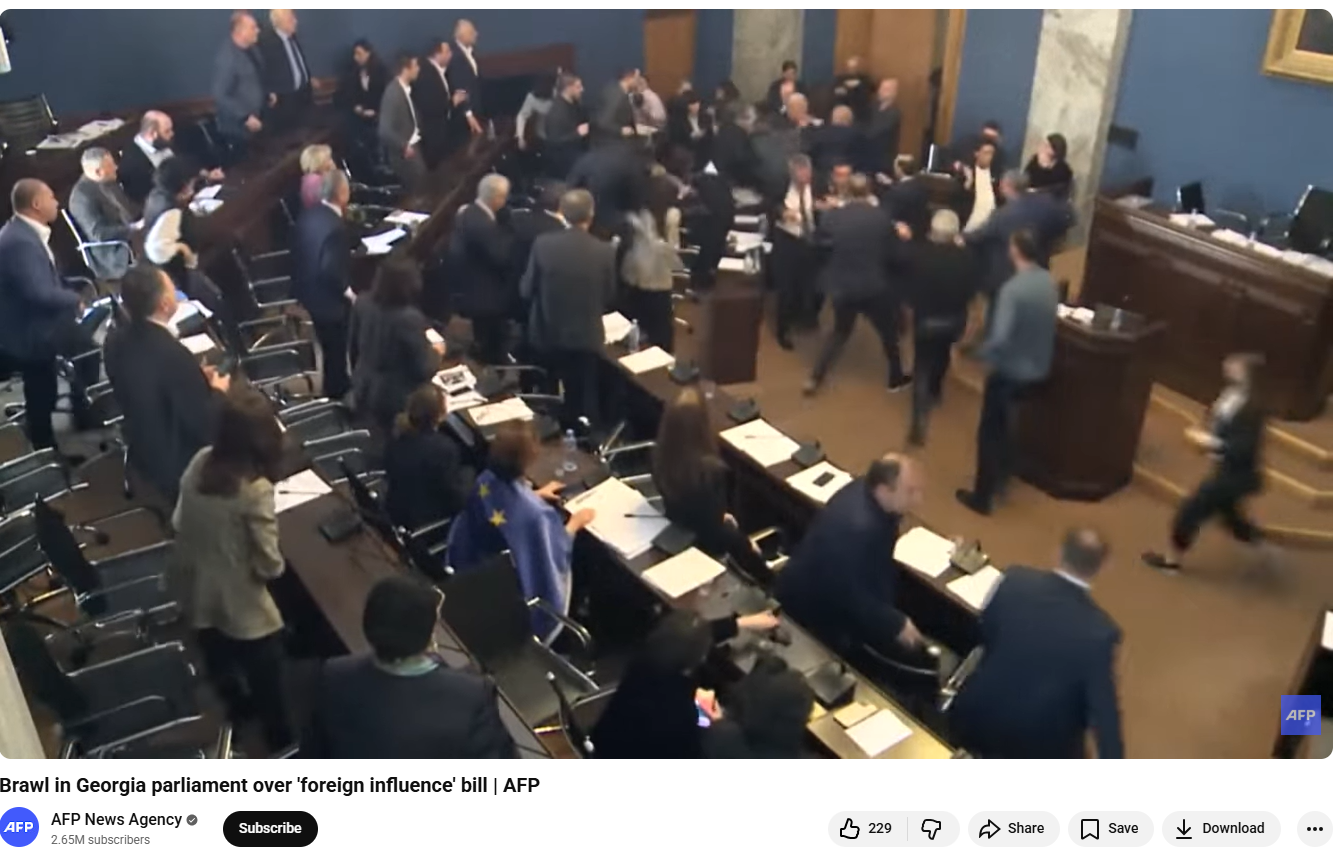
The same incident was also reported by BBC on April 16, 2024, confirming that the video is from Georgia and not Israel.
Second Video
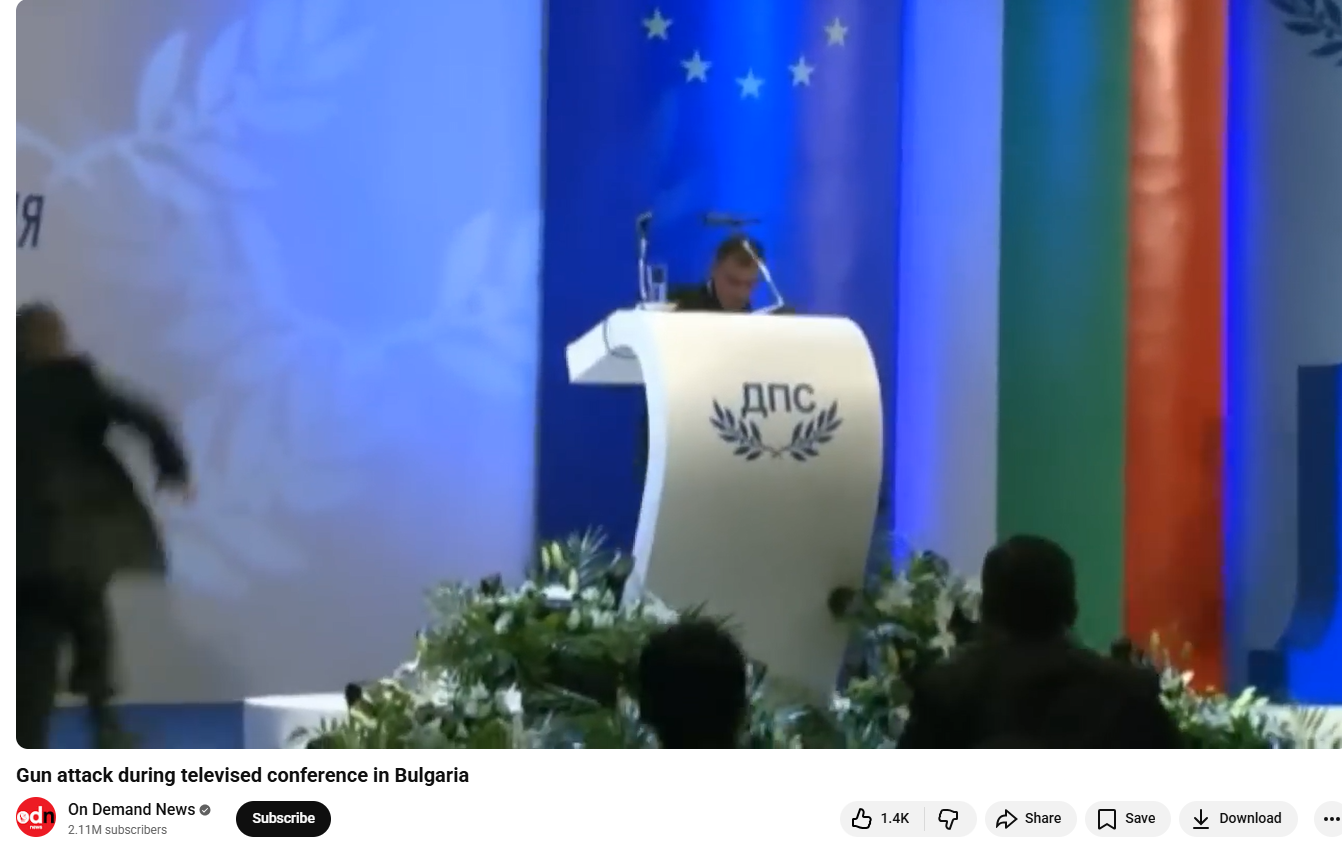
The second video has also circulated earlier with similar claims. Verification shows that it dates back to January 2013 and is from Bulgaria. Footage uploaded by the YouTube channel “On Demand News” on January 19, 2013 shows an attack on Bulgarian political leader Ahmed Dogan, when a man pointed a gun at him before being overpowered by security personnel.
Conclusion
The viral claims are false and misleading. Neither of the videos is related to Israel. The first clip is from Georgia’s parliament in April 2024, while the second dates back to a 2013 incident in Bulgaria. Both videos have been taken out of context and falsely linked to Israel and Prime Minister Benjamin Netanyahu to mislead viewers.
There is no evidence of any such attack in Israel’s parliament or on its prime minister as claimed. Users are advised to verify information before sharing such content, especially during sensitive geopolitical situations.
