
#FactCheck - Out-of-Context Clip of PM Modi Misused to Claim He Insulted India
Executive Summary:
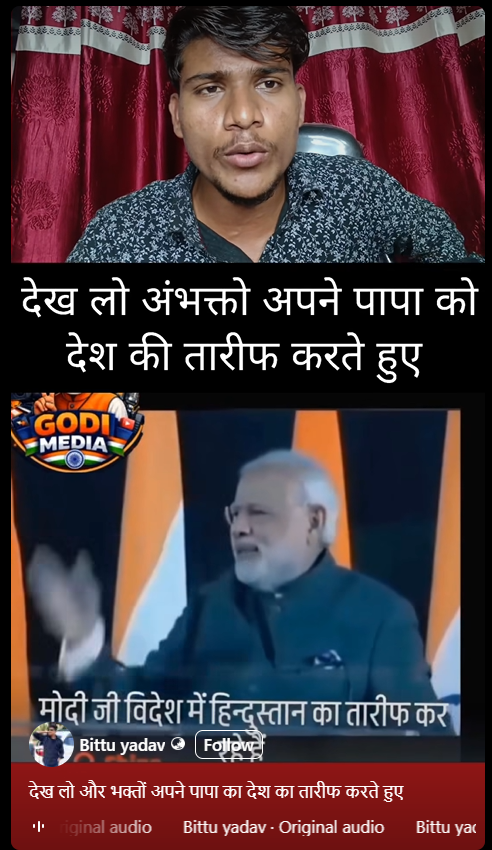
A short video clip of Prime Minister Narendra Modi is going viral on social media. In the clip, he can be heard saying, “What sins did we commit in our previous life that we were born in India?” Users are sharing this video claiming that the Prime Minister insulted India and its people during a foreign visit. However, an research by the CyberPeace found that the claim is misleading. The viral clip is taken out of context from a longer speech delivered by Modi during his visit to Shanghai, China, in 2015
Claim:
A Facebook user named “Bittu Yadav” shared the reel, portraying the statement as anti-India. The caption reads:“Look at this, and you supporters—see how your ‘leader’ is praising the country.”
Post link and archive link:
Fact Check:
To verify the claim, we searched relevant keywords on Google and found the full video uploaded on May 16, 2015, on the official YouTube channel of the Bharatiya Janata Party. The video shows Prime Minister Narendra Modi addressing the Indian community in Shanghai, China.
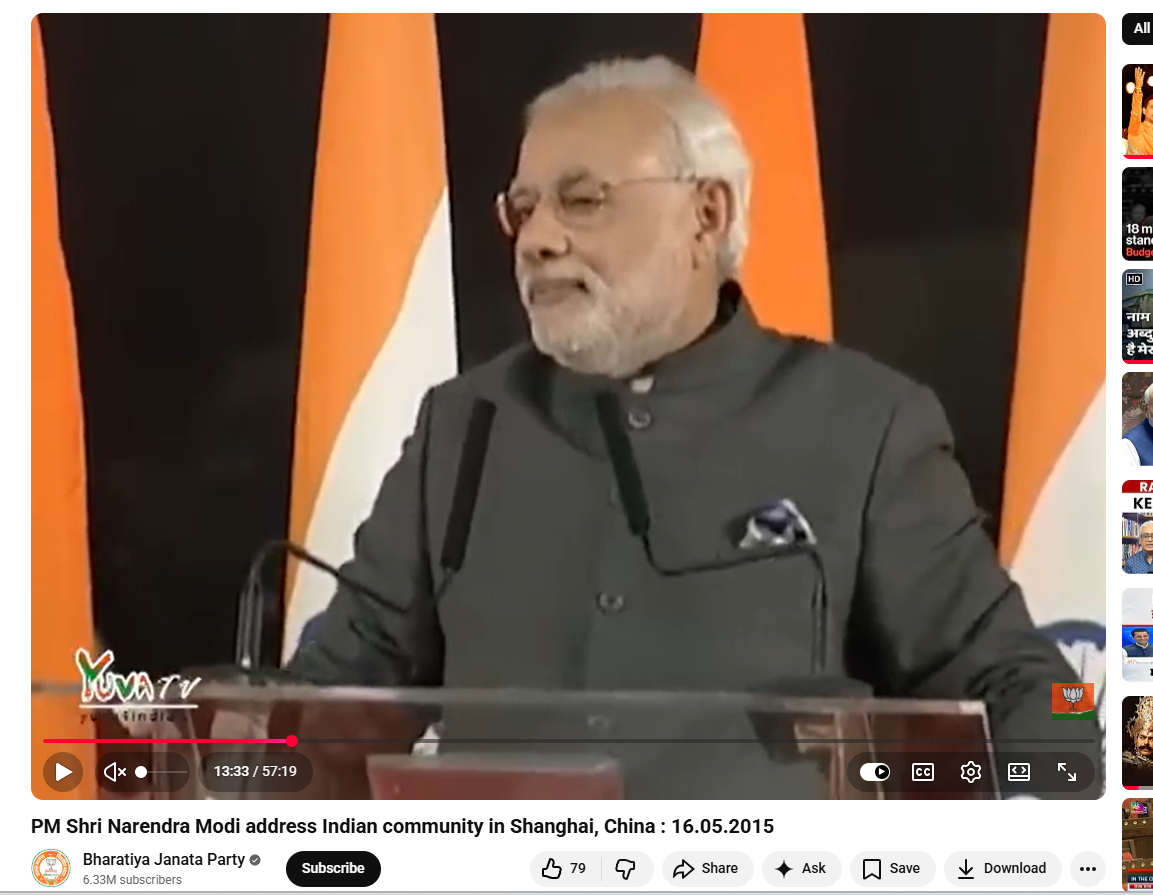
In the 57-minute speech, at around 51 minutes 25 seconds, Modi was referring to the pessimistic atmosphere in India before 2014. He said: “Within a year… people used to say, ‘Leave it, nothing will happen now. Who knows what sins we committed in our previous life that we were born in India’… From that mindset, today the world says that if there is a country growing at the fastest pace, it is India.”
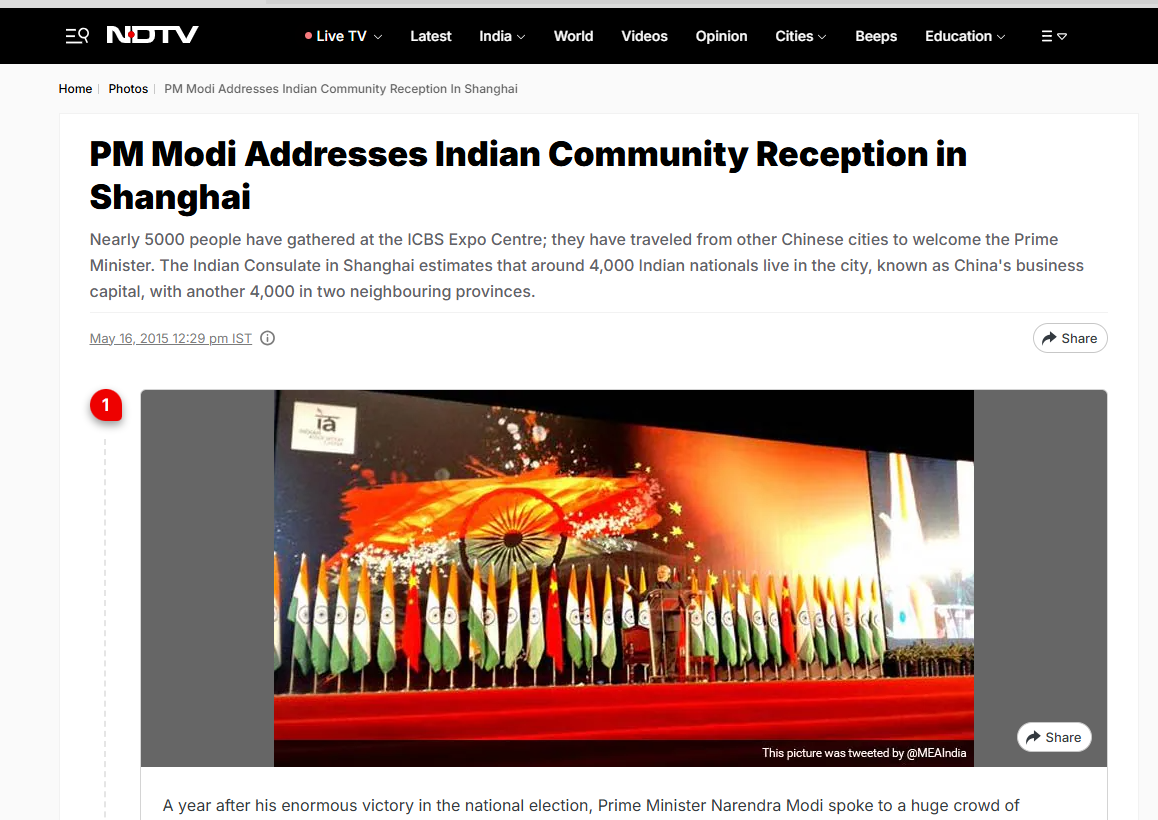
This clearly shows that Modi was citing a past sentiment to highlight how perceptions about India have changed over time, not expressing his personal view. Media reports from his May 2015 China visit also noted that he addressed around 5,000 members of the Indian community in Shanghai, where he spoke about India’s economic growth and initiatives like “Make in India.”
Conclusion:
The viral claim is false. The video has been edited and shared out of context. In reality, Prime Minister Narendra Modi was referring to a past mindset before 2014 while highlighting the change in India’s global perception.

Related Blogs

In the 21st century, wars are no longer confined to land, sea, and air. Rather, they are increasingly playing out across the digital domain, where effective dominance over networks, data, and communications determines who holds the upper hand. Among these, 5G networks are becoming a defining factor on modern battlefields. The ultra-low latency, massive bandwidth capability, and the ability to connect many devices at a single time are transforming the scale and level of military operations, intelligence, and logistics. This unprecedented connectivity is also met with a host of cybersecurity vulnerabilities that the governments and the militaries have to address.
As India faces a challenging security environment, the emergence of 5G presents both an opportunity and a dilemma. On one hand, it can enhance our command, control, surveillance and battlefield coordination. On the other hand, it also exposes the military and the security establishments to risks of espionage and supply chain vulnerabilities. So in this case, it will be important to strike a balance between innovation and security for turning 5G into a strength rather than a liability.
How can 5G networks be a military asset?
In comparison to its predecessors, 5G is not just about faster downloads. Rather, it is a complete overhaul of network architectures that are designed to support services and technologies according to modern technological requirements. In terms of military application of 5G networks, it can prove a series of game-changing capabilities, such as:-
- Enhanced Command and Control in the form of real-time data sharing between troops, UAVs, Radar systems and the Command Cells to ensure a faster and coordinated decision-making approach.
- Tactical Situational Awareness with the help of 5G-enabled devices can give soldiers instant updates on the terrain, troop movements, or positions and enemy movements.
- Advanced Intelligence, Surveillance and Reconnaissance (ISR) with high-resolution sensors, radars and UAVs that can operate at their full potential by transmitting vast data streams with minimal legacy.
However, 5G networks can also help to become a key component of the communication component of the military command establishments that would allow machines, sensors and human operators to function as a single and integrated force.
Understanding the importance of 5G networks as the Double-Edged Swords of Connectivity-
The potential of 5G is undeniable, but its vulnerabilities cannot be ignored. Because they are software-driven and reliant on dense networks of small cells. For the military, this shows that adversaries could exploit their weaknesses to disrupt the communication, jam signals, and intercept sensitive data, leaving behind some key risks, such as;
- Cybersecurity threats from software-based architectures make 5G networks prone to malware and data breaches.
- Supply chain risks can arise from reliance on foreign hardware and software components with raising fears of embedded backdoors or compromised systems.
- Signal jamming and interface in terms of millimetre-wave spectrum, 5G signals are vulnerable to disruption in contested environments.
- There can also be insider threats and physical sabotage over personnel or unsecured installations that could compromise network integrity.
Securing the Backbone: Cyber Defence Imperatives
To safeguard 5G networks as the backbone for future warfare, the defence establishments need to adopt a layered, proactive cybersecurity strategy. Several measures can be considered, such as;
- Ensuring robust encryption and authentication to protect sensitive data, which requires the installation of advanced protocols like Subscription Concealed Identifiers and zero-trust frameworks to eliminate implicit trust.
- Investing in domestic R&D for 5G components to reduce dependency on foreign suppliers. India’s adoption of the 5Gi standard is a step in this direction, but upgrading it into a military grade remains vital.
- To ensure collaboration across different sectors, the defence forces need to work with civilian agencies and private telecoms support providers to create unified standards and best practices.
Thus, with embedding cybersecurity into every layer of the 5G architecture, India can work in the direction to reduce risks to maintain its operational resilience.
The geopolitical domains of 5G Network as a tool of warfare-
The introduction of 5G networks has definitely come as a tool of technological advancement in the communication sector. But at the same time, it has also posed a geopolitical context as well. The strategic competition between the US and China to dominate the 5G infrastructure has global security implications. For India, aligning closely with either of the blocs will pose a risk to its strategic autonomy, but pursuing non-alignment can give India some leverage to develop its capability on its own.
In this case, partnerships with the QUAD with the US, Japan and Australia can open avenues for cooperating on shared standards, cost sharing, and interoperability in 5G-enabled military systems. Learning from countries like the US and Israel, which are developing their defence communication and network infrastructure to secure 5G networks, or revisiting existing frameworks like COMCASA or BECA with the US can serve as platforms to explore joint protocols for 5G networks.
Conclusion: Opportunities and the way forward-
The 5G network is becoming a part of the central nervous system of the future battlefields. It can offer immense opportunities for India to modernise its defence capabilities and enhance the situational awareness by integrating AI-driven systems. The future lies in adopting a balanced strategy by developing indigenous capabilities, forging trusted partnerships, embedding cybersecurity into every layer of the networking architecture and preparing a skilled workforce to analyse and counter evolving threats. However, by adopting a foresighted preparedness, India can turn the double-edged sword of 5G into a decisive advantage by ensuring that it not only adapts to the digital battlefield, rather India can also lead it.
References
- https://chanakyaforum.com/5g-poised-to-usher-in-a-paradigm-shift-in-military-communications
- https://www.ijert.org/secure-5g-network-architecture-for-armed-forces
- https://www.airforce-technology.com/sponsored/data-is-becoming-more-powerful-than-any-weaponry-on-the-battlefield-and-5g-is-the-backbone/
- https://www.upguard.com/blog/how-5g-technology-affects-cybersecurity
- https://agileblue.com/exploring-the-impact-of-5g-technology-on-cybersecurity-practices/

Executive Summary:
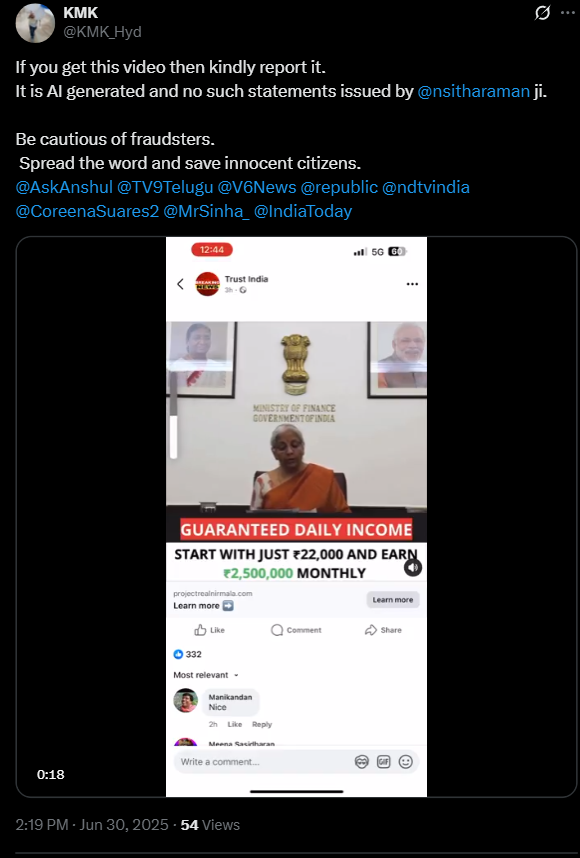
A video circulating on social media falsely claims that India’s Finance Minister, Smt. Nirmala Sitharaman, has endorsed an investment platform promising unusually high returns. Upon investigation, it was confirmed that the video is a deepfake—digitally manipulated using artificial intelligence. The Finance Minister has made no such endorsement through any official platform. This incident highlights a concerning trend of scammers using AI-generated videos to create misleading and seemingly legitimate advertisements to deceive the public.

Claim:
A viral video falsely claims that the Finance Minister of India Smt. Nirmala Sitharaman is endorsing an investment platform, promoting it as a secure and highly profitable scheme for Indian citizens. The video alleges that individuals can start with an investment of ₹22,000 and earn up to ₹25 lakh per month as guaranteed daily income.
Fact check:
By doing a reverse image search from the key frames of the viral fake video we found an original YouTube clip of the Finance Minister of India delivering a speech on the webinar regarding 'Regulatory, Investment and EODB reforms'. Upon further research we have not found anything related to the viral investment scheme in the whole video.
The manipulated video has had an AI-generated voice/audio and scripted text injected into it to make it appear as if she has approved an investment platform.
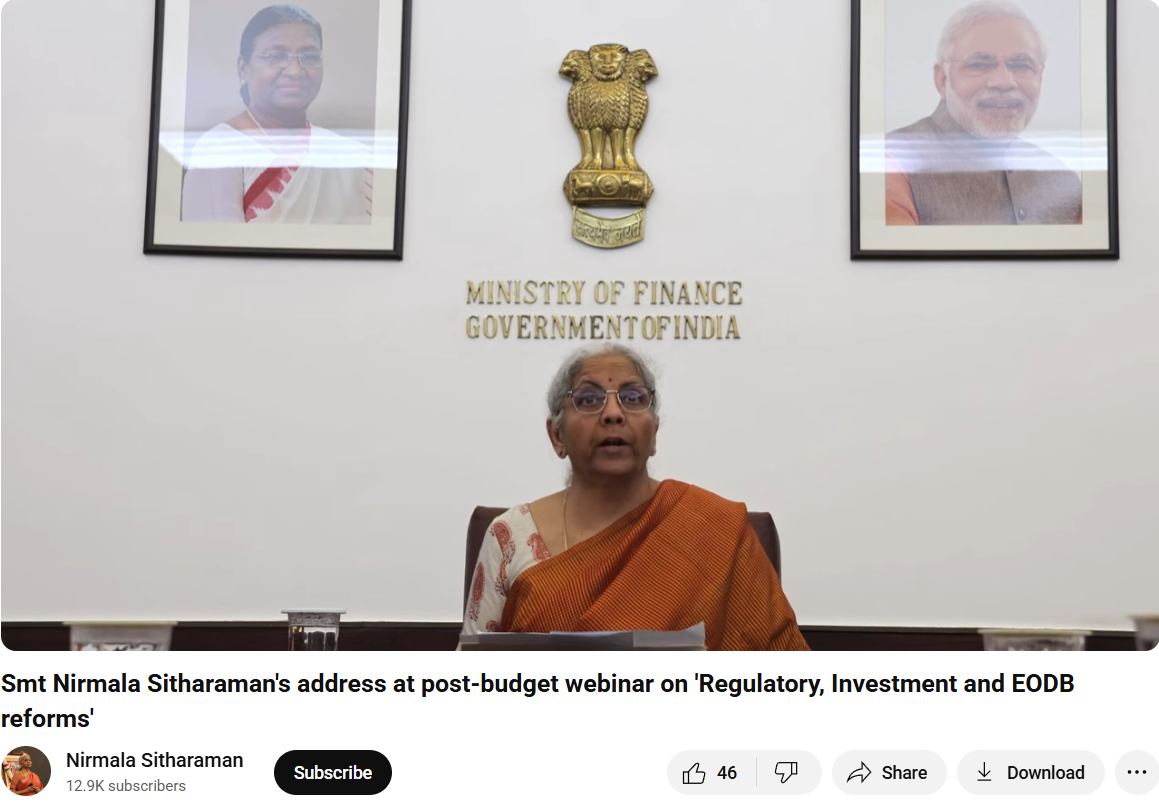
The key to deepfakes is that they seem relatively realistic in their facial movement; however, if you look closely, you can see that there are mismatched lip-syncing and visual transitions that are out of the ordinary, and the results prove our point.
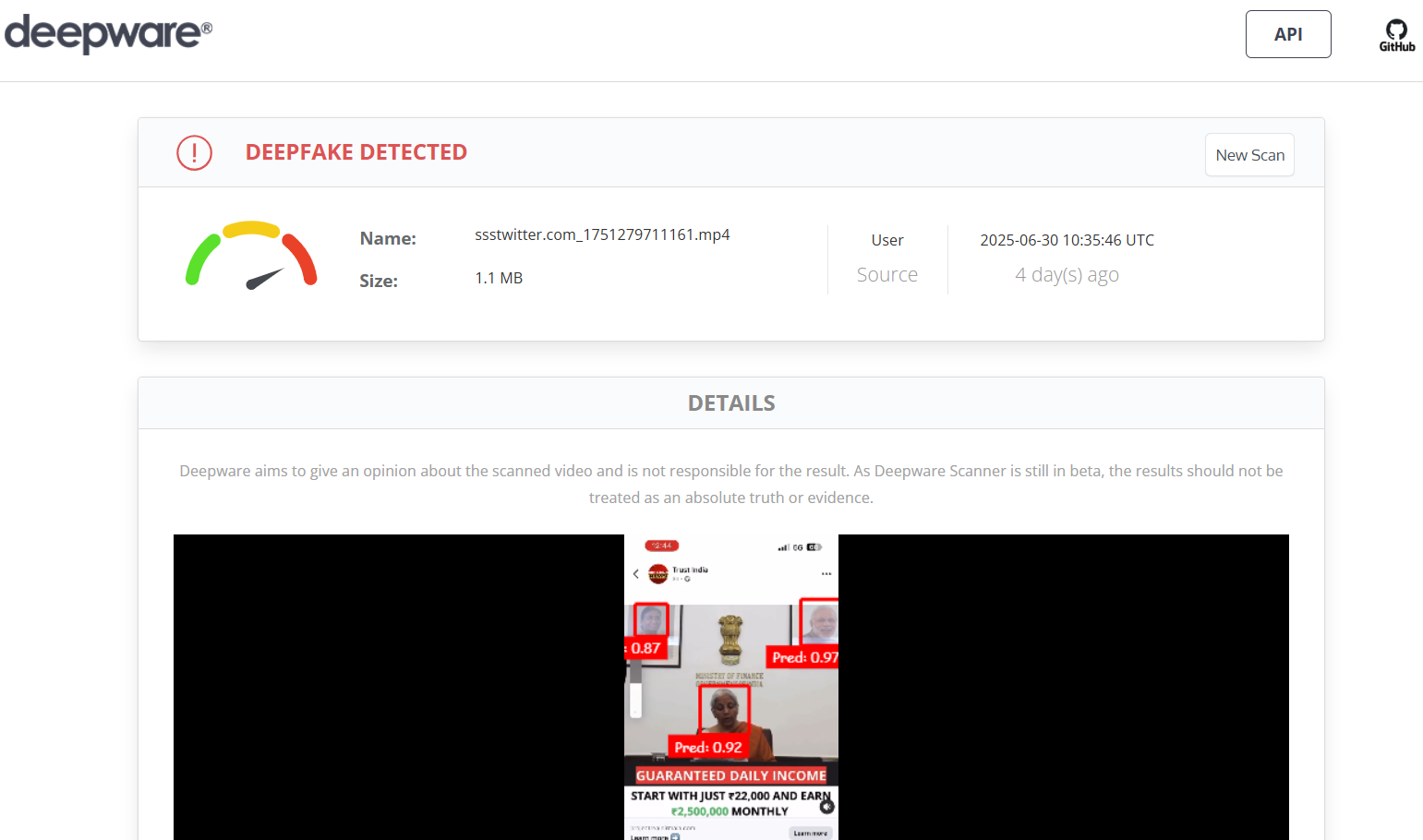
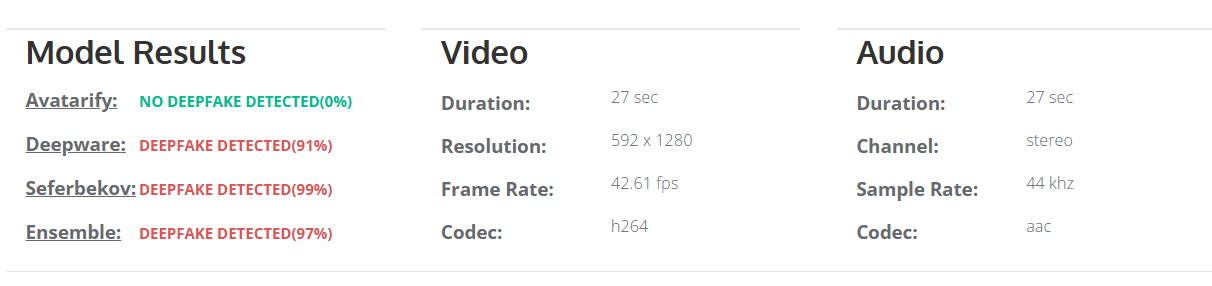
Also, there doesn't appear to be any acknowledgment of any such endorsement from a legitimate government website or a credible news outlet. This video is a fabricated piece of misinformation to attempt to scam the viewers by leveraging the image of a trusted public figure.
Conclusion:
The viral video showing the Finance Minister of India, Smt. Nirmala Sitharaman promoting an investment platform is fake and AI-generated. This is a clear case of deepfake misuse aimed at misleading the public and luring individuals into fraudulent schemes. Citizens are advised to exercise caution, verify any such claims through official government channels, and refrain from clicking on unknown investment links circulating on social media.
- Claim: Nirmala Sitharaman promoted an investment app in a viral video.
- Claimed On: Social Media
- Fact Check: False and Misleading
.webp)
Executive Summary:
A viral video of the Argentina football team dancing in the dressing room to a Bhojpuri song is being circulated in social media. After analyzing the originality, CyberPeace Research Team discovered that this video was altered and the music was edited. The original footage was posted by former Argentine footballer Sergio Leonel Aguero in his official Instagram page on 19th December 2022. Lionel Messi and his teammates were shown celebrating their win at the 2022 FIFA World Cup. Contrary to viral video, the song in this real-life video is not from Bhojpuri language. The viral video is cropped from a part of Aguero’s upload and the audio of the clip has been changed to incorporate the Bhojpuri song. Therefore, it is concluded that the Argentinian team dancing to Bhojpuri song is misleading.

Claims:
A video of the Argentina football team dancing to a Bhojpuri song after victory.


Fact Check:
On receiving these posts, we split the video into frames, performed the reverse image search on one of these frames and found a video uploaded to the SKY SPORTS website on 19 December 2022.

We found that this is the same clip as in the viral video but the celebration differs. Upon further analysis, We also found a live video uploaded by Argentinian footballer Sergio Leonel Aguero on his Instagram account on 19th December 2022. The viral video was a clip from his live video and the song or music that’s playing is not a Bhojpuri song.

Thus this proves that the news that circulates in the social media in regards to the viral video of Argentina football team dancing Bhojpuri is false and misleading. People should always ensure to check its authenticity before sharing.
Conclusion:
In conclusion, the video that appears to show Argentina’s football team dancing to a Bhojpuri song is fake. It is a manipulated version of an original clip celebrating their 2022 FIFA World Cup victory, with the song altered to include a Bhojpuri song. This confirms that the claim circulating on social media is false and misleading.
- Claim: A viral video of the Argentina football team dancing to a Bhojpuri song after victory.
- Claimed on: Instagram, YouTube
- Fact Check: Fake & Misleading
