
#FactCheck - Old Wedding Fire Video Misleadingly Shared as Iranian Hypersonic Missile Strike in Tel Aviv
Executive Summary:
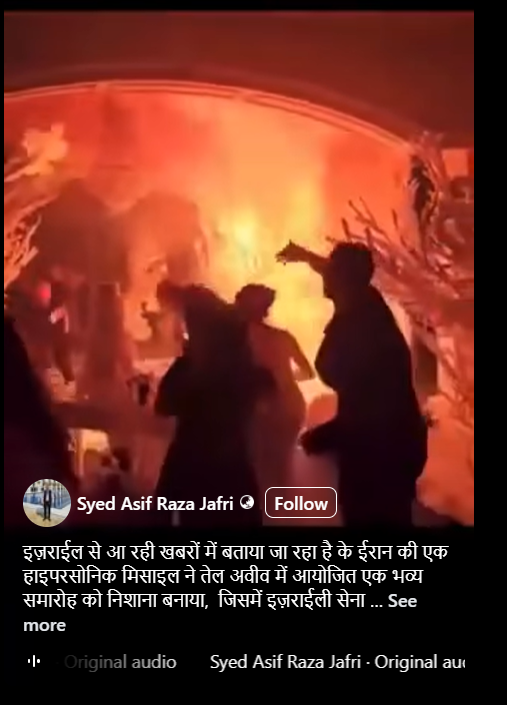
Amid the ongoing conflict involving the United States, Israel, and Iran, a video showing a building engulfed in flames is being widely circulated on social media. In the clip, a large fire can be seen inside a building while several people appear to be running in panic. The video is being shared with the claim that Iran fired a hypersonic missile targeting a ceremony in Tel Aviv, Israel, allegedly killing several Israeli military generals and other prominent figures.
However, research by the CyberPeace found that the claim is false. The video being circulated as footage of an attack in Israel actually predates the current conflict and shows a fire that broke out during a wedding ceremony.
Claim
A Facebook user named “Syed Asif Raza Jafri” shared the video on March 13, 2026, claiming that an Iranian hypersonic missile had struck a grand ceremony in Tel Aviv, where several Israeli military officers, generals, soldiers, and other important personalities were present. According to the post, the attack resulted in multiple casualties.
Source:
- https://www.facebook.com/reel/902182825912364
- https://ghostarchive.org/archive/rZryr
Fact Check
To verify the claim, we began our research using the Google Lens reverse image search tool. Several key frames from the viral video were extracted and searched online.
During the search, we found the same video shared earlier on multiple foreign social media accounts. A Facebook user named “Es de Bombero” from Chile had posted the video on January 17, 2026, describing it in Spanish as footage of a fire that broke out during a wedding celebration.
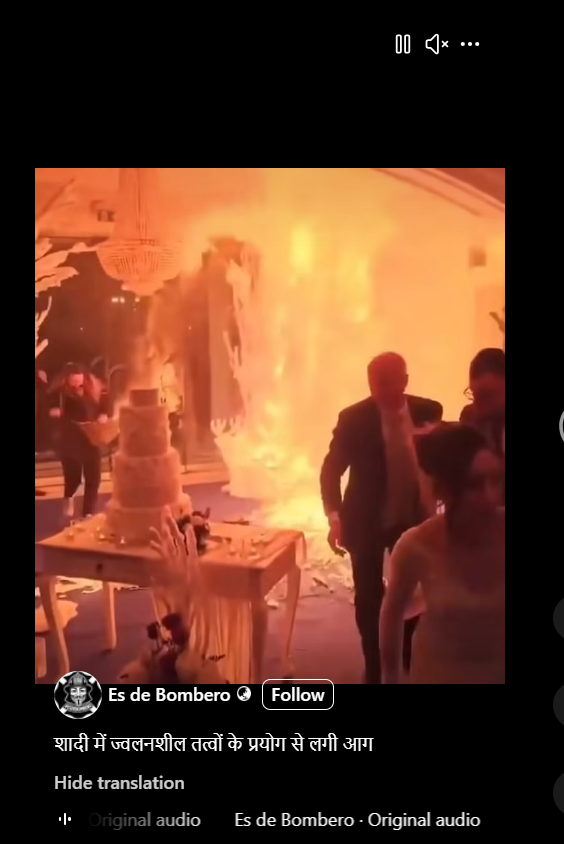
Our research shows that the viral video had been circulating on social media since at least January 15, 2026, well before the escalation of the current conflict. According to a report published on March 1, 2026, by BBC, the large-scale attacks on Iran by the United States and Israel began on February 28, 2026, after which Iran’s Supreme Leader Ali Khamenei was reported dead.
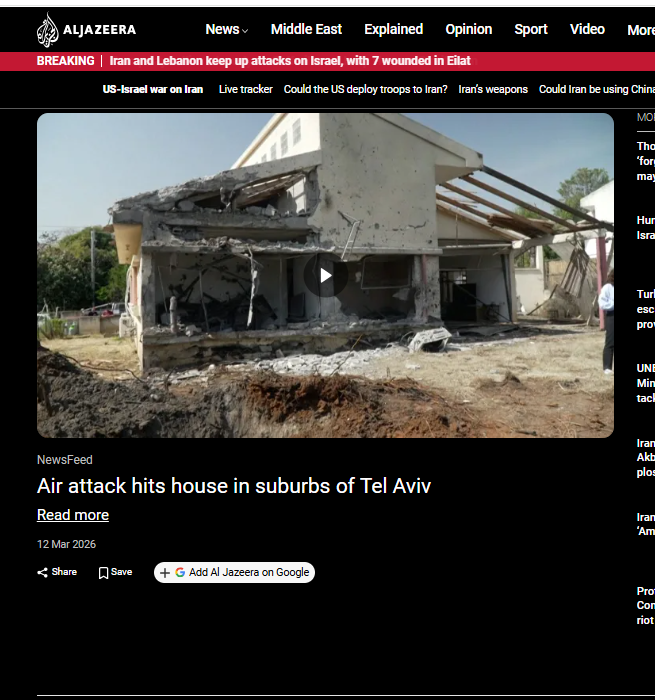
Additionally, a March 12, 2026 report by Al Jazeera stated that a house near Tel Aviv in central Israel was damaged by a rocket reportedly fired by Hezbollah, which has previously carried out joint attacks in coordination with Iran.
Conclusion
The viral video being shared as footage of an Iranian hypersonic missile strike in Tel Aviv is misleading. The clip is an older video of a fire that reportedly broke out during a wedding ceremony and was circulating online before the current conflict began.
While the exact location of the incident shown in the video cannot be independently verified, it is clear that the footage has no connection to the ongoing war between the United States, Israel, and Iran.

Related Blogs
Executive Summary
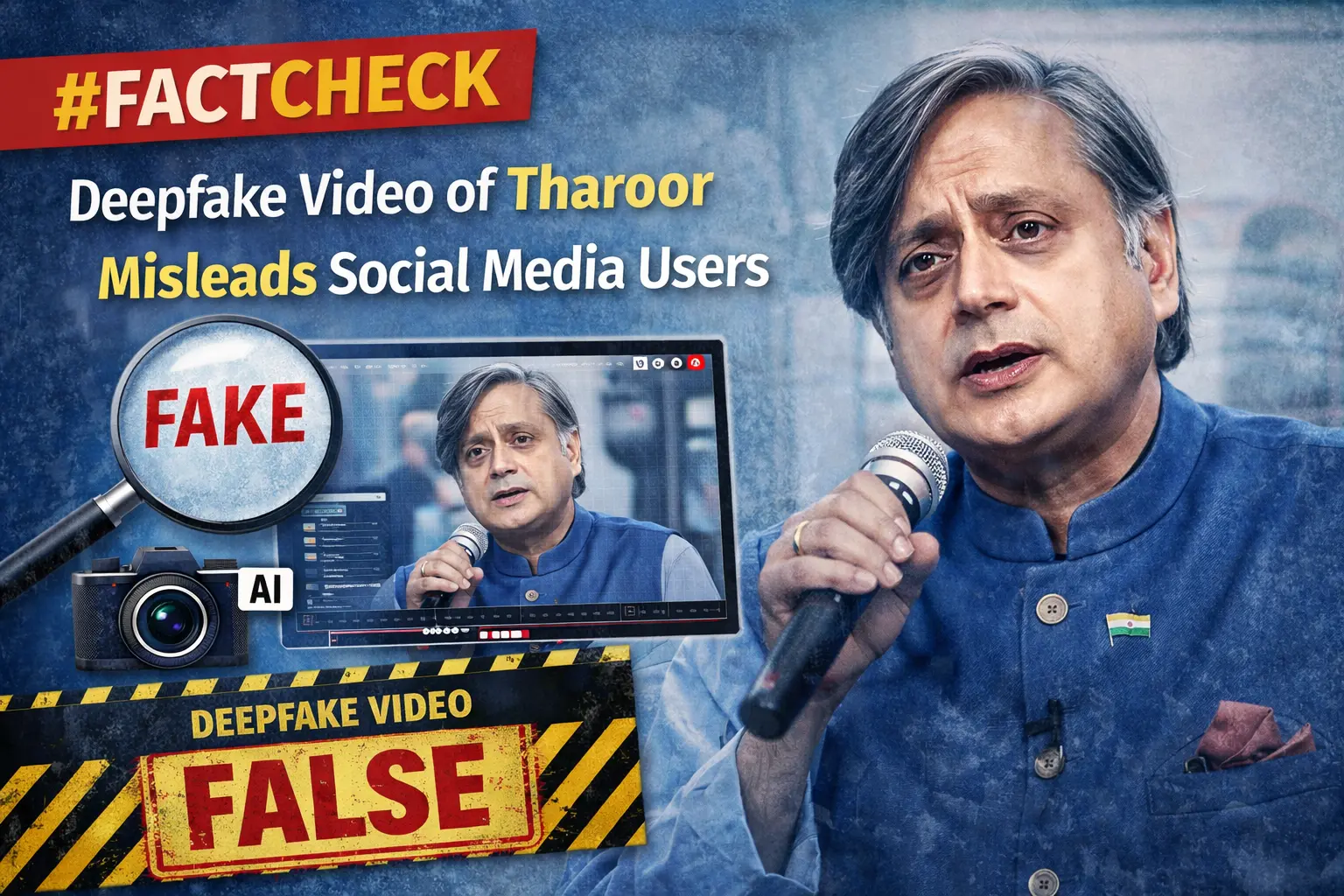
A video of senior Congress leader Shashi Tharoor is widely circulating on social media, allegedly showing him praising Pakistan’s diplomatic stance over the ICC T20 World Cup issue. Many users are sharing the clip believing it to be genuine. However, research by the CyberPeace found the claim to be false. The viral video of Tharoor is a deepfake, and the Congress leader himself has described it as fabricated and fake.
Claim
A Facebook page named “Vok Sports” shared the video on February 11, 2026, claiming that Tharoor praised Pakistan. In the viral clip, he is purportedly heard saying in English that Pakistan’s diplomatic handling of the matter was “brilliant” and that it had outmanoeuvred the Indian cricket board, adding that good diplomacy could make a weak nation appear powerful.
The video was widely shared by social media users as authentic. (Archive links and post details provided.)
Fact Check
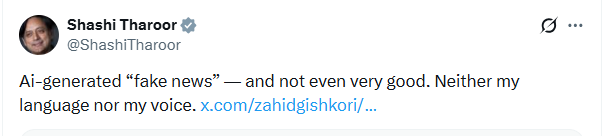
To verify the claim, we first scanned Tharoor’s official X (formerly Twitter) handle. We found a post dated February 12 in which he responded to a Pakistani journalist who had shared the video. Tharoor stated that the clip was AI-generated “fake news,” adding that neither the language nor the voice in the video was his.
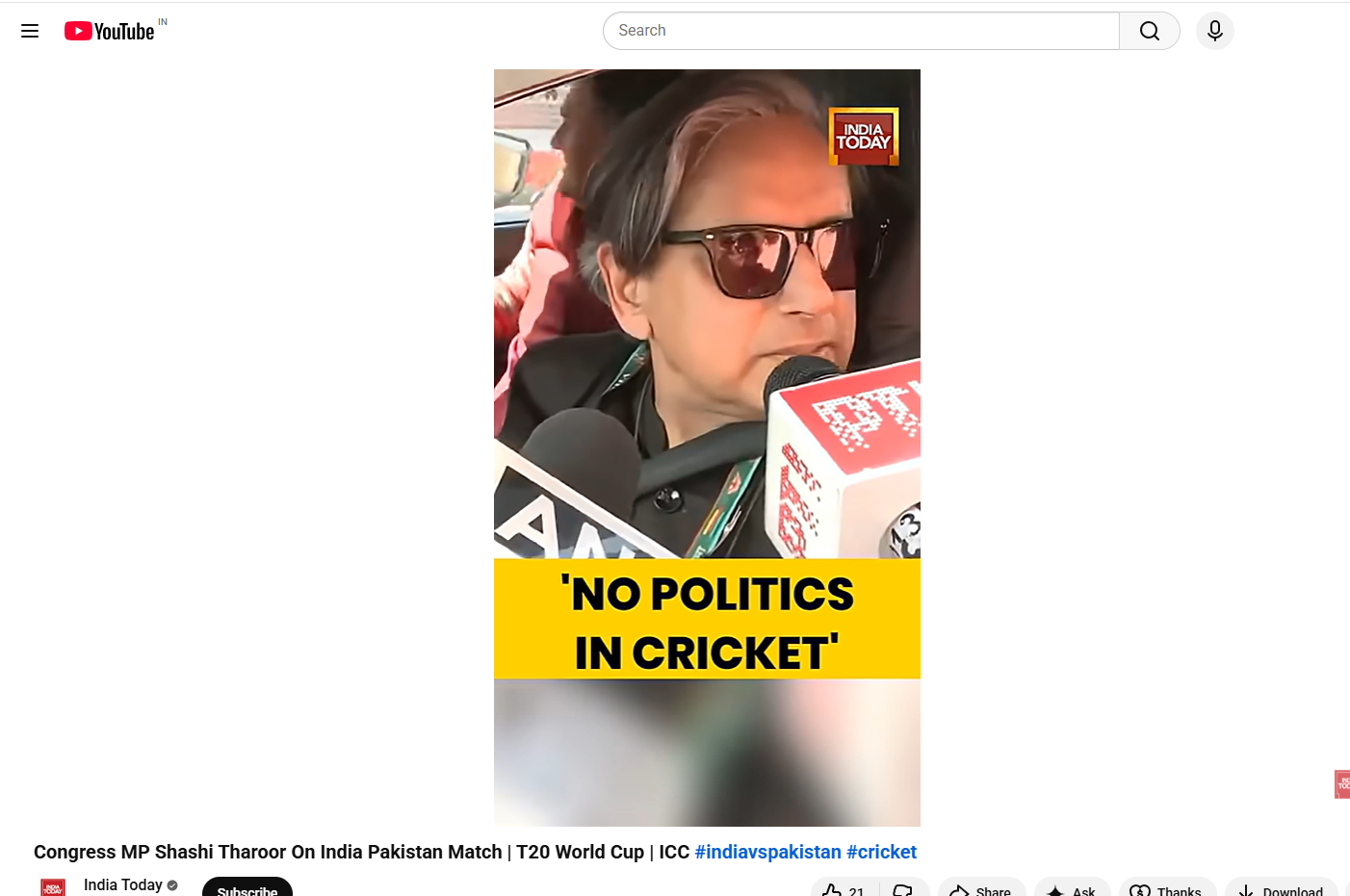
A reverse image search using Google Lens led the Desk to a video uploaded on February 10, 2026, by India Today on its official YouTube channel. The visuals in this original video exactly matched those seen in the viral clip showing Tharoor speaking to the media. However, upon analysing the original footage, we found that Tharoor was speaking in Hindi about the controversy surrounding the T20 World Cup. He stated that politics should not be mixed with cricket or sports and did not praise Pakistan or the Pakistan Cricket Board at any point. This indicates that the audio in the viral clip had been manipulated and replaced. In the original video, Tharoor said that politicians should conduct politics separately, diplomats should handle diplomacy, and cricket players should focus on the game, expressing hope that cricket would move forward with the match.
- https://www.youtube.com/watch?v=GkA1mLlAT8Q&t=3s
To further verify the authenticity of the video, several AI detection tools were used. Analysis through Aurigin.ai suggested a 78 percent probability that the audio in the viral clip was AI-generated.

Conclusion
The CyberPeace confirmed that the viral video is a deepfake. Tharoor did not praise Pakistan’s diplomatic stance during the T20 World Cup controversy, and the circulating clip has been digitally manipulated.

Introduction
In today’s hyper-connected world, information spreads faster than ever before. But while much attention is focused on public platforms like Facebook and Twitter, a different challenge lurks in the shadows: misinformation circulating on encrypted and closed-network platforms such as WhatsApp and Telegram. Unlike open platforms where harmful content can be flagged in public, private groups operate behind a digital curtain. Here, falsehoods often spread unchecked, gaining legitimacy because they are shared by trusted contacts. This makes encrypted platforms a double-edged sword. It is essential for privacy and free expression, yet uniquely vulnerable to misuse.
As Prime Minister Narendra Modi rightly reminded,
“Think 10 times before forwarding anything,” warning that even a “single fake news has the capability to snowball into a matter of national concern.”
The Moderation Challenge with End-to-End Encryption
Encrypted messaging platforms were built to protect personal communication. Yet, the same end-to-end encryption that shields users’ privacy also creates a blind spot for moderation. Authorities, researchers, and even the platforms themselves cannot view content circulating in private groups, making fact-checking nearly impossible.
Trust within closed groups makes the problem worse. When a message comes from family, friends, or community leaders, people tend to believe it without questioning and quickly pass it along. Features like large group chats, broadcast lists, and “forward to many” options further speed up its spread. Unlike open networks, there is no public scrutiny, no visible counter-narrative, and no opportunity for timely correction.
During the COVID-19 pandemic, false claims about vaccines spread widely through WhatsApp groups, undermining public health campaigns. Even more alarming, WhatsApp rumors about child kidnappers and cow meat in India triggered mob lynchings, leading to the tragic loss of life.
Encrypted platforms, therefore, represent a unique challenge: they are designed to protect privacy, but, unintentionally, they also protect the spread of dangerous misinformation.
Approaches to Curbing Misinformation on End-to-End Platforms
- Regulatory: Governments worldwide are exploring ways to access encrypted data on messaging platforms, creating tensions between the right to user privacy and crime prevention. Approaches like traceability requirements on WhatsApp, data-sharing mandates for platforms in serious cases, and stronger obligations to act against harmful viral content are also being considered.
- Technological Interventions: Platforms like WhatsApp have introduced features such as “forwarded many times” labels and limits on mass forwarding. These tools can be expanded further by introducing AI-driven link-checking and warnings for suspicious content.
- Community-Based Interventions: Ultimately, no regulation or technology can succeed without public awareness. People need to be inoculated against misinformation through pre-bunking efforts and digital literacy campaigns. Fact-checking websites and tools also have to be taught.
Best Practices for Netizens
Experts recommend simple yet powerful habits that every user can adopt to protect themselves and others. By adopting these, ordinary users can become the first line of defence against misinformation in their own communities:
- Cross-Check Before Forwarding: Verify claims from trusted platforms & official sources.
- Beware of Sensational Content: Headlines that sound too shocking or dramatic probably need checking. Consult multiple sources for a piece of news. If only one platform/ channel is carrying sensational news, it is likely to be clickbait or outright false.
- Stick to Trusted News Sources: Verify news through national newspapers and expert commentary. Remember, not everything on the internet/television is true.
- Look Out for Manipulated Media: Now, with AI-generated deepfakes, it becomes more difficult to tell the difference between original and manipulated media. Check for edited images, cropped videos, or voice messages without source information. Always cross-verify any media received.
- Report Harmful Content: Report misinformation to the platform it is being circulated on and PIB’s Fact Check Unit.
Conclusion
In closed, unmonitored groups, platforms like WhatsApp and Telegram often become safe havens where people trust and forward messages from friends and family without question. Once misinformation takes root, it becomes extremely difficult to challenge or correct, and over time, such actions can snowball into serious social, economic and national concerns.
Preventing this is a matter of shared responsibility. Governments can frame balanced regulations, but individuals must also take initiative: pause, think, and verify before sharing. Ultimately, the right to privacy must be upheld, but with reasonable safeguards to ensure it is not misused at the cost of societal trust and safety.
References
- India WhatsApp ‘child kidnap’ rumours claim two more victims (BBC) The people trying to fight fake news in India (BBC)
- Press Information Bureau – PIB Fact Check
- Brookings Institution – Encryption and Misinformation Report (2021)
- Curtis, T. L., Touzel, M. P., Garneau, W., Gruaz, M., Pinder, M., Wang, L. W., Krishna, S., Cohen, L., Godbout, J.-F., Rabbany, R., & Pelrine, K. (2024). Veracity: An Open-Source AI Fact-Checking System. arXiv.
- NDTV – PM Modi cautions against fake news (2022)
- Times of India – Govt may insist on WhatsApp traceability (2019)
- Medianama – Telegram refused to share ISIS channel data (2019)
Executive Summary
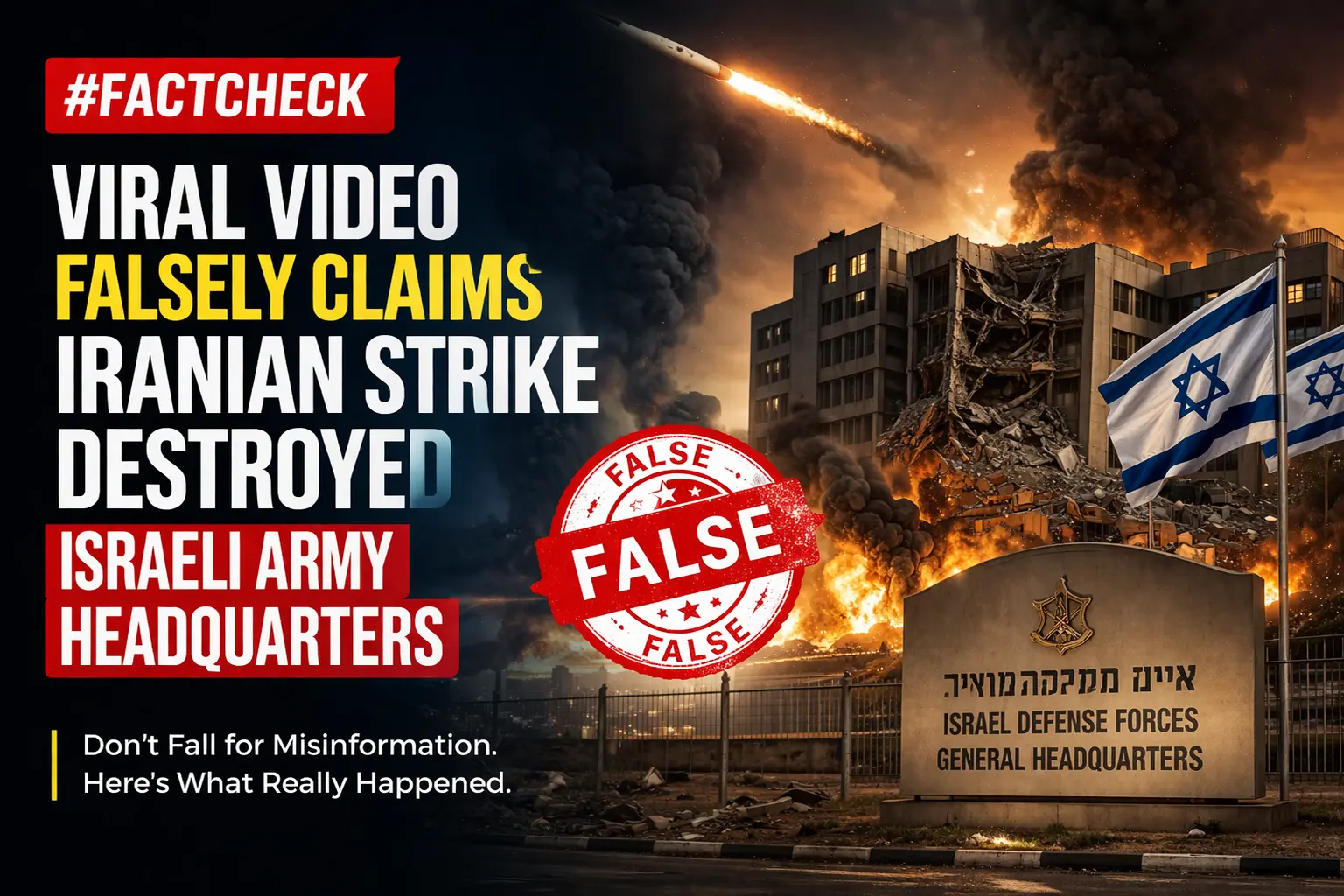
A video is going viral on social media showing a massive building engulfed in flames and collapsing into debris. It is being widely claimed that Iran launched a powerful attack that destroyed Israel’s army headquarters. However, research by CyberPeace reveals that this claim is misleading. The viral video is AI-generated and has no connection to any real-world event.
Claim
An X (formerly Twitter) user shared the viral video with the caption: “Iran has targeted Israel’s army headquarters. It seems Israel’s dream of becoming ‘Greater Israel’ will remain unfulfilled.”
Post link:
- https://x.com/KAMESHKUMAR96/status/2039009484069368083
Archived version:
- https://archive.ph/HKXkK
- https://x.com/KAMESHKUMAR96/status/2039009484069368083
- https://archive.ph/HKXkK
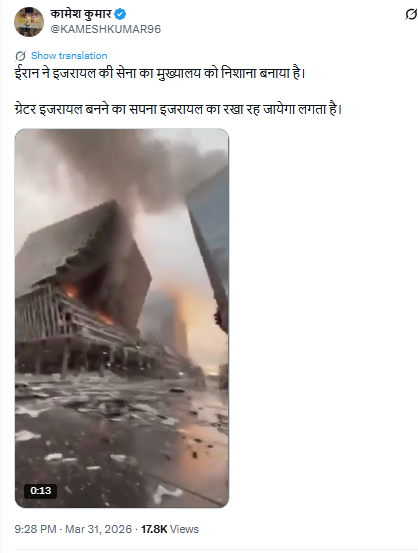
Similar videos have also been shared by other users on social media:
Fact Check
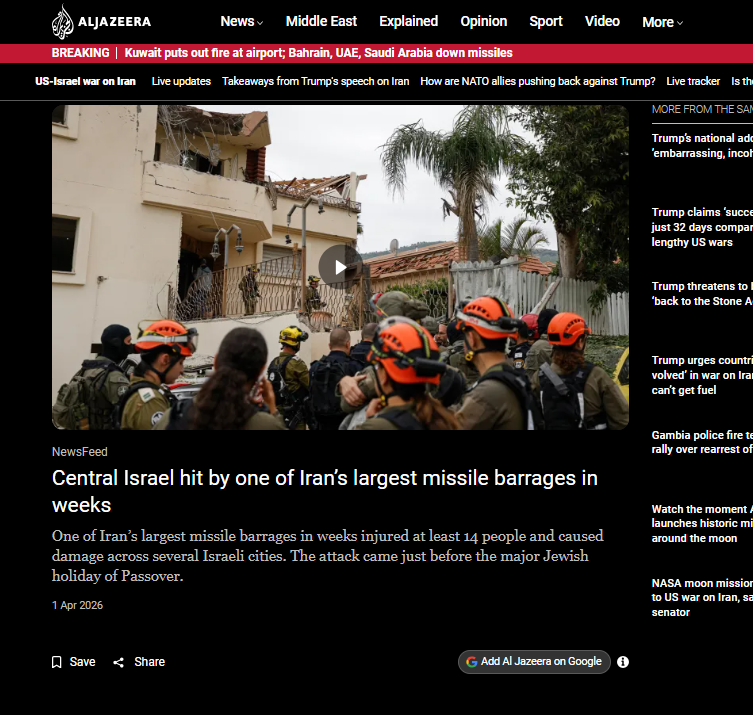
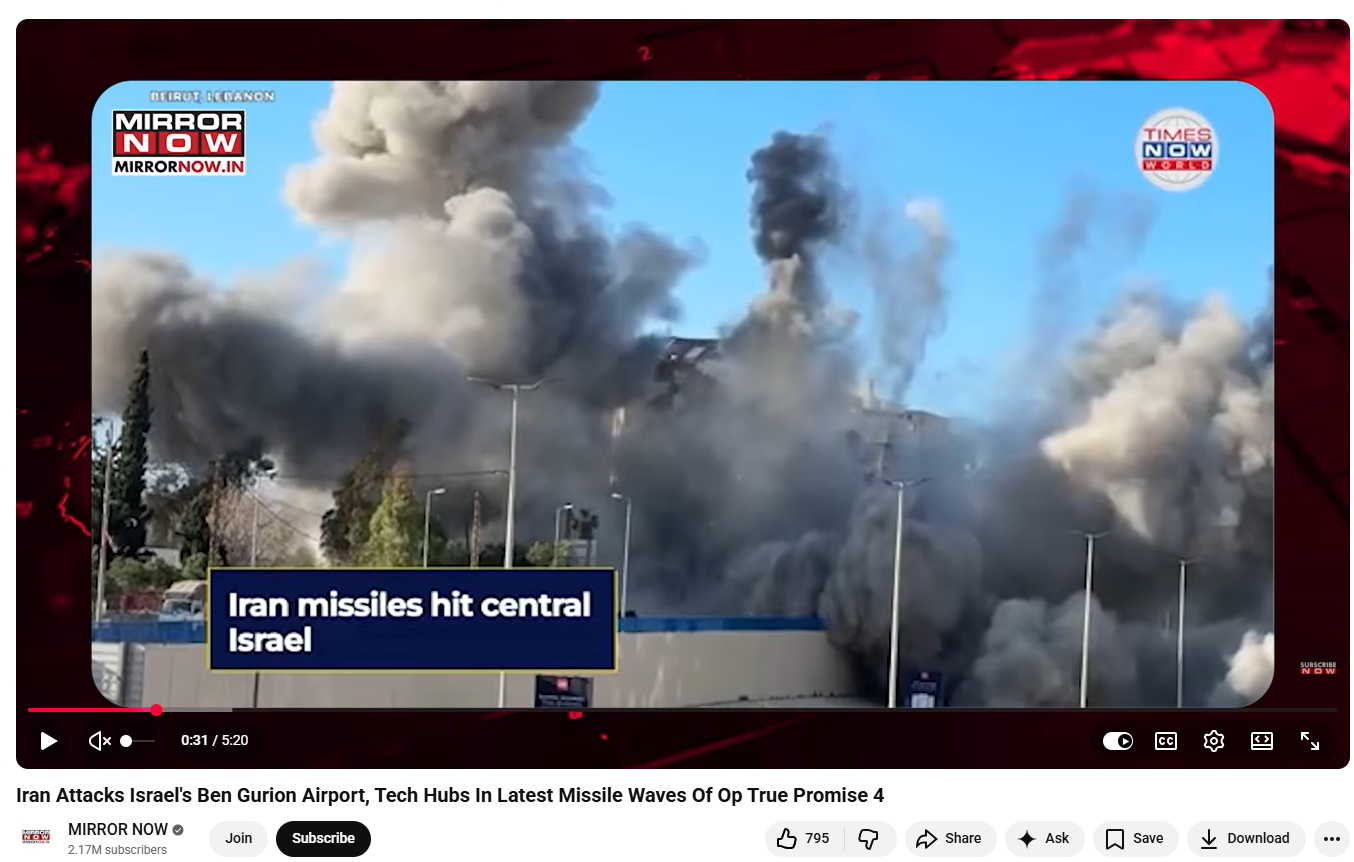
To verify the claim, we extracted keyframes from the viral video and conducted a reverse image search. During this process, we found several credible media reports confirming that Iran has carried out drone and missile attacks on Israel and the Gulf regions in recent times. However, none of these reports featured the viral video, indicating that it is not authentic footage.
- https://www.youtube.com/watch?v=fxDBX90bYng
A closer examination of the video revealed multiple visual inconsistencies commonly associated with AI-generated content. For instance, a building on the left side appears to bend and collapse in a rubber-like manner—something that is physically unrealistic for structures made of concrete and steel. Additionally, the smoke and flames appear unnatural and lack realistic dynamics.
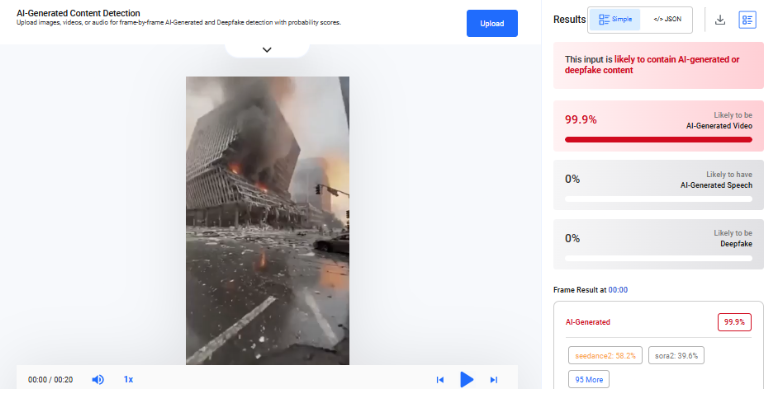
To further verify, we analyzed the video using the AI detection tool Hive Moderation, which classified it as 99.9% AI-generated.
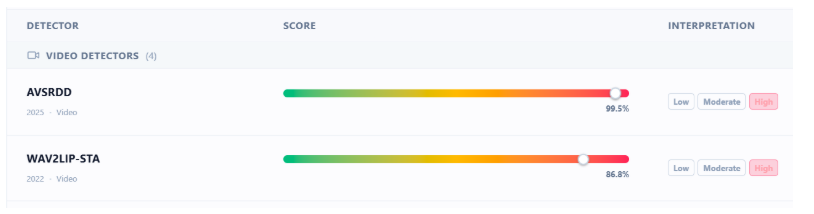
We also tested the video using the Deepfake-o-Meter platform.The AVSRDD (2025) model detected it as 99.5% AI-generated
Conclusion
Our research clearly establishes that the viral video claiming Iran destroyed Israel’s army headquarters is false and misleading. The footage does not appear in any credible news coverage of recent attacks, which strongly indicates that it is not real. Moreover, multiple AI detection tools consistently classify the video as artificially generated, with extremely high probability scores. Visual anomalies in the clip further support this finding.
