
#FactCheck - Fake Graphic Falsely Claims Amit Shah Urged People to Skip Meals Amid Crisis Rumours
Executive Summary
A graphic widely circulating on social media claims that Union Home Minister Amit Shah has warned, “A major crisis is coming; if possible, skip one meal a day.” The claim has been found to be false in a fact-check conducted by CyberPeace Research Wing. The research revealed that Amit Shah has not made any such statement.
Claim
A Facebook user shared the viral graphic on May 17, 2026, claiming that BJP leader and Home Minister Amit Shah issued a “warning” to the public, allegedly saying people should be prepared for a major crisis and consider skipping one meal a day. The post has been widely circulated on social media, drawing significant attention and discussion.
- https://www.facebook.com/photo.php?fbid=1509406197622070&set=pb.100056581115590.-2207520000&type=3
- https://archive.ph/Z9Tle

Factcheck
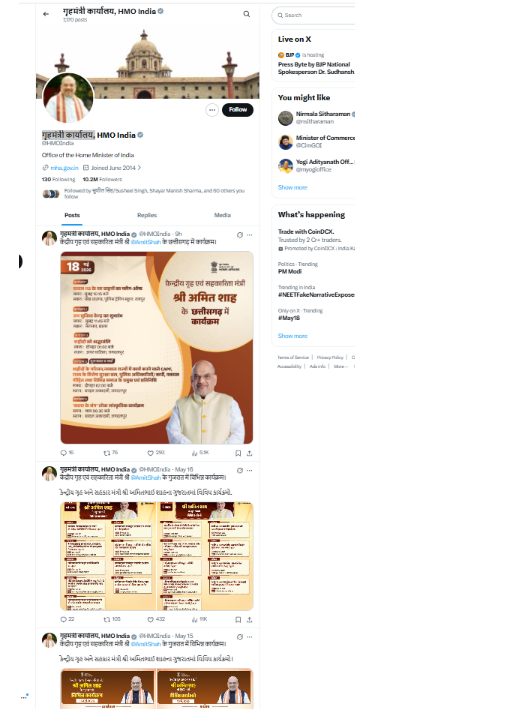
A keyword-based search on Google did not return any credible news reports supporting the claim. Further scrutiny of the official account of the Ministry of Home Affairs on X also found no mention or statement matching the viral claim.
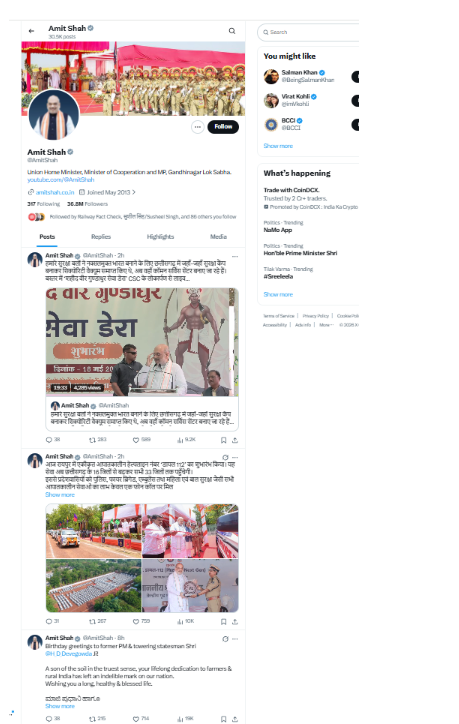
A separate review of the official X account of Home Minister Amit Shah also did not show any such statement or post confirming the viral claim.
Conclusion
The viral claim is false. Union Home Minister Amit Shah has not made any such statement.

Related Blogs
.webp)
Misinformation spread has become a cause for concern for all stakeholders, be it the government, policymakers, business organisations or the citizens. The current push for combating misinformation is rooted in the growing awareness that misinformation leads to sentiment exploitation and can result in economic instability, personal risks, and a rise in political, regional, and religious tensions. The circulation of misinformation poses significant challenges for organisations, brands and administrators of all types. The spread of misinformation online poses a risk not only to the everyday content consumer, but also creates concerns for the sharer but the platforms themselves. Sharing misinformation in the digital realm, intentionally or not, can have real consequences.
Consequences for Platforms
Platforms have been scrutinised for the content they allow to be published and what they don't. It is important to understand not only how this misinformation affects platform users, but also its impact and consequences for the platforms themselves. These consequences highlight the complex environment that social media platforms operate in, where the stakes are high from the perspective of both business and societal impact. They are:
- Legal Consequences: Platforms can be fined by regulators if they fail to comply with content moderation or misinformation-related laws and a prime example of such a law is the Digital Services Act of the EU, which has been created for the regulation of digital services that act as intermediaries for consumers and goods, services, and content. They can face lawsuits by individuals, organisations or governments for any damages due to misinformation. Defamation suits are part of the standard practice when dealing with misinformation-causing vectors. In India, the Prohibition of Fake News on Social Media Bill of 2023 is in the pipeline and would establish a regulatory body for fake news on social media platforms.
- Reputational Consequences: Platforms employ a trust model where the user trusts it and its content. If a user loses trust in the platform because of misinformation, it can reduce engagement. This might even lead to negative coverage that affects the public opinion of the brand, its value and viability in the long run.
- Financial Consequences: Businesses that engage with the platform may end their engagement with platforms accused of misinformation, which can lead to a revenue drop. This can also have major consequences affecting the long-term financial health of the platform, such as a decline in stock prices.
- Operational Consequences: To counter the scrutiny from regulators, the platform might need to engage in stricter content moderation policies or other resource-intensive tasks, increasing operational costs for the platforms.
- Market Position Loss: If the reliability of a platform is under question, then, platform users can migrate to other platforms, leading to a loss in the market share in favour of those platforms that manage misinformation more effectively.
- Freedom of Expression vs. Censorship Debate: There needs to be a balance between freedom of expression and the prevention of misinformation. Censorship can become an accusation for the platform in case of stricter content moderation and if the users feel that their opinions are unfairly suppressed.
- Ethical and Moral Responsibilities: Accountability for platforms extends to moral accountability as they allow content that affects different spheres of the user's life such as public health, democracy etc. Misinformation can cause real-world harm like health misinformation or inciting violence, which leads to the fact that platforms have social responsibility too.
Misinformation has turned into a global issue and because of this, digital platforms need to be vigilant while they navigate the varying legal, cultural and social expectations across different jurisdictions. Efforts to create standardised practices and policies have been complicated by the diversity of approaches, leading platforms to adopt flexible strategies for managing misinformation that align with global and local standards.
Addressing the Consequences
These consequences can be addressed by undertaking the following measures:
- The implementation of a more robust content moderation system by the platforms using a combination of AI and human oversight for the identification and removal of misinformation in an effective manner.
- Enhancing the transparency in platform policies for content moderation and decision-making would build user trust and reduce the backlash associated with perceived censorship.
- Collaborations with fact checkers in the form of partnerships to help verify the accuracy of content and reduce the spread of misinformation.
- Engage with regulators proactively to stay ahead of legal and regulatory requirements and avoid punitive actions.
- Platforms should Invest in media literacy initiatives and help users critically evaluate the content available to them.
Final Takeaways
The accrual of misinformation on digital platforms has resulted in presenting significant challenges across legal, reputational, financial, and operational functions for all stakeholders. As a result, a critical need arises where the interlinked, but seemingly-exclusive priorities of preventing misinformation and upholding freedom of expression must be balanced. Platforms must invest in the creation and implementation of a robust content moderation system with in-built transparency, collaborating with fact-checkers, and media literacy efforts to mitigate the adverse effects of misinformation. In addition to this, adapting to diverse international standards is essential to maintaining their global presence and societal trust.
References
- https://pirg.org/edfund/articles/misinformation-on-social-media/
- https://www.mdpi.com/2076-0760/12/12/674
- https://scroll.in/article/1057626/israel-hamas-war-misinformation-is-being-spread-across-social-media-with-real-world-consequences
- https://www.who.int/europe/news/item/01-09-2022-infodemics-and-misinformation-negatively-affect-people-s-health-behaviours--new-who-review-finds

Introduction
Netflix is no stranger to its subscribers being targeted by SMS and email-led phishing campaigns. But the most recent campaign has been deployed at a global scale, affecting paid users in as many as 23 countries according to cybersecurity firm Bitdefender. In this particular campaign, attackers are using the carrot-and-stick tactic of either creating a false sense of urgency or promising rewards to steal financial information and Netflix credentials. For example, users may be contacted via SMS and told that their account is being suspended due to payment failures. A fake website may be shared through a link, encouraging the individual to share sensitive information to restore their account. Once this information has been input, it is now accessible to the attackers. This can create significant stress and even financial loss for its users. Thus, they are encouraged to develop the necessary skills to recognize and respond to these threats effectively.
How The Netflix Scam Works
Users are typically contacted through SMS. Bitdefender reports that these messages may look something like this:
"NETFLIX: There was an issue processing your payment. To keep your services active, please sign in and confirm your details at: https://account-details[.]com"
On clicking the link, the victim is directed to a website designed to mimic an authentic user experience interface, containing Netflix’s logo, color scheme, and grammatically-correct text. The website uses this interface to encourage the victim to divulge sensitive personal information, such as account credentials and payment details. Since this is a phishing website, the user’s personal information becomes accessible to the attacker as soon as it is entered. This information is then sold individually or in bundles on the dark web.
Practical Steps to Stay Safe
- Know Netflix’s Customer Interface: According to Netflix, it will never ask users to share personal information including credit or debit card numbers, bank account details, and Netflix passwords. It will also never ask for payment through a third-party vendor or website.
- Verify Authenticity: Do not open links from unknown sources sent by email or sms. If unsure, access Netflix directly by typing the URL into the browser instead of clicking on links in emails or texts. If the link has been opened, do not enter any information.
- Use Netflix’s Official Support Channels: Confirm any suspicious communication through Netflix’s verified help page or app. Write to phishing@netflix.com with any complaints about such an issue.
- Contact Your Financial Institution: If you have entered your personal information into a phishing website, you should immediately reach out to your bank to block your card and change your Netflix password. Contact the authorities via www.cybercrime.gov.in or by calling the helpline at 1930 in case of loss of funds.
- Use Strong Passwords and Enable MFA/2FA: Users are advised to use a unique, strong password with multiple characters. Enable Multi-Factor Authentication or Two Factor Authentication to your accounts, if available, to add an extra level of security.
Conclusion
Phishing campaigns which are designed to gather customer data through fraudulent means often involve sending links to as many users as possible, with the aim of monetizing stolen information. Attackers exploit user trust in online platforms to steal sensitive personal information, making such campaigns more sophisticated as highlighted above. This underscores the need for users of online platforms to practice good cyber hygiene by verifying information, learning to detect suspicious information and ignoring it, and staying aware of the types of online fraud they may be exposed to.
Sources
- https://www.bitdefender.com/en-gb/blog/hotforsecurity/netflix-scam-stay-safe
- https://help.netflix.com/en/node/65674
- https://timesofindia.indiatimes.com/technology/tech-news/netflix-users-beware-this-netflix-subscription-scam-is-active-in-23-countries-how-to-spot-one-and-stay-safe/articleshow/115820070.cms
Executive Summary
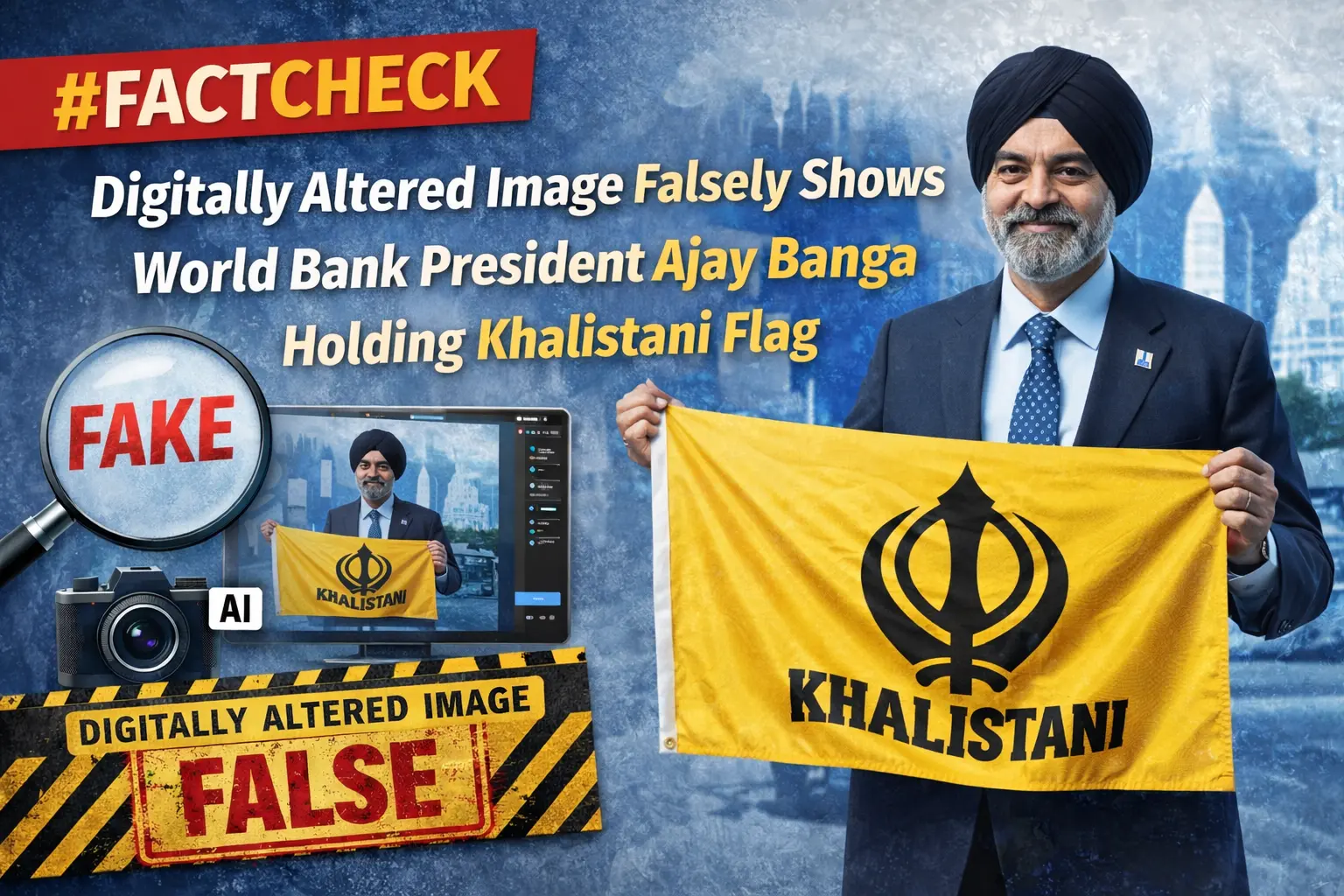
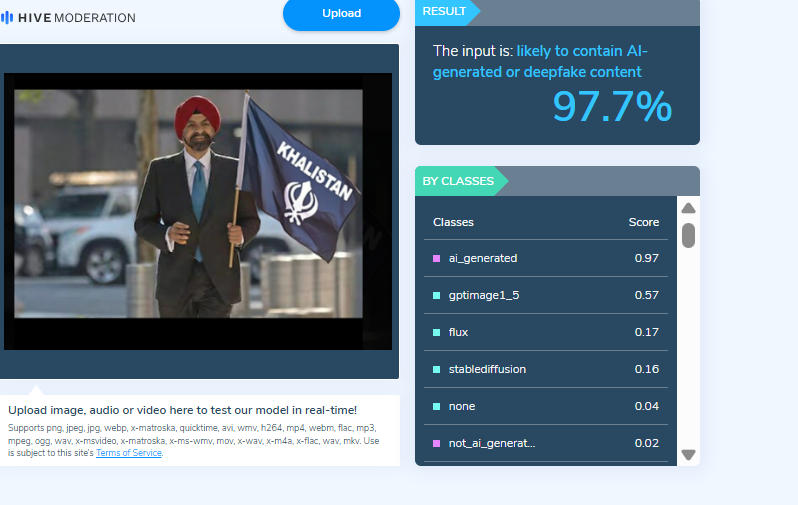
A digitally manipulated image of World Bank President Ajay Banga has been circulating on social media, falsely portraying him as holding a Khalistani flag. The image was shared by a Pakistan-based X (formerly Twitter) user, who also incorrectly identified Banga as the President of the International Monetary Fund (IMF), thereby fuelling misleading speculation that he supports the Khalistani movement against India.
The Claim
On February 5, an X user with the handle @syedAnas0101010 posted an image allegedly showing Ajay Banga holding a Khalistani flag. The user misidentified him as the IMF President and captioned the post, “IMF president sending signals to INDIA.” The post quickly gained traction, amplifying false narratives and political speculation. Here is the link and archive link to the post, along with a screenshot:
Fact Check:
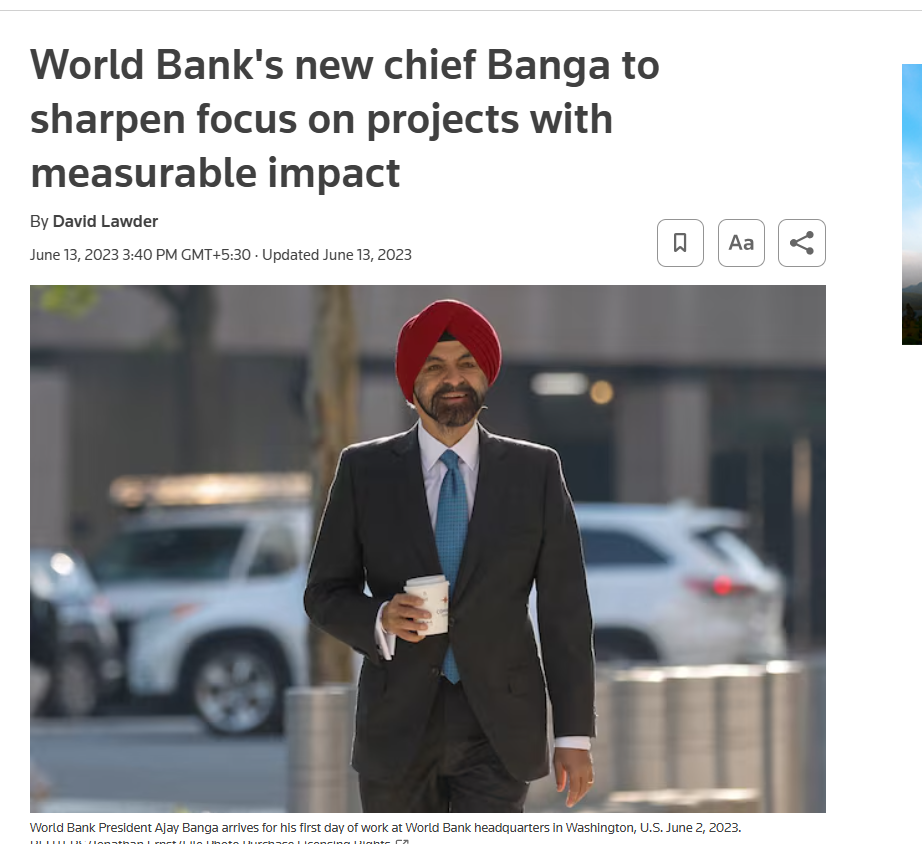
To verify the authenticity of the image, the CyberPeace Fact Check Desk conducted a detailed research . The image was first subjected to a reverse image search using Google Lens, which led to a Reuters news report published on June 13, 2023. The original photograph, captured by Reuters photojournalist Jonathan Ernst, showed Ajay Banga arriving at the World Bank headquarters in Washington, D.C., on June 2, 2023, marking his first day in office. In the authentic image, Banga is seen holding a coffee cup, not a flag.
Further analysis confirmed that the viral image had been digitally altered to replace the coffee cup with a Khalistani flag, thereby misrepresenting the context and intent of the original photograph. Here is the link to the report, along with a screenshot.
To strengthen the findings, the altered image was also analysed using the Hive Moderation AI detection tool. The tool’s assessment indicated a high likelihood that the image contained AI-generated or manipulated elements, reinforcing the conclusion that the image was not genuine. Below is a screenshot of the result.
Conclusion
The viral image claiming to show World Bank President Ajay Banga holding a Khalistani flag is fake. The photograph was digitally manipulated to spread misinformation and provoke political speculation. In reality, the original Reuters image from June 2023 shows Banga holding a coffee cup during his arrival at the World Bank headquarters. The claim that he supports the Khalistani movement is false and misleading.
