
#FactCheck - AI-Generated Video Falsely Claims Salman Khan Is Joining AIMIM
A video of Bollywood actor Salman Khan is being widely circulated on social media, in which he can allegedly be heard saying that he will soon join Asaduddin Owaisi’s party, the All India Majlis-e-Ittehadul Muslimeen (AIMIM). Along with the video, a purported image of Salman Khan with Asaduddin Owaisi is also being shared. Social media users are claiming that Salman Khan is set to join the AIMIM party.
CyberPeace research found the viral claim to be false. Our research revealed that Salman Khan has not made any such statement, and that both the viral video and the accompanying image are AI-generated.
Claim
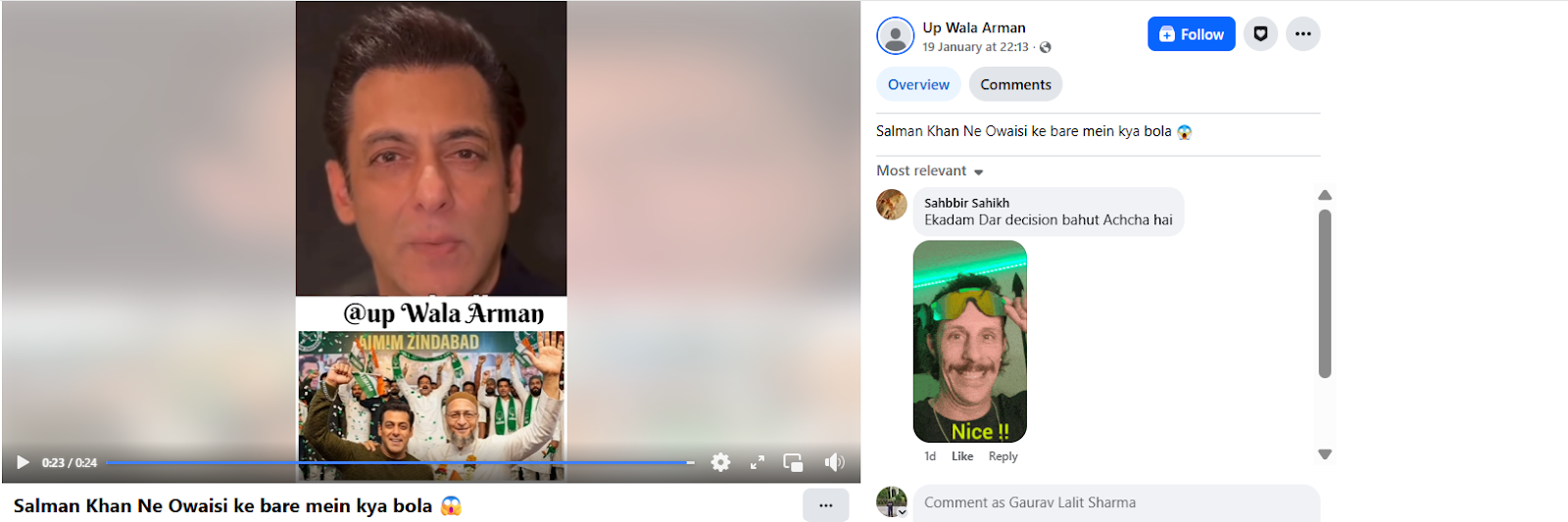
Social media users claim that Salman Khan has announced his decision to join AIMIM.On 19 January 2026, a Facebook user shared the viral video with the caption, “What did Salman say about Owaisi?” In the video, Salman Khan can allegedly be heard saying that he is going to join Owaisi’s party. (The link to the post, its archived version, and screenshots are available.)
Fact Check:
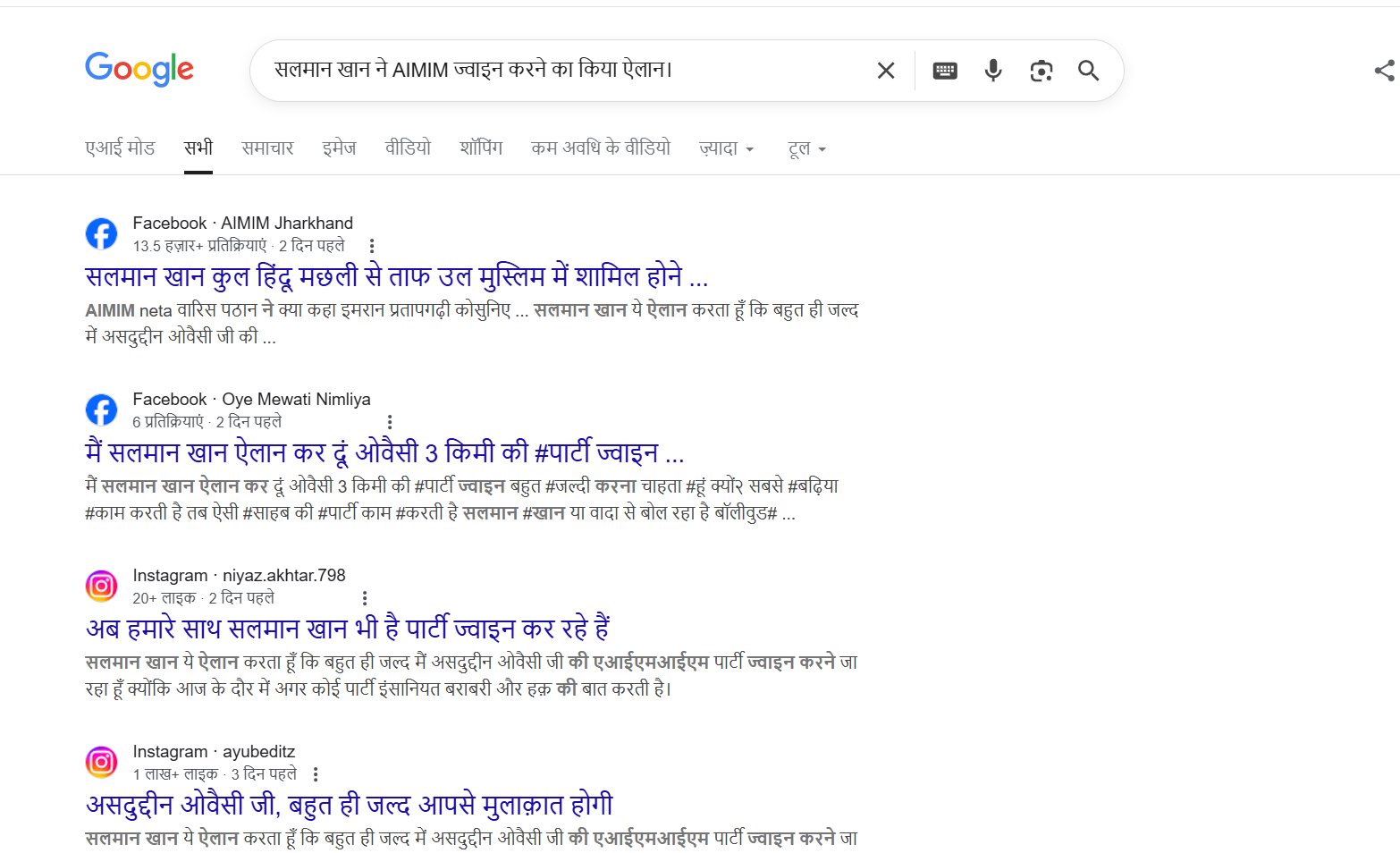
To verify the claim, we first searched Google using relevant keywords. However, no credible or reliable media reports were found supporting the claim that Salman Khan is joining AIMIM.
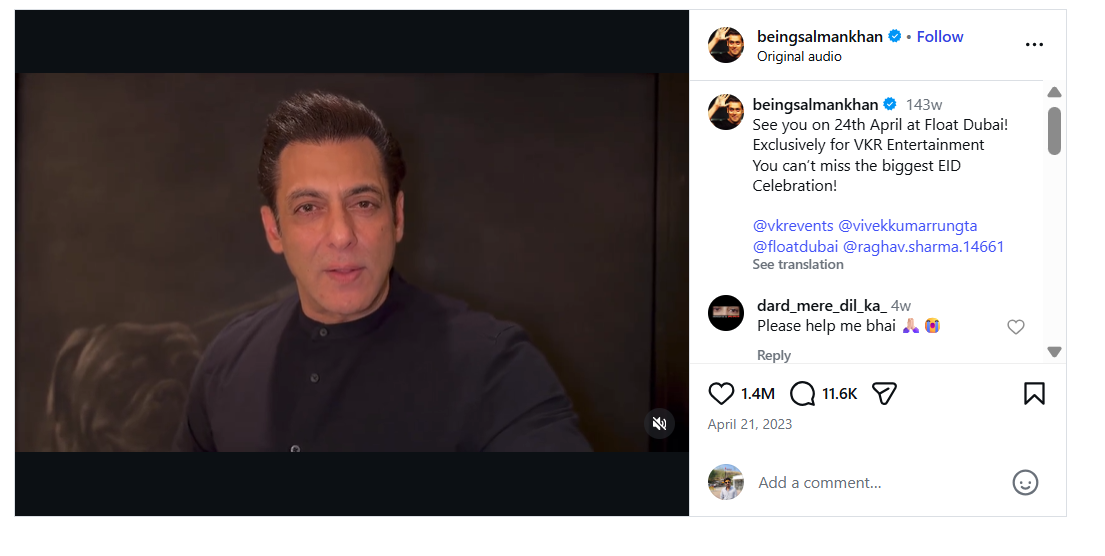
In the next step of verification, we extracted key frames from the viral video and conducted a reverse image search using Google Lens. This led us to a video posted on Salman Khan’s official Instagram account on 21 April 2023. In the original video, Salman Khan is seen talking about an event scheduled to take place in Dubai. A careful review of the full video confirmed that no statement related to AIMIM or Asaduddin Owaisi is made.
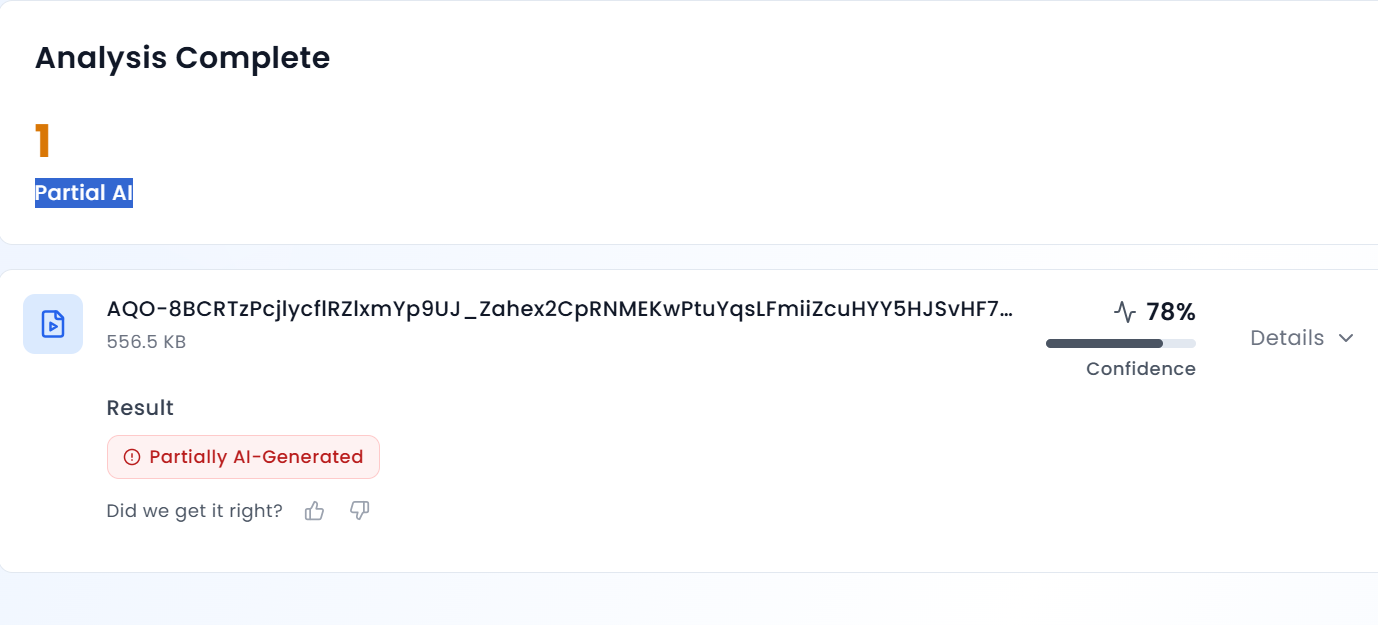
Further analysis of the viral clip revealed that Salman Khan’s voice sounds unnatural and robotic. To verify this, we scanned the video using AURGIN AI, an AI-generated content detection tool. According to the tool’s analysis, the viral video was generated using artificial intelligence.
Conclusion
Salman Khan has not announced that he is joining the AIMIM party. The viral video and the image circulating on social media are AI-generated and manipulated.

Related Blogs

Introduction
India’s telecom regulator, the Telecom Regulatory Authority of India (TRAI), has directed telcos to block all unverified headers and message templates within 30 and 60 days, respectively, according to a press release. The regulator observed that telemarketers were ‘misusing’ headers and message templates of registered parties and asked telcos to reverify all registered headers & message templates on the DLT (Distributed Ledger Technology) platform. All telecom service providers (TSP) have to comply with these directions, issued under the Telecom Commercial Communication Customer Preference Regulations, 2018, within a month, TRAI said in its release. The directions were issued after TRAI held a meeting with telcos on February 17, 2023, to discuss quality of service (QoS) improvements, review of QoS standards, QoS of 5G services and unsolicited commercial communications”, as per its press release.
Why it matters?
It may be useful as it can ensure that all promotional messages are sent through registered telemarketers using only approved templates. It is no secret that the spam problem has been difficult to rein in, so the measure can restrict its proliferation and filter out telemarketers resorting to misuse.
Details about TRAI’s orders
The release said that telcos have to ensure that temporary headers are deactivated immediately after the time duration for which such headers were created. The telcos also have to ensure that there is no space to insert unwanted content in the template of a message where one can add content to be sent to people. Message recipients should not be confused, so telcos must ensure that they register no lookalike headers in the names of different senders.
Measures to check unregistered telemarketers
The release ordered telcos to bar telemarketers not registered on its DLT platform from accessing message templates and scrubbing them to deliver spam messages to recipients on the telco’s network. The telcos have been directed not to allow promotional messages to be sent by unregistered telemarketers or telemarketers using 10-digit telephone numbers. It added that telcos have to take action against erring telemarketers and share details of these telemarketers with other telcos, which will then be responsible for stopping these entities from sending commercial communications through their networks.
How big is the problem of spam?
A survey conducted by LocalCircles said that two out of every three people (66 per cent) in India get three or more spam calls daily. It added that not one person among thousands of respondents checked the box of ‘no spam’.
The platform said that it was a national survey which gathered over 56,000 responses from Indians located in 342 districts. It also found that 92 % of responders said they continue receiving spam despite opting for DND. The DND list is a feature where mobile subscriber can register their number to avoid getting unsolicited commercial communication (UCC).
Addressing the problem of spam
The regulatory body recently released a consultation paper that proposed the idea of providing the real name identity of callers to people receiving calls. The paper said that it would use a database containing each subscriber’s correct name to implement the caller name presentation (CNAP) service. The regulator wants to use details acquired by telecom service providers via customer acquisition forms (CAF).
TRAI formed a joint committee to look at the issue of phishing and cyber fraud in 2022. It included officials from the Reserve Bank of India (RBI) and the Securities and Exchange Board of India (SEBI). The telecom watchdog had laid out a plan to combat SMS and call spam using blockchain technology (DLT). It saw telecom companies and TRAI to build an encrypted and distributed database that will record user consent to be included in SMS or call send-out lists.
According to a press release, the Telecom Regulatory Authority of India (TRAI), the telecom regulator in India, has ordered carriers to block any unverified headers and message templates within 30 and 60 days, respectively.
The regulator saw that telemarketers were “misusing” registered parties’ headers and message templates. Thus, they requested that telecoms validate all of the registered headers and message templates on the DLT (Distributed Ledger Technology) platform.
According to TRAI’s statement, all telecom service providers (TSP) must adhere to these directives within one month under the 2018 Telecom Commercial Communication Consumer Preference Rules. The guidelines were released following a conference with telcos convened by TRAI on February 17, 2023, to discuss quality of service (QoS) enhancements, a review of QoS standards, the QoS of 5G services, and unsolicited commercial communications.
Why it matters?
Requiring that only registered telemarketers send promotional communications using approved templates may prove to be a beneficial safeguard. It is no secret that the spam problem has been challenging to control, so the measure can limit its spread and screen out telemarketers that employ abusive tactics.
Information on the TRAI order
According to the press release, telecoms must ensure that temporary headers are deactivated as soon as the time period they were established has passed. The telecoms must also ensure that there is no room in the message template where one can add content to be sent to recipients for unwanted content. There should be no room for uncertainty among message recipients. Thus, telecoms must ensure that no similar-looking headers are registered under the identities of various senders.
Taking action against unregistered telemarketers In accordance with the directive, telcos must prevent telemarketers who are not registered on their DLT platform from obtaining message templates and using them to send spam to subscribers on their network. Telemarketers who are not registered or who use 10-digit phone numbers cannot send promotional messages, according to instructions given to telecoms. Telcos must take action against misbehaving telemarketers, it was noted, and divulge their information to other telecoms, who would be in charge of preventing these companies from transmitting commercial messages.
How widespread is the spam issue?
According to a LocalCircles poll, three or more spam calls are received every day by two out of every three Indians (66%) on average. It further stated that not a single one of the thousands of responses clicked the “no-spam” box. According to the platform, the survey was conducted nationally and received over 56,000 responses from Indians in 342 districts. Moreover, 92 % of respondents reported that even after choosing DND, they still receive spam. A mobile subscriber can register their number on the DND list to prevent receiving unsolicited commercial communication (UCC).
consultation document recently in which it recommended the concept of providing the genuine name identify of callers to persons receiving calls. The paper indicated that it would employ a database containing each subscriber’s correct name to implement the caller name presentation (CNAP) service. The regulator wants to use information collected by telecom service providers through client acquisition forms (CAF).
Conclusion
TRAI established a joint committee to examine the problem of phishing and cyber scams in 2022. Officials from the Securities and Exchange Board of India (SEBI) and Reserve Bank of India (RBI) were present (SEBI).
The telecom watchdog had outlined a strategy for leveraging blockchain technology to combat SMS and call spam (DLT).

Introduction
Election misinformation poses a major threat to democratic processes all over the world. The rampant spread of misleading information intentionally (disinformation) and unintentionally (misinformation) during the election cycle can not only create grounds for voter confusion with ramifications on election results but also incite harassment, bullying, and even physical violence. The attack on the United States Capitol Building in Washington D.C., in 2021, is a classic example of this phenomenon, where the spread of dis/misinformation snowballed into riots.
Election Dis/Misinformation
Election dis/misinformation is false or misleading information that affects/influences public understanding of voting, candidates, and election integrity. The internet, particularly social media, is the foremost source of false information during elections. It hosts fabricated news articles, posts or messages containing incorrectly-captioned pictures and videos, fabricated websites, synthetic media and memes, and distorted truths or lies. In a recent example during the 2024 US elections, fake videos using the Federal Bureau of Investigation’s (FBI) insignia alleging voter fraud in collusion with a political party and claiming the threat of terrorist attacks were circulated. According to polling data collected by Brookings, false claims influenced how voters saw candidates and shaped opinions on major issues like the economy, immigration, and crime. It also impacted how they viewed the news media’s coverage of the candidates’ campaign. The shaping of public perceptions can thus, directly influence election outcomes. It can increase polarisation, affect the quality of democratic discourse, and cause disenfranchisement. From a broader perspective, pervasive and persistent misinformation during the electoral process also has the potential to erode public trust in democratic government institutions and destabilise social order in the long run.
Challenges In Combating Dis/Misinformation
- Platform Limitations: Current content moderation practices by social media companies struggle to identify and flag misinformation effectively. To address this, further adjustments are needed, including platform design improvements, algorithm changes, enhanced content moderation, and stronger regulations.
- Speed and Spread: Due to increasingly powerful algorithms, the speed and scale at which misinformation can spread is unprecedented. In contrast, content moderation and fact-checking are reactive and are more time-consuming. Further, incendiary material, which is often the subject of fake news, tends to command higher emotional engagement and thus, spreads faster (virality).
- Geopolitical influences: Foreign actors seeking to benefit from the erosion of public trust in the USA present a challenge to the country's governance, administration and security machinery. In 2018, the federal jury indicted 11 Russian military officials for alleged computer hacking to gain access to files during the 2016 elections. Similarly, Russian involvement in the 2024 federal elections has been alleged by high-ranking officials such as White House national security spokesman John Kirby, and Attorney General Merrick Garland.
- Lack of Targeted Plan to Combat Election Dis/Misinformation: In the USA, dis/misinformation is indirectly addressed through laws on commercial advertising, fraud, defamation, etc. At the state level, some laws such as Bills AB 730, AB 2655, AB 2839, and AB 2355 in California target election dis/misinformation. The federal and state governments criminalize false claims about election procedures, but the Constitution mandates “breathing space” for protection from false statements within election speech. This makes it difficult for the government to regulate election-related falsities.
CyberPeace Recommendations
- Strengthening Election Cybersecurity Infrastructure: To build public trust in the electoral process and its institutions, security measures such as updated data protection protocols, publicized audits of election results, encryption of voter data, etc. can be taken. In 2022, the federal legislative body of the USA passed the Electoral Count Reform and Presidential Transition Improvement Act (ECRA), pushing reforms allowing only a state’s governor or designated executive official to submit official election results, preventing state legislatures from altering elector appointment rules after Election Day and making it more difficult for federal legislators to overturn election results. More investments can be made in training, scenario planning, and fact-checking for more robust mitigation of election-related malpractices online.
- Regulating Transparency on Social Media Platforms: Measures such as transparent labeling of election-related content and clear disclosure of political advertising to increase accountability can make it easier for voters to identify potential misinformation. This type of transparency is a necessary first step in the regulation of content on social media and is useful in providing disclosures, public reporting, and access to data for researchers. Regulatory support is also required in cases where popular platforms actively promote election misinformation.
- Increasing focus on ‘Prebunking’ and Debunking Information: Rather than addressing misinformation after it spreads, ‘prebunking’ should serve as the primary defence to strengthen public resilience ahead of time. On the other hand, misinformation needs to be debunked repeatedly through trusted channels. Psychological inoculation techniques against dis/misinformation can be scaled to reach millions on social media through short videos or messages.
- Focused Interventions On Contentious Themes By Social Media Platforms: As platforms prioritize user growth, the burden of verifying the accuracy of posts largely rests with users. To shoulder the responsibility of tackling false information, social media platforms can outline critical themes with large-scale impact such as anti-vax content, and either censor, ban, or tweak the recommendations algorithm to reduce exposure and weaken online echo chambers.
- Addressing Dis/Information through a Socio-Psychological Lens: Dis/misinformation and its impact on domains like health, education, economy, politics, etc. need to be understood through a psychological and sociological lens, apart from the technological one. A holistic understanding of the propagation of false information should inform digital literacy training in schools and public awareness campaigns to empower citizens to evaluate online information critically.
Conclusion
According to the World Economic Forum’s Global Risks Report 2024, the link between misleading or false information and societal unrest will be a focal point during elections in several major economies over the next two years. Democracies must employ a mixed approach of immediate tactical solutions, such as large-scale fact-checking and content labelling, and long-term evidence-backed countermeasures, such as digital literacy, to curb the spread and impact of dis/misinformation.
Sources
- https://www.cbsnews.com/news/2024-election-misinformation-fbi-fake-videos/
- https://www.brookings.edu/articles/how-disinformation-defined-the-2024-election-narrative/
- https://www.fbi.gov/wanted/cyber/russian-interference-in-2016-u-s-elections
- https://indianexpress.com/article/world/misinformation-spreads-fear-distrust-ahead-us-election-9652111/
- https://academic.oup.com/ajcl/article/70/Supplement_1/i278/6597032#377629256
- https://www.brennancenter.org/our-work/policy-solutions/how-states-can-prevent-election-subversion-2024-and-beyond
- https://www.bbc.com/news/articles/cx2dpj485nno
- https://msutoday.msu.edu/news/2022/how-misinformation-and-disinformation-influence-elections
- https://misinforeview.hks.harvard.edu/article/a-survey-of-expert-views-on-misinformation-definitions-determinants-solutions-and-future-of-the-field/
- https://reutersinstitute.politics.ox.ac.uk/sites/default/files/2023-06/Digital_News_Report_2023.pdf
- https://www.weforum.org/stories/2024/03/disinformation-trust-ecosystem-experts-curb-it/
- https://www.apa.org/topics/journalism-facts/misinformation-recommendations
- https://mythvsreality.eci.gov.in/
- https://www.brookings.edu/articles/transparency-is-essential-for-effective-social-media-regulation/
- https://www.brookings.edu/articles/how-should-social-media-platforms-combat-misinformation-and-hate-speech/
Introduction
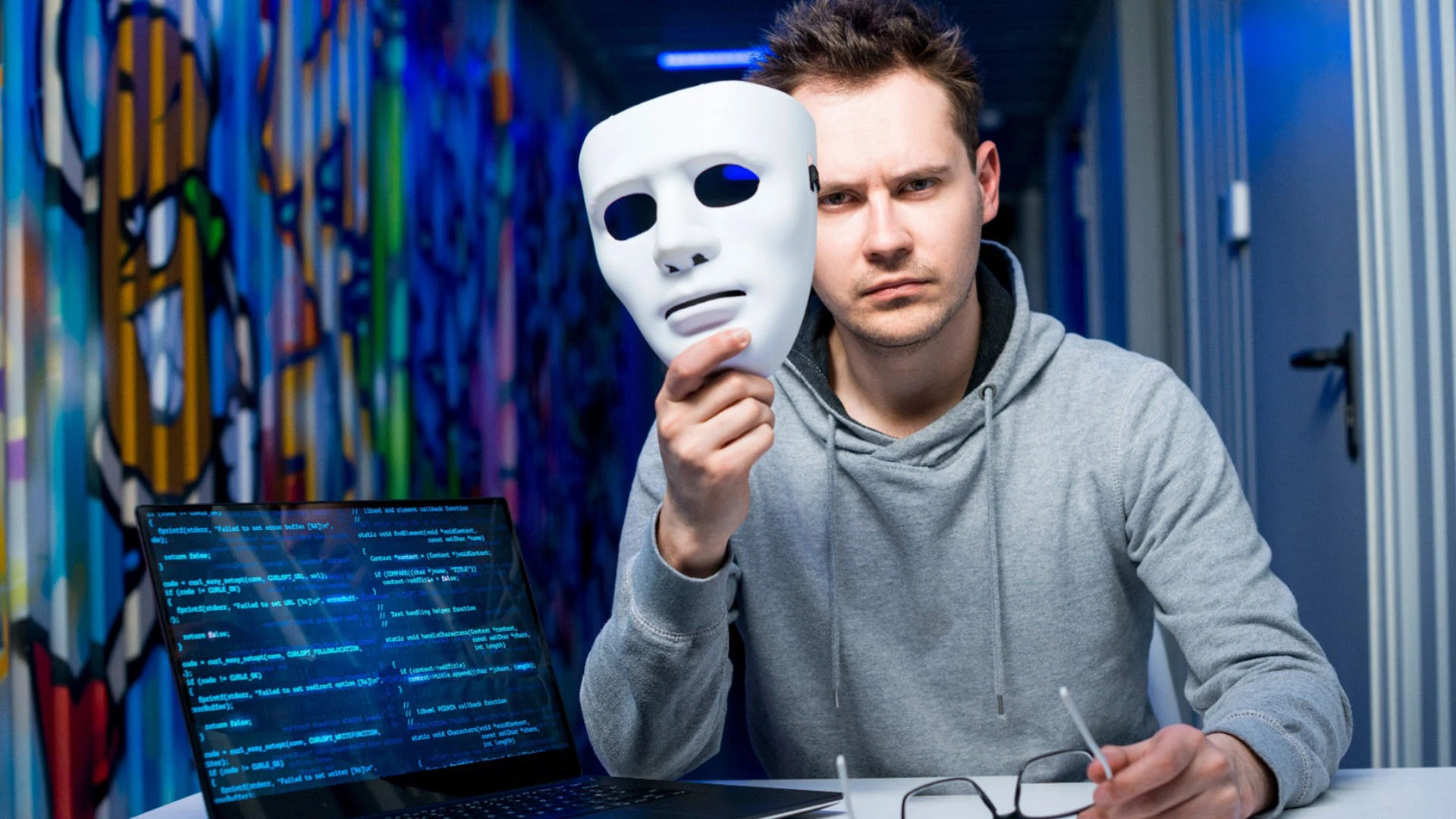
Deepfake technology, which combines the words "deep learning" and "fake," uses highly developed artificial intelligence—specifically, generative adversarial networks (GANs)—to produce computer-generated content that is remarkably lifelike, including audio and video recordings. Because it can provide credible false information, there are concerns about its misuse, including identity theft and the transmission of fake information. Cybercriminals leverage AI tools and technologies for malicious activities or for committing various cyber frauds. By such misuse of advanced technologies such as AI, deepfake, and voice clones. Such new cyber threats have emerged.
India Topmost destination for deepfake attacks
According to Sumsub’s identity fraud report 2023, a well-known digital identity verification company with headquarters in the UK. India, Bangladesh, and Pakistan have become an important participants in the Asia-Pacific identity fraud scene with India’s fraud rate growing exponentially by 2.99% from 2022 to 2023. They are among the top ten nations most impacted by the use of deepfake technology. Deepfake technology is being used in a significant number of cybercrimes, according to the newly released Sumsub Identity Fraud Report for 2023, and this trend is expected to continue in the upcoming year. This highlights the need for increased cybersecurity awareness and safeguards as identity fraud poses an increasing concern in the area.
How Deeepfake Works
Deepfakes are a fascinating and worrisome phenomenon that have emerged in the modern digital landscape. These realistic-looking but wholly artificial videos have become quite popular in the last few months. Such realistic-looking, but wholly artificial, movies have been ingrained in the very fabric of our digital civilisation as we navigate its vast landscape. The consequences are enormous and the attraction is irresistible.
Deep Learning Algorithms
Deepfakes examine large datasets, frequently pictures or videos of a target person, using deep learning techniques, especially Generative Adversarial Networks. By mimicking and learning from gestures, speech patterns, and facial expressions, these algorithms can extract valuable information from the data. By using sophisticated approaches, generative models create material that mixes seamlessly with the target context. Misuse of this technology, including the dissemination of false information, is a worry. Sophisticated detection techniques are becoming more and more necessary to separate real content from modified content as deepfake capabilities improve.
Generative Adversarial Networks
Deepfake technology is based on GANs, which use a dual-network design. Made up of a discriminator and a generator, they participate in an ongoing cycle of competition. The discriminator assesses how authentic the generated information is, whereas the generator aims to create fake material, such as realistic voice patterns or facial expressions. The process of creating and evaluating continuously leads to a persistent improvement in Deepfake's effectiveness over time. The whole deepfake production process gets better over time as the discriminator adjusts to become more perceptive and the generator adapts to produce more and more convincing content.
Effect on Community
The extensive use of Deepfake technology has serious ramifications for several industries. As technology develops, immediate action is required to appropriately manage its effects. And promoting ethical use of technologies. This includes strict laws and technological safeguards. Deepfakes are computer trickery that mimics prominent politicians' statements or videos. Thus, it's a serious issue since it has the potential to spread instability and make it difficult for the public to understand the true nature of politics. Deepfake technology has the potential to generate totally new characters or bring stars back to life for posthumous roles in the entertainment industry. It gets harder and harder to tell fake content from authentic content, which makes it simpler for hackers to trick people and businesses.
Ongoing Deepfake Assaults In India
Deepfake videos continue to target popular celebrities, Priyanka Chopra is the most recent victim of this unsettling trend. Priyanka's deepfake adopts a different strategy than other examples including actresses like Rashmika Mandanna, Katrina Kaif, Kajol, and Alia Bhatt. Rather than editing her face in contentious situations, the misleading film keeps her look the same but modifies her voice and replaces real interview quotes with made-up commercial phrases. The deceptive video shows Priyanka promoting a product and talking about her yearly salary, highlighting the worrying development of deepfake technology and its possible effects on prominent personalities.
Actions Considered by Authorities
A PIL was filed requesting the Delhi High Court that access to websites that produce deepfakes be blocked. The petitioner's attorney argued in court that the government should at the very least establish some guidelines to hold individuals accountable for their misuse of deepfake and AI technology. He also proposed that websites should be asked to identify information produced through AI as such and that they should be prevented from producing illegally. A division bench highlighted how complicated the problem is and suggested the government (Centre) to arrive at a balanced solution without infringing the right to freedom of speech and expression (internet).
Information Technology Minister Ashwini Vaishnaw stated that new laws and guidelines would be implemented by the government to curb the dissemination of deepfake content. He presided over a meeting involving social media companies to talk about the problem of deepfakes. "We will begin drafting regulation immediately, and soon, we are going to have a fresh set of regulations for deepfakes. this might come in the way of amending the current framework or ushering in new rules, or a new law," he stated.
Prevention and Detection Techniques
To effectively combat the growing threat posed by the misuse of deepfake technology, people and institutions should place a high priority on developing critical thinking abilities, carefully examining visual and auditory cues for discrepancies, making use of tools like reverse image searches, keeping up with the latest developments in deepfake trends, and rigorously fact-check reputable media sources. Important actions to improve resistance against deepfake threats include putting in place strong security policies, integrating cutting-edge deepfake detection technologies, supporting the development of ethical AI, and encouraging candid communication and cooperation. We can all work together to effectively and mindfully manage the problems presented by deepfake technology by combining these tactics and adjusting the constantly changing terrain.
Conclusion
Advanced artificial intelligence-powered deepfake technology produces extraordinarily lifelike computer-generated information, raising both creative and moral questions. Misuse of tech or deepfake presents major difficulties such as identity theft and the propagation of misleading information, as demonstrated by examples in India, such as the latest deepfake video involving Priyanka Chopra. It is important to develop critical thinking abilities, use detection strategies including analyzing audio quality and facial expressions, and keep up with current trends in order to counter this danger. A thorough strategy that incorporates fact-checking, preventative tactics, and awareness-raising is necessary to protect against the negative effects of deepfake technology. Important actions to improve resistance against deepfake threats include putting in place strong security policies, integrating cutting-edge deepfake detection technologies, supporting the development of ethical AI, and encouraging candid communication and cooperation. We can all work together to effectively and mindfully manage the problems presented by deepfake technology by combining these tactics and making adjustments to the constantly changing terrain. Creating a true cyber-safe environment for netizens.
References:
- https://yourstory.com/2023/11/unveiling-deepfake-technology-impact
- https://www.indiatoday.in/movies/celebrities/story/deepfake-alert-priyanka-chopra-falls-prey-after-rashmika-mandanna-katrina-kaif-and-alia-bhatt-2472293-2023-12-05
- https://www.csoonline.com/article/1251094/deepfakes-emerge-as-a-top-security-threat-ahead-of-the-2024-us-election.html
- https://timesofindia.indiatimes.com/city/delhi/hc-unwilling-to-step-in-to-curb-deepfakes-delhi-high-court/articleshow/105739942.cms
- https://www.indiatoday.in/india/story/india-among-top-targets-of-deepfake-identity-fraud-2472241-2023-12-05
- https://sumsub.com/fraud-report-2023/
