
#FactCheck - AI-Generated Image of Abhishek Bachchan and Aishwarya Rai Falsely Linked to Kedarnath Visit
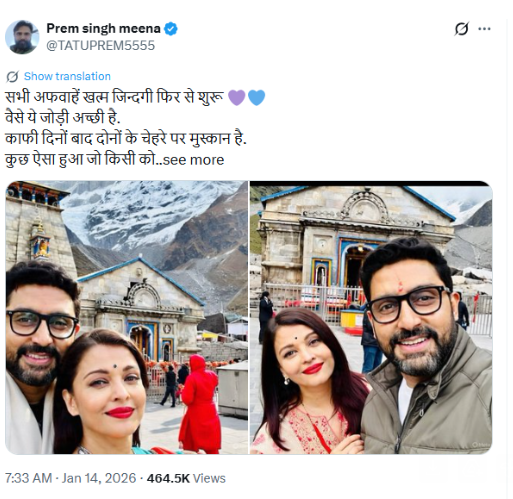
A photo featuring Bollywood actor Abhishek Bachchan and actress Aishwarya Rai is being widely shared on social media. In the image, the Kedarnath Temple is clearly visible in the background. Users are claiming that the couple recently visited the Kedarnath shrine for darshan.
Cyber Peace Foundation’s research found the viral claim to be false. Our research revealed that the image of Abhishek Bachchan and Aishwarya Rai is not real, but AI-generated, and is being misleadingly shared as a genuine photograph.
Claim
On January 14, 2026, a user on X (formerly Twitter) shared the viral image with a caption suggesting that all rumours had ended and that the couple had restarted their life together. The post further claimed that both actors were seen smiling after a long time, implying that the image was taken during their visit to Kedarnath Temple.
The post has since been widely circulated on social media platforms
Fact Check:
To verify the claim, we first conducted a keyword search on Google related to Abhishek Bachchan, Aishwarya Rai, and a Kedarnath visit. However, we did not find any credible media reports confirming such a visit.
On closely examining the viral image, several visual inconsistencies raised suspicion about it being artificially generated. To confirm this, we scanned the image using the AI detection tool Sightengine. According to the tool’s analysis, the image was found to be 84 percent AI-generated.
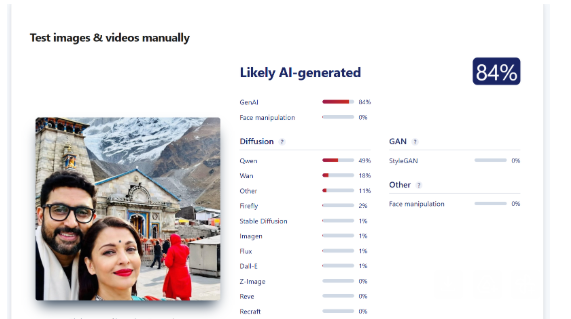
Additionally, we scanned the same image using another AI detection tool, HIVE Moderation. The results showed an even stronger indication, classifying the image as 99 percent AI-generated.

Conclusion
Our research confirms that the viral image showing Abhishek Bachchan and Aishwarya Rai at Kedarnath Temple is not authentic. The picture is AI-generated and is being falsely shared on social media to mislead users.

Related Blogs

Executive Summary:
As we researched a viral social media video we encountered, we did a comprehensive fact check utilizing reverse image search. The video circulated with the claim that it shows illegal Bangladeshi in Assam's Goalpara district carrying homemade spears and attacking a police and/or government official. Our findings are certain that this claim is false. This video was filmed in the Kishoreganj district, Bangladesh, on July 1, 2025, during a political argument involving two rival factions of the Bangladesh Nationalist Party (BNP). The footage has been intentionally misrepresented, putting the report into context regarding Assam to disseminate false information.

Claim:
The viral video shows illegal Bangladeshi immigrants armed with spears marching in Goalpara, Assam, with the intention of attacking police or officials.

Fact Check:
To establish if the claim was valid, we performed a reverse image search on some of the key frames from the video. We did our research on a number of news articles and social media posts from Bangladeshi sources. This led us to a reality check as the events confirmed in these reports took place in Ashtagram, Kishoreganj district, Bangladesh, in a violent political confrontation between factions of the Bangladesh Nationalist Party (BNP) on July 1, 2025, that ultimately resulted in about 40 injuries.
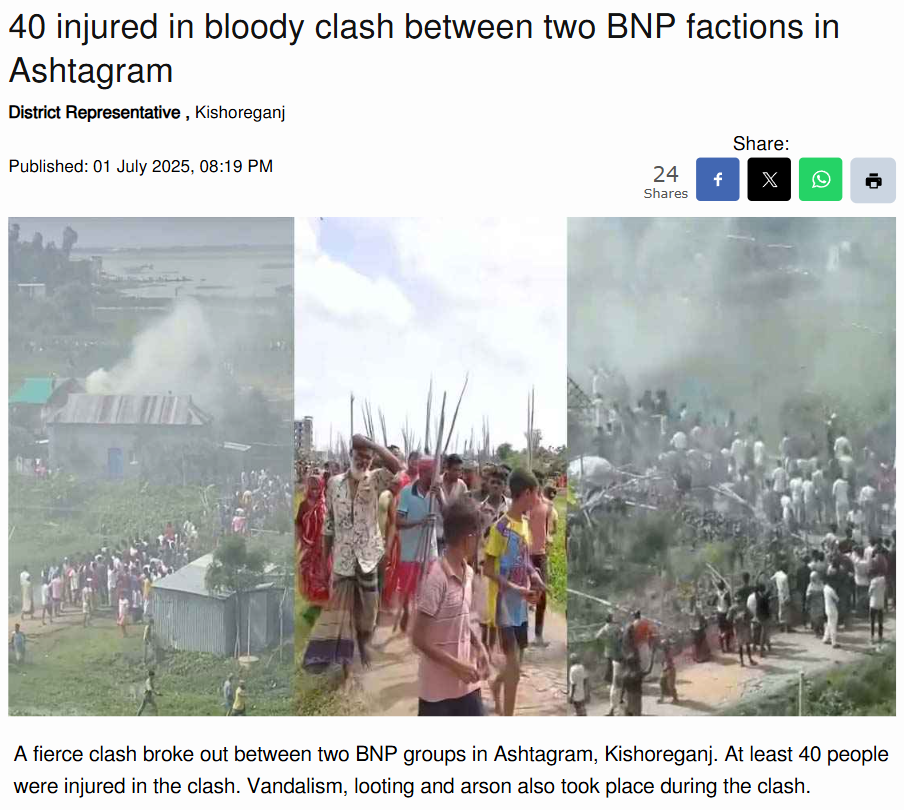
We also found on local media, in particular, Channel i News reported full accounts of the viral report and showed images from the video post. The individuals seen in the video were engaged in a political fight and wielding makeshift spears rather than transitioning into a cross-border attack. The Assam Police issued an official response on X (formerly Twitter) that denied the claim, while noting that nothing of that nature occurred in Goalpara nor in any other district of Assam.


Conclusion:
Based on our research, we conclude that the viral video does not show unlawful Bangladeshi immigrants in Assam. It depicts a political clash in Kishoreganj, Bangladesh, on July 1, 2025. The claim attached to the video is completely untrue and is intended to mislead the public as to where and what the incident depicted is.
Claim: Video shows illegal migrants with spears moving in groups to assault police!
Claimed On: Social Media
Fact Check: False and Misleading
"India’s digital public infrastructure promises inclusion and efficiency. But when essential services depend on handing over data, children become legible to the state long before anyone listens to them."
India’s digital transformation deserves much of the praise it gets. Digital Public Infrastructure (DPI) has taken public services to people at a scale few countries have managed. Still, one question gets less attention than it should: what happens when the state’s wish for a neatly administered citizen starts to override the rights of a child?
Aditi Pillai takes this up in From Principle(al) to Practice: The Child as a Datafied Digital Citizen in India’s Digital Public Infrastructure. She doesn’t argue against digital infrastructure. Her point is that its claim to serve the public can’t be separated from the power it holds over the people enrolled in it. The most obvious example is children. When they are persons with rights today, they run the risk of being reduced to administrative categories, data points and future projections. A child’s citizenship is suspended until adulthood. These days, identity, privacy and agency are important but digital governance frequently views childhood as something that needs to be tracked, controlled and maximised.
Protection without participation
Pillai’s sharpest idea is what she calls “double paternalism.” She uses 49-story completion responses from parents who completed brief hypothetical situations regarding enrolling a child in a computerised system, as well as expert interviews. Her focus is on how parental and institutional power reinforce one another and prevent kids from making decisions about their own online life.
Consider the Automated Permanent Academic Account Registry (APAAR), which provides a permanent academic identification for every student. Consolidating records may well help administrators. The harder questions are whether enrolment is truly voluntary, whether refusing carries a penalty, and whether a family can question how data is collected and linked without risking the child’s schooling.
The answers weren’t encouraging. Many parents either accepted enrolment despite their reservations or viewed it as a requirement that wasn’t worth challenging. Out of the 48, only four exhibited aggressive resistance and just one admitted that the adolescent in the scenario might have a voice. It is not appropriate to interpret this little qualitative study as a statistical representation of Indian parents. Nevertheless, it implies that there was never a choice and that obedience may be mistaken for informed agreement.
That is the double edge. The state compels, or strongly nudges, parents to enrol their children. Parents then decide on the child’s behalf without involving them. Both layers claim to protect the child’s interests, and the child’s own voice is missing from both.
When convenience becomes compulsion
It is easy to treat digital systems as neutral tools. They aren’t. Every system embodies decisions about what is collected, which records are linked, who can see them, and what happens to someone who can’t or won’t comply.
Pillai points to what can follow when educational records are tied to identity systems. Persistent data trails can expose children to long-term profiling. Rigid identification rules can shut out those whose lives don’t fit the institutional template: children without reliable documents, those who have left abusive homes, those who can’t provide valid biometrics.
There is an irony here. A system built to make citizens more visible to the state can make its most vulnerable citizens less visible as people. When a child can’t meet the system’s requirements, the result is often exclusion, not accommodation.
All of this does not imply that India should abandon digital infrastructure.The true debate is whether people’s freedom of choice, privacy and equitable access should be sacrificed for efficiency. A system can’t call itself inclusive if participation is compulsory in practice and the exceptions are badly designed.
Parents can’t carry this alone
Pillai also names “potentiality risk,” the worry that data gathered in childhood will quietly shape future opportunities, reputation or identity. A school record can outlast the circumstances that produced it. A bad year, once logged, may follow a student if institutions come to read them through a permanent digital profile.
Parents are left in an impossible spot. They are expected to guard their children against risks they may not fully understand and have little power to control. Responsibility slides from the institutions that build and run these systems to the families who must live with them. That is a weak form of accountability. Parental consent can’t justify every kind of data processing involving a child, and parents shouldn’t have to bargain one by one with schools or authorities when the alternative is losing an essential service.
The Digital Personal Data Protection Act, 2023, treats children as a distinct category of data principals and requires verifiable parental consent, subject to its provisions and rules. That is a start. The deeper question remains: does a child-focused data regime only regulate what adults decide about children, or does it also leave room for children’s own evolving views and abilities? Protection without participation can turn into control by another name.
From data subjects to digital citizens
Pillai’s strategy is built on two interconnected concepts: a rights-based perspective of data justice rooted in the UN Convention on the Rights of the Child (UNCRC) and participatory digital citizenship.
In actuality, this entails consulting kids before systems are developed rather than after. Parents need clear information and practical options to raise concerns about enrolment. Accessible grievance procedures, real alternatives when necessary and safeguards against exclusion are all necessary for institutions. Collection and linking of data should be proportionate to a legitimate purpose with clear accountability for how it is used later. Above all, the child’s best interests should be a standard that actually governs decisions, not a phrase invoked to excuse administrative convenience.
India’s digital ambitions and children’s rights don’t have to collide. A public system is best judged by how it treats the people least able to challenge it. The real test of a digital state is not how many people it can enrol or connect, but whether they keep their dignity and agency once inside. Children should not end up as records to be maintained or risks to be managed. They are citizens now, and their rights matter now.
References
- Aditi Pillai, ‘From Principle(al) to Practice: The Child as a Datafied Digital Citizen in India’s Digital Public Infrastructure’ (2026) 22(2) Indian Journal of Law and Technology, Article 3. DOI: 10.55496/NFYV5618.
- Digital Personal Data Protection Act 2023, s 9.
- United Nations Convention on the Rights of the Child (adopted 20 November 1989, entered into force 2 September 1990) 1577 UNTS 3.
- Government of India, ‘G20 New Delhi Leaders’ Declaration’ (2023).
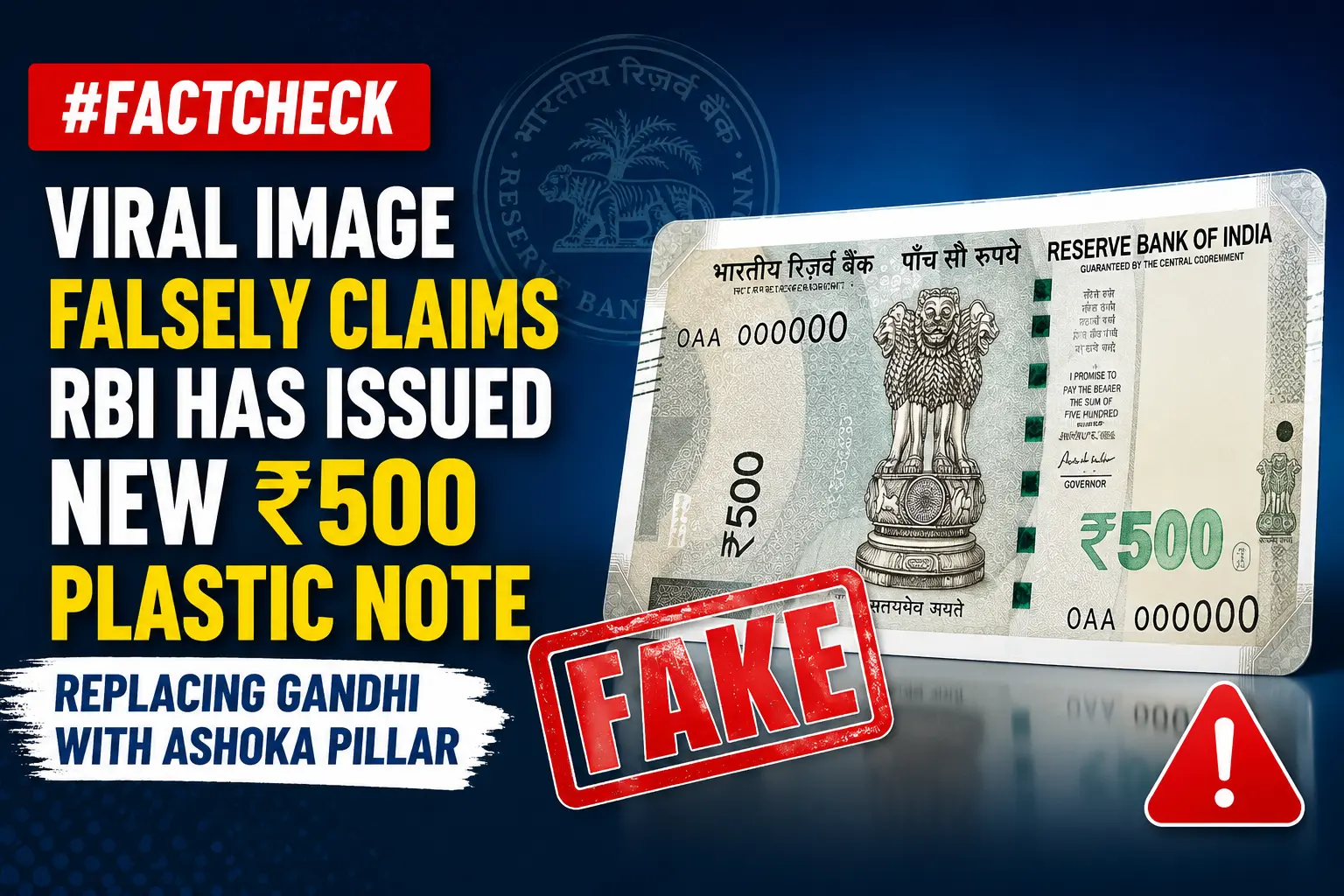
Executive Summary
An image of a purported new ₹500 plastic banknote is being widely shared on social media. Users claim that the Reserve Bank of India (RBI) has issued the new note and replaced Mahatma Gandhi’s portrait with the Ashoka Pillar.The CyberPeace Research Wing research found the claim to be misleading. The probe revealed that RBI has not issued any new ₹500 plastic banknote. Furthermore, no official announcement or decision has been made regarding the removal of Mahatma Gandhi’s portrait from Indian currency and its replacement with the Ashoka Pillar.
Claim
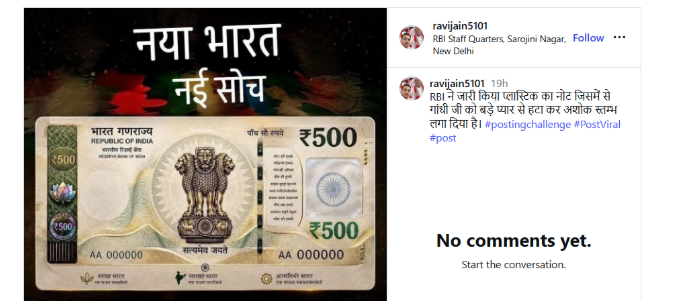
An Instagram user shared the viral image with the claim: “RBI has issued a ₹500 plastic note in which Mahatma Gandhi’s image has been removed and replaced with the Ashoka Pillar.” The claim has been widely circulated on social media, with many users sharing the image as genuine. The post link, archived version, and screenshot can be seen below.
Fact Check
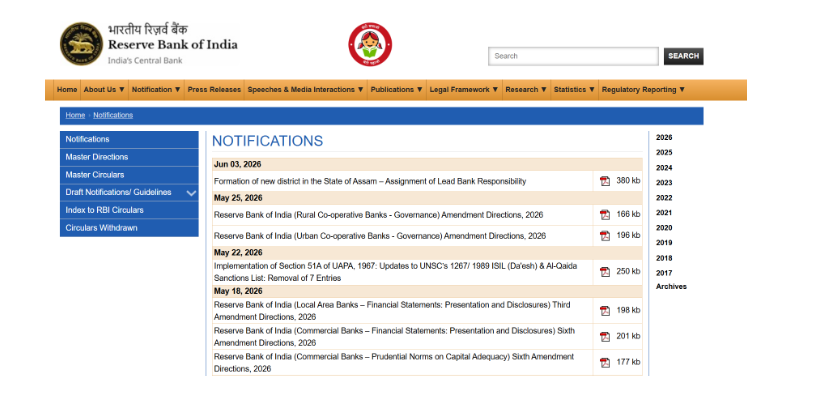
To verify the claim, we conducted a keyword search on Google. However, we found no credible media reports suggesting that RBI had issued a new ₹500 plastic note featuring the Ashoka Pillar in place of Mahatma Gandhi. We then searched the official RBI website for any notification or announcement related to the claim. Our search yielded no official communication supporting the viral claim.
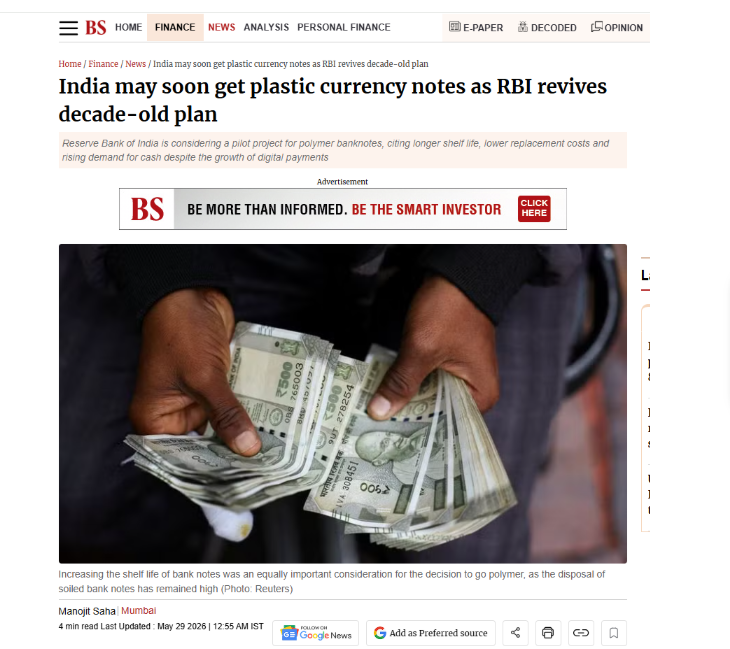
During the research, we also came across a report published by Business Standard. According to the report, the Reserve Bank of India is exploring the possibility of introducing polymer (plastic) currency notes in the future. The report states that RBI is studying and discussing the proposal in view of the growing global adoption of polymer notes and their greater durability. However, the report does not state that RBI has already issued a new ₹500 plastic note. Nor does it mention any decision to remove Mahatma Gandhi’s portrait from existing currency notes and replace it with the Ashoka Pillar.
- https://www.business-standard.com/finance/news/rbi-set-to-unveil-polymer-rupee-notes-amid-rising-currency-demand-126052801725_1.html
Conclusion
The research found that the viral claim is misleading. RBI has not issued any new ₹500 plastic banknote, and there has been no official announcement or decision to replace Mahatma Gandhi’s portrait on Indian currency with the Ashoka Pillar.
