
The Silent Online Epidemic: A Fight Against Digital Drug and Trafficking Cartels
Introduction
We were all stunned and taken aback when multiple photos of streets in the U.S. surfaced with heavily drugged individuals loosely sitting on the streets, victims of a systematically led drug operation that has recently become a target of the Trump-led “tariff” war, which he terms as a war on drug cartels. The drug is a synthetic opioid, fentanyl, which is highly powerful and addictive. The menace of this drug is found in a country that has Wall Street and the largest and most powerful economy globally. The serious implications of drug abuse are not about a certain economy; instead, it has huge costs to society in general. The estimated cost of substance misuse to society is more than $820 billion each year and is expected to continue rising.
On June 26, the International Day against Drug Abuse and Illicit Trafficking is observed globally. However, this war is waged daily for millions of people, not on streets or borders, but in bloodstreams, behind locked doors, and inside broken homes. Drug abuse is no longer a health crisis; it is a developmental crisis. The United Nations Office on Drugs and Crime has launched a campaign against this organised crime that says, “Break the Cycle’ attributing to the fact that de-addiction is hard for individuals.
The Evolving Drug Crisis: From Alleyways to Algorithms
The menace of Drug abuse and illicit trafficking has also taken strides in advancement, and what was once considered a street-side vice has made its way online in a faceless, encrypted, and algorithmically optimised sense. The online drug cartels operate in the shadows and often hide in plain sight, taking advantage of the privacy designed to benefit individuals. With the help of darknet markets, cryptocurrency, and anonymised logistics, the drug trade has transformed into a transnational, tech-enabled industry on a global scale. In an operation led by the U.S. Department of Justice’s Joint Criminal Opiod and Darknet Enforcement (JCODE) and related to Operation RapTor, an LA apartment was only to find an organised business centre that operated as a hub of one of the most prolific methamphetamine and cocaine distributors in the market. Aaron Pinder, Unit Chief of the FBI Hi-Tech Organised Crime Unit, said in his interview, “The darknet vendors that we investigate, they truly operate on a global scale.” On January 11, 2025, during the Regional Conference on “Drug Trafficking and National Security,” it was acknowledged how cryptocurrency, the dark web, online marketplaces, and drones have made drug trafficking a faceless crime. Reportedly, there has been a seven-fold increase in the drugs seized from 2004-14 to 2014-24.
India’s Response: Bridging Borders, Policing Bytes
India has been historically vulnerable due to its geostrategic placement between the Golden Crescent (Afghanistan-Iran-Pakistan) and Golden Triangle (Myanmar-Laos-Thailand), and confronts a fresh danger from “click-to-consume’ narcotics. Although India has always adopted a highly sensitised approach, it holds an optimistic future outlook for the youth. Last year, to commemorate the occasion of International Day against Drug Abuse and Illicit Trafficking, the Department of Social Justice & Empowerment organised a programme to engage individuals for the cause. The Indian authorities are often seen coming down heavily on the drug peddlers and cartels, and to aid the cause, the Home Minister Amit Shah inaugurated the new office complex of the NCB’s Bhopal zonal unit and extension of the MANAS-2 helpline to all 36 states and UTs. The primary objectives of this step are to evaluate the effectiveness of the Narcotics Coordination Mechanism (NCORD), assess the progress of states in fighting drug trafficking, and share real-time information from the National Narcotics Helpline ‘MANAS’ portal with the Anti-Narcotics Task Force (ANTF) of states and UTs.
The United Nation’s War on Narcotics: From Treaties to Technology
The United Nations Office on Drugs and Crime (UNODC) is leading the international response. It offers vital data, early warning systems, and technical support to the states fighting the drug problem. The UNODC incorporates cooperation in cross-border intelligence, overseeing the darknet activities, encouraging the treatment and harm reduction, and using anti-money laundering mechanisms to stop financial flows. India has always pledged its support to the UN led activities, and as per reports dated 26th March, 2025, India chaired the prestigious UN-backed Commission on Narcotic Drugs (CND) meeting held in vienna, wherein India highlighted the importance of opioids for medical purposes as well as the nation’s notable advancements in the field.
Resolution on June 26: From Commemoration to Commitment
Let June 26 be more than a date on the calendar- let it echo as a call to action, a day when awareness transforms into action, and resolve becomes resistance. On this day, CyberPeace resolves the following:
- To treat addicts as victims rather than criminals and to pitch for reforms to provide access to reasonably priced, stigma-free rehabilitation.
- To integrate anti-drug awareness into digital literacy initiatives and school curricula in order to teach frequently and early.
- To demand responsibility and accountability from online marketplaces and delivery services that unwittingly aid traffickers
- To tackle the demand side through employment, mental health services, and social protection, particularly for at-risk youth.
References
- https://www.gatewayfoundation.org/blog/cost-of-drug-addiction/#:~:text=The%20estimated%20cost%20for%20substance,Alcohol%3A%20%24249%20billion
- https://www.unodc.org/unodc/en/drugs/index-new.html
- https://www.fbi.gov/news/stories/global-operation-targets-darknet-drug-trafficking
- https://www.thehindu.com/news/national/dark-web-crypto-drones-emerge-as-challenges-in-fight-against-drug-trafficking-amit-shah/article69088383.ece
- https://www.pib.gov.in/PressReleaseIframePage.aspx?PRID=2028704
- https://www.newindianexpress.com/nation/2025/Mar/26/in-a-first-india-chairs-un-forum-on-narcotics-pledges-to-improve-access-to-pain-relief-and-palliative-care

Related Blogs

Overview:
It is worth stating that millions of Windows users around the world are facing the Blue Screen of Death (BSOD) problem that makes systems shutdown or restart. This has been attributed to a CrowdStrike update that was released recently and has impacted many organizations, financial institutions, and government agencies across the globe. Indian airlines have also reported disruptions on X (formerly Twitter), informing passengers about the issue.
Understanding Blue Screen of Death:
Blue Screen errors, also known as black screen errors or STOP code errors, can occur due to critical issues forcing Windows to shut down or restart. You may encounter messages like "Windows has been shut down to prevent damage to your computer." These errors can be caused by hardware or software problems.
Impact on Industries
Some of the large U. S. airlines such as American Airlines, Delta Airlines, and United Airlines had to issue ground stops because of communication problems. Also, several airports on Friday suffered a massive technical issue in check-in kiosks for IndiGo, Akasa Air, SpiceJet, and Air India Express.
The Widespread Issue
The issue seems widespread and is causing disruption across the board as Windows PCs are deployed at workplaces and other public entities like airlines, banks, and even media companies. It has been pointed out that Windows PCs use a special cybersecurity solution from a company called CrowdStrike that seems to be the culprit for this outage, affecting most Windows PC users out there.
Microsoft's Response
The issue was acknowledged by Microsoft and the mitigations are underway. The company in its verified X handle Microsoft 365 status has shared a series information on the latest outage and they are looking into the matter. The issue is under investigation.
In one of the posts from Microsoft Azure, it is mentioned that they have become aware of an issue affecting Virtual Machines (VMs) running Windows Client and Windows Server with the CrowdStrike Falcon agent installed. These VMs may encounter a bug check (BSOD) and become stuck in a restarting state. Their analysis indicates that this issue started approximately at 19:00 UTC on July 18th. They have provided recommendations as follows:
Restore from Backup: In case customers have available backups prior to 19:00 UTC on July 18th, they should recover VM data from the backups. If the customer is using Azure Backup, they can get exact steps on how to restore VM data in the Azure portal. here.
Offline OS Disk Repair: Alternatively, customers can attempt offline repair of the OS disk by attaching an unmanaged disk to the affected VM. Encrypted disks may require additional steps to unlock before repair. Once attached, delete the following file:
Windows/System/System32/Drivers/CrowdStrike/C00000291*.sys
After deletion, reattach the disk to the original VM.
Microsoft Azure is actively investigating additional mitigation options for affected customers. We will provide updates as we gather more information.
Resolving Blue Screen Errors in Windows
Windows 11 & Windows 10:
Blue Screen errors can stem from both hardware and software issues. If new hardware was added before the error, try removing it and restarting your PC. If restarting is difficult, start your PC in Safe Mode.
To Start in Safe Mode:
From Settings:
Open Settings > Update & Security > Recovery.
Under "Advanced startup," select Restart now.
After your PC restarts to the Choose an option screen, select Troubleshoot > Advanced options > Startup Settings > Restart.
After your PC restarts, you'll see a list of options. Select 4 or press F4 to start in Safe Mode. If you need to use the internet, select 5 or press F5 for Safe Mode with Networking.
From the Sign-in Screen:
Restart your PC. When you get to the sign-in screen, hold the Shift key down while you select Power > Restart.
After your PC restarts, follow the steps above.
From a Black or Blank Screen:
Press the power button to turn off your device, then turn it back on. Repeat this two more times.
After the third time, your device will start in the Windows Recovery Environment (WinRE).
From the Choose an option screen, follow the steps to enter Safe Mode.
Additional Help:
Windows Update: Ensure your system has the latest patches.
Blue Screen Troubleshooter: In Windows, open Get Help, type Troubleshoot BSOD error, and follow the guided walkthrough.
Online Troubleshooting: Visit Microsoft's support page and follow the recommendations under "Recommended Help."
If none of those steps help to resolve your Blue Screen error, please try the Blue Screen Troubleshooter in the Get Help app:
- In Windows, open Get Help.
- In the Get Help app, type Troubleshoot BSOD error.
- Follow the guided walkthrough in the Get Help app.
[Note: If you're not on a Windows device, you can run the Blue Screen Troubleshooter on your browser by going to Contact Microsoft Support and typing Troubleshoot BSOD error. Then follow the guided walkthrough under "Recommended Help."]
For detailed steps and further assistance, please refer to the Microsoft support portal or contact their support team.
CrowdStrike’s Response:
In the statement given by CrowdStrike, they have clearly mentioned it is not any cyberattack and their resources are working to fix the issue on Windows. Further, they have identified the deployment issue and fixed the same. Crowdstrike mentions about their problematic versions as follows:
- “Channel file "C-00000291*.sys" with timestamp of 0527 UTC or later is the reverted (good) version.
- Channel file "C-00000291*.sys" with timestamp of 0409 UTC is the problematic version.
Note: It is normal for multiple "C-00000291*.sys files to be present in the CrowdStrike directory - as long as one of the files in the folder has a timestamp of 0527 UTC or later, that will be the active content.”
The CrowdStrike will be providing latest updates on the same and advises their customers and organizations to contact their officials officially to get latest updates and accurate information. It is encouraged to refer to customer’s support portal for further help.
Stay safe and ensure regular backups to mitigate the impact of such issues.
References:
https://status.cloud.microsoft/
https://www.crowdstrike.com/blog/statement-on-falcon-content-update-for-windows-hosts/

Introduction
As the world is being "Digitally Interlaced", cyber security has become a continuous wrangle. The “Gambling industry” is considered an incredibly lucrative mark for cybercriminals, principally due to the enormous quantities of cash on hand and the sensitive details it processes day to day. Cybercriminals may use susceptibilities in gambling scaffolds to achieve financial scams or launder unlawful funds. An analysis by Security Scorecard discovered that the online gambling industry was ranked third in the possibility of encountering a cyber attack, following the energy and financial services sectors. Similarly, Online gambling is a bending matter that demands meticulous contemplation by policymakers and nationals. The incredible rise of online gambling has led to a terse acclivity in unlawful activities such as online scams, fraud, etc. Also, online sports gambling has become a thriving endeavour in contemporary years as millions of people are putting stakes and gambles on their electronic devices.
The Challenges
Online gambling has thus become a widespread frolicking for numerous youngsters, with the industry tossed to be worth billions of dollars in the forthcoming decades. The prominent cyber security challenges in the gambling industry are money laundering, financial laundering, ransomware, personal information theft, data breaches, distributed Denial of Service (DDoS), system disruptions and Insider perils and employee malfeasance. Challenges of online gambling also include being properly not regulated and a lack of social interaction with near and dear ones. The spread of Internet gambling has presented many problems affecting consumer behaviour online, motivations to gamble, problem gambling, security of websites, and the righteousness and virtue of the games. The rise of online gambling among young people due to the lack of clear regulations has likewise produced an abundant backdrop for financial ruination.
Web games and betting are among the fastest-evolving areas of the Internet. Over the past several years, there has been an international flare-up in online gambling, permitting customers to play from the convenience of home, work, and public locations. Numerous offshore betting websites and apps usually permit parties to win in the start with sound returns, whereas after the user gets addicted and invests considerable sums, they either keep failing or have the website refuse to cash out the winnings. Also, the information demonstrates that online games have been employed to commit wrongdoings (Child sexual exploitive material, religious conversion, cyberbullying, fraud, betting in virtual online casinos, etc.)
India's laws and regulations surrounding online gambling are complex and constantly evolving. While the legal framework is not entirely clear, a few state in India have their own set of rules.
Recently In April 2023, the Union Ministry of Electronics and Information Technology (“MeitY”), by virtue of the rule-making powers available to the central government under the Information Technology Act, 2000 (“IT Act 2000”), implemented a new central legal framework for online gaming through amendments to the Information Technology (Intermediary Guidelines and Digital Media Ethics Code) Rules, 2021 (“IT Rules 2021”). These amendments (“Online Gaming Rules”) propose a light-touch, co-regulatory regime whereby MeitY-recognised, independent self-regulatory bodies (“SRB”) will verify whether an “online real-money game” is to be made available to the general public or not – in accordance with the baseline criteria prescribed by the Online Gaming Rules.
The Online Gaming Rules attempt to regulate online gaming platforms by treating them as an “online gaming intermediary” (“OGI”) and prescribing intermediary due diligence obligations for them under the IT Rules 2021. An OGI has been defined in the Online Gaming Rules as “any intermediary that enables the users of its computer resource to access one or more online games”. Under the Online Gaming Rules, an online game can be a “permissible online game” if (i) it is not an online real-money game, or (ii) it is an online real-money game but is “verified” by an SRB in accordance with the baseline criteria prescribed by the Online Gaming Rules and any additional criteria prescribed by the SRB itself.
Global Perspective
The global gaming industry worth over US$227 billion in 2022 is further projected to grow to US$312 billion by 2027. Several countries have set regulatory frameworks about online gaming, though these are skewed, concentrating mainly on gambling and circumventing numerous of the more typical cyber threats. The US spends about $60 billion annually on online gambling and sports betting. In Europe, gambling is an even larger moneymaker. Also, numerous countries in Europe, like the UK, have legalised gambling. Nevertheless, it is prohibited for a US based company to operate an online gambling site. Yet, sports betting online is permitted in some states.
Today, though the gaming market has been overpowered by China and the US, future growth in the sector is anticipated to come from emerging economies like India with increasing populations. The permitted status of online gambling in India is nonetheless imprecise, vamoosing space for exploitation by cyber criminals and disarray for players involved. One of the climactic points that ought to be addressed is the sudden upsurge of online games, which increases gambling. Skill-based games such as poker, rummy etc., have additionally been developed to circumvent the legal definition of gambling in India. The recent instances of the online gaming industry not being properly regulated have also come to light in India. For instance, the Enforcement Directorate (ED) is still investigating the vast Mahadev Online Betting scandal, exposing an unknown money laundering method using Unified Payment Interface (UPI) IDs. Also, the Cyber Cell in Agra has taken proactive action against copyright violations, illegal online gambling and betting activities, shutting down 27 Illegal cricket betting sites in major operations, safeguarding several lakhs of Indians with thousands of crores from being transferred to overseas shores principally China.
Consequently, though India has announced new regulations on online gaming, its contemporary policy framework cannot contend with the problems endangering this sector. The Public Gambling Act of 1867 makes it unlawful to use a public gambling house or to be seen in one. Nevertheless, the act does not explicitly cite online gambling, leading to further interpretation. The Ministry of Home Affairs (MHA) has released a further awareness campaign for offshore illegal gambling apps, notifying users to be mindful of foreign apps as they may be fraudulent and might induce monetary damage to the user. Also, state laws control gambling in India with each state having its own directive on the subject. Yet, the Supreme Court of India has maintained that skilled games are not gambling and are thus legal. Furthermore, the Information Technology (IT) Act, of 2000 does not precisely handle online gambling or games that enable gambling.
Today, developers have strived for new ways to monetise the growing popularity of online gaming, which oversaw the creation of in-game currencies that can be bought using actual money, usually through credit cards. Several nations have prohibited the usage of in-game currency and loot boxes, considering them a kind of online gambling. The in-game currency has thus caused much disagreement about becoming a state of hunting monetisation by developers, especially targeting minor or newbie players. The gambling industry, therefore, faces unique cybersecurity challenges that require a comprehensive and proactive approach to cybersecurity.
Conclusion
Presently, there are approximately 3.09 billion active video game players worldwide, and the number is expected to reach 3.32 billion by 2024 as of 2023. In the contemporary digital era, information is priceless, and encryption acts as a necessary means to safeguard it. Thus, Regulators are working to maintain the swiftness of shift in the industry, as the dearth of transparency in the law has made it challenging to implement regulations. There is also less awareness about cyber security in India due to the following grounds such as the lack of ethical hackers in the country, companies in India lacking focus on cyber security and hiring a team of ethical hackers and cyber security experts. Furthermore, there has been a lack of knowledge among the citizens as well.
It is essential to realise the conceivable social and economic consequences and take measures to handle the online gambling industry. The industry has thus been undersized in the mode of research following online crime and Internet gambling, even though it is an acute emphasis. There is also a pressing necessity to rebuild these regulations to tackle the more unbridled cyber security hazards swarming the gaming industry. Similarly, there is an urgent need for governments and policymakers around the world to start paying more attention to the gaming industry as cyber security threats continue to rise. There should be a further need to strengthen the regulatory framework, establish Self Regulatory Organizations (SROs), create ethical gaming designs and increase awareness among gamers. The Government of India should consider devising its own rating system to rate games so that players under 18 cannot access them.
Eventually, cyber security is a shared commitment, and everyone in the online gambling ecosystem must function jointly to provide a secure and safe setting for all.
References:
- https://truefort.com/gambling-industry-cybersecurity/
- https://www.orfonline.org/research/cybersecurity-threats-in-online-gaming-learnings-for-india
- https://www.hackread.com/chinese-scammers-cloned-websites-gambling-network/
- https://www.civilsdaily.com/news/cybersecurity-threats-from-online-gaming/
- https://www.linkedin.com/pulse/legal-considerations-online-gambling-india-sudden-increase-mathur/
- https://www.jsheld.com/insights/articles/the-importance-of-cybersecurity-in-the-online-sports-betting-industry
- https://www.the420.in/agra-cyber-cell-takes-down-27-illegal-betting-sites/
- https://g2g.news/gaming/ministry-of-home-affairs-releases-new-awareness-campaign-for-online-gaming-in-india/
- https://smestreet.in/technology/kaspersky-warns-of-increased-phishing-scams-and-data-breaches-in-apac-for-2024-2381601
- https://economictimes.indiatimes.com/tech/newsletters/morning-dispatch/govt-bans-mahadev-other-illegal-betting-apps-cyber-attacks-against-india-spike/articleshow/104996017.cms?from=mdr
- https://cipher.com/cybersecurity-for-gambling/
- https://www.mangalorean.com/tightening-the-reins-indian-government-blocks-over-550-illegal-betting-and-gambling-apps/
- https://cybersecurityasean.com/news-press-releases/kaspersky-predicts-rise-cyber-threats-across-apac-2024
- https://www.cnbctv18.com/technology/mahadev-betting-app-scam-ed-money-laundering-upi-celebrities-under-scanner-17815661.htm
- https://iclg.com/practice-areas/gambling-laws-and-regulations/india
Executive Summary
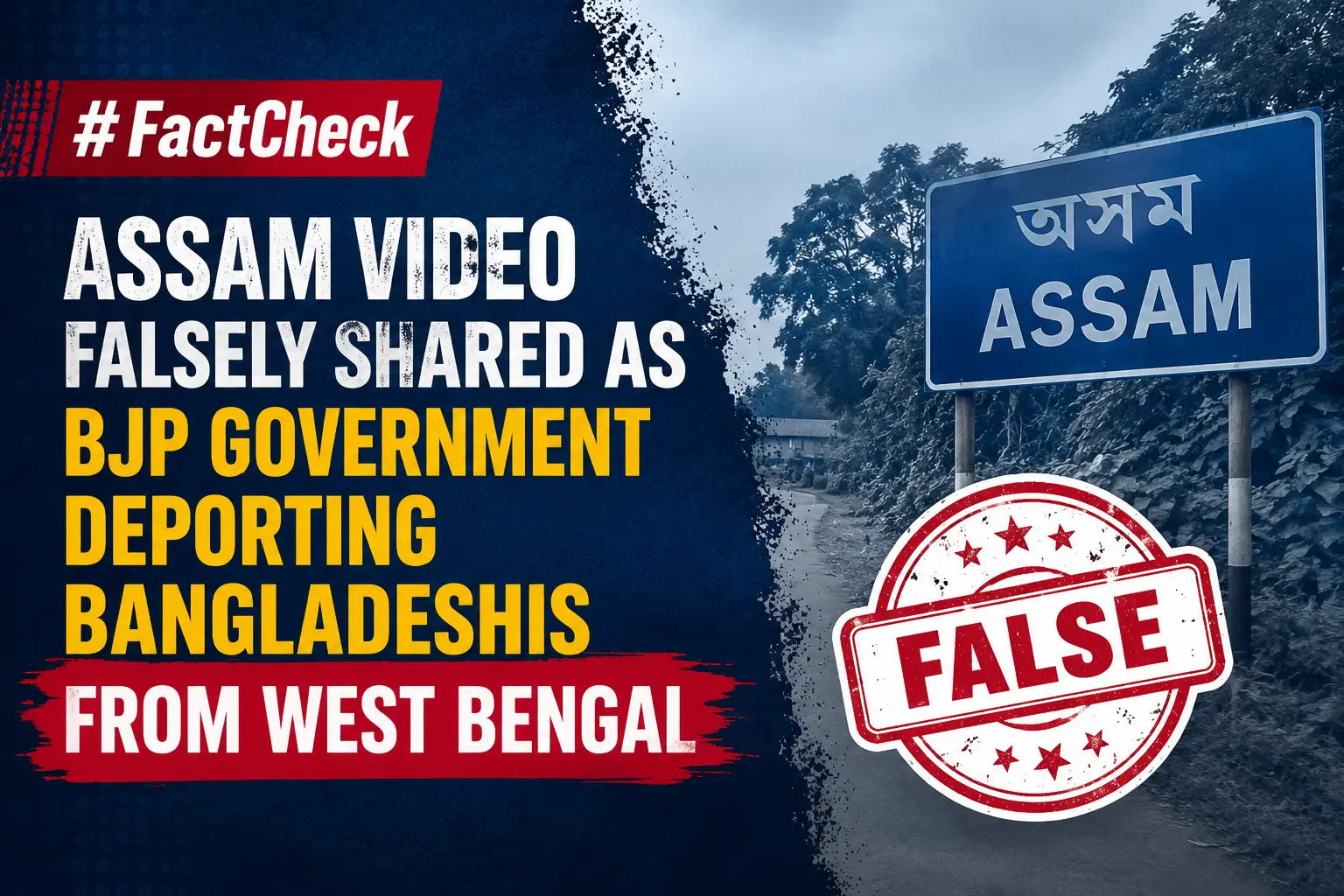
A video is being widely shared on social media amid claims that the BJP has formed a government in West Bengal. The video shows several people being taken away in a bus while their family members are seen crying and grieving nearby. Users sharing the clip claim that the scene is from West Bengal, where the BJP government has allegedly started sending back Bangladeshis who were living illegally in the state.
Research by CyberPeace Research Wing found the viral claim to be misleading. The research revealed that the viral video has no connection with West Bengal. The video is actually from Assam’s Barpeta district, where in 2024, a Foreigners Tribunal declared 28 people as non-citizens. Following the order, authorities shifted them to a transit camp. The viral clip is from that incident. An old and unrelated video is now being falsely shared as a recent incident from West Bengal.
Claim
On May 14, 2026, a Facebook user shared the viral video and wrote, “How sad… Opposition voters are now being packed off to the Bangladesh border from Bengal and Assam. How will they ever win now? Really terrible what is happening to these poor people.” The post link, archive link, and screenshot are provided below.
- https://www.facebook.com/rajendra.kasliwal1/posts/973081982000168/
- https://archive.ph/y7Y4D

Another user also shared the same viral video on social media with a similar claim. The post link, archive link, and screenshot are given below.

Fact Check
To verify the authenticity of the viral video, we extracted several key frames and performed a reverse image search. During the research, we found the same video uploaded on a YouTube channel named Daily Salar Digital on September 5, 2024. The link to the post and its screenshot are given below.

Further research led us to a report published by IndiaTodayNE on September 3, 2024, carrying a similar description of the incident. The post link and screenshot are provided below.

Conclusion
Our research found that the viral video has no connection with West Bengal. The clip is from Assam’s Barpeta district, where in 2024, 28 people were declared non-citizens by a Foreigners Tribunal and later shifted to a transit camp by authorities. The video being shared online is from that incident. An old and unrelated video is being falsely circulated as a recent development from West Bengal.
