
#FactCheck: Viral Video Showing Bus Stuck Between Two Flyovers Is AI-Generated
Executive Summary
A video purportedly showing a bus stuck between two flyovers is going viral across various social media platforms. The video shows a bus carrying several passengers trapped between two flyovers. Some passengers can also be seen climbing out through the roof of the bus. Several social media users are sharing the video, believing it to be genuine. CyberPeace Research found the viral video to be fake. Our research revealed that the video is AI-generated.
Claim:
A Facebook user shared the viral video with the caption: "Friends, a bus is stuck between two flyovers, leaving passengers in panic! How could such a major negligence occur? The passengers' lives were put at risk after the bus got stuck in this manner. Who do you think is responsible for this incident?"
https://www.facebook.com/groups/272961377150654/posts/1798861331227310/

Fact Check
Upon closely examining the viral video, we noticed several inconsistencies. These irregularities raised suspicions that the video might be AI-generated.We then scanned the viral video using the AI detection tool AI Video Detector. According to the results, the viral video is AI-generated.
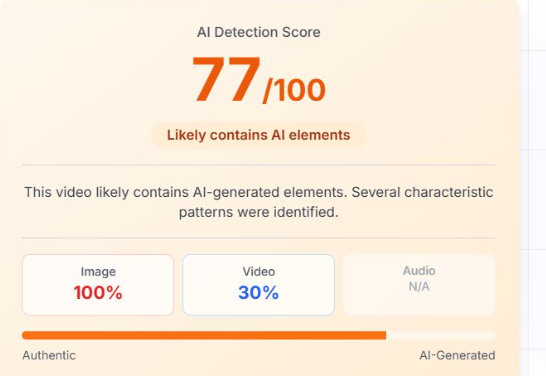
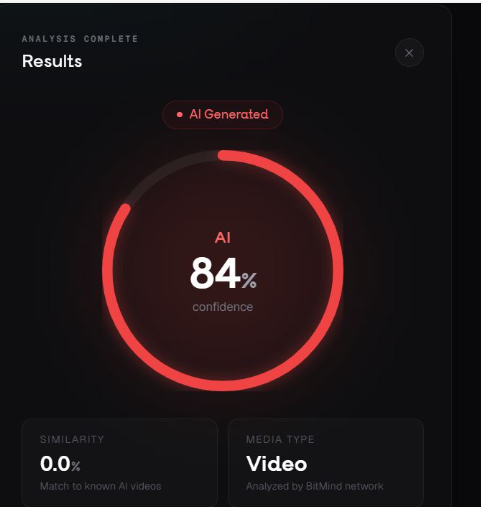
We also used an AI detection tool, Bit Mind, to analyse the video. The tool indicated an 84 per cent likelihood that the video was AI-generated.
Conclusion
Our research found that the viral video is fake and AI-generated. The results from two AI detection tools also indicated that the video was created using artificial intelligence.

Related Blogs

Introduction
In September 2024, the Australian government announced the Communications Legislation Amendment (Combatting Misinformation and Disinformation) Bill 2024 ( CLA Bill 2024 hereon), to provide new powers to the Australian Communications and Media Authority (ACMA), the statutory regulatory body for Australia's communications and media infrastructure, to combat online misinformation and disinformation. It proposed allowing the ACMA to hold digital platforms accountable for the “seriously harmful mis- and disinformation” being spread on their platforms and their response to it, while also balancing freedom of expression. However, the Bill was subsequently withdrawn, primarily over concerns regarding the possibility of censorship by the government. This development is reflective of the global contention on the balance between misinformation regulation and freedom of speech.
Background and Key Features of the Bill
According to the BBC’s Global Minds Survey of 2023, nearly 73% of Australians struggled to identify fake news and AI-generated misinformation. There has been a substantial rise in misinformation on platforms like Facebook, Twitter, and TikTok since the COVID-19 pandemic, especially during major events like the bushfires of 2020 and the 2022 federal elections. The government’s campaign against misinformation was launched against this background, with the launch of The Australian Code of Practice on Disinformation and Misinformation in 2021. The main provisions of the CLA Bill, 2024 were:
- Core Transparency Obligations of Digital Media Platforms: Publishing current media literacy plans, risk assessment reports, and policies or information on their approach to addressing mis- and disinformation. The ACMA would also be allowed to make additional rules regarding complaints and dispute-handling processes.
- Information Gathering and Record-Keeping Powers: The ACMA would form rules allowing it to gather consistent information across platforms and publish it. However, it would not have been empowered to gather and publish user information except in limited circumstances.
- Approving Codes and Making Standards: The ACMA would have powers to approve codes developed by the industry and make standards regarding reporting tools, links to authoritative information, support for fact-checking, and demonetisation of disinformation. This would make compliance mandatory for relevant sections of the industry.
- Parliamentary Oversight: The transparency obligations, codes approved and standards set by ACMA under the Bill would be subject to parliamentary scrutiny and disallowance. ACMA would be required to report to the Parliament annually.
- Freedom of Speech Protections: End-users would not be required to produce information for ACMA unless they are a person providing services to the platform, such as its employees or fact-checkers. Further, it would not be allowed to call for removing content from platforms unless it involved inauthentic behavior such as bots.
- Penalties for Non-Compliance: ACMA would be required to employ a “graduated, proportionate and risk-based approach” to non-compliance and enforcement in the form of formal warnings, remedial directions, injunctions, or significant civil penalties as decided by the courts, subject to review by the Administrative Review Tribunal (ART). No criminal penalties would be imposed.
Key Concerns
- Inadequacy of Freedom of Speech Protections: The biggest contention on this Bill has been regarding the issue of possible censorship, particularly of alternative opinions that are crucial to the health of a democratic system. To protect the freedom of speech, the Bill defined mis- and disinformation, what constitutes “serious harm” (election interference, harming public health, etc.), and what would be excluded from its scope. However, reservations among the Opposition persisted due to the lack of a clear mechanism to protect divergent opinions from the purview of this Bill.
- Efficacy of Regulatory Measures: Many argue that by allowing the digital platform industry to make its codes, this law lets it self-police. Big Tech companies have no incentive to curb misinformation effectively since their business models allow them to reap financial benefits from the rampant spread of misinformation. Unless there are financial non- or dis- incentives to curb misinformation, Big Tech is not likely to address the situation at war footing. Thus, this law would run the risk of being toothless. Secondly, the Bill did not require platforms to report on the “prevalence of” false content which, along with other metrics, is crucial for researchers and legislators to track the efficacy of the current misinformation-curbing practices employed by platforms.
- Threat of Government Overreach: The Bill sought to expand the ACMA’s compliance and enforcement powers concerning misinformation and disinformation on online communication platforms by giving it powers to form rules on information gathering, code registration, standard-making powers, and core transparency obligations. However, even though the ACMA as a regulatory authority is answerable to the Parliament, the Bill was unclear in defining limits to these powers. This raised concerns from civil society about potential government overreach in a domain filled with contextual ambiguities regarding information.
Conclusion
While the Communications Legislation Amendment (Combatting Misinformation and Disinformation) Bill sought to equip the ACMA with tools to hold digital platforms accountable and mitigate the harm caused by false information, its critique highlights the complexities of regulating such content without infringing on freedom of speech. Legislations and proposals regarding the matter all over the world are having to contend with this challenge. Globally, legislation and proposals addressing this issue face similar challenges, emphasizing the need for a continuous discourse at the intersection of platform accountability, regulatory restraint, and the protection of diverse viewpoints.
To regulate Big Tech effectively, governments can benefit from adopting a consultative, incremental, and cooperative approach, as exemplified by the European Union’s Digital Services Act 2023. Such a framework provides for a balanced response, fostering accountability while safeguarding democratic freedoms.
Resources
- https://www.infrastructure.gov.au/sites/default/files/documents/factsheet-misinformation-disinformation-bill.pdf
- https://www.infrastructure.gov.au/have-your-say/new-acma-powers-combat-misinformation-and-disinformation
- https://www.mi-3.com.au/07-02-2024/over-80-australians-feel-they-may-have-fallen-fake-news-says-bbc
- https://www.hrlc.org.au/news/misinformation-inquiry
- https://humanrights.gov.au/our-work/legal/submission/combatting-misinformation-and-disinformation-bill-2024
- https://www.sbs.com.au/news/article/what-is-the-misinformation-bill-and-why-has-it-triggered-worries-about-freedom-of-speech/4n3ijebde
- https://www.hrw.org/report/2023/06/14/no-internet-means-no-work-no-pay-no-food/internet-shutdowns-deny-access-basic#:~:text=The%20Telegraph%20Act%20allows%20authorities,preventing%20incitement%20to%20the%20commission
- https://www.hrlc.org.au/submissions/2024/11/8/submission-combatting-misinformation?utm_medium=email&utm_campaign=Media%20Release%20Senate%20Committee%20to%20hear%20evidence%20calling%20for%20Albanese%20Government%20to%20regulate%20and%20hold%20big%20tech%20accountable%20for%20misinformation&utm_content=Media%20Release%20Senate%20Committee%20to%20hear%20evidence%20calling%20for%20Albanese%20Government%20to%20regulate%20and%20hold%20big%20tech%20accountable%20for%20misinformation+Preview+CID_31c6d7200ed9bd2f7f6f596ba2a8b1fb&utm_source=Email%20campaign&utm_term=Read%20the%20Human%20Rights%20Law%20Centres%20submission%20to%20the%20inquiry
Introduction
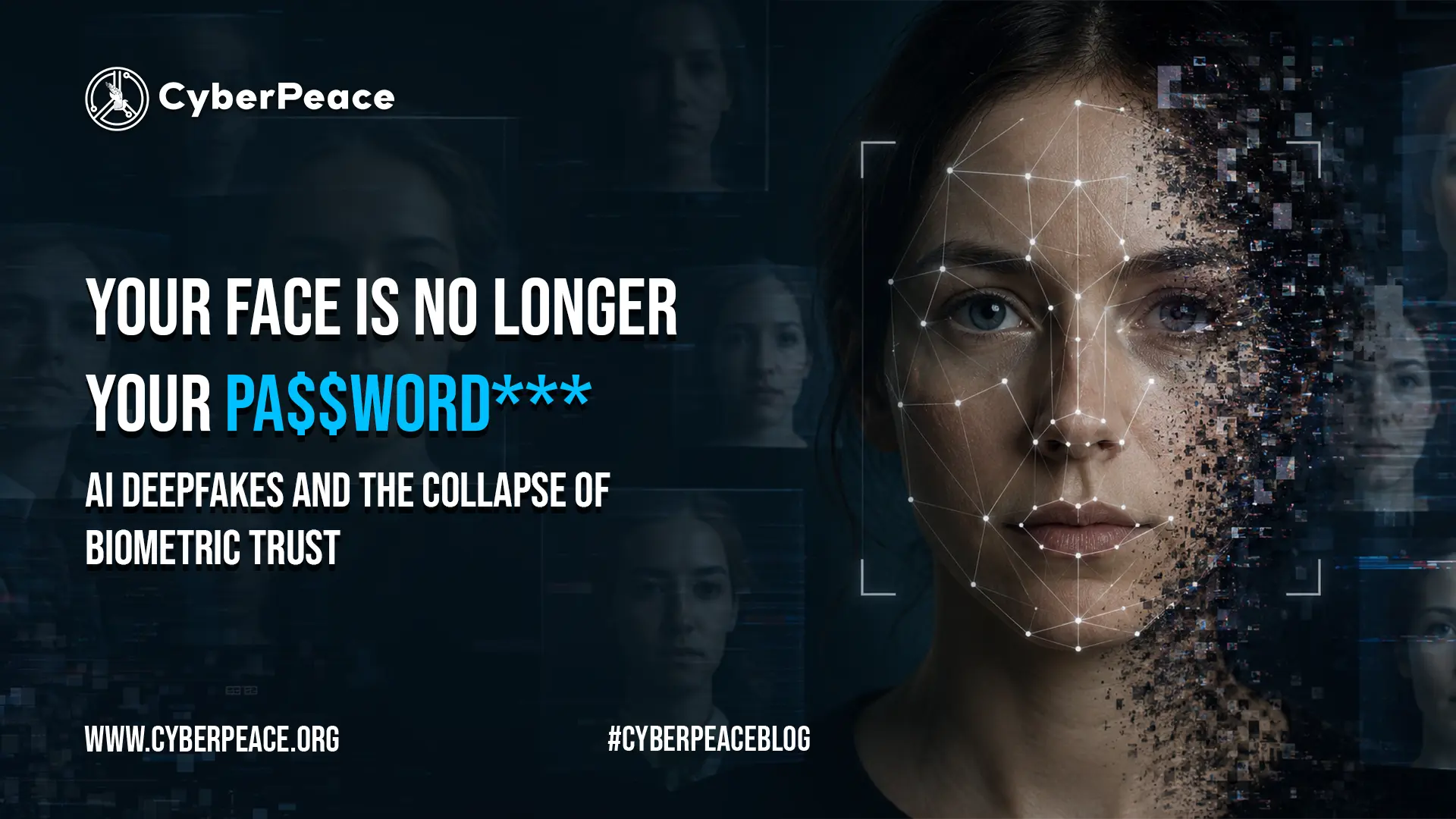
On June 11, 2026, the Ministry of Home Affairs (MHA) India released one of the most critical Indian government advisories concerning cybersecurity by the Indian Cyber Crime Coordination Centre (I4C) under the National Cybercrime Threat Analytics Unit (NCTAU) concerning the immediate and escalating threat posed by the weaponization of generative artificial intelligence to forge synthetic biometric identities capable of bypassing the existing facial verification mechanisms in India. This advisory is arguably one of the most explicit Indian government recognitions of the deep-seated threats associated with AI-generated deepfakes in the country’s digital financial infrastructure. As many Indian financial service providers embrace facial recognition and biometric verification systems for customer onboarding and authentications, the myth that biometric traits are in themselves secure is slowly unraveling.
The advisory states that cybercriminals are deploying sophisticated AI tools to forge such credible digital simulacrums that exhibit such a precise similarity of facial expressions, eye movements, eye blinks, head movements, and voice patterns that they are virtually indistinguishable from the originals for identity verification mechanisms. Such a confluence of easy AI technology, mass onboarding of digital identities, and underdeveloped infrastructure to detect these synthetics requires urgent regulatory, institutional, and technological intervention.
The I4C Advisory: Core Findings and Threat Architecture
In its advisory, NCTAU describes a complex, multi-step attack chain used by scammers to capture biometric information and perpetrate fraud using everyday social interactions. The attackers typically use social media accounts, chat messengers, online job applications, dating applications, or direct phone calls to reach their targets. These interactions are presented as innocuous, such as for video calls, job interviews, identity checks, or just normal conversation with the intention of recording facial and vocal data.
During these interactions, victims may be asked to perform gestures commonly seen in legitimate video calls, such as look directly at the camera, blink, turn their head, or say specific phrases. However, the perpetrators record this video feed without the victim's knowledge and then use deep learning generative AI technologies to process it. Through methods such as Generative Adversarial Networks (GANs) and diffusion models, the scammers create photorealistic synthetic duplicates of the target, capable of mirroring all physical and vocal attributes, such as facial expressions, blinking patterns, head movements, and even voice tones.
The advisory explicitly states that these synthetic identities can be used for a variety of fraudulent activities, such as spoofing face authentication systems, circumventing liveness detection checks, successfully completing video KYC, enabling fraudulent account recovery processes, and illegally accessing bank and financial services. NCTAU also cautions that these voice deepfakes may be paired with facial deepfakes in an attempt to undermine multi-modal authentication methods, and the occurrence of related SIM-swap attacks can eliminate the last layer of security in OTP verification and facilitate a complete account compromise.
The scale of India's Digital Financial Ecosystem
The scale of I4C's detected threat can be better understood by considering India's entire digital financial landscape. In 2025 India has witnessed over 228 billion UPI transactions, with 21.63 billion in December alone, an annual growth rate of 29% from 2024, and an active user base of over 500 million by the beginning of 2026. Furthermore, total e-KYC transactions by April 2025 have exceeded 2,393 crore, and thus, it can be seen the extent to which these aspects of finance (banking, insurance, and credit) are now conducted via remote digital verification. The transformation, although instrumental in increasing financial inclusion, has, according to some analysts, created an attack surface of historic scale. As hundreds of millions more become financially integrated via the very same channels that now form the country's infrastructure and systems of identity, the threat from identity-based fraud becomes astronomically large.
Indian government data further illustrates the extent to which such frauds are a growing concern. Cybercrime cases jumped 42% year-on-year to 2.27 million in 2024, resulting in losses amounting to nearly 228.45 billion. Within that, 1.34 million UPI cases, worth 1,087 crore, occurred in FY2024 alone, while cybercrimes in general soared from 260,000 cases in 2021 to nearly 2.8 million by 2025, totaling cybercrime losses of 22,931 crore.
How Do Deepfakes Defeat Biometric Systems?
Deepfake fraud, in particular, is extremely difficult to counteract due to the direct attack it poses on the assumptions underlying traditional verification systems. Passive techniques for verifying a live person from a static photo or video existed that primarily looked for similarities in textures, lighting, and geometrical properties or challenged subjects to perform an action in real-time. But the generation of real-time face swapping that contains blinks, head motion, and speaking can now be produced on even cheap machines. Cybercriminals can exploit these by using virtual camera drivers to "inject" the false image feed into the live verification session, nullifying any passive liveness checks. Data from the industry clearly shows the extent of this problem: iProov, a leading authenticator, documented a 7.8-fold rise in injection attacks in 2024; Jumio noted an 88% increase in deepfake-induced fraud in 2025; and voice-deepfake attacks on financial call centres saw a 6.8-fold increase in 2024.
Gartner had also predicted that 30% of organizations would have lost trust in facial verification alone by 2026, and work by Kubam (2024) confirmed a lack of multi-factor authentication such as cross-validation of biometric, document, and device integrity signals used within KYC platforms. Such fears have been corroborated by FATF's 2025 Horizon Scan, which classified deepfakes as an emerging threat to the AML/CDD framework and digital identity verification.
Recommendations by I4C
I4C's advisory goes beyond merely warning about threats and lists actionable recommendations to both institutions and citizens. Banks, NBFCs, fintech companies, and onboarding platforms have been advised to incorporate advanced deepfake and synthetic content detection techniques into their verification flows, given that first-generation liveness checks are not enough. They should employ a multi-modal strategy that considers face features along with the device, network signals, behavioral biometrics, and alignment of face and voice. They also have been advised to make a more robust upgrade of their onboarding and verification platforms, as much of the current remote verification architecture was built in a less sophisticated threat context. This aligns with the KYC Master Direction of the RBI that specifies end-to-end encryption, IP-based access controls, geotagging, and technology platforms and systems are to be upgraded frequently. Citizens are advised by I4C to keep their biometric information secure; be careful of unsolicited video calls and online interviews; keep an eye on transaction-related SMS and emails; and report suspicious instances through the National Cybercrime Reporting Portal and through the telephone number 1930. It is clarified that this advisory aims to create awareness of developing AI-based identity fraud schemes, and it is not a declaration that any specific organization, platform, or service is vulnerable.
The Legislative Dimension: India's Evolving Response to Synthetic Media
The problem highlighted by I4C is evolving in a heavily legislated environment, not a legal void. The first-ever legal definition of "synthetic media" in India came into force in the Information Technology Amendment Rules 2026 on February 20, 2026. These rules oblige significant platforms to remove deepfakes and non-consensual intimate media within three hours and two hours, respectively, or lose their safe harbor protection under Section 79 of the IT Act. While the provision focuses on harm stemming from content, this creates a new legal and normative precedent on dealing with AI-induced deception. However, financial frauds facilitated through deepfakes are not content but involve the use of remote identity verification and customer onboarding systems, which require specific technical standards. The overall policy environment when viewed in light of the FATF Horizon Scan, RBI KYC rules, and recent I4C advisory already offers significant scope to define and introduce mandatory deepfake detection and identity assurance standards even before these are explicitly legislated.
Institutional and Technical Recommendations
- For Financial Institutions and Fintech platforms: The existing verification systems (liveness detection) must be replaced with multi-layered deep-fake detection processes, including injection attack detection, behavioral biometrics, cross-modal facial and voice verification, device integrity check, and hardware attestation during onboarding itself.
- For Regulators: The RBI and Ministry of Home Affairs should work together to release technical standards that specify minimum deepfake-detection requirements for video-KYC and remote onboarding systems in line with FATF digital identity guidance and the upcoming EU AI Act.
- For researchers and academia: Dedicated studies on deepfake detection performance across varied demographic, linguistic, and regional populations of India should be prioritized. Current models are mostly trained on Western data.
- For citizens: Face recordings and other biometric information should be treated with the same caution as sensitive financial details. Be wary of unsolicited video calls, remote interviews, or verification requests from unknown people, and report suspicious activities on any account immediately via the National Cybercrime Helpline (1930) or cybercrime.gov.in.
Conclusion
The I4C advisory of June 2026 marks a critical recognition that advances in generative AI have fundamentally challenged the reliability of facial biometric authentication. For a country whose digital financial ecosystem relies heavily on remote identity verification, the implications are significant. The integrity of India's financial inclusion framework now depends on rapidly strengthening identity assurance mechanisms. Addressing this threat will require coordinated action by regulators, financial institutions, technology developers, researchers, and citizens to develop robust technical standards, enhance detection capabilities, and build public awareness at a pace matching the evolution of AI-enabled fraud.
References and Sources
- I4C / NCTAU Advisory, June 2026 — National Cybercrime Threat Analytics Unit, Indian Cyber Crime Coordination Centre, Ministry of Home Affairs, Government of India. Advisory on AI-Enabled Deepfake Identity Fraud. Issued 11 June 2026.
- shuftipro.com/blog/key-takeaways-from-fatf-horizon-scan-report-on-deepfakes
- https://timesofindia.indiatimes.com/india/fraudsters-creating-deepfakes-to-bypass-facial-authentication-i4c/articleshow/131668958.cms
- hyperverge.co/blog/what-is-a-deepfake
- iproov.com/reports/threat-intelligence-report-2026
- arxiv.org/pdf/2601.06241

Introduction
Who would have predicted that the crime of slavery would haunt our lives through the digital world? In a recent unfolding of events, the cyber wing of Maharashtra has saved 60 Indian nationals from a cyber slavery racket run by armed rebel groups operating in Myanmar and arrested five suspects who acted as recruiting agents, including a foreign national. As per the reports, the racketeers made contact with various individuals, enticing them with offers of high-paying jobs in East Asian countries. The operation unfolds a carefully designed crime network that operates through bordering states, Myanmar, Thailand, and Malaysia, targeting vulnerable individuals through deceptive means and forcing them to commit cyber fraud and financial crimes, operating as an authentic industrial setup. The disturbing set of events makes up only one of many such cyber-slavery incidents that are uncovered and various other rackets that operate in the shadows of cyberspace. Another similar event was reported in March 2025, where the disturbing ordeal of a 52-year-old father from Bihar’s Gopalganj, whose son was lured into working in a scam call centre under the pretence of a data entry job in Thailand.
Counting the Unseen: The Dark Metrics of Cyber Slavery
As per the United Nations report from October 2024, a large number of young individuals are enslaved, acting under the impression they will be employed in high-paying jobs, often on social media platforms, and what follows is an intricate web of cybercriminals operating from illegal scam compounds. According to the UN Office on Drugs and Crime (UNODC), financial losses from scams in Southeast Asia reached between $18 billion (Rs 1.6 lakh crore) and $37 billion (Rs 3.2 lakh crore) in 2023, much of it linked to organised crime in these three countries. Also, acting on a similar premise, the Indian Cyber Crime Coordination Centre (I4C), a division under the Ministry of Home Affairs (MHA), organised an inter-ministerial committee to address a significant rise in cybercrime in Southeast Asian countries, which includes Cambodia, Myanmar, and Laos.
The data from the Bureau of Immigration in the Union Ministry of Home Affairs, which included around 29,466 Indians who travelled on visitor visas to Thailand, Vietnam, Myanmar, and Cambodia between January 2022 and May 2024, has gone missing.
From Rescue to Reform: How India is Tackling Cyber Slavery
The recent events that unfolded have agitated the government to undertake vigilant rescue operations for the missing individuals who became victims of this modern-day trafficking and coordinate with foreign ministries in Myanmar, Thailand and Cambodia for extradition and repatriation. It is notable that in the year 2015, India along with seven other countries in South Asia, including Afghanistan, Bangladesh, Bhutan, Maldives, Nepal, Pakistan and Sri Lanka, came together to address transnational threats that transcend geographical and cultural borders in cooperation with the United Nations Office on Drugs and Crimes (UNODC). The collaboration brought together a Compendium of Bilateral and Regional Instruments for South Asia providing for International Cooperation in Criminal Matters. Further, in January 2025, UNODC and the European Union launched a €9 million regional project titled "Preventing and Addressing Trafficking in Human Beings and the Smuggling of Migrants in South Asia." The Government of India, through its various agencies, also lays down various guidelines and advisories on the National Cyber Crime Reporting Portal. Additionally, law enforcement agencies are actively involved, and cybersecurity NGOs are proactively spreading awareness about identifying red flags associated with threats such as cyber slavery.
Recommendations: A Call to Action
- The various advisories released by the Gov. of India emphasise the need for Indian nationals to verify the credentials of the employer through the Indian Embassy located in that country.
- The authorities and various agencies also stress the need for individuals to refrain from sharing personal information such as location details, contact information or any information pertaining to personal relationships that can be exploited by such criminals.
- The fundamental manner of tackling the crime of cyber slavery is to ensure digital literacy and increase awareness through public campaigns and educational programmes
- The need of the hour is international cooperation and collaboration to undertake a concerted effort to bring back the victims and penalise all those who facilitate such criminal activities.
References
- https://www.thehindu.com/news/national/more-than-60-indians-forced-into-cyber-slavery-rescued-from-myanmar-5-arrested/article69438991.ece
- https://www.indiatoday.in/india-today-insight/story/cyber-slavery-the-new-job-con-trapping-indian-youth-abroad-2637157-2024-11-21
- https://indianexpress.com/article/india/mha-high-powered-committee-cybercrimes-from-se-asia-9345843/
- https://www.unodc.org/documents/terrorism/Publications/SAARC%20compendium/SA_Compendium_Volume-2.pdf
