
#FactCheck: Video from Bangladesh Protest Falsely Linked to Attack on BSF Personnel in Tripura
Executive Summary
A video is being shared on social media with the claim that a man who attacked BSF personnel in Tripura is now pleading with the police for mercy. However, CyberPeace Research found that the video is not from Tripura but from a protest in the Gazipur area of Bangladesh.
Claim:
A 27-second video is going viral, showing several uniformed personnel taking a man into custody and allegedly assaulting him. The man can also be seen pleading with the police to let him go. A text overlay in the video reads: “The person who attacked BSF personnel and snatched their weapons in Tripura is now begging for mercy.”
https://x.com/AjeetPataudi/status/2118256235577569544
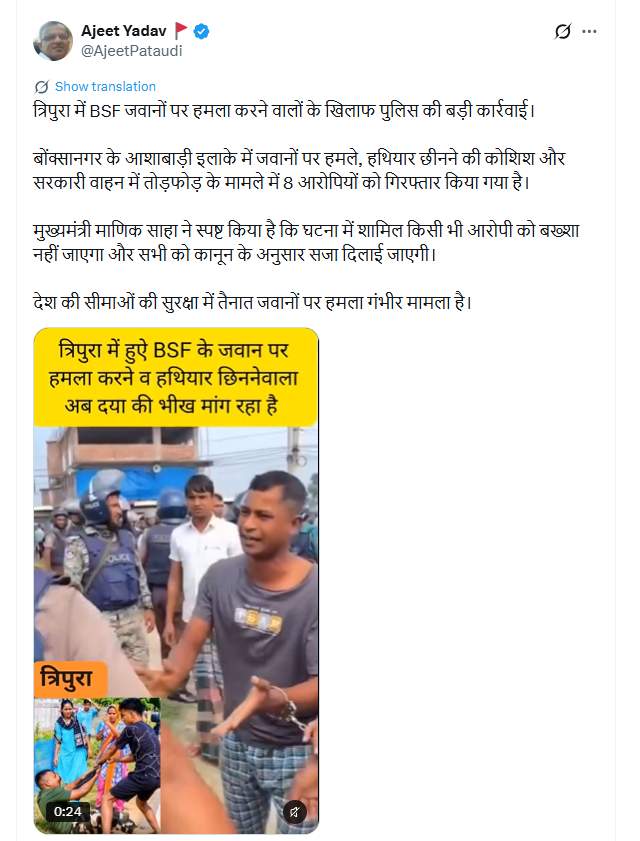
Fact Check
To verify the viral video being linked to the alleged attack on BSF personnel in Tripura, we conducted a reverse image search using its keyframes. During the search, we found the same visuals in a video uploaded on November 3, 2026, on the YouTube channel of Bangladeshi news outlet Prothom Alo.
The headline and description accompanying the video identified the footage as being from a protest by garment factory workers in Gazipur, Bangladesh.
https://www.youtube.com/watch?v=FidQprRzYPg
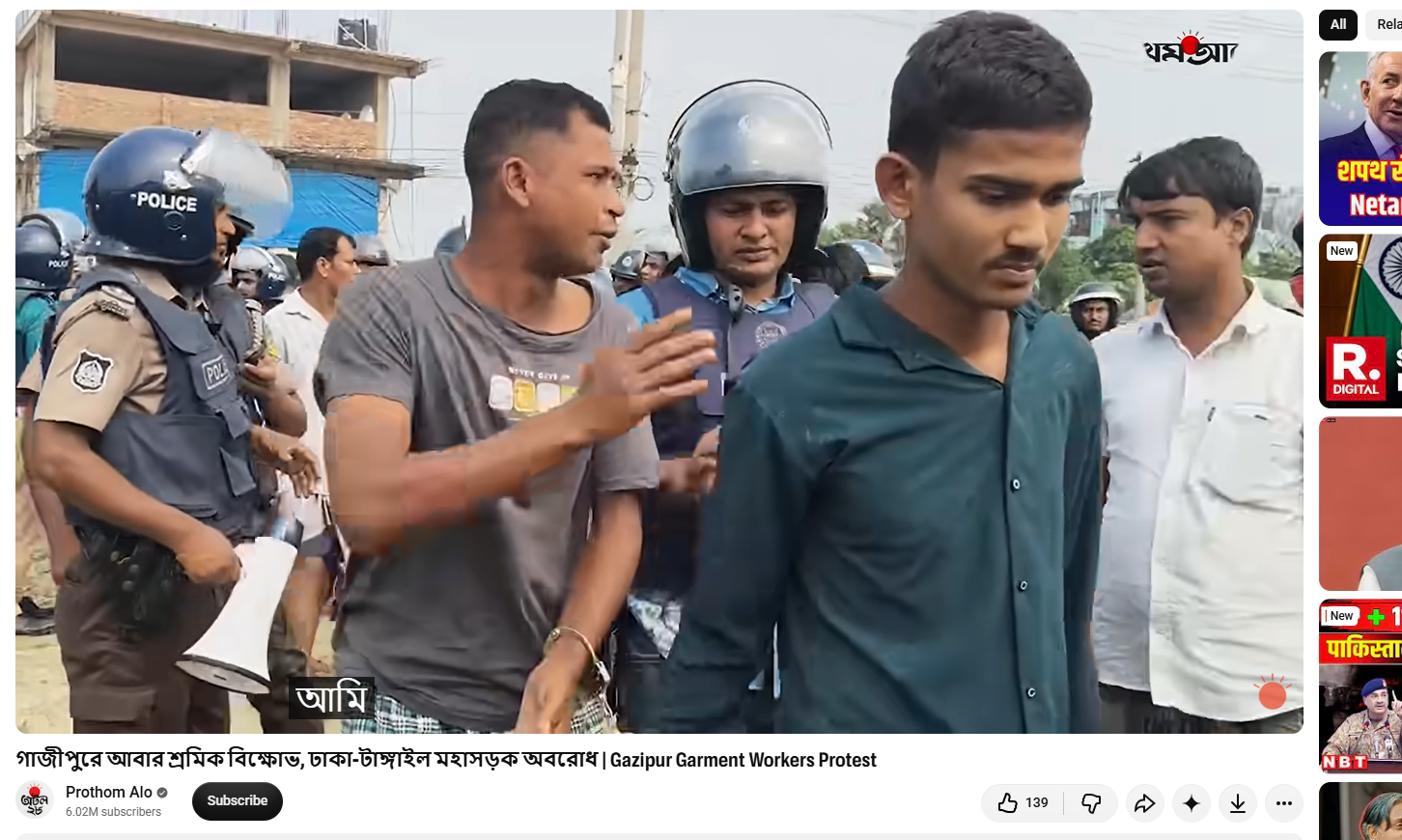
Additionally, we found the same visuals in a video uploaded on November 3, 2026, on the Facebook account of another Bangladeshi media outlet, Kaler Kantho. The caption accompanying the video also identified it as showing the arrest of two individuals during a protest by garment factory workers in the Bhogra Bypass area of Gazipur.
https://www.facebook.com/reel/30009212345348428
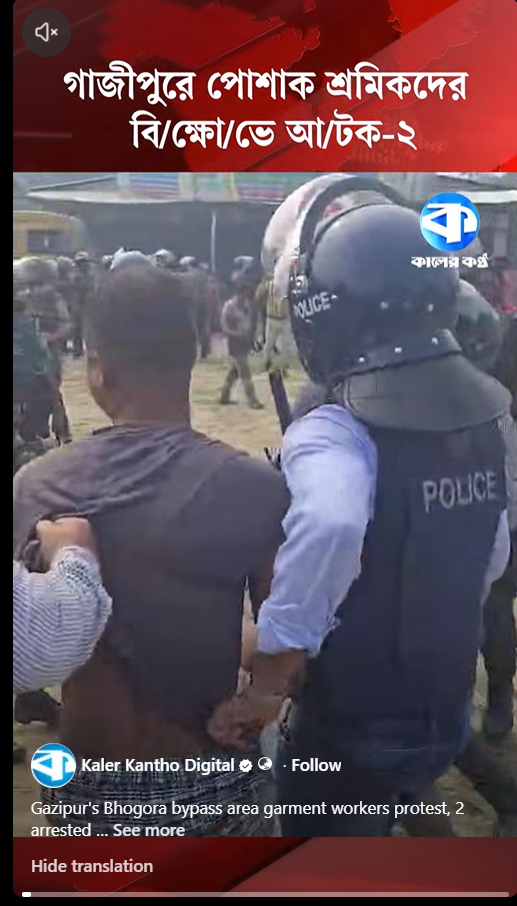
Conclusion
The evidence gathered during our research clearly establishes that the viral video, which is being linked to the alleged attackers of BSF personnel in Tripura, is actually from Bangladesh.

Related Blogs

Introduction
WhatsApp has become the new platform for scams, and the number of cases of WhatsApp scams is increasing daily. Just like that, a new WhatsApp scam has been started, and many WhatsApp users in India have reported receiving missed calls from unknown international numbers. Worse, one does not even have to answer the call to be scammed. A missed call is sufficient to be scammed.
Millions of populations switch from normal SMS to WhatsApp, usually, people used to get fake messages and marketing messages, but the trend of scamming has been evolving now. Most people get calls from different countries, and they are concerned about how these scammers got the numbers. WhatsApp works through VoIP networks, so no extra charges from any country exist. And about 500 million WhatsApp users are getting these scam calls, the calls are mainly on job-scams of promising part-time employment and opportunities. These types of job scam calls have been started reporting in 2023.
People reporting missed calls from countries like Ethiopia (+251), Malaysia (+60), Indonesia (+62), Vietnam (+84), etc.
The agenda of these calls are still unclear. Still, in some cases, the scammers ask for confidential information from WhatsApp users, like bank details, so the users must not reveal their personal information. Also, it is important to note that if you get any calls from a particular country, it necessarily does not mean it is from that country. Various agencies sell international numbers for WhatsApp calls.
Why has WhatsApp become a hub scam?
The generation has evolved and dumped the old SMS into WhatsApp. From school to college and offices, people use WhatsApp for their official work, as it is very easy and user-friendly, so people avoid safety measures. Generally, users need to understand the consequences of technology and use it with safeguards and awareness. Many people lose money and become victims of scams on WhatsApp as they share their confidential information. And the worse is that one does not even have to answer the call to be scammed. A missed call is sufficient to be scammed.
Before these international calls scam, the user received a call from the scam that they were from KBC, and the user won something. Then sought confidential information by the excuse that they would transfer the money to the user, and because of that user got scammed by the scammers. These scams have risen rapidly lately.
Safeguards users can use against these scam calls
WhatsApp responds to complaints regarding international calls to “block and report.”
If you have already received such calls, the best thing you can do is report and block them right away. As a result, the same number does not return to your phone, and numerous identical reports may persuade WhatsApp to delete the number entirely.
WhatsApp is also working on an update allowing users to block calls from unknown numbers on the service.

Users must modify their phone’s and app’s fundamental privacy settings to protect themselves from data breaches. The calls are directed toward app users who are actively using the app. However, by modifying the account’s appearance, a user can lessen the likelihood of being added to the scammers’ attack lists.
Limit Privacy
Begin by modifying WhatsApp’s ‘who can see’ settings. If your profile photo, last seen, and online status are visible to anybody, restrict them to persons on your contact list only. Change the About and Groups options as well.
Turn on two-factor authentication
Enabling two-factor authentication on WhatsApp adds more security to your data. In addition, the app also supports biometric protection in case of theft or loss.
Active Reporting
The users should report as soon as they see something odd or suspicious activity.
A typical question that users have is, ‘Where do the scammers acquire my phone number from?’
The answer is a little more complicated than we thought. Your data is retained on the company database from the time you sign up on a website or reveal your phone number at a store in order to take advantage of promotional offers and promotions. Due to a lack of technological infrastructure and legislation to protect personal data, a scammer can simply obtain your information.
According to Palo Alto research, India is the second most vulnerable country in the APAC region in terms of cyberattacks and data breaches. A data protection law is essential in the face of increasing calls and data breaches.
The Digital Personal Data Protection bill is set to be introduced in the parliament’s monsoon session. The bill has the potential to protect data, which will help to eliminate scams.
Conclusion
Several people had tweeted on tweeter about receiving fake calls on WhatsApp from international numbers more than once. WhatsApp encrypts calls and messages, making it difficult to track the person, and it appears that hackers are taking advantage of this to swindle customers. If you receive a WhatsApp call from any of the above ISD codes, we strongly advise you not to answer it and to block the number so the bad actors do not call you again. Report & block immediately that’s what WhatsApp has been responding to the complainants.

Over The Top (OTT)
OTT messaging platforms have taken the world by storm; everyone across the globe is working on OTT platforms, and they have changed the dynamics of accessibility and information speed forever. Whatsapp is one of the leading OTT messaging platforms under the tech giant Meta as of 2013. All tasks, whether personal or professional, can be performed over Whatsapp, and as of today, Whatsapp has 2.44 billion users worldwide, with 487.5 Million users in India alone[1]. With such a vast user base, it is pertinent to have proper safety and security measures and mechanisms on these platforms and active reporting options for the users. The growth of OTT platforms has been exponential in the previous decade. As internet penetration increased during the Covid-19 pandemic, the following factors contributed towards the growth of OTT platforms –
- Urbanisation and Westernisation
- Access to Digital Services
- Media Democratization
- Convenience
- Increased Internet Penetration
These factors have been influential in providing exceptional content and services to the consumers, and extensive internet connectivity has allowed people from the remotest part of the country to use OTT messaging platforms. But it is pertinent to maintain user safety and security by the platforms and abide by the policies and regulations to maintain accountability and transparency.
New Safety Features
Keeping in mind the safety requirements and threats coming with emerging technologies, Whatsapp has been crucial in taking out new technology and policy-based security measures. A number of new security features have been added to WhatsApp to make it more difficult to take control of other people’s accounts. The app’s privacy and security-focused features go beyond its assertion that online chats and discussions should be as private and secure as in-person interactions. Numerous technological advancements pertaining to that goal have focussed on message security, such as adding end-to-end encryption to conversations. The new features allegedly increase user security on the app.
WhatsApp announced that three new security features are now available to all users on Android and iOS devices. The new security features are called Account Protect, Device Verification, and Automatic Security Codes
- For instance, a new programme named “Account Protect” will start when users migrate an account from an old device to a new one. If users receive an unexpected alert, it may be a sign that someone is trying to access their account without their knowledge. Users may see an alert on their previous handset asking them to confirm that they are truly transitioning away from it.
- To make sure that users cannot install malware to access other people’s messages, another function called “Device Verification” operates in the background. Without the user’s knowledge, this feature authenticates devices in the background. In particular, WhatsApp claims it is concerned about unlicensed WhatsApp applications that contain spyware made explicitly for this use. Users do not need to take any action due to the company’s new checks that help authenticate user accounts to prevent this.
- The final feature is dubbed “automatic security codes,” It builds on an already-existing service that lets users verify that they are speaking with the person they believe they are. This is still done manually, but by default, an automated version will be carried out with the addition of a tool to determine whether the connection is secure.
While users can now view the code by visiting a user’s profile, the social media platform will start to develop a concept called “Key Transparency” to make it easier for its users to verify the validity of the code. Update to the most recent build if you use WhatsApp on Android because these features have already been released. If you use iOS, the security features have not yet been released, although an update is anticipated soon.
Conclusion
Digital safety is a crucial matter for netizens across the world; platforms like Whatsapp, which enjoy a massive user base, should lead the way in terms of OTT platforms’ cyber security by inculcating the use of emerging technologies, user reporting, and transparency in the principles and also encourage other platforms to replicate their security mechanisms to keep bad actors at bay. Account Protect, Device Verification, and Automatic Security Codes will go a long way in protecting the user’s interests while simultaneously maintaining convenience, thus showing us that the future with such platforms is bright and secure.
[1] https://verloop.io/blog/whatsapp-statistics-2023/#:~:text=1.,over%202.44%20billion%20users%20worldwide.
Executive Summary
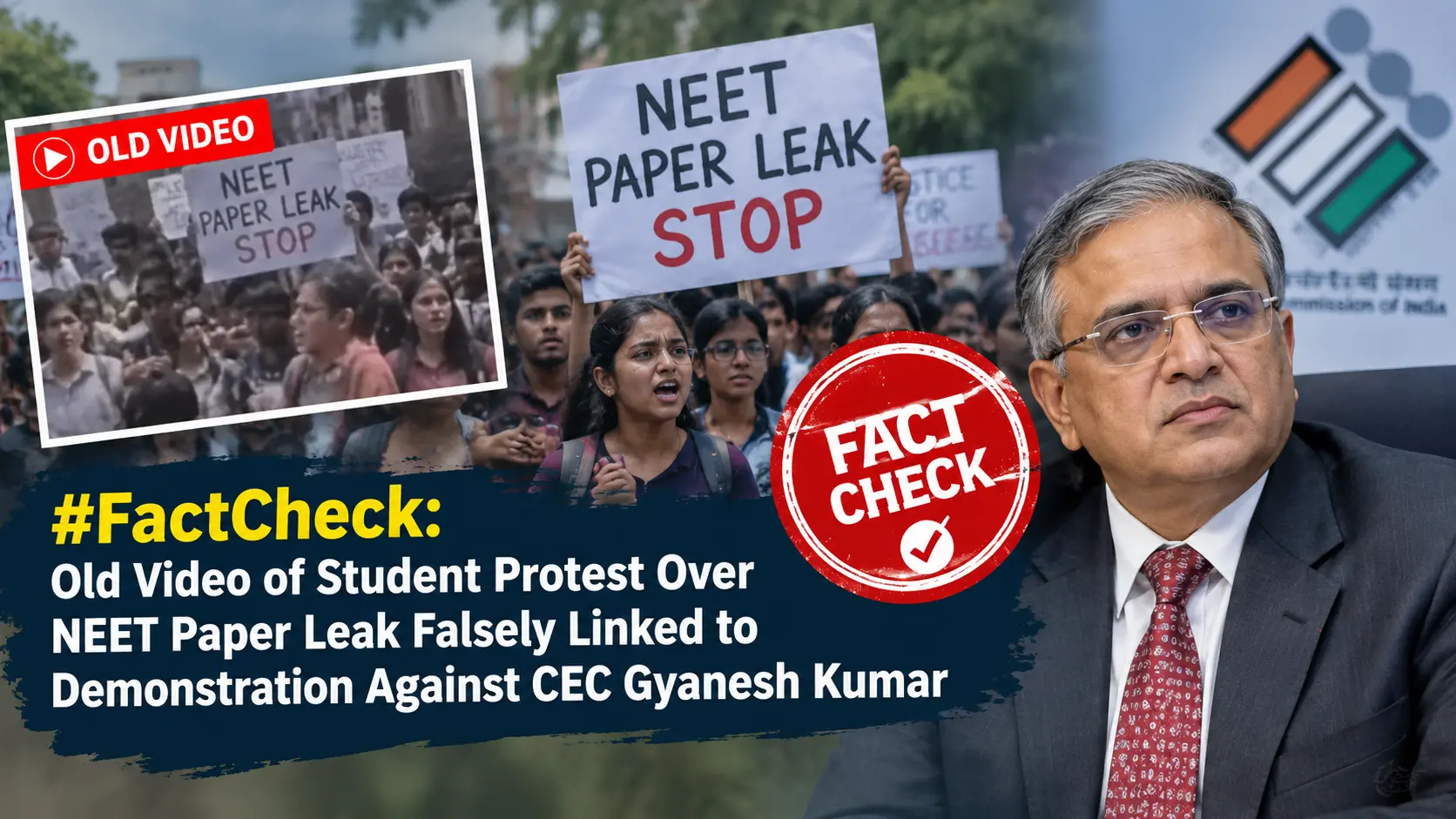
Reports of differences between the Chief Election Commissioner and the two Election Commissioners over the functioning of the Election Commission have emerged, following which protests were held across the country. Protesters demanding the resignation of Chief Election Commissioner Gyanesh Kumar took out a ‘Citizens March’ to Jantar Mantar on October 4, 2026. Against this backdrop, a video is being widely shared on social media. The video purportedly shows a CRPF personnel lathi-charging protesters. It is being shared with the claim that the footage is from the protest against Chief Election Commissioner Gyanesh Kumar at Jantar Mantar in Delhi. However, CyberPeace Research found the viral claim to be false. The viral video is not recent; it dates back to July 2026. At that time, students in Delhi were protesting over the alleged NEET paper leak and demanding the resignation of then Union Education Minister Dharmendra Pradhan.
Claim:
A Facebook user, ‘Kuldeep Pandit’, shared the viral video on October 4, 2026, with the caption: “The only thing left was the last ball, when Modi ji hit a six at the Jantar Mantar stadium and broke the backsides of traitors... Jantar Mantar is now under the control of the Indian Army, and the Army is giving freedom by the trolley load... Jai Shri Ram.”The archive link to the post can be viewed here.
https://www.facebook.com/reel/1807020453964507
https://perma.cc/RN8J-XV4K?type=standard

Fact Check
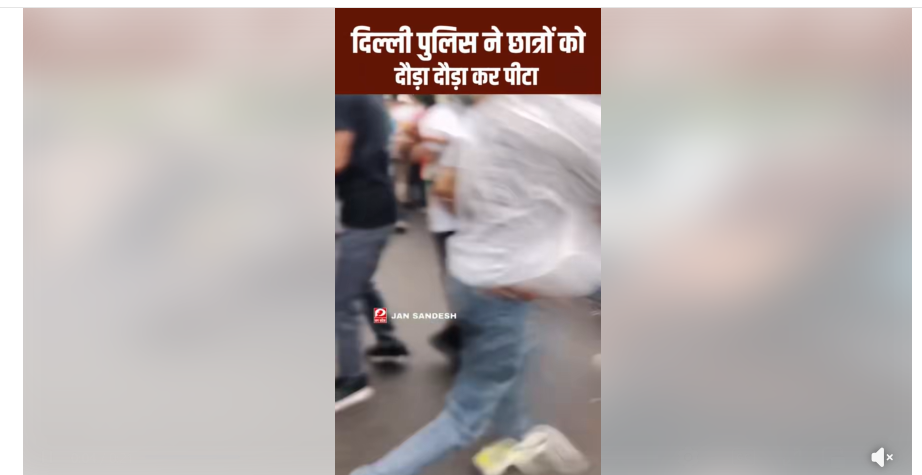
To verify the authenticity of the viral video, we extracted several keyframes using the InVID tool and conducted a reverse image search on Google. During the search, we found the viral video shared on a Facebook account named ‘Jansandesh News’ on July 21, 2026. According to the information provided with the post, the video shows a protest held at Jantar Mantar over the alleged NEET paper leak.
https://www.facebook.com/watch/?v=1786356329397999
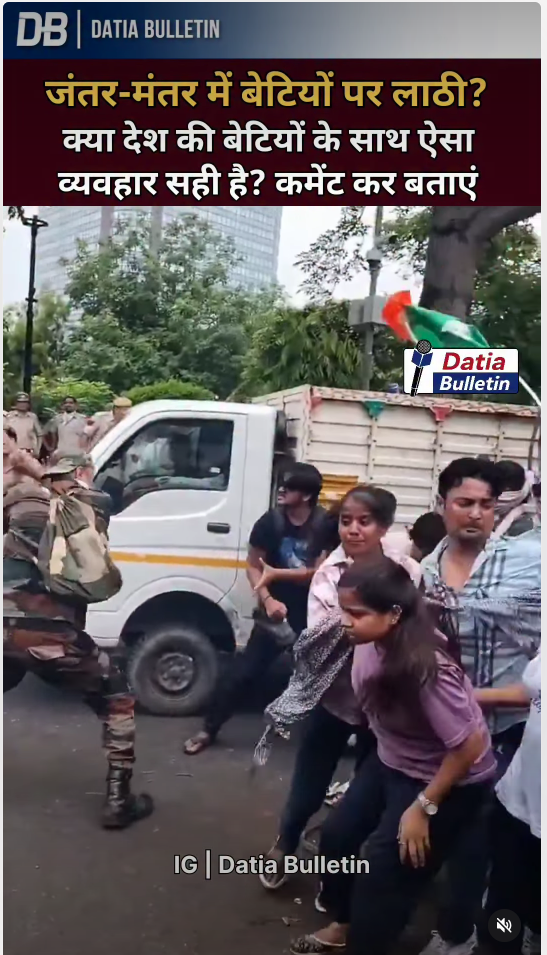
Based on the information obtained, we conducted a Google search using relevant keywords. We also found the viral video on an Instagram account named ‘datiabulletinofficial’. The video was shared on July 21, 2026, and was identified as footage from a protest held at Jantar Mantar. According to the caption, students were protesting over the alleged NEET paper leak and demanding the resignation of then Union Education Minister Dharmendra Pradhan.
https://www.instagram.com/reels/DbFXpGHzmwB/
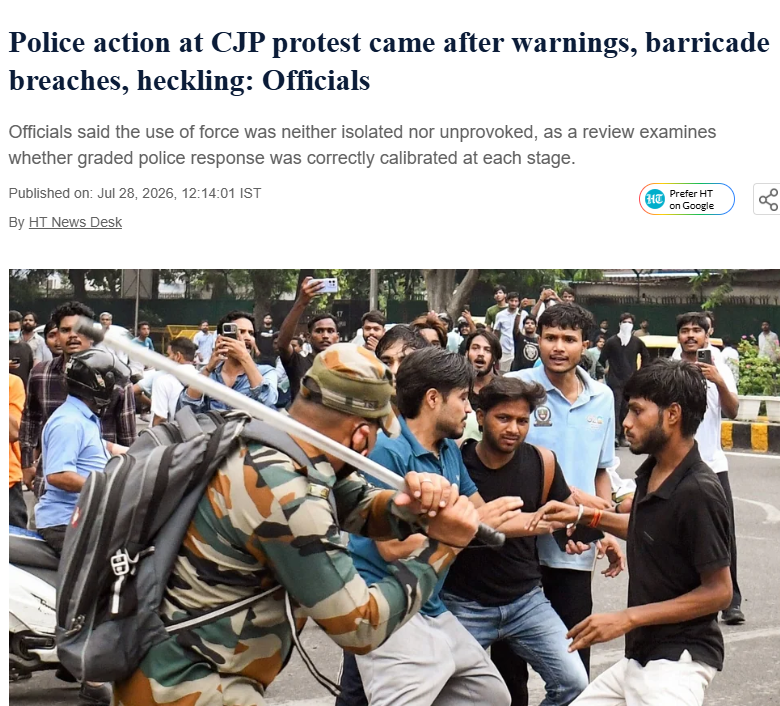
During our research, we found a news report related to the claim on the Hindustan Times website. The report was published on July 28, 2026. According to the report, “On July 20, students led by the ‘Cockroach Janta Party’ (CJP) marched towards Parliament. During the protest, police and Rapid Action Force (RAF) personnel lathi-charged the students, drawing considerable criticism. The Delhi Police later clarified that it would review the lathi-charge on the students and the action taken by the police.”The report also contains keyframes that closely resemble the visuals seen in the viral video.
Conclusion:
Our research found that the claim being made about the viral video of protesters being lathi-charged is false. The video dates back to July 2026, when students in Delhi held protests over the alleged NEET paper leak and demanded the resignation of then Union Education Minister Dharmendra Pradhan.
