
#FactCheck: Old Modi-Xi Jinping Video Shared With Misleading BRICS Summit Claim
Executive Summary
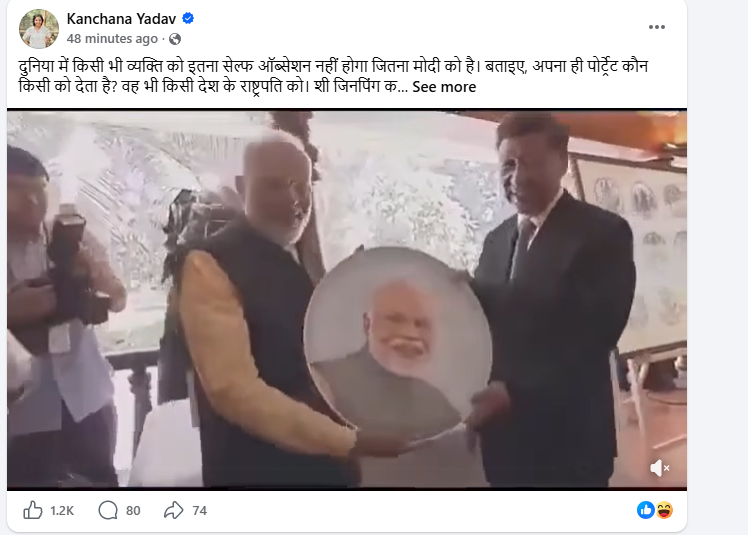
A video of Prime Minister Narendra Modi and Chinese President Xi Jinping is being shared on social media. The video is being shared with the claim that during the BRICS Summit, Prime Minister Modi gifted Xi Jinping a portrait featuring his own image. The post also takes aim at Prime Minister Modi based on this claim. Research by CyberPeace found that the video dates back to October 2019 and shows an exchange of gifts between Prime Minister Narendra Modi and Chinese President Xi Jinping. On the concluding day of the Mamallapuram Summit, Prime Minister Modi gifted Xi Jinping a large, handcrafted silk shawl. In return, Xi Jinping presented Prime Minister Modi with a porcelain souvenir bearing his portrait.
Claim:
A video of Prime Minister Narendra Modi and Chinese President Xi Jinping is being shared on Facebook with the claim that during the BRICS Summit, Prime Minister Modi gifted Xi Jinping a portrait of himself.
https://www.facebook.com/watch/?v=1109664078425193
Fact Check
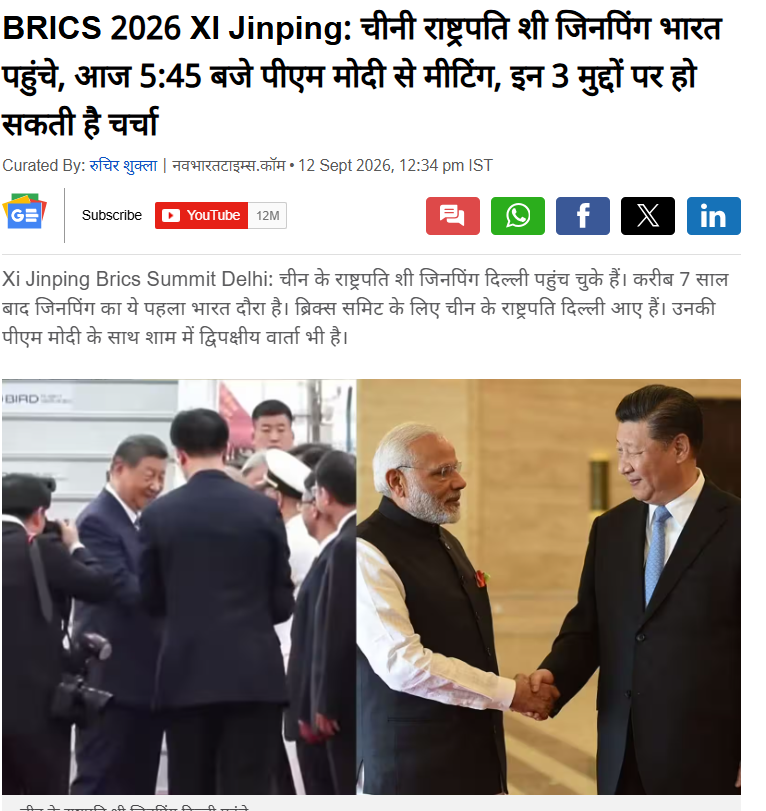
To verify the authenticity of the viral claim, we conducted a Google search using relevant keywords. During the search, we found a report published by Navbharat Times on September 12, 2026. According to the report, Chinese President Xi Jinping has arrived in Delhi to attend the 18th BRICS Summit. His aircraft landed at Palam Airport at around noon on Saturday. This is his first visit to India in nearly seven years.The report further stated that Prime Minister Narendra Modi and Xi Jinping were scheduled to meet at around 5 pm on the same day. This made it clear during our research that the video being shared on social media is not from the current BRICS Summit and is an old video.
To verify the authenticity of the viral claim, we conducted a reverse image search of the keyframes from the video. During the search, we found a report published by Business Standard on October 13, 2019, which contained visuals from the viral video. According to the report, Chinese President Xi Jinping left for Nepal on Saturday aboard an Air China aircraft, concluding his second informal summit with Prime Minister Narendra Modi, which signalled a recalibration of bilateral ties. Xi spent around 24 hours in India.During his visit, he travelled to Mamallapuram near Chennai and held informal talks with Prime Minister Narendra Modi. Delegation-level talks between the two countries were also held.
https://www.business-standard.com/article/opinion/moving-the-needle-119101300820_1.html
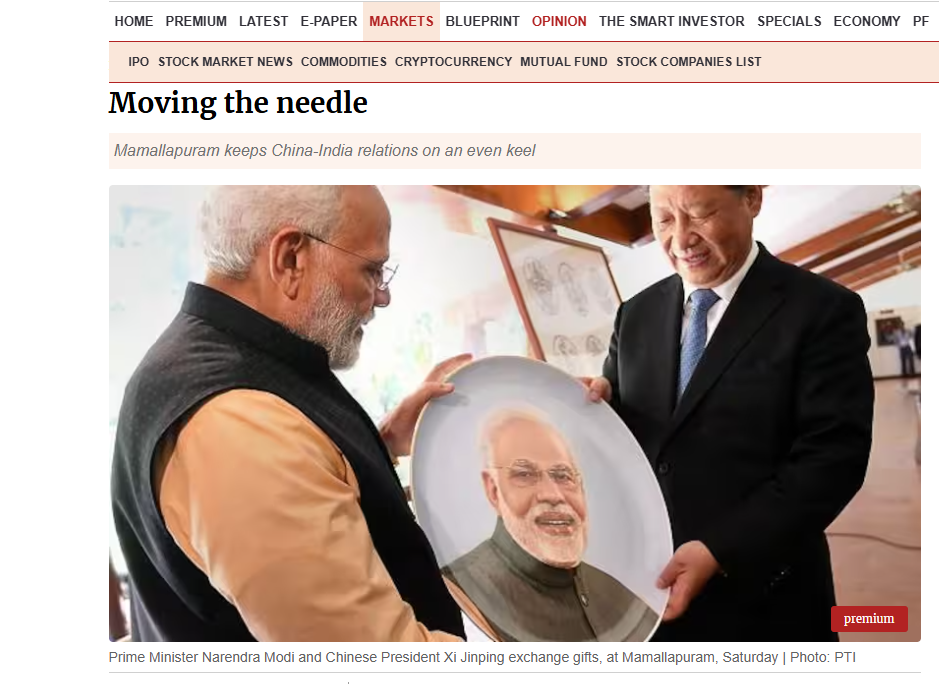
In the next step of our research, we found a report published by Economic Times on October 14, 2019. The report also contained the same visuals from the viral video and presented them in their original context.

Conclusion
The evidence gathered during our research makes it clear that the video being shared on social media is not from the BRICS Summit, but is an old video from 2019. This confirms that the video is being shared on social media by taking it out of its original context and falsely linking it to the BRICS Summit. Therefore, the claim that the viral video is from the BRICS Summit is misleading.

Related Blogs
Executive Summary
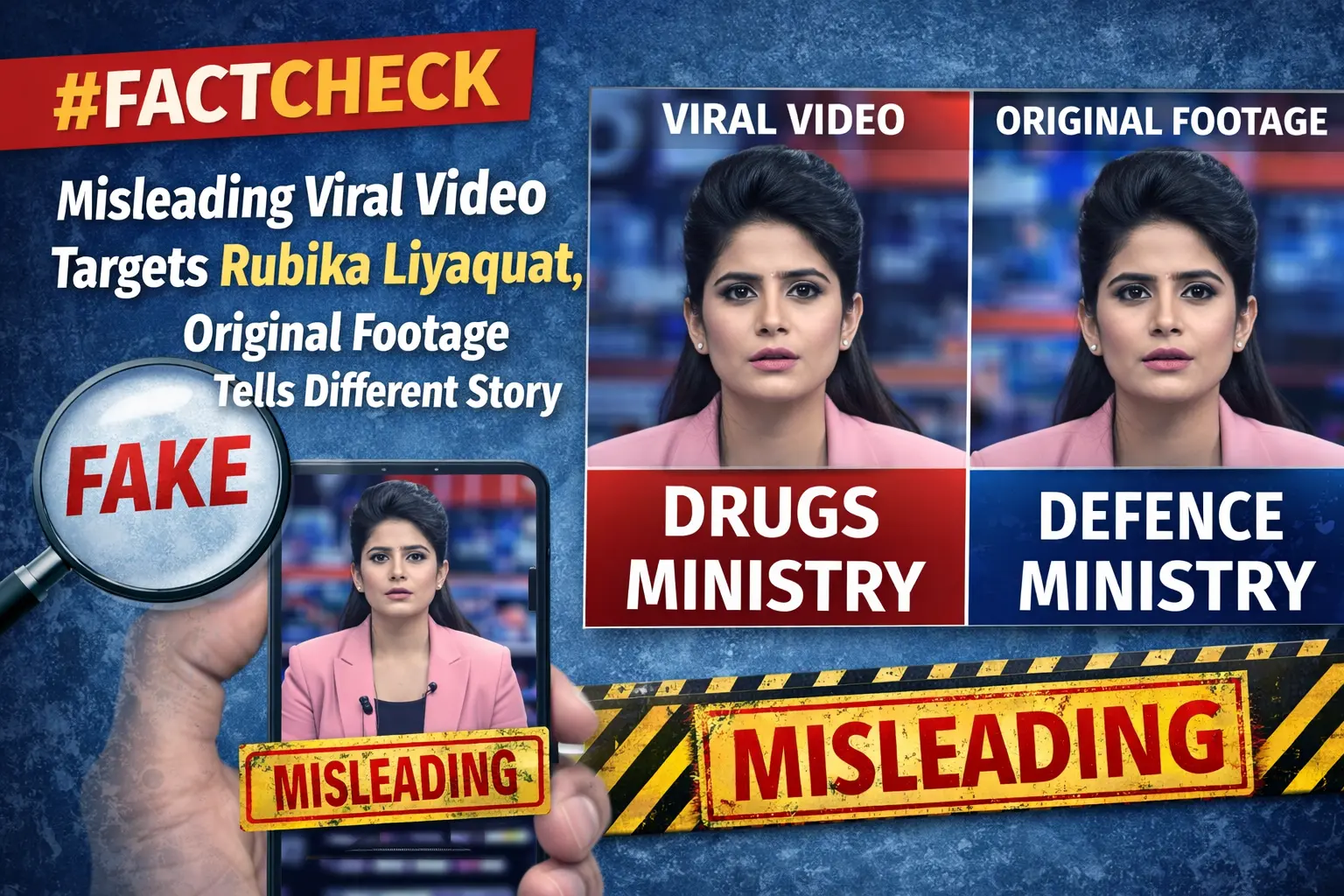
A video circulating on social media claims that a Pakistani man misbehaved with TV anchor Rubika Liyaquat during a live television debate. Users sharing the clip alleged that the Pakistani participant silenced the anchor on live TV.
However, research by CyberPeace found the viral claim to be false and revealed that the video being shared on social media is edited. In the original video, published on YouTube on November 26, 2025, the alleged Pakistani man was not present in the TV debate.
Claim
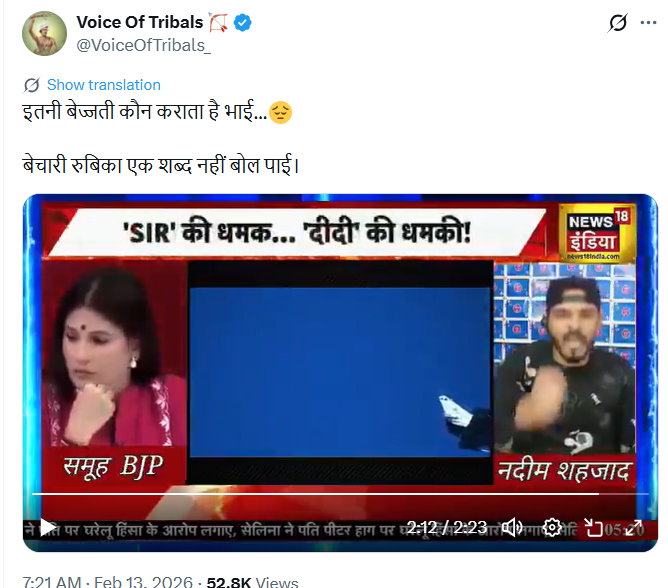
On February 13, 2026, a user shared the viral clip on X (formerly Twitter), claiming that the anchor was insulted during the debate and was left speechless. Another user on February 11, 2026, asked News18 India to verify the video and questioned who allowed such behaviour towards the journalist on air.
Fact Check:
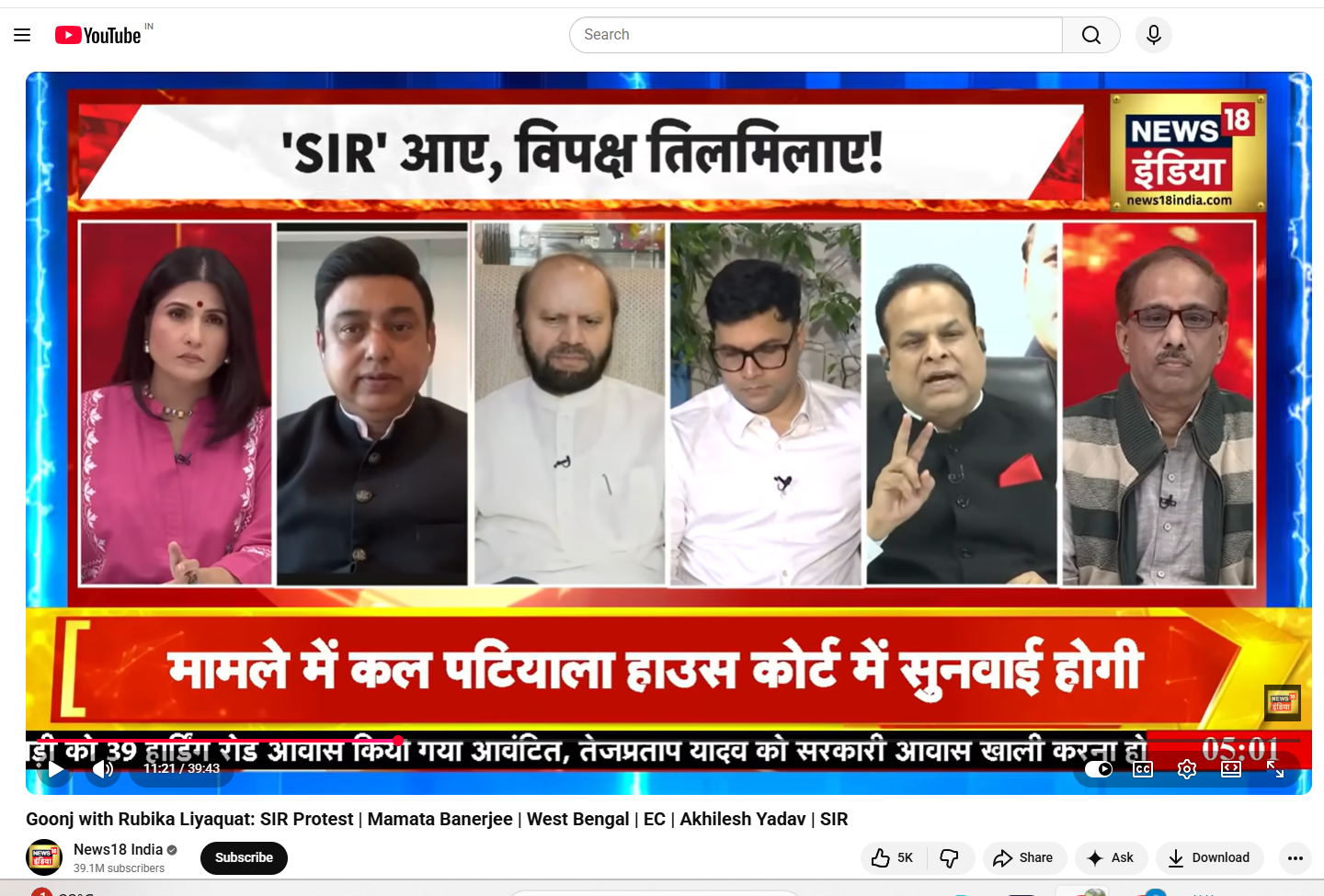
To verify the claim, we extracted key frames from the viral video and conducted a reverse image search using Google Lens. During the research, we found the full version of the debate uploaded on the official YouTube channel of News18 India on November 26, 2025. The nearly 40-minute original broadcast featured anchor Rubika Liyaquat along with panelists Zafar Islam, Varun Purohit, Prateek Kumar, Arvind Kumar Vajpayee, Tausif Ahmed Khan, and Aziz Khan. However, the person seen misbehaving with the anchor in the viral clip was not present in the original video.
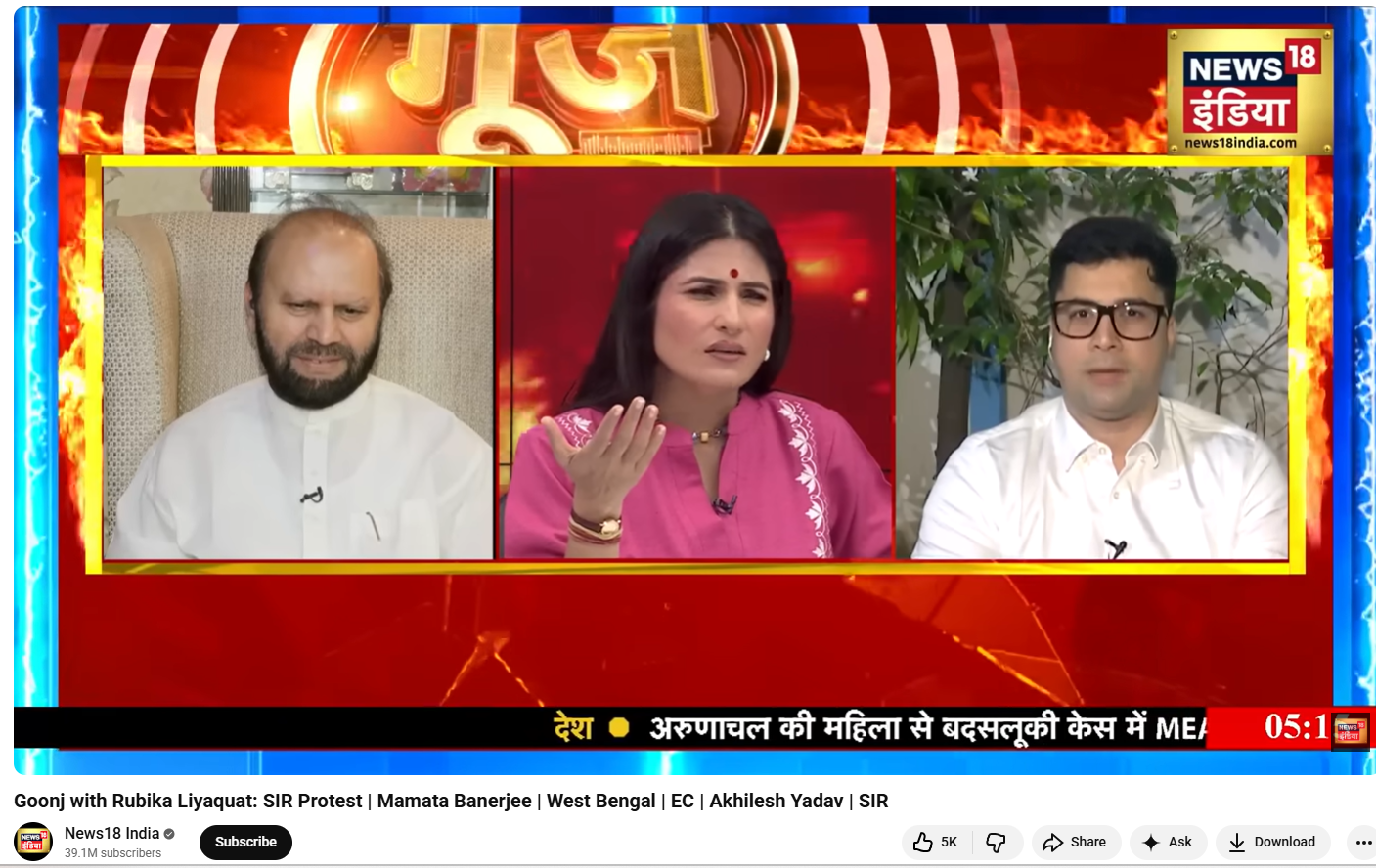
Upon carefully reviewing the footage, we located the actual segment around the 25-minute 40-second mark. In this portion, the anchor can be heard asking panelist Tausif Ahmed Khan to leave the show, using the same words heard in the viral clip. However, the original broadcast does not feature any Pakistani participant or any individual named “Nadeem Shahzad.”
Conclusion
Our research found that the viral claim is false. The circulating video has been edited, and the alleged Pakistani participant does not appear in the original debate uploaded on November 26, 2025.
Introduction
The banking and finance sector worldwide is among the most vulnerable to cybersecurity attacks. Moreover, traditional threats such as DDoS attacks, ransomware, supply chain attacks, phishing, and Advanced Persistent Threats (APTs) are becoming increasingly potent with the growing adoption of AI. It is crucial for banking and financial institutions to stay ahead of the curve when it comes to their cybersecurity posture, something that is possible only through a systematic approach to security. In this context, the Reserve Bank of India’s latest Financial Stability Report (June 2025) acknowledges that cybersecurity risks are systemic to the sector, particularly the securities market, and have to be treated as such.
What the Financial Stability Report June 2025 Says
The report notes that the increasing scale of digital financial services, cloud-based architecture, and interconnected systems has expanded the cyberattack surface across sectors. It calls for building cybersecurity resilience by improving Security Operations Center (SOC) efficacy, undertaking “risk-based supervision”, implementing “zero-trust approaches”, and “AI-aware defense strategies”. It also recommends the implementation of graded monitoring systems, employing behavioral analytics for threat detection, building adequate skill through hands-on training, engaging in continuous learning and simulation-based exercises like Continuous Assessment-Based Red Teaming (CART), conducting scenario-based resilience drills, and establishing consistent incident reporting frameworks. In addition, it suggests that organizations need to adopt quantifiable benchmarks like SOC Efficacy and Cyber Capability Index to guarantee efficient governance and readiness.
Implications
Firstly, even though the report doesn’t break new ground in identifying cyber risk, it does sharpen its urgency and lays the groundwork for giving more weight to cybersecurity in macroprudential supervision. In the face of emerging threats, it positions cyberattacks as a systemic financial risk that can affect India’s financial stability with the same seriousness as traditional threats like NPAs and capital inadequacy.
Secondly, by calling to “ensure cyber resilience”, it reflects the RBI’s dedication to values-based compliance to cybersecurity policies where effectiveness and adaptability matter more than box-ticking. This approach caters to an organisation’s/ sector’s unique nature, governance requirements, and updates to rising risks. It checks not only if certain measures were used, but also if they were effective, through constant self-assessment, scenario-based training, cyber drills, dynamic risk management, and value-driven audits. In the face of a rapidly expanding digital transactions ecosystem with integration of new technologies such as AI, this approach is imperative to building cyber resilience. The RBI’s report suggests exactly this need for banks and NBFCs to update its parameters for resilience.
Conclusion
While the RBI’s 2016 guidelines focus on core cybersecurity concerns and has issued guidelines on IT governance, outsourcing, and digital payment security, none explicitly codify “AI-aware,” “zero-trust,” or a full “risk-based supervision” mechanism. The more recent emphasis on these concepts comes from the 2025 Financial Stability Report, which uses them as forward-looking policy orientations. How the RBI chooses to operationalize these frameworks is yet to be seen. Further, RBI’s vision cannot operate in a silo. Cross-sector regulators like SEBI, IRDAI, and DoT must align on cyber standards and incident reporting protocols.
In the meanwhile, highly vulnerable sectors like education and healthcare, which have weaker cybersecurity capabilities, can take a leaf from RBI’s book by ensuring that cybersecurity is treated as a continuously evolving issue . Many institutions in these sectors are known to perform goals-based compliance through a simple checklist approach. Institutions that take the lead in implementing zero-trust, diversifying vendor dependencies, and investing in cyber resilience will not only meet regulatory expectations but build long-term competitive advantage.
References
- https://economictimes.indiatimes.com/news/economy/policy/adopt-risk-based-supervision-zero-trust-approach-to-curb-cyberfrauds-rbi/articleshow/122164631.cms?from=mdr-%20500
- https://paramountassure.com/blog/value-driven-cybersecurity/
- https://www.rbi.org.in/commonman/english/Scripts/Notification.aspx?Id=1721
- https://rbidocs.rbi.org.in/rdocs//PublicationReport/Pdfs/0FSRJUNE20253006258AE798B4484642AD861CC35BC2CB3D8E.PDF
CyberPeace | Automotive Cybersecurity & Digital Forensics
Introduction
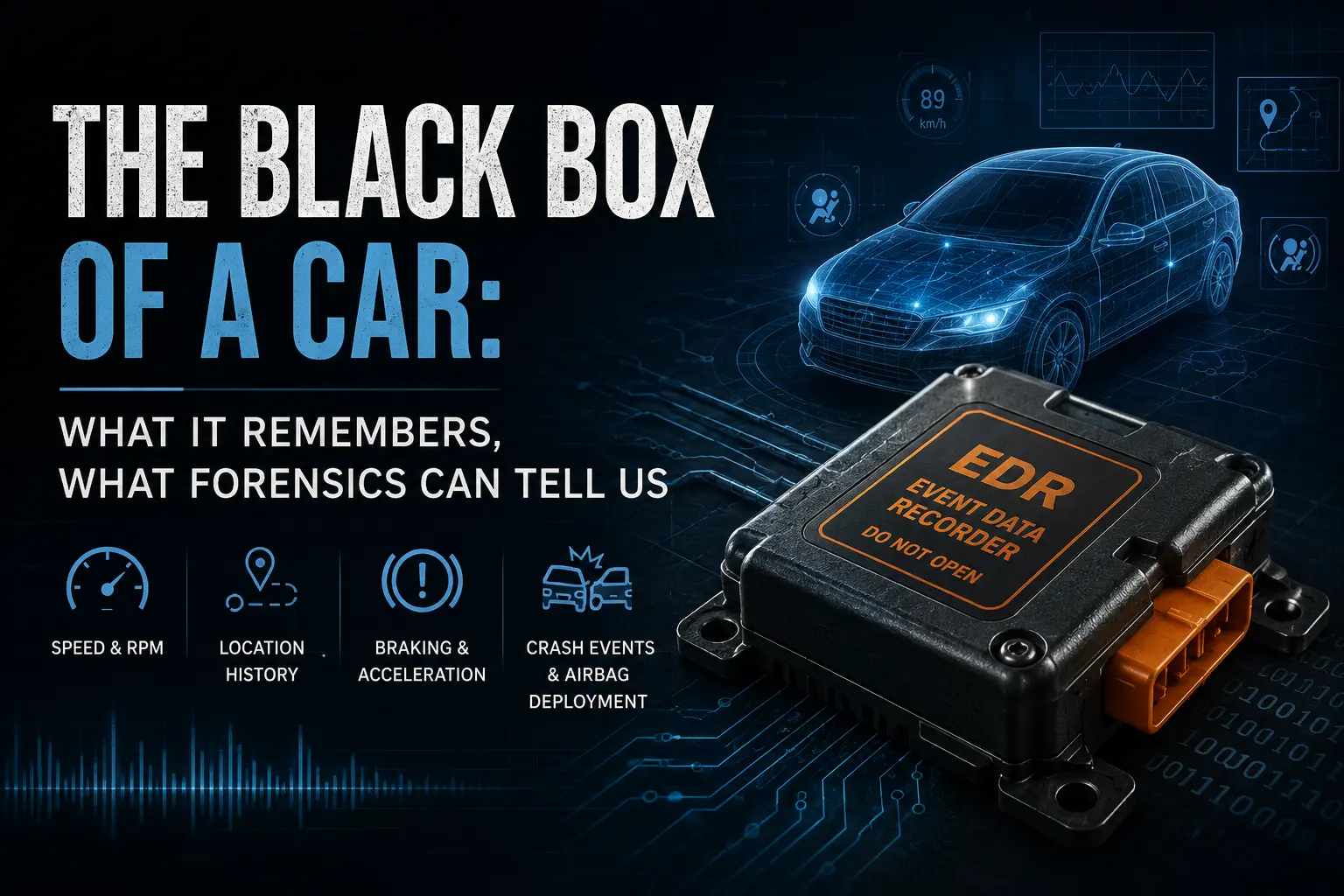
After a crash, the story usually comes from the driver, a witness or a police report. But a modern vehicle can leave another version behind - a digital one. An Event Data Recorder (EDR), commonly called a car's black box, can preserve selected information from the seconds around a crash. NHTSA describes EDRs as recording vehicle dynamics, driver inputs, crash characteristics, restraint status and some post-crash information.[1] The exact fields depend on the vehicle. A black box is not a magical device that records everything; it is one evidence source inside a much larger vehicle.
A modern vehicle can also contain safety controllers, diagnostic interfaces, ADAS, telematics and software-update systems. For an investigator, the question is what evidence can be linked to the EDR and what that combined record can actually support.
What Is Actually in the Black Box?
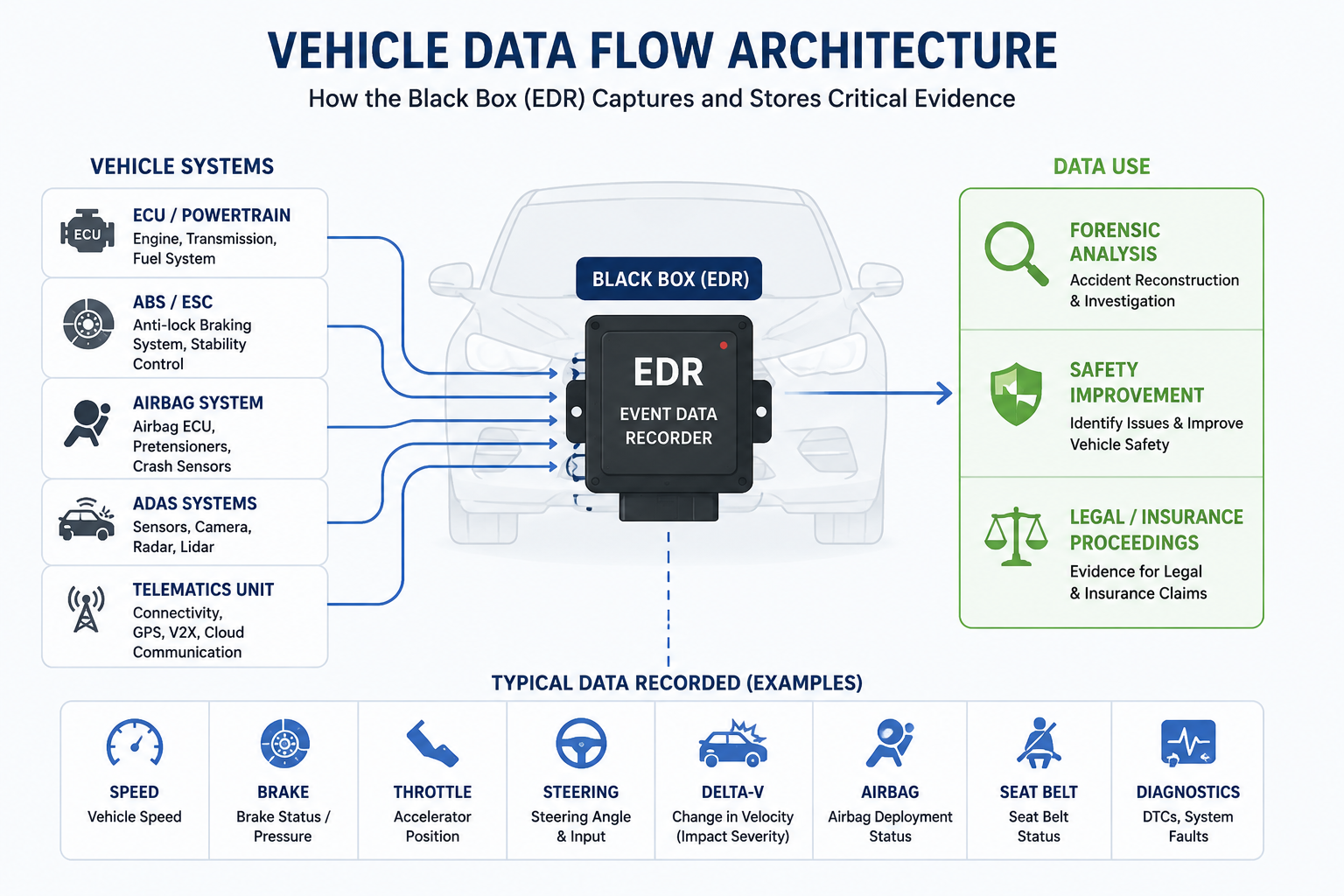
An EDR is best understood as a short event record, not a continuous driving diary. Depending on the vehicle and its configuration, forensic extraction may reveal items such as speed, acceleration, delta-V, engine RPM, throttle position, brake status, steering input, ABS or stability-control activity, seat-belt status and airbag or restraint events. NHTSA's published EDR material shows that data elements can include longitudinal and lateral acceleration, delta-V, vehicle speed, engine speed, throttle, service-brake status, roll/pitch/yaw information and steering input.[2] Do not overread the data: A field that exists in one model should not automatically be assumed to exist in another. A forensic report must identify exactly which module and fields were available and actually recovered.
What Can a Forensic Examination Recover?
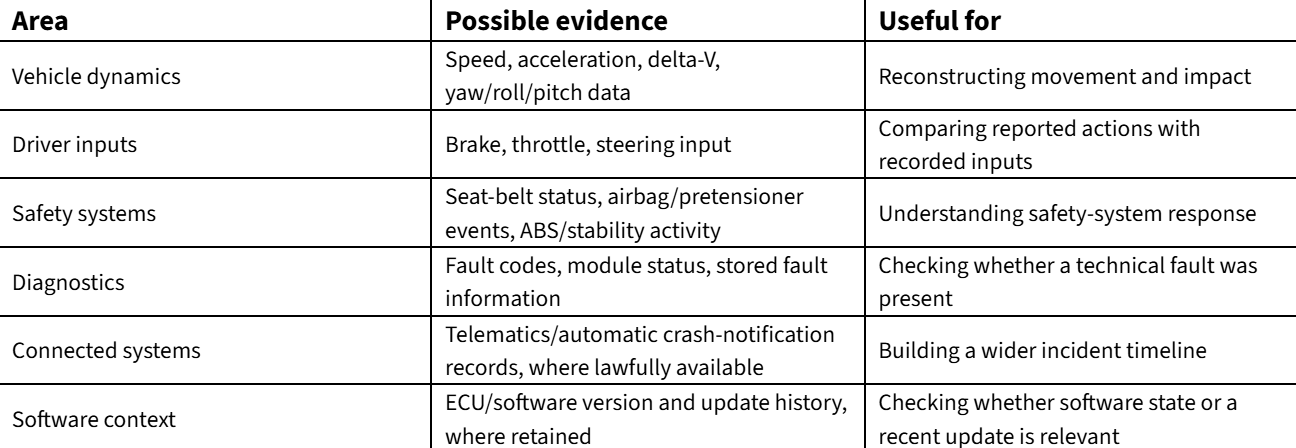
A Brake Failure Example
Consider a driver who reports: “I pressed the brake, but nothing happened.” The statement should be preserved, but a forensic investigation should test it. Was brake status captured? What was the speed before the event? Did ABS activate? What were the acceleration and delta-V patterns? Were there relevant fault codes? Was the vehicle recently repaired or updated? Suppose the recovered records show a brake input, ABS activity and a change in vehicle speed before impact. That does not prove the brakes were mechanically perfect. It does, however, make the sentence “nothing happened” too simple. Conversely, a relevant fault appearing just before the event may give investigators a stronger lead. The important part is the comparison: human account, vehicle record, physical evidence and technical history should be examined together.
Smart Vehicles, Digital Evidence and Cybersecurity Investigation
A connected vehicle can communicate through cellular networks, Bluetooth, Wi-Fi, mobile applications, workshop tools and cloud services. If unusual activity appears around a safety-critical incident, investigators may need to look beyond the EDR. Useful questions include:
• Was there unusual diagnostic or service activity before the incident?
• Was a software update or configuration change recently applied?
• Do timestamps from different modules line up, or is there clock drift?
• Can the extracted record be tied back to the original vehicle and module?
• Is there a non-cyber explanation - such as a hardware fault or software defect - that fits the evidence better?
The mindset matters: A cyberattack should be a conclusion supported by evidence, not the default explanation for strange vehicle behaviour.
The Forensic View: From Data to Evidence
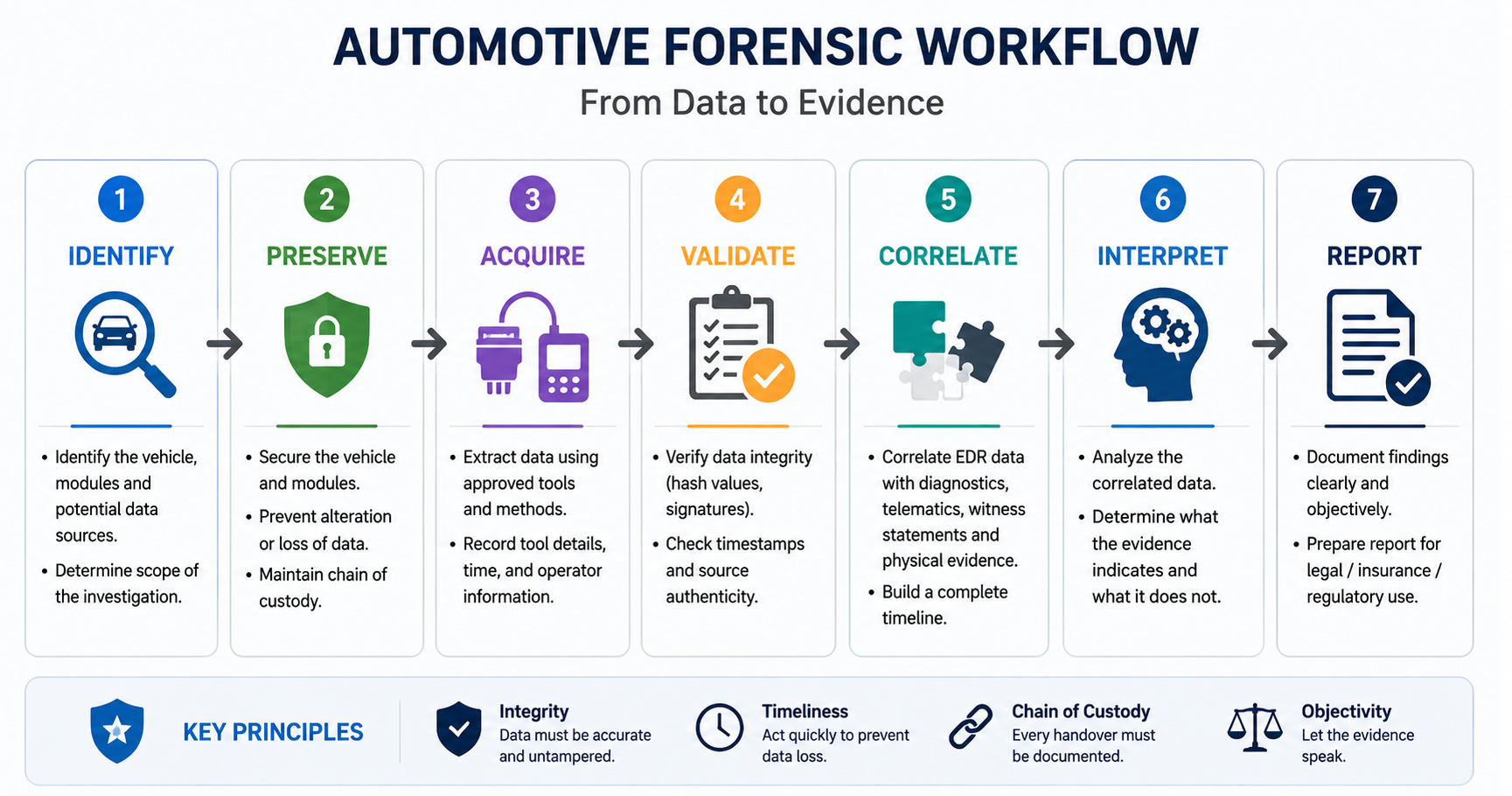
Automotive forensics is not simply plugging in a tool and exporting a report. The investigator should document the vehicle identity, module involved, extraction method, tool version, acquisition time and evidence-preservation steps. The goal is to make the work repeatable and defensible.
• Identify the relevant modules and evidence sources.
• Preserve the vehicle and extracted data against unnecessary alteration.
• Acquire data using a documented and appropriate method.
• Validate provenance, integrity, timestamps and completeness.
• Correlate EDR, diagnostics, software history, connected records and physical evidence.
• Report both findings and uncertainty.
A useful forensic rule: “Recorded” does not mean “proven.” Evidence becomes persuasive when its source, integrity and context are clear.
What the Law and Standards Are Changing
India is moving toward a more formal automotive cybersecurity lifecycle. IS-189 focuses on vehicle cybersecurity and the Cyber Security Management System (CSMS), while AIS-190 deals with software updates and the Software Update Management System (SUMS).[4][5] The wider statutory and type-approval framework is provided by the Motor Vehicles Act, 1988 and the Central Motor Vehicles Rules, 1989. For vehicle prototypes, Rule 126 provides for testing and approval by authorized testing agencies.[6][7]
In June 2026, the Ministry of Road Transport and Highways (MoRTH) came out with draft G.S.R. 503(E). The draft proposes new CMVR Rules 125-T and 125-U covering cybersecurity and software-update requirements. Since G.S.R. 503(E) is still a draft notification, its proposed requirements and the dates from which they may apply should be verified with the latest final notification before treating them as applicable law.[8]
At the international level, UN Regulation No. 155 addresses vehicle cybersecurity, while UN Regulation No. 156 covers software updates and their management.[9][10] This matters to forensics because lifecycle cybersecurity creates an expectation that manufacturers should be able to understand and manage security risks over time. In other words, logs, software-state information, vulnerability records and incident evidence can become part of the security story, not merely post-incident paperwork.
The Real Takeaway
The black box is valuable because it can reduce guesswork. It may tell us how fast the vehicle was moving, whether the driver applied the brake, how the vehicle responded, and what certain safety systems were doing around the event. But it rarely answers the whole case on its own. The strongest investigation is built by joining several pieces: EDR data, diagnostics, software context, connected-system evidence and what was found at the crash scene.
For cybersecurity professionals, the lesson is simple: a secure vehicle should not only resist attacks. It should also leave trustworthy evidence when something goes wrong. Good access controls, reliable timestamps and careful evidence handling help turn “something failed” into a defensible explanation.
Conclusion
The phrase “car black box” sounds simple, but the evidence behind it is not. An EDR can preserve a small but valuable window into a crash. During forensic examination, investigators may also be able to recover diagnostic, safety-system, software and connected-vehicle information, depending on the vehicle and what has been retained. The job is not to collect the largest possible amount of data. It is to collect the right data, preserve it properly and understand what each record can - and cannot - prove.
That is where automotive cybersecurity and digital forensics meet. As vehicles become more connected and software-driven, the ability to reconstruct an incident becomes part of security itself.
References
1. National Highway Traffic Safety Administration (NHTSA), Event Data Recorder (EDR) overview and research resources.
2. NHTSA, Use of Event Data Recorder (EDR) Technology for Highway Crash Data Analysis.
3. NHTSA, Light-Vehicle Event Data Recorder Technologies Update.
4. Automotive Research Association of India (ARAI), AIS-189, Approval of Vehicles with Regards to Cyber Security and Cyber Security Management System, April 2024.
5. Automotive Research Association of India (ARAI), AIS-190, Approval of Vehicles with Regards to Software Update and Software Update Management System, April 2024.
6. Government of India, Motor Vehicles Act, 1988.
7. Government of India, Central Motor Vehicles Rules, 1989, Rule 126.
8. Ministry of Road Transport and Highways, G.S.R. 503(E), 17 June 2026, draft Central Motor Vehicles (Amendment) Rules concerning cybersecurity and software updates.
9. UNECE, UN Regulation No. 155, Cyber Security and Cyber Security Management System.
10. UNECE, UN Regulation No. 156, Software Update and Software Update Management System.
11. NIST, SP 800-86, Guide to Integrating Forensic Techniques into Incident Response.
