
#FactCheck: Old 2018 Video of Putin and Xi Jinping Cooking Pancakes Falsely Linked to 2026 BRICS Summit
Executive Summary
A video of Russian President Vladimir Putin and Chinese President Xi Jinping is being shared on social media. In the video, the two leaders can be seen cooking together and interacting with each other.The video is being linked to the BRICS Summit held at Bharat Mandapam in Delhi on September 12 and 13, 2026, with the claim that Putin and Xi Jinping were seen in this manner during the summit. The viral claim was found to be false in CyberPeace Research Wing’s research. Our research revealed that the video being shared on social media is not recent. The video dates back to 2018, when Russian President Vladimir Putin and Chinese President Xi Jinping cooked together during the Eastern Economic Forum held in Vladivostok, Russia.
Claim:
A Facebook user shared the viral video with the caption: “Russian President Vladimir Putin and Chinese President Xi Jinping enjoyed cooking and sharing a meal together in India. The special camaraderie between the two leaders was on display during the BRICS Summit.” The link to the post, along with an archive link and screenshot, is provided below.
https://www.instagram.com/reels/DdOFovfkelC/

Factcheck
To verify the authenticity of the viral claim, we conducted a reverse image search of the keyframes from the video. During the search, we found visuals matching the video on the Armenpress website, published on September 12, 2018. The link to the post and the screenshot are provided below.
https://armenpress.am/en/article/946878
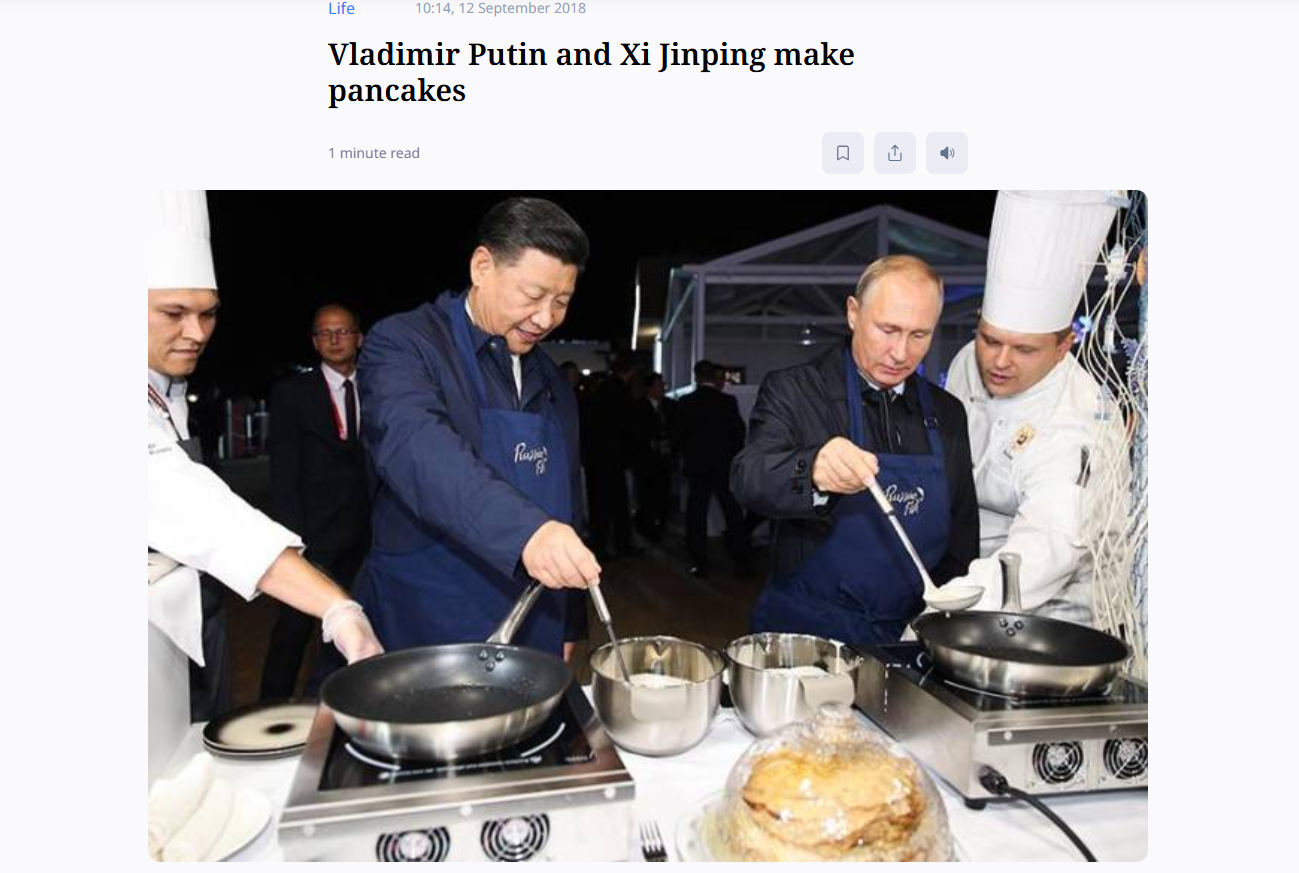
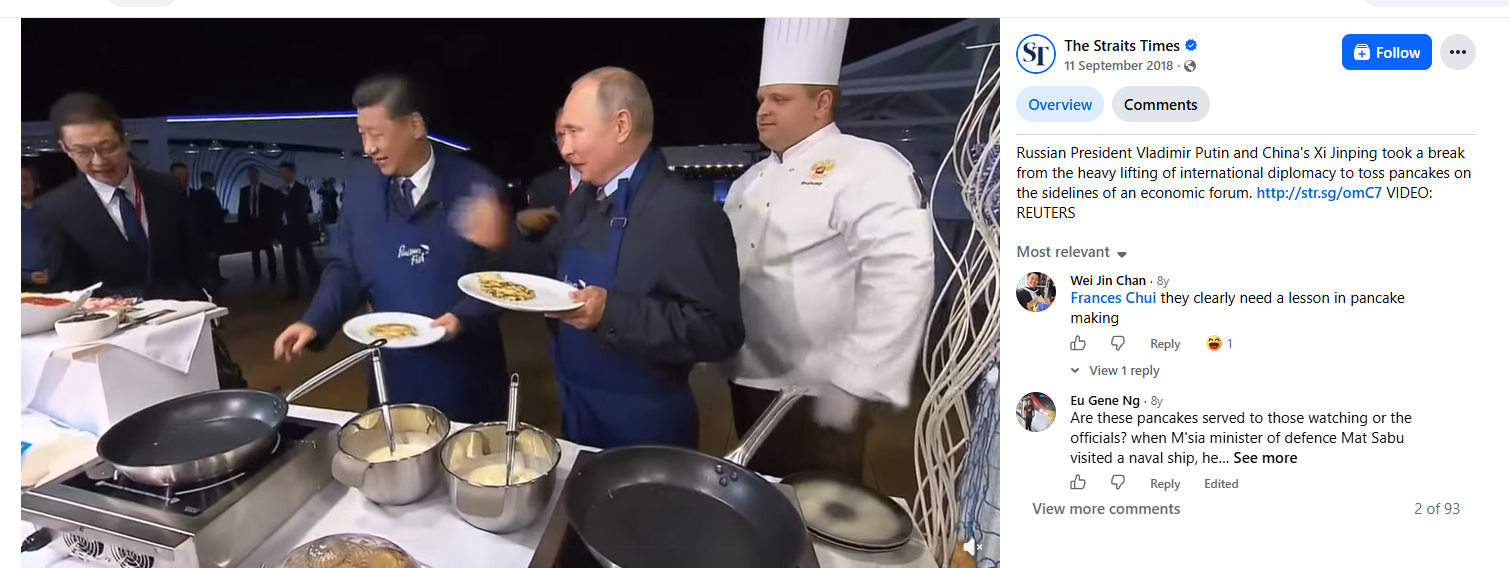
According to the report, Russian President Vladimir Putin and Chinese President Xi Jinping took a break from the hectic schedule of international diplomacy on Tuesday to make pancakes on the sidelines of an economic forum. Chinese President Xi Jinping was among the prominent leaders attending the event in Russia’s Far Eastern city of Vladivostok. The forum primarily focused on economic ties and issues related to North Korea.During the event, the two leaders made blini, a traditional Russian pancake, together at an exhibition called “Far East Street”, which showcased the region’s cultural and economic achievements. Photographs showed Putin and Xi Jinping wearing blue aprons as they poured pancake batter onto a griddle and flipped the pancakes. They later enjoyed the pancakes with caviar and vodka. As we continued our research, we found the same video on The Straits Times’ Facebook page, where it was published on September 11, 2018. According to the information provided with the video, Russian President Vladimir Putin and Chinese President Xi Jinping took a break from the hectic schedule of international diplomacy to make pancakes together on the sidelines of an economic forum. The link to the post and the screenshot are provided below.
https://www.facebook.com/watch/?v=1915270415222092
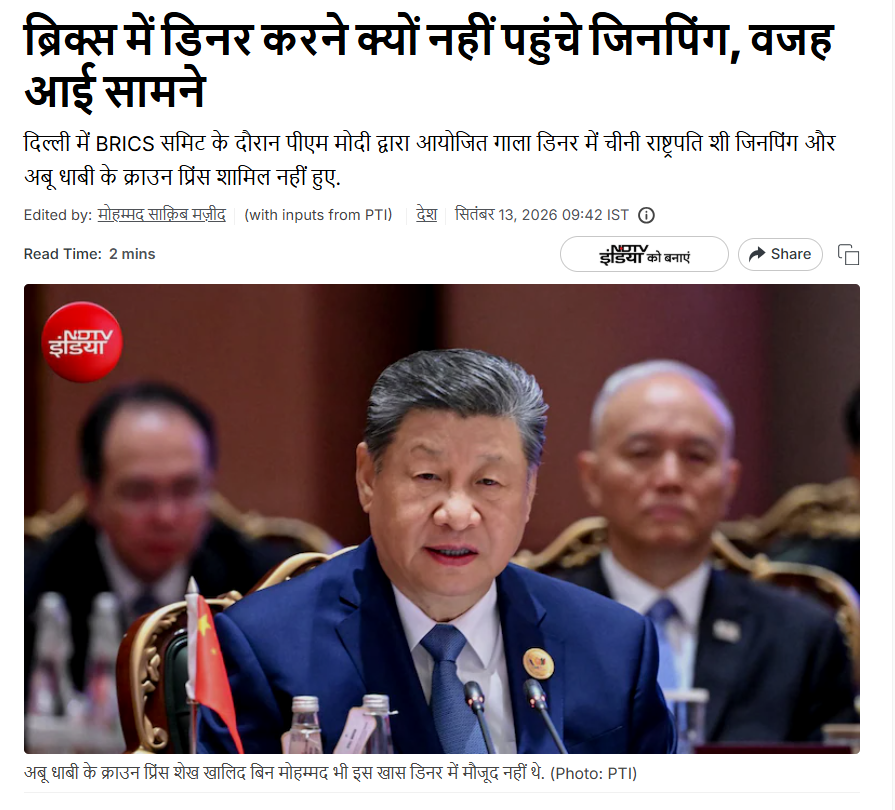
Meanwhile, for context, according to a report by a news agency, the BRICS Summit was underway in Delhi. Saturday was an important day of the summit, and Prime Minister Narendra Modi hosted a dinner for several heads of state, including Chinese President Xi Jinping. Several leaders, including Russian President Vladimir Putin, attended the special dinner. However, Chinese President Xi Jinping was not present. According to sources cited by the news agency, Xi Jinping did not attend the dinner.
https://ndtv.in/india/chinese-president-xi-jinping-skips-brics-gala-dinner-what-reason-12039666
Conclusion
Our research found that the video showing Russian President Vladimir Putin and Chinese President Xi Jinping making pancakes together is not recent and has no connection with the 2026 BRICS Summit held in Delhi. The claim circulating on social media is therefore false and misleading. Further research established that the video dates back to 2018, when Putin and Xi participated in the Eastern Economic Forum in Vladivostok, Russia. During the event, the two leaders were seen preparing traditional Russian pancakes, or blini, together at an exhibition showcasing the cultural and economic achievements of Russia’s Far East region. Therefore, the video is being shared with a false context by linking an old 2018 event to the recently held BRICS Summit.

Related Blogs
.webp)
Introduction
Digitalisation presents both opportunities and challenges for micro, small, and medium enterprises (MSMEs) in emerging markets. Digital tools can increase business efficiency and reach but also increase exposure to misinformation, fraud, and cyber attacks. Such cyber threats can lead to financial losses, reputational damage, loss of customer trust, and other challenges hindering MSMEs' ability and desire to participate in the digital economy.
The current information dump is a major component of misinformation. Misinformation spreads or emerges from online sources, causing controversy and confusion in various fields including politics, science, medicine, and business. One obvious adverse effect of misinformation is that MSMEs might lose trust in the digital market. Misinformation can even result in the devaluation of a product, sow mistrust among customers, and negatively impact the companies’ revenue. The reach of and speed with which misinformation can spread and ruin companies’ brands, as well as the overall difficulty businesses face in seeking recourse, may discourage MSMEs from fully embracing the digital ecosystem.
MSMEs are essential for innovation, job development, and economic growth. They contribute considerably to the GDP and account for a sizable share of enterprises. They serve as engines of economic resilience in many nations, including India. Hence, a developing economy’s prosperity and sustainability depend on the MSMEs' growth and such digital threats might hinder this process of growth.
There are widespread incidents of misinformation on social media, and these affect brand and product promotion. MSMEs also rely on online platforms for business activities, and threats such as misinformation and other digital risks can result in reputational damage and financial losses. A company's reputation being tarnished due to inaccurate information or a product or service being incorrectly represented are just some examples and these incidents can cause MSMSs to lose clients and revenue.
In the digital era, MSMEs need to be vigilant against false information in order to preserve their brand name, clientele, and financial standing. In the interconnected world of today, these organisations must develop digital literacy and resistance against misinformation in order to succeed in the long run. Information resilience is crucial for protecting and preserving their reputation in the online market.
The Impact of Misinformation on MSMEs
Misinformation can have serious financial repercussions, such as lost sales, higher expenses, legal fees, harm to the company's reputation, diminished consumer trust, bad press, and a long-lasting unfavourable impact on image. A company's products may lose value as a result of rumours, which might affect both sales and client loyalty.
Inaccurate information can also result in operational mistakes, which can interrupt regular corporate operations and cost the enterprise a lot of money. When inaccurate information on a product's safety causes demand to decline and stockpiling problems to rise, supply chain disruptions may occur. Misinformation can also lead to operational and reputational issues, which can cause psychological stress and anxiety at work. The peace of the workplace and general productivity may suffer as a result. For MSMEs, false information has serious repercussions that impact their capacity to operate profitably, retain employees, and maintain a sustainable business. Companies need to make investments in cybersecurity defence, legal costs, and restoring consumer confidence and brand image in order to lessen the effects of false information and ensure smooth operations.
When we refer to the financial implications caused by misinformation spread in the market, be it about the product or the enterprise, the cost is two-fold in all scenarios: there is loss of revenue and then the organisation has to contend with the costs of countering the impact of the misinformation. Stock Price Volatility is one financial consequence for publicly-traded MSMEs, as misinformation can cause stock price fluctuations. Potential investors might be discouraged due to false negative information.
Further, the reputational damage consequences of misinformation on MSMEs is also a serious concern as a loss of their reputation can have long-term damages for a carefully-cultivated brand image.
There are also operational disruptions caused by misinformation: for instance, false product recalls can take place and supplier mistrust or false claims about supplier reliability can disrupt procurement leading to disruptions in the operations of MSMEs.
Misinformation can negatively impact employee morale and productivity due to its physiological effects. This leads to psychological stress and workplace tensions. Staff confidence is also affected due to the misinformation about the brand. Internal operational stability is a core component of any organisation’s success.
Misinformation: Key Risk Areas for MSMEs
- Product and Service Misinformation
For MSMEs, misinformation about products and services poses a serious danger since it undermines their credibility and the confidence clients place in the enterprise and its products or services. Because this misleading material might mix in with everyday activities and newsfeeds, viewers may find it challenging to identify fraudulent content. For example, falsehoods and rumours about a company or its goods may travel quickly through social media, impacting the confidence and attitude of customers. Algorithms that favour sensational material have the potential to magnify disinformation, resulting in the broad distribution of erroneous information that can harm a company's brand.
- False Customer Reviews and Testimonials
False testimonies and evaluations pose a serious risk to MSMEs. These might be abused to damage a company's brand or lead to unfair competition. False testimonials, for instance, might mislead prospective customers about the calibre or quality of a company’s offerings, while phony reviews can cause consumers to mistrust a company's goods or services. These actions frequently form a part of larger plans by rival companies or bad individuals to weaken a company's position in the market.
- Misleading Information about Business Practices
False statements or distortions regarding a company's operations constitute misleading information about business practices. This might involve dishonest marketing, fabrications regarding the efficacy or legitimacy of goods, and inaccurate claims on a company's compliance with laws or moral principles. Such incorrect information can result in a decline in consumer confidence, harm to one's reputation, and even legal issues if consumers or rival businesses act upon it. Even before the truth is confirmed, for example, allegations of wrongdoing or criminal activity pertaining can inflict a great deal of harm, even if they are disproven later.
- Fake News Related to Industry and Market Conditions
By skewing consumer views and company actions, fake news about market and industry circumstances can have a significant effect on MSMEs. For instance, false information about market trends, regulations, or economic situations might make consumers lose faith in particular industries or force corporations to make poor strategic decisions. The rapid dissemination of misinformation on online platforms intensifies its effects on enterprises that significantly depend on digital engagement for their operations.
Factors Contributing to the Vulnerability of MSMEs
- Limited Resources for Verification
MSMEs have a small resource pool. Information verification is typically not a top priority for most. MSMEs usually lack the resources needed to verify the information and given their limited resources, they usually tend to deploy the same towards other, more seemingly-critical functions. They are more susceptible to misleading information because they lack the capacity to do thorough fact-checking or validate the authenticity of digital content. Technology tools, human capital, and financial resources are all in low supply but they are essential requirements for effective verification processes.
- Inadequate Digital Literacy
Digital literacy is required for effective day-to-day operations. Fake reviews, rumours, or fake images commonly used by malicious actors can result in increased scrutiny or backlash against the targeted business. The lack of awareness combined with limited resources usually spells out a pale redressal plan on part of the affected MSME. Due to their low digital literacy in this domain, a large number of MSMEs are more susceptible to false information and other online threats. Inadequate knowledge and abilities to use digital platforms securely and effectively can result in making bad decisions and raising one's vulnerability to fraud, deception, and online scams.
- Lack of Crisis Management Plans
MSMEs frequently function without clear-cut procedures for handling crises. They lack the strategic preparation necessary to deal with the fallout from disinformation and cyberattacks. Proactive crisis management plans usually incorporate procedures for detecting, addressing, and lessening the impact of digital harms, which are frequently absent from MSMEs.
- High Dependence on Social Media and Online Platforms
The marketing strategy for most MSMEs is heavily reliant on social media and online platforms. While the digital-first nature of operations reduces the need for a large capital to set up in the form of stores or outlets, it also gives them a higher need to stay relevant to the trends of the online community and make their products attractive to the customer base. However, MSMEs are depending more and more on social media and other online channels for marketing, customer interaction, and company operations. These platforms are really beneficial, but they also put organisations at a higher risk of false information and online fraud. Heavy reliance on these platforms coupled with the absence of proper security measures and awareness can result in serious interruptions to operations and monetary losses.
CyberPeace Policy Recommendations to Enhance Information Resilience for MSMEs
CyberPeace advocates for establishing stronger legal frameworks to protect MSMEs from misinformation. Governments should establish regulations to build trust in online business activities and mitigate fraud and misinformation risks. Mandatory training programs should be implemented to cover online safety and misinformation awareness for MSME businesses. Enhanced reporting mechanisms should be developed to address digital harm incidents promptly. Governments should establish strict penalties for deliberate inaccurate misinformation spreaders, similar to those for copyright or intellectual property violations. Community-based approaches should be encouraged to help MSMEs navigate digital challenges effectively. Donor communities and development agencies should invest in digital literacy and cybersecurity training for MSMEs, focusing on misinformation mitigation and safe online practices. Platform accountability should be increased, with social media and online platforms playing a more active role in removing content from known scam networks and responding to fraudulent activity reports. There should be investment in comprehensive digital literacy solutions for MSMEs that incorporate cyber hygiene and discernment skills to combat misinformation.
Conclusion
Misinformation poses a serious risk to MSME’s digital resilience, operational effectiveness, and financial stability. MSMEs are susceptible to false information because of limited technical resources, lack of crisis management strategies, and insufficient digital literacy. They are also more vulnerable to false information and online fraud because of their heavy reliance on social media and other online platforms. To address these challenges it is significant to strengthen their cyber hygiene and information resilience. Robust policy and regulatory frameworks are encouraged, promoting and mandating online safety training programmes, and improved reporting procedures, are required to overall enhance the information landscape.
References:
- https://www.dai.com/uploads/digital-downsides.pdf
- https://www.indiacode.nic.in/bitstream/123456789/2013/3/A2006-27.pdf
- https://pib.gov.in/PressReleaseIframePage.aspx?PRID=1946375
- https://dai-global-digital.com/digital-downsides-the-economic-impact-of-misinformation-and-other-digital-harms-on-msmes-in-kenya-india-and-cambodia.html
- https://www.dai.com/uploads/digital-downsides.pdf
Introduction
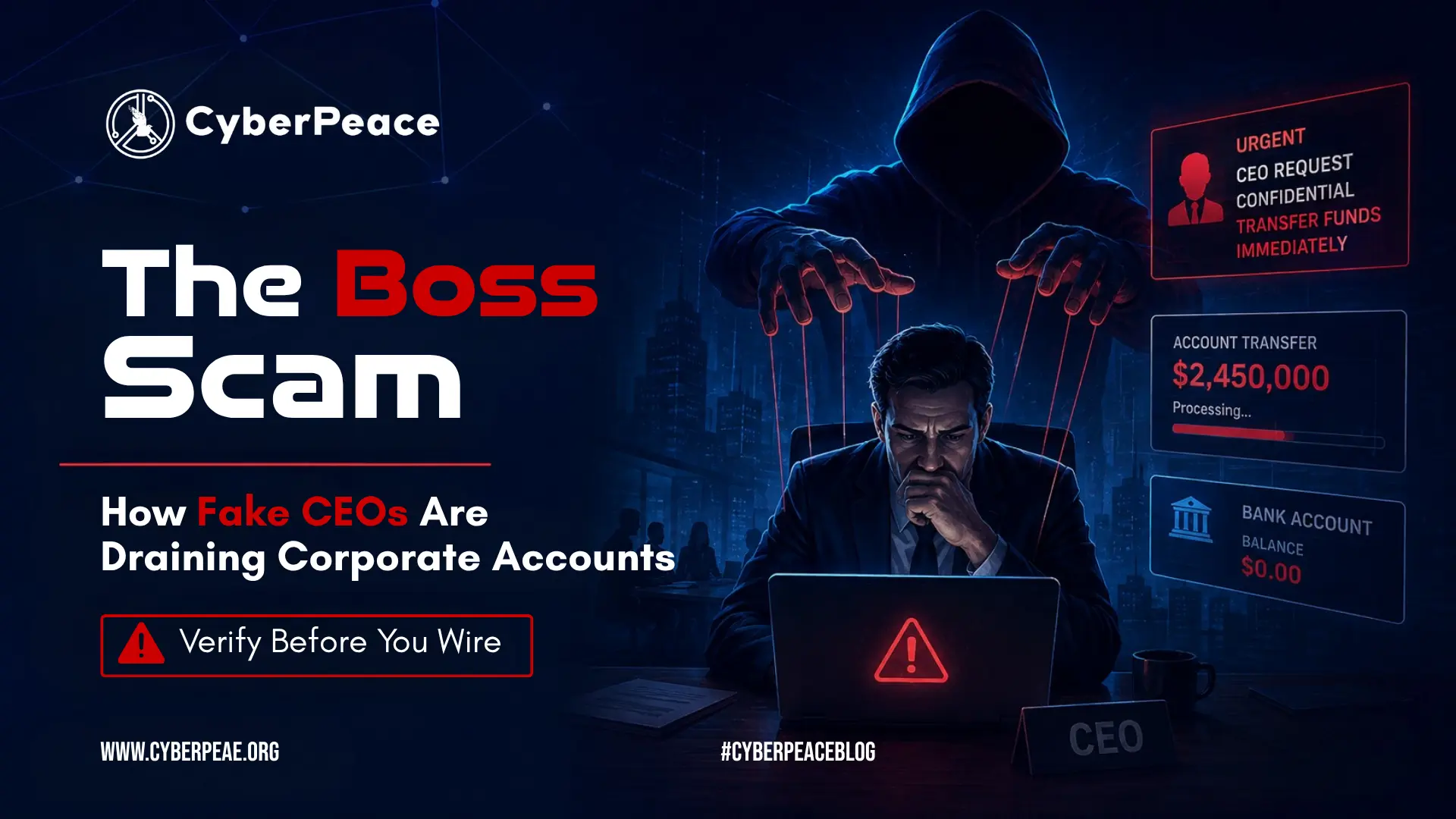
Imagine receiving a WhatsApp message from your CEO late on a Friday afternoon. The message is urgent: a confidential business deal requires an immediate wire transfer before markets close. The profile picture matches, the tone sounds familiar, and the account it came from has your CEO's name on it. Everything appears legitimate except it is not. This is the essence of the 'Boss Scam,' a sophisticated form of CEO impersonation fraud that has emerged as one of the most financially devastating cybercrime trends of 2025. India's Indian Cyber Crime Coordination Centre (I4C), under the Ministry of Home Affairs, issued an urgent national advisory on this threat in June 2025, warning that organisations across the country are falling victim to an evolved and technically advanced version of executive impersonation fraud that bypasses many traditional cybersecurity safeguards.
Understanding the Boss Scam
What Is CEO Impersonation Fraud?
CEO fraud, also known as Business Email Compromise (BEC) or executive impersonation fraud, is a targeted cyberattack in which criminals assume the digital identity of a high-ranking executive most commonly the Chief Executive Officer to deceive subordinate employees into authorising fraudulent financial transactions or divulging sensitive information. Unlike generic phishing campaigns that cast a wide net, CEO fraud is a precision attack. Cybercriminals invest significant time and resources researching their targets, studying organisational hierarchies, communication styles, and internal financial workflows before executing the scam. The attack is devastatingly effective because it weaponises one of the most powerful forces in any workplace: authority. An instruction that appears to originate from the CEO carries an implicit demand for immediate compliance, often bypassing normal checks and verification procedures. The FBI's Internet Crime Complaint Center (IC3) has consistently identified BEC as one of the most financially destructive categories of cybercrime, with adjusted losses of approximately USD 2.77 billion reported in 2024 alone across the United States.
The New and Evolved Variant: India's I4C Advisory
The variant identified by India's I4C represents a dangerous evolution of traditional CEO fraud. The earlier versions of this scam relied on spoofed email addresses or fake WhatsApp profiles that merely mimicked an executive's account. Employees were trained to spot tell-tale warning signs suspicious domains, unusual sender addresses, or spelling errors in email IDs. The latest
Boss Scam variant eliminates many of these red flags entirely by hijacking the executive's actual and legitimate WhatsApp account. This sophisticated attack begins not with the employee, but with the CEO. Cybercriminals approach senior executives through email or WhatsApp while posing as regulatory authorities in India's context, this includes impersonating officials from the Reserve Bank of India (RBI) or other government bodies. These messages claim an urgent compliance violation or regulatory breach requiring immediate remedial action. The communication contains a compressed ZIP archive, which the executive is prompted to open. Inside the archive are malicious executable (.exe) and Dynamic Link Library (.dll) files that, when run on a Windows system, deploy a Trojan dropper a form of malware capable of establishing persistent access on the device and hijacking active WhatsApp Web session tokens.
Once the session token is compromised, the attacker gains complete control over the executive's WhatsApp account without needing the phone, password, or any two-factor authentication code. The legitimate account is now in criminal hands, and any message sent from it appears entirely authentic to recipients.
How the Boss Scam Operates: A Step-by-Step Breakdown
Stage 1: Targeting the Executive: The operation begins with careful reconnaissance. Attackers study the target organisation's leadership, identify the CEO or a senior executive, and gather publicly available information about their communication patterns, business relationships, and company operations through LinkedIn, corporate websites, and news sources. They then contact the executive under a false regulatory identity, engineering a sense of crisis and urgency.
Stage 2: Malware Deployment:The fraudulent regulatory communication contains a ZIP file disguised as a compliance document, a security patch, or a mandatory software update. Upon execution on a Windows machine, the embedded malware installs itself and begins hijacking the WhatsApp Web session. Critically, in many documented cases, the CEO innocently forwards this regulatory message and the malicious attachment to their own finance officer or IT team, inadvertently widening the attack surface.
Stage 3: Account Takeover and Impersonation:With the CEO's legitimate WhatsApp account now under their control, cybercriminals send highly convincing messages to subordinate staff, particularly those in finance, accounts payable, or treasury functions. These messages carry the full weight of genuine executive authority correct name, profile photo, and account history making them extraordinarily difficult to distinguish from authentic communications.
Stage 4: The Financial Strike:The fraudulent instruction typically requests an urgent, confidential wire transfer to an unfamiliar account, often accompanied by requests for complete secrecy. The employee, believing the instruction to be genuine and fearing the consequences of non-compliance with a directive from their CEO, processes the transaction. By the time the fraud is discovered, the funds have been routed through multiple mule accounts, making recovery extremely difficult.
The Broader Landscape: Scale and Impact
The Boss Scam is not an isolated Indian phenomenon it represents the cutting edge of a global epidemic of executive impersonation fraud. According to the FBI's data, BEC has been the costliest category of cybercrime for several years running, with cumulative global losses that officials have described as exceeding USD 50 billion over the past decade. A 2025 fraud survey found that 90 per cent of U.S. companies experienced attempted cyber-fraud in 2024, with business email compromise and impersonation scams surging by 103 per cent year-on-year. The technological sophistication of these attacks has grown in lockstep with the availability of AI tools. In early 2024, a finance worker at a multinational firm in Hong Kong was tricked into authorising a payment of USD 25 million after attending a video conference in which the CFO and other senior executives were entirely fabricated using deepfake technology. In March 2025, a similar attack unfolded in Singapore, where a finance director authorised nearly USD 499,000 after joining a Zoom call populated entirely by AI-generated deepfakes of company executives. Deepfake attacks against businesses reportedly surged by 3,000 per cent in 2023, and voice cloning fraud rose by 680 per cent the following year. In India, the Telangana Cyber Security Bureau reported over 300 complaints related to the Boss Scam variant alone within a twenty-day period in June 2025. In one prominent case, formerPrime Minister I.K. Gujral's son, Naresh Gujral, reportedly lost approximately Rs 7.8 crorethrough a messaging-app impersonation scheme targeting his company's Chief Financial Officer.
Warning Signs Every Employee Must Recognise
Identifying a Boss Scam attempt requires situational awareness and healthy scepticism. The following red flags should prompt immediate caution:
● Any request for urgent or secret financial transfers received via WhatsApp or email, without prior discussion or formal documentation.
● Instructions to bypass standard approval procedures or to maintain secrecy from colleagues or senior management.
● Compressed files (.zip, .rar) or executable attachments received from any source, including apparently known contacts, claiming to be compliance documents or regulatory updates.
● Messages from executives at unusual hours, particularly those emphasising that a transaction must be completed immediately.
● Claims that a request comes from a government regulator, such as the RBI, delivered through informal channels like WhatsApp.
● Any communication that creates extreme urgency, invokes authority, and simultaneously demands confidentiality the classic triangle of social engineering manipulation. Protective Measures: Defending Against the Boss Scam
For Employees and Finance Teams
The I4C advisory and global cybersecurity authorities recommend several concrete steps that employees can take. The most important is to independently verify any urgent financial instruction through a direct voice call or in-person confirmation before taking action, regardless of how convincing the digital message appears. No financial transaction of significance should be authorised on the basis of a WhatsApp message or email alone.
For Organisations and Leadership
Organisations must implement multi-layered verification protocols for all wire transfers above a defined threshold, making dual authorisation and out-of-band verification mandatory. IT teams should deploy updated malware detection tools, enforce software restriction policies that block unauthorised executable files, and regularly audit devices for signs of compromise. WhatsApp linked devices should be reviewed periodically. Leadership must also commit to regular, mandatory cybersecurity awareness training for all staff, with particular attention to social engineering tactics. The I4C has also emphasised that legitimate regulatory bodies including the RBI , do not distribute software, compliance tools, or security patches via WhatsApp or email attachments. Any such communication must be treated as a potential attack vector and reported immediately.
Conclusion
The Boss Scam exploits organisational trust and human psychology rather than technical vulnerabilities and with deepfake technology now capable of replicating familiar voices and faces, traditional verification instincts are no longer reliable. The strongest defence is a culture of verification without embarrassment, where questioning an unusual instruction is seen as diligence, not insubordination. Awareness, clear protocols, and scepticism towards urgency remain our most powerful tools. If you've encountered such a scam, contact India's National Cybercrime Helpline at 1930 or report at cybercrime.gov.in.
References
- https://www.cybercrime.gov.in
- https://www.business-standard.com/india-news/boss-scam-ceo-impersonation-fraudgovt- advisory-i4c-126062300353_1.html
- https://www.indiatvnews.com/news/india/boss-scam-all-about-the-new-cyber-fraudtargeting- corporates-and-precautions-listed-by-mha-2026-06-23-1045827
- https://www.freepressjournal.in/business/boss-scam-on-whatsapp-new-ceo-fraudbypasses- traditional-cybersecurity-checks
- https://hyderabadmail.com/tgcsb-warns-boss-scam-ceo-impersonation-fraud-malwarealert/
- https://www.newkerala.com/news/a/rising-boss-scam-threat-targets-senior-executiveswarns- 242.html
- https://www.ic3.gov
- https://www.mcafee.com/learn/is-that-really-your-boss/
- https://abnormal.ai/glossary/ceo-fraud
- https://www.brside.com/blog/deepfake-ceo-fraud-50m-voice-cloning-threat-cfos
- https://www.eftsure.com/blog/cyber-crime/these-7-deepfake-ceo-scams-prove-that-nobusiness- is-safe/
- https://www.knowbe4.com/ceo-fraud
- https://trustpair.com/blog/ceo-fraud-how-to-protect-your-organization-from-fraudsters/
- https://hacked.com/services/executive-impersonation-and-ceo-fraud-protecting-high-networth- individuals/
- https://www.certifid.com/article/ceo-fraud

In the 21st century, wars are no longer confined to land, sea, and air. Rather, they are increasingly playing out across the digital domain, where effective dominance over networks, data, and communications determines who holds the upper hand. Among these, 5G networks are becoming a defining factor on modern battlefields. The ultra-low latency, massive bandwidth capability, and the ability to connect many devices at a single time are transforming the scale and level of military operations, intelligence, and logistics. This unprecedented connectivity is also met with a host of cybersecurity vulnerabilities that the governments and the militaries have to address.
As India faces a challenging security environment, the emergence of 5G presents both an opportunity and a dilemma. On one hand, it can enhance our command, control, surveillance and battlefield coordination. On the other hand, it also exposes the military and the security establishments to risks of espionage and supply chain vulnerabilities. So in this case, it will be important to strike a balance between innovation and security for turning 5G into a strength rather than a liability.
How can 5G networks be a military asset?
In comparison to its predecessors, 5G is not just about faster downloads. Rather, it is a complete overhaul of network architectures that are designed to support services and technologies according to modern technological requirements. In terms of military application of 5G networks, it can prove a series of game-changing capabilities, such as:-
- Enhanced Command and Control in the form of real-time data sharing between troops, UAVs, Radar systems and the Command Cells to ensure a faster and coordinated decision-making approach.
- Tactical Situational Awareness with the help of 5G-enabled devices can give soldiers instant updates on the terrain, troop movements, or positions and enemy movements.
- Advanced Intelligence, Surveillance and Reconnaissance (ISR) with high-resolution sensors, radars and UAVs that can operate at their full potential by transmitting vast data streams with minimal legacy.
However, 5G networks can also help to become a key component of the communication component of the military command establishments that would allow machines, sensors and human operators to function as a single and integrated force.
Understanding the importance of 5G networks as the Double-Edged Swords of Connectivity-
The potential of 5G is undeniable, but its vulnerabilities cannot be ignored. Because they are software-driven and reliant on dense networks of small cells. For the military, this shows that adversaries could exploit their weaknesses to disrupt the communication, jam signals, and intercept sensitive data, leaving behind some key risks, such as;
- Cybersecurity threats from software-based architectures make 5G networks prone to malware and data breaches.
- Supply chain risks can arise from reliance on foreign hardware and software components with raising fears of embedded backdoors or compromised systems.
- Signal jamming and interface in terms of millimetre-wave spectrum, 5G signals are vulnerable to disruption in contested environments.
- There can also be insider threats and physical sabotage over personnel or unsecured installations that could compromise network integrity.
Securing the Backbone: Cyber Defence Imperatives
To safeguard 5G networks as the backbone for future warfare, the defence establishments need to adopt a layered, proactive cybersecurity strategy. Several measures can be considered, such as;
- Ensuring robust encryption and authentication to protect sensitive data, which requires the installation of advanced protocols like Subscription Concealed Identifiers and zero-trust frameworks to eliminate implicit trust.
- Investing in domestic R&D for 5G components to reduce dependency on foreign suppliers. India’s adoption of the 5Gi standard is a step in this direction, but upgrading it into a military grade remains vital.
- To ensure collaboration across different sectors, the defence forces need to work with civilian agencies and private telecoms support providers to create unified standards and best practices.
Thus, with embedding cybersecurity into every layer of the 5G architecture, India can work in the direction to reduce risks to maintain its operational resilience.
The geopolitical domains of 5G Network as a tool of warfare-
The introduction of 5G networks has definitely come as a tool of technological advancement in the communication sector. But at the same time, it has also posed a geopolitical context as well. The strategic competition between the US and China to dominate the 5G infrastructure has global security implications. For India, aligning closely with either of the blocs will pose a risk to its strategic autonomy, but pursuing non-alignment can give India some leverage to develop its capability on its own.
In this case, partnerships with the QUAD with the US, Japan and Australia can open avenues for cooperating on shared standards, cost sharing, and interoperability in 5G-enabled military systems. Learning from countries like the US and Israel, which are developing their defence communication and network infrastructure to secure 5G networks, or revisiting existing frameworks like COMCASA or BECA with the US can serve as platforms to explore joint protocols for 5G networks.
Conclusion: Opportunities and the way forward-
The 5G network is becoming a part of the central nervous system of the future battlefields. It can offer immense opportunities for India to modernise its defence capabilities and enhance the situational awareness by integrating AI-driven systems. The future lies in adopting a balanced strategy by developing indigenous capabilities, forging trusted partnerships, embedding cybersecurity into every layer of the networking architecture and preparing a skilled workforce to analyse and counter evolving threats. However, by adopting a foresighted preparedness, India can turn the double-edged sword of 5G into a decisive advantage by ensuring that it not only adapts to the digital battlefield, rather India can also lead it.
References
- https://chanakyaforum.com/5g-poised-to-usher-in-a-paradigm-shift-in-military-communications
- https://www.ijert.org/secure-5g-network-architecture-for-armed-forces
- https://www.airforce-technology.com/sponsored/data-is-becoming-more-powerful-than-any-weaponry-on-the-battlefield-and-5g-is-the-backbone/
- https://www.upguard.com/blog/how-5g-technology-affects-cybersecurity
- https://agileblue.com/exploring-the-impact-of-5g-technology-on-cybersecurity-practices/
