
#FactCheck: India-Bangladesh Border Video Falsely Shared as Chinese Army Occupying Arunachal Pradesh
Executive Summary
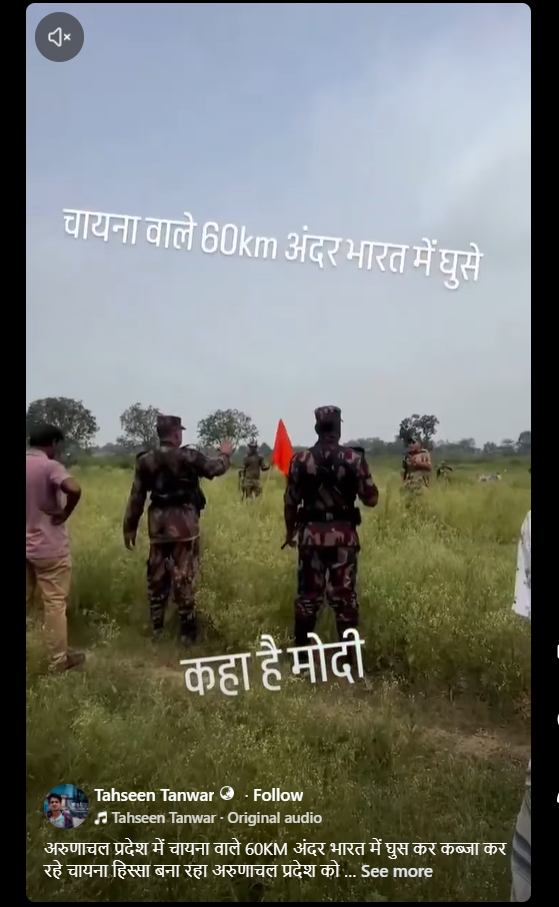
A video is being widely shared on social media with the claim that the Chinese Army has entered 60 kilometres inside Arunachal Pradesh and occupied Indian territory. In the video, a man appears to be recording the situation using his selfie camera, while soldiers can be seen standing face-to-face and arguing with each other in the background. The CyberPeace Research Wing found that the claim is false. The viral video is not from Arunachal Pradesh. It shows a confrontation between India’s Border Security Force (BSF) and Bangladesh’s Border Guard Bangladesh (BGB) along the India-Bangladesh border.
Claim
A Facebook user shared the video with the caption:
"China is entering 60 km inside India and occupying Arunachal Pradesh. China is turning Arunachal Pradesh into its territory. Where are Prime Minister Modi, Defence Minister Rajnath Singh and Home Minister Amit Shah?"
Post link:
https://www.facebook.com/reel/1736825064305394
https://www.facebook.com/reel/1736825064305394
FactCheck
Our research found no credible news report confirming that Chinese troops had entered 60 kilometres inside Arunachal Pradesh or occupied Indian territory.
The people in the viral video can be heard speaking in Bengali, suggesting that the footage could be from the India-Bangladesh border rather than Arunachal Pradesh.
A reverse image search of keyframes from the viral video led us to an identical video posted on the Facebook page of Bangladeshi news channel Jamuna TV on June 20. According to the caption, the incident took place along the Chapainawabganj border in Bangladesh, where personnel of India’s BSF and Bangladesh’s BGB had confronted each other.
https://www.facebook.com/reel/1049262804595610

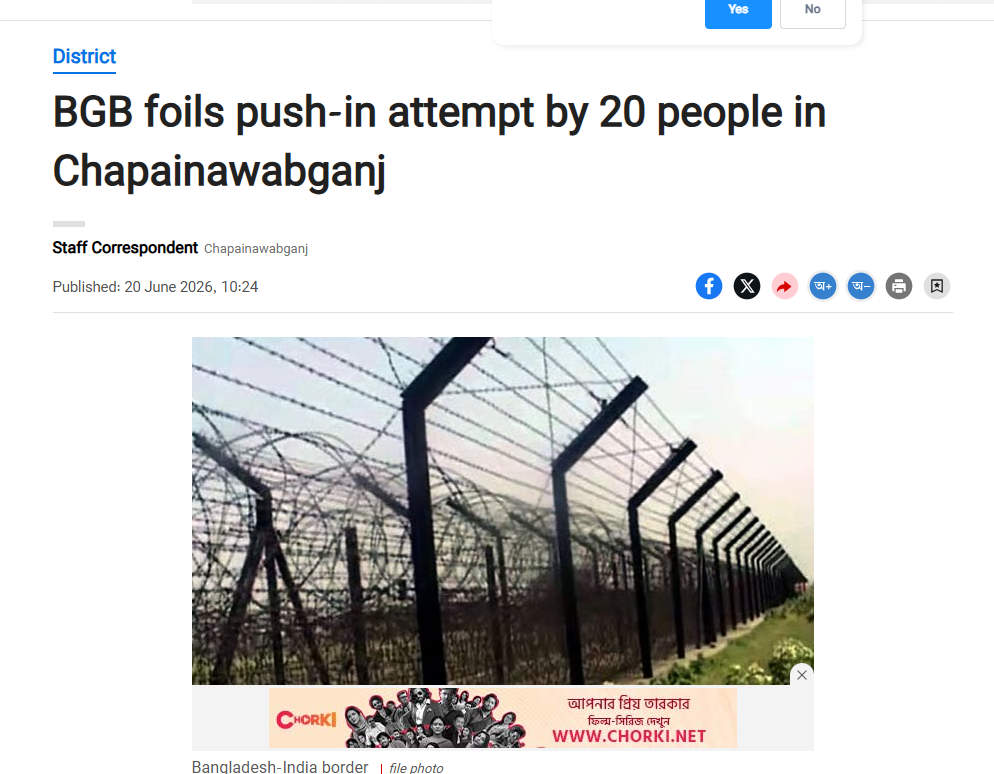
We also found reports from Bangladeshi media outlet Prothom Alo about the incident. According to the reports, Bangladeshi security personnel had stopped around 20 people who were attempting to return to Bangladesh from India, following which a verbal altercation took place between BSF and BGB personnel.
https://www.prothomalo.com/bangladesh/district/syzkfootaq
Conclusion
The viral claim is false. The video does not show Chinese troops entering or occupying 60 kilometres of territory inside Arunachal Pradesh. It actually shows a confrontation between BSF and BGB personnel along the India-Bangladesh border in the Chapainawabganj area of Bangladesh. The footage is being circulated with a false Arunachal Pradesh-related narrative.

Related Blogs

Executive Summary
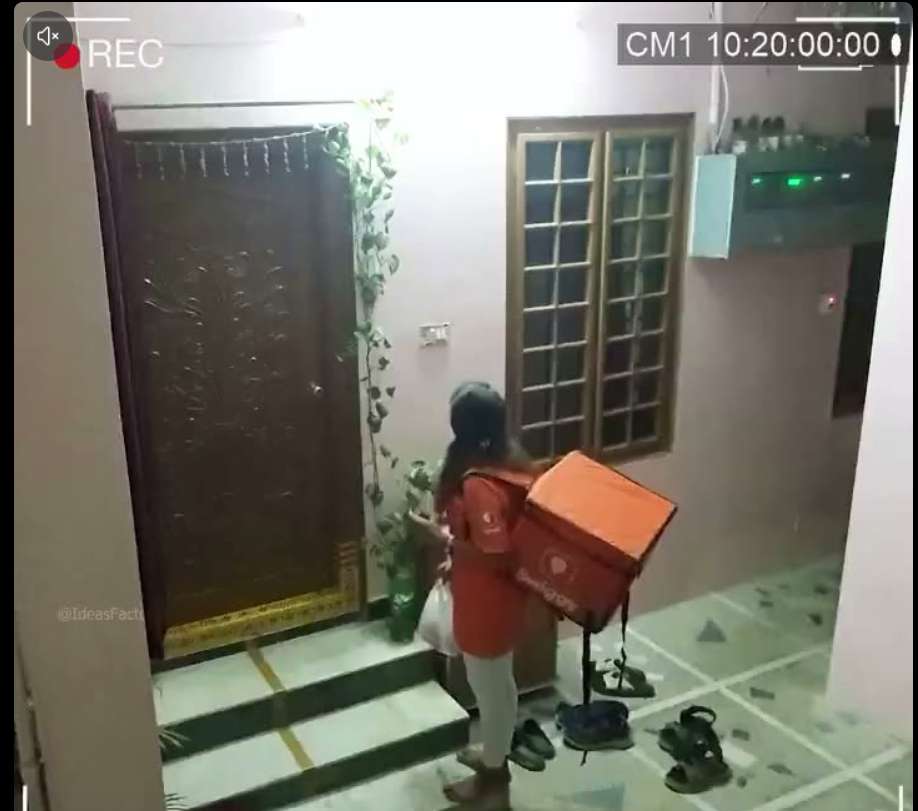
A video was shared on social media showing a woman food delivery agent allegedly being assaulted by a customer. The video showed the woman ringing a house’s doorbell to deliver an order. A man, who appeared to be in an inebriated state, came out, collected the order and left without paying. When the woman rang the doorbell again and asked him to pay for the order, another man, who appeared to be his friend, came out. The two men then appeared to forcibly pull the woman inside the house. She was later seen emerging from the house visibly injured and distressed, suggesting that she may have been assaulted. CyberPeace Research Wing reviewed the viral media and confirmed that the footage is staged. It bears no connection to any actual event and has been circulated on social networks with a misleading context.
Claim
On August 21, Facebook user D.K. Sharma shared a video clip asserting that it captures a real instance of a female food delivery partner being assaulted by customers. In the viral footage, a delivery woman knocks on a house door to drop off an order. An apparently intoxicated man receives the package and leaves without making the payment. When she rings the doorbell again to request the payment, a second man joins him. The duo is then seen forcibly dragging the woman inside the residence. Moments later, she emerges from the house visibly distressed and injured, suggesting physical assault.
https://www.facebook.com/reel/1326466852646458/
Fact Check
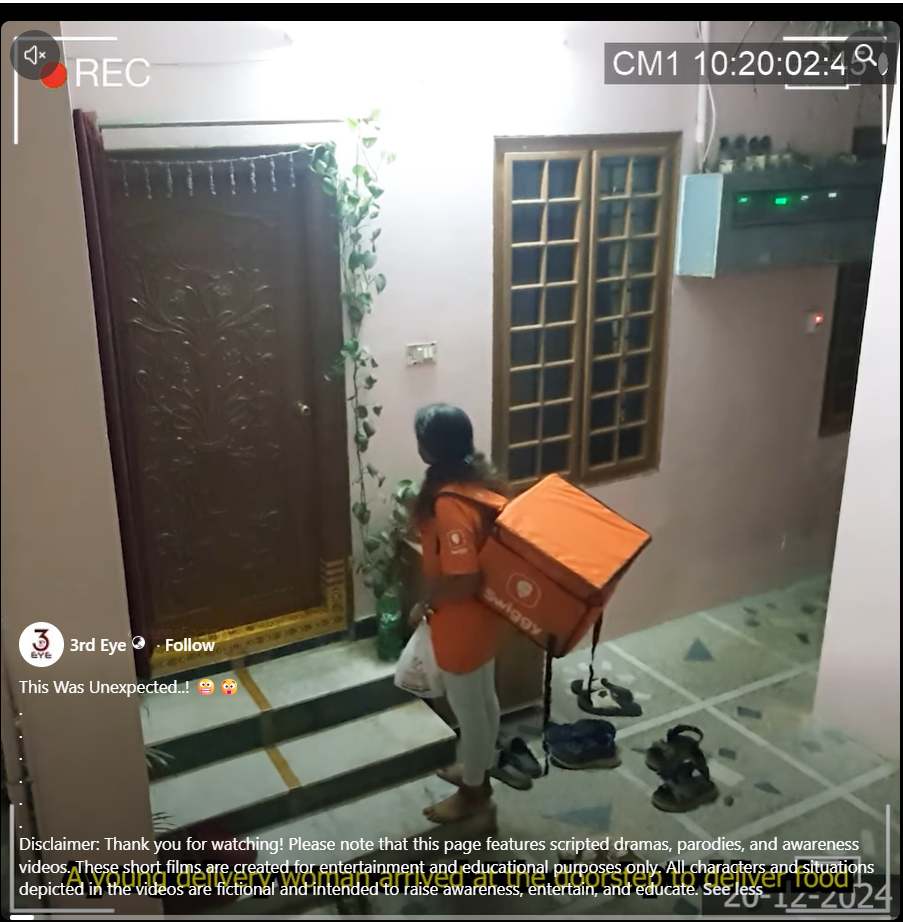
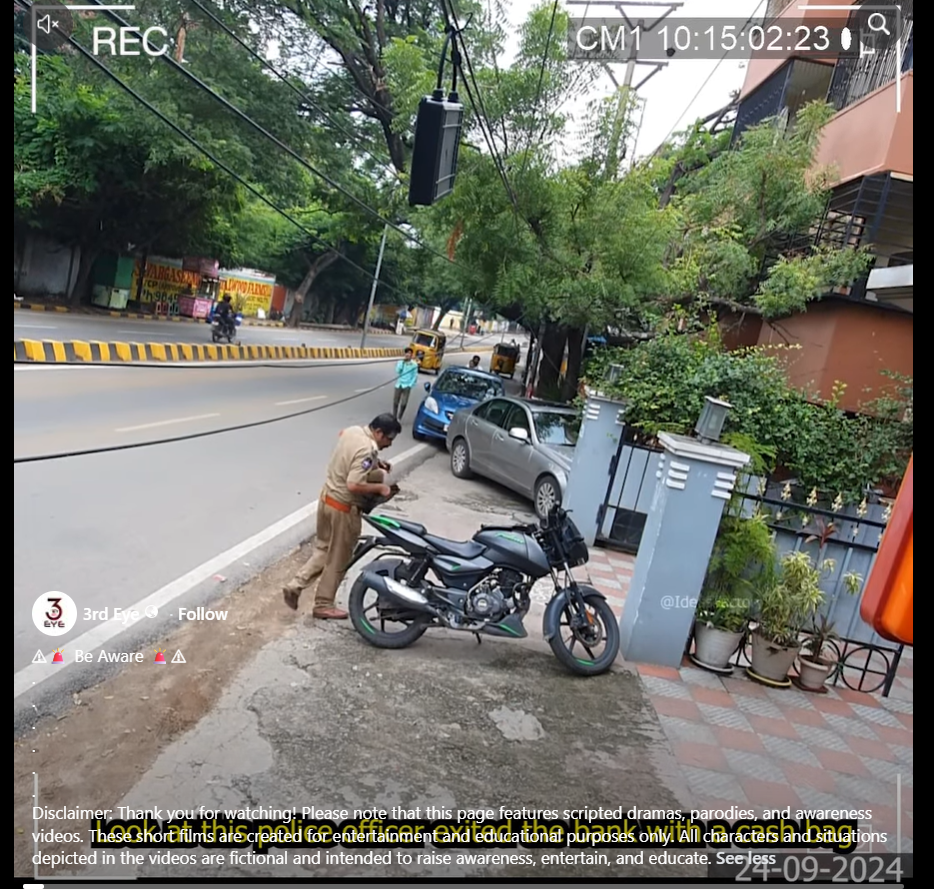
A Google Reverse Image Search led the Desk to a video posted on a Facebook page named 3RD EYE, which had over 1.1 million followers at the time of publication of this story. The page had shared the same video on June 21, showing a food delivery agent being assaulted, as seen in the viral social media posts. However, upon carefully reviewing the disclaimer accompanying the video, the Desk found that it was scripted and not based on any real-life incident.
The disclaimer clearly stated that the video was intended to raise awareness, entertain and educate viewers. The page caption read: “Thank you for watching! Please note that this page features scripted dramas, parodies, and awareness videos. These short films are created for entertainment and educational purposes only. All characters and situations depicted in the videos are fictional and intended to raise awareness, entertain and educate.”
https://www.facebook.com/reel/764475639236044
Further inspection of the '3RD EYE' Facebook channel confirmed a routine pattern of posting scripted awareness clips and fictional dramatizations.
https://www.facebook.com/reel/824802854039405
Conclusion
The claim that a female food delivery partner was assaulted by customers in a real-life incident is FALSE. The video in question is a fictional, scripted short drama created for educational/entertainment purposes and has been falsely shared as a genuine occurrence.

Introduction
The United Nations General Assembly (UNGA) has unanimously adopted the first global resolution on Artificial Intelligence (AI), encouraging countries to take into consideration human rights, keeping personal data safe, and further monitoring the threats associated with AI. This non-binding resolution proposed by the United States and co-sponsored by China and over 120 other nations advocates the strengthening of privacy policies. This step is crucial for governments across the world to shape how AI grows because of the dangers it carries that could undermine the protection, promotion, and right to human dignity and fundamental freedoms. The resolution emphasizes the importance of respecting human rights and fundamental freedoms throughout the life cycle of AI systems, highlighting the benefits of digital transformation and safe AI systems.
Key highlights
● This is indeed a landmark move by the UNGA, which adopted the first global resolution on AI. This resolution encourages member countries to safeguard human rights, protect personal data, and monitor AI for risks.
● Global leaders have shown their consensus for safe, secure, trustworthy AI systems that advance sustainable development and respect fundamental freedom.
● Resolution is the latest in a series of initiatives by governments around the world to shape AI. Therefore, AI will have to be created and deployed through the lens of humanity and dignity, Safety and Security, human rights and fundamental freedoms throughout the life cycle of AI systems.
● UN resolution encourages global cooperation, warns against improper AI use, and emphasizes the issues of human rights.
● The resolution aims to protect from potential harm and ensure that everyone can enjoy its benefits. The United States has worked with over 120 countries at the United Nations, including Russia, China, and Cuba, to negotiate the text of the resolution adopted.
Brief Analysis
AI has become increasingly prevalent in recent years, with chatbots such as the Chat GPT taking the world by storm. AI has been steadily attempting to replicate human-like thinking and solve problems. Furthermore, machine learning, a key aspect of AI, involves learning from experience and identifying patterns to solve problems autonomously. The contemporary emergence of AI has, however, raised questions about its ethical implications, potential negative impact on society, and whether it is too late to control it.
While AI is capable of solving problems quickly and performing various tasks with ease, it also has its own set of problems. As AI continues to grow, global leaders have called for regulations to prevent significant harm due to the unregulated AI landscape to the world and encourage the use of trustworthy AI. The European Union (EU) has come up with an AI act called the “European AI Act”. Recently, a Senate bill called “The AI Consent Bill” was introduced in the US. Similarly, India is also proactively working towards setting the stage for a more regulated Al landscape by fostering dialogues and taking significant measures. Recently, the Ministry of Electronics and Information Technology (MeitY) issued an advisory on AI, which requires explicit permission to deploy under-testing or unreliable AI models related to India's Internet. The following advisory also indicates measures advocating to combat deepfakes or misinformation.
AI has thus become a powerful tool that has raised concerns about its ethical implications and the potential negative influence on society. Governments worldwide are taking action to regulate AI and ensure that it remains safe and effective. Now, the groundbreaking move of the UNGA, which adopted the global resolution on AI, with the support of all 193 U.N. member nations, shows the true potential of efforts by countries to regulate AI and promote safe and responsible use globally.
New AI tools have emerged in the public sphere, which may threaten humanity in an unexpected direction. AI is able to learn by itself through machine learning to improve itself, and developers often are surprised by the emergent abilities and qualities of these tools. The ability to manipulate and generate language, whether with words, images, or sounds, is the most important aspect of the current phase of the ongoing AI Revolution. In the future, AI can have several implications. Hence, it is high time to regulate AI and promote the safe, secure and responsible use of it.
Conclusion
The UNGA has approved its global resolution on AI, marking significant progress towards creating global standards for the responsible development and employment of AI. The resolution underscores the critical need to protect human rights, safeguard personal data, and closely monitor AI technologies for potential hazards. It calls for more robust privacy regulations and recognises the dangers associated with improper AI systems. This profound resolution reflects a unified stance among UN member countries on overseeing AI to prevent possible negative effects and promote safe, secure and trustworthy AI.
References
Introduction
Online dating platforms have become a common way for individuals to connect in today’s digital age. For many in the LGBTQ+ community, especially in environments where offline meeting spaces are limited, these platforms offer a way to find companionship and support. However, alongside these opportunities come serious risks. Users are increasingly being targeted by cybercrimes such as blackmail, sextortion, identity theft, and online harassment. These incidents often go unreported due to stigma and concerns about privacy. The impact of such crimes can be both emotional and financial, highlighting the need for greater awareness and digital safety.
Cybercrime On LGBTQ+ Dating Apps: A Threat Landscape
According to the NCRB 2022 report, there has been a 24.4% increase in cybercrimes. But unfortunately, the queer community-specific data is not available. Cybercrimes that target LGBTQ+ users in very organised and predatory. In several Indian cities, gangs actively monitor dating platforms to the point that potential victims, especially young queers and those who seem discreet about their identity, become targets. Once the contact is established, perpetrators use a standard operating process, building false trust, forcing private exchanges, and then gradually starting blackmail and financial exploitation. Many queer victims are blackmailed with threats of exposure to families or workplaces, often by fake police demanding bribes. Fear of stigma and insensitive policing discourages reporting. Cyber criminal gangs exploit these gaps on dating apps. Despite some arrests, under-reporting persists, and activists call for stronger platform safety.
Types of Cyber Crimes against Queer Community on Dating Apps
- Romance scam or “Lonely hearts scam”: Scammers build trust with false stories (military, doctors, NGO workers) and quickly express strong romantic interest. They later request money, claiming emergencies. They often try to create multiple accounts to avoid profile bans.
- Sugar daddy scam: In this type of scam, the fraudster offers money or allowance in exchange for things like chatting, sending photos, or other interactions. They usually offer a specific amount and want to use some uncommon payment gateways. After telling you they will send you a lot of money, they often make up a story like: “My last sugar baby cheated me, so now you must first send me a small amount to prove you are trustworthy.” This is just a trick to make you send them money first.
- Sextortion / Blackmail scam: Scammers record explicit chats or pretend to be underage, then threaten exposure unless you pay. Some target discreet users. Never send explicit content or pay blackmailers.
- Investment Scams: Scammers posing as traders or bankers convince victims to invest in fake opportunities. Some "flip" small amounts to build trust, then disappear with larger sums. Real investors won’t approach you on dating apps. Don’t share financial info or transfer money.
- Pay-Before-You-Meet scam: Scammer demands upfront payment (gift cards, gas money, membership fees) before meeting, then vanishes. Never pay anyone before meeting in person.
- Security app registration scam: Scammers ask you to register on fake "security apps" to steal your info, claiming it ensures your safety. Research apps before registering. Be wary of quick link requests.
- The Verification code scam: Scammers trick you into giving them SMS verification codes, allowing them to hijack your accounts. Never share verification codes with anyone.
- Third-party app links: Mass spam messages with suspicious links that steal info or infect devices. Don’t click suspicious links or “Google me” messages.
- Support message scam: Messages pretending to be from application support, offering prizes or fake shows to lure you to malicious sites.
Platform Accountability & Challenges
The issue of online dating platforms in India is characterised by weak grievance redressal, poor takedown of abusive profiles, and limited moderation practices. Most platforms appoint grievance officers or offer an in-app complaint portal, but complaints are often unanswered or receive only automated and AI-generated responses. This highlights the gap between policy and enforcement on the ground.
Abusive or fake profiles, often used for scams, hate crimes, and outing LGBTQ+ individuals, remain active long after being reported. In India, organised extortion gangs have exploited such profiles to lure, assault, rob, and blackmail queer men. Moderation teams often struggle with backlogs and lack the resources needed to handle even the most serious complaints.
Despite offering privacy settings and restricting profile visibility, moderation practices in India are still weak, leaving large segments of users vulnerable to impersonation, catfishing, and fraud. The concept of pseudonymisation can help protect vulnerable communities, but it is difficult to distinguish authentic users from malicious actors without robust, privacy-respecting verification systems.
Since many LGBTQ+ individuals prefer to maintain their confidentiality, while others are more vocal about their identities, in either case, the data shared by an individual with an online dating platform must be vigilantly protected. The Digital Personal Data Protection Act, 2023, mandates the protection of personal data. Section 8(4) provides: “A Data Fiduciary shall implement appropriate technical and organisational measures to ensure effective observance of the provisions of this Act and the rules made thereunder.” Accordingly, digital platforms collecting such data should adopt the necessary technical and organisational measures to comply with data protection laws.
Recommendations
The Supreme Court has been proactive in this regard, through decisions like Navtej Singh Johar v. Union of India, which decriminalised same-sex relationships. Justice K.S. Puttaswamy (Retd.) v. Union of India and Ors., acknowledged the right to privacy as a fundamental right, and, most recently, the 2025 affirmation of the right to digital access. However, to protect LGBTQ+ people online, more robust legal frameworks are still required.
There is a requirement for a dedicated commission or an empowered LGBTQ+ cell. Like the National Commission for Women (NCW), which works to safeguard the rights of women, a similar commission would address community-specific issues, including cybercrime, privacy violations, and discrimination on digital platforms. It may serve as an institutional link between the victim, the digital platforms, the government, and the police. Dating Platforms must enhance their security features and grievance mechanisms to safeguard the users.
Best Practices
Scammers use data sets and plans to target individuals seeking specific interests, such as love, sex, money, or association. Do not make financial transactions, such as signing up for third-party platforms or services. Scammers may attempt to create accounts for others, which can be used to access dating platforms and harm legitimate users. Users should be vigilant about sharing sensitive information, such as private images, contact information, or addresses, as scammers can use this information to threaten users. Stay smart, stay cyber safe.
References
- https://www.hindustantimes.com/htcity/cinema/16yearold-queer-child-pranshu-dies-by-suicide-due-to-bullying-did-we-fail-as-a-society-mental-health-expert-opines-101701172202794.html#google_vignette
- https://www.ijsr.net/archive/v11i6/SR22617213031.pdf
- https://help.grindr.com/hc/en-us/articles/1500009328241-Scam-awareness-guide
- http://meity.gov.in/static/uploads/2024/06/2bf1f0e9f04e6fb4f8fef35e82c42aa5.pdf
- https://mib.gov.in/sites/default/files/2024-02/IT%28Intermediary%20Guidelines%20and%20Digital%20Media%20Ethics%20Code%29%20Rules%2C%202021%20English.pdf
