
#FactCheck-AI-Generated Video Falsely Shows Neymar and Messi Facing Off in FIFA World Cup 2026
Executive Summary
A video linked to the FIFA World Cup 2026 is being widely shared on social media. The clip appears to show a match between Brazil and Argentina, with Neymar and Lionel Messi facing each other on the field. In the video, Messi is seen trying to stop Neymar from scoring, but Neymar dribbles past him and scores a goal. The footage is being circulated as a real moment from the ongoing FIFA World Cup. CyberPeace Research Wing research found the claim to be false. The video does not depict any real football match and was created using artificial intelligence (AI).
Claim
A Facebook user named “India Guru” shared the viral video on June 25, 2026, with the caption: "Neymar’s storm in the FIFA World Cup. Lionel Messi could only watch. Wow! What a moment… Brilliant." https://www.facebook.com/reel/993162133465919 , https://perma.cc/V8SA-Y3SE

Fact Check
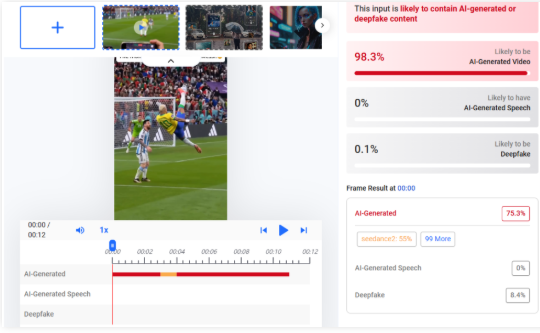
To verify the claim, we searched relevant keywords on Google. However, we found no credible news reports related to the viral video or the claims being made alongside it. We also found no evidence that Brazil and Argentina had played a match against each other during the FIFA World Cup 2026. A closer examination of the footage revealed unusual movements in the legs and body positions of both players, which appeared unnatural and inconsistent with real match footage. These visual anomalies raised suspicions that the video had been generated using artificial intelligence. The video was then analyzed using the AI detection tool Hive Moderation, which indicated a nearly 99 percent probability that the content was AI-generated.
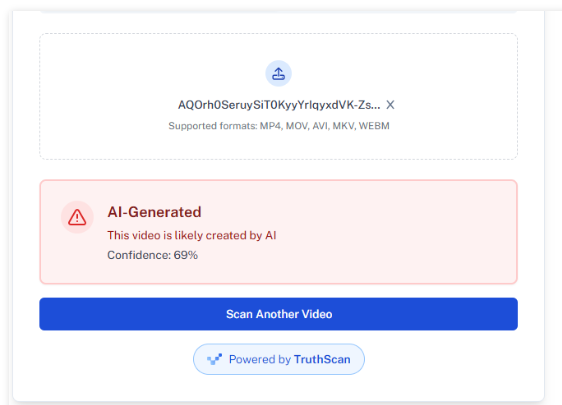
For additional verification, we also examined the clip using Undetectable AI, which similarly indicated a high likelihood that the video had been created using artificial intelligence.
Conclusion
Our research found that the viral claim linking the video to a FIFA World Cup 2026 match between Neymar and Lionel Messi is false. The footage is AI-generated and does not show a real football match.

Related Blogs

Introduction
We consume news from various sources such as news channels, social media platforms and the Internet etc. In the age of the Internet and social media, the concern of misinformation has become a common issue as there is widespread misinformation or fake news on the Internet and social media platforms.
Misinformation on social media platforms
The wide availability of user-provided content on online social media platforms facilitates the spread of misinformation. With the vast population on social media platforms, the information gets viral and spreads all over the internet. It has become a serious concern as such misinformation, including rumours, morphed images, unverified information, fake news, and planted stories, spread easily on the internet, leading to severe consequences such as public riots, lynching, communal tensions, misconception about facts, defamation etc.
Platform-centric measures to mitigate the spread of misinformation
- Google introduced the ‘About this result’ feature’. This allows the users to help with better understand the search results and websites at a glance.
- During the covid-19 pandemic, there were huge cases of misinformation being shared. Google, in April 2020, invested $6.5 million in funding to fact-checkers and non-profits fighting misinformation around the world, including a check on information related to coronavirus or on issues related to the treatment, prevention, and transmission of Covid-19.
- YouTube also have its Medical Misinformation Policy which prevents the spread of information or content which is in contravention of the World Health Organization (WHO) or local health authorities.
- At the time of the Covid-19 pandemic, major social media platforms such as Facebook and Instagram have started showing awareness pop-ups which connected people to information directly from the WHO and regional authorities.
- WhatsApp has a limit on the number of times a WhatsApp message can be forwarded to prevent the spread of fake news. And also shows on top of the message that it is forwarded many times. WhatsApp has also partnered with fact-checking organisations to make sure to have access to accurate information.
- On Instagram as well, when content has been rated as false or partly false, Instagram either removes it or reduces its distribution by reducing its visibility in Feeds.
Fight Against Misinformation
Misinformation is rampant all across the world, and the same needs to be addressed at the earliest. Multiple developed nations have synergised with tech bases companies to address this issue, and with the increasing penetration of social media and the internet, this remains a global issue. Big tech companies such as Meta and Google have undertaken various initiatives globally to address this issue. Google has taken up the initiative to address this issue in India and, in collaboration with Civil Society Organisations, multiple avenues for mass-scale awareness and upskilling campaigns have been piloted to make an impact on the ground.
How to prevent the spread of misinformation?
Conclusion
In the digital media space, there is a widespread of misinformative content and information. Platforms like Google and other social media platforms have taken proactive steps to prevent the spread of misinformation. Users should also act responsibly while sharing any information. Hence creating a safe digital environment for everyone.

SVIMS Director and Vice-Chancellor B. Vengamma lighting a lamp to formally launch the cybercrime awareness programme conducted by the police department for the medical students in Tirupati on Wednesday.
An awareness meet on safe Internet practices was held for the students of Sri Venkateswara University University (SVU) and Sri Venkateswara Institute of Medical Sciences (SVIMS) here on Wednesday.
“Cyber criminals on the prowl can easily track our digital footprint, steal our identity and resort to impersonation,” cyber expert I.L. Narasimha Rao cautioned the college students.
Addressing the students in two sessions, Mr. Narasimha Rao, who is a Senior Manager with CyberPeace Foundation, said seemingly common acts like browsing a website, and liking and commenting on posts on social media platforms could be used by impersonators to recreate an account in our name.
Turning to the youth, Mr. Narasimha Rao said the incognito mode and Virtual Private Network (VPN) used as a protected network connection do not ensure total privacy as third parties could still snoop over the websites being visited by the users. He also cautioned them tactics like ‘phishing’, ‘vishing’ and ‘smishing’ being used by cybercriminals to steal our passwords and gain access to our accounts.
“After cracking the whip on websites and apps that could potentially compromise our security, the Government of India has recently banned 232 more apps,” he noted.
Additional Superintendent of Police (Crime) B.H. Vimala Kumari appealed to cyber victims to call 1930 or the Cyber Mitra’s helpline 9121211100. SVIMS Director B. Vengamma stressed the need for caution with smartphones becoming an indispensable tool for students, be it for online education, seeking information, entertainment or for conducting digital transactions.

Executive Summary
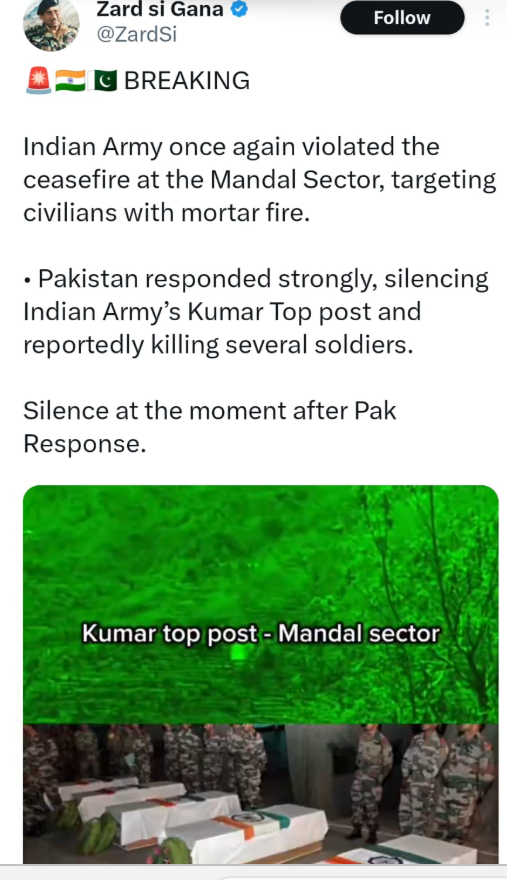
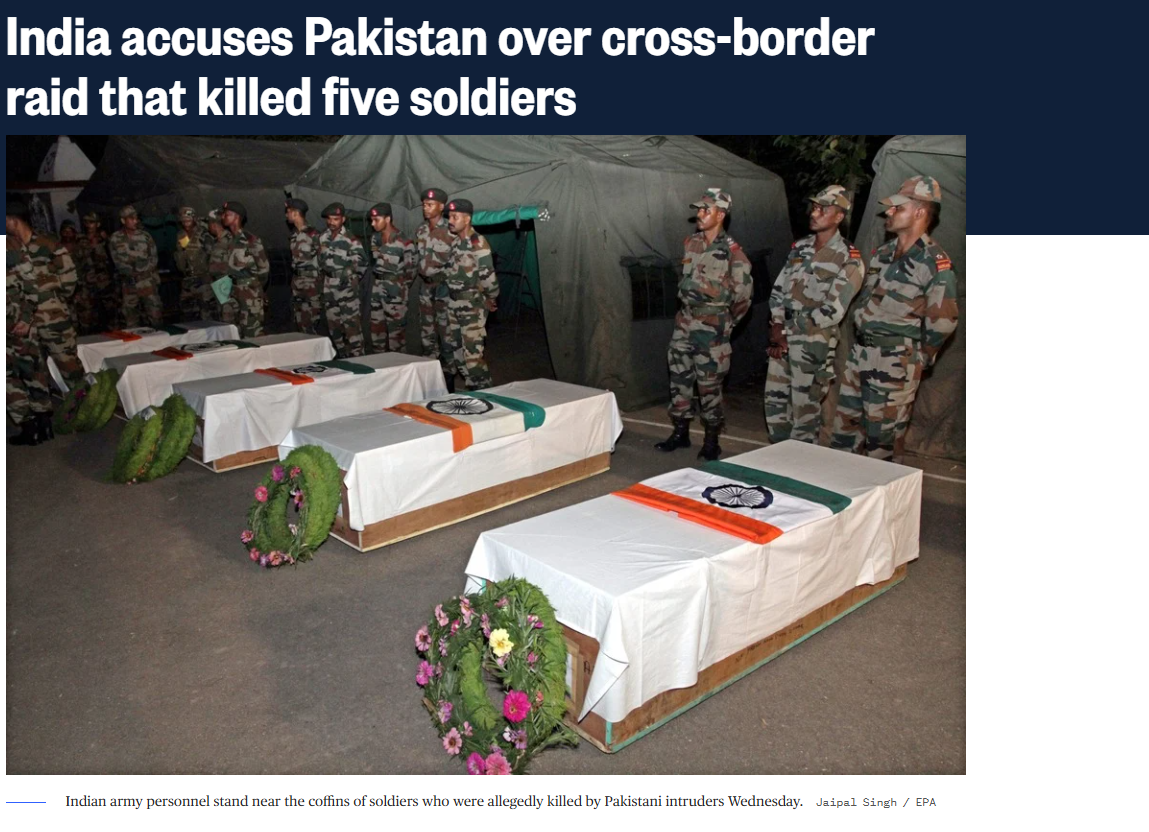
Social media users, particularly Pakistani propaganda accounts, shared an image showing coffins wrapped in the Indian tricolour and claimed that India violated the ceasefire along the Line of Control (LoC). According to the posts, Pakistan retaliated with heavy firing, captured the Indian Army’s Kumar Top post, and several Indian soldiers were killed in the exchange.
One user wrote, “Breaking News: Indian Army once again violated the ceasefire in the Mandal sector, targeting civilians with mortar shelling. Pakistan responded strongly, captured the Indian Army’s Kumar Top post, and several soldiers were reportedly killed. Calm has now been restored after Pakistan’s response.”
Fact Check
Research by CyberPeace found the viral claim to be false. Using reverse image search, we traced the viral photo to the Shutterstock website. The image description states that it was taken on August 6, 2013, and shows Indian Army personnel standing near the coffins of soldiers who were killed by Pakistani infiltrators at a brigade headquarters in Poonch, located about 240 km from Jammu. This confirms that the image is old and unrelated to recent developments along the Line of Control.
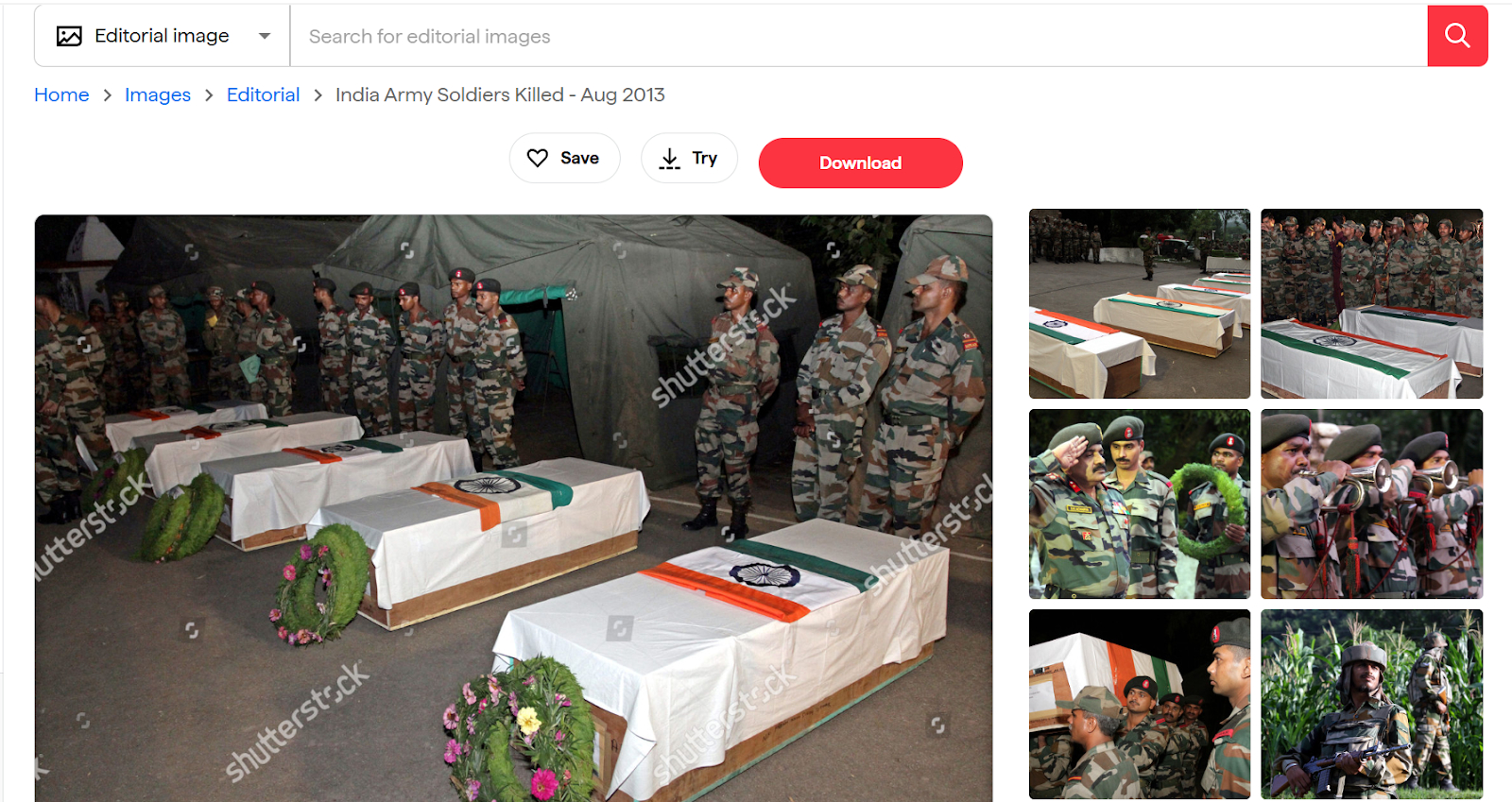
Further verification led us to a report published by NBC News on August 8, 2013, which also featured the same visual in connection with the 2013 cross-border attack.
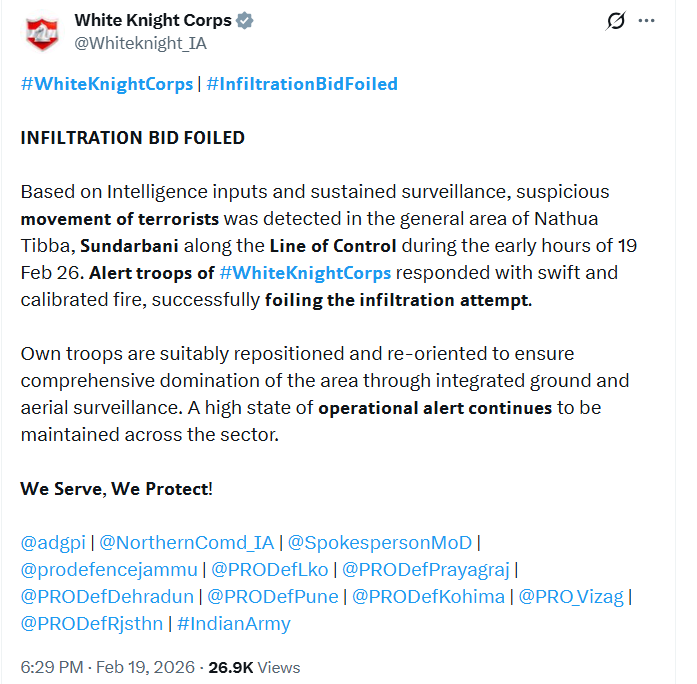
Additionally, posts from the official X (formerly Twitter) handle of the Indian Army 16 Corps (White Knight Corps) stated that based on intelligence inputs and continuous surveillance, suspicious terrorist activity was detected near Nathua Tibba in the Sunderbani sector close to the LoC in the early hours of February 19, 2026. Alert troops responded promptly and successfully foiled the infiltration attempt. The Army also confirmed that operational vigilance remains high across the sector. However, there were no reports of casualties due to Pakistani firing.
Conclusion:
The viral image showing coffins of Indian soldiers is not recent but dates back to 2013. There are no confirmed reports of casualties from Pakistani firing along the Line of Control in the current context. Therefore, the claim circulating on social media is misleading.
