
#FactCheck:AI-generated video falsely shared as thief evading police in Indore
Executive Summary
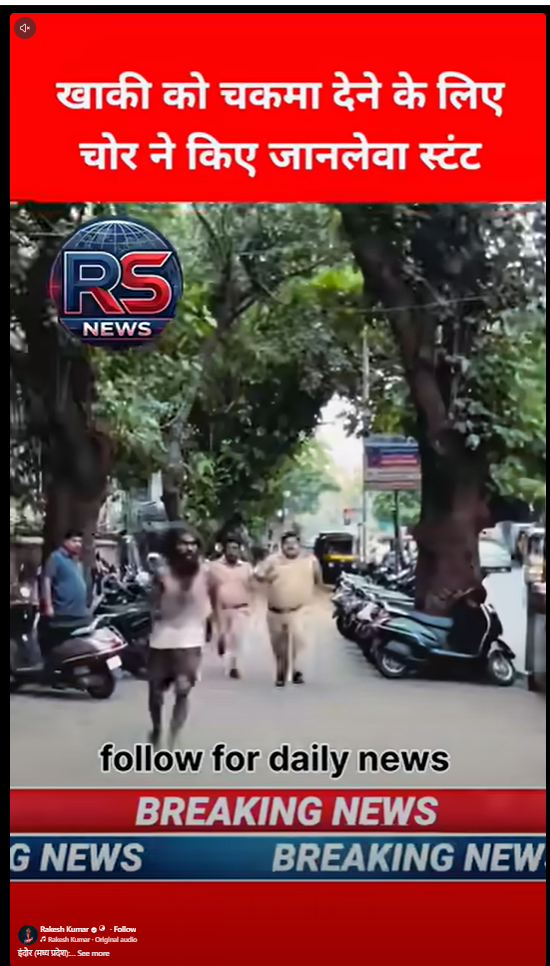
A video is being shared on social media with the claim that a thief in Indore, Madhya Pradesh, performed dangerous stunts to evade the police. In the viral video, several police personnel can be seen chasing a man. The man appears to dodge vehicles on the road to escape the police and then climbs onto the roof of a moving bus. He later jumps from the bus and climbs onto a roadside hoarding. The video is being shared with the claim that a clever thief gave the police a tough time in Indore. Research by CyberPeace Research Wing found that the video is AI-generated and is being shared with a misleading claim.
Claim:
A high-voltage, filmy-style chase between police and a clever thief took place in a busy market in Indore. The police later surrounded the accused and detained him. Archive of the post can be seen here. Similar posts can be seen here and here.
https://www.facebook.com/reel/1356598853312128
Fact Check:
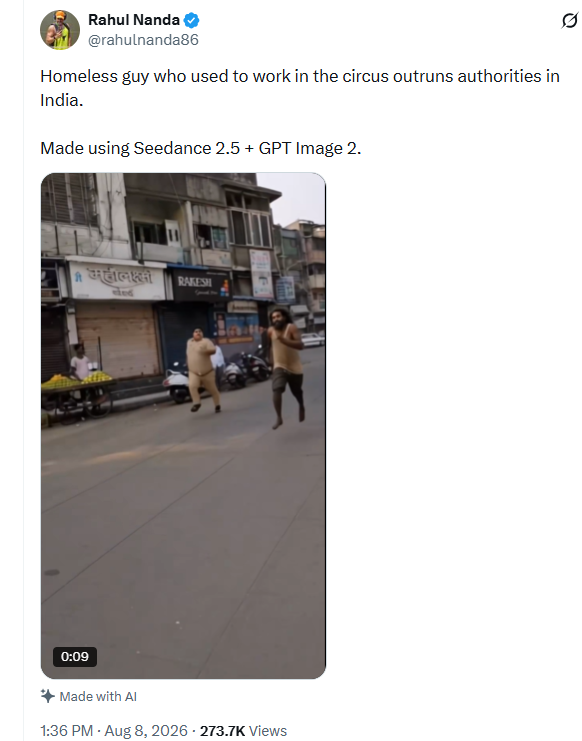
To verify the claim, we conducted a reverse image search of keyframes from the viral video using Google Lens. During the search, we found the same video posted on August 8 on the X account of a user named Rahul Nanda. The post stated that the video had been created using AI.
https://x.com/rahulnanda86/status/2086001127762657614
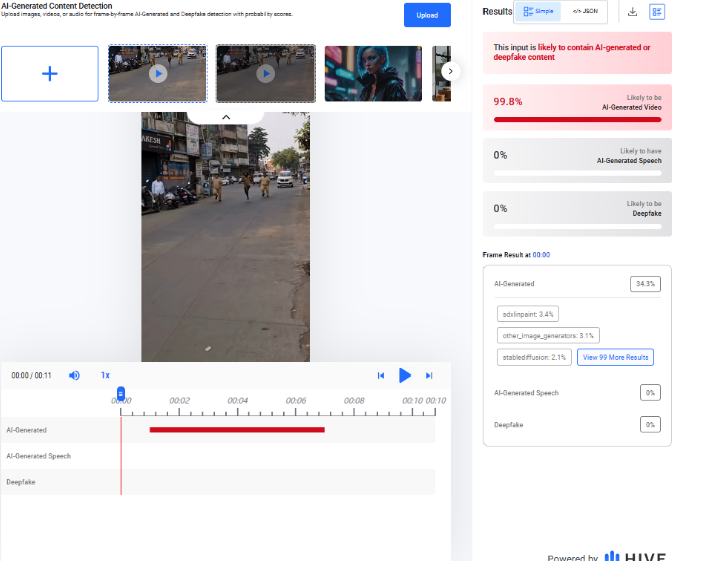
We then analysed the viral video using the AI detection tool Hive Moderation. The tool gave the video a 99.8 per cent score for being potentially AI-generated.
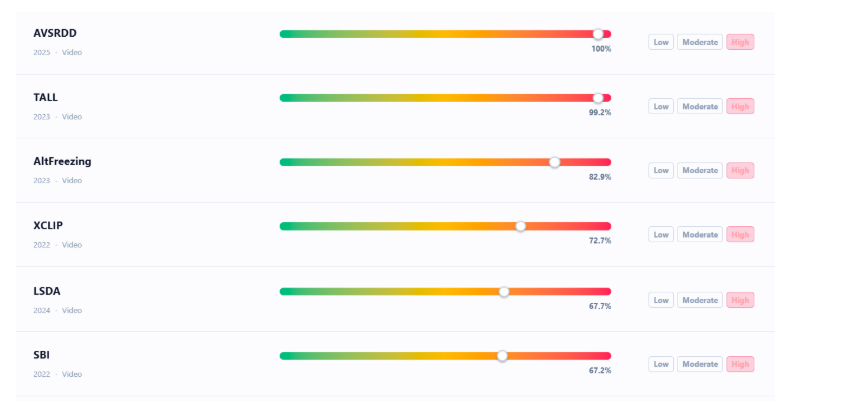
As part of the research, we also checked the video using another AI detection tool, Deepfake-O-Meter. Six different detectors on the tool indicated a high probability that the video was AI-generated.
Conclusion
The evidence gathered during our research establishes that the viral video claiming to show a thief evading police in Indore is AI-generated. Therefore, the claim is misleading.

Related Blogs

Introduction
Over the past few months, cybercriminals have upped the ante with highly complex methods targeting innocent users. One such scam is a new one that exploits WhatsApp users in India and globally. A seemingly harmless picture message is the entry point to stealing money and data. Downloading seemingly harmless images via WhatsApp can unknowingly install malware on your smartphone. This malicious software can compromise your banking applications, steal passwords, and expose your personal identity. With such malware-laced instant messages now making headlines, it is advised for netizens to exercise extreme caution while handling media received on messaging platforms.
How Does the WhatsApp Photo Scam Work?
Cybercriminals began embedding malicious code in images being shared on WhatsApp. Here is how the attack typically works:
- The user receives a WhatsApp message from an unknown number with an image.
- The image may appear harmless—a greeting, meme, or holiday card—but it's packed with hidden malware.
- When the user taps to download the image, the malware gets installed on the phone in silent mode.
- Once installed, the malware is able to capture keystrokes, read messages, swipe banking applications, swipe credentials, and even hijack device functionality.
- Allegedly, in its advanced versions, it can exploit two-factor authentication (2FA) and make unauthorised transactions.
Who Is Being Targeted?
This scam targets both Android and iPhone users, with a focus on vulnerable groups like senior citizens, busy workers during peak seasons, and members of WhatsApp groups flooded with forwarded messages. Experts warn that a single careless click is enough to compromise an entire device.
What Can the Malware Do?
Upon installation, the malware grants hackers a terrifying level of access:
- Track user activity via keylogging or screen capture.
- Pilfer banking credentials and initiate fund transfers automatically.
- Obtain SMS or app-based 2FA codes, evading security layers.
- Clone identity information, such as Aadhaar details, digital wallets, and email access.
- Control device operations, including the camera and microphone.
This level of intrusion can result in not just financial loss but long-term digital impersonation or blackmail.
Safety Measures for WhatsApp Users
- Never Download Media from Suspicious Numbers
Do not download any files or pictures, even if the content appears to be familiar, unless you have faith in the source. Spread this advice among family members, particularly the older generation.
- Turn off Auto-Download in WhatsApp Settings
Navigate to Settings > Storage and Data > Media Auto-Download. Switch off auto-download for mobile data, Wi-Fi, and roaming.
- Install and Update Mobile Security Apps
Ensure your phone is equipped with a good antivirus or mobile security app that is updated from time to time.
- Block and Report Potential Scammers
WhatsApp offers the ability to block and report senders in a straightforward manner. This ensures that it notifies the platform and others as well.
- Educate Your Community
Share your knowledge on cyber hygiene with family, friends, and colleagues. Many people fall victim simply because they aren't aware of the risks, staying informed and spreading the word can make a big difference.
Advisories and Response
The Indian Cybercrime Coordination Centre (I4C) and other state cyber cells have released several alerts on increasing fraud via messaging platforms. Law enforcement agencies are appealing to the public not only to be vigilant but also to report any incident at once through the National Cybercrime Reporting Portal (cybercrime.gov.in).
Conclusion
The WhatsApp photo scam is a stark reminder that not all dangers come with a warning. A picture can now be a Trojan horse, propagating silently from device to device and draining personal money. Do not engage with unwanted media, refresh and update your privacy and security settings. Cyber criminals survive on neglect and ignorance, but through digital hygiene and vigilance, we can fight against these types of emerging threats.
References
- https://www.opswat.com/blog/how-emerging-image-based-malware-attacks-threaten-enterprise-defenses
- https://www.indiatvnews.com/technology/news/whatsapp-photo-scam-alert-downloading-random-images-could-cost-you-big-2025-05-06-988855
- https://www.hindustantimes.com/india-news/what-is-the-whatsapp-image-scam-and-how-can-you-stay-safe-from-it-101744353412848.html
- https://faq.whatsapp.com/898107234497196/?helpref=uf_share
- https://www.welivesecurity.com/en/malware/malware-hiding-in-pictures-more-likely-than-you-think/
- https://faq.whatsapp.com/573786218075805
- https://www.reversinglabs.com/blog/malware-in-images

Executive Summary
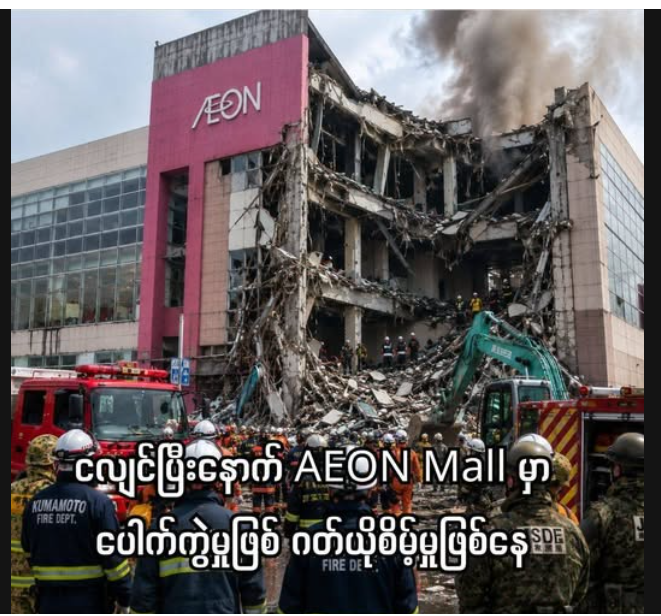
An image is being widely circulated on social media with the claim that it shows the destruction caused by an explosion at a mall in Japan following a 7.1-magnitude earthquake in July 2026. The viral image shows a shopping complex in a severely damaged condition, allegedly after the incident. CyberPeace Research Wing’s research found that the viral image does not show damage caused by an explosion or earthquake at any mall in Japan. The visuals in the image do not match authentic photographs of the affected shopping complex. The research further revealed that the viral image was created using Artificial Intelligence (AI).
Claim
A social media post claims that the AEON Mall in Japan exploded after the Kumamoto earthquake and a gas leak was suspected. The post, published in Burmese language on Facebook on July 29, 2026, shared an image claiming to show the aftermath of the incident at the mall.
FactCheck
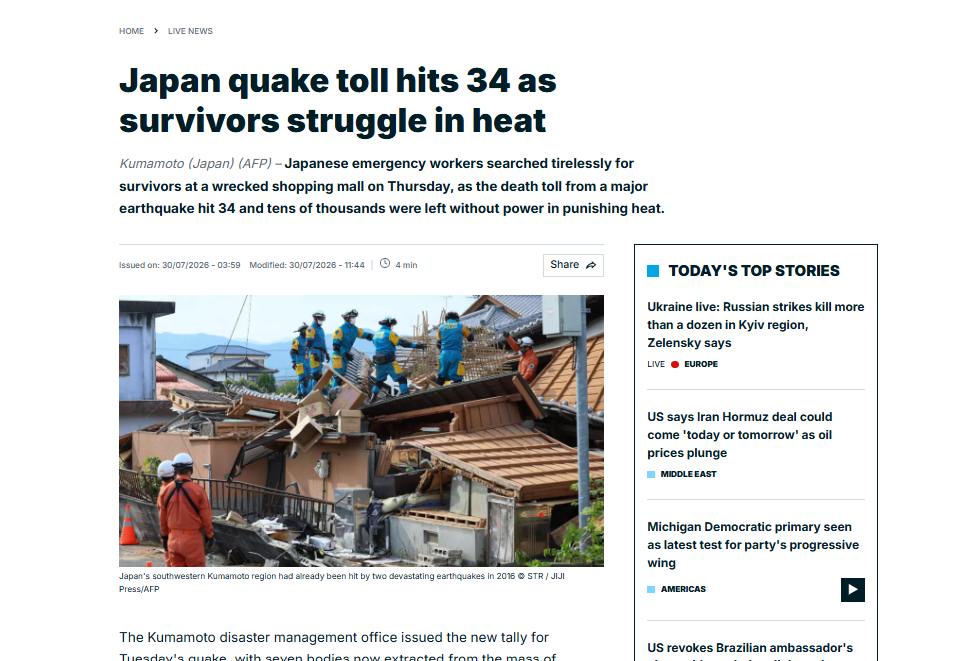
To verify the authenticity of the viral claim, we conducted a Google search using relevant keywords. During the search, we found a report published by France24, which stated that the Kumamoto disaster management office released updated figures following the earthquake. According to the report, seven bodies were recovered from the debris, steel and wires of the Aeon shopping mall after a suspected gas blast. The report further stated that eight people were confirmed dead at the Nippon Paper Industries factory in Yatsushiro city, where part of a red-and-white smokestack collapsed. Following the 7.1-magnitude earthquake, five others were reported to be in critical condition, while around 9,500 residents were staying in evacuation centres in Kyushu, southwestern Japan.
http://france24.com/en/live-news/20260730-up-to-23-feared-dead-in-japan-quake
However, the viral image showed several visual inconsistencies and was flagged as AI-generated.
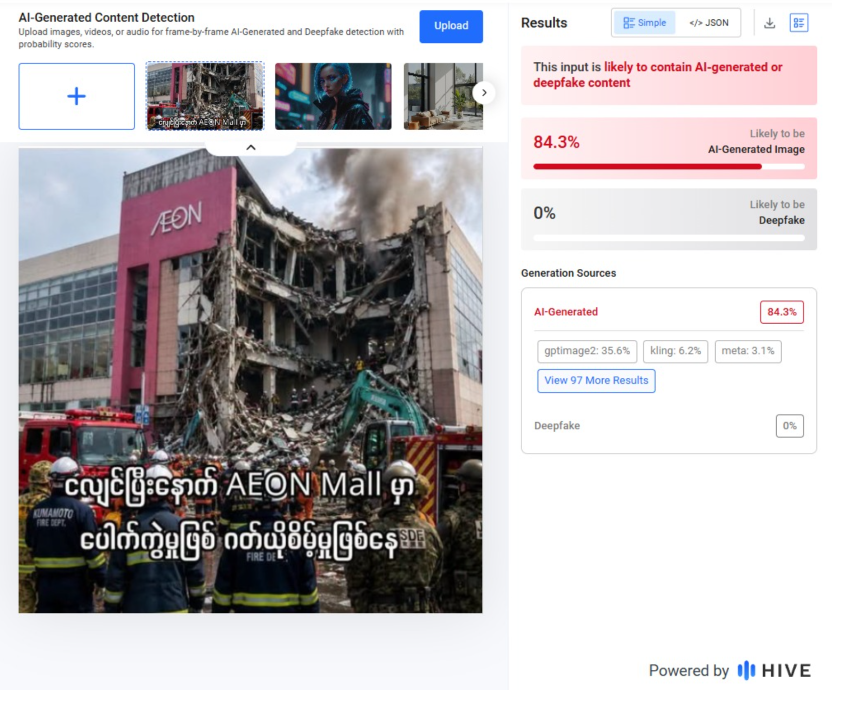
To further examine the authenticity of the image, we scanned it using the AI detection tool Hive Moderation. The results indicated that the image had an 84 percent probability of being AI-generated.
We also analysed the image using Human Meter, where the results showed a 75 percent probability that the image was AI-generated.

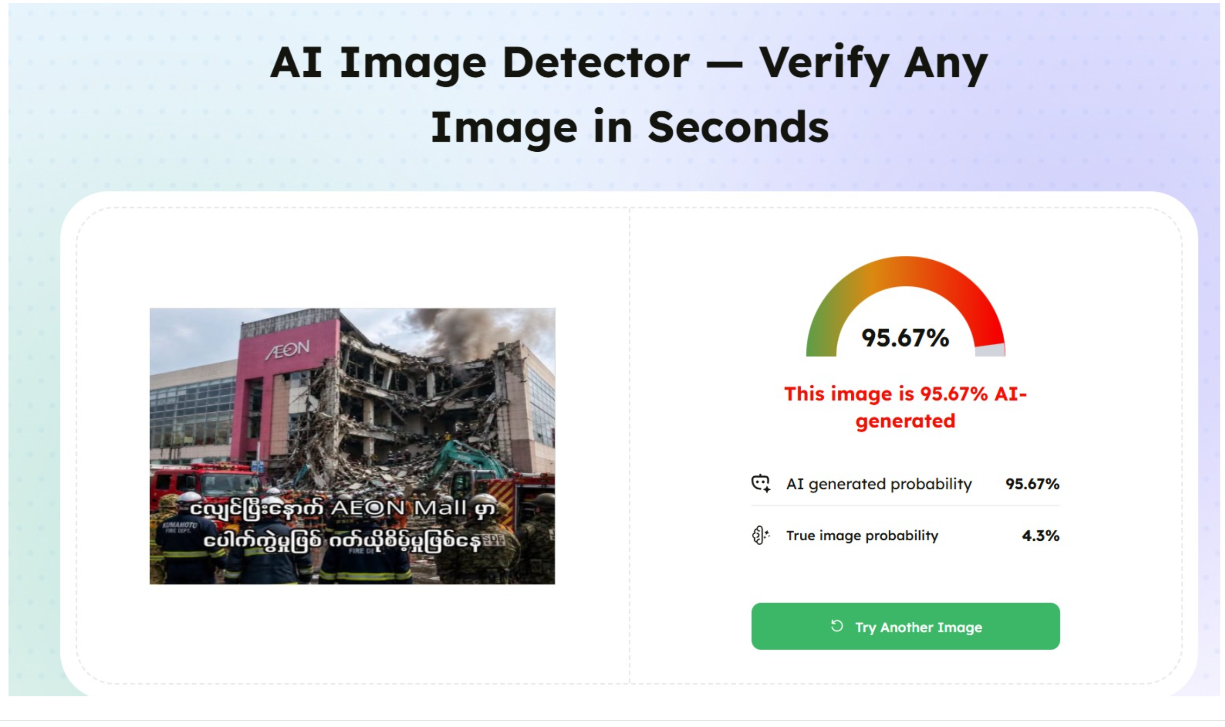
In the final stage of the research, we scanned the image using another AI detection tool, AI Image Detector. The tool indicated that the image had a 95 percent probability of being AI-generated.
Conclusion:
The research established that the viral image is not an authentic photograph of the damage caused by the Kumamoto earthquake or any explosion at an Aeon Mall in Japan. The image contains multiple inconsistencies and was found to be AI-generated. Therefore, the claim linking the image to the Japan earthquake incident is false.
Executive Summary
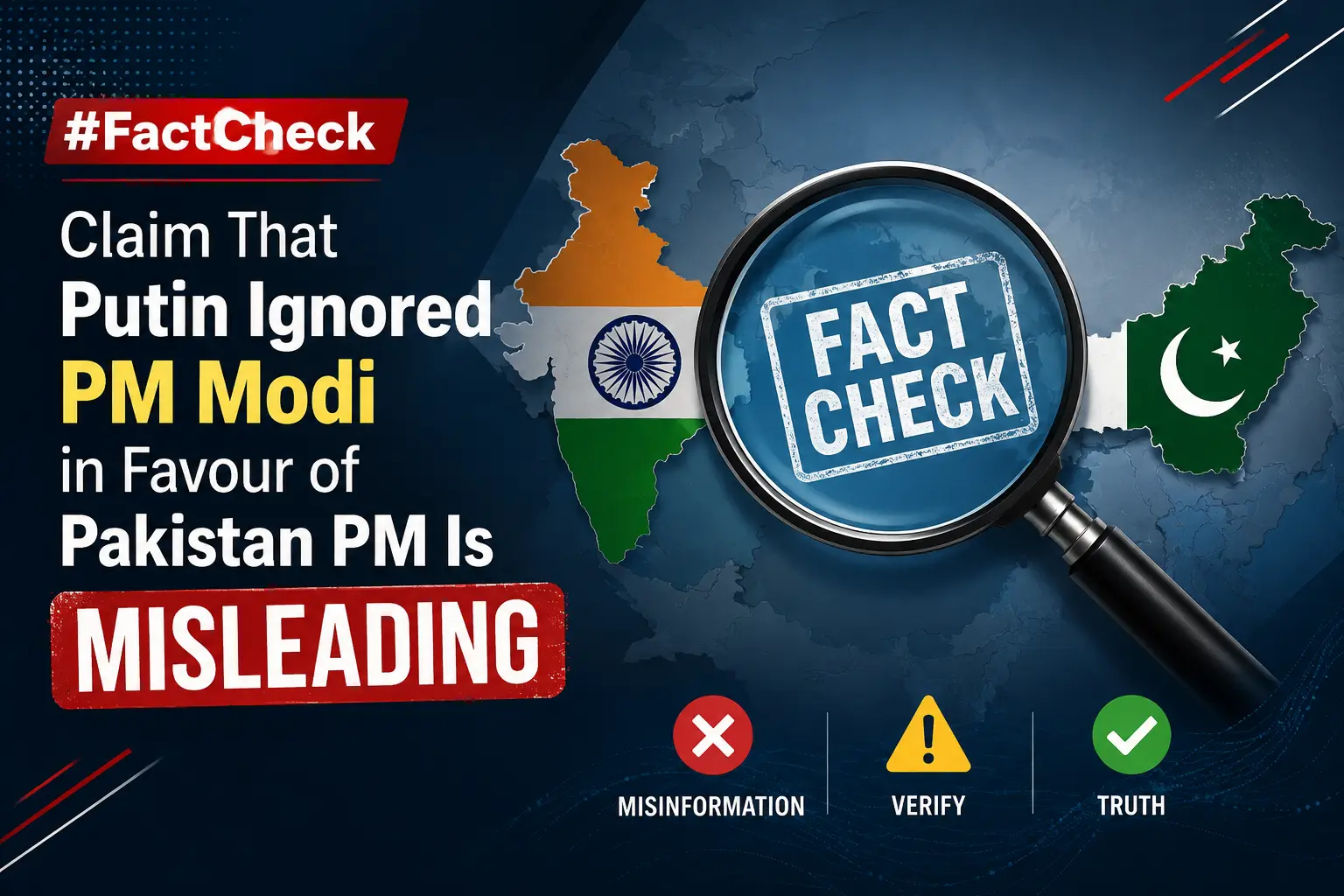
A Pakistani propaganda account on social media has claimed that Russian President Vladimir Putin ignored Indian Prime Minister Narendra Modi and stood alongside the Pakistani Prime Minister. Research by CyberPeace’s research wing found that PM Modi and President Putin held a bilateral meeting on the sidelines of the SCO Summit in Bishkek, Kyrgyzstan. During the meeting, the two leaders exchanged warm greetings and discussed several issues, including the India-Russia strategic partnership.
Claim:
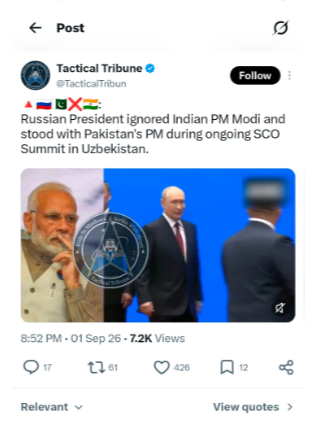
A social media post claims that Russian President Vladimir Putin ignored Prime Minister Narendra Modi and stood alongside the Pakistani Prime Minister.
https://x.com/TacticalTribun/status/2094808040973172786
Fact Check:
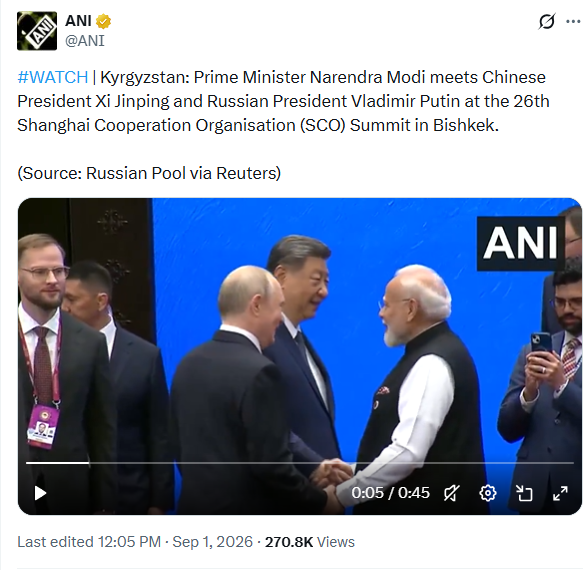
To verify the truth behind the viral claim, we searched Google using relevant keywords related to Prime Minister Narendra Modi’s official visit to Kyrgyzstan. During the search, we found a video posted on ANI’s X handle on September 1, 2026. According to the video, Prime Minister Narendra Modi met Chinese President Xi Jinping and Russian President Vladimir Putin in Bishkek during the 26th Shanghai Cooperation Organisation (SCO) Summit.
https://x.com/ANI/status/2094675518897692896
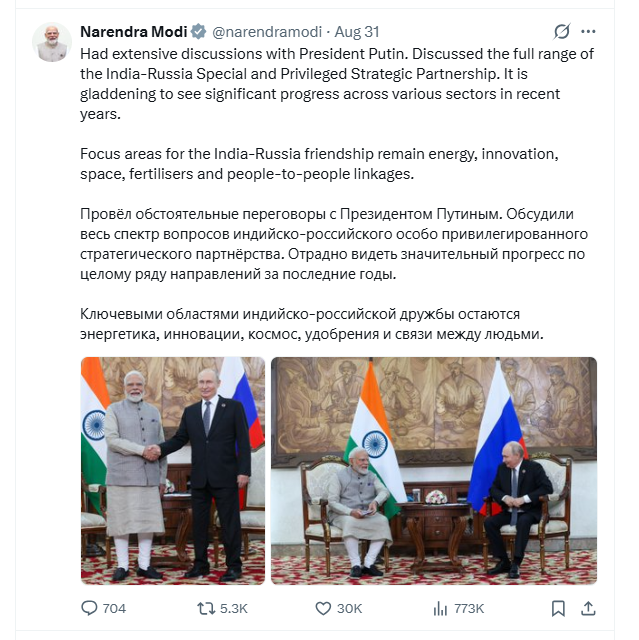
In the next step of our research, we scanned Prime Minister Narendra Modi’s X account, where we found a post dated August 31, 2026. In the post, PM Modi wrote, “Had extensive discussions with President Putin. Discussed the full range of the India-Russia Special and Privileged Strategic Partnership. It is gladdening to see significant progress across various sectors in recent years. Focus areas for the India-Russia friendship remain energy, innovation, space, fertilisers and people-to-people linkages.”
https://x.com/narendramodi/status/2094433881714032725?s=20
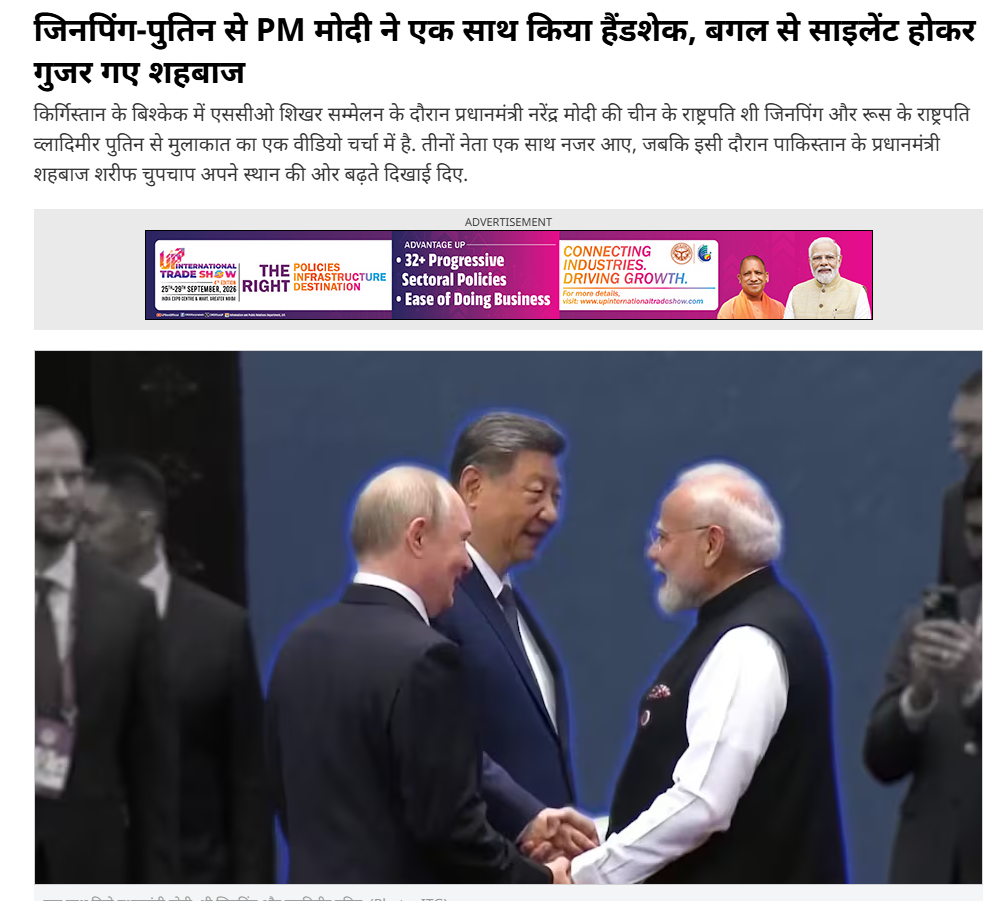
At the end of our research, we found a report published on the Aaj Tak website on September 1, 2026. According to the report, Prime Minister Narendra Modi was in Bishkek, the capital of Kyrgyzstan, where he attended the Shanghai Cooperation Organisation (SCO) Summit. Several leaders of the organisation, including Chinese President Xi Jinping, Russian President Vladimir Putin and Pakistani Prime Minister Shehbaz Sharif, also attended the summit. During the summit, a moment was captured in which PM Modi warmly greeted Chinese President Xi Jinping and Russian President Vladimir Putin together, while Shehbaz Sharif was seen quietly walking past them.
Conclusion:
Our research established that the claim that Russian President Vladimir Putin ignored Prime Minister Narendra Modi and gave preference to the Pakistani Prime Minister is misleading. The viral post presents video footage from different occasions out of context. In reality, Prime Minister Narendra Modi and President Putin held a bilateral meeting, during which the two leaders discussed several key issues, including the India-Russia strategic partnership.
