
#FactCheck: AI-Generated Video Falsely Shared as Sunny Deol’s Leaked Hanuman Look from ‘Ramayanam’
Executive Summary
A video of actor Sunny Deol, linked to the film ‘Ramayanam’, which was released around Diwali, is going viral on social media. The video shows Sunny Deol getting ready and undergoing makeup to portray Lord Hanuman. It is being shared with the claim that the video shows Sunny Deol’s look leaked from the sets of ‘Ramayanam’ and that he will appear in the film in this avatar. However, CyberPeace Research found that the viral video was generated using artificial intelligence (AI).
Claim:
An Instagram user, ‘ajitsamachar’, shared the video on November 7, 2026, with the caption: “Sunny Deol as Hanuman, look leaked from the Ramayan film.”
https://www.instagram.com/reels/DfcW6LjhOF5/

Fact Check
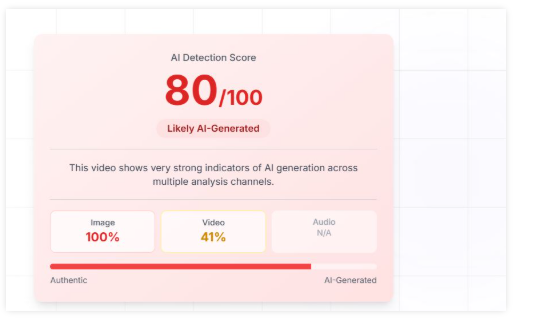
We also used another tool, ‘AI Video Detector’, to analyse the video. The tool indicated that the video was up to 80 per cent likely to be AI-generated.
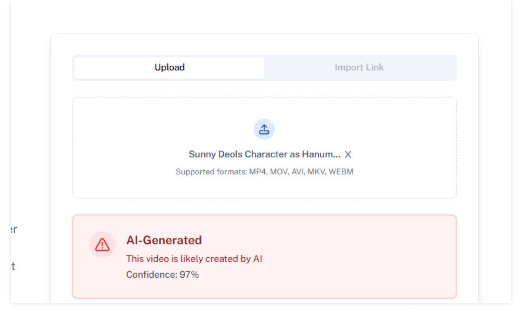
When we analysed the video using another AI detection tool, ‘Undetectable AI’, it indicated a 97 per cent likelihood that the video was AI-generated.
Conclusion
Our research found that the video purportedly showing Sunny Deol getting ready to portray Hanuman in the film ‘Ramayanam’ is not authentic. In fact, the viral video has been generated using artificial intelligence (AI).

Related Blogs

Introduction
In an era where organisations are increasingly interdependent through global supply chains, outsourcing and digital ecosystems, third-party risk has become one of the most vital aspects of enterprise risk management. The SolarWinds hack, the MOVEit vulnerabilities and recent software vendor attacks all serve as a reminder of the necessity to enhance Third-Party Risk Management (TPRM). As cyber risks evolve and become more sophisticated and as regulatory oversight sharpens globally, 2025 is a transformative year for the development of TPRM practices. This blog explores the top trends redefining TPRM in 2025, encompassing real-time risk scoring, AI-driven due diligence, harmonisation of regulations, integration of ESG, and a shift towards continuous monitoring. All of these trends signal a larger movement towards resilience, openness and anticipatory defence in an increasingly dependent world.
Real-Time and Continuous Monitoring becomes the Norm
The old TPRM methods entailed point-in-time testing, which typically was an annual or onboarding process. By 2025, organisations are shifting towards continuous, real-time monitoring of their third-party ecosystems. Now, authentic advanced tools are making it possible for companies to take a real-time pulse of the security of their vendors by monitoring threat indicators, patching practices and digital footprint variations. This change has been further spurred by the growth in cyber supply chain attacks, where the attackers target vendors to gain access to bigger organisations. Real-time monitoring software enables the timely detection of malicious activity, equipping organisations with a faster defence response. It also guarantees dynamic risk rating instead of relying on outdated questionnaire-based scoring.
AI and Automation in Risk Assessment and Due Diligence
Manual TPRM processes aren't sustainable anymore. In 2025, AI and machine learning are reshaping the TPRM lifecycle from onboarding and risk classification to contract review and incident handling. AI technology can now analyse massive amounts of vendor documentation and automatically raise red flags on potential issues. Natural language processing (NLP) is becoming more common for automated contract intelligence, which assists in the detection of risky clauses or liability gaps or data protection obligations. In addition, automation is increasing scalability for large organisations that have hundreds or thousands of third-party relationships, eliminating human errors and compliance fatigue. However, all of this must be implemented with a strong focus on security, transparency, and ethical AI use to ensure that sensitive vendor and organisational data remains protected throughout the process.
Risk Quantification and Business Impact Mapping
Risk scoring in isolation is no longer adequate. One of the major trends for 2025 is the merging of third-party risk with business impact analysis (BIA). Organisations are using tools that associate vendors to particular business processes and assets, allowing better knowledge of how a compromise of a vendor would impact operations, customer information or financial position. This movement has resulted in increased use of risk quantification models, such as FAIR (Factor Analysis of Information Risk), which puts dollar values on risks associated with vendors. By using the language of business value, CISOs and risk officers are more effective at prioritising risks and making resource allocations.
Environmental, Social, and Governance (ESG) enters into TPRM
As ESG keeps growing on the corporate agenda, organisations are taking TPRM one step further than cybersecurity and legal risks and expanding it to incorporate ESG-related factors. In 2025, organisations evaluate if their suppliers have ethical labour practices, sustainable supply chains, DEI (Diversity, Equity, Inclusion) metrics and climate impact disclosures. This growth is not only a reputational concern, but also a third-party non-compliance with ESG can now invoke regulatory or shareholder action. ESG risk scoring software and vendor ESG audits are becoming components of onboarding and performance evaluations.
Shared Assessments and Third-Party Exchanges
With the duplication of effort by having multiple vendors respond to the same security questionnaires, the trend is moving toward shared assessments. Systems such as the SIG Questionnaire (Standardised Information Gathering) and the Global Vendor Exchange allow vendors to upload once and share with many clients. This change not only simplifies the due diligence process but also enhances data accuracy, standardisation and vendor experience. In 2025, organisations are relying more and more on industry-wide vendor assurance platforms to minimise duplication, decrease costs and maximise trust.
Incident Response and Resilience Partnerships
Another trend on the rise is bringing vendors into incident response planning. In 2025, proactive organisations address major vendors as more than suppliers but as resilience partners. This encompasses shared tabletop exercises, communication procedures and breach notification SLAs. With the increasing ransomware attacks and cloud reliance, organisations are now calling for vendor-side recovery plans, RTO and RPO metrics. TPRM is transforming into a comprehensive resilience management function where readiness and not mere compliance takes centre stage.
Conclusion
Third-Party Risk Management in 2025 is no longer about checklists and compliance audits; it's a dynamic, intelligence-driven and continuous process. With regulatory alignment, AI automation, real-time monitoring, ESG integration and resilience partnerships leading the way, organisations are transforming their TPRM programs to address contemporary threat landscapes. As digital ecosystems grow increasingly complex and interdependent, managing third-party risk is now essential. Early adopters who invest in tools, talent and governance will be more likely to create secure and resilient businesses for the AI era.
References
- https://finance.ec.europa.eu/publications/digital-operational-resilience-act-dora_en
- https://digital-strategy.ec.europa.eu/en/policies/nis2-directive
- https://www.meity.gov.in/data-protection-framework
- https://securityscorecard.com
- https://sharedassessments.org/sig/
- https://www.fairinstitute.org/fair-model
Introduction
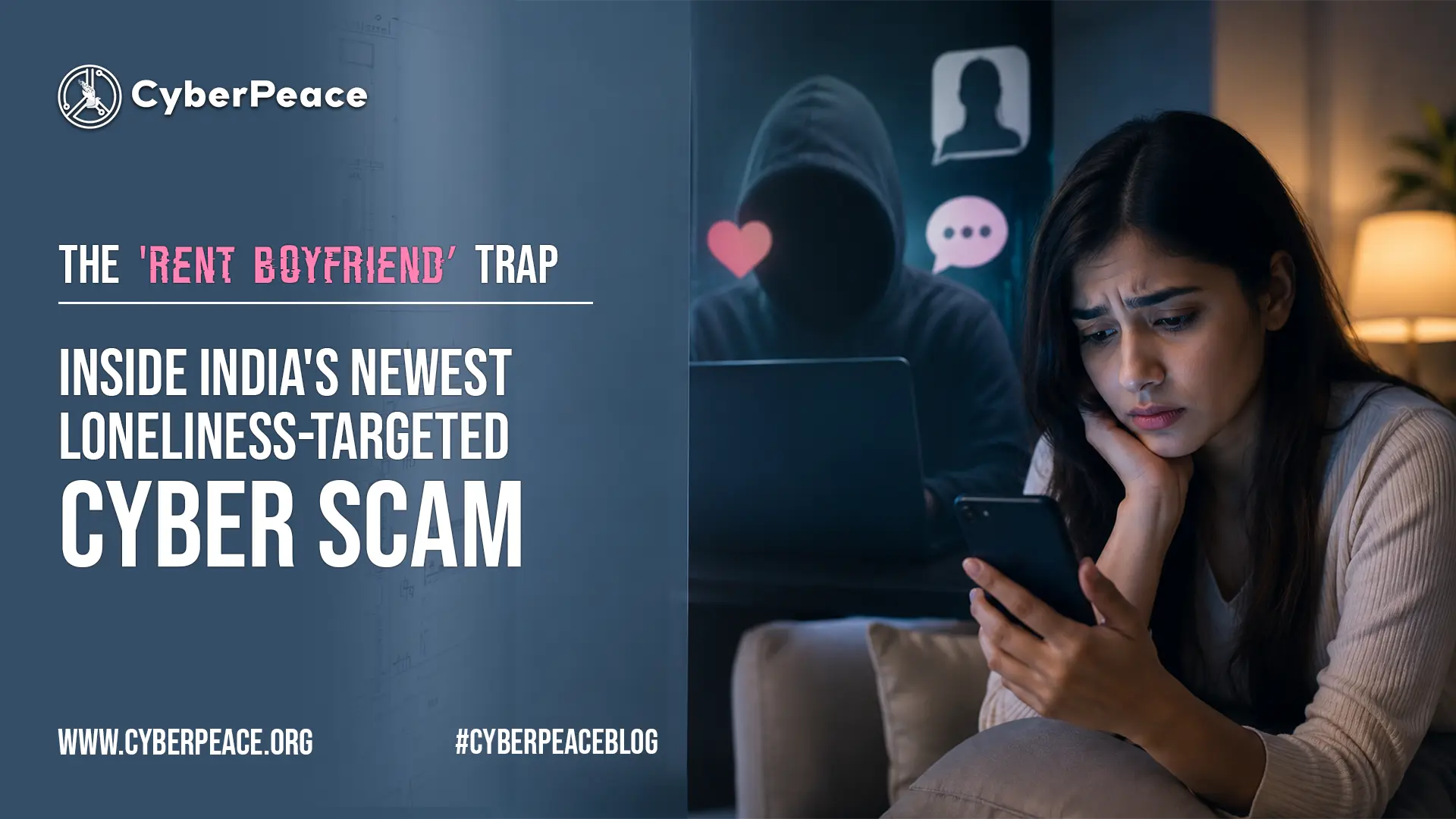
On August 8, 2026, Hyderabad Police Commissioner V.C. Sajjanar posted an unusual warning on X: colourful posters offering a "handsome guy" to join you for coffee or a movie at 50% off: it was not a quirky dating startup but a calculated cyber fraud. Within hours, the "Rent Boyfriend" alert had gone viral, pulling back the curtain on a scam that blends India's growing loneliness economy, classic confidence tricks, and AI-generated imagery. Here is what's actually happening, why it works, and how to protect yourself.
A Trend Growing Fast: In India and Worldwide
Paid-companionship culture itself isn't new. "Rent a friend" services began in Japan and later China, where apps let people hire a company for a movie, a walk, or a family event without romantic or sexual expectations. The idea reached India as early as 2018, when Mumbai's "Rent A Guy" app began recruiting men for casual outings; by 2022, similar pages like "Toy Boy" and "Hire a Friend" had spread to Bengaluru, and Valentine's Day 2025 saw ₹389 "rent a boyfriend" posters plastered across the city. Fraudsters have now hijacked this recognisable, socially normalised idea and weaponised it: the Hyderabad ads promised specific packages, ₹499 for a coffee date, ₹1,249 for a movie, ₹1,999 for a wedding, and ₹4,499 for ten hours collected via QR codes and wallets, then vanished. The underlying numbers show why this template is so attractive to criminals. Complaints filed on India's National Cyber Crime Reporting Portal jumped from roughly 4.5 lakh in 2021 to about 2.3 million by 2026, and the country now logs an estimated 4,000-plus cybercrime complaints a day. Globally, romance and "confidence fraud" are some of the costliest online crimes: the FBI's Internet Crime Complaint Center recorded 23,159 romance-fraud complaints in 2025 worth $929.3 million, which is a 38% jump over 2024, while the UK logged over £102 million in losses and Australia and Canada reported tens of millions more. Crucially, IC3's 2025 report flagged AI as an accelerant for the first time, attributing roughly $19 million in romance-scam losses directly to AI-generated profiles, images and chat exactly the "AI-generated photographs" Hyderabad Police say the Rent Boyfriend network used.
Case Studies
The Rent Boyfriend network is one data point in a wider, well-documented pattern in India:
- Hyderabad, August 2026: Fraudsters ran Instagram, Telegram and Facebook pages using stock or AI-generated photos of "attractive men", collected advance payments and security deposits, and then blocked victims, the case that prompted this advisory.
- Jaipur, 2026: A honey-trap and extortion ring allegedly used AI-manipulated videos and images to blackmail a businessman out of nearly ₹90 lakh, with police examining how far synthetic media was used to fabricate compromising content.
- Mumbai: A gang was arrested for cheating a woman out of ₹16.18 lakh in gold and cash after promising to "reunite" her with a lost partner, a variant that exploits the same emotional vulnerability through a different pretext.
- Gujarat, 2025: A social media influencer with over 10 lakh followers was arrested for allegedly honey-trapping and blackmailing a builder, illustrating how organised such rackets have become.
These sit alongside a global backdrop where FBI data shows confidence and romance fraud disproportionately drains people over 60 (63% of US losses in 2025) even as India's version increasingly targets young women and students, a sign the tactic is being localised for different demographics rather than disappearing.
Why It Works: The Psychology of Loneliness and Grooming
Researchers who study romance-fraud victims consistently find that loneliness, a tendency toward idealised romantic beliefs, and a need for social connection are the strongest predictors of victimisation. Scammers exploit this through a well-rehearsed grooming arc: rapid, excessive flattery ("love bombing") to create instant intimacy; mirroring the target's interests and values to seem like a perfect match; gently discouraging outside opinions so doubts don't surface; and only then introducing a financial ask, framed as something small and reasonable — a booking fee or a security deposit precisely because it feels low-stakes compared to a direct cash demand. The "package" pricing in the Rent Boyfriend ads (₹499 for coffee, scaling up to ₹4,499) mimics legitimate e-commerce, which lowers a target's guard further. Once payment is made and blocked, many victims feel too embarrassed to report it — a shame response researchers and police repeatedly flag as the biggest reason such scams are under-reported.
Red Flags and What To Do?
Red flags to watch for:
- Companionship or dating offers with attractive stock/AI-style photos and steep "discounts"
- Contact only through DMs, with no verifiable business identity, address or reviews.
- Requests for advance payment, "security deposits", or booking fees via UPI/QR code before any service is delivered.
- Reluctance to do a video call or a video call that looks slightly off (a common AI/deepfake tell).
- Pressure to move fast, share personal photos, or keep the interaction secret from friends and family.
Precautions:
- Never send money to confirm a booking with an unverified individual or page.
- Avoid sharing personal photographs, phone numbers, addresses or financial details with strangers online.
- Don't meet anyone in person whom you've only interacted with through such ads.
- Parents should stay engaged with what their children see and who they talk to on social media.
If you suspect a scam or have lost money: Don't panic and don't pay more to "fix" it. Stop all contact, save screenshots and payment records, and call the 1930 cybercrime helpline or file a complaint at cybercrime.gov.in immediately — reporting within the first "golden hour" significantly improves the chance of freezing transferred funds before they're withdrawn.
The Government, Platform and Legal Angle
India already has legal tools for this, though enforcement lags the pace of the fraud. Cheating by personation online is punishable under Section 66D of the IT Act, 2000 (up to three years' imprisonment plus fine), often paired with Section 66C on identity theft; the Bharatiya Nyaya Sanhita's cheating provisions (replacing IPC Sections 420/419) apply where money is dishonestly induced. Under the IT (Intermediary Guidelines) Rules, 2021, platforms like Instagram, Facebook and Telegram must appoint a grievance officer, acknowledge complaints within 24 hours, and take down unlawful content within 36 hours of a court or government notification obligation. Hyderabad's cybercrime wing can invoke to force the removal of these ad networks. Larger "significant social media intermediaries" carry added duties around traceability and proactive monitoring.
The gap is upstream: platforms currently do little to verify who is running a commercial-sounding page before it reaches thousands of users, and AI-generated "profile" images are not systematically flagged. A stronger response would combine faster platform-side KYC for pages soliciting payment, proactive detection of AI-generated advertising imagery, and continued expansion of the 1930 golden-hour fund-freezing mechanism paired with public advisories like Hyderabad's, which remain one of the fastest ways to blunt a scam before it scales.
Conclusion
Loneliness is not something anyone should be ashamed of, but it is exactly what these networks are built to exploit. No genuine companionship service needs an advance QR payment before you've even met the person.
Sources
- Deccan Herald — Hyderabad Police Commissioner cautions young women over 'rent boyfriend' offers
- Republic World — 'Rent Boyfriend' Offers On Social Media?
- Newsdrum — What is 'Rent Boyfriend' trap?
- IndiaSpend — How India's Cyber Crime Incidence Is Rising
- FBI IC3 2025 Annual Report Brochure

Introduction
Over the past few months, cybercriminals have upped the ante with highly complex methods targeting innocent users. One such scam is a new one that exploits WhatsApp users in India and globally. A seemingly harmless picture message is the entry point to stealing money and data. Downloading seemingly harmless images via WhatsApp can unknowingly install malware on your smartphone. This malicious software can compromise your banking applications, steal passwords, and expose your personal identity. With such malware-laced instant messages now making headlines, it is advised for netizens to exercise extreme caution while handling media received on messaging platforms.
How Does the WhatsApp Photo Scam Work?
Cybercriminals began embedding malicious code in images being shared on WhatsApp. Here is how the attack typically works:
- The user receives a WhatsApp message from an unknown number with an image.
- The image may appear harmless—a greeting, meme, or holiday card—but it's packed with hidden malware.
- When the user taps to download the image, the malware gets installed on the phone in silent mode.
- Once installed, the malware is able to capture keystrokes, read messages, swipe banking applications, swipe credentials, and even hijack device functionality.
- Allegedly, in its advanced versions, it can exploit two-factor authentication (2FA) and make unauthorised transactions.
Who Is Being Targeted?
This scam targets both Android and iPhone users, with a focus on vulnerable groups like senior citizens, busy workers during peak seasons, and members of WhatsApp groups flooded with forwarded messages. Experts warn that a single careless click is enough to compromise an entire device.
What Can the Malware Do?
Upon installation, the malware grants hackers a terrifying level of access:
- Track user activity via keylogging or screen capture.
- Pilfer banking credentials and initiate fund transfers automatically.
- Obtain SMS or app-based 2FA codes, evading security layers.
- Clone identity information, such as Aadhaar details, digital wallets, and email access.
- Control device operations, including the camera and microphone.
This level of intrusion can result in not just financial loss but long-term digital impersonation or blackmail.
Safety Measures for WhatsApp Users
- Never Download Media from Suspicious Numbers
Do not download any files or pictures, even if the content appears to be familiar, unless you have faith in the source. Spread this advice among family members, particularly the older generation.
- Turn off Auto-Download in WhatsApp Settings
Navigate to Settings > Storage and Data > Media Auto-Download. Switch off auto-download for mobile data, Wi-Fi, and roaming.
- Install and Update Mobile Security Apps
Ensure your phone is equipped with a good antivirus or mobile security app that is updated from time to time.
- Block and Report Potential Scammers
WhatsApp offers the ability to block and report senders in a straightforward manner. This ensures that it notifies the platform and others as well.
- Educate Your Community
Share your knowledge on cyber hygiene with family, friends, and colleagues. Many people fall victim simply because they aren't aware of the risks, staying informed and spreading the word can make a big difference.
Advisories and Response
The Indian Cybercrime Coordination Centre (I4C) and other state cyber cells have released several alerts on increasing fraud via messaging platforms. Law enforcement agencies are appealing to the public not only to be vigilant but also to report any incident at once through the National Cybercrime Reporting Portal (cybercrime.gov.in).
Conclusion
The WhatsApp photo scam is a stark reminder that not all dangers come with a warning. A picture can now be a Trojan horse, propagating silently from device to device and draining personal money. Do not engage with unwanted media, refresh and update your privacy and security settings. Cyber criminals survive on neglect and ignorance, but through digital hygiene and vigilance, we can fight against these types of emerging threats.
References
- https://www.opswat.com/blog/how-emerging-image-based-malware-attacks-threaten-enterprise-defenses
- https://www.indiatvnews.com/technology/news/whatsapp-photo-scam-alert-downloading-random-images-could-cost-you-big-2025-05-06-988855
- https://www.hindustantimes.com/india-news/what-is-the-whatsapp-image-scam-and-how-can-you-stay-safe-from-it-101744353412848.html
- https://faq.whatsapp.com/898107234497196/?helpref=uf_share
- https://www.welivesecurity.com/en/malware/malware-hiding-in-pictures-more-likely-than-you-think/
- https://faq.whatsapp.com/573786218075805
- https://www.reversinglabs.com/blog/malware-in-images
