
#FactCheck: AI-Generated Video Falsely Shared as Footage of Landslide in Nepal
Executive Summary
A video is being shared on social media showing a large amount of debris cascading down a mountain amid multi-storey buildings. The video is being shared with the claim that it shows a landslide incident in Nepal. CyberPeace Research found the viral claim to be false. Our research found that the viral video is AI-generated and is being shared with a misleading claim.
Claim:
A Facebook user shared the viral video on September 29, 2026, with the caption, “A horrifying scene of a mountain collapsing in Nepal.” The post link, archive link and screenshot are provided below.
https://x.com/ptravidwivedi/status/2104934750595219494

Fact Check
To verify the authenticity of the viral claim, we conducted a reverse image search using keyframes from the video. However, we did not find any credible media reports or other reliable sources related to the video during the search. Upon closely examining the viral video, we noticed several inconsistencies that raised suspicions that the video may be AI-generated.
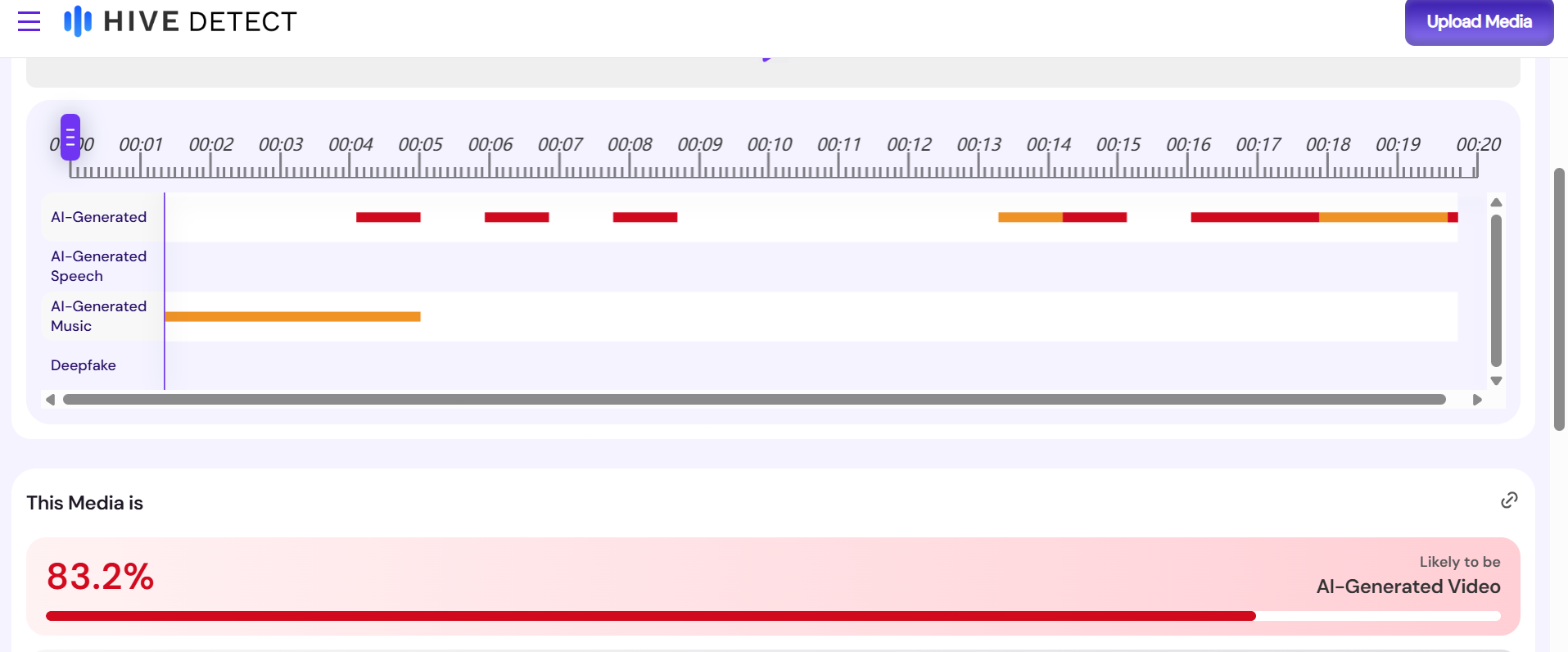
As part of the next step in our research, we scanned the video using the AI detection tool Hive Detect. According to the results, the viral video has an 83 per cent likelihood of being AI-generated.

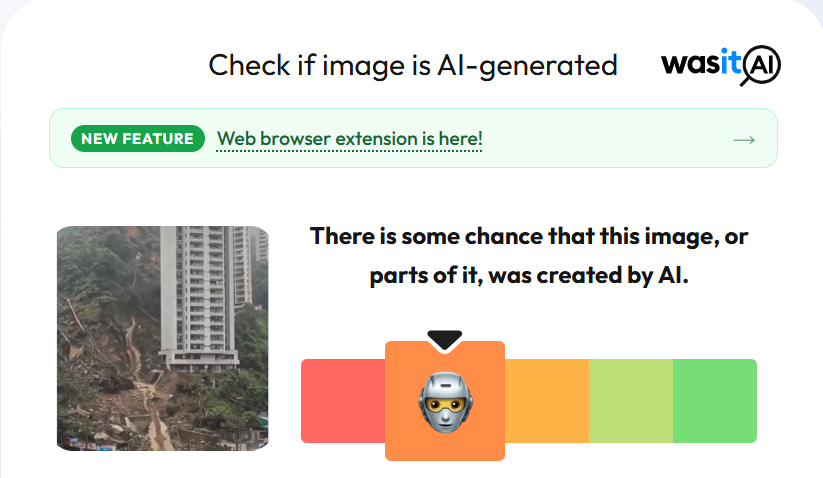
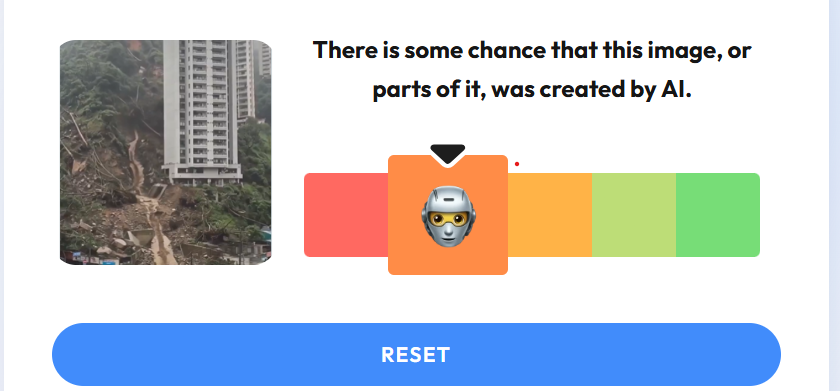
At the end of our research, we scanned the viral video using the AI detection tool WasIt AI. According to the results, the viral video was found to be AI-generated.
Conclusion
Our research found that the viral video is AI-generated and is being shared with a misleading claim.

Related Blogs

Introduction
Robotic or Robo dogs are created to resemble dogs in conduct and appearance, usually comprising canine features including barking and wagging tails. Some examples include Rhex (hexapod robot), Littledog and BigDog (created by Boston Dynamics robot). Robodogs, on the whole, can even respond to commands and look at a person with large LED-lit puppy eyes.
A four-legged robotic solution was recently concluded through its foremost successful radiation protection test inside the most extensive experimental area at the European Organization for Nuclear Research known as CERN. Each robot created at CERN is carefully crafted to fulfil exceptional challenges and complement each other. Unlike the previous wheeled, tracked or monorail robots, the robodogs will be capable of penetrating unexplored dimensions of the caverns, expanding the spectrum of surroundings that CERN robots can act as a guide. Also, Incorporating the robodog with the existing monorail robots in the Large Hadron Collider (LHC) tunnel will expand the range of places available for monitoring and supervision, improving the security and efficiency of the operation of CERN. Lenovo too has designed a six-legged robot called the "Daystar Bot GS" to be launched this year, which promises "comprehensive data collection."
Use of Robodogs in diverse domains
Due to the enhancement of Artificial Intelligence (AI), robodogs can be a boon for those with exceptional requirements. The advantage of AI is the dependability of its features, which can be programmed to answer certain commands detailed to the user.
In the context of health and well-being, they can be useful if they are programmed to take care of a person with distinct or special requirements (elderly person or visually impaired person). For this reason, they are considered more advantageous than the real dogs. Recently, New Stanford has designed robodogs that can perform several physical activities, including dancing and may also one day assist in putting pediatric patients in comfort during their hospital stays. Similarly, the robodog, "Pupper", is a revamped version of another robotic dog designed at Stanford called "Doggo", an open-source bot with 3D printed elements that one could create on a fairly small budget. They were also created to interact with humans. Furthermore, Robots as friends are a more comfortable hop for the Japanese. The oldest and most successful social robot in Japan is called "Paro", resembling an ordinary plush toy that can help in treating depression, stress, anxiety and also mood swings in a person. Following 1998, several Paro robots were exported overseas and put into service globally, reducing stress among children in ICUs, treating American veterans suffering from Post Traumatic Stress Disorder (PTSD), and assisting dementia patients.
Post-pandemic, the Japanese experiencing loneliness and isolation have been clinging to social robots for mind healing and comfort. Likewise, at a cafe in Japan, proud owners of the AI-driven robot dog "Aibo" have pawed its course into the minds and hearts of the people. Presently, robots are replacing the conventional class guinea pig or bunny at Moriyama Kindergarten in the central Japanese city of Nagoya. According to the teachers here, the bots apparently reduce stress and teach kids to be more humane.
In the security and defence domain, the unique skills of robodogs allow them to be used in hazardous and challenging circumstances. They can even navigate through rugged topography with reassurance to save stranded individuals from natural catastrophes. They could correspondingly help with search and rescue procedures, surveillance, and other circumstances that could be dangerous for humans. Researchers or experts are still fine-tuning the algorithm to develop them by devising the technology and employing affordable off-shelf robots that are already functional. Robodogs are further used for providing surveillance in hostage crises, defusing bombs, besides killing people to stop them from attacking other individuals. Similarly, a breakthrough in AI is being tested by the Australian military that reportedly allows soldiers to control robodogs solely with their minds. Cities like Florida and St. Petersburg also seem bound to keep police robodogs. The U.S. Department of Homeland Security is further seeking plans to deploy robot dogs at the borderlands. Also, the New York City Police Department (NYPD) intends to once again deploy four-legged 'Robodogs' to deal with high-risk circumstances like hostage negotiations. The NYPD has previously employed alike robodogs for high-octane duties in examining unsafe environments where human officers should not be exposed. The U.S. Marine Corps is additionally experimenting with a new breed of robotic canine that can be helpful in the battleground, enhance the safety and mobility of soldiers, and aid in other tasks. The Unitree Go1 robot dog (Nicknamed GOAT-Grounded Open-Air Transport) by the Marines is a four-legged machine that has a built-in AI system, which can be equipped to carry an infantry anti-armour rocket launcher on its back. The GOAT robot dog is designed to help the Marines move hefty loads, analyse topography, and deliver fire support in distant and dangerous places.
However, on the contrary, robodogs may pose ethical and moral predicaments regarding who is accountable for their actions and how to ensure their adherence to the laws of warfare. This may further increase security and privacy situations on how to safeguard the data of the robotic dogs and contain hacking or sabotage.
Conclusion
Teaching robots to traverse the world conventionally has been an extravagant challenge. Though the world has been seeing an increase in their manufacturing, it is simply a machine and can never replace the feeling of owning a real dog. Designers state that intelligent social robots will never replace humans, though robots provide the assurance of social harmony without social contact. Also, they may not be capable of managing complicated or unforeseen circumstances that need instinct or human decision-making. Nevertheless, owning robodogs in the coming decades is expected to become even more common and cost-effective as they evolve or advance with new algorithms being tested and implemented.
References:
- https://home.cern/news/news/engineering/introducing-cerns-robodog
- https://news.stanford.edu/2023/10/04/ai-approach-yields-athletically-intelligent-robotic-dog/
- https://nypost.com/2023/02/17/combat-ai-robodogs-follow-telepathic-commands-from-soldiers/
- https://www.popsci.com/technology/parkour-algorithm-robodog/
- https://ggba.swiss/en/cern-unveils-its-innovative-robodog-for-radiation-detection/
- https://www.themarshallproject.org/2022/12/10/san-francisco-killer-robots-policing-debate
- https://www.cbsnews.com/news/robo-dogs-therapy-bots-artificial-intelligence/
- https://news.stanford.edu/report/2023/08/01/robo-dogs-unleash-fun-joy-stanford-hospital/
- https://www.pcmag.com/news/lenovo-creates-six-legged-daystar-gs-robot
- https://www.foxnews.com/tech/new-breed-military-ai-robo-dogs-could-marines-secret-weapon
- https://www.wptv.com/news/national/new-york-police-will-use-four-legged-robodogs-again
- https://www.dailystar.co.uk/news/us-news/creepy-robodogs-controlled-soldiers-minds-29638615
- https://www.newarab.com/news/robodogs-part-israels-army-robots-gaza-war
- https://us.aibo.com/

Introduction
Words come easily, but not necessarily the consequences that follow. Imagine a 15-year-old child on the internet hoping that the world will be nice to him and help him gain confidence, but instead, someone chooses to be mean on the internet, or the child becomes the victim of a new kind of cyberbullying, i.e., online trolling. The consequences of trolling can have serious repercussions, including eating disorders, substance abuse, conduct issues, body dysmorphia, negative self-esteem, and, in tragic cases, self-harm and suicide attempts in vulnerable individuals. The effects of online trolling can include anxiety, depression, and social isolation. This is one example, and hate speech and online abuse can touch anyone, regardless of age, background, or status. The damage may take different forms, but its impact is far-reaching. In today’s digital age, hate speech spreads rapidly through online platforms, often amplified by AI algorithms.
As we celebrate today, i.e., 18th June, the International Day for Countering Hate Speech, if we have ever been mean to someone on the internet, we pledge never to repeat that kind of behaviour, and if we have been the victim, we will stand against the perpetrator and report it.
This year, the theme for the International Day for Countering Hate Speech is “Hate Speech and Artificial Intelligence Nexus: Building coalitions to reclaim inclusive and secure environments free of hatred. UN Secretary-General Antonio Guterres, in his statement, said, “Today, as this year’s theme reminds us, hate speech travels faster and farther than ever, amplified by Artificial Intelligence. Biased algorithms and digital platforms are spreading toxic content and creating new spaces for harassment and abuse."
Coded Convictions: How AI Reflects and Reinforces Ideologies
Algorithms have swiftly taken the place of feelings; they tamper with your taste, and they do so with a lighter foot, invisibly. They are becoming an important component of social media user interaction and content distribution. While these tools are designed to improve user experience, they frequently inadvertently spread divisive ideologies and push extremist propaganda. This amplification can strengthen the power of extremist organisations, spread misinformation, and deepen societal tensions. This phenomenon, known as “algorithmic radicalisation,” demonstrates how social media companies may utilise a discriminating content selection approach to entice people down ideological rabbit holes and shape their ideas. AI-driven algorithms often prioritise engagement over ethics, enabling divisive and toxic content to trend and placing vulnerable groups, especially youth and minorities, at risk. The UN’s Strategy and Plan of Action on Hate Speech, launched on June 18, 2019, recognises that while AI holds promise for early detection and prevention of harmful speech, it also demands stringent human rights safeguards. Without regulation, these tools can themselves become purveyors of bias and exclusion.
India’s Constitutional Resolve and Civilizational Ethos against Hate
India has always taken pride in being inclusive and united rather than divided. As far as hate speech is concerned, India's stand is no different. The United Nations, India believes in the same values as its international counterpart. Although India has won many battles against hate speech, the war is not over and is now more prominent than ever due to the advancement in communication technologies. In India, while the right to freedom of speech and expression is protected under Article 19(1)(a), its exercise is limited subject to reasonable restrictions under Article 19(2). Landmark rulings such as Ramji Lal Modi v. State of U.P. and Amish Devgan v. UOI have clarified that speech can be curbed if it incites violence or undermines public order. Section 69A of the IT Act, 2000, empowers the government to block content, and these principles are also reflected in Section 196 of the BNS, 2023 (153A IPC) and Section 299 of the BNS, 2023 (295A IPC). Platforms are also required to track down the creators of harmful content and remove it within a reasonable hour and fulfil their due diligence requirements under IT rules.
While there is no denying that India needs to be well-equipped and prepared normatively to tackle hate propaganda and divisive forces. India’s rich culture and history, rooted in philosophies of Vasudhaiva Kutumbakam (the world is one family) and pluralistic traditions, have long stood as a beacon of tolerance and coexistence. By revisiting these civilizational values, we can resist divisive forces and renew our collective journey toward harmony and peaceful living.
CyberPeace Message
The ultimate goal is to create internet and social media platforms that are better, safer and more harmonious for each individual, irrespective of his/her/their social and cultural background. CyberPeace stands resolute on promoting digital media literacy, cyber resilience, and consistently pushing for greater accountability for social media platforms.
References
- https://www.un.org/en/observances/countering-hate-speech
- https://www.artemishospitals.com/blog/the-impact-of-trolling-on-teen-mental-health
- https://www.orfonline.org/expert-speak/from-clicks-to-chaos-how-social-media-algorithms-amplify-extremism
- https://www.techpolicy.press/indias-courts-must-hold-social-media-platforms-accountable-for-hate-speech/

Executive Summary
A dispute had recently emerged in Kotdwar, Uttarakhand, over the name of a shop. During the controversy, a local youth, Deepak Kumar, came forward in support of the shopkeeper. The incident subsequently became a subject of discussion on social media, with users expressing varied reactions. Meanwhile, a photo began circulating on social media showing a burqa-clad woman presenting a bouquet to Deepak Kumar. The image is being shared with the claim that All India Majlis-e-Ittehadul Muslimeen (AIMIM)’s women’s president, Rubina, welcomed “Mohammad Deepak Kumar” by presenting him with a bouquet. However, research conducted by the CyberPeace found the viral claim to be false. The research revealed that users are sharing an AI-generated image with a misleading claim.
Claim:
On social media platform Instagram, a user shared the viral image claiming that AIMIM’s women’s president Rubina welcomed “Mohammad Deepak Kumar” by presenting him with a bouquet. The link to the post, its archived version, and a screenshot are provided below.

Fact Check:
Upon closely examining the viral image, certain inconsistencies raised suspicion that it could be AI-generated. To verify its authenticity, the image was analysed using the AI detection tool Hive Moderation, which indicated a 96 percent probability that the image was AI-generated.

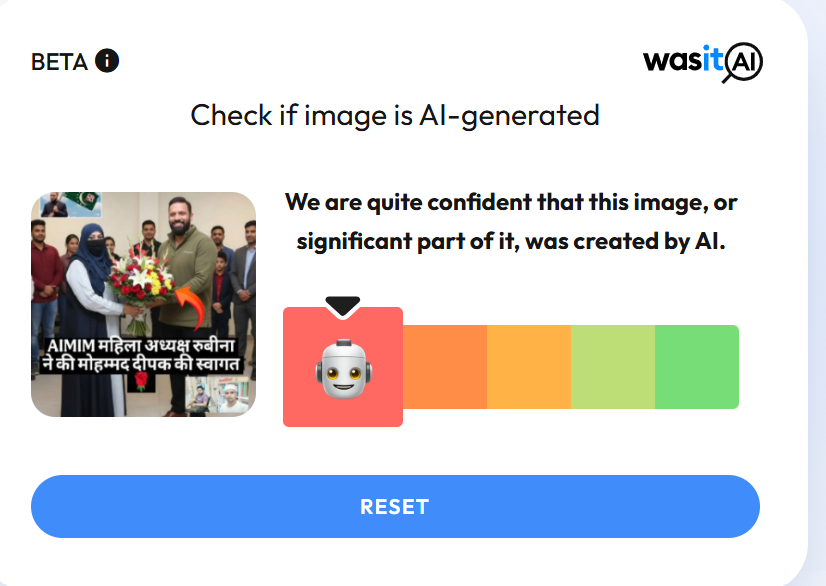
In the next stage of the research , the image was also analysed using another AI detection tool, Wasit AI, which likewise identified the image as AI-generated.
Conclusion
The research establishes that users are circulating an AI-generated image with a misleading claim linking it to the Kotdwar controversy.
