
#FactCheck: AI-Generated Image Falsely Shared as Photo of INDIA Bloc Rally at Delhi’s Ramlila Maidan
Executive Summary
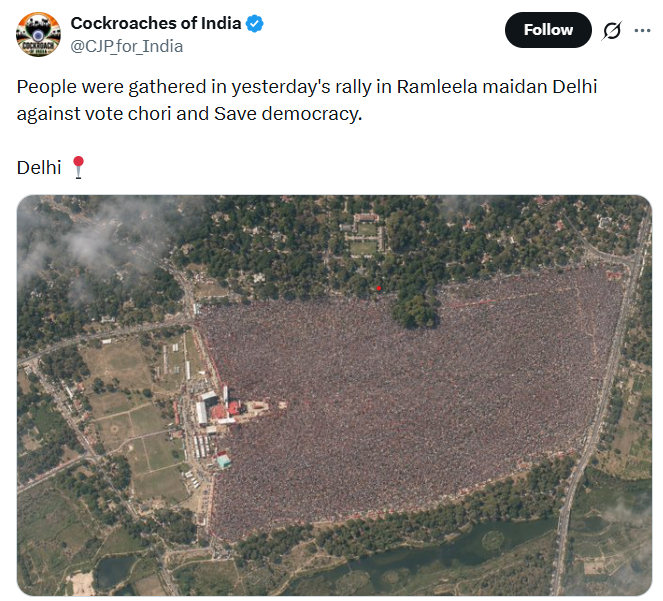
A rally was organised by the opposition INDIA bloc at Delhi’s Ramlila Maidan on November 1, 2026, under the slogans of “Vote Chori” and “Save Democracy”, along with a “Chalo Delhi” march. Meanwhile, a photograph is being shared on social media with the claim that it shows the same rally. A large crowd of people can be seen in the picture.
CyberPeace Research found the viral claim to be false. Our research found that the viral image is not authentic but AI-generated.
Claim:
A photograph is being shared on social media with the claim that it shows a rally held at Delhi’s Ramlila Maidan on the issues of “Vote Chori” and “Save Democracy”, which was attended by a large number of people.
https://x.com/CJP_for_India/status/2117125139003588873?a=NW3G6-9xW1sPqHOkUTo&s=20
Fact Check
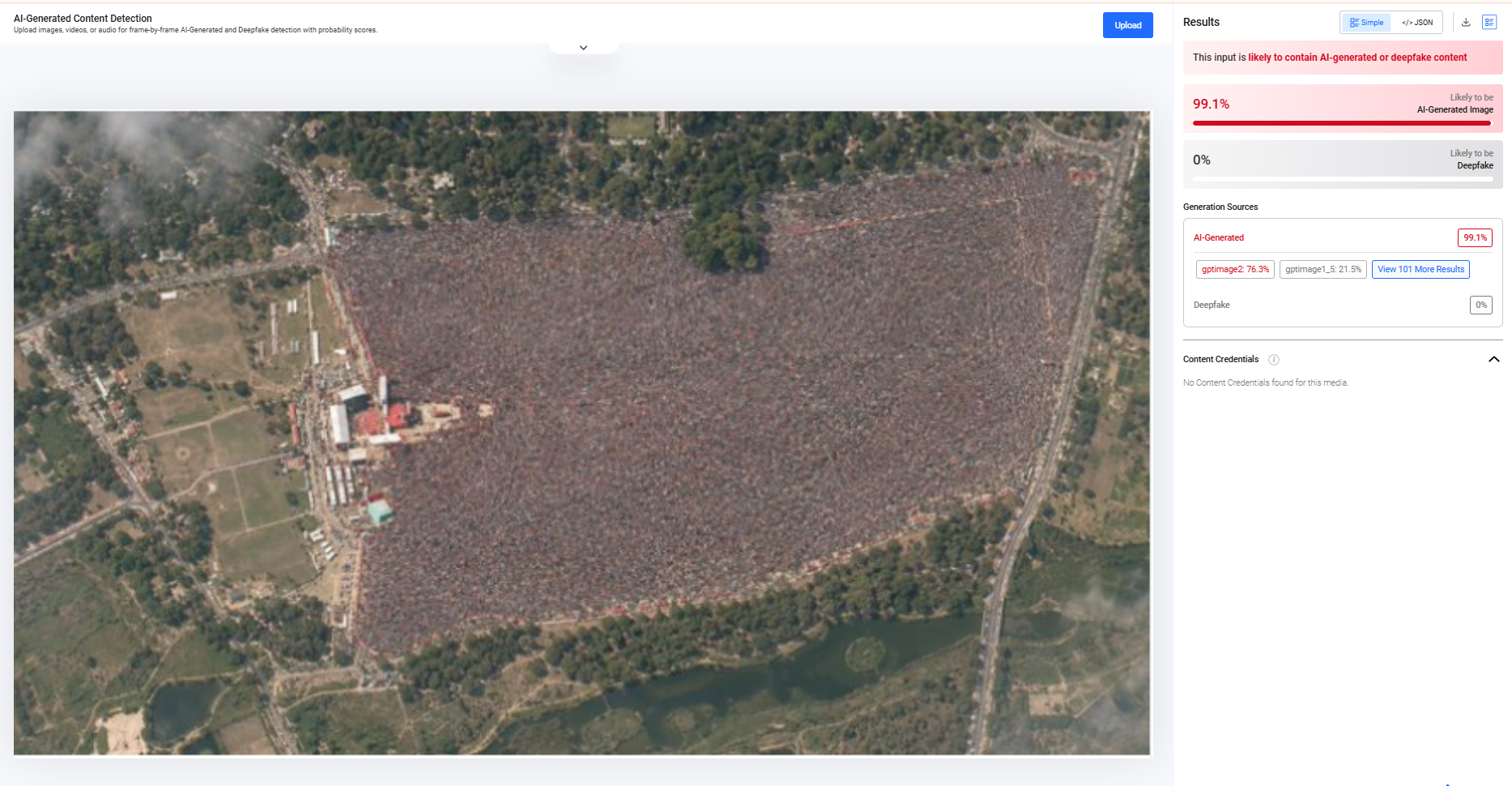
Upon closely examining the viral image, we noticed certain inconsistencies that raised suspicions that it was AI-generated. We then scanned the image using the AI detection tool Hive Moderation. According to the results, the image is 99 per cent likely to be AI-generated.
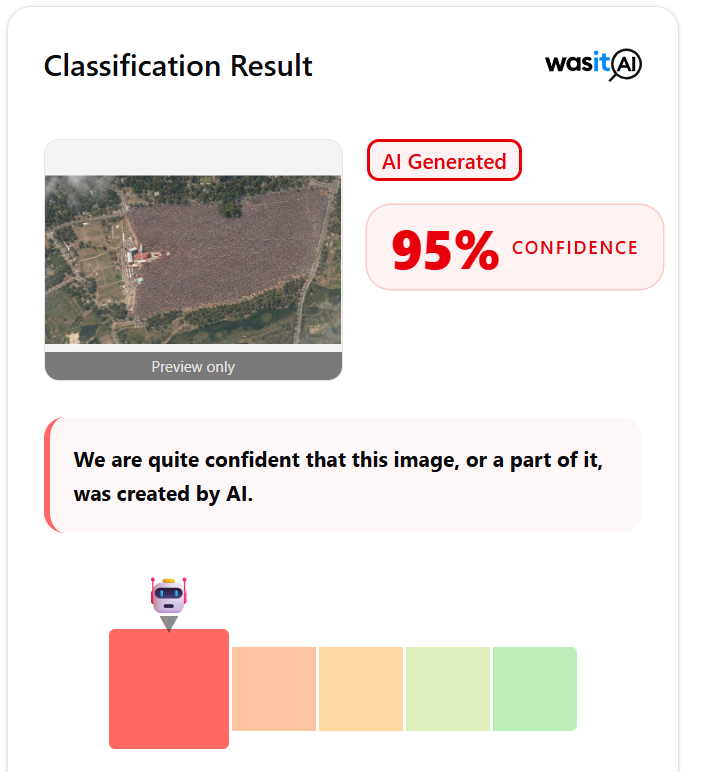
Taking our research forward, we scanned the viral image using another AI detection tool, Wasit AI. According to the results, the image is 95 per cent likely to be AI-generated.
Conclusion
Our research found that the viral image is not authentic but AI-generated.

Related Blogs

Executive Summary
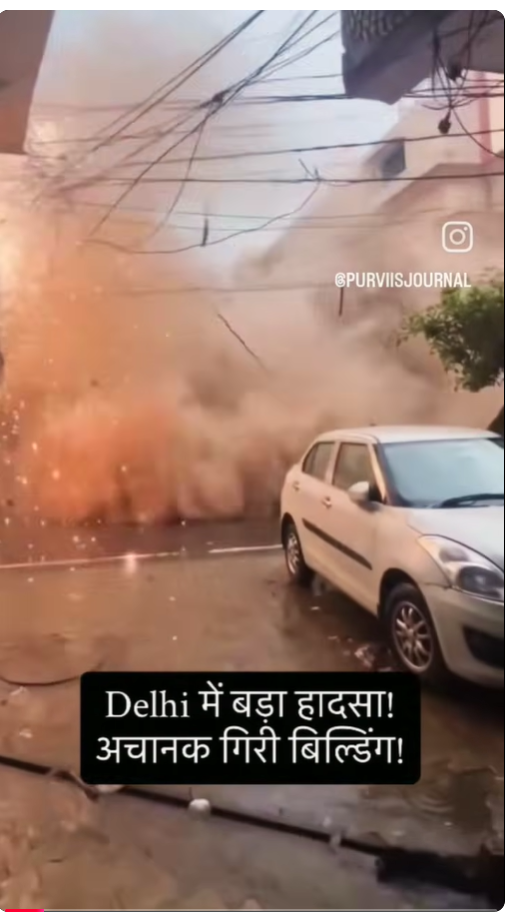
A video showing a building collapse is going viral on social media. It is being shared as footage of a tragic incident that took place in Satya Niketan, Delhi. The video is accompanied by claims that it shows the building collapse in Satya Niketan. However, a research by CyberPeace’s Research Wing found that the viral video is not from the incident in Satya Niketan, Delhi. The research revealed that the video is actually from Moradabad, Uttar Pradesh, where a building collapsed on September 5, 2026. Clear similarities were found between the viral video and visuals from the incident in Moradabad. This confirms that an old video is being shared on social media with a false context, linking it to the incident in Satya Niketan, Delhi.
Claim:
A user shared the viral video on YouTube with the caption: “Major accident in Delhi! A five-storey building collapsed.”
https://www.youtube.com/shorts/1qeW-pFoMd4
Fact Check
While investigating the viral video, we conducted a reverse image search using its keyframes. This led us to the same video, which was uploaded on an Instagram account on September 5, 2026. The text visible in the video identified the location as Moradabad, Uttar Pradesh.
https://www.instagram.com/p/Dc54OW2SOh3/

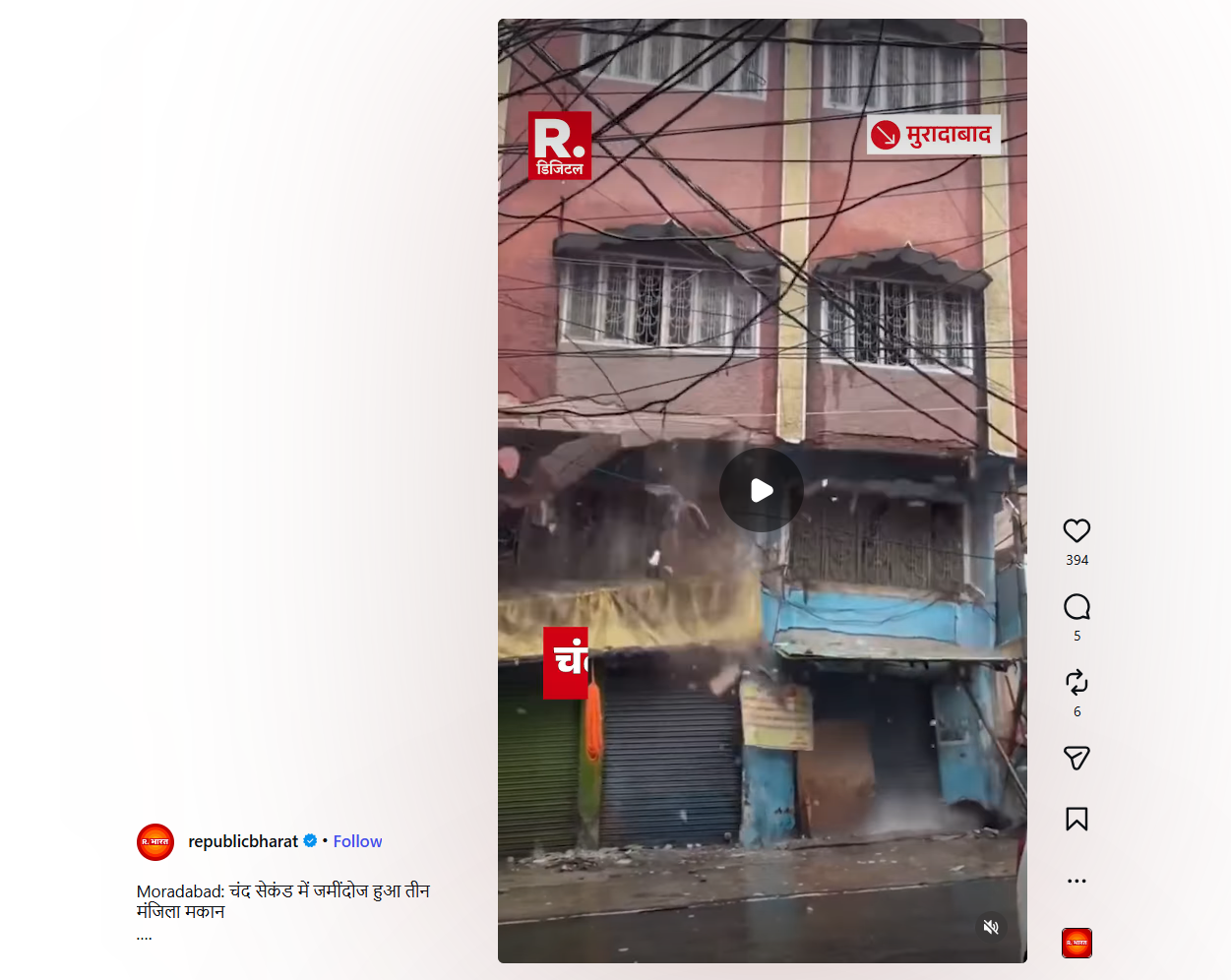
In the next stage of our research, we found the video on Republic Bharat’s Instagram channel, where it was also identified as being from Moradabad.
https://www.instagram.com/reels/Dc8XTlpgaRL/
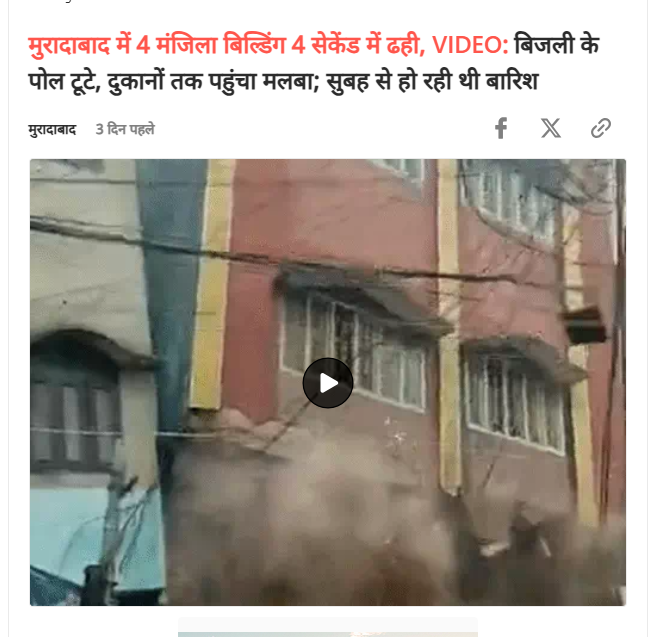
Based on the information gathered above, a keyword search led us to a report published by Dainik Bhaskar on September 5, 2026. The report also contained visuals matching those seen in the viral video. According to the Dainik Bhaskar report, on September 5, 2026, a four-storey dilapidated building collapsed in the Mughalpura area of Moradabad amid heavy rain, triggering panic in the area. However, the administration had sealed the building a day earlier after assessing its condition. The incident took place at around 3 p.m. The building was owned by a man named Sarfaraz Ali.
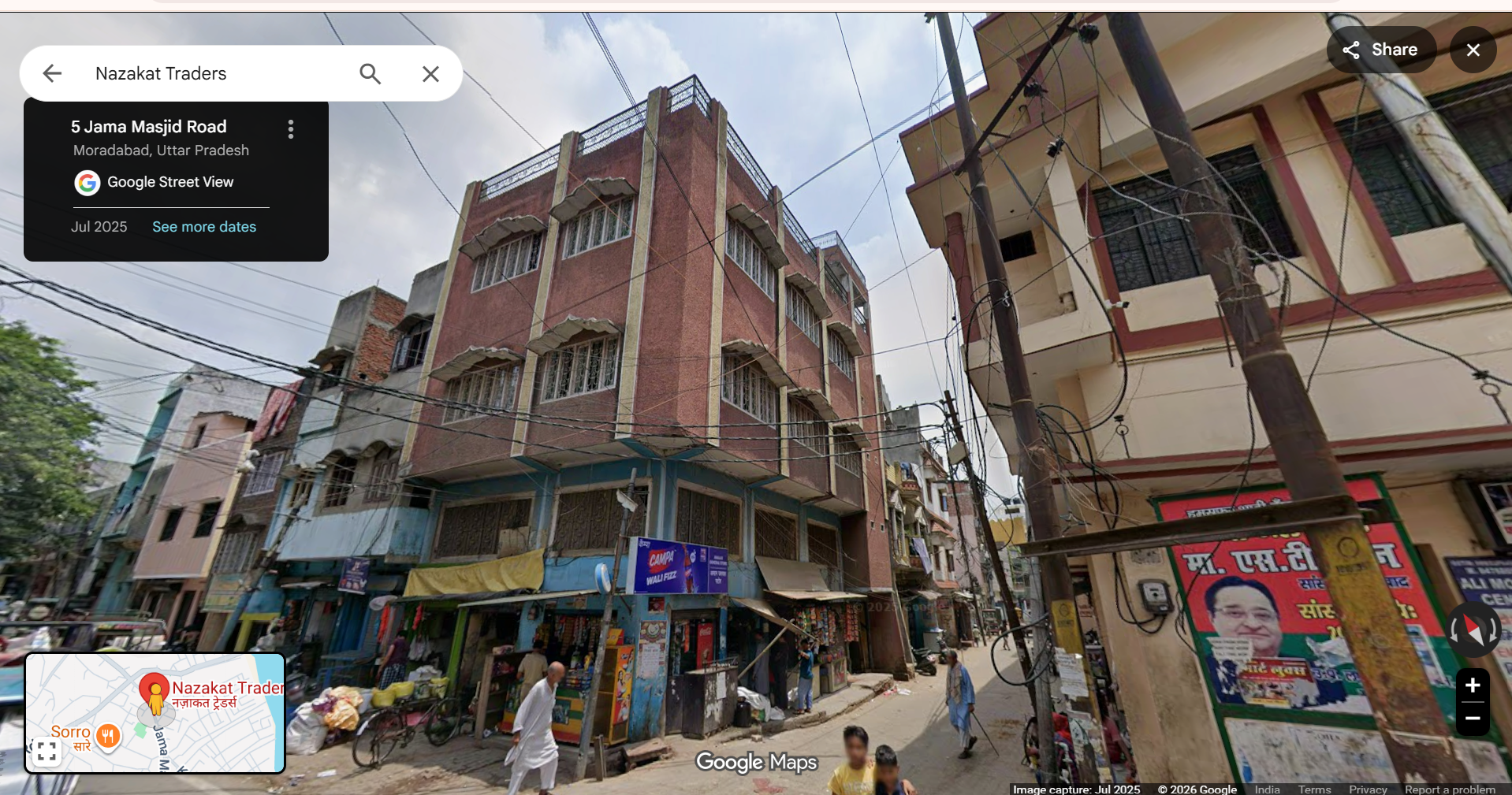
In our research, we also tried to geolocate the building seen collapsing in the viral video. We found that the building was located near Guiyan Bagh on Jama Masjid Road in Moradabad. The location can be seen in the image below.
Conclusion
The evidence gathered during our research clearly establishes that the video being circulated as footage of the tragic building collapse in Satya Niketan, Delhi, is not from Delhi. Our findings show that the viral video actually captures the collapse of a dilapidated four-storey building in the Mughalpura area of Moradabad, Uttar Pradesh, on September 5, 2026, amid heavy rainfall. The video was traced to multiple sources that identified the location as Moradabad, and further verification through media reports and geolocation confirmed that the visuals correspond to the same incident. Therefore, the viral video is being shared with a false context by incorrectly linking an incident in Moradabad to the building collapse in Satya Niketan, Delhi.

Introduction
AI has transformed the way we look at advanced technologies. As the use of AI is evolving, it also raises a concern about AI-based deepfake scams. Where scammers use AI technologies to create deep fake videos, images and audio to deceive people and commit AI-based crimes. Recently a Kerala man fall victim to such a scam. He received a WhatsApp video call, the scammer impersonated the face of the victim’s known friend using AI-based deep fake technology. There is a need for awareness and vigilance to safeguard ourselves from such incidents.
Unveiling the Kerala deep fake video call Scam
The man in Kerala received a WhatsApp video call from a person claiming to be his former colleague in Andhra Pradesh. In actuality, he was the scammer. He asked for help of 40,000 rupees from the Kerala man via google pay. Scammer to gain the trust even mentioned some common friends with the victim. The scammer said that he is at the Dubai airport and urgently need the money for the medical emergency of his sister.
As AI is capable of analysing and processing data such as facial images, videos, and audio creating a realistic deep fake of the same which closely resembles as real one. In the Kerala Deepfake video call scam the scammer made a video call that featured a convincingly similar facial appearance and voice as same to the victim’s colleague which the scammer was impersonating. The Kerala man believing that he was genuinely communicating with his colleague, transferred the money without hesitation. The Kerala man then called his former colleague on the number he had saved earlier in his contact list, and his former colleague said that he has not called him. Kerala man realised that he had been cheated by a scammer, who has used AI-based deep-fake technology to impersonate his former colleague.
Recognising Deepfake Red Flags
Deepfake-based scams are on the rise, as they pose challenges that really make it difficult to distinguish between genuine and fabricated audio, videos and images. Deepfake technology is capable of creating entirely fictional photos and videos from scratch. In fact, audio can be deepfaked too, to create “voice clones” of anyone.
However, there are some red flags which can indicate the authenticity of the content:
- Video quality- Deepfake videos often have compromised or poor video quality, and unusual blur resolution, which might pose a question to its genuineness.
- Looping videos: Deepfake videos often loop or unusually freeze or where the footage repeats itself, indicating that the video content might be fabricated.
- Verify Separately: Whenever you receive requests for such as financial help, verify the situation by directly contacting the person through a separate channel such as a phone call on his primary contact number.
- Be vigilant: Scammers often possess a sense of urgency leading to giving no time to the victim to think upon it and deceiving them by making a quick decision. So be vigilant and cautious when receiving and entertaining such a sudden emergency which demands financial support from you on an urgent basis.
- Report suspicious activity: If you encounter such activities on your social media accounts or through such calls report it to the platform or to the relevant authority.
Conclusion
The advanced nature of AI deepfake technology has introduced challenges in combatting such AI-based cyber crimes. The Kerala man’s case of falling victim to an AI-based deepfake video call and losing Rs 40,000 serves as an alarming need to remain extra vigilant and cautious in the digital age. So in the reported incident where Kerala man received a call from a person appearing as his former colleague but in actuality, he was a scammer and tricking the victim by using AI-based deepfake technology. By being aware of such types of rising scams and following precautionary measures we can protect ourselves from falling victim to such AI-based cyber crimes. And stay protected from such malicious scammers who exploit these technologies for their financial gain. Stay cautious and safe in the ever-evolving digital landscape.
Executive Summary
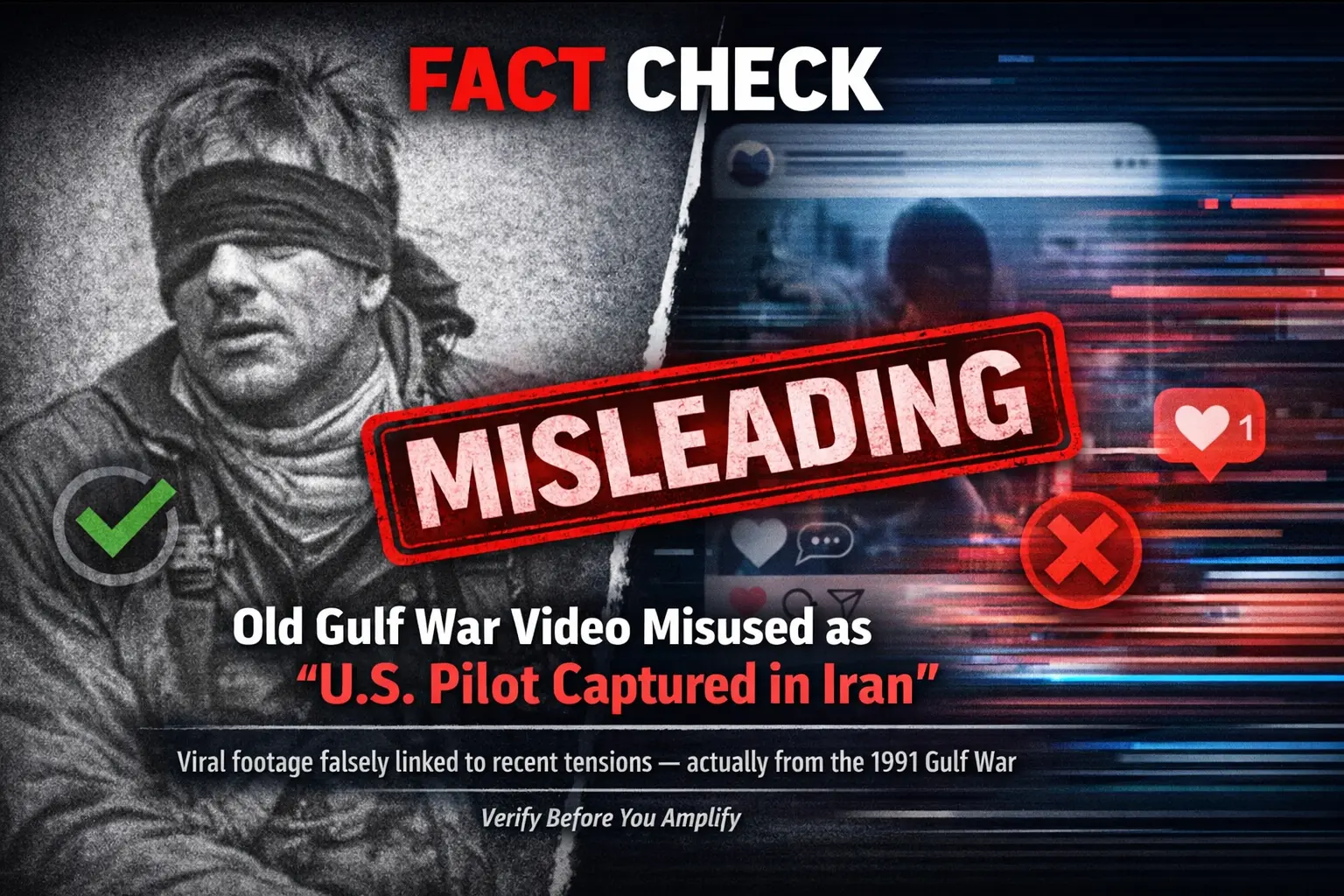
Amid reports that the U.S. military rescued a missing crew member of a fighter jet in Iran, a video is going viral on social media. The clip is being shared with the claim that it shows a U.S. F-15 pilot captured in Iran after his aircraft was shot down. In the video, the detained officer can be heard identifying himself as “Colonel David William Everly.”
However, research by the CyberPeace has found this claim to be misleading. The viral video is real but not recent. It is from the 1991 Gulf War, when U.S. Air Force Colonel David William Everly was captured in Iraq during Operation Desert Storm.
Claim
A social media user “palestinereports786” shared the video with the caption suggesting that a U.S. F-15 fighter jet was shot down over Iran and that one crew member may have been captured.
Fact Check
In the viral video, the officer is heard responding to questions, stating his name as Colonel David William Everly and identifying himself as a U.S. national and an F-15 pilot from the 4th Tactical Fighter Wing. Using these details, we conducted a news search and found several old reports confirming that this incident dates back to the 1991 Gulf War.
A report by the Los Angeles Times (April 13, 2003) recounts Everly’s experience, stating that his aircraft was shot down during the Gulf War. After evading capture for three nights, he was eventually taken prisoner and held for 43 days in multiple prisons in Baghdad, where he faced harsh treatment.
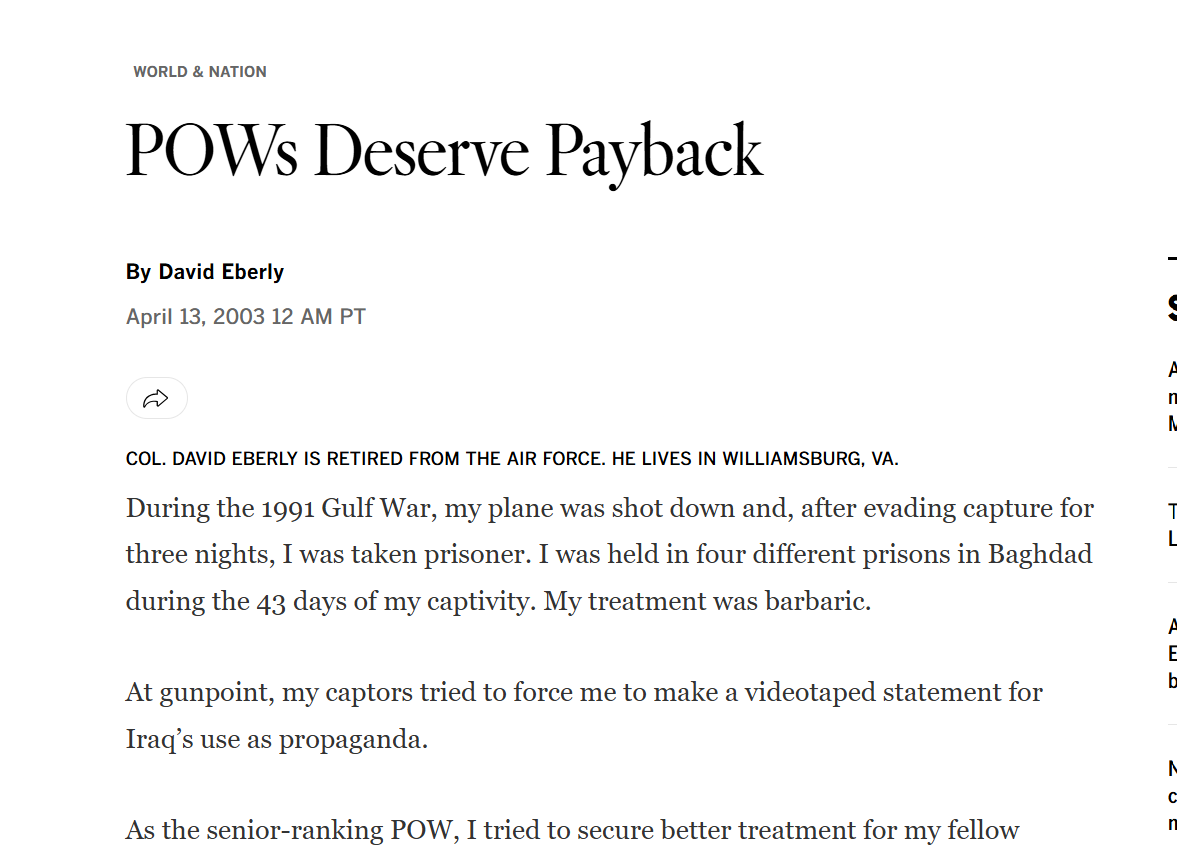
Additional references to the incident were also found on platforms such as pownetwork.org, nara.getarchive.net, and the National Air and Space Museum’s “Wall of Honor,” all documenting Everly’s captivity and eventual return to the United States. We also found an older interview of Everly, where he narrates the same incident.

According to data from acleddata.com, military tensions involving the United States, Israel, and Iran escalated after February 28, 2026, when operations against Iran reportedly began and are ongoing. However, reports indicate that the crew members of the recently downed F-15 aircraft were able to eject safely before the crash. Both crew members survived, and at least one has already been rescued by U.S. forces. There is no confirmed evidence that any pilot has been captured in Iran.

Conclusion
The viral video claiming to show a U.S. pilot captured in Iran is misleading. The footage is not related to any recent incident but originates from the 1991 Gulf War, when Colonel David William Everly was captured in Iraq. The old video has been shared with a false narrative to link it to the current geopolitical situation involving Iran. There is no verified evidence supporting claims that a U.S. pilot has been captured in Iran in the recent conflict.
