
#FactCheck- Viral Kapil Mishra Video on 50% Attendance Not Recent
Executive Summary
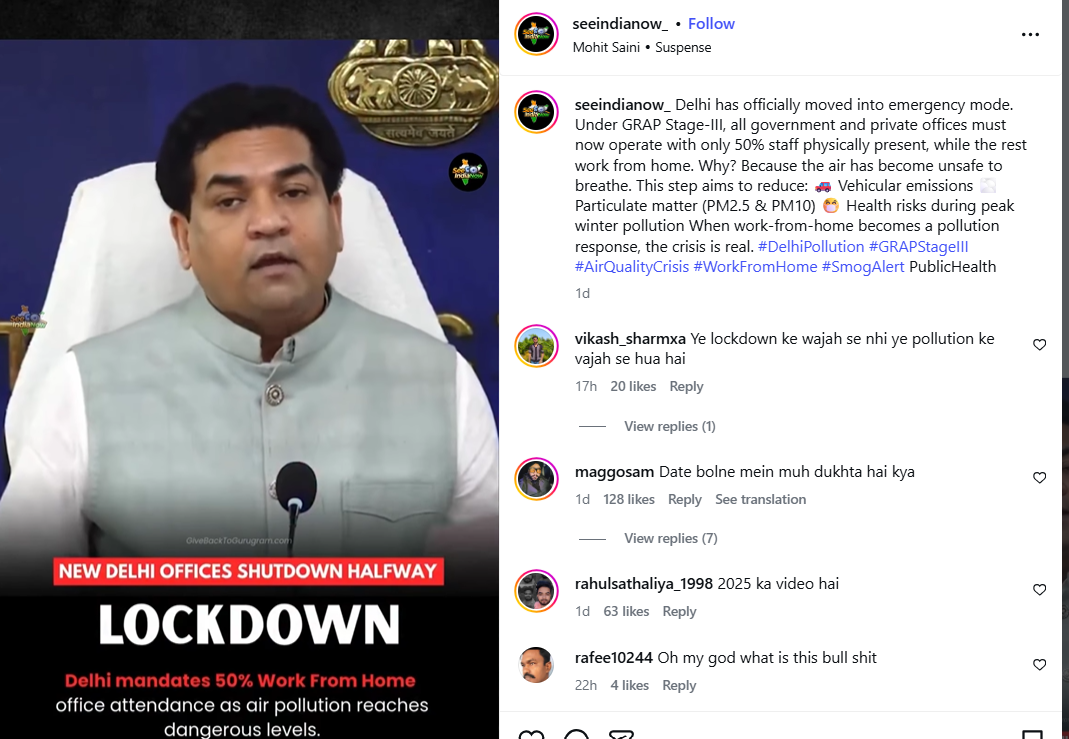
A video of Delhi government cabinet minister Kapil Mishra is being shared on social media. In the clip, he can be heard saying that from the next day, only 50 percent attendance will be allowed in offices, while the remaining 50 percent employees will work from home. He also states that all institutions must comply with this. Users are sharing the video as a recent development. However, a study by the CyberPeace found the viral claim to be misleading. Our research revealed that the video is not recent but dates back to December 2025.
Claim:
An Instagram user shared the viral video on March 24, 2026. The link to the post is given below.
Fact Check:
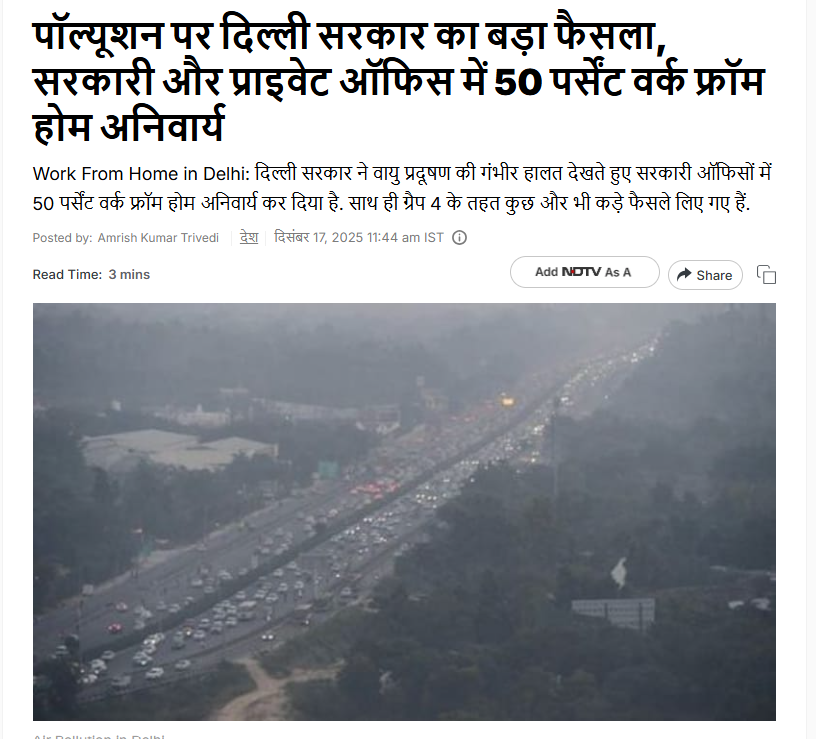
To verify the claim, we conducted a keyword search on Google. During this process, we found a report published on December 17, 2025, on NDTV Hindi. According to the report, the Delhi government had made 50 percent work-from-home mandatory in government offices due to severe air pollution. Additional restrictions were also imposed under GRAP Stage IV.
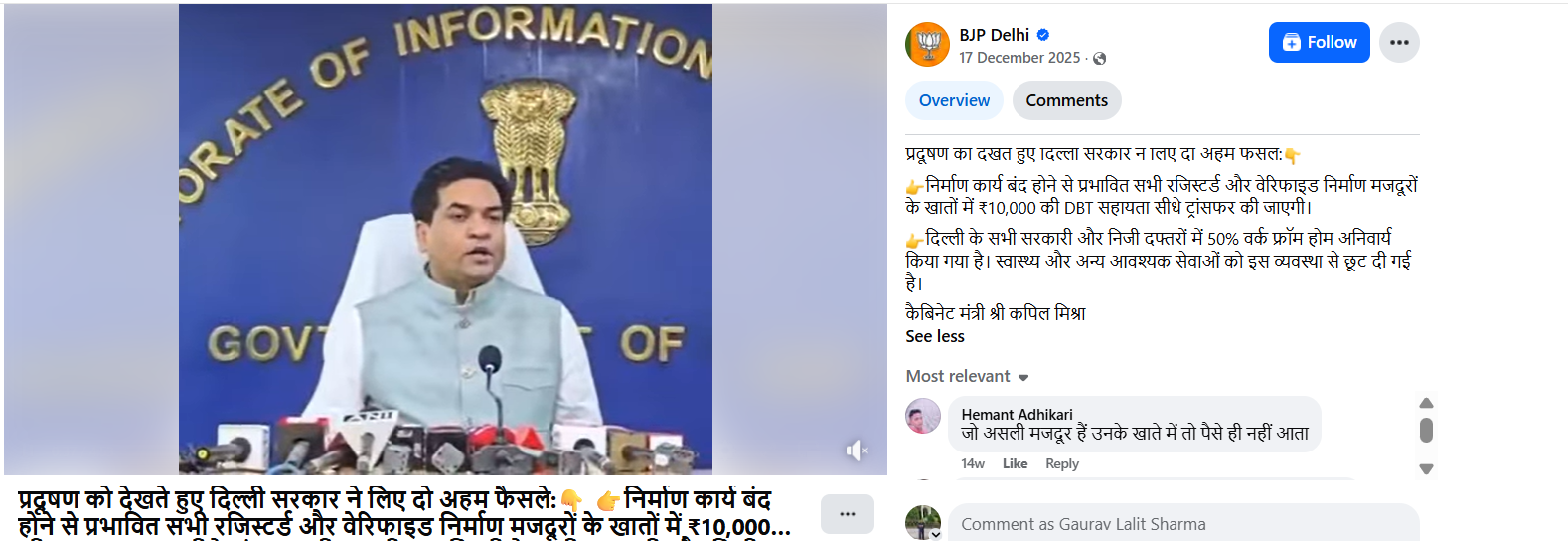
Further, we found the original video on the official social media handle of BJP Delhi. In this video, Kapil Mishra can be heard stating that 50 percent work-from-home has been made mandatory in all government and private offices in Delhi, while health and other essential services have been exempted from this arrangement.
Conclusion:
Our research found that the viral video is not recent. It is from December 2025 and is being shared with a misleading claim.

Related Blogs

Executive Summary
A video is being shared on social media with the claim that a thief in Indore, Madhya Pradesh, performed dangerous stunts to evade the police. In the viral video, several police personnel can be seen chasing a man. The man appears to dodge vehicles on the road to escape the police and then climbs onto the roof of a moving bus. He later jumps from the bus and climbs onto a roadside hoarding. The video is being shared with the claim that a clever thief gave the police a tough time in Indore. Research by CyberPeace Research Wing found that the video is AI-generated and is being shared with a misleading claim.
Claim:
A high-voltage, filmy-style chase between police and a clever thief took place in a busy market in Indore. The police later surrounded the accused and detained him. Archive of the post can be seen here. Similar posts can be seen here and here.
https://www.facebook.com/reel/1356598853312128

Fact Check:
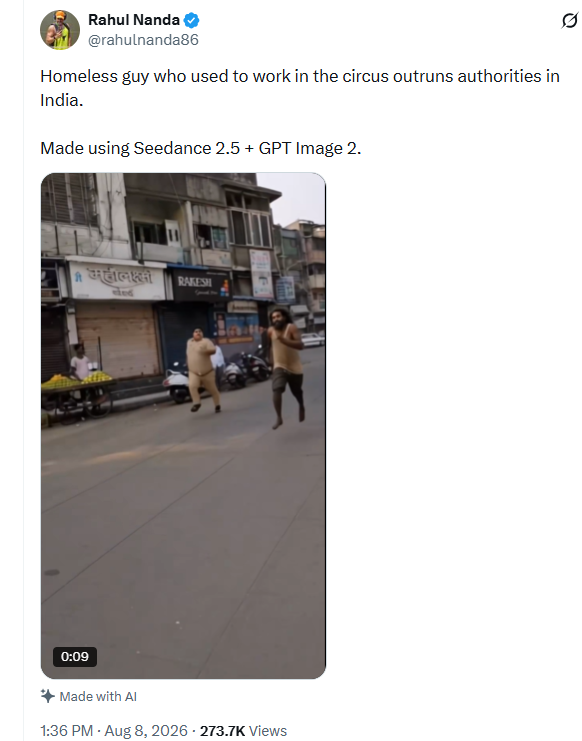
To verify the claim, we conducted a reverse image search of keyframes from the viral video using Google Lens. During the search, we found the same video posted on August 8 on the X account of a user named Rahul Nanda. The post stated that the video had been created using AI.
https://x.com/rahulnanda86/status/2086001127762657614
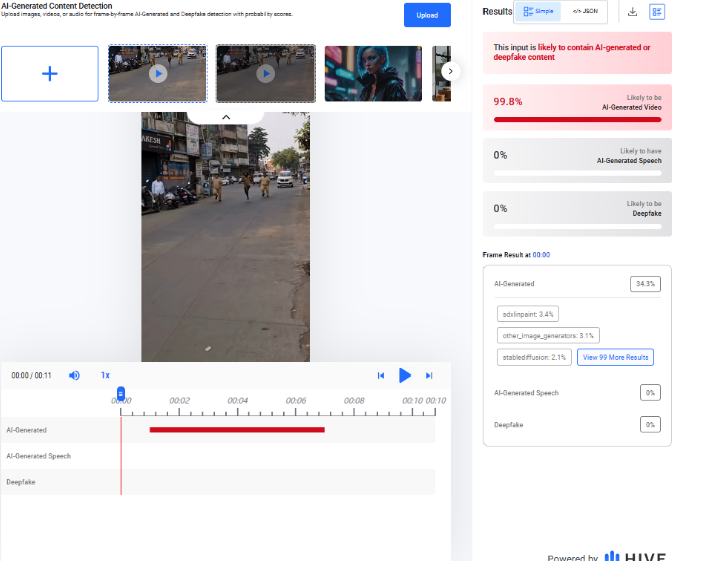
We then analysed the viral video using the AI detection tool Hive Moderation. The tool gave the video a 99.8 per cent score for being potentially AI-generated.
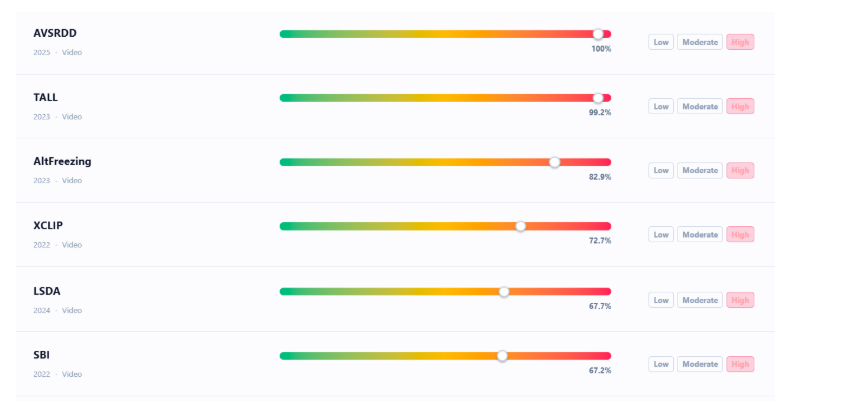
As part of the research, we also checked the video using another AI detection tool, Deepfake-O-Meter. Six different detectors on the tool indicated a high probability that the video was AI-generated.
Conclusion
The evidence gathered during our research establishes that the viral video claiming to show a thief evading police in Indore is AI-generated. Therefore, the claim is misleading.

Executive Summary
Amid the ongoing geopolitical tensions involving the US, Israel, and Iran, and reports of disruptions in the Strait of Hormuz affecting cargo ship movement and global crude oil prices, several posts on social media have made a viral claim. The posts allege that Indian cargo vessels are being allowed to pass through the Strait of Hormuz after payments to Iran were made in Chinese currency, the yuan. The claim has been widely circulated from certain social media accounts, suggesting a shift in India’s trade and payment arrangements. However, a fact-check by CyberPeace Research Wing has found the claim to be false.
Claim
A social media user “MEHF voice 2.0” shared a viral post (archived link), claiming that an Indian oil tanker secured passage through the Strait of Hormuz by making payments in Chinese yuan. The post further suggested that India had formed a new alignment with China, bypassing the US dollar system.

Fact Check
Due to US sanctions, Iran is excluded from the international banking network SWIFT, which prevents direct trade settlements in US dollars or euros. As a result, India and Iran conduct trade through a specially designed rupee–rial payment mechanism. According to a Ministry of Commerce and Industry release (based on a written reply in Parliament), India and Iran established this arrangement to facilitate bilateral trade using local currencies instead of the US dollar.

Further, information from the Indian Embassy in Tehran notes that rupee-based payments are processed through UCO Bank and Iranian banks with vostro accounts, enabling trade settlement outside sanctioned banking channels. IDBI Bank has also been part of efforts to expand rupee-based transactions with Iran.
The Ministry of External Affairs’ official fact-check handle has also debunked this claim, confirming that it is false.

Conclusion
The viral claim that Indian oil tankers are paying in Chinese yuan to pass through the Strait of Hormuz is false. India and Iran conduct trade settlements through a rupee–rial payment mechanism, not through the Chinese currency.

Introduction
We are living in the digital age, where from ordering food to floating into a relationship everything is preferred to be digitized. It has been quite evident that in the past few years, online dating has become immensely popular due to its potential success stories. Since it has become a medium to find potential partners. Among the string of successes and pros of online dating, there seems to be a corner which is curtained that contains scams and treachery. A very recent case in Delhi puts light into the dark side of online dating where a 25-year-old journalist was trapped in an online dating scam. It portrays the threat of meeting an unknown person through an online dating app and how a person gets involved in the vicious cycle. Since the concept of online dating is all about meeting a new person and getting indulged. This incident talks about a man who met a woman through a dating app Bumble and got scammed for Rs 15000.
Unveiling the scam
It started like a fairy tale where a 25-year-old Delhi resident met with a girl on a dating app Bumble, where they spoke and found each other compatible. Followed by it the girl approaches the boy to meet at a specific restaurant situated in Delhi. The boy was away from the idea that the first meetup would turn into a nightmare which horrifying experience he would share on social media. It is not only about the financial loss but also about the emotional distress one goes through. Every coin has two sides and when surfing in the digital world one needs to keep in mind that along with the pros, there are certain cons. In the eagerness to meet someone, we should not lose our presence of mind. Continuing the incident once both reached the specified restaurant the girl made an order of various food items including beverages, shots of vodka, glasses of wine, different cuisines and hookah. Which not so surprisingly culminated in an inflated bill of Rs 15,886. After paying the hefty amount the boy went to the washroom once he came back the bill vanished followed by the girl being eager to leave the place. Till that very moment, the victim was in his dreamland where he did not get the hint that he had been scammed. Once he reached home and tried contacting the lady her account was deleted from the platform and was not reachable through calls. This incident shook the victim and pushed him to melancholy. Since he did not expect this to happen. Devastated by the fraud and treachery the man wrote about his disappointing experience on his Twitter handle addressing Delhi police to look into this.
It has been brought to the notice that similar incidents have been reported in the past as well. The trend remains the same in which the culprit insists the victim meet at a specific location decided by them, it is done with such conviction that it becomes difficult for the victim to deny. Once they accept to meet in the decided location it is followed by making the victim order expensive food and alcohol and at the time of payment giving excuses or pretending to pay. Once the payment is done the culprit rushes to leave the location or disappears without any head up. Not to be perplexed once they leave they will not leave any trace of them.
How to stay safe in the online dating world?
Online dating can bring butterflies in the stomach, and indeed it is a beautiful experience to meet someone new and fall in love but with this beauty, there comes the baggage of falling into the trap of cyber scams. While surfing online dating sites one needs to be very careful and vigilant since the highlighted incidents are relevant enough to showcase the negative impact on it.
Best practices
- Use reliable platforms: With the growing digitalization, there are infinite platforms available for online dating. But here is the catch one needs to be very finicky in choosing an appropriate platform among the countless options. It is best to use authentic platforms or apps and read reviews and ratings before installing any such applications or platforms.
- Cross-verify the profiles: Once you receive a profile compatible enough to talk about it is recommended to have elaborative conversations. It is not about doubting someone but being calculative and cross-checking all the information given. Before meeting the person it is best to have a detailed conversation but not reveal much about you.
- Have control in your pocket: When it comes to paying the bill be proactive in dividing the bill. It is advisable to do so that the liability of paying a hefty bill does not come from one party. This will make sure that even if one of the people has the intention to exploit the other person they will become alarmed.
- Go with the flow: Since meeting an unknown person is all flowery and spontaneous, it is also good to follow your instinct and go with the flow if you find anything weird during the conversation or while in person. It is advisable to back off or to leave the place as soon as possible.
- Be cautious in sharing your personal information with strangers: While conversing with an unknown person online, it is very important to keep a hold on our emotions and not share any personal information which can be misused by cyber crooks. Also, it is very important that we do not discuss anything about our financial capabilities and transactions. It is imperative to note that cyber crooks exploit the many new ways to commit online fraud by targeting innocent individuals.
- Catching up in public places: When meeting for the first time it is advisable to meet a person in a public place such as a park, museums etc. It is the best way to avoid going to a place decided or being insisted. Since meeting in a public place gives a sense of security that people are around you.
- Keep your near people in Loop: No matter how private you are while meeting an unknown person keep your friends and near one aware of it.
What to do if you fall into such dating scams
- While one can be emotionally drained, it is very important to keep track of all the information shared, save all your messages, take pictures of the scammer's profile and document every small detail which can be relevant.
- Report on the platform: There would be a section called “Contact us” or “Report” on the platform where you can report against the scammer. Most dating apps have this section where you can mention your issue so that they can take action against such profiles.
- National Cyber Crime Reporting Portal, 1930 Helpline: The Cybercrime reporting portal http://www.cybercrime.gov.in/ equipped with 24x7 helpline 1930 is a powerful resource available to the victims of cybercrimes to report their cases.
Conclusion
Online dating can become the gush of winds for someone but it is very important to keep in mind that with the potential of falling in love, there comes a threat of being trapped and getting into cyber frauds or scams. So many cases are being reported, and the recent case also highlights that not everyone on online sites is genuine. So be aware of such scams and stay informed and safe in the evolving digital environment.
References
- https://www.moneycontrol.com/news/trends/delhi-cafes-hiring-girls-to-scam-customers-says-bumble-user-conned-out-of-rs-15000-11724701.html
- https://www.ndtv.com/delhi-news/delhi-man-falls-victim-to-scam-as-bumble-date-costs-him-15-000-4566680/amp/1
- https://services.india.gov.in/service/detail/national-cyber-crime-reporting-portal#:~:text=This%20portal%20is%20an%20initiative,crimes%20against%20women%20and%20children.
